StateImpact is a collaboration among NPR and local public radio stations in eight pilot states to examine issues of local importance. The project seeks to inform and engage communities with broadcast and online news about how state government decisions affect people’s lives.
Posted in Air Quality, Coal, Energy, Global Warming, natural gas, Nuclear, Texas Legislature, Water | Tagged environmental issues, public radio stations, Terrence Henry, Texas |
Austinites rally outside campaign headquarters in solidarity with 12,000 in DC

- Protestors spell out their message. “SAY NO TO TARSANDS!” – Photo by Don Mason (http://ow.ly/7nbjY)
AUSTIN, TX – Campaign staff and volunteers working for President Obama’s re-election got an earful from environmentalists in Austin on Monday, one day after 12,000 people encircled the White House in Washington DC to protest the proposed Keystone XL pipeline.
“He has given every indication that this decision is his to make,” said Hope Philips, one of the protestors at the rally. “So we’re here to tell him to stick to his campaign promises and ‘end the tyranny of oil.’”
Many of the signs at both protests featured quotes from President Obama’s 2008 campaign when he made bold claims about reducing oil dependence to the delight of young voters and environmentalists.
Between chants protestors celebrated signs their actions are making headway in the fight against the tar sands pipeline.
“Just today the inspector general of the US State Department agreed to investigate the environmental assessment process. The relationships between TransCanada and the State Department were too cozy resulting in a deeply flawed process,” said Chris Wilson, a retired chemical engineer who recently authored a report criticizing the State Department’s environmental impact study.
The Austin protest drew out about 50 people who directed
their voices towards the campaign’s offices inside a small building on the corner of East 6th and Navasota St. During the protest two representatives from the group were invited in to speak with Hector Nieto, Texas director of Obama for America.
“It was a good conversation and I think the local and state leaders get why this is an important issue,” said Adam Hammick, one of the two representatives and a volunteer with 350.org. “They promised to take our message straight to the top of the campaign food chain, so we hope the message gets through to the President.”
Monday’s protest comes only a week after a widely reported “oil zombie” themed Halloween protest at City Hall, and organizers show no signs of slowing down. On Saturday November 12th they plan to join forces with Occupy Austin to hold a march on Citigroup who they accuse of helping to fund tar sands giant TransCanada. Then on November 28th they plan to return to the campaign headquarters along with organizers in all 50 states who will be demonstrating outside of local campaign offices.
Posted in Climate Change, Energy, Global Warming, Tarsands, Toxics | Tagged Austin, Keystone Pipeline, Texas, transcanada, United States Department of State |
In recent months, the oil and gas industry has been vigorously denying that hydraulic fracturing (fracking), a technique of extracting natural gas from shale formations, is in anyway responsible for small earthquakes in areas where fracking activities have been taking place. However, (according to Bloomberg) U.K.-based shale explorer Cuadrilla Resources Ltd. said in a report published Thursday, November 3rd it is “highly probably” that fracking caused two small earthquakes near Blackpool in northwest England earlier this year.
Of course they went on to minimize the event saying the geological circumstances were “rare” and the strongest possible tremor, of a magnitude of 3, wouldn’t be a risk to safety or property on the surface.
That being said, the findings may add to concern that fracturing is harmful to the environment. France has already halted the practice for fear it may pollute drinking water and a small earthquake near Dallas caused concern for local residents who feared fracking in the area might have contributed to the event, even while the industry decried that possibility.
Cuadrilla halted operations earlier this year after two tremors were felt on the surface. The first, on April 1, measured 2.3 on the Richter scale and another on May 27 measured 1.5. Homeowners in the English seaside resort of Blackpool called the police after feeling their houses shake, the British Broadcasting Corp. reported.
Pressure from fluids on a so-called stressed fault zone probably caused the quakes, the report showed. This should be of concern for other areas around the world where fracking activity is occurring near faults (for instance the Eagle Shale area near San Antonio).
Posted in Global Warming | Tagged hydraulic fracturing, Texas |
In the 2011 ozone season, North Texas pushed ahead of Houston in the battle for the worst air quality in the state. Both metro areas have significant pollution problems, and both continue to exceed federal ozone limits.
Dallas-Fort Worth now has the distinction of beating the Bayou City as the former longtime state champ, and one that has been contending for years for the worst smog problem in the country.
The release of the 2011 ozone season stats has been met with little concern by those in positions of power.
The Texas leadership keeps telling Texans that the feds are out to get us with their onerous and unnecessary environmental rules and regulations. But as the ozone readings reveal, the state isn’t troubling itself with meeting even basic standards.
North Texas and Houston are still exceeding the now-outdated ozone limit of 85 parts per billion and are nowhere near complying with the new standard of 75 ppb. We all pay for failing to meet this bar with public health consequences — more respiratory illnesses, hospital visits, lost work days and premature deaths.
Texas is under federal mandate to reduce ozone levels. The state is required to submit and to abide by plans to improve air quality — but too many deadlines have been missed, and too many plans have been little more than Band-Aids.
The story the numbers tell is, not enough has been done to bring North Texas into compliance. The metropolitan area needs a more aggressive clean-air plan, but it also needs state environmental officials to lead the way to reduce pollution from sources outside the cities’ purview – like coal-fired power plants – that blow into these urban areas making it even more difficult to meet air quality standards.
Posted in Air Quality | Tagged air pollution, Air Quality, Dallas-Fort Worth, houston, ozone, Texas, United States Environmental Protection Agency |
San Antonio’s dreams of becoming a solar manufacturing hub have been deferred temporarily. CPS Energy, the city’s municipally owned utility, couldn’t come to agreement with two unnamed finalists and will restart a bidding process that would put San Antonio into the top tier of solar users around the globe by seeking bids for 400 megawatts of solar power, enough to power 80,000 homes, and will require the winning bidder to bring manufacturing jobs to the Alamo City.
San Antonio is trying to marry investment in renewables with economic development in an effort to keep the cost of electricity as low as possible while getting as many jobs as possible, but the city has had a learning curve in this process, yet they remain confident that this vision can come to fruition.
Thirty two companies initially submitted 111 proposals several months ago. The utility then re-opened the bidding process and expected to make a decision by Sept. 1. Even as CPS Energy zeroed in on two finalists, Lewis said, other companies around the globe approached the utility with their own ideas and CPS Energy officials decided to end negotiations and open a third round of bidding after rewriting the specifications of what it wants.
So the problem lies not with no takers, but with many and new ideas coming forward to possibly make this move by San Antonio more profitable. What this Central Texas metroplex does with this process could set the trend for the country and remains an experiment to watch.
Posted in Global Warming | Tagged Energy, San Antonio, solar power, Texas |
According to the Texas Energy Report, Senate Natural Resources Committee Chairman Troy Fraser, called the energy industry a bit too “thirsty” during a record one-year drought, and warned the oil and gas companies to ramp up the recycling of water consumed during hydraulic fracturing.
Currently much of the chemical-laced water and sand that Texas companies blast into shale formations to release oil and gas is later pumped back underground for disposal.
“It’s going to be an issue next session. I continue to tell the industry they’ve got to get aggressive about water reuse,” Fraser, a Republican from Horseshoe Bay in the Central Texas Highland Lakes region, said during a joint interim hearing on drought held by the Natural Resources and the Senate Agriculture and Rural Affairs Committees.
“In a drought situation, it’s starting to be a problem, a big problem in some areas,” Fraser added of the millions of gallons of water used in fracking. “I’ve been projecting for multiple months that this is coming and we’ve got a crisis out there.”
When asked about the water recovery program and how much water is being recovered from fracking, the industry representative responded that he did not have a specific number of how many companies recycle frack water but added that TXOGA has requested data from its members. He noted that while some companies do have significant recovery operations, others do not.
“Significant,”said Fraser. “That implies a lot.” But the numbers from the industry were not there to back that implication up.
Fraser said he’d like to see more efficient water reclamation by cities, manufacturers and refiners as well, but he also took aim at the electric power industry.
“Long-term the power industry is going to hear me talking about figuring out a way to convert and get that technology,” he said. “We can’t continue to use the amount of water that we’ve used in the past. The way we are treating our water right now is not sustainable.”
John Fainter, president of the Association of Electric Companies of Texas, said everyone in the state needs to learn more and do more about conserving and saving and reusing water, but he added a threat of his own. “There is a cost, and the public needs to be aware of that, just like the environmental requirements we’re facing,” he said.
Click here to watch the hearing.
Posted in Coal Plants, Nuclear Plants, Water | Tagged drought, Energy, fracking, Texas, water |
According to the Associated Press, the U.S. Department of Energy calculated the global output of heat-trapping carbon dioxide soared by six percent in 2010, the biggest single year increase on record and a sign of how feeble the world’s efforts are at slowing man-made global warming.
The new figures for 2010 mean that levels of greenhouse gases are higher than the worst case scenario outlined
The world pumped about 564 million more tons of carbon into the air in 2010 than it did in 2009, and extra pollution in China and the U.S. account for more than half the increase in emissions last year.
Burning coal is the biggest carbon source worldwide and emissions from that jumped nearly 8 percent in 2010 with India and China’s increased use of coal contributing to those emission increases. And while broader economic improvements in poor countries has been bringing living improvements to the people of those countries, doing it with increasing reliance on coal is imperiling the world.
In 2007, the Intergovernmental Panel on Climate Change issued a report on global warming, using different scenarios for carbon dioxide pollution. At that time the IPCC said the rate of warming would be based on the rate of pollution. The latest figures put global emissions higher than the worst case projections from the climate panel. Those forecast global temperatures rising between 4 and 11 degrees Fahrenheit by the end of the century with the best estimate at 7.5 degrees.
Even though global warming skeptics have attacked the climate change panel as being too alarmist, most climate scientists have generally found their predictions too conservative. The IPCC’s worst case scenario was only about in the middle of what MIT calculated are likely scenarios.
One bright spot is the developed countries that ratified the 1997 Kyoto Protocol greenhouse gas limiting treaty have reduced their emissions overall since then and have achieved their goals of cutting emissions to about 8 percent below 1990 levels. The U.S. did not ratify the agreement.
In 1990, developed countries produced about 60 percent of the world’s greenhouse gases, now it’s probably less than 50 percent. The real challenge will be to get buy in from the developing world. If we don’t, the problem will only get worse . . . and well . . . see yesterday’s blog.
Posted in Climate Change, Global Warming | Tagged Global Warming, greenhouse gas, intergovernmental panel on climate change, Texas, united states department of energy |
With weather catastrophes in abundance this year, the latest warning from top climate scientists paints a grim future: more floods, heat waves, droughts
and with the world’s population nearing 7 billion, greater costs to deal with them.
A soon to be released report from the Intergovernmental Panel on Climate Change marks a shift in climate science from focusing on subtle changes in average temperatures to concentrating on events that grab headlines, hurt economies and kill people, saying that extremes caused by climate change could eventually grow so severe that some areas will become “increasingly marginal asplaces to live.”
The final version of the report will be issued in a few weeks. The draft says there is at least a 2-in-3 probability that climate extremes have already worsened because of human-made greenhouse gases.
By the end of the century, the intense, single-day rainstorms that typically happen once every 20 years will probably happen about twice a decade, the report said.
The opposite type of disaster – a drought such as the stubbornly long dry spell gripping Texas and parts of the Southwest – could also happen more often as the world warms.
The Texas State Climatologist John Nielsen-Gammon, taking a cue from the state leadership is not is not committing to how much the current drought, Texas’ worst single-year one on record, is connected to climate change. But he does acknowledge that the drought is caused by a lack of rainfall and record heat; and at least part of the heat is due to global warming.
In the future, climate change will make droughts even more severe, with higher temperatures causing more evaporation and thus putting a greater strain on water resources.
The report does say scientists are “virtually certain” – 99 percent – that the world will have more extreme spells of heat and fewer of cold. Heat waves could peak as much as 5 degrees higher by midcentury and even 9 degrees by the end of the century.
In the United States this year, we set 2,703 daily high temperature records, compared with only 300 cold records during that period, making it the hottest summer in the U.S. since the Dust Bowl of 1936, according to Weather Underground.
The report’s summary chapter didn’t detail which regions might suffer extremes so severe that they become only marginally habitable, but we may learn more once the report is released.
Posted in Climate Change, Global Warming | Tagged climate change, Dust Bowl, intergovernmental panel on climate change, Texas |
Four environmental groups are preparing a lawsuit that alleges the Obama administration has not adequately studied how the proposed Keystone XL oil sands pipeline would affect several endangered species.
The Sierra Club, National Wildlife Federation, Natural Resources Defense Council and Nebraska Wildlife Federation sent a formal notice of intent to sue Thursday to the State Department – which is heading the federal review of the project – and several other agencies stating, “State and [the U.S. Fish and Wildlife Service] have failed to conduct formal consultation to consider the effects of the Keystone XL Pipeline project (Project) to the Whooping Crane, Interior Least Tern, Piping Plover, Western Prairie Fringed Orchid, Pallid Sturgeon, and Arkansas River Shiner.”
The State Department picked a company called Cardno Entrix to help carry out the environmental impact statement on the Keystone pipeline. Cardno Entrix listed among its chief clients …TransCanada. And this apparent conflict puts in question the final report that came out in late August, stating the pipeline would have “no significant impact” on the nearby land and water resources. The State Department hopes to make a final decision by the end of the year and the letter of notice of intent to sue is designed to ensure the option to litigate if the permit is issued.
The groups, in the letter, allege the “biological assessment” prepared alongside the EIS and a subsequent “biological opinion” prepared by the U.S. Fish and Wildlife Service were shoddy in their analysis of the pipeline’s effect on the species and that the unduly narrow analysis omits impacts such as the effects of habitat fragmentation from the Pipeline’s pump sites, construction camps, and power lines.”
The planned lawsuit comes in addition to separate, ongoing litigation by three other groups: the Center for Biological Diversity, the Western Nebraska Resources Council and Friends of the Earth.
That litigation, filed in a Nebraska federal court, was expanded through an amended complaint this week that alleges the U.S. Fish and Wildlife Service “unreasonably and unlawfully concurred that the Pipeline is ‘not likely to adversely affect’ endangered and threatened species.”
Posted in Global Warming | Tagged Keystone Pipeline, Texas, transcanada, United States Department of State |
The ongoing drought, extended high temperatures, and wildfires have increased the importance of state water studies. In light of the study by the State of Texas and the critical nature of our water issues, the League of Women Voters (LWV) Austin is sponsoring a meeting for its members and the public featuring an outstanding panel of water experts to speak on this topic. The panel will address approaches to managing Texas’ very valuable water resources.
Where: Ascension Lutheran Church Family Life Center
6420 Hart Lane, Between 2222 and Far West Blvd., west of Balcones Dr.
The meeting is free and open to the public.
This outstanding panel of speakers, all water professionals, will address water issues inTexas.
- Carolyn Ahrens, Booth Ahrens Werkenthin Attorney – Water Marketing
- David Meesey, Texas Water Development Board Water Planning – The Regional Planning Process
- David Wheelock, LCRA, Manager of Water Supply and Conservation – Surface Water Supply
- John Dupnik, Barton Springs Edwards Aquifer Conservation District – Groundwater Management
- Brian Hunt, Barton Springs Edwards Aquifer Conservation District – Groundwater Management and WaterModeling
You are strongly encouraged to read Facts and Issues: Should Water Be a Commodity? from LWVTX prior to themeeting. Click here to print out a copy.
Posted in Coal Plants, Nuclear Plants, Water | Tagged drought, League of Women Voters, Texas, Water resources |
ACCESS News! A program about being a better citizen (Presidents included).
What happens when the President of the United States runs afoul of the law? What is a grand jury? Is the future of nuclear energy dead? Is our water supply properly managed?
The Director of Public Citizen’s Texas office, Tom “SMITTY” Smith, discusses impeachment, grand juries, nuclear energy, water supplies, and more on ACCESS News.
New episode of ACCESS News airs on KLRU-PBS TV in Austin, Texas on Sunday, October 30, 2011 at 1:00pm
Click here if you miss it and want to watch Smitty online.
ACCESS News – If it happens in Austin, it’s happening everywhere . . . or should be
Posted in Global Warming, Nuclear, Nuclear Plants, Water | Tagged ACCESS News, ACCESS News ACCESS News, nuclear energy, Texas |
Click here to read a news release from the office of Governor Dave Heineman of Nebraska.
The Governor has announced a special legislative session to attempt a statutory solution to siting problems associated with the Keystone XL tar sands pipeline.
The Governor and many prominent elected leaders in Nebraska have expressed concerns about the impact a spill could have on the Ogallala Aquifer which supplies approximately 80% of the state’s water.
The Ogallala Aquifer also supplies about 40% of the water consumed in Texas. Once in Texas, the proposed pipeline route would also cross the Carrizo-Wilcox Aquifer which supplies water to 60 counties in East Texas and as many as 12 million people.
Posted in Tarsands | Tagged Governor Dave Heineman, ogallala aquifer, Special Nebraska Legislative Session, Tar Sands Pipeline Click, Texas |
This summer, as Hurricane Irene pounded the East Coast of the U.S. and flooded communities far inland, temperatures in Austin soared to 112°F and across the Lone Star State it was bone dry.
Caught in the grip of a heat wave that fed on the drought – where sunlight hit the ground, evaporated any moisture in the soil and raised the temperature of the soil, making the ground a virtual hot plate – Central Texas saw 90 days of 100 plus degree days. And while the scorching heat finally broke at the end of September, the drought is far from over and is expected to have a ripple effect that will spread beyond the region in the months ahead, impacting the one place Americans do not need to feel the hurt: their pocketbooks.
From beef prices to the cost of a pair of socks to the price of bread, the Texas drought of 2011 will leave its mark on family budgets.
In Texas, losses, so far, are estimated at over $5 billion. The state lost a little over half of its cotton crop. Acres of drought parched and wildfire blacken fields are reminiscent of the dust bowl of 1933.
Texas produces 55% of the U.S. crop and two-thirds of America’s yield is exported to mills outside of the country where cheap clothing is manufactured and shipped back to US retail shelves. Now with shrinking supplies, cotton prices are surging and the price of those inexpensive t-shirts could be going up.
The effects go beyond this year’s cotton harvest. Ranchers are selling off cattle in historic numbers, including breeding stock that ranchers can no longer feed and water. The state has also lost an entire hay crop, making winter feeding an expensive proposition. While that may mean lower beef prices in the short run as plenty of newly slaughtered cattle hit the marketplace, it likely will mean higher prices down the road since valuable breeding stock is being sold off.
The sell-off has profound implications for the U.S. beef industry since ranchers have developed cattle suited to specific environments over generations. Rebuilding herds will be a long, expensive process.
The U.S. cattle herd is down to its lowest count since 1963 and skyrocketing prices and diminished supplies could put the price of prime steak beyond the family budget in 2012 and ’13.
The bad news does not stop there. Winter-wheat-planting season runs from September through October and rain, which Texas still has not seen much of, is vital to germination. Texas and Oklahoma produce almost a third of winter wheat in the U.S. — the hard wheat used in bread products – and it is expected there will be a 50% jump in winter-wheat prices. If the drought continues, as it is expected to do , prices could climb higher still.
The Texas state climatologist says that weather patterns are setting up to be similar to those of the extended drought of the 1950s and that Texas could be looking at an multi-year drought for the next five years and could even be in place until 2020. The temperatures may have eased in Texas recently, but pocketbooks around the country and the globe will be feeling the heat for some time to come.
Posted in Global Warming | Tagged Beef Prices, drought, Texas |
The following are the Interim Charges focused on the current drought and wildfires as outlined by Lt Governor Dewhurst:
Business & Commerce Committee
- Assess the impact of extreme drought conditions on electric generation capacity.
- Identify those regions of Texas that will be most affected by a lack of capacity.
- Analyze response plans and make recommendations to improve and expedite those plans.
Natural Resources Committee
- Review water resources and conservation measures included in the State Water Plan.
- Evaluate methods to enhance existing water resources and promote water conservation across the state at all times, not just in case of severe drought conditions.
Agriculture & Rural Affairs Committee
- Review the impact of the drought on the Texas agricultural and ranching industry.
- Develop methods and legislative recommendations to minimize the effects of drought and respond to the challenges for farmers and ranchers.
Economic Development Committee
- Assess the economic impact of long-term drought on all sectors of the Texas economy.
- Include additional analysis of economic consequences of wildland fires.
- Develop a compendium of federal, state, and local funding and other assistance alternatives for reducing the long-term economic consequences of the drought.
Intergovernmental Relations Committee
- Analyze ways to better coordinate existing federal, state and local housing resources to increase access to affordable housing following a disaster.
- Review best practices for fulfilling emergency short-term housing needs and developing long-term housing opportunities using existing tools, such as land trusts, land banks and other available incentives.
- Review housing and development codes, and guidelines for structures in areas prone to natural disasters, and make recommendations on how these structures can be “hardened” to avoid loss.
- Make recommendations to educate and enable private landowners to use best practices in fire risk mitigation, fuel reduction and urban forest management to reduce exposure to wildland fires.
Subcommittee on Flooding & Evacuations
- Investigate and evaluate communication options during evacuations and make recommendations for legislative action.
Transportation & Homeland Security Committee
- Review state, local and federal emergency preparation and response efforts as they pertain to protecting lives, property and natural resources from wildland fire.
- Consider ways to facilitate better communication, collaboration and response between all state agencies and stakeholders involved in wildfire prevention, mitigation and control.
- Review training of emergency responders to ensure that they have the appropriate skills to respond to wildfire events.
- Review best practices in urban forest management and fuel reduction policies, both regulatory as well as voluntary, to promote safe firefighting operations.
Posted in Global Warming | Tagged drought, Texas, water, Wildfire |
While the temperatures have come down from the relentless 100 degree heat wave that blanketed much of the state of Texas this summer, and parts of the state have seen some much needed rain, the state climatologist is warning us that conditions are lining up for us to be in a drought pattern for the next five years and even as long as into 2020.
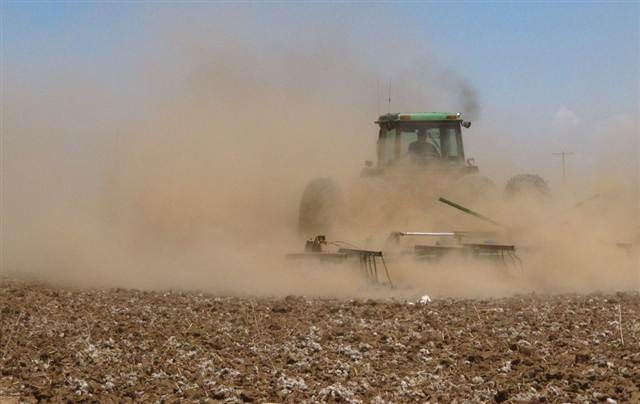
Last week, the US Drought Monitor showed 73 percent of the state still in the exceptional drought category (down from the 89 percent from the previous week) which means the state still has to have significant rainfall to begin recovery from what has been the single worst drought year on record for Texas. But a La Nina pattern is going to keep us dryer and warmer than normal for a while longer. In the meantime, Texas will continue to deal with the aftermath of an extreme drought — water restrictions, fire bans, curtailed agricultural activity, and now dust storms.
Posted in Global Warming | Tagged degree heat wave, state climatologist, Texas |