Feeds:
Posts
Comments

Archive for January, 2009

John Broder at The New York Times reports:

“With the designation of the world’s largest marine reserve in the Northwestern Hawaiian Islands in 2006, and now these three other sites, George W. Bush has done more to protect unique areas of the world’s oceans than any other person in history,” said Joshua Reichert, managing director of the Pew Environmental Group.

Wow.  Maybe after eight years I have low expectations, but that’s not something I expected to hear at any point in my life this morning.  Turns out our outgoing lame duck president has decided to do something positive with his last remaining days. Today Bush is set to designate over 195, 280 square miles of “American-controlled Pacific Ocean islands, reefs, surface waters and sea floor as marine national monuments.”
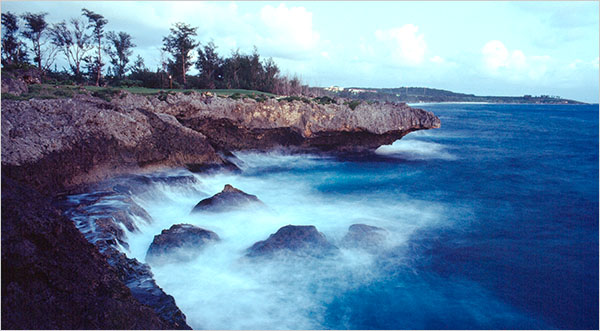
06oceans_600Apparently the islands are remote and for the most part, uninhabited.  The article reports, however, that there was some opposition to the designation by commercial and recreational fishing groups, as well as government officials from the nearby Commonwealth of the Northern Mariana Islands who feared potentially negative commercial impacts.

The article continues,

The islands, atolls, reefs and underwater mountain ranges offer unique habitat to hundreds of rare species of birds and fish. Among them are tropicbirds, boobies, frigate birds, terns, noddies, petrels, shearwaters and albatrosses, according to environmental groups who pushed for the protection. It is also the habitat of the rare Micronesian megapode, a bird that incubates its eggs using subterranean volcanic heat.

Yay! I love frigate birds.  My favorite part of this story, however, is how America came to control this land in the first place.  I’m a big history nerd, so you’ll have to bear with me as I geek out.  You see kiddoes, in 1856 we passed the Guano Island Act, a law that allowed sea captains to just claim any islands that were rich in guano.  This encouraged sailors to seek out the poopy-est islands possible and claim them in the name of America.  These rock solid legal claims kept those lands under our dominance for over 150 years.  Weird.

Anyway, thank you Bush, for protecting these lands as a final parting shot.  This is a welcome change from your other last minute presidential actions, such as auctioning off public lands in Utah to oil and gas drilling letting his EPA administrator make up bogus rules.

UPDATE:  Looks like I spoke too soon: Bush’s One Last Blow to the Environment

Read Full Post »

Hey, look! A joint press release from Public Citizen Texas, the Lone Star Chapter of the Sierra Club, and the SEED Coalition:

An NRC Environmental Scoping Meeting will be held on Jan. 6th in Glen Rose, Texas to take comment on the environmental impact study for two nuclear reactors proposed for the existing Comanche Peak site. A coalition of environmental and consumer groups and their members will be telling the Nuclear Regulatory Commission and Luminant (formerly TXU) that nuclear plants are “too risky, too expensive and too dangerous” to help Texas meet its power needs, and makes no sense when clean, safe, affordable options exist. The coalition of groups said they
only learned of the hastily called public meeting to seek input on environmental issues on December 24th.

“We’ve been down this road before,” noted Cyrus Reed, Conservation Director of the Lone Star Chapter of the Sierra Club. “The utility industry sold Texas on Comanche Peak and the South Texas Project and consumers have been paying the ‘stranded’ costs ever since, even as valuable water resources are expended and radioactive waste piles up on-site.”

Luminant proposes to build two more nuclear reactors at the existing Comanche Peak nuclear site near Glen Rose, in Somervell County, using an unproven, untested technology known as USAPWR. “The design of the reactors has not been certified and has never been builtanywhere in the world. Why should Texas serve as guinea pigs for a dangerous radioactive experiment?” asked Karen Hadden, Executive Director of the Sustainable Energy and Economic Development (SEED) Coalition. “Design problems as well as human error led to numerous problems and shutdowns of Comanche Peak reactors in the past. The competence and character of Luminant need to be examined closely since the history of the existing reactors is disastrous. In the past, there was a chance to fix nuclear reactor construction problems before an operating license was issued, but that safeguard is gone with the new licensing process.” (more…)

Read Full Post »

straus2Joe Straus (R- San Antonio) announced in a press conference this morning that he has enough pledged supporters to win the race for Speaker of the Texas House.

In holding with the national trend towards change and bipartisanship, Straus will replace the great and powerful Tom Craddick with a pledge to bring harmony back to the sharply divided Texas legislature.

Said Democratic strategist Harold Cook in an article in the Dallas Morning News,

“I don’t know anybody who doesn’t like the guy, and in the Legislature, that’s really saying something,” Cook said. “It’s easy to see why people looking for a new tone out of the Texas House are gravitating toward him.”

Other state Dems agreed,

“He is one of the most honest people that I know,” said Rep. Ruth Jones McClendon, D-San Antonio. “He’s going to be a fair speaker who will rule with an even hand and an open mind.”

We have seen such a bitterly divided legislature in recent years, these reactions sound almost too good to be true.  But it looks as though Straus may represent Texas’ brightest hope for a constructive, pragmatic legislative session.

What’s more, Straus has a positive history on ethics reform, open government, and has shown significant leadership on environmental issues.  As a member of the Regulated Industries Committee and chairman of the Subcommittee on Energy Conservation and Efficiency, Straus oversaw the passage of the most important energy efficiency bill since deregulation. Straus’ HB 3693 doubled utilities’ efficiency goals to 20% of load growth by 2010 and directed the Public Utility Commission to study whether increasing the program to 50% of load growth is technically possible.  This report, released by ITRON a month ago, found that Texas could not only meet but exceed that goal.

Straus has also received awards from both the Texas Public Power Association and the  Lone Star Chapter of the Sierra Club for his work in energy efficiency and contributions to public power.

Public Citizen congratulates Straus on being the next Speaker of the House of Representatives, and looks forward to working with him in the upcoming session.

Read Full Post »

Happy 2009, everyone.

Imagine my surprise when I see the new issue of The Economist, now talking about the major problems global warming will be creating called The Curse of Carbon.  When even The Economist is coming around on global warming, it seems like things might be changing on the climate change debate.  Who’s next?  The Free Republic?

From the article:

Copyright The Economist 2009

If the seas continue to become less alkaline at the current rate, the time will soon come when reefs will start to lose coral faster through erosion than they gain it through calcification. How soon? Some scientists think it could be in 60 or 70 years. Many fear that half the world’s coral will be gone by 2030.

The Arctic has lost over 40% of its year-round ice since 1985, 14% in 2004-05 alone. This will not do much directly to raise sea levels, because most Arctic ice is floating, but it suggests that the melting is speeding up, and that is confirmed by the flow of the Jakobshavn glacier in Greenland, which doubled in speed between 1997 and 2003.

Everything depends on the speed at which the ice disappears. Computer models have been predicting that the Arctic will not be ice-free, even for a short time in late summer, until 2040, and at present only icebreakers and the occasional lone yachtsman are getting through. But some people believe change is coming so fast that the northern seas will open up much earlier than expected. They may be right.

If so, it will be seen as a harbinger of a another horror: the prospect of a shutdown of the North Atlantic conveyor. This is the current of water that takes enormous amounts of heat—about as much as would be generated by a million nuclear power plants—from the tropics and carries it to eastern North America and western Europe. The fear is that melting ice, along with increased snow and rain, could reduce the density and salinity of the top layers of the sea, making them more buoyant. At present, the conveyor depends on surface water sinking and travelling towards the equator, there to rise again and bring warmth back to the north (see map in the introduction). If this current stopped, the average temperature in Europe might fall by five to ten degrees Celsius.

They even have a video of the ice melt and the major problems that melting arctic sea ice will create.

Read Full Post »

« Newer Posts
