Feeds:
Posts
Comments

Texas Green Network Networking Event at Austin Energy

A Panel Discussion on Zero Waste and How to Get There

Thursday, July 21st 5:30pm-8:30pm

Sponsored by Texas Green Network
Hosted by: Austin Energy

721 Barton Springs, Austin, TX 78704

Please R.S.V.P. to rsvpaustin@texasgreennetwork.org

Austin Energy hosts Texas Green Network’s July event in Austin with a panel discussion on Zero Waste, how you can achieve Zero Waste and how the City can get there with your help!  The panel will consist of:

Melanie McAfee
•Owner at Barr Mansion
•Member at City of Austin Sustainable Food Policy Board

Brandi Clark Burton
Founder & Chief Inspiration Officer at Austin EcoNetwork
•Steering Committee at Austin Climate Protection Plan – Community Outreach

Stacy Guidry
Austin Program Director at Texas Campaign for the Environment
•Board Member, Central Texas Zero Waste Alliance

Gerry Acuna
•Chair at City of Austin Solid Waste Commission
•Boardmember at State of Texas Capitol Area Council of Governments
•Board Member at USGBC Central Texas
•President at Tri Recycling Inc.

Join Texas Green Network (TGN)  for the panel discussion,  a “TGN Open Mike” and snacks and beverages, including teas provided by Zhi Tea.

TGN is an ongoing active connecting point for green business leaders in Central Texas.

The U.S. Environmental Protection Agency (EPA) announced that all `flexible permit’ companies in Texas have agreed to apply for approved air permits, helping to achieve clean air in the state and providing for regulatory certainty.

Under the Texas flexible permit rule, certain industries were allowed an exemption from having to disclose pollution for each individual smokestack at a facility which enabled them to aggregate all emissions from the plant together in spite of the fact that the EPA under President George W. Bush had warned the Texas Commission on Environmental Quality (TCEQ) that the processes did not meet federal standards and should be reformed.

The Clean Air Act ensures that businesses across the country operate efficiently and cleanly to safeguard public health from harmful levels of air pollution.  Under the act, the EPA had authorized the TCEQ as the Clean Air Act permitting authority in Texas.   TCEQ operates the largest air permitting program for major and minor sources in the U.S.  with over 1500 major air permit holders in Texas.  Less than 150 companies had applied for and received non-EPA-approved flexible permits from the TCEQ creating uncertainty about their compliance status with the Clean Air Act.   Starting in 2007, EPA wrote to all flexible permit holders telling them of their need to ensure compliance with federal requirements.

On May 25, 2010, the EPA barred the TCEQ from issuing a permit to a refinery in Corpus Christi. EPA said that the process used to justify that permit violated the Clean Air Act.  EPA’s Region 6 Administrator, Al Armendariz, also stated that the EPA would block future permits and force polluters to comply with EPA standards if the TCEQ did not change its rules.  TCEQ and Texas Attorney General, Greg Abbott, filed lawsuits against the EPA defending Texas’ flexible permit program.  In September 2010,  EPA notified all of the 136 `flexible permit’ companies that they needed to seek Clean Air Act compliant permits from the state.

This move by industry to come into compliance with federal standards flies in the face of Texas’ position that the state’s flexible permitting rules met those standards and probably doesn’t help their lawsuit much either.

More about activities in EPA Region 6 is available at http://www.epa.gov/aboutepa/region6.html

The Texas Low-Level Radioactive Waste Disposal Compact Commission will meet Saturday, August 20, 2011, at 10:30 AM in the James Roberts Center, 855 Hwy 176 East, Andrews, TX 79714.  Don’t know yet what they will have on their agenda, but they say it will be posted in the Texas Register and on the Commission website when available.

Click here to read more about legislation that passed this session, opening the state wide to accept radioactive waste from around the country and giving Waste Control Specialists, the operator of the Texas waste site, carte blanche for much of the regulation of this site.

Have Questions?  Contact the Texas Low Level Radioactive Waste Disposal Compact Commission

http://www.tllrwdcc.org
Telephone: 512-820-2930
Mailing Address:
TLLRWDCC
3616 Far West Blvd., Ste. 117, # 294
Austin, Texas  78731
NOTE:  This is a mailing address only and not the physical location of the Commission.

Data on Dangerous TXU-Luminant Pollution Underscores Need for Strengthened Environmental Safeguards

The Sierra Club released new reports indicating that three large, North East Texas coal-fired power plants owned by Luminant, formerly TXU, are single-handedly causing violations of federal air quality standards.  The three East Texas coal plants addressed in the reports — Big Brown, located in Freestone County, Monticello, located in Titus County, and Martin Lake, located in Rusk County, have a history of environmental problems.  The new reports indicate that sulfur dioxide emissions from the troubled coal plants are causing air pollution in nearby areas that exceeds the federal air quality standard for sulfur dioxide (SO2).  The reports come a week after the Environmental Protection Agency (EPA) issued a rule that requires coal-fired power plants in 28 states, including Texas, to cut dangerous SO2 emissions.

“TXU-Luminant’s coal plants have been a problem for public health and the environment for a long time now.  Big Brown, Monticello, and Martin Lake top the list of the nation’s worst polluters,” said Neil Carman, Sierra Club’s Clean Air Program Director.  “These reports reveal that the TXU-Luminant coal plants’ emissions of dangerous SO2 pollution are more than double the allowable amount of that pollutant.  

The new EPA safeguard is designed to protect public health by setting a maximum amount of SO2 considered to be safe for Americans to breathe. The reports by Khanh T. Tran of AMI Environmental, show that the three coal plants are each modeled to emit SO2 pollution at levels that are predicted to far exceed the federal standard – even without taking into account other background sources.

SO2 is linked to asthma, other respiratory illnesses, and heart disease.  SO2  is especially harmful to those with existing conditions, such as asthma, and is associated with increased emergency room visits, according to the EPA.

In 2010, TXU-Luminant’s three coal plants emitted the following tonnage of SO2 into the air:

Martin Lake                ~76,000 tons of SO2
Big Brown                    ~63,000 tons of SO2
Monticello                   ~58,000 tons of SO2

TOTAL in 2010      ~ 197,000 tons of SO2

Ilan Levin, attorney with Environmental Integrity Project, said “Despite lots of promises, TXU-Luminant continues to be the poster child for dirty coal-fired power plants.  The levels of dangerous contaminants being put into the air and water from just these three coal plants is staggering.”   

Highlights From the Reports:

  • Big Brown, Monticello, and Martin Lake are the top three emitters of sulfur dioxide emissions in Texas
  • Martin Lake coal plant was modeled to exceed safe limits by over 189%, and the area of exceedances is up to 10 miles away from the coal plant.
  • The report’s modeling shows that each coal plant is causing exceedances of sulfur dioxide air quality standards independently, without taking into account other sources of SO2 pollution.

TXU-LUMINANT OPTIONS

“A series of additional EPA environmental safeguards  are pending that will require  coal plants to install a series of retrofits to meet toughening clean air and water  standards. We estimate these retrofits  could cost  as much as $3.6 billlion for all three of the plants,” said Tom ‘Smitty’ Smith of Public Citizen’s Texas Office.  “TXU-Luminant should consider retiring these aging coal plants and replacing them with cleaner energy options such as energy efficiency and renewable energy including geothermal, wind, and solar power. TXU-Luminant has already made some clean energy steps, however they could create many more jobs by transitioning away from dirty coal toward clean energy.”

An earlier report released in March 2011 by the Sierra Club, The Case to Retire Big Brown, Monticello and Martin Lake Coal Plants details financial issues at the North East Texas TXU-Luminant coal plants which are the subject of today’s air modeling reports.  The financial report’s author Tom Sanzillo found, “The bottom line investment decision: should $3.6 billion, and possibly more be invested into plants that are nearing the end of their useful life (usually fifty years) in a regional economy that is not conducive to coal plants. Throughout the United States coal plants are being retired because the market in mid and late stage plants are no longer profitable.”

Neil Carman, Clean Air Program Director with the Sierra Club’s Lone Star Chapter summed it up this way, “TXU-Luminant should begin phasing out and retiring the dirtiest coal plants – these plants are public health hazards and that is not acceptable — nor financially viable.  TXU-Luminant would do much better to strongly transition to clean energy.”

Last week,  Governor Rick Perry issued a proclamation certifying that certain counties in Texas are currently threatened by exceptional drought conditions and an extreme fire hazard due to a continuing disaster in several counties in Texas, including Jones and Haskell Counties, which the small town of Stamford straddles.

Water Restrictions in Texas at the beginning of July

Located 40 miles north of Abilene with a population just over 3,000, Stamford’s city council voted today to sell water to the proposed Tenaska coal-fired plant. It is expected that Stamford would provide about 780,000 gallons (or roughly three-quarters of the minimum amount of water needed by the plant) daily from Lake Stamford, a reservoir formed by Stamford Dam with a storage capacity of 51,573 acre·ft.  The average depth of Lake Stamford is only 11 feet. The 2011 Brazos G Water Plan (Vol. 1, p. 4A-7) projects Stamford will have a deficit of nearly 3,000 acre-feet a year by 2030 without the Tenaska contract.

There was no public hearing before the City Council voted, and there were some people present who disagreed with the decision.

Last night, Tenaska hosted an open house.  Over a hundred people showed up, the majority of whom were opposed to the water contract, and while some members of the city council and the mayor were present, they still chose to approve the water contract.


Tell them that the testimony being given is based upon false premises and they should not vote for HR 2273 when the Committee hearing resumes at 3 pm EST.

According to the National Academy of Science (NAS) Coal Combustion Residues or waste (CCR’s) contain numerous hazardous metals and substances with hazardous characteristics including arsenic, lead, selenium, mercury, chlorides and sulfates. (The National Research Council (NRC), Managing Coal Combustion Residues in Mines, March 2006, pp. 27-57)

A recent report cites hexavalent chromium as another toxic by-product of CCR’s

These pollutants can cause cancer, birth defects, reproductive problems, damage to the nervous system and kidneys, and learning disabilities in children.  Similar to lye, CCR’s can be caustic enough to burn the skin on contact.  CCR’s can decimate fish, bird and amphibian populations by causing developmental problems such as tadpoles born without teeth, or fish with severe spinal deformities.  CCR’s have been associated with the deaths of livestock and wildlife.

According to the U.S. Environmental Protection Agency (EPA), a waste is “hazardous” if it leaches toxic chemicals, like arsenic or selenium, above a certain threshold when tested using the Toxicity Characteristic Leaching Procedure (TCLP).

Using the TCLP, coal ash rarely exceeds this threshold.  The EPA’s Science Advisory Board and the National Academy of Sciences have determined that the TCLP does not accurately predict the toxicity of coal ash.

National Research Council, Managing Coal Combustion Residues in Mines, 2006, pages 150-152.  Also see U.S. EPA Science Advisory Board, Waste Leachability: The Need for Review of Current Agency Procedures, EPA-SAB-EEC-COM-99-002, Washington, DC, 1999, and Leachability Phenomena: Recommendations and Rationale for Analysis of Contaminant Release by the Environmental Engineering Committee, EPA-SAB-EEC-92-003, Washington, DC, 1991.

When EPA tests coal ash using the new, more accurate Leaching Environment Assessment Framework (LEAF), the resulting leachate can exceed by many times these hazardous waste thresholds.  For example, when tested with EPA’s new, more accurate test, coal ash leached arsenic at 1,800 times the federal drinking water standard and over 3 times the hazardous waste threshold. The new test revealed selenium leached from one coal ash 580 times the drinking water standard and 29 times the hazardous waste threshold.

U.S. EPA, Characterization of Coal Combustion Residues from Electric Utilities – Leaching and Characterization Data. EPA-600/R-09/151, Dec. 2009, http://www.epa.gov/nrmrl/pubs/600r09151/600r09151.html,  pages xii, xiv, 133, 135, 138 and 143.

U.S. EPA, Characterization of Coal Combustion Residues from Electric Utilities – Leaching and Characterization Data. EPA-600/R-09/151, Dec, 2009, http://www.epa.gov/nrmrl/pubs/600r09151/600r09151.html, page xiv, Table ES-2.

EPA’s 2010 risk assessment found the cancer risk from drinking water contaminated with arsenic from coal ash disposed in unlined ponds is as high as 1 in 50 adults, which is 2,000 times EPA’s regulatory goal for acceptable cancer risk.

U.S. EPA, Human and Ecological Risk Assessment of Coal Combustion Wastes, RIN 2050-AE81 April 2010, page 4-7.

In hearings today, members are providing information that minimizes the harm by coal ash waste.  Rep Green is holding that Coal Ash is only an impoundment issue, and Rep. McKinley has testified that all tests show Coal ash is not toxic using a chart that uses ONLY TCLP tests results when the National Academy of Science has twice determined that the TCLP is NOT accurate.   Further, Rep. McKinley has testified that EPA has twice “conclude” that coal ash is not toxic when the EPA stated that if new evidence is presented that shows evidence of damage that it will revisit the determination.

Can you call your legislators and explain that the testimony being given is based upon false premises.

US House Energy and Commerce Committee

Republican Members, 112th CongressCliff Stearns (FL)  202-225-5744       

Fred Upton (MI) 202-225-3761
Joe Barton (TX) 202-225-2002
Ed Whitfield (KY) 202-225-3115
John Shimkus (IL) 202-225-5271
Joseph R. Pitts (PA) 202-225-2411
Mary Bono Mack (CA) 202-225-5330
Greg Walden (OR) 202-225-6730
Lee Terry (NE) 202-225-4155
Mike Rogers (MI) 202-225-4872
Sue Myrick (NC) 202-225-1976
John Sullivan (OK) 202-225-2211
Tim Murphy (PA) 202-225-2301
Michael Burgess (TX) 202-225-7772
Marsha Blackburn (TN) 202-225-2811
Brian P. Bilbray (CA) 202-225-0508
Charles F. Bass (NH) 202-225-5206
Phil Gingrey (GA) 202-225-2931
Steve Scalise (LA) 202-225-3015
Bob Latta (OH) 202-225-5206
Cathy McMorris Rodgers (WA) 202-225-2006  
Gregg Harper (MS) 202-225-5031                 
Leonard Lance (NJ) 202-225-5361
Bill Cassidy (LA) 202-225-3901
Brett Guthrie (KY) 202-225-3501
Pete Olson (TX) 202-225-5951
David McKinley (WV) 202-225-4172            
Cory Gardner (CO) 202-225-4676
Mike Pompeo (KS) 202-225-6216
Adam Kinzinger (IL) 202-225-3635
Morgan Griffith (VA) 202-225-3861

Democrat Members, 112th CongressHenry A. Waxman (CA) 202-225-3976
John D. Dingell (MI) 202-225-4071
Edward J. Markey (MA) 202-225-2836
Edolphus Towns (NY) 202-225-5936
Frank Pallone, Jr. (NJ) 202-225-4671
Bobby L. Rush (IL) 202-225-4372
Anna G. Eshoo (CA) 202-225-8104
Eliot L. Engel (NY) 202-225-2464
Gene Green (TX) 202-225-1688
Diana DeGette (CO) 202-225-4431
Lois Capps (CA) 202-225-3601
Michael F. Doyle (PA) 202-225-2135
Jan Schakowsky (IL) 202-225-2111
Charles A. Gonzalez (TX) 202-225-3236
Jay Inslee (WA) 202-225-6311
Tammy Baldwin (WI) 202-225-2906
Mike Ross (AR) 202-225-3772
Jim Matheson (UT) 202-225-3011
G. K. Butterfield (NC) 202-225-3101   
John Barrow (GA) 202-225-2823
Doris O. Matsui (CA) 202-225-7163 Kathy Castor (FL) 202-225-3376 Donna Christensen (VI)

Oh no . . . we're fracked!

What happens when you let Big Business regulate itself? – You get fracked.

Hydraulic fracturing — also known as fracking — is a controversial method of natural gas extraction that involves injecting a toxic chemical sludge into the surface of the earth until it rips open.

And it’s a case study in the dangers of letting giant corporations sidestep laws that protect our health, our investments and our environment.

Learn more about the risks of fracking, including how it could threaten your drinking water:

www.citizen.org/fracking-unsafe-unregulated

In 2005, then-Vice President Dick Cheney got fracking exempted from laws that keep our air and water clean. That exemption — known as the “Halliburton loophole” — allows oil and gas companies to force hazardous chemicals into underground water supplies.

As if that’s not enough, the Halliburton loophole is only one of seven exemptions for the oil and gas industries from major federal environmental laws like the Clean Air Act and National Environmental Policy Act.

The wholesale lack of federal tools to protect the public from fracking has created an inadequate patchwork of state regulations. As a result, companies are assaulting the environment and polluting drinking water supplies all over the country.

In Pennsylvania, a state with some of the most robust fracking regulations, one company — Chesapeake Appalachia LLC — racked up 149 environmental violations in just two and a half years.

While fracking is currently a hot-button issue, it is not a new practice. It was developed by Halliburton in the 1940s and has primarily been the scourge of communities in the Southwest.

The huge bump in fracking has been based on speculation that shale reserves in the Northeast could be the Saudi Arabia of natural gas. But even this is being challenged. The New York Times has recently reported that natural gas companies may be vastly overstating their reserves in what could be a giant Ponzi scheme.

To the credit of activists all over the country, the federal government has been forced to address fracking.

  • A number of lawmakers have sent letters to the Securities and Exchange Commission asking it to investigate whether the industry has provided accurate information about the productivity of natural gas wells, particularly those involved in fracking.
  • As part of President Obama’s “Blueprint for a Secure Energy Future,” the Secretary of Energy Advisory Board (SEAB) is exploring recommendations to better protect public health and the environment from fracking.

Public Citizen will be giving public comment with a list of recommendations at a SEAB meeting later this week. We will be giving you an opportunity to contribute to the dialogue, too, so stay tuned!

But investigations are only the first step toward curbing this unsafe practice. In the near term, legislative action to close loopholes that exempt fracking from federal law is needed. Meanwhile, all fracking activity should be suspended. Moving forward, shifting away from dangerous and dirty fuels is the only solution.

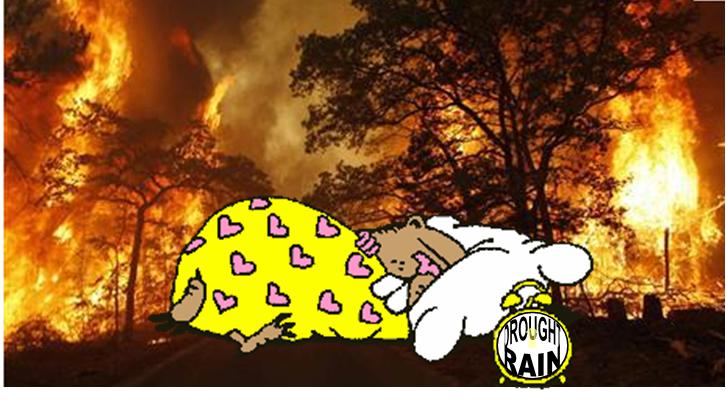
We’ve blogged numerous times about the persistent heat and drought plaguing the Southern Plains (particularly Texas) this year. Much of Texas is off a June that ranks among the top five hottest in history. According to the National Climatic Data Center, Texas had their hottest June on record and of the six record hottest June cities, 5 were in Texas.

  • Record hottest June in Texas, surpassing June 1953!
  • Record hottest June cities: Lubbock, Midland, San Angelo, Houston, Galveston, Wichita Falls, and Columbus, Ga.

There has been no letup in July so far and the number of days with 100-degree temperatures continues to climb. Since the beginning of June to the beginning of July, Texas has seen the highest levels of drought — rated as “exceptional” — jump from  50.65 percent of the state to 72 percent of the state.

Dallas, Texas

  • 16 100-degree days through July 10 —the annual average is 18 days;
  • Most 100-degree days in a year: 69 in 1980.

Austin, Texas

  • 27 100-degree days through July 10 —more than double the annual average of 12 days;
  • Most 100-degree days in a year: 69 in 1925.

Even if you don’t believe in anthropogenic climate change, the last 10 years have been the hottest in the last 440,000 years, at least if the Vostok and Greenland ice cores are any indication.  And whether or not you think we can mitigate global warming, here in Texas we need to carefully consider one of our state’s most precious resources, WATER!

So when industries, like coal-fired power plants, nuclear plants, natural gas fracking – to name a few that use large amounts of water, are about to sign contracts with the water districts, or river authorities, we should all show up and demand that they show us we indeed will have water available for the people who live in the area.

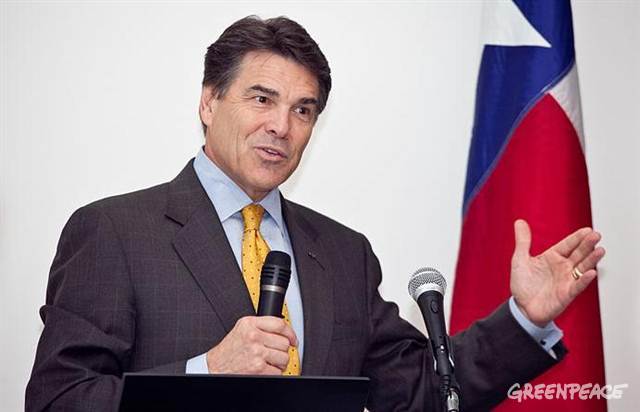
An unnamed Republican campaign veteran told the Washington Post that Texas Governor Rick Perry has decided to run for President, though the official word from the Perry camp is still a definite maybe, stating that Mr. Perry has surveyed the field and decided to get in the race later this summer.  The thinking from republican sources  is that apparent front-runner Mitt Romney “does not reflect the Republican Party” and is therefore vulnerable to a credible challenge from the right, especially after Mr. Romney’s recent squishy remarks on global warming.  So the Texas governor is running as a climate change denier.

In a Stanford University report researches have found that “candidates running for office can gain votes by taking green positions and might lose votes by expressing skepticism about climate change.” A study entitled “The Impact of Candidates’ Statements about Climate Change on Electoral Success in 2010: Experimental Evidences,” reveals that taking a “green” position on global warming attracts votes from Democrats and Independents, while expressing skepticism about the warmist theory alienates those same voters. On the Republican side there was no significant impact either way, so it looks like Perry intends to look to his base.

Today was the last day for the Texas Public Utility Commission (PUC) to pass the 500 Mw non-wind RPS rule.  After 6 years they failed to implement a provision by passed by the legislature setting aside a portion of the state’s Renewable Portfolio Standard for renewable technologies other than wind (like solar, geothermal, or storage).  Citing cost concerns, the PUC once again failed to provide guidance and support for a group of emerging industries that needs strong government policy to get them kicked off, much like the wind energy received back in 2005, during a time when Texas currently is experiencing some of the lowest price electricity in decades.

The PUC has consistently dragged its feet, sided with the large corporate interests, offered overly complicated rules and then fail to act.   So while our leadership is yelling foul at new EPA rules that will help clean up our air, and may force us to finally shut down dirty polluting 50-year old power plants that were grand fathered in under the clean air act and expected to close decades ago, the state has failed to encourage cleaner, renewable sources of power for Texans.  Other concerns that have been expressed were whether the industry would be able to supply the needed capacity to meet this tiny goal.  This concern was being aired at the same time municipal utilities like San Antonio and Austin and electric co-ops like the PEC were committing to build projects that combined exceed the states still unleashed goal.

Traditional Generators and other vested interests are trying to keep their antiquated highly polluting fleets running and are fighting new clean energy resources.  In this instance they appear to have gained an upper hand with this commission. With Chairman Smitherman’s resignation from the PUC to take a position at the Railroad Commission (which oversees the oil and gas industry) there is an opportunity for new leadership.  Will the new commissioner be able to get anything done, only time will tell?

In the meantime, the new energy economy is finding homes in China and India (and not because they are concerned about the environment, but because it makes economic sense, while Texas rides into the 21st century on the back of a fracking gold rush that continues to feed the same industries with billion dollar tax breaks.

The price of solar is sliding down at a rapid pace and annual job growth in all sectors of this emerging industry are being reported at over 26% per year.  So where is the leadership when we need it?  Where are those whose mantra has been “Jobs, baby jobs?”  Down in San Antonio  they are making things happen while the rest of the state goes on playing the same old song of “drill, baby, drill” as we listen to our children “wheeze, baby,wheeze” and our Governor whines “Why’s the EPA always Pickin’ on me“.

As I was reminded today by one of our coworkers it was here in Texas that JFK spoke the words,  “we do these not because they are easy, but because they are hard, because that goal will serve to organize and measure the best of our energies and skills, because that challenge is one that we are willing to accept, one we are unwilling to postpone, and one which we intend to win…”

In a state that made a name in energy as big as Texas through its intrepid vision,  we should be leaders.  This new era brought us the largest wind industry in the country, but its potential to disrupt the status quo is sending Texas sliding back from being in the energy “bidness” to going back to being in the oil and gas “bidness”.

So we start the dance all over again and hope that the PUC opens a new rule making – while time, the world and the opportunities for jobs and new industries pass us by us by.  We now look to our cities and co-ops for leadership and innovation.   PUC Project # 35792, I bid you adieu.  May we we meet again, somewhere, sometime.  And now the sun slowly sets on our bright Texas sky.

New EPA Safeguard will Improve Health & Lives of Millions of Americans

Earlier today, the US Environmental Protection Agency (EPA)  announced a new Cross State Air Pollution Rule designed to protect Americans from dangerous air pollution from coal-fired power plants. The new protections will reduce power plant emissions of sulfur dioxide (SO2) and nitrogen oxides (NOx) in 27 states including Texas. SO2 and NOx form soot and ground-level ozone smog which contributes to poor air quality days and respiratory illnesses affecting millions of Americans.   Texas environmental groups Sierra Club, Public Citizen, and Environmental Integrity Project welcomed the EPA’s announcement.

Dr. Neil Carman, Sierra Club’s Clean Air Program Director in Texas, a chemist and former Air Control Board investigator celebrated the announcement:

The Sierra Club applauds EPA Administrator Lisa Jackson’s landmark Cross State Air Pollution safeguard announcement today.  EPA’s actions today will help save lives and reduce dangerous air pollutants from coal-fired power plants.  Air pollution does not respect state boundaries.  As a result, air pollution created in one state can burden surrounding states with harmful pollution.  Texas coal plants are known to produce pollution that has negative consequences for the health of people both in Texas and surrounding states, particularly in eastern Oklahoma and western Arkansas.  We are especially pleased with EPA’s decision to include Texas in its proposal and to include sulfur dioxide, as Texas coal plants are at the top of the list of worst polluters in the nation.

According to the EPA, in 2005, 17 Texas coal plants emitted 531,059 tons of SO2 and 134,234 tons of NOx. By 2014, the new safeguard will reduce from 2005 levels — 303,467 tons of SO2 or 57% of SO2 and 49,814 tons of NOx or 29% of NOx.  90% of these reductions will occur at Texas coal plants.  EPA Chief Administrator Lisa Jackson today said that this rule will prevent 670-1000 premature deaths in Texas beginning in 2014.

Carman concluded, “This will result in a leap forward in reducing ozone in Texas non-attainment areas where urban areas have been struggling to clean up the air.  People living near the coal plants will definitely enjoy living with cleaner and safer air.”

TEXAS ENERGY NEEDS COVERED & COST BENEFITS

Tom ‘Smitty’ Smith, Director of Public Citizen’s Texas office spoke about the economic implications of the new EPA safeguard saying,

Concerns about meeting Texas energy needs are unfounded.  ERCOT’s most recent state of the market report along with its 2011 Report on the Capacity, Demand, and Reserves in the ERCOT Region show that we have sufficient generating capacity to meet summer peaks.  With cost effective energy efficiency measures, we can meet the electrical demand and clean the air.  Concerns about costs of this protective measure are also unfounded.  EPA found that this protection will result in a less than 1% increase on electricity bills.

We believe – and, the Texas PUC’s own Itron report, the “Assessment of the Feasible and Achievable Levels of Electricity Savings from Investor Owned Utilities in Texas: 2009-2018” shows that we can cost effectively reduce the energy needed in Texas by 23% using energy efficiency measures that are far cheaper than the cost of burning coal.   Today Texans are paying almost $6 billion a year in health care costs resulting from power plant pollution, and the insignificant cost increases that might result to consumers will be more than made up in lowered medical costs for all.  It’s time the utilities do their fair share to clean the air. The emissions controls that the utilities will be required to use are very similar to those put on every new car since the 1970s. Besides health benefits, the EPA’s safeguard supports Texas transition to a clean energy economy and green jobs.

Texas officials should convene a panel to analyze the cost of pollution upgrades at the coal plants and look at whether there are more cost-effective ways to meet our energy needs in the future.

TEXAS TRANSITION TO CLEAN ENERGY JOBS

San Antonio’s public utility, City Public Service recently announced the phase-out of its dirty old coal plant, Deely in favor of clean energy solutions and just yesterday announced a call for bids for a 400 Megawatt solar power plant.

Smith concluded, “The costs of solar are plummeting as this clean renewable energy source comes to scale.  San Antonio is leading the way to Texas clean energy future and the rest of the State should get with the clean energy program.”

A recent report published in March of 2011 by the American Council for an Energy Efficient Economy found that a significant investment in energy efficiency in homes and businesses and investments in new combined heat and power capacity within the industrial sector found that some 98,600 jobs would be created over the next 20 years in Texas. An American Center for Progress Report study found that a 25% renewable energy standard by 2025 coupled with increased spending in energy efficiency through the monies earmarked for Texas through the ARRA would produce some 150,000 jobs in Texas by 2030, while a 2009 Blue-Green Alliance study found that a nationwide Renewable Energy Standard would create 60,000 new jobs in Texas over the next 10 years, including 20,000 in solar energy.

Next week, Texas environmental groups will release new data that details pollution problems at existing coal plants and underscores the importance EPA’s inclusion of Texas in this new Cross State Air Pollution rule.. 

The Southwestern U.S. has dominated the world of utility-scale solar projects over the past few years, with news of deals being signed for solar-power plants as large as 1 gigawatt or more.  But now the Southeastern U.S. looks like it will soon be home to one of the world’s largest solar projects, a 400-megawatt photovoltaic farm being built by National Solar Power, LLC.

The next question is where.  The company has vetted a total of seven sites in three states, Florida, Georgia and North Carolina, as potential hosts for the ambitious project.  They say the sites must meet certain criteria:

1

Having enough undeveloped land to put this farm in (ideally 4,000 acres contiguously) but because the Southeast doesn’t have the same relatively unused land resources as the Southwest, the company is looking at a different approach.  Creating the world’s largest solar farm that could be made up of as many as 20 different fields.  

2

Appropriate economic development strategies, such as tax incentives that could include federal, state and local incentives, and financial partners.  

3

Community support, and  

4

A qualified work force.  

The five-year build out project is projected to cost roughly $1.5 billion.

The 1,000 megawatt Blythe Solar Power Project in California that broke ground last month is projected to create 1,000 direct jobs during construction phases and 200 permanent positions. It will also create 7,500 indirect jobs throughout the country.

So many of these opportunities are passing Texas by because the state had failed to provide incentives for them to come here.  Fortunately, Texas has some large cities with municipally owned utilities that are seeing the advantages to their communities both in terms of jobs, the ability to lure other associated industries (like PV manufacturing) to their cities, and the stablelization of their peak electric demand by investing in rooftop and utility scale solar and other renewable sources of power.

In an Austin American-Statesman editorial that ran last Saturday, July 2nd, the paper talked quite candidly about the lack of a level playing field in the Texas capital as pointed out by conservative East Texas republican freshman Representative David Simpson and liberal Austin-based Public Citizen director, Tom “Smitty” Smith.

The odd man from East Texas

Austin American-Statesman Editorial Board

July 2, 2011

For whatever reason and for whatever it says about their region, East Texans occasionally send us lawmakers who are just a bit different.

But difference, like diversity, can be good.

David Simpson

Representative David Simpson (R-Longview)

This year, the people of the Pineywoods sent us Republican Rep. David Simpson, who wears his Christian faith on his sleeve and is uninterested in being just another freshman eager to go along to get along.

“I guess I don’t know what a freshman’s supposed to do,” Simpson told the American-Statesman’s Tim Eaton in April.

Last Wednesday, in the special legislative session’s closing moments, Simpson showed he also doesn’t know what a freshman isn’t supposed to do by giving a blistering speech generally critical of legislative process and specifically critical of the death of his bill criminalizing invasive pat-downs by Transportation Security Administration agents.

Simpson’s “personal privilege” speech was odd, and many of his House colleagues consider him a bit odd. Be that as it may — and setting aside what we believe was his misguided war against the TSA — it should be noted that Simpson raised some basic and important questions about legislative process.

“We all, no doubt, were aware that when we came to these grand halls that there also would be within them duplicity and deceit,” he told colleagues. “The challenge, though, is not to succumb to it, not to go along to get along in order to be re-elected, not to be complicit with its corruption.”

Corruption is a strong word. If Simpson has first-hand knowledge of corruption, it is his duty to report it to the proper authorities. But Simpson also pointed to peculiarities of the legislative process that, while somewhere this side of corruption, can cause head-scratching, including the expedited handling of measures on the House Local and Consent Calendar that might not actually meet the requirements for streamlined handling.

He also raised good questions about the no-new-taxes state budget of which Gov. Rick Perry and other Capitol conservatives are so proud.

“Methinks we boast too much,” Simpson cautioned. “Some are touting that we have not raised taxes and have not used the rainy day fund. But let’s be honest about it. We are deferring $4 billion into the next biennium. Is that conservative? Is using tax speed-ups conservative?”

Simpson also noted shortfalls in Medicaid funding and the use of the rainy day fund to balance the current state budget. “And we have not kept up with the enrollment of our schools,” he said. “We are funding our schools a little bit more but not on a per-capita basis.”

“How can it be right to approve a half-billion dollars of handouts to special interests, including commercials for Fortune 500 companies? We put them before our children, before our students, before our coming workforce,” he complained.

Simpson was referring to state records that show subsidies (though not $500 million worth) for the production of commercials for Fortune 500 companies.

Simpson also discussed his support for abolishing the state’s Emerging Technology Fund that doles out dollars to promising business ventures. For his efforts, Simpson said he “was scolded and told (by a state leader) that if I wanted to come back … we’ve got to keep taking pork back to the district.”

“The majority in my district don’t want more pork, more handouts for special interests,” he said. “They want a level playing field.”

“Politics has a lot in common with fairy tales,” he said. “In both arenas, you have to suspend rational faculties in order to comprehend what’s going on.”

He is correct. At the Capitol, when House members flit about the chamber and cast votes for absent colleagues or to register an absent colleague as present, you do indeed have to suspend rational faculties to justify what you’re seeing. You also have to do that when a majority of the members of each chamber blatantly retreat into private to discuss the public’s business.

You also gaze in wonderment when important legislation, including bills that died during the process after lengthy deliberation, spring to life as below-the-radar amendments appended to related or semi-related or unrelated legislation in the session’s closing days.

Tom "Smitty" Smith - Director, Texas office of Public Citizen

It all gets back to what Tom Smith, director of Public Citizen Texas, an advocacy group that bills itself as “the people’s voice,” calls “the three really big lies about the Texas Legislature.”

  1. The first is that “ideas pass and fail on their merits, as opposed to whether they are going to protect the politicians that are in power.”
  2. The second big lie is that the rules are fair. “Anybody who has watched the Legislature knows the clocks don’t run on time and the rules get bent to benefit the people who are the insiders,” Smith said.
  3. The third big lie is that the budget is based on needs. Smith noted that economic development funds controlled by Gov. Rick Perry didn’t get cut, “but we cut budgets for those people who need it the most, whether it be state agency workers or school kids.”

Smith and Simpson probably are on the opposite sides of many issues of importance. But Smith praised Simpson for “calling out the basic lies that permeate the Texas legislative process.”

“He represents the kind of principled politician we all hope we elect every session to represent us,” Smith said.

Some see Simpson as odd. Smith sees something else.

“For me, he is a hero,” Smith said

We should all keep this in mind when we go to the polls to vote.  Kudos to the Statesman for editorializing on this.

In their ongoing effort to accomplish a cold shutdown by January, Tokyo Electric Power Co (Tepco), the beleaguered operator of the crippled Fukushima Daiichi nuclear-power plant said it had resumed the use of recycled water to cool the reactor cores this weekend, a week after its first attempt was suspended due to leaks that developed within minutes of starting up the recycled water system.

Tepco has installed a tank to store 1,000 metric tons of decontaminated water to complete the recycling system, stabilizing the water source for cooling the Nos. 1-3 reactors, eliminating the need to use fresh water from an outside source to cool the reactors, and creating even more irradiated water, which then requires storage or disposal.

Establishment of a closed cooling system is essential to stabilizing the Daiichi reactors and getting the reactors to cold shutdown, which is defined as lowering the temperature of the fuel rods to below 100 degrees Celsius—water’s boiling point—and keeping it there.

If Tepco’s current efforts are successful, they hope to increase the flow of water and bring down the reactor-core temperatures, which currently hovers between 100 and 160 degrees Celsius.

Even if the recycling system works smoothly, Japan is still left with the problem of how to dispose of the radioactive sludge being created during the filtering process.  Japan, like Texas, has a disposal site for low-level radioactive waste, but there are no guidelines for disposing of the type of sludge now being created, which is expected to total 706 metric tons.

In the meantime, work at the complex is being hampered by the unseasonably hot weather.  There have been 17 reported cases of heatstroke at the plant in recent weeks.

And if that wasn’t enough

Tepco also faces other issues as senior members of Japan’s government developed secret plans to break up the nuclear plant operator, according to reports uncovered by Reuters.

The plan would bring nuclear operations of Tepco under government control, and force Tepco to sell its power distribution business.  Only the power-generation operations that use thermal and hydraulic power plants would remain as the company’s business cutting Tepco’s size to one third of its current operations.

I guess a really, really big mistake costs industry really, really big.

It appears that the fate for nuclear power in Japan following the Fukushima Daiichi disaster, could be decided by a local governor of an obscure prefecture of about 850,000 residents on the southernmost main island of Kyushu.

Governor Yasushi Furukawa of Saga Prefecture, must decide in coming days whether to support a request by Prime Minister Naoto Kan to restart two reactors at a local nuclear plant that have been shut down since last winter for regular maintenance.  If Governor Furukawa decides no, and other governors follow his lead, every nuclear reactor in Japan could end up idled in less than a year, turning Japan into a non-nuclear country faster than Germany.

Japan’s reactors are legally required to shut down every 13 months for routine maintenance. Thirty-five of the nation’s 54 reactors are now offline, some because of damage from the March 11 earthquake and tsunami, but most because of the maintenance requirement. Unless some of them are turned back on, the last reactor in Japan will be shut down by next April.  Currently nuclear reactors provide the nation with almost a third of its electricity.

Turning the reactors back on requires the central government’s approval, which has not been granted since the Fukushima accident. In the public backlash against nuclear power that has followed the disaster, the government is asking local political leaders to sign off on the restarts as well.

Mr. Furukawa is the first governor who is being called upon to make a decision. This has turned him into a reluctant leader of sorts on this nation’s nuclear future, as his decision will be closely watched by other local leaders, most of whom are on the fence about restarting reactors as they weigh issues of public anxieties about safety versus the threat of electricity shortages.

Recent Japanese opinion polls show an overwhelming majority — 82 percent in a survey conducted last month for Tokyo Shimbun — support getting rid of the nation’s reactors, but do not favor an immediate halt, prefering a gradual phasing out of nuclear power as alternatives are found.

Japan has a long history with nuclear power, and is the world’s principle manufacturer of some nuclear reactor components.  A pull back of their commitment to nuclear power could have a resounding affect on the future of nuclear power throughout the world, including those countries – the U.S., India, and Poland – who are still promoting the expansion of nuclear power.  The Saga Prefecture governor should make a decision in the next couple of weeks and we’ll update this blog at that time.