Feeds:
Posts
Comments

Archive for July, 2012

With the passing of the Summer solstice and temperatures expected to hit triple digits several days next week in the Lone Star State, the Electric Reliability Council of Texas (ERCOT), the electric grid operator for most of the state, is looking closely at anticipated electric use and available electric generation.

Following on the heels of 2011’s second hottest summer on record in the U.S. with Texas experiencing the warmest summer on record of any state and its hottest summer on record,  ERCOT is going to be carefully looking at demand in the coming months.  Peak electric demand is expected to exceed 65,000 megawatts on Monday and Tuesday, and ERCOT expects to have adequate electric generation resources available to serve the residents of Texas without issuing an Energy Emergency Alert. This takes into account current outages and the possibility of losing additional resources in the first heat wave of summer.

ERCOT will use a variety of channels to keep the public informed throughout the summer. ERCOT Energy Saver, a new mobile app now available for Apple and Android devices, will provide real-time alerts when conservation is most critical in the ERCOT region. Users of the free app need to enable push notifications to receive these messages. ERCOT also will provide information through the news media, Facebook, Twitter and ERCOT’s new subscription-based EmergencyAlerts list (http://lists.ercot.com).

ERCOT will provide updates as needed, especially if actual energy use or loss of generation through unplanned outages exceeds current expectations.

Although the grid operator anticipates sufficient electric generation to meet this early summer heat wave, consumers are urged to conserve, especially between the hours of 3 and 7 pm.

Some steps everyone can take to reduce demand on the grid during these peak demand hours include the following:

  • Turn your thermostat up by two or three degrees in the late afternoon.
  • If you will be away from home throughout the day, turn your thermostat up before leaving home in the morning.
  • Set pool pumps to run late at night or early in the morning.
  • Avoid using large appliances, especially hot stoves and clothes dryers, during the peak.

For more conservation tips, download the ERCOT Energy Saver app or visit the Public Utility Commission of Texas website.
Read Full Post »

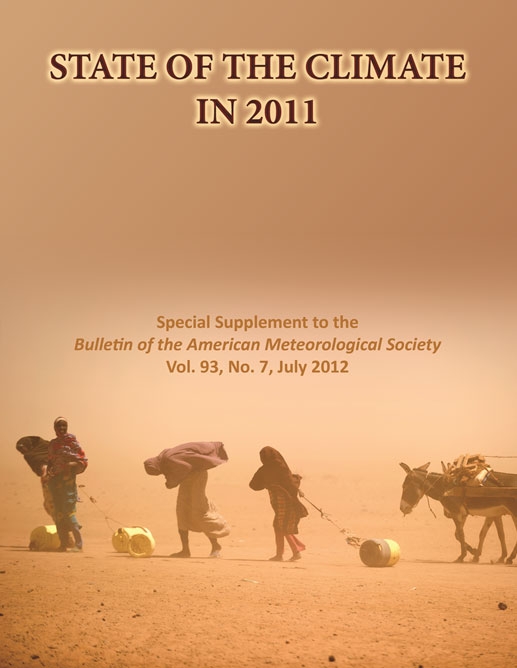
According to a story on MSNBC, scientists can’t blame any single weather event on global warming, but they now believe they can assess how climate change has altered the odds of such events happening,   Click here to read the AP story, Global warming tied to risk of weather extremesClick here to download a copy of NOAA’s State of the Climate 2011 Report.

Tom Peterson of the National Oceanic and Atmospheric Administration is an editor of the report that includes the analyses published by the Bulletin of the American Meteorological Society one of which looked at the Texas drought last year.  If you are from Texas you know that we suffered through record heat and low precipitation in 2011 that left most of the state in “exceptional” drought (the highest level of drought classification) well into 2012.

Meterologists attribute last year’s weather in the south to a La Nina weather pattern, caused by the cooling of the central Pacific Ocean, La Nina generally cools global temperatures but tends to make the southern United States warmer and drier than usual.  In the report analysis, scientists wondered, beyond that, would global warming affect the chances of such an extreme event happening?

To find out, they studied computer climate simulations for La Nina years, focusing on Texas. They compared the outcome of three such years in the 1960s with that of 2008. They used 2008 because their deadline for the study didn’t allow enough time to generate thousands of new simulations with fresh data from 2011.  The two years were similar in having a La Nina and in amounts of greenhouse gases in the air.

The idea of the study, they said, was to check the likelihood of such a heat wave both before and after there was a lot of man-made climate change, which is primarily from burning fossil fuels like coal and oil.

Their conclusion: Global warming has made such a Texas heat wave about 20 times more likely to happen during a La Nina year.

This has grave implications for Texas for the next La Nina pattern.  Over the last several months, Texas legislators have been meeting and taking testimony about the drought’s impacts on the states’ water supplies and stability of our electric grid.  Right now, policies are being put in place that makes it more attractive for electricity generators to pull old polluting plants out of mothball and run them full out during times of electrical shortage emergencies rather than investing in peak energy use forms of renewable energy (like solar and coastal wind).  This creates a vicious cycle – increasing global warming gasses emitted, that increase global warming, that increases the likelihood that we will have more extreme heat waves during La Nina years, and on and on.

Texas needs to incentivise a move away from sources of electric generation that contributes to both global warming gas emissions and intensive water use.

Read Full Post »
