According to NBC News, the State Department announced today that it will take more time to review the controversial Keystone pipeline proposal before a decision is made, and that will likely be after the midterm elections in November. Click here to read the story.
Posted in Global Warming, pipelines, Tarsands | Tagged Keystone decision, Keystone Pipeline, Texas, the State Department |
How does the largest utility in Texas — Energy Future Holdings — go bankrupt? Click here to find out more in a Fort Worth Star-Telegram op-ed by Tom Sanzillo, director of finance for the Institute for Energy Economics and Financial Analysis, who examined Energy Future Holdings for The Sierra Club and Public Citizen Texas.
Posted in Energy, Energy Future Holdings, Utilities | Tagged bankruptcy, EFH, Texas |
 This afternoon, Austin City Council passed a resolution establishing a community wide goal of achieving net zero greenhouse gas emissions by 2050. This is one of the most ambitions emissions reduction goals in the world and was passed in response to the recent reports from the Intergovernmental Panel on Climate Change‘s (IPCC) most recent reports, which indicate that climate change is progressing more rapidly than projected.
The resolution will set in motion a process of updating the city’s current Climate Protection Plan to include all emissions from the Austin community, not only those from city departments – a major improvement over the existing Austin Climate Protection Plan.
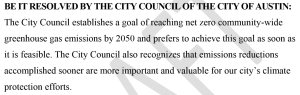 The resolution also acknowledged that cutting emissions in the near term will have greater impact on reducing climate change, than emissions cuts closer to the 2050 deadline. This is because carbon dioxide emissions will continue to impact the global climate centuries after they enter the atmosphere.
The ultimate goal of having net zero greenhouse gas emissions was established to ignite creative ideas in the community and to serve as an inspiration to other cities. Austin has long been considered a leader in renewable energy and other environmental efforts, but Council recognized that other cities were now establishing more aggressive emissions reductions targets and took this opportunity to help Austin maintain its leadership role.
The resolution called for public participation in developing the new Austin Climate Protection Plan and established that boards and commissions, as well as other technical advisory groups should be consulted. The first deadline established in the resolution is September 1, 2014, when the City Manager will be responsible for presenting City Council with a framework for meeting short and long term emissions reductions goals. The final community wide Climate Protection Plan is to be presented to City Council by March 1, 2015. By then the new 10-1 City Council will be in place.
In the meantime, the Austin Energy Resource, Generation, and Climate Protection Plan update will continue and could include improvements to Austin Energy’s climate protection goals. The Austin Energy Resource Generation Task Force will have it’s first meeting at 3:30pm on Wednesday, April 16. That meeting, and all subsequent Task Force meetings will be open to the public.
Councilman Riley sponsored the resolution with Councilman Spelman and Mayor Pro Tem Cole as co-sponsors. The resolution passed on a 6 to 0 vote, which only Mayor Leffingwell voting against it. The resolution passes with no fanfare, but the sponsors will host a press conference with community leaders tomorrow morning to announce this encouraging progress.
Posted in Austin Energy, Climate Change, Global Warming | Tagged austin city council, austin climate protection plan, City Council, greenhouse gas emissions, greenhouse gases, Texas |
“Human interference with the climate system is occurring, and climate change poses risks for human and natural systems.” IPCC WGII AR5
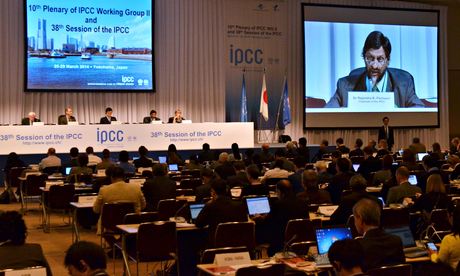
The opening session of IPCC meeting in Yokohama.
Photo by Yoshikazu Tsuno, AFP, Getty Images
The Intergovernmental Panel on Climate Change (IPCC) recently released Part 2 of its Assessment Report showing that work to limit the effects of climate change must begin now. Part 1 came out in September 2013 and showed indisputable evidence that climate change is real, it is happening today, and human influence is the root cause. The report is the fifth such report that has come from the UN.
This week, government officials and top climate scientists are meeting in Berlin to review a 29-page draft from working group 3 of the UN’s IPCC. This third document is expected to be released later this month.
The scope of the second report takes a broad look at how climate change is impacting the Earth’s oceans, coasts, atmosphere, animals, humans and human societies. The report then examines how we must adapt to manage risks associated with climate change.
This is a stern warning coming from the world’s scientific community, and there is little doubt from the experts about the solution: cut pollution from fossil fuels and prepare for the risks associated with a warming world.
The document warns of side effects from a warming world over the next century. There is a high level of consensus from the scientific community that there will be a rise in sea level from melting glaciers, which threatens coastal cities and low-lying nations. There will also be an increase of drier areas, resulting in increased wildfires and drought.
Part of the problem with climate change is that scientists don’t have a crystal ball to predict how the environment will respond to a rise in temperatures. They are trying to predict effects of climate change over the course of decades. Scientists are anticipating that forests ecosystems could collapse and wetland ecosystems could disintegrate. They are expecting that water systems worldwide will be effected from more flooding in many places and drought in drier regions. Of course, the effects won’t be uniform everywhere.
Scientists are also noting that there could be some localized positive effects from climate change. They say that there will be fewer deaths from severe cold, but scientists are also anticipating more deaths due to heat. Some parts of the planet may become better suited for agriculture, especially in higher altitudes, but lower crop yields in other areas will outweigh those benefits. Also, scientist predict that fish and aquatic life will move around as ocean temperatures rise. However, there could be effects, both good and bad, that scientists are not expecting.
The experts are warning the world’s leaders that in order to prevent the worst consequences of climate change we need to reduce pollution, and inaction today will reduce the world’s options for managing the worst effects of climate change.
The level of carbon dioxide is up 41 percent since the Industrial Revolution nearly 200 years ago, and it could double in a matter of decades if the present trend continues.
Unfortunately, here in the US, climate deniers have hijacked the Republican Party and have stalled any meaningful debate about what we are going to do to combat climate change.
“There are those who say we can’t afford to act,” Secretary of State John Kerry said in a statement. “But waiting is truly unaffordable. The costs of inaction are catastrophic.”
Posted in Climate Change, Consumers, drought, Energy, Global Warming, Health, Water | Tagged Carbon Dioxide, climate change, co2, ipcc, Texas, UN |
A coal plant outside of Buffalo, NY was issued one of the largest fines ever imposed criminally on a company for violating the Clean Air Act.
 On Wednesday, March 19th, Tonawanda Coke Corp. was fined $12.5 million for knowingly and illegally releasing hundreds of tons of the carcinogen benzene into the air for five years and improperly conducting hazardous sludge on the ground. The company will also pay for two separate environmental studies with a price tag of $12.2 million. These two 10-year studies will look at emissions and examine soil samples.
On top of that, the Tonawanda Coke Corp. environmental controls manager faces a year and a day in jail, 100 hours of community service and a $20,000 fine. He was also found guilty of obstruction of justice for covering up the pollution during plant inspections by regulators.
Community Outrage

2013 community meeting on the problems the citizens of Tonawanda are dealing with.
Residents have complained about the black soot from the coal plant for a decade and many are worried about the health implications to the community.
In 2005, local residents concerned for their health joined together to form the Clean Air Coalition. They began sampling air quality by using buckets and plastic bags. They also petitioned state and federal agencies to investigate the plants operations. After finding elevated levels of benzene in the community, federal agencies raided the plant in 2009 when levels were 75 times higher than state and federal law permit.
A three-year health study completed last year by the State Health Department and Department of Environmental Conservation found elevated rates of lung and bladder cancers in men and women, and elevated esophageal cancer in men and uterine cancer in women.

Jackie James-Creedon, of Citizen Science Community Resources, said she was very pleased that the plant will fund a soil testing project she has been working on for years.
Photo by Don Heupel
“Back in 2005, we just wanted a clean environment for us to live. We wanted our air to be cleaner. We wanted to know why everyone was sick. We had no clue they were breaking the law,” Jackie James-Creedon said. James-Creedon is a resident fighting this case, suffers from fibromyalgia and is a resident that submitted one of the 10-year studies.
Repeat Offenders
This is not the first time Tonawanda Coke Corp. has been in the hot seat for environmental violations. Last March the company was found guilty of 11 violations of the Clean Air Act and three counts of violating the Resource Conservation and Recovery Act.
Continue Reading »
Posted in Coal, Coal Plants, Health, Safety | Tagged benzene, clean air act, Clean Air Coalition, Coal, EPA, Texas, Tonawanda Coke Corp. |
Over the course of a little more than a week, here in the United States, over 222,775 gallons of oil have been spilled onto our land and into our water. A week.
Most of the narrative around oil condemns it for the amount of carbon dioxide it puts into the atmosphere, and its profound implications for climate change. Over the course of one week this month, four different oil spills have helped demonstrate why responsible citizens should stand against oil. While all the spills have tremendous consequences, each of the following cases reveals a unique threat that transporting this toxic substance has for our families and our environment.
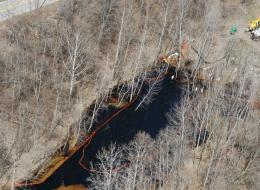
Mid Valley Oil Spill in Michigan Nature Preserve
Photo from Huffington Post
On March 17, just 20 miles north of Cincinnati, an oil leak was discovered when a motorist smelled something funny in the air and called the police. What was discovered was tragic – over 20,000 gallons of oil had leaked into the 374 acre Glen Oak Nature Preserve. It is still unclear when the leak started – without this concerned citizen, it is likely the spill would’ve gone on for days before anyone noticed.
The oil had come from a 5 inch crack in the Mid-Valley pipeline, which runs over 1,000 miles from Michigan to Texas. Despite the fact that the company that maintains the pipeline is unsure of the leak’s cause, less than a week after it was discovered, an impromptu clamp had been designed, approved by the federal government, installed and oil is once more flowing in the pipeline.
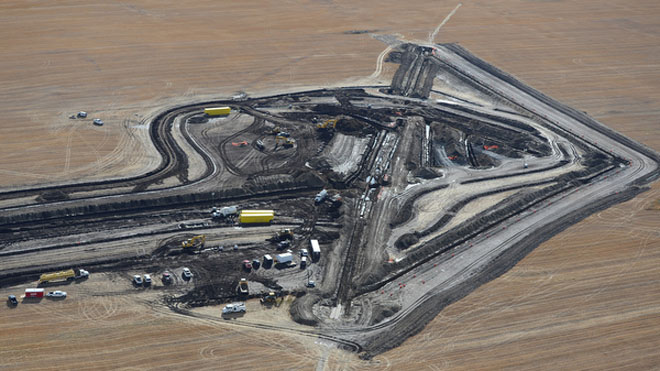
North Dakota Oil Spil in a Wheat Farm
Photo from GREENPEACE
A few days later, on March 20, a gasket on a portion of above-ground pipeline in Alexander, North Dakota malfunctioned and spewed 34,000 gallons of crude oil onto the ground. While it appears that no water has been contaminated, North Dakota’s water quality director has warned that if a heavy spring rain comes, the oil could very well leach into nearby waterways.
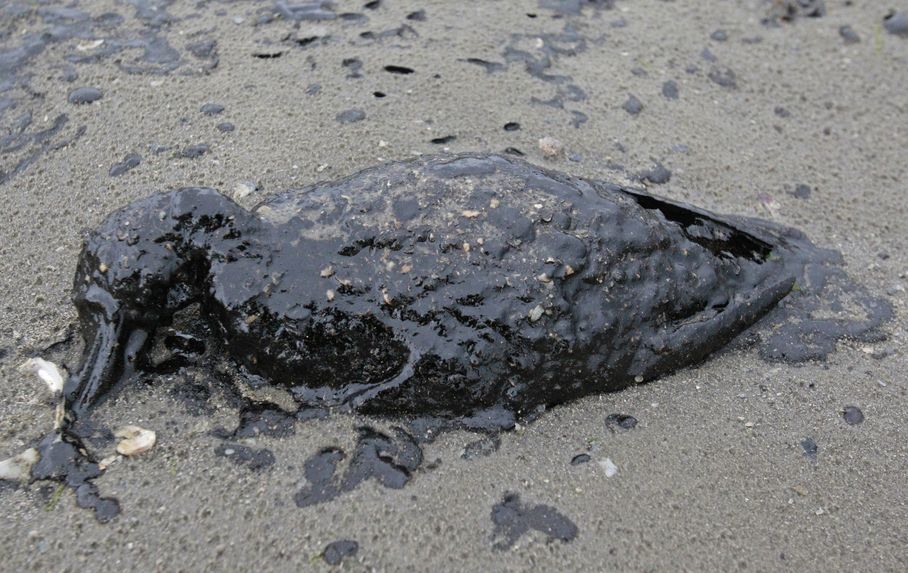
A dead oil covered bird is shown on Eastern end of Galveston near the ship channel.
Photo by Melissa Phillip, AP
Two days after the North Dakota leak, an oil carrier collided with a barge, spilling 168,000 gallons of oil into Galveston Bay, Texas. While it was fortunate that not all of the oil in the carrier escaped into the water, the timing of the spill couldn’t be worse as peak bird migration season approaches. When oil is in the water, these water-diving birds often die from ingesting the oil. What’s worse is that the oil spilled is a particularly heavy type of oil, meaning that, unlike gasoline spills, which can largely evaporate off the surface of the water, this oil will sink to the bottom of the Bay and can adversely affect the environment for years to come.
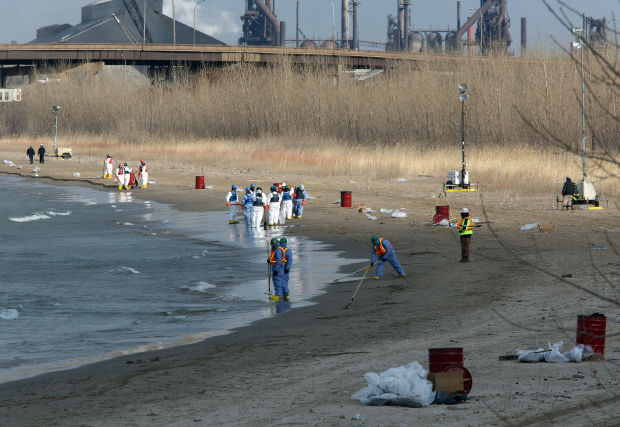
Crews Clean Oil from Lake Michigan After Spill from BP Refinery
Finally, On March 25, eight days after the first oil spill in Ohio, a BP refinery in Whiting, Indiana spilled 755 gallons of oil into Lake Michigan. While this spill is relatively minor in comparison to the other spills, Lake Michigan serves as the drinking water source for Chicago and its suburbs – over 7 million people. Ingesting any oil at all is toxic, and the potential effects on humans are huge.
With so many other sensational stories dominating the airtime these days, it’s no wonder that many citizens are not aware that all of these spills happened. But note that in all these cases, until something bad happened, everything was running exactly as designed. The system with which we regulate and handle this toxic substance is broken, and the penalty for accidents is paid in permanent environmental damage, contaminated water, and human health.
It is crucial to remember as debates about oil rage on that oil is not just bad when burned – the processes to extract, transport and refine oil are toxic and dangerous on a global level and to local and regional communities.
Posted in Energy, Health, pipelines, Safety, Toxics, Water | Tagged bp, Galveston oil spill, Lake Michigan oil spill, Michigan, north dakota, oil spill, Oil Spills, Texas, toxic substance |

Site of Duke Energy Coal Ash Spill
Photo b Waterkeeper Alliance
A federal grand jury and North Carolina regulators are investigating Duke Energy, the nation’s largst electric power holding company, as part of a widening criminal investigation initiated by a massive coal ash spill that coated 70 miles of the Dan River with toxic sludge back in February.
The Dan River spill was the third largest coal ash spill in the nation’s history – an estimated 39,000 tons of coal ash were released. Since the Dan River spill the company has been cited for eight more violations.
Controversy Continues
The North Carolina Department of Environment and Natural Resouces (DENR) says Duke Energy illegally pumped 61 million gallons of contaminated water over six months from two coal ash pits at its’ Cape Fear plant in Moncure, N.C., and into a tributary of the Cape Fear River

Pumping from a Duke Energy
Waste Pond to a Nearby Stream
Photo by Rick Dove, Waterkeeper Alliance
A couple of weeks ago Waterkeeper Alliance took aerial photographs showing that Duke Energy has been pumping coal ash into a tributary of the Cape Fear River, a local drinking souce. The state is now testing water in the river to check for contaminants. There are several towns and cities downstream of the most recent spill, but none of them have reported any problems with their drinking water so far.
Duke has unlined coal ash pits at 14 power plants in North Carolina, and all of these were cited last year for polluting groundwater.
Coal ash is a byproduct of burning coal and it is highly toxic to humans and wildlife. Coal ash contains arsenic, lead, mercury and more than a dozen other heavy metals. Studies from the EPA have found that people living within one mile of unlined coal ash ponds can have a 1 in 50 risk of cancer.
NC Pulls Deal with Duke
North Carolina regulators have withdrawn a coal ash violations settlement the would have allowed Duke Energy to resolve environmental violations by paying a $99,000 fine with no requirement to clean up its pollution.
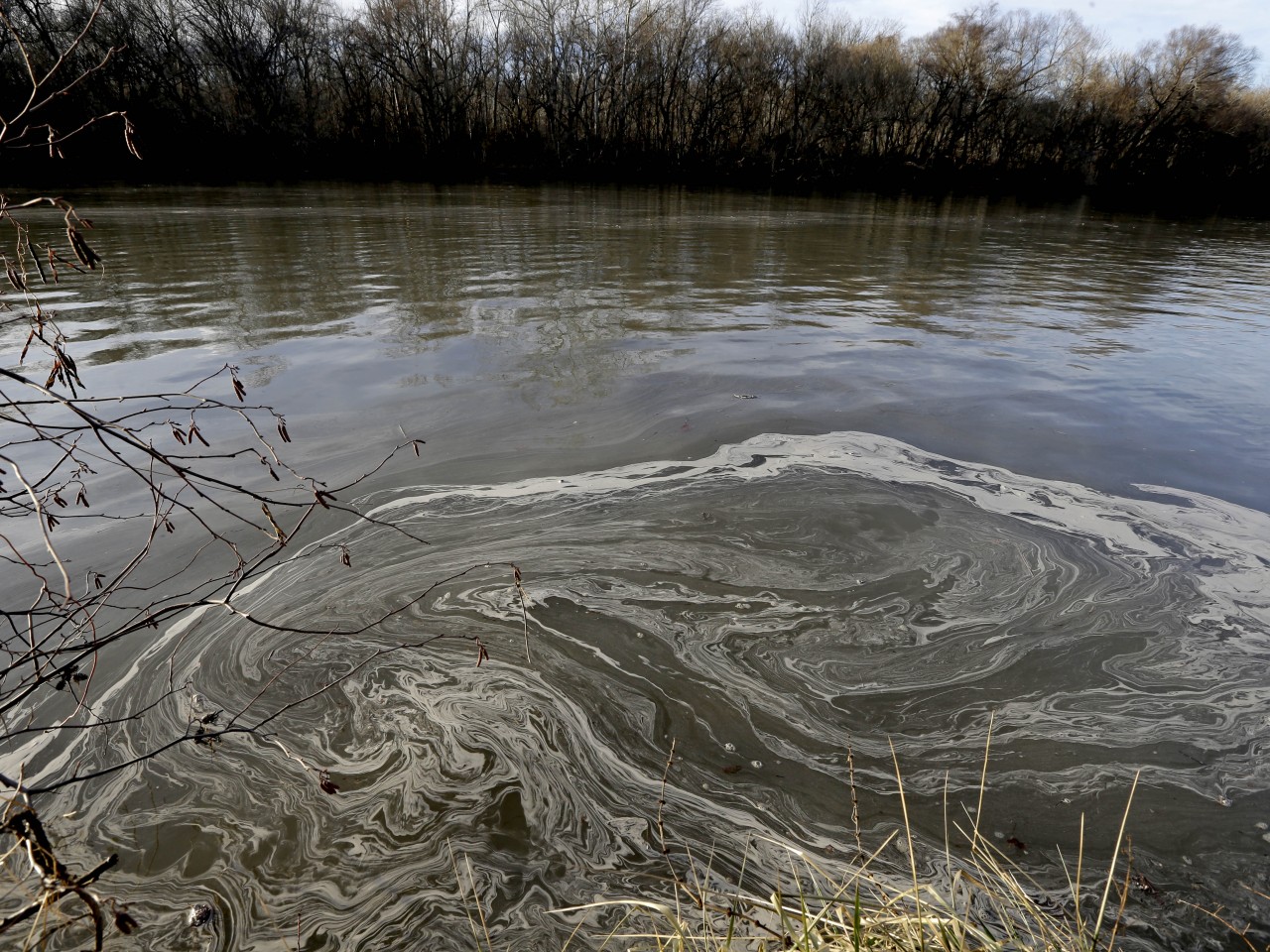
On Feb, 5, 2014, signs of coal ash swirl in
the water inthe Dan River in Danville, VA.
Photo by Gerry Broome, AP
State regulators now say that they will partner with the U.S. Environmental Protection Agency (EPA) to pursue joint investigation and enforcement against Duke Energy for Clean Water Act violations related to the Dan River spill and new concerns about the illegal dumping of coal ash at another of the company’s facilities.
Duke Energy has a clear record of complete disregard for pollution and environmental laws. Unfortunately, Duke has so much clout in the North Carolina legislature that it will be difficult for regulators to punish Duke with penalties that match the crime.
Posted in Coal, Coal Plants, Energy, Safety, Toxics, Water | Tagged coal ash, Dan River, duke energy, north carolina, Texas, Water Pollution, Waterkeeper Alliance |
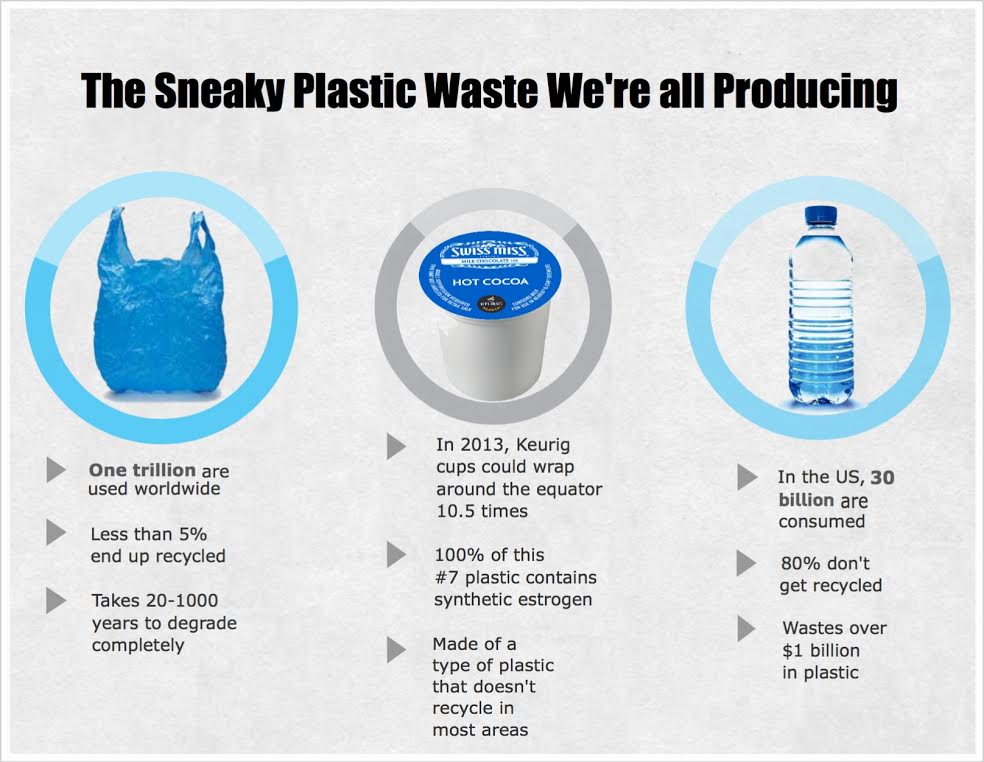 Earlier this week an article on Mother Jones highlighted a growing source of waste in American households – single serve coffee ‘cups’ used in coffee brewers like Keurig’s. According to the article, enough of these cups were sold in 2013 that they could have wrapped around the equator 10.5 times.
That’s a whole lotta trash. And specifically, a whole lotta plastic. And most of those little cups are made of #7 plastic, which is nonrecyclable in most areas (it is recyclable, however, here in Austin). In other words, most of those cups are going into landfills. What’s even worse is that a recent field testing of so-called safe plastics (they’re all BPA-free) revealed that 100% of #7 plastics tested contained estrogenic activity, the very characteristic that has made BPA so controversial. From a broader perspective, virtually all plastic leaches out chemicals over time, especially in the high heat and pressure environments found in landfills. This can result in soil, water and air pollution, especially when these plastics end up in our waterways.
In other words, plastic, and specifically, the plastic waste that we individually produce, is a problem. For those of us who are not using single serve coffee cups, there are two other large culprits in our plastic waste – disposable water bottles and plastic bags.
Every year in the United States, 30 billion bottles of water are consumed. That’s almost 100 bottles of water per person living in the US. What’s more is that 80% of those completely recyclable water bottles don’t get recycled, but end up in landfills, wasting over $1 billion in plastic that could have been recycled. To cap it all off, studies have proven that bottled water is not any better for you than tap water.
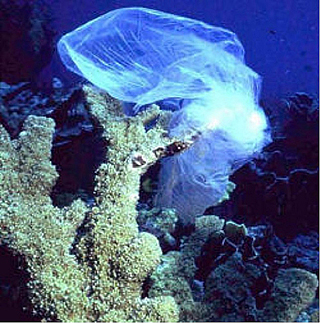
This may look like a Jellyfish, but it isn’t.
Photo Courtesy UC Davis
The other big culprit for plastic waste is plastic bags. Every year, over one trillion bags are used worldwide. 100 billion of those are used in the US, which ends up costing retailers around $4 billion. Less than 5% of these bags end up being recycled, and it can take anywhere from 20-1000 years for the bags to degrade completely. In the meantime, they break down into smaller pieces that readily absorb and leach toxins and are mistaken for food by animals. Plastic bag bans and taxes are already taking off across the country (including in Austin), and many stores offer small discounts for bringing your own bags.
The amount of waste created by water bottles, plastic bags, and even those little K-Cups is astronomical. Not only are plastics toxic and hard to degrade, fossil fuels are required to make them, making their environmental footprint large even when recycled. While many of our environmental challenges are difficult to grasp and often times overwhelming, one thing that each person can do is try their best to reduce the plastic waste they produce. Drink tap or filtered water from home and use a reusable (preferably metal) water bottle to refill throughout the day. Keep reusable bags in your car so you remember to use them at the grocery store. And if you own a single serve coffee machine, try and find a reusable filter to put your own bulk-bought coffee grounds in.
It’s been reported that every square mile of the ocean has 46,000 pieces of plastic in it, but each of us can control how much of that we put in there!
Posted in Consumers, Efficiency, Health, recycling, Water | Tagged BPA, plastic bags, plastic waste, Texas, trash, water bottle, water bottles |
Los Alamos National Laboratory has stored transuranic waste, debris, soil, tools and clothing contaminated primarily with plutonium that has been generated by its activities above ground for years. In 2011, the largest forest fire in the history of New Mexico came within 3.5 miles of this waste causing the state of New Mexico to ask Los Alamos to ship 3,706 cubic meters of above-ground waste from the lab to the Waste Isolation Pilot Plant (WIPP) located 26 miles southeast of Carlsbad, N.M by June 30 of this year.
A month ago we reported on a fire at the 15 year old WIPP site in our blog about a Texas interim charge to “study the rules, laws, and regulations pertaining to the disposal of high-level radioactive waste in Texas and determine the potential economic impact of permitting a facility in Texas. Make specific recommendations on the state and federal actions necessary to permit a high-level radioactive waste disposal or interim storage facility in Texas“. We followed up two weeks later with a report about radiation alarms going off at the same site.
WIPP has been closed indefinitely while they investigate the fire and the radiation leaks. In the meantime, we have learned that New Mexico plans to ship the last 20 percent of the Los Alamos National Laboratory nuclear waste to the commercial Waste Control Specialists (WCS) site in Andrews, Texas starting April 1st.
What we want to know is:
- Who authorized the importation of waste that had been slated to go to WIPP?
- What routes are being used and are the federal requirements for designating routes for this type of waste being met?
- Have any increases in financial assurance been required as a result of accepting TRU waste from Los Alamos?
- Is WCS seeking to import TRU waste through license amendments?
- Wildfires are the reason given for why the waste must be moved, but the same year Los Alamos experience wildfires close by, the WCS site also had wildfires nearby. While WCS may have “a fire truck” onsite, there is only a volunteer fire department in Andrews and Texas is about to enter its wildfire season.
- The Transuranic (TRU) waste is highly radioactive weapons waste that is supposed to be buried a half mile underground at the WIPP site. Is there any evidence that it is safe to store the TRU waste above-ground, even temporarily?
If waste outside of the compact’s license can be re-routed to WCS without so much as a “by your leave” how are Texans to be reassured that all possible care is being taken on behalf of our welfare and well-being? And are we going to become the nation’s high level radioactive waste repository by dribs and drabs rather than by thorough review of the suitability of a site?
Posted in Global Warming | Tagged Los Alamos National Laboratory, Texas, waste control specialists, Waste Isolation Pilot Plant, WCS, WIPP |
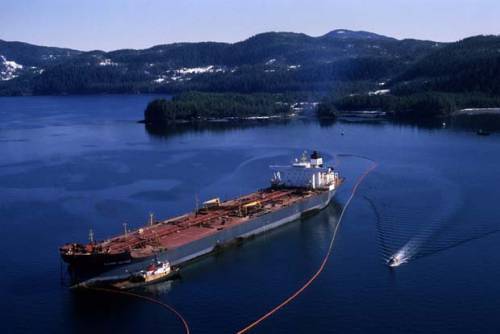
Boom surrounded the Exxon Valdez as underwent preliminary repairs at its temporary home just off Naked Island, April 7, 1989.
Photo by Erik Hill, Anchorage Daily News
Twenty-five years ago today the Exxon-Valdez oil tanker ran aground on Bligh Reef in Prince William Sound, Alaska, causing the worst oil spill in the United States at the time. The 987-foot tanker spilled an estimated 11 million gallons, or more, of toxic crude oil into the water, which ultimately smeared over 1,300 miles of shoreline. Today, oil can still be found on the rocky beaches and some wildlife populations have not fully recovered.
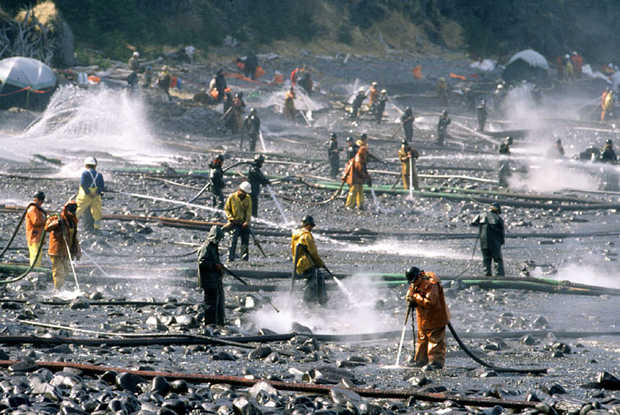
Exxon Valdez oil spill workers used pressure washers to wash oil from the beach on Smith Island, Prince William Sound. The oil was impounded in the water off of the beach and skimmed from the water.
Photo by Bob Hallinen, Anchorage Daily News
Oil Persists
If you were to go to the beaches on Prince William Sound today, you could still find patches of oil underneath rocks and in the sand. The reason that oil continues to persist in the area is because Prince William Sound is what ecologists refer to as a closed ecological system, meaning that there is not much of a tide change and big, crashing waves do not break up the oil. Scientists that have examined this oil have been surprised to find that it has “most of the same chemical compounds as oil sampled 11 days after the initial spill.” Marine ecologist Gail Irvine says that when the oil spilled from the tanker, it mixed with seawater and formed into a goopy compound.
“When oil forms into the foam, the outside is weathering, but the inside isn’t,” Irvine explains. “It’s like mayonnaise left out on the counter. The surface will crust over, but the inside of the clump still looks like mayonnaise.”
As late as 2009 there were still more than 21,000 gallons of oil remaining from the Exxon-Valdez spill, some of which has been detected as far as 450 miles from the site of the spill. Although cleanup efforts came to a halt in 1994, oil from the Exxon-Valdez spill will remain in the environment for decades to come.
Wildlife Impacted
During the first year of the oil spill, The World Wildlife Fund estimated that 250,000 seabirds, 4,000 sea otters, 250 bald eagles and more than 20 orca whales died, making the 1989 Exxon-Valdez oil spill one of the most ecologically destructive spills. While most of the animal populations have bounced back in the two-and-a-half decades since the spill, some wildlife populations have not recovered.
The Pacific herring population crashed after the spill, and is now listed as “not recovering.” The silvery fish is a staple food for species such as salmon, seabirds, sea otters and whales.
Other species that have struggled to bounce back to pre-oil spill levels include sea otters, pigeon guillemots, killer whales and orca whales.
A Reminder in Texas
Just two days before the 25th Anniversary of the Exxon-Valdez oil spill, “an extremely serious spill” occurred in Galveston Bay. As much as 168,000 gallons of heavy oil spilled when a barge and a ship collided near the Texas City dike on Saturday afternoon. Crews have been frantically working to clean up the spill in order to minimize lasting impacts on Galveston Bay, which is an ecologically sensitive area. Migratory birds are expected to be flying through the bay over the next month, which puts them and scores of other species at grave risk.
The type of fuel that spilled into Galveston Bay is a marine fuel oil known as RMG 380, which is sticky, black and heavy. This means that unlike gasoline, which evaporates from the surface of the water, much of this oil will sink and mix into the sediment, resulting in subsurface tarballs or tarmats which may persist in the environment for months or years to come.
These tragedies highlight the importance of ending our dependence on fossil fuels. The negative impacts will be with us long after the benefits have been left behind.
These tragedy highlights the importance of ending our dependence on fossil fuels. The negative impacts will be with us long after the benefits have been left behind.
Posted in Energy, Toxics, Transportation | Tagged Exxon Valdez, oil spill, Prince William Sound, Texas, toxic crude oil |
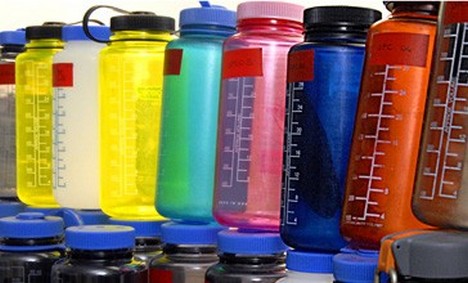 Bisphenol A. In an age of ever-growing consumer awareness and savy, many of us are familiar with this chemical, better known as BPA. We look for the phrase “BPA Free” on our water bottles, Tupperware containers and children’s sippy cups in the hopes we’re protected from negative health effects. Unfortunately, recent reports indicate that this is not the case.
Despite the fact that Bisphenol A has been around for over a hundred years, it was only a few years ago in the late ‘00s that much of the danger around the endocrine-disrupting chemical came to light, ultimately leading to the FDA banning its use in baby bottles in July 2012. Despite this ban, which many would see as a confession of the chemical’s danger, the FDA maintains that BPA is still safe in small doses – it’s in everything from canned food to thermal receipt paper.
For those not as familiar, BPA is recognized as an endocrine-disrupting chemical – while in the human body it mimics estrogen. Although estrogen is produced naturally in both men and women, ingesting synthetic hormones can have drastic effects on the human body. BPA has been linked to a host of diseases and ailments, particularly breast cancer and hyperactivity. This is especially notable since recent estimates say that 1 in 8 women will be diagnosed with breast cancer in her lifetime and 1 in 5 high school-age boys in the US will receive an ADHD diagnosis.
While independent studies have found BPA to be highly dangerous in lower doses with “More than 95 percent of people in developed countries… exposed to levels of BPA that are “within the range” associated with health problems in animals, from cancer and insulin-resistant diabetes to early puberty”, the government is arguing that the chemical is still safe to use in small amounts. There are, however groups saying that the government study is flawed, mostly due to the fact that the control group in the study ended up being compromised.
Even if you limit your plastic use to only BPA-Free plastics, studies suggest you might not be as safe as you may think. A report published by Environmental Health Perspectives authored by a professor at University of Texas at Austin notes that “almost all” commercially available plastics tested contained “estrogenic activity” – the thing about BPA that makes it so dangerous. In the wake of all the attention around BPA, lots of tests have been done to test the potential health implications of other types of widely accepted plastics. A field guide to help decipher these plastics and the estrogenic activity of the chemicals in them can be found here.
One of the most concerning things about this plastics debate is the degree to which the chemical and plastic companies are subverting and ‘spinning’ information in an attempt to avoid regulation. As Public Citizen continues to push people before profits, it’s still important to try and do research on items you bring into your home whenever you can. When in doubt, avoid plastic if you can and opt for glass or metal containers or bottles.
Posted in Consumers, Good Government, Health, Safety, Toxics | Tagged BPA, health, plastics, safety, Texas |
By Vanessa Ramos and Max Anderson
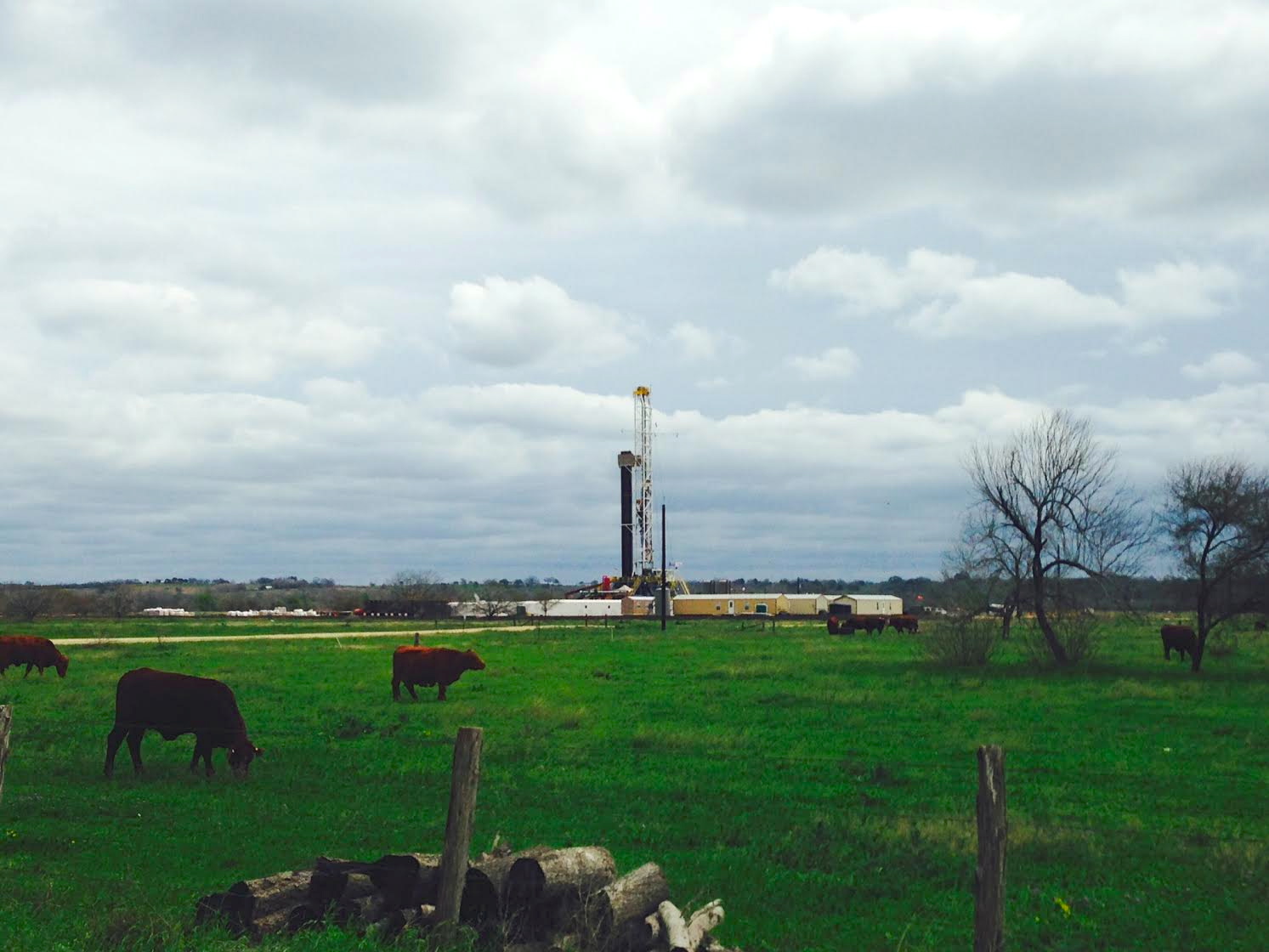 Environment Texas, a statewide citizen-based environmental advocacy group, hosted a fracking action camp Sunday, March 16th,through Monday, March 17th.
Sunday attendees traveled south through Gonzales, Nordheim and Cuero, Texas, to visit the Eagle Ford Shale, one of the largest shale plays in the United States.
The landscape is dotted with well pads, drilling rigs, cranes, flares, storage tanks, waste pits, pipelines, pipeline pumping stations, 18-wheelers, mobiles offices, fences, surveillance cameras, and RV man camps. While some residents have made millions off of royalties from oil and gas leases, others are seeing their property value, health, and the integrity of their land decline.
Halfway between Yorktown and Nordheim, attendees met up with resident Lynn Janssen and were able to ask her questions.
Janssen’s land has been in her family since her grandfather bought it in 1897. Mrs. Janssen and her neighbors are organizing to stop two large disposal pits from being put next to their property. Their growing concern is about the health consequences of living near a disposal pit for an extended period of time, due to air pollution and water runoff.
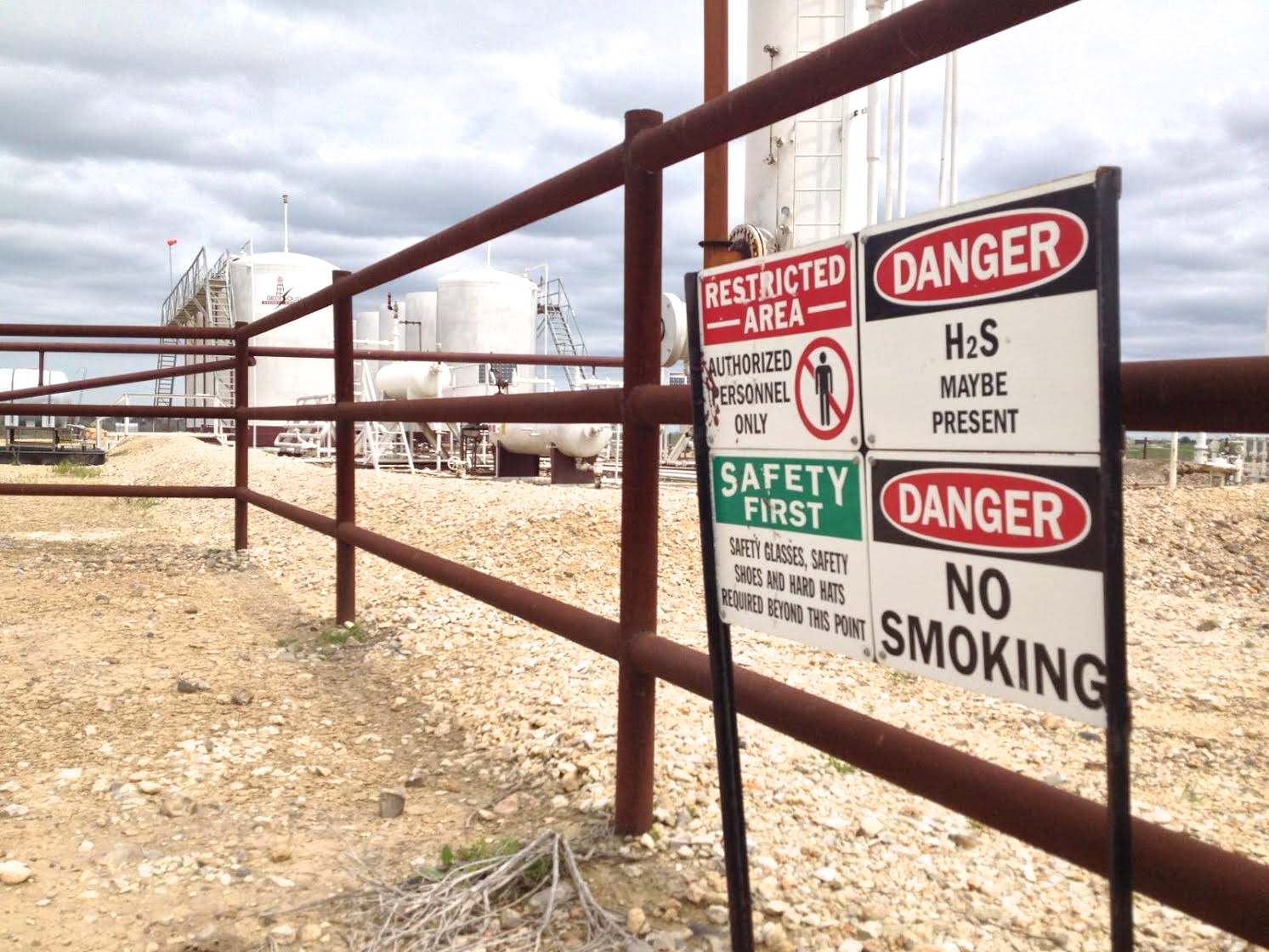 Some of these health consequences concerning citizens of Nordheim are air pollution from chemicals and volatile organic compounds (VOC) like benzene, toluene, and xylene. VOS’s are known to cause cancer, and many times are emitted into the air by the practice of flaring. There is also concern with the toxic chemicals found in fracking fluid. However, an even bigger concern is hydrogen sulfide gas, which is deadly in high doses and abundant in the Eagle Ford Shale.
Attendees looked at foam boards filled with maps and disposal well locations in Janssen’s garage. Mrs. Janssen explained some of the pictures on the boards were from 1.1-inch of rain that, in an hour’s time, had streamed from the property designated for a disposal pit site onto her property.
One map that has citizens and Mayor Kathy Payne’s attention is the waste pit sand disposal well that has already been permitted and is under construction, which sits 150 feet from the city limits sign and the high school in this small town. The mayor is continuing to fight for the air and water for this small community, but it’s an uphill battle.
On Monday, March 17th, attendees met up with Irma Gutierrez, the Director of Outreach for Congressman Pete Gallego, at the Congressman’s office in San Antonio, TX. This gave attendees an opportunity to speak about the issues associated with fracking and what they witnessed the day before in the Eagle Ford Shale region. It also gave an opportunity to lobby an elected official and understand the importance of lobbying.
Attendees spoke about the billions of gallons of fresh water being used in Texas fracking, at a time of drought. The toxic wastewater, which is laced with cancer-causing chemicals is a concern in fracking communities. The CLEANER Act (HR 2825), a bill by Representative Cartwright (PA), would close the loophole that exempts fracking from the Clean Water Act and Safe Drinking Water Act and protect communities from toxic fracking waste by regulating it as hazardous.
As reported by The Weather Channel, InsideClimate News and the Center for Public Integrity, air quality is another major concern in the Eagle Ford region. Toxic air emissions from fracking in the Eagle Ford Shale have doubled since 2009, and air pollution from fracking threatens to push San Antonio out of attainment with the Clean Air Act for the first time in history.
Its no wonder that communities are feeling the negative health and environmental impacts of fracking, given how many exemptions the industry enjoys from our environmental and public health laws, including the Safe Drinking Water Act, the Clean Water Act, the Clean Air Act, and our nation’s hazardous waste law, the Resource Conservation and Recovery Act (RCRA).
The fracking boom in the Eagle Ford Shale has changed communities and altered landscapes. Production in the Eagle Ford Shale had already reached over 1 million barrels per day (bpd) in August 2013, and it is expected to continue expanding as more wells are drilled. Many residents are concerned about the long-term impacts to their health, water, and communities, after the fracking boom goes bust. The fracking boom in the Eagle Ford Shale could be a disaster in the making.
Posted in Fracking, Health, natural gas | Tagged CLEANER Act, disposal wells, Eagle Ford, Eagle Ford Shale, fracking, Texas |
Engaged Citizens Leave Standing Room Only at Public Hearing on the Austin Energy 10 Year Energy Plan
 Austin Energy customers turned out in force to support renewable energy last night. Over 100 people packed the Shudde Fath Conference room at Austin Energy headquarters for a joint hearing in front of the Electric Utility and Resource Management commissions. Not prepared for the enthusiastic turnout, Austin Energy staff provided additional chairs, but many attendees were left with standing room only.
Over 50 people signed up to speak at the hearing, which extended well past the scheduled ending time of 8:00 pm to about 9:30 pm, forcing some to leave before they had a chance to voice their concerns.
Citizens expressed passionate concern about climate change, water availability, water contamination, air quality, health, job creation and equity. The common theme was overwhelming support for a rapid transition away from polluting fossil fuels to clean energy resources, including wind, solar, energy efficiency and energy storage.
Climate change was brought front and center as an issue that cannot be ignored and which demands immediate action. The commissions heard from numerous citizens that Austin will be judged by future generations based on what we do to mitigate our impact on the climate.
One point of contention between Austin Energy and advocates has been whether or not goals, including the carbon reduction and renewable energy goals, will be expanded as part of this update of the Austin Energy Resource, Generation and Climate Protection Plan. Austin Energy’s current goals were set as a starting point, but they aren’t nearly strong enough to protect our climate. Last night, with climate change already impacting our communities, Austin Energy ratepayers spoke clearly in favor of substantially expanding those goals.
With the ongoing drought still weighing on many minds, the connection between water and energy was repeatedly brought up throughout the evening. Citizens talked about water used in generating electricity at the Fayette coal plan and the billions of gallons used in Texas fracking jobs each year.
Austin Energy’s recent announcement of the 100-150 megawatt solar deal up for City Council approval this week added to the enthusiasm about renewable energy. That project will provide Austin Energy with energy at around 5 cents per kilowatt-hour and is projected to slightly reduce customer bills. Many ratepayers made the point that since wind and solar are already affordable, Austin Energy should support calls for increasing its renewable energy goals and should continue purchasing more wind and solar.
Click here if you want to watch the archived video recording of the meeting.
Posted in Air Quality, Austin Energy, Climate Change, Coal, Coal Plants, Consumers, drought, Efficiency, Energy, Fracking, Global Warming, Health, natural gas, Renewables, solar, Water, wind | Tagged austin climate protection plan, Austin Energy, Austin Energy Generation Plan, Texas |
Environmental advocacy group members of the Clean Gulf Commerce Coalition (CGCC) filed suit against the United Bulk coal export terminal in Davant for violating the federal Clean Water Act.
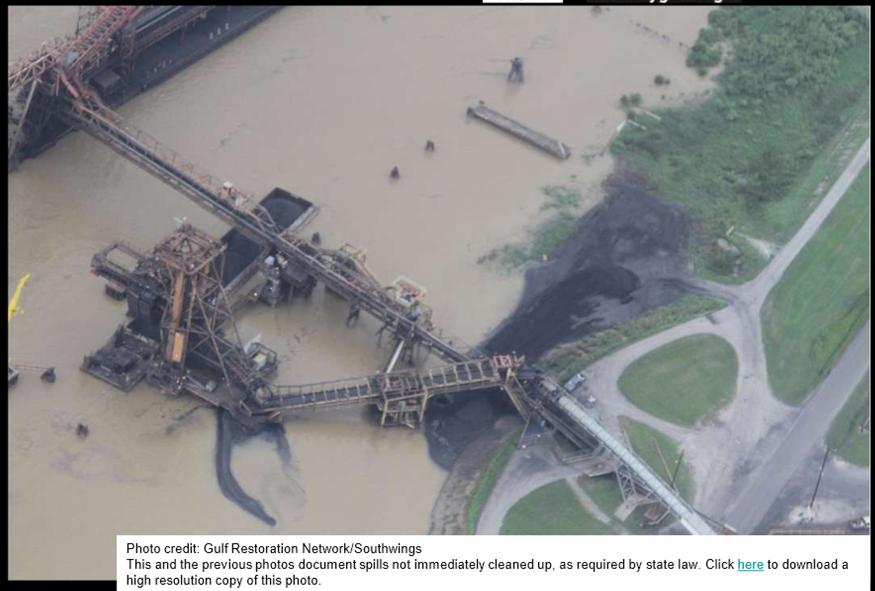 The terminal, owned by United Bulk Terminals Davant LLC, has operated for more than four decades, shipping millions of tons of coal and petcoke – an oil-refining byproduct with high levels of arsenic, mercury and other toxins hazardous to human health and aquatic life – every year to overseas markets. But before they are shipped, that coal and petcoke sits in huge, open piles along the river, and blows right into the river and the wetlands when there is rain or wind.
Officially, the Gulf Restoration Network (GRN), Louisiana Environmental Action Network (LEAN) and Sierra Club are the parties that filed the suit in New Orleans’ U.S. District Court for the Eastern District of Louisiana. The groups, represented by Tulane University’s Environmental Law Clinic, are members of the Clean Gulf Commerce Coalition (CGCC), which is working to clean-up existing coal terminals in the Gulf Coast region, stop any new coal export terminals, and promote cleaner, safer industries and jobs.
The suit contends that United Bulk has illegally discharged coal and petcoke into the river every day that it has operated for at least five years. It points out that coal and petcoke have been discharged into the river in enough quantities to produce visible spills on a regular basis. The suit also cites the EPA’s determination that storm water runoff from coal piles “can flush heavy metals from the coal, such as arsenic and lead, into nearby bodies of water.”
The international market for U.S. coal has also grown increasingly volatile. Port authorities on the West Coast and in Corpus Christi, Texas have concluded that the coal export market is simply too risky to invest significant sums in new or expanded shipping facilities.
For more information, check out The Clean Gulf Commerce Coalition’s website.
Posted in Coal, Global Warming, Gulf Coast Coal Export Terminals, Water | Tagged Clean Gulf Commerce Coalition, Texas, the�Clean Gulf Commerce Coalition, United Bulk, United Bulk Terminals Davant LLC |
In February 2013, 40 intrepid Texans from from all over the state, (Corpus Christi, Houston, Dallas, East Texas, and Austin), boarded a bus and traveled 34 straight hours to join folks in an inspiring event where Bill McKibben of 350, Michael Brune of Sierra Club, other speakers from prominent eco groups and celebrities in the largest rally ever held in history in Washington, DC. In the freezing February weather, between 40,000 to 50,000 people from around the country came together and said NO to the Keystone XL pipeline.
Among the Texans on the long bus trip were three filmmakers from Dallas. Sponsored by DOLPHIN BLUE, they documented the trip and interviewed the young people who were joining this fight. There is also a portion of the movie which shows exclusive footage and interviews with first responders and residents affected by the devastating tar sands spill in Mayflower, Arksansas due to Exxon’s Pegasus pipeline rupture with interviews and footage of the neighborhood.
That movie, Cry Heard ‘Round the World, premiers with a free screening on Thursday, March 20th in Dallas and if you are in the area we hope you consider seeing this new film.
Check out the trailer and reserve your seat below.
[youtube=http://youtu.be/58jD4wRTvKo]
Click here to reserve your seat at this FREE movie
Cry Heard ‘Round the World
Angelika Film Center
5321 E Mockingbird Ln
Dallas, TX 75206
THURSDAY, MARCH 20 at 8 pm
Seats are filling up quickly, and reservations are on a first come, first serve basis.
After the film, there will be a panel
with landowner Julia Trigg Crawford, who STILL has her fight at the Texas Supreme Court against KXL,
Rita Beving of Public Citizen and David Griggs of Sierra Club
to talk about the rally and tar sands
Others who were at the rally may join the discussion.
Posted in Global Warming, Tarsands | Tagged #nokxl, Bill McKibben, Climate rally, dallas, keystone xl, Michael Brune, Sierra Club, Texas |
Support our work!

 ">spousal
Subscribe by Email
Categories
Popular Tags
air pollution Air Quality Austin Austin Energy Barnett shale Carbon Dioxide clean air act Clean Energy climate change Coal coal plant CPS Energy Energy Energy Efficiency Environmental Protection Agency EPA eye on williamson Global Warming green jobs houston Keystone Pipeline natural gas Nuclear Nuclear Power Nuclear Regulatory Commission Public Citizen public citizen texas radioactive waste renewable energy Renewables Rick Perry San Antonio SEED Coalition Sierra Club solar solar power south texas chisme South Texas Project TCEQ Texas Texas Commission on Environmental Quality Texas Legislature texas progressive alliance Tom "Smitty" Smith United States Environmental Protection Agency Citizen Vox Blog
-
350 Challenge

Pages
Archives
Meta