Feeds:
Posts
Comments

According to an MSNBC article, even short-term exposure to air pollution — just a day or a week in some cases — may kick off a heart attack or stroke according to two new studies.  The studies reveal that the risk of heart attack or stroke can jump after high-pollution days, especially for people who already have predisposing health problems.

In a new analysis published in the latest issue of the Journal of the American Medical Association, up to a week of exposure to most major types of air pollution may be enough to trigger a heart attack.

  • Heart attack risk went up by almost 5 percent with high carbon monoxide levels over as little as seven days
  • Heart attack risk increased almost 3 percent with higher levels of air particles for up to seven days.

The risk of stroke jumped 34 percent after 24 hours of exposure to moderate air pollution, according to a study published in the latest issue of the Archives of Internal Medicine.

No one knows exactly how much pollution will trigger a heart attack or stroke, but experts suggest that vulnerable people protect themselves by minimizing time spent breathing air contaminated with a heavy dose of fine particles.  As exposure increases, both in terms of time and intensity, so does the risk of a heart attack and stroke.

The best recourse for those with cardiovascular disease may be to keep a close eye on local pollution levels, experts say. And government agencies are making that easier and easier. The Environmental Protection Agency, for example, has a downloadable app that provides information on local air quality. You can download the air quality app from the AIRNow app from the EPA’s website. The app works on both Apple and Android phones and allows users to get pollutant and ozone levels for more than 400 cities across the nation.

The culprit in both studies is particulate matter, tiny bits of material and droplets, known as PM2.5s. The particles come from a variety of sources, including power plants, factories, trucks and cars.

If you live in an area that is in non-attainment for federal air quality standards such as DFW or Houston, this should cause you some concern as the Texas leadership does everything they can to block the EPA’s efforts to enforce the Clean Air Act.  While they express concern about EPA regulations on the financial health of the energy industry, touting the imaginary loss of jobs, they rarely express concerns about the actual health of Texans who would be protected by the increased regulation.

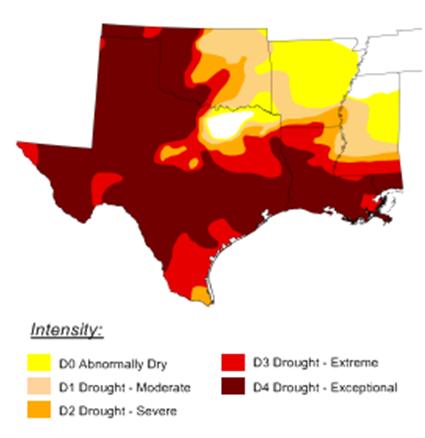
drought monitor Feb 7, 2012While only 23 percent of Texas remains under “exceptional” drought, 90% of the state is still under some level of drought in spite of the recent rains many parts of the state have experienced.  But we can’t get cocky, as the U.S. seasonal drought outlook indicates most of Texas can expect the drought to persist or intensify through April of this year.  If we are lucky, the next outlook won’t be so dire as we head toward another Texas summer, hopefully not like our last one.

Drought Outlook thru April, 2012

Among the recommendations for managing the current stockpile of spent nuclear fuel — approximately 65,000 tons of waste stored at about 75 operating and shut-down reactor sites around the country — is a plan to move the waste to temporary storage sites.

Public Citizen rejects this plan. In the absence of a permanent and viable solution, we and more than 200 other organizations advocate safeguarding the waste where it is generated.

Tell your representative in Congress to reject efforts to move radioactive waste to temporary dump sites.

The temporary dump plan is flawed for several reasons:

  • It would put tons of lethal radioactive waste on our highways, rails and waterways. An accident in transit could put whole communities at risk.
  • It would condemn a few targeted communities to being radioactive waste dumps for the whole country. Past attempts to place temporary dumps targeted Indian reservations and poor communities of color by offering substantial financial incentives.
  • The temporary dumps could become permanent if no suitable geological repository site is found.
  • It does not address an existing critical vulnerability of nuclear waste storage: almost all reactor fuel pools are filled to capacity. Fuel that is cool enough to move is stored in outdoor casks. Both types of storage are vulnerable to accidents, attack and natural disasters, as shown so clearly by the Fukushima nuclear disaster.

To better safeguard this waste, we advocate hardened on-site storage — a plan that calls for emptying the waste storage pools and placing the irradiated rods in high-quality outdoor casks fortified by thick bunkers and berms.

Ideally, we should stop generating nuclear waste, but while it continues to accumulate, we must implement smart safeguards to protect people and the environment from the immediate risks associated with high-level radioactive waste.

Tell your representative to increase nuclear waste safety at reactor sites.

The Nuclear Regulatory Commission is reporting that a “small” amount of radioactive gas may have leaked at the San Onofre Nuclear Generating Station in Southern California.

The San Onofre plant is on the Pacific Ocean coast near San Clemente north of San Diego. It consists of two units, No. 2 and No. 3. No. 1 was shut down permanently in 1992. It is one of two nuclear plants that generate electricity in Southern California; the other is the Diablo Canyon plant in San Luis Obispo County.

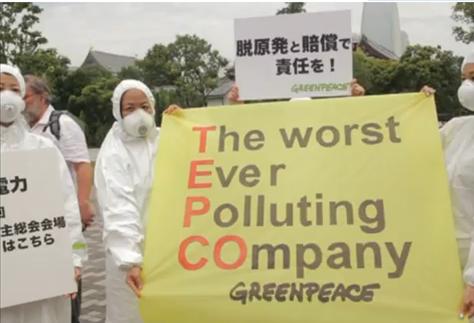
The Unit 3 reactor at the plant was shut down Tuesday night after a possible leak was detected in one of the unit’s steam generator tubes.  The company and federal regulators say the release would not have posed a safety risk for the public, but we’ve heard that before (can you say TEPCO/Fukushima/the Japanese government one year ago?) so we will keep an eye on this one.

Unit No. 2 at San Onofre was already offline for maintenance and refueling.  In September, the failure of a major tranmission line between Arizona and California caused the Onofre reactors to go offline automatically.

And folks carry on about renewables being unreliable.

Spicewood, Texas, a small community on Lake Travis, is precariously close to becoming the state’s first community to run out of drinking water during this historic drought.  On Monday, under dark clouds and with rain falling, Spicewood got its first delivery of 8,000-gallons of water after it became clear local wells could no longer produce enough water to meet the needs of the 1,100 residents.

Several communities in Texas have come close to running out of water during 2011, the driest year in Lone Star State history, but until now none had to truck in water.

For more than a year, nearly the entire state of Texas has been in some stage of severe or exceptional drought. Rain has been so scarce lakes across the state have been drying up. One town near Waco, Groesbeck, bought water from a rock quarry and built a seven-mile pipeline through a state park to get water. Some communities on Lake Travis moved their intake pipes into deeper water. And Houston started getting water from an alternative, farther away reservoir when Lake Houston ran too low.

Although it has started to rain more this winter, it is not enough to fill the state’s arid rivers and lakes.  Austin, Tx still remains nearly 20 inches below normal rainfall for the past 12 months, so we are talking about rainfall events of 20 inches plus, basically flood events, to bring the lake levels up.

Under the current long term weather predictions, we are not likely to see such an extreme weather event as la Nina keeps its hold on Texas, bringing dryer than normal conditions through the spring.  2012 is going to be a difficult year for the Lone Star state.

Texas Coalition for Affordable Power’s (TCAP) report on electric deregulation in Texas says the industry has failed to deliver, while industry and agency critics find fault with the reports price and reliability comparisons.

Texans have paid higher prices for power that is less reliable – as evidenced by two rolling blackouts – during a decade of electric deregulation, the report, Deregulated Electricity in Texas: A History of Retail Competition – The First 10 Years,  asserts.

Commissioned by the Texas Coalition for Affordable Power, a non-profit including 163 municipalities and other political subdivisions, the report takes sharp aim at higher retail prices, increased consumer complaints and greater reliability problems.

Key findings of the report include:

  1. During 10 years of deregulation, typical electric customers paid $3,000 more than other Texans not subject to deregulation.
  2. Nationally, Texans paid average prices 6.4 percent below national averages before deregulation but 8.72 percent higher in the 10 years since deregulation.
  3. Customer complaints have risen because an increase in providers has also produced an increase in the complexity of contracts.
  4. Texaselectric reserve margins – which are key for electric reliability – have shifted from among the highest nationally before deregulation to among the lowest now.
  5. Under deregulation,Texashas seen two rolling blackouts in four years and nine reliability emergencies last year alone. Before deregulation,Texasendured only one rolling blackout in more than 30 years.
  6. Electric generators are seeking market changes “that abandon competitive principles” and rely upon “artificial price supports.” At the same time, generators are making no promises that they’ll add new electric supplies if they get their wish for market adjustments.
  7. The power grid, the Electric Reliability Council of Texas (ERCOT), has “suffered persistent management problems.”

The report acknowledges that electric prices have recently dropped but also notes that customers have endured $7 billion in “stranded costs” under deregulation that were shifted from electric generators to electric customers.

TCAP Board President Jay Dogey said recent drops in both prices and complaints are not “sufficient to offset the billions of dollars in excess costs to consumers. All this points to a market that is deregulated but still not fully competitive.”

John Fainter, president and chief executive officer of the Association of Electric Companies of Texas, said TCAP’s report fails to consider several key factors that undermine its comparisons, but that still cannot counter the fact that Texas has some of the highest electric bills in the country.

Texas Public Utility Commission Chairman Donna Nelson responded to the report’s price comparisons by re-issuing a letter she sent to Senate Business and Commerce Committee Chairman John Carona (R-Dallas) more than a year ago.

A copy of Nelson’s letter is here.

TCAP’s report is here.

Chronic violators of Texas Railroad Commission safety rules may be looking at steeper fines if they don’t clean up their acts.

In response to the agency’s Sunset review last session, the commissioners who regulate the state’s booming oil and gas industry are expected to approve penalty hikes in six major categories, taking special aim at repeat offenders. The proposed penalty hikes – the first since 2004– will then undergo a 30-day public comment period before new rules are finalized. Repeat offenders will see their penalties enhanced.

If approved, penalties will increase for an array of safety violations in six major divisions: 1) oil and gas 2) pipeline safety 3) propane safety 4) compressed natural gas 5) liquid natural gas and 6) underground pipeline damage prevention (rules requiring such things as calling before digging).

No estimate has been made available on how much extra revenue the tougher penalties will raise, but all proceeds will be funneled into the state budget’s General Revenue Fund.

While details are not yet available on exact increases across the board, according to the Texas Energy Report, a few examples make clear that the commission means business. Take the current $2,000 penalty for failing to plug a well in a timely fashion. Once the new fees kick in, violators will pay that amount plus $1 per foot of the well’s depth. So a driller of a 6,000-foot well who fails to plug the well will pay four times as much – $8,000.

Violators of safety rules for waste pits at oil and gas sites will see their fines increasing more than double under the proposed rules. If they use the pit for the wrong type of fluid, fail to get a permit for the pit or run amok of other rules, fines are set to more than double – from $1,000 now to $2,500.

Until now, penalties at the commission have always been in the form of staff guidelines, but the new penalty guidelines will be plaed into rules. State law caps all penalties at a maximum of $10,000 per day, and commissioners will retain their power to adjust fines.

While the Railroad Commission is going above and beyond the recommendations of the Sunset Commission, environmental groups believe penalties should be above the economic benefit to the company to be effective in detering repeat offenders.

The Sierra Club claims the Texas Commission on Environmental Quality illegally gave four coal-fired power plants passes to pollute the air.

The Sierra Club says the state in December illegally approved permit amendments for Luminant Generation Co.-owned plants in Freestone, Rusk, Titus and Milam counties (Big Brown, Martin Lake, Monticello and Sandow).

It claims the amendments allow increased air pollution, “including thousands of additional pounds per hour of particulate manner, a pollutant linked by numerous scientific studies to heart attacks and premature death, without any public notice, the opportunity for public comment, or the opportunity for contested case hearings.”

Sierra Club attorney Ilan Levin told the Austin American-Statesman the lawsuit comes as coal-fired plants are applying for permit amendments for emissions produced during startup, shutdown and maintenance, which were not previously regulated by the state.

Levin said that not all plants seeking permitting changes are required to go through a public process, but these permits are for large enough increases that public notice is required.

“We were surprised to find out that, really, just by trolling the agency’s website, that right before the holidays, the TCEQ had issued these permits to Luminant without any public notice or any sort of opportunity at all to file some formal comments,”  Levin said.

In its complaint in Travis County Court, the Sierra Club says it asked the TCEQ air permits director on Feb. 22, 2011 to require public notice for Luminant and other electric utilities’ permit amendment applications, but received no response.

The environmental group says regulators failed to conduct a best available control technology analysis for the amendments, and failed to conduct a proper air quality impacts analysis for all four permit amendments.

As interim legislative hearings and ERCOT workshops grapple with the drought’s anticipated stresses for Texas electric generation and reliability, Sen.Kirk Watson (D-Austin), is calling on the Texas Public Utility Commission to give solar energy a push.

“You stated that your highest priority as chair of the PUC is to prevent rolling outages,”Watson wrote in a Jan. 13 letter to PUC Chair Donna Nelson, mentioning her testimony last week before the Senate Business and Commerce Committee.

“Drought-proof solar power that can be available at the times of peak demand is one way to avoid rolling outages,” his letter continued. It noted that Nelson mentioned the importance of wind energy and the state’s CREZ (Competitive Renewable Energy Zones) lines in reducing the state’s reliance on water.

Nelson has opposed rulemaking to promote solar energy generation as directed in a bill passed by the Texas Legislature in 2005 directing the PUC to establish a non-wind renewable energy target of 500 megawatts. Nelson, however, has said that Senate Bill 20 by Sen.Troy Fraser (R-Horseshoe Bay) during that special session was not mandatory.

During a PUC meeting in December 2010, Nelson said she believed the PUC needed more direct guidance from the legislature during the spring 2011 session before moving forward.

“It’s called a target,” she said, “and everyone knows a target is not mandatory. It would be my preference if we waited – forever.” When a proposed rule on the matter surfaced again last summer, the commission tabled it.

In his letter, Watson took issue with Nelson’s argument that the PUC lacks legislative authority.

“Moving forward on the 500 megawatt non-wind renewable energy rule is an act that lies fully within your authority and that requires no further action or direction from the legislature,” Watson wrote. “It would boost investment in solar power right away, at a time when any potential cost to consumers can be mitigated by federal investment tax incentives in place through 2016. Not only would this action be seen as a wise and prudent step for ERCOT (Electric Reliability Council of Texas) grid reliability, but it would be a simple and bold display of the leadership that our state desperately needs.”

See Sen. Watson’s letter below.

In a statement this afternoon, Obama said that he received a recommendation from Secretary of State Hillary Rodham Clinton earlier today recommending that the Keystone XL tar sands Presidential permit application be denied.

TransCanada’s first tar sands pipeline leaked 12 times in its first year of operation, although the company estimated it would leak just once in 14 years. The proposed Keystone XL pipeline route would cross Texas’s third-largest aquifer, as well as numerous rivers and lakes that provide water to some of the most populated areas of the Lone Star State, making TransCanada’s leaky history a pretty compelling reason for reviewing Keystone XL thoroughly. But when congressional Republicans forced a 60-day decision on the Keystone XL’s presidential permit, they took the option of a thorough review away from President Obama and the U.S. State Department.

Trevor Lovell with the Texas office of Public Citizen said, “Today’s rejection of the permit application was the only sensible decision the Obama administration could make.”

As Texas struggles to determine how they will meet their water needs in the face of what could be an extended 5 to 10 year period of drought, Oklahomans are looking to protect their water rights as their neighbors to the south look on lustfully.

An Associated Press story says proposed legislation by two Oklahoma state lawmakers would require a statewide vote of the people before any out-of-state sale of Oklahoma water. Sen. Jerry Ellis of Valliant and Rep. Eric Proctor of Tulsa said the legislation, dubbed “The People’s Water Act”, would give Oklahomans the final say in deals with other states.

The Tarrant Regional Water District has waged a multi-year legal battle to obtain water from Oklahoma that has so far been unsuccessful. Ellis, who is based in water-rich Southeastern Oklahoma has been one of the most vocal opponents of water sales to Texas and said the future of Oklahoma water should not be decided in private meetings between politicians and Texans.

In the 1870s to 1881 recurrent friction and eventual violent conflict over water rights in the vicinity of Tularosa, New Mexico, involving villagers, ranchers, and farmers were well documented.  As the region deals with this extended drought, which some say could be the region’s new norm, could we be looking at more conflicts over water, not only along groundwater sources inside the state, between industrials, urban areas and agriculutural regions, but between Texas and its neighbors?

Read more here: http://blogs.star-telegram.com/politex/2012/01/bill-would-give-oklahomans-the-right-to-vote-on-any-texas-water-sale.html#storylink=cpy

Reprinted with permission from Christopher Searles blog – http://chrissearles.blogspot.com/

In January of 2011 U.S. Attorney General Eric Holder addressed the Environmental Protection Agency’s (EPA) Office of Civil Rights Affirmative Employment and Diversity at an event honoring Dr. Martin Luther King, Jr., “I am old to enough to have witnessed and experienced the remarkable progress that’s been made since the 1960s when Dr. King, in addition to his many other achievements, helped to plant the seeds for what would become our nation’s now-thriving environmental justice movement.”
Holder, “I want you to know that – at every level of the Justice Department, just like here at the EPA, (Environmental Justice) is a top priority — and, for me, it is also a personal calling.”
‘Injustice anywhere is a threat to justice everywhere.”
According to the EPA, Environmental Justice will be achieved when “everyone enjoys the same degree of protection from environmental and health hazards and equal access to the decision-making process to have a healthy environment in which to live, learn, and work.” The movement against Environmental Racism began in the 1980s and was formally established as the Environmental Justice movement in 1991 when the First National People of Color delegation drafted and adopted “Principles of Environmental Justice” in Washington, D.C.  Read Principles here.
In recent years the movement has expanded its definition beyond color lines. “We are just as much concerned with inequities in Appalachia, for example, where the whites are basically dumped on because of lack of economic and political clout,” says Dr. Robert Bullard, movement ‘grandfather.’ Likewise, the movement has grown beyond radical environmentalism to include Christian, Jewish and other communities of faith and the academic sector. In the religious domain, Environmental Justice is often referred to as “Social Justice.”
Attorney Gen. Holder, “Dr. King did not have the chance to witness the impact of the movement that he began. But he left with us the creed that continues to guide our work. His enduring words, which he penned from a Birmingham jail cell, still remind us that, “Injustice anywhere is a threat to justice everywhere.”
Attorney General Eric Holder, “Environmental Justice is a Civil Rights issue.”
At the EPA’s 2011 event Holder cited a 2005 report showing that African Americans were nearly 80 percent more likely than white Americans to live near hazardous industrial pollution sites at that time. Holder said these issues persist, “In 2011, the burden of environmental degradation still falls disproportionately on low-income communities and communities of color, and most often on their youngest residents: our children, my children.”
“This is unacceptable.  And it is unconscionable.  But through the aggressive enforcement of federal environmental laws in every community, I believe that we can – and I know that we must – change the status quo.”
After Holder’s speech the event’s program closed with the EPA’s general counsel and EPA’s associate director of the Water Protection performing “Free at Last” for the audience at the Ronald Reagan Building.

Read more via CNSnews.com.
Learn about the EPA’s Environmental Justice Achievement Awards.
Other sources: EcoHearth, The National Council of Churches, TaintedGreen, Yale Peabody Museum of Natural History.

Hope everyone had a thoughtful MLK Day yesterday.

The EPA has published a federal register notice to solicit public comments on their ozone designation recommendations to the states.  This comment period closes on January 19th and we have included the notice for information on where and how to submit your comments.

Public Citizen and Sierra Club believe the inclusion of Freestone, Limestone, McClennan, Navarro and Wise Counties in the designation of the new Dallas-Fort Worth (DFW) ozone nonattaiment area for the 2008 Ozone National Ambient Air Quality Standard (NAAQS) will be essential to this area being able to effectively develop an implementation plan that will move the area out of nonattainment for federal air quality standards.  We would encourage those in these counties and in the DFW area to submit comments to this effect.

FEDERAL REGISTER NOTICE OF ENVIRONMENTAL PROTECTION AGENCY PUBLIC COMMENT PERIOD – SUMMARY: Notice is hereby given that the EPA has posted its responses to state and tribal designation recommendations for the 2008 Ozone National Ambient Air Quality Standards (NAAQS) on the Agency’s Internet Web site. The EPA invites public comments on its responses during the comment period specified in the DATES section. The EPA sent responses directly to the states and tribes on or about December 9, 2011, and intends to make final designation determinations for the 2008 Ozone NAAQS in spring 2012.
DATES: Comments must be received on or before January 19, 2012. Please refer to SUPPLEMENTARY INFORMATION for additional information on the comment period.

ADDRESSES: Submit your comments, identified by Docket ID No. EPA-OAR- HQ-2008-0476, by one of the following methods:     http://www.regulations.gov. Follow the online instructions for submitting comments:

  • Email: a-and-r-docket@epa.gov. Attention Docket ID No. EPA-HQ-OAR-2008-0476.
  • Fax: (202) 566-9744. Attention Docket ID No. EPA-HQ-OAR- 2008-0476.
  • Mail: Air Docket, Attention Docket ID No. EPA-HQ-OAR-2008- 0476, Environmental Protection Agency, Mail Code: 6102T, 1200 Pennsylvania Ave. NW., Washington, DC 20460.
  • Hand Delivery: EPA Docket Center, 1301 Constitution Avenue NW., Room 3334, Washington, DC.
    (Such deliveries are only accepted during the Docket’s normal hours of operation, and special arrangements should be made for deliveries of boxed information.

Instructions: Direct your comments to Docket ID No. EPA-HQ-OAR- 2008-0476. The EPA’s policy is that all comments received will be included in the public docket without change and may be made available online at www.regulations.gov, including any personal information provided, unless the comment includes information claimed to be confidential business information or other information whose disclosure is restricted by statute. Do not submit information that you consider to be confidential business information or otherwise protected through www.regulations.gov or email. The www.regulations.gov web site is an “anonymous access” system, which means the EPA will not know your identity or contact information unless you provide it in the body of your comment. If you send an email comment directly to the EPA without going through www.regulations.gov, your email address will be automatically captured and included as part of the comment that is placed in the public docket and made available on the Internet. If you submit an electronic comment, the EPA recommends that you include your name and other contact information in the body of your comment and with any disk or CD-ROM you submit. If the EPA is unable to read your comment and cannot contact you for clarification due to technical difficulties, the EPA may not be able to consider your comment. Electronic files should avoid the use of special characters, any form of encryption, and be free of any defects or viruses. For additional information about the EPA’s public docket, visit the EPA Docket Center homepage at http://www.epa.gov/epahome/dockets.htm. For additional instructions on submitting comments, go to Section II of the SUPPLEMENTARY INFORMATION section of this document.     Docket: All documents in the docket are listed in the www.regulations.gov index. Although listed in the index, some information is not publicly available, i.e., confidential business information or other information whose disclosure is restricted by statute. Certain other material, such as copyrighted material, is not placed on the Internet and will be publicly available only in hard copy form. Publicly available docket materials are available either electronically in www.regulations.gov or in hard copy at the EPA Docket Center, EPA West, Room 3334, 1301 Constitution Avenue NW., Washington, DC. The Public Reading Room is open from 8:30 a.m. to 4:30 p.m., Monday through Friday, excluding legal holidays. The telephone number for the Public Reading Room is (202) 566-1744, and the telephone number for the Air Docket is (202) 566-1742.

FOR FURTHER INFORMATION CONTACT: For general questions concerning this action, please contact Carla Oldham, U.S. EPA, Office of Air Quality Planning and Standards, Air Quality Planning Division, C539-04, Research Triangle Park, NC 27711, telephone (919) 541-3347, email at oldham.carla@epa.gov. For questions about areas in the EPA Region 1, please contact Richard Burkhart, U.S. EPA, telephone (617) 918-1664, email at burkhart.richard@epa.gov. For questions about areas in the EPA Region 2, please contact Bob Kelly, U.S. EPA, telephone (212) 637-3709, email at kelly.bob@email.gov. For questions about areas in the EPA Region 3, please contact Maria Pino, U.S. EPA, telephone (215) 814- 2181, email at pino.maria@epa.gov. For questions about areas in the EPA Region 4, please contact Jane Spann, U.S. EPA, telephone (404) 562- 9029, email at spann.jane@epa.gov. For questions about areas in the EPA Region 5, please contact Edward Doty, U.S. EPA, telephone (312) 886- 6057, email at doty.edward@epa.gov. For questions about areas in the EPA Region 6, please contact Guy Donaldson, U.S. EPA, telephone (214) 665-7242, email at donaldson.guy@epa.gov. For questions about areas in the EPA Region 7, please contact Lachala Kemp, U.S. EPA, telephone (913) 551-7214, email at kemp.lachala@epa.gov. For questions about areas in the EPA Region 8, please contact Scott Jackson, U.S. EPA, telephone (303) 312-6107, email at jackson.scott@epa.gov. For questions about areas in the EPA Region 9, please contact John J. Kelly, U.S. EPA, telephone (415) 947-4151, email at kelly.johnj@epa.gov. For questions about areas in EPA Region 10, please contact Claudia Vaupel, U.S. EPA, telephone (206) 553-6121, email at vaupel.claudia@epa.gov.

SUPPLEMENTARY INFORMATION:
I. Background and Purpose
On March 12, 2008, the EPA revised the NAAQS for ozone to provide increased protection of public health and welfare from ozone pollution (73 FR 16436; March 27, 2008). The process for designating areas following promulgation of a new or revised NAAQS is contained in Clean Air Act (CAA) section 107(d) (42 U.S.C. 7407). Following the promulgation of a new or revised standard, each governor or tribal leader has an opportunity to recommend air quality designations, including the appropriate boundaries for nonattainment areas, to the EPA. The EPA considers these recommendations as part of its duty to promulgate the formal area designations and boundaries for the new or revised standards. By no later than 120 days prior to promulgating designations, the EPA is required to notify states and tribes of any intended modification to an area designation or boundary recommendation that the EPA deems necessary. On or around December 9, 2011, the EPA notified states and tribes of its intended area designations for the 2008 Ozone NAAQS. States and tribes now have an opportunity to demonstrate why they believe an intended modification by the EPA may be inappropriate. The EPA encouraged states and tribes to provide comments and additional information for consideration by the EPA in finalizing designations. The EPA plans to make final designation decisions for the 2008 Ozone NAAQS in spring 2012.     The purpose of this notice is to solicit public comments from interested parties other than states and tribes on the EPA’s recent responses to the state and tribal designation recommendations for the 2008 Ozone NAAQS. These responses can be found on the EPA’s Internet Web site at http://www.epa.gov/ozonedesignations and also in the public docket for ozone designations at Docket ID No. EPA-HQ-OAR-2008-0476. The CAA section 107(d) provides a process for designations that involves recommendations by states and tribes to the EPA and responses from the EPA to those parties, prior to the EPA promulgating final designations and boundaries. The EPA is not required under the CAA section 107(d) to seek public comment during the designation process, but is electing to do so for the 2008 Ozone NAAQS in order to gather additional information for the EPA to consider before making final designations. The EPA invites public comment on its responses to states and tribes during the 30-day comment period provided by this notice. Due to the statutory timeframe for promulgating designations set out in the CAA section 107(d), the EPA will not be able to consider any public comments submitted after January 19, 2012. This notice and opportunity for public comment does not affect any rights or obligations of any state, tribe or the EPA which might otherwise exist pursuant to the CAA section 107(d).     Please refer to the ADDRESSES section above in this document for specific instructions on submitting comments and locating relevant public documents.     In establishing nonattainment area boundaries, the EPA is required to identify the area that does not meet the 2008 Ozone NAAQS and any nearby area that is contributing to the area that does not meet that standard. We are particularly interested in receiving comments, supported by relevant information, if you believe that a specific geographic area that the EPA is proposing to identify as a nonattainment area should not be categorized by the CAA section 107(d) criteria as nonattainment, or if you believe that a specific area not proposed by the EPA to be identified as a nonattainment area should in fact be categorized as nonattainment using the CAA section 107(d) criteria. Please be as specific as possible in supporting your views.     Describe any assumptions and provide any technical information and/or data that you used.     Provide specific examples to illustrate your concerns, and suggest alternatives.     Explain your views as clearly as possible.     Make sure to submit your comments by the comment period deadline identified in the DATES section above.

II. Instructions for Submitting Public Comments
What should I consider as I prepare my comments for the EPA?
1. Submitting Confidential Business Information. Do not submit this information to the EPA through www.regulations.gov or email. Clearly mark the part or all of the information that you claim to be confidential business information. For confidential business information in a disk or CD-ROM that you mail to the EPA, mark the outside of the disk or CD-ROM as confidential business information and then identify electronically within the disk or CD-ROM the specific information that is claimed as confidential business information. In addition to one complete version of the comment that includes information claimed as confidential business information, a copy of the comment that does not contain the information claimed as confidential business information must be submitted for inclusion in the public docket. Information so marked will not be disclosed except in accordance with procedures set forth in 40 CFR part 2. Send or deliver information identified as confidential business information only to the following address: Roberto Morales, U.S. EPA, Office of Air Quality Planning and Standards, Mail Code C404-02, Research Triangle Park, NC 27711, telephone (919) 541-0880, email at morales.roberto@epa.gov, Attention Docket ID No. EPA-HQ-OAR-2008-0476.     2. Tips for Preparing Your Comments. When submitting comments, remember to:     Identify the rulemaking by docket number and other identifying information (subject heading, Federal Register date and page number).     Follow directions–The agency may ask you to respond to specific questions or organize comments by referencing a Code of Federal Regulations (CFR) part or section number.     Explain why you agree or disagree; suggest alternatives and substitute language for your requested changes.     Describe any assumptions and provide any technical information and/or data that you used.     If you estimate potential costs or burdens, explain how you arrived at your estimate in sufficient detail to allow for it to be reproduced.     Provide specific examples to illustrate your concerns, and suggest alternatives.     Explain your views as clearly as possible, avoiding the use of profanity or personal threats.     Make sure to submit your comments by the comment period deadline identified.
III. Internet Web Site for Rulemaking Information
The EPA has also established a Web site for this rulemaking at www.epa.gov/ozonedesignations. The Web site includes the state and tribal designation recommendations, information supporting the EPA’s preliminary designation decisions, as well as the rulemaking actions and other related information that the public may find useful.

On a blustery and brilliantly sunny Texas winter day a couple hundred Central Texas citizens, that included officials and solar enthusiasts, gathered on what had been an empty 380 acre field only three years ago to usher in a new era of “drought-proof” energy for the City of Austin.

Former Austin Mayor Will Wynn, PUC Commissioner Rolando Pablos, Austin Councilmember Bill Spelman, Travis County Commissioner Ron Davis, Webberville Mayor Hector Gonzales, Austin Energy General Manager Larry Weis, Austin Councilmember Chris Riley, Austin Mayor Lee Leffingwell and Mark Mendenhall of SunEdison.

On Friday, January 6, 2012, Austin Energy held a grand opening ceremony for their new Webberville Solar Project, the largest facility in Texas and among the largest in the nation with 127,728 ground mounted solar panels that rotate with the sun and will generate 30 megawatts (MW) of electricity – enough to power 5,000 homes annually.

A number of years ago, the City of Austin purchased this land planning to install a new coal-fired power plant.  When those plans fell through, a landfill was proposed for the site that now boasts 280 acres of solar panels with a view of downtown Austin along its horizon.

Public Citizen says kudos to the City of Austin and Austin Energy for their vision and efforts in completing this project.  Given that the State Climatologist is warning us that Texas can expect up to 5 more years of the current drought cycle, this project came just in time to help provide our community with drought–proof electricity during the peak use times – that will come in handy next summer.

Reprinted with permission from Chris Searles‘ blogspot

“Nobody knows the true economic value of trees.” That’s the first thing that popped into my head last week when I read the Texas Forest Service recently estimated up to a half billion Texas trees measuring at least five inches in diameter were lost due to the unrelenting drought of 2011.
Map of Texas' Eco Regions

Map of Texas' Eco Regions

I already knew the state had lost close to four million acres of open lands to record wildfires, suffered over five billion dollars in agricultural and livestock damages, considered shutting down parts of its electric grid to prevent rolling blackouts due to water shortages, and that the list goes on. I also knew the long-term effects of Texas’s drought looked equally dismal and that all its damage didn’t just hurt Texans, but seriously? Hundreds of million of trees “killed?” That sounds expensive.

The economic value of trees. I did a little digging. It doesn’t take much time on Google to figure out the average value of an urban tree is about $1,000.00 per tree. The range of valuations, however, is huge. I have a friend who recently paid $7,500 to have three trees “installed” in his yard. The Council of Tree and Landscape Appraisers says, “A mature tree can have an appraised value of between $1,000 and $10,000.” A US Court once valued a single, mature tree at over $160,000.00. But let’s go with the City of Arlington, TX’s 2009 study (pdf), which appraises their urban trees at about $932.50 per tree. Since the Arlington study omits many of the intrinsic services associated with both wild and urban trees in their valuation and since Arlington’s number is the lowest I could find, let’s assume this is a fair and conservative tree value and use it.  Multiple the number of trees lost times the Arlington valuation, and you get:
-$93,250,320,404.72. -$93.2 Billion (in 2009 dollars). That’s Arlington’s $932.50 per tree x 100 Million tree losses. But wait, that’s the low number. Texas Forest Service estimates “between 100 million and 500 million” trees died last year. Their high end count of nearly half a billion trees nets out a total impact of over -$466 Billion ($466,251,602,023.61 to be exact). Impressive, right? People seem to have a hard time thinking of the environment as having any economic value, perhaps that’s because the environment’s value dwarfs our little human-made economy. I’ve always suspected the “dollar” value of ecosystem services to be many orders of magnitude greater than the entire industrialized economy. How couldn’t it be? How could Texas suffer around $100 Billion in ecosystem losses during a recession year and not be severely impaired? And what is the industrial economy is catching up? Perhaps events like this massive tree die off are whittling down our natural systems and there are only a few orders magnitude of greatness left in our nature. Texas Forest Service estimates from 2% to 10% of the state’s 4.9 billion trees were just killed.* How many consecutive years can Texas sustain around $100 Billion in forest destruction? 49 years? 9 years? The drought is expected to continue for at least five years. If that comes to pass, its effects will likely have significantly changed much of Texas as early as 2017. Climate aficionados like me believe Austin will become more like Tucson over the next 90 years as desertification moves north. But what if that transition has already begun? What if Austin’s desertification will be securely in place sometime in the next 10 years? What’s Austin without trees? What happens to Austin’s water cycle and summertime temperatures? Plenty of climate scientists believe Texas is indeed on a super rapid change trajectory, way ahead of schedule.
How Texas compares to the rest of the country

67.3% of the state in "extreme" drought conditions

But nobody knows the economic value of trees. Or ecology. Or nature itself. And that’s the point. Our environment should probably contain exponentially more economic value than our industrial economy. Perhaps we should start counting. And start changing. If you believe, as I tend to, that we humans are playing Russian roulette with the planet’s future, changing the way society measures economic success is paramount, as is eliminating the emissions believed to be driving things like radical drought, as is preserving our trees and ecosystems.
Resources

  • Tree Services. Trees perform so many services.The Texas Trees Foundation lists the popularly accepted ones, such as: energy efficiency, human health benefits, pollution control, and property value enhancement. Trees Are Good, big fans of trees, list several more. The Municipal Research and Services Center of Washington has an even longer list including intangibles, such as psycho-social dimensions and positive effects on consumers in shopping malls. iTree is an industry-embraced software, being used around the world, to appraise trees according to a number of different criteria.
  • Lake Levels are another indication of total precipitation in the system. Texas lakes are generally speaking at all time lows. Check out the USGS and LCRA measurements. 
  • Fruit Trees. Texas has (had?) an abundant food production economy, particularly in the southern regions of the state, thanks to grapefruit, lime, etc. Learn more here.
  • Tree Calculator. Calculate the value of your own trees here.
  • Photo Gallery. View one local drought photo gallery here.

*Total value of 4.9 Billion Texas trees, at $932.50 per tree in 2009 dollars is 4,589,250,000,000 ($4.5 Trillion).