Feeds:
Posts
Comments

Archive for the ‘Global Warming’ Category

Texas Capitol - north viewWith the regular session behind us and energy and environmental issues not likely to find a place in the special session, it’s a good time to look at what we accomplished.

Our wins came in two forms – bills that passed that will actually improve policy in Texas and bills that didn’t pass that would have taken policy in the wrong direction.

We made progress by helping to get bills passed that:

  • Expand funding for the Texas Emissions Reduction Plan (TERP) by about 40%;
  • Create a program within TERP to replace old diesel tractor trailer trucks used in and around ports and rail yards (these are some of the most polluting vehicles on the road);
  • Establish new incentives within TERP for purchasing plug-in electric cars; and
  • Assign authority to the Railroad Commission (RRC) to regulate small oil and gas lines (these lines, known as gathering lines, are prone to leaks); and
  • Allows commercial and industrial building owners to obtain low-cost, long-term private sector financing for water conservation and energy-efficiency improvements, including on-site renewable energy, such as solar.

We successfully helped to stop or improve bad legislation that would have:

  • Eliminated hearings on permits for new pollution sources (the contested case hearing process is crucial to limiting pollution increases);
  • Eliminated additional inspections for facilities with repeated pollution violations;
  • Weakened protections against utilities that violate market rules and safety guidelines;
  • Eliminated property tax breaks for wind farms, while continuing the policy for other industries;
  • Granted home owners associations (HOAs) authority to unreasonably restrict homeowners ability to install solar panels on their roofs; and
  • Permitted Austin City Council to turn control of Austin Energy over to an unelected board without a vote by the citizens of Austin.

We did lose ground on the issue of radioactive waste disposal.  Despite our considerable efforts, a bill passed that will allow more highly radioactive waste to be disposed of in the Waste Control Specialists (WCS) facility in west Texas.  Campaign contributions certainly played an important roll in getting the bill passed.

We were also disappointed by Governor Perry’s veto of the Ethics Commission sunset bill, which included several improvements, including a requirement that railroad commissioners resign before running for another office, as they are prone to do.  Read Carol’s post about this bill and the issue.

With the legislation over and Perry’s veto pen out of ink, we now shift our attention to organizing and advocating for a transition from polluting energy sources that send money out of our state to clean energy sources that can grow our economy.

We’re working to:

  • Promote solar energy at electric cooperatives and municipal electric utilities;
  • Speed up the retirement of old, inefficient, polluting coal-fired power plants in east Texas;
  • Protect our climate and our port communities throughout the Gulf states from health hazards from new and expanded coal export facilities;
  • Fight permitting of the Keystone XL and other tar sands pipelines in Texas;
  • Ensure full implementation of improvements made to TERP; and
  • Develop an environmental platform for the 2014 election cycle.

Our power comes from people like you getting involved – even in small ways, like writing an email or making a call.  If you want to help us work for a cleaner, healthier, more sustainable future, email me at kwhite@citizen.org.  And one of the best things you can do is to get your friends involved too.

Read Full Post »

Fire season started early in California this year because the winter rains that usually tide this area over until July or August, barely materialized. Last year, the focus was on wildfires in Colorado and New Mexico. In 2011, Texas was a hotbed of drought and wildfire.  Now, all signs point to a destructive 2013 season, given how parched the earth is in the southwest and west, and we are starting to see that materialize.

Typically, this would be the height of the wildfire season in the southwest – New Mexico, Arizona, parts of Colorado, but despite how dry it is and how hot it’s been, a lot of the region had been spared until the big fire started in Colorado this week near Colorado Springs.

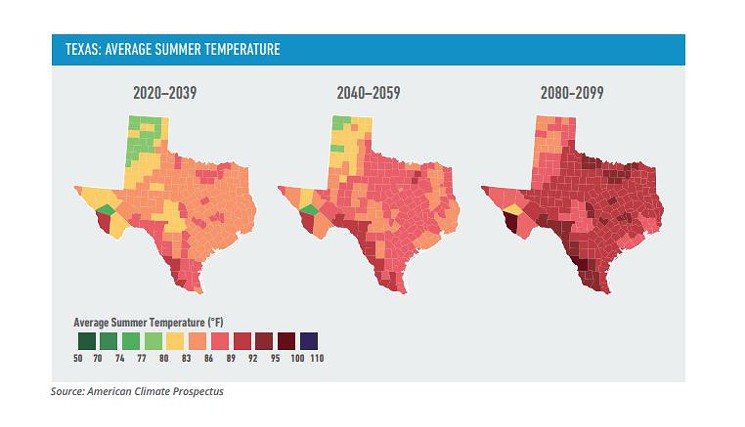
According to several scientists on a Climate Nexus panel on Tuesday (Climate Nexus is a strategic communications group dedicated to highlighting the wide-ranging impacts of climate change and clean energy solutions in the United States), major wildfires could occur across the Southwest this year, including in Texas.  Now that Texas is in its third year of drought, the state is likely to experience a longer fire season as a result of dry conditions and rising summer temperatures. High fire risk conditions raise the concern that Texas could again experience severe wildfires. Fires on Labor Day weekend in  2011 destroyed more than 1,600 Texas homes

A draft report by the federal National Climate Assessment and Development Advisory Council (NCADAC) shows that in recent decades, the frequency of large wildfires and the length of the fire season have increased substantially.  Earlier spring snowmelts and warmer spring and summer temperatures have increased the risk of fire in the Southwest. Fire models predict that more wildfires will occur in the future, with increased risks to communities throughout the region.

US wildfires May to June 2013

US wildfires May to June 2013

To see this interactive map click here

Read Full Post »

The Centers for Disease Control and Prevention warns climate change means we should continue to expect hotter summers and more intense storms that could knock power out for days — and kill people.

According to an article by NBC news, data on heat-related deaths suggest that public health officials have been underestimating them, as summers get longer and hotter due to climate change, and as storms that can cause widespread blackouts become more common and more intense.  The latest numbers, part of the CDC’s weekly report in death and illness, list non-residents for the first time, a group that includes illegal immigrants, tourists, migrant workers and others. These groups suffer especially when it gets hot.

Forty percent of heat related deaths over the last 10 years were in just three states – California, Arizona and Texas, all border states in the south.

Weather experts stress that it’s impossible to say whether any individual storm or heat wave was caused by climate change. But is clear that climate change is contributing to changing patterns and that the sheer magnitude of these extreme weather events present a challenge to public health.

Climate predictions and observations are suggesting that the magnitude of extreme weather events is increasing.

Click here to read the entire article.

Read Full Post »

by guest blogger Jane Dale Owen

GP-ExxonOn May 9, carbon dioxide (CO2) concentration in the earth’s atmosphere surpassed 400 parts per million for the first time since measurements began in 1958, according to National Oceanic and Atmospheric Administration (NOAA) scientists. Climate experts consider this to be the tipping point when unimaginable disastrous climate change is inevitable.

As if to illustrate this point of no return, monster tornadoes raged across the middle of this country completely obliterating Moore, Oklahoma. Pieter Tans, a senior scientist in NOAA’s Global Monitoring Division told a New York Times reporter,  “It symbolizes that so far we have failed miserably in tackling this problem.”

For years, responsible investor groups have called for ExxonMobil to address climate change. The company’s board of directors seems to hardly notice. Again this year, there are resolutions calling for greenhouse gas emissions goals.

But a major shift in shareholder resolution themes is emerging. 2013 shareholder resolutions call for ExxonMobil to disclose what the company is doing to adapt to extreme weather and climate change. This shift in resolution themes illustrates how neglecting to address climate change has contributed to a global crisis in which disasters are anticipated and preparedness for such events is a priority for any company’s business plan.

The situation reminds me of a Winston Churchill quote:

Want of foresight, unwillingness to act when action would be simple and effective, lack of clear thinking, confusion of counsel until the emergency comes, until self-preservation strikes its jarring gong — these are the features which constitute the endless repetition of history.

As I cast my votes this year, I hope that more shareholders will get involved to move ExxonMobil toward a life-sustaining future. ExxonMobil’s $44.9 billion in earnings for 2012 came close to a world’s record. Instead of wildcatting in costly, unproven non-conventional fossil fuel technologies such as fracking and tar sands that add greenhouse gas to the atmosphere, the company could show foresight and leadership by investing in clean, renewable energy such as wind, solar and geo-thermal.

At the very least, ExxonMobil could invest some of its vast resources in best available technology to clean-up the emissions from its refineries and chemical plants. In addition to increasing CO2 levels, these emissions endanger the lives and health of the people living on the fence lines of these operations.

Unless citizens get involved, we can expect ExxonMobil to continue business as usual. Of course we should expect our company to disclose to us it’s plan for adapting to climate change and how much it will cost.  But I regret that this company, the U.S. government and others did not heed NASA Scientist James Hansen’s warning to the U.S. Congress about climate change in 1988. If action had been taken then, I believe we could have avoided much of the loss and suffering due to storms, fires and drought we recently have seen and are likely to see in the future.

If you are an ExxonMobil shareholder, I urge you to exercise your power — review the shareholder resolutions and vote.  We must continue to work toward getting this company to take responsibility for its role in climate change. As Ralph Keeling, geochemist at the Scripps Institution of Oceanography noted in the report about CO2 levels, “There’s no stopping CO2 from reaching 400 ppm. That’s now a done deal. But what happens from here on still matters to climate, and it’s still under our control. It mainly comes down to how much we continue to rely on fossil fuels for energy.”

– Jane Dale Owen is granddaughter of Robert Lee Blaffer, one of the founders of Humble Oil and Refining Company, the parent company of Exxon Mobil. She is president and founder of Citizens League for Environmental Action Now (CLEAN) www.cleanhouston.org, an organization that provides news, information and education about global and local environmental issues.

Read Full Post »

pants on fireAccording to PolitiFact Texas, State Representative Wayne Smith’s pants are on fire.  PolitiFact Texas recently analyzed a statement regarding global climate change by Mr. Smith, a Republican from Baytown.

During floor discussion of his greenhouse gas permitting bill, HB 788, he said, “Science has not shown greenhouse gases to be a problem.”  Then Smith went on to say, “There’s no need to regulate greenhouse gases.”  Well, Politifact Texas disagreed.  They throughly researched Mr. Smith’s statements and found them to be totally false, or “pants on fire” as they put it.

Take a look at the PolitiFact Texas analysis and give Representative Smith’s office a call and tell them what you think about his inaccurate statements: (512)463-0733.

Read Full Post »

Plant in Point Comfort

Plant in Point Comfort

The Calhoun County Port is located an hour southeast of Victoria, Texas, and across the bay from Port Lavaca, in Point Comfort. In March, I took a trip to this port city and was astonished by some of the issues I found there.

The port has submitted documents to TCEQ for operating a bulk material handling dock.  Our coalition was told it will be used for coal imports, most likely for the plants there.  The permit application allows for the handling of coal and petcoke.  The main facilities there are Alcoa and Formosa plants for plastics.

I first noticed the lack of wildlife near the site.  On the Port Lavaca side of the bridge over the bay there are seagulls flying around, but in Point Comfort I did not see any wildlife.  No birds, insects, or even squirrels.  There was a deathly silence surrounding the area, broken only by the whirring of port-related trucks.  No one was fishing on the Point Comfort side of the bridge, while the Port Lavaca side was bustling with people fishing on piers.

On Texas 35 I saw a large elevated area that I first assumed would be used for a landfill.  There were Caterpillar bulldozers pushing around dirt up a 15 foot tall, mile-wide manmade hill.  However, it may also be a site of the coal import facility since it is right next to a ship dock.

I drove further and saw many TCEQ air quality permit signs, including for the Formosa plastics plant.  Some of the plants with TCEQ air quality permit signs were emitting some kind of steam.  At the end of the road was a large chute with huge piles of bauxite, the ore from which aluminum is made.

The residential areas were empty and had very few cars in front of them.  I wasn’t sure if that was because few people in the area had cars, but later on I was told that a lot of the residents died of cancer or the houses were condemned.  There were playgrounds right next to the plastics plant, but it is doubtful that Point Comfort was an area with a lot of children.

At the gas station as I was leaving I picked up a copy of the local newspaper, the Port Lavaca Wave.  On the front page was a news story about how Point Comfort was getting one more police officer in addition to the sheriff because the plant workers were driving too fast.  On a hunch I decided to look into the crime rate in the area and found something shocking.  There is a correlation between lead exposure and violent crime.  The violent crime rate in Port Lavaca is extremely high for a municipality of its size (11,405).  The violent crime rates are comparable to mid-sized cities like El Paso that are many times larger than Port Lavaca.

What I saw there was straight out of a nightmare, the result of when too little regulation and overpowering industry meet residential areas.  However, workers aren’t safe either, as there was a recent fire that resulted in injuries at the Formosa plant there.  These horrific industrial areas are not limited to isolated areas where people move out.  This is a common theme across the Gulf Coast in more populated areas like Plaquemines Parish near New Orleans, LA and Houston, TX.  In the face of disasters like the one in West, TX issues like these need to be raised to policymakers and community leaders to prevent the deaths of both persons and communities.

Read Full Post »

Just before Earth Day, the House of Representatives once again demonstrated its commitment to protecting the fossil fuel industries that fund many of the members campaigns instead of protecting the people of our state from the devastating impacts of climate change by passing HB 788. The bill requires the Texas Commission on Environmental Quality (TCEQ) to permit greenhouse gas emissions, which cause climate change, but would remove the agency’s authority to limit such emissions.

You might wonder “what’s the point?”  The point is to take control of greenhouse gas permitting for Texas facilities from the Environmental Protection Agency (EPA) and place it in the hands of our state environmental agency – which has a much cozier relationship with industry.  While EPA may ultimately prefer that states take responsibility for such permitting, we hope they wouldn’t support such a ineffective system as is proposed in HB 788.

Adding insult to injury, the author of the bill, Representative Wayne Smith, took advantage of the opportunity to spread misinformation.  Smith stated, “…the terms ‘climate change’ and ‘global warming’ are based on an unfounded science,” claiming this language was struck to remove the politics from the bill.  His remarks epitomizes a legislature that continues to threaten the health and safety of the people it should protect through weakened environmental regulations.

In fact, removing language which has been in Texas’ Health and Safety Code for 22 years which gives TCEQ the authority to limit greenhouse gases put the politics in the bill and took the science out of it.  Governor Rick Perry is an avid climate change denier and may have influenced the drafting of HB 788.

This type of misinformation does a disservice to Texas citizens who must endure the harmful impacts of climate change, such as drought, wildfires, sea-level rise and more volatile weather patterns. These changes have already cost our state billions of dollars and numerous lives.  Climate change is happening now and given the big jump in carbon dioxide (CO2) emissions last year, we’re probably in for more harmful impacts than many predicted just a few years ago.

Image

This graph compares increasing CO2 levels (dark line) to increasing average global temperature over the last century (blue and red bars).

Although our efforts to stop or amend HB 788 in the Texas House were unsuccessful and it was disheartening to hear Representative Smith’s comments, Earth Day brought a refocusing on facts.

The Committee on International Trade and Intergovernmental Affairs held a hearing on Global Climate Change and Trade.  Attendance was sparse in the audience, but a stellar line-up of scientists, delegates, and business representatives took the witness stand to testify on the fact of climate change.

HB788 was mentioned in anonymous fashion as a bad greenhouse gas bill on several occasions.  But, the most glaring comments were directed at Texas’ lack of policy to address climate change.  Cynthia Connor, the Resource Security Policy Adviser for the British Consulate General in Houston spoke in serious tones.  Her message was that Texas has a responsibility to adopt climate change policies to protect $20 billion in Texas investments by UK-owned business, which are responsible for  70,000 jobs.

Almost all of the witnesses addressed Texas’ policy of climate change denial.  To their credit, most of the Representatives on the committee asked questions to confirm the scientific findings, how climate change affects Texas, and how our climate change policies compare to the rest of the modernized world.  The general consensus is that Texas lags far behind the rest of the world.  Texas fails to acknowledge the potential harms of climate change and ignores its responsibility to lead the nation in ethical energy policies as the top producer of oil and natural gas.

While these weren’t messages of hope, at least they were based in scientific facts and observations.  At least for a brief time, science was recognized in our state capitol.

We must each do what we can to reduce our personal impact and we must convince our elected officials that the time for climate change denial is over.

HB 788 is now being considered in the Texas Senate.

Email your Texas state senator to oppose HB 788 and protect Texas’ climate, economy and people.

Read Full Post »

Hundreds of residents living near the Port of Houston attended a Town Hall meeting Thursday evening at Holland Middle School to learn about the changes coming to their communities with the expansion of the Port.

Residents filled the Holland Middle School auditorium to hear the preliminary results of neighborhood surveys and to share their concerns with local officials.

Residents filled the Holland Middle School auditorium to hear the preliminary results of neighborhood surveys and to share their concerns with local officials.

“For far too long, the voices of community members living with the health and safety impacts of the Port of Houston have been ignored in the decision making about the Port’s economic growth, routing of hazardous and heavy truck traffic, strategic positioning of pollution control devices, and disposal of hazardous wastes. The Healthy Port Communities Coalition was created in response to this void.” said Hillary Corgey, originally from the Houston area and representing Public Citizen at the meeting, “We seek to provide information and to give a voice to portside communities that have historically been left out of this decision making process as they organize to make their communities safer and healthier for all who live there.”

Preliminary results of Port Side Community Survey Released
The Coalition is currently conducting surveys in port-side communities to determine the full extent of port impacts on residents of these communities and to raise awareness about their causes. The preliminary results of this ongoing survey were discussed at the town hall.  Some notable early results include:

  • Port side community residents concerned about pollution from industries and port operations along the ship channel.
  • 61% concerned about ships and cargo equipment pollution.
  • 67% concerned about train and rail yard pollution.
  • 86% concerned about refinery and chemical plant pollution.
  • 82% concerned about 18 wheeler/truck pollution.
    • 89% concerned about local pollutions’ effects on their health and 54% of respondents do not have health insurance.
    • Cancer rates in these communities are more than 8 times the Texas average.
    • Children have twice the rate of asthma in these communities than other Texans.

The only good news, if you can call it that, while 54% of the respondents do not have health insurance, nearly 80% reported they have had a routine exam in the last two years.  What we don’t know is if this is high because of higher rates of disease.  Residents may have characterized more frequent trips to the doctor, the emergency room, or another clinic as “a routine” exam.

  • The survey also identified the need for job opportunities and job training.
  • 42% of households have an unemployed resident.
  • 81% said there is a need for job training.
  • 69% said there is not sufficient work in their area.

During the town hall, Patricia Gonzales, a mother of three from Pasadena and member of the Texas Organizing Project, spoke up saying, “All of my children have asthma, and after moving to Pasadena, I too have asthma.  We need to know what impact these changes will have on our health.”

“The Coalition is here to help port-side community residents speak with a unified voice on issues that affect their health and well-being,” said Adrian Shelley, Executive Director of Coalition member Air Alliance Houston. “These communities have borne the burden of Houston’s intense industrial development.”

Also attending the Town Hall meeting to listen to and address residents’ concerns were Bob Allen, the Director of Harris County Pollution Control Services Department, Marcus Woodring, Managing Director of Health Safety Security and Environment at the Port of Houston, Jerry Peruchini, chief of staff of Houston City Councilman Ed Gonzales, Edna Campos with Councilmember Melissa Noriega’s office, Rhonda Sauter of the Mayor’s Citizens Assistance Office, State Representative Mary Ann Perez, Linda Jamail with State Representative Ana Hernandez-Luna’s office, Marisol Rodriguez from Senator Sylvia Garcia’s office, and Myriam Saldivar from State Representative Armando Walle’s office.

“We recognize our constituents living near the port of Houston/ship channel area have to contend with issues not common to the rest of Houston and want to thank these residents for taking the time to make them known to us.  The survey will be helpful as we try to address the impacts of the port and its expansion on these communities; that’s why I’ve urged the Port Authority’s Chair to create a Community Advisory Board: said State Senator Sylvia R Garcia. “Such an advisory board would provide continuing communication and dialogue between the community and the Port’s leadership on this and other issues that impact all the Ship Channel area communities.”

The attendees were divided into groups to begin outlining the concerns of port community residents.

“We want to know what’s going on around us and how it will affect our everyday lives,” concluded Gonzales. “This town hall meeting is an opportunity for us to begin that conversation.”

“One of the recommendations posed to the residents living near the ports was to ask for community representation on the Port of Houston Authority Commission,” said Debbie Allen, a resident of Pleasantville and member of the Pleasantville Environmental Coalition. “While my neighbors in the community are concerned about local hiring for port jobs, job training for port jobs, environmental protection and access to healthcare, I believe representation on the Port Commission would give our communities a seat at the table so that we can begin addressing these issues.  One way this could be done is by putting this change into Representative Dennis Bonnen’s Port of Houston Authority Sunset Bill – HB 1642.”

###

The Healthy Port Communities Coalition is an open-ended collaboration that names among its members: Air Alliance Houston, Pleasantville Environmental Coalition, Public Citizen, Texas Environmental Justice Advocacy Services and the Texas Organizing Project.

Ryan Korsgard reports on Houston’s Channel 2

Concerns over Port of Houston cancer risks

Houston Univision45 coverage

Amenazada la salud de los residentes del puerto de Houston   

Read Full Post »

Guest post by the Coalition for Sensible Safeguards

Texas Plant Disaster Shows Fragmented System of Oversight

The specific cause of the West, Texas, fertilizer plant disaster is still being investigated, but one thing is clear: Tragedies like this shouldn’t happen in America. Our country can and should do more to prevent these kinds of tragedies from occurring, and businesses must be required to develop safety and emergency plans, said the Coalition for Sensible Safeguards (CSS), an alliance of groups working to protect and strengthen public protections. The victims of the tragedy at the West, Texas, fertilizer facility will be honored today in a memorial service in Waco, which President Barack Obama is scheduled to attend.

The fire and explosion last Wednesday at the West Fertilizer Company killed at least 15 people and injured more than 200. It demolished up to 80 homes and damaged other buildings nearby, including an apartment complex, a middle school and a nursing home.

“You’d like to think something like this could never happen, that there’d be tight oversight by some agency, but that’s not how it looks,” said Peg Seminario, director of Safety and Health for the AFL-CIO. “In reality, the regulation and oversight systems are often fragmented, so a small but potentially hazardous facility like this one in Texas can get what appears to be little scrutiny. There’s a lot we don’t know yet about what happened, but we do know there are gaps in the regulation and oversight systems. The president should provide leadership in coordinating the investigation and response from federal and state agencies.”

West Fertilizer filed an emergency response plan update in 2011 with the U.S. Environmental Protection Agency (EPA) listing anhydrous ammonia on site, but did not indicate there was a risk of fire or explosion at the plant. And no one can explain the enormous quantity of ammonium nitrate (the substance used in the Oklahoma City bombing in 1995) that was on site but unreported to the Department of Homeland Security.

Local firemen and volunteers who rushed toward the facility represented the majority of the deaths from the incident, indicating that first responders may have been unprepared for the dangers of explosion. But the company was supposed to have a risk management plan developed and shared with local first responders. The law requiring such a plan – the Clean Air Act Amendments of 1990 – was passed in response to earlier tragedies.

Almost 10,000 facilities across the United States are storing or handling anhydrous ammonia, according to the Center for Effective Government’s RTK NET (www.rtknet.org). There is currently no way to determine whether these facilities have up-to-date risk management plans, and whether these plans have been shared with plant employees, residents of the surrounding community and local emergency personnel. The EPA does not require facilities to include ammonium nitrate in their risk management plans.

The Occupational Safety and Health Administration (OSHA) last inspected the West facility in 1985. But OSHA is generally only able to inspect facilities with fewer than 10 employees in response to a complaint or incident, and in 2011, the West plant reported only seven employees. Small facilities like this one scattered throughout the nation are “regulated” by a system rife with gaps in oversight, limited enforcement and unclear rules.

Loopholes that allow lapses in health and safety standards must be closed if we’re going to avoid future tragedies. Companies have to be required to create and register emergency plans and share this information with emergency personnel and the communities in which they operate.  And oversight agencies must have staff and resources to ensure this happens.

“As we mourn the human losses West has had to endure and grieve for the courageous people who rushed in to help, let’s commit ourselves to creating a system that prevents other communities from having to experience similar events,” said Katherine McFate, president and CEO of the Center for Effective Government and a CSS co-chair. “That would be a most fitting tribute to those who lost their lives in West, Texas, and other industrial accidents across the country.”

diamond line

The Coalition for Sensible Safeguards is an alliance of consumer, small business, labor, scientific, research, good government, faith, community, health, environmental, and public interest groups, as well as concerned individuals, joined in the belief that our country’s system of regulatory safeguards provides a stable framework that secures our quality of life and paves the way for a sound economy that benefits us all. For more information about the coalition, see: http://www.sensiblesafeguards.org/about_us

Read Full Post »

Gina_McCarthy_--_EPAWhile EPA nominee, Gina McCarthy is likely to be confirmed, the confirmation hearing on Thursday was dominated by a debate on the future of coal as a source of electric power in the U.S. according to a report by NBC News.

Click here to read NBC’s story on this confirmation hearing.

Read Full Post »

Earthday is coming up and we’d like to share two ways to support Public Citizen’s Texas office through EarthShare programs!

H-E-B Tear Pad Campaign

Earthshare HEB CampaignFor those who are able to give to EarthShare through your work place charitable giving campaign, we thank you.  For those who do not have that option, Public Citizen is pleased to announce that H-E-B has selected EarthShare of Texas to be the April beneficiary for its in-store coupon promotion for the fifth year in a row. As an EarthShare partner, Public Citizen will benefit from this promotion as well!

Whenever you shop at H-E-B from now until May 4, grab one of the tear-off coupons at the register to add $1, $3, or $5 to your total bill. Those extra dollars go to EarthShare, and at the end of the campaign, BikeTexas will get a portion of EarthShare’s total proceeds for the month. You can join in at any H-E-B in Texas. Support bicycle advocacy while you pick up your lettuce!

Reliant EcoShare Program

Reliant Energy customers also contribute to the EarthShare campaign making a donation every time a Texas customer purchases a carbon offset. All the Earthshare programs receives a portion of those donations.  If you live in a competitive electric service area that Reliant serves and are a customer, consider making Earthday year round by participating in their carbon offset program.

Public Ctizen is happy to be partnered with many organizations across this state who support making Texas a leader in clean, sustainable energy.  Thank you for supporting Public Citizen!

Read Full Post »

TurbulenceAccording to the new study published in the journal Nature Climate Change, by the middle of this century climate change could lead to more airplane turbulence.

Turbulence strength over the North Atlantic flight corridor could increase between 10 percent and 40 percent, and turbulence frequency could jump between 40 percent and 170 percent.

Researchers Paul Williams of the University of Reading in the United Kingdom and Manoj Joshi of the University of East Anglia wanted to know how climate change might influence turbulence and used computer models to simulate a world where carbon dioxide in the atmosphere reaches twice pre-industrial levels.

Check out the article by Stephanie Pappas of LiveScience for more about this study, and this article on NBC news.

Read Full Post »

Canadian Oil Sands: Location of Canadian oil sands and viscous heavy oil deposits (Source: Canadian Association of Petroleum Producers (CAPP) website at http://www.canadasoilsands.ca/en/)

Canadian Oil Sands: Location of Canadian oil sands and viscous heavy oil deposits (Source: Canadian Association of Petroleum Producers (CAPP) website at http://www.canadasoilsands.ca/en/)

On Good Friday, an ExxonMobil pipeline carrying Canadian Wabasca Heavy crude burst in Mayflower, Arkansas and was discovered—not by the pipeline company—but by a local resident.  According to the Canadian Energy Pipeline Association (CEPA), which referred to Wabasca as “oil sands” in a report, the “heavy crude” is a heavy bitumen crude diluted with lighter liquids (or diluted bitumen also called dilbit) to allow it to flow through pipeline. So we will be referring to the spill as oil sands to differentiate it from crude oil.

Exxon Mobil Corp continues its efforts to clean up thousands of barrels of Canadian tarsands spilled from a 65-year-old pipeline in Arkansas, as a debate rages about the safety of transporting rising volumes of the fuel into the United States.

Oil Sands spilling from Exxon pipeline, March 29, 2013

Oil Sands spilling from Exxon pipeline, March 29, 2013 – http://switchboard.nrdc.org/blogs/aswift/tar_sands_pipeline_safety_risk.html

The Pegasus pipeline, which ruptured in a community near the town of Mayflower, spewing oil sands across lawns and down residential streets, remains shut and Exxon didn’t begin excavating the area around the breach until Monday, a critical step in assessing damage and determining how and why it leaked.  And no reports we have seen indicate the community was alerted to the potential health impacts the residents might experience.

Exxon Mobil’s Pegasus pipeline crosses 13 miles of the Lake Maumelle watershed. Many are concerned this poses a risk to Central Arkansas’s water supply, which includes the drinking water for Little Rock, the capital and the largest city of the state of Arkansas

The spill has stoked a discussion about the environmental dangers of using aging pipelines to transport dilbit from Canada, as a boom in oil and gas production in North America increases volumes moving across the continent.  The Pipeline and Hazardous Materials Safety Administration (PHMSA) said in a recent report that more than half of the nation’s pipelines were built in the 1950s and 1960s in response to higher energy demand after World War II.  This is of particular interest to East Texans who may become host to hundreds of miles of re purposed Seaway pipeline that, like the Arkansas pipeline, passes near three major DFW water supplies.

Environmentalists argue that oil sands are more corrosive to pipelines than conventional oil and that spills from these pipelines pose a risk to drinking supplies and the health of residents living near a spill.

A 2010 Michigan spill resulted in residents being evacuated up to six miles away with more than 60% of the local population complaining of illness. (Source: Michigan Messenger,July,  2010)  In a spill of oil sands, high levels of benzene and hydrogen sulfide go airborne requiring evacuation.

A film crew from the DFW area doing a documentary on the Tarsands fight, that traveled with a group of Texans to the Climate Rally in DC in February, were quickly dispatched after the Arkansas spill was discovered.  They have shared with environmental groups that while filming in a local elementary school not far from the spill, numerous children at the school were reporting bouts of vomiting.

Children living near the Michigan spill reported cases of vomiting, upset stomach, shortness of breath, lethargy, headaches, rash, irritation with the eyes, sore throat, and cough withing the first week. Adults experienced migraines, eye irritation, sore throat, nausea, and coughing, and pets suffered from continuous vomiting and diarrhea.  While the pipeline company told residents that they couldn’t prove that the pipeline spill was the cause, the EPA established that there were 15 parts per billion of benzene in the atmosphere in the region of the spill, which is roughly three times the standard established as safe for human exposure.

And to add insult to injury, this community found out after the fact that, while companies that transport oil are required to pay into the Oil Spill Liability Trust Fund, giving the government a pot of money for immediate spill responses, the Enbridge pipeline in Michigan and the Exxon pipeline in Arkansas, are exempt because these pipelines are not considered to be carrying “conventional oil”, despite the fact bitumen spills are more expensive and more dangerous.

So after 3 years, the Michigan spill is far from being cleaned up, and the long term affects of exposure to the toxins released from the spill won’t be known for years.  We can only anticipate that the Arkansas community will experience similar issues in cleanup efforts and Little Rock will wait to see if there are going to be impacts on their water resources.

Texans along the pipeline routes have expressed many of these concerns over the past year fighting the tar sands pipeline companies that want to run these through their lands and here are a few things that they have learned.

Despite tar sands unique properties of high pressure, high transport temperatures, higher acidic, sulfuric, and chemical content, these pipelines are built to conventional crude pipeline standards and in Texas:

  • Emergency response plans are only required after a pipeline company begins operations, not before.
  • Pipeline testing is self-determined by industry for both new and re-purposed pipelines.
  • The Railroad Commission has few inspectors to check pipeline integrity.  Companies only propose flyover inspections of these lines every two weeks.
  • Pipelines travel through rural areas, are considered low consequence, so are not given the same safety considerations as more populated,  high consequence areas.
  • Volunteer fire departments in rural areas lack the expertise, training and equipment  to deal with a tar sands spill which is a hazardous material spill
  • Computerized detection system tout spotting pipeline problems within 10 minutes, but this has failed with both new and re-purposed pipeline spill detection.

I certainly don’t feel like the government has my best interest at heart looking at these failures to protect the citizens of Texas and other states along these pipeline routes.  We will be watching this one.

Read Full Post »

The House Energy Resources Committee is scheduled to hear Representative Dennis Bonnen’s bill, HB 2166, relating to the continuation, functions, and name of the Railroad Commission of Texas; providing for the imposition of fees, the repeal of provisions for the suspension of the collection of fees, and the elimination of a fee.

During the 81st interim session, the Texas Railroad Commission underwent a review by the Texas Sunset Advisory Commission.  During the 82nd Legislative session, the legislature failed to pass a bill reauthorizing the continuation of the Commission and instead added it to the ombudsman bill that extends an agency temporarily when it fails to get sunset legislation passed.  Now that bill is starting to move through the 83rd legislature and the first hearing is scheduled on Wednesday, March 27th starting at 2pm or upon final adjournment or recess of the House in John H. Reagan building on 15th Street between Colorado Street and Congress Avenue in room 120 (JHR 120).

To read the entire bill, click here.

We will keep you posted on this bill as it moves forward.

Read Full Post »

Whooping Cranes - Wikipedia Photo

Whooping Cranes – Wikipedia Photo

A federal judge has ruled that the Texas Commission on Environmental Quality was responsible for the deaths of 23 rare whooping cranes in the winter of 2008-2009.

Senior U.S. District Judge Janis Graham Jack in Corpus Christi found that TCEQ’s management of rivers feeding San Antonio and Aransas bays caused their salt levels to rise and says the state must develop a conservation plan to protect the last naturally migrating flock of the endangered birds.

Her order also bars the state from issuing any new water permits on the rivers.

Read Full Post »

« Newer Posts - Older Posts »