Feeds:
Posts
Comments

Archive for the ‘Global Warming’ Category

One of the great things about living in Texas is our winters are mild enough that many outdoor activities are year round activities, including fishing.  BUT . . ., before you eat that fish, be sure to check out the mercury advisories for the state’s waterways on the Texas Department of Health website to make sure that fish is safe to eat – especially for children and pregnant women.

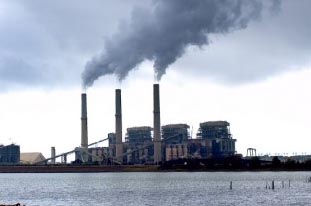
The main source of mercury in Texas waterways comes from coal fired power plants.  Check out www.stopthecoalplant.org for more information.

Read Full Post »

Foreign Pipeline Owners Find a Way to Get Around Federal Permit Process

TransCanada is attempting to outsmart the State Department and bypass federal blocks by using two existing pipelines of poison after the State Department and President Obama delayed approval of the Keystone XL Pipeline permit amidst concerns about bias, conflicts of interest, and environmental issues,  If implemented the pipeline of poison will pose serious threats to Texas water resources that supply 12 million in East Texas and the Dallas/Fort Worth and Houston metropolises, and our climate.  The groups are urging Texans to contact their local and state officials and ask them to stop the pipelines of poison.

“TransCanada is attempting to mislead the public and circumvent the regulatory mandates of Presidential approval, environmental review and public participation,” said Tom “Smitty” Smith, director of the Texas office of Public Citizen.  “They are now proposing to connect their Gulf Coast Segment (from Cushing, OK to Port Arthur and Houston, TX) into the end of their existing Keystone 1 pipeline.  Make that foreign tar sands corporations – 1: the United States – 0.”

“We also believe that Enbridge also plans to do the same by connecting their proposed Wrangler pipeline that runs from Cushing, OK to Houston TX to their existing Spearhead pipeline system that runs from Canada to Cushing, OK. It would be a serious mistake to allow these pipelines to carry toxic tar sands across Texas land,” continued Smith.

Threats to Texas Water Sources

These two pipelines of poison – TransCanada’s Gulf Coast Segment and Enbridge’s Wrangler – would pose serious threats to Texas water resources, including aquifers, drinking and agricultural water resources for up to 12 million Texans in Dallas, Houston and East Texas.

Tar Sands Pipeline Affected Texas WaterwaysTransCanada’s pipeline would cross the Carrizo-Wilcox Aquifer, the Trinity Aquifer and the Gulf Coast Aquifer.  It would traverse 16 large rivers several of which are listed as sensitive and protected, and cross over more than 130 designated floodplain areas in Texas.  These rivers and drainages feed 21 lakes and municipal reservoirs, including Pat Mayse Lake, Lake Tyler and Lake Cypress Springs.

“TransCanada’s Keystone 1 pipeline has already leaked 14 times in its first year,” said Chris Wilson, a chemical engineering consultant for opponents of the pipeline.  “How can we trust them to build it better and not endanger the waterways in Texas?”

In 2011, one of Enbridge’s pipelines leaked over 1 million gallons of tar sands into the Kalamazoo River in Michigan.  Clean-up efforts have cost over $700 million, it’s still not cleaned-up and people and animals are sick and communities are poisoned.

“Sadly, this is what happens when there are no federal pipeline safety regulations and effective cleanup procedure for toxic tar sands spills,” continued Ms. Wilson.  “Tar sands are not like crude oil which floats on water, they are heavier and they sink, making cleanup much more difficult if not impossible.  Congress should protect the public and put an immediate halt on all tar sands pipelines until studies are completed, safety regulations are enacted and effective spill remediation procedures are put in place.”

Other Threats to Texas

“Despite the fact that TransCanada and Enbridge imply that they might not have to undergo environmental review our analysis has identified several major environmental hazards and key red flags to the project that are cause for concern and require addressing,” said Karen Hadden, Executive Director of the Sustainable Energy and Economic Development (SEED) Coalition.  “These include:

  • Toxic spills that would threaten drinking and agricultural water resources for up to 12 million Texans in Dallas, Houston and East Texas;
  • Exposure to benzene, polycyclic aromatic hydrocarbons(PAH’S) and heavy metals;
  • Increases in toxic refinery emissions, greenhouse gases, climate change and associated Environmental Justice issues in the end of market refinery communities in Texas;
  • Increases in refinery wastewater toxicity, toxic solid waste volume and spent catalyst toxicity ;
  • Lack of federal safety pipeline standards and spill remediation standards for tar sands pipelines;
  • Drought and wildfire in Texas;
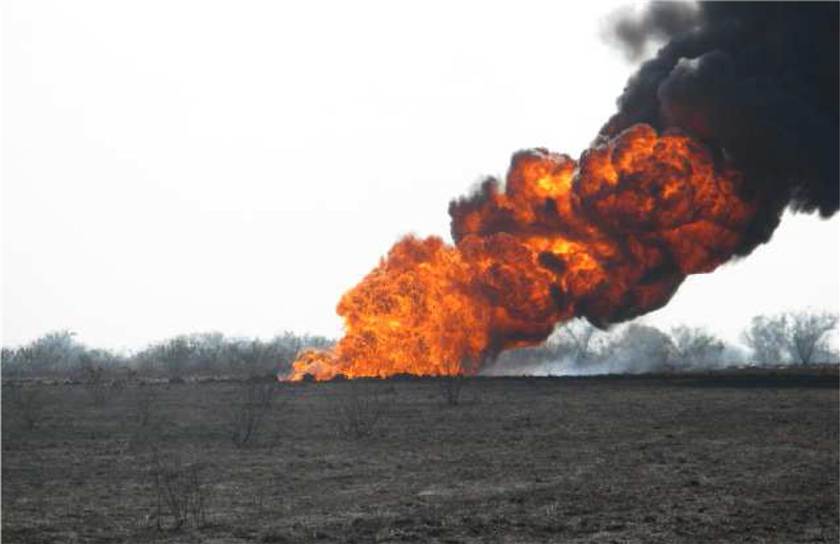
  • Lack of Emergency Response Plans for volunteer fire departments to address pipeline fires; and
  • Eminent domain abuses, threats and bullying of TX landowners.”

Threats to the Health of Texans

The crude oil that would flow through the pipeline is known as diluted bitumen, or dilbit.  Federal safety officials don’t know precisely which chemicals TransCanada mixes with bitumen to create dilbit, including the levels of benzene used in the diluents. And even industry groups can’t say exactly how corrosive dilbit is.

“The U.S. EPA raised serious health risks over benzene in the diluents in a June 2011 letter to the U.S. State Department based on ambient air data at the Kalamazoo river spill”, stated Dr. Neil Carman, Clean Air Program Director of the Sierra Club Lone Star Chapter.  “In a tar sands pipeline spill Benzene easily volatilizes into the air at ambient temperatures allowing inhalation exposure to occur, its toxicity results in immediate health effects in the low parts per billion range.  Benzene also poses a water contamination risk at low concentrations.”

“These characteristics make benzene the most dangerous chemical to human health in a tar sands pipeline spill because it is a known human carcinogenic agent,” Carman emphasized.  “Short-term benzene exposures may cause a variety of health effects, including nausea, vomiting, dizziness, narcosis, reduction in blood pressure, and central nervous system depression as reported in Michigan from the Kalamazoo tar sands spill in July 2010 where high levels (15,000 parts per billion) were measured in the air.”

Finally, Carman noted that, “Tar sands bitumen contains 11X more sulfur and nickel, 5X more lead, and higher levels of other toxic substances (arsenic, chromium, vanadium, boron, and zinc) compared to conventional crude oil.”  Carman concluded, “The higher toxicity of tar sands bitumen will result in increased toxic emissions in refinery communities already overburdened with too much air pollution where environmental justice issues have been ignored by the state and the oil firms.”

Threats to Air Quality and Climate Change

NASA’s James Hansen, a leading climate scientist who rang the first alarm bells nearly 30 years ago, has called the Keystone XL tar sands pipeline “game over” for the climate.

According to a recent US Environmental Protection Agency (EPA) assessment, tar sands emissions are approximately twice those of conventional oil, making tar sands well-to-tank emissions approximately 82% higher than conventional oil.

“Tar sands oil is far dirtier than conventional crude oil,” said Tom “Smitty” Smith, director of Public Citizen’s Texas office.  “This will significantly increase emissions from Houston and Beaumont refineries, which will further put the region beyond the ability to meet federal air quality standards.”

“The DFW area won’t fare much better as pumps are situated at 20- to 100-mile-intervals along the length of the pipeline to “push” the tar sands crude,” continued Smith. “Pipeline pumps may be powered by burning diesel or natural gas, or by using electricity (which may come from burning natural gas or coal at power plants that feed the area).  This will add to the emissions blowing into the DFW area.”

What Can Be Done If Foreign Corporations Circumvent U.S. Regulatory Process

Texans should contact their elected officials regarding their concerns about TransCanada’s Gulf Coast and Enbridge’s Wrangler proposed tar sands pipelines and they should ask their elected officials to join together to protect Texans from the dangers of toxic tar sands pipeline spills and impacts to end-of-market refinery communities.  The Texas Legislature needs to study tar sands, hold interim hearing about tar sands and work together with their constituents to assure that Texans water, air, land and health are not harmed by toxic tar sands.

Cites:

Read Full Post »

The Intergovernmental Panel on Climate Change (IPCC) today released a special report on the influence of climate change on extreme weather events. In the United States, Americans have endured a record-setting series of extreme weather events in 2011, including the Mississippi floods, record high summer temperatures, and severe drought in Texas and Oklahoma.

In a November 2011 national survey, the Yale Project on Climate Change Communication found that a majority of Americans believe global warming made the following events worse:

What do you think?

[polldaddy poll=5682908]

Read Full Post »

After the Obama administration delayed a decision on an oil pipeline, which has been garnering more and more opposition from environmentalists, landowners and downwind communities near refineries along the proposed pipeline route that slices through the heartland of America, there are some who believe that this project could die from a number of issues that could come up as a result of re-routing the path of the pipeline, or re-doing the environmental impact statement (which was originally done by a State Department contractor whose major client was the pipeline owner).

But never fear, industry is doing what it always does when thwarted – they are throwing money at the problem and now Canada is stepping up its lobbying efforts.

Canada’s prime minister said he made it clear in a weekend meeting with U.S. President Barack Obama that Canada will step up its efforts to sell oil to Asia since the Obama administration delayed a decision on the proposed Keystone XL pipeline.

Meanwhile, Alberta Premier Alison Redford, the leader of the Canadian province that has the world’s third-largest reserves of oil, visited Washington on Monday and said she’ll meet with U.S. Speaker of the House John Boehner and other officials to discuss the pipeline’s future.

Last week, the U.S. State Department ordered that the pipeline be rerouted and subject to further environmental review, delaying a decision until 2013.

Canadian Prime Minister Stephen Harper, who met Obama on the sidelines of the APEC summit, said Canada will continue to push the U.S. to approve TransCanada’s $7 billion Keystone XL project to the U.S. Gulf Coast.

The pipeline is critical to Canada which must have pipelines in place to export its growing oil sands production from northern Alberta, which has more than 170 billion barrels of proven reserves.

The Obama administration’s announcement to put off a decision went over badly in Canada which relies on the U.S. for 97 percent of their energy exports and the Harper government has said it is a strategic objective of the country to diversify its customer base. Canada, however, is expected to remain the biggest foreign supplier of oil to the U.S. even if the pipeline is not approved.

Harper said Obama told him the U.S. is continuing to examine the Keystone XL decision and that his government has not taken a final decision. The State Department wants the pipeline to avoid environmentally sensitive areas of Nebraska.

The prime minister previously characterized Obama’s approval of the project as a “no-brainer” but at least one oil analyst said the project now only has a 50 percent chance of being approved.

TransCanada wants to build the pipeline to carry crude oil extracted from the oil sands in Alberta to the refinery hubs in Texas. The pipeline would carry an estimated 700,000 barrels of oil a day, doubling the capacity of an existing pipeline from Canada.

TransCanada and its supporters have said the project would create U.S. construction jobs, help lower gas prices and reduce dependence on Middle East oil. Opponents say it would bring “dirty oil” that requires huge amounts of energy to extract and could cause an ecological disaster in case of a spill.

The heavily contested project became a political trap for Obama, who risked angering environmental supporters — and losing re-election contributions from some liberal donors — if he approved it. The State Department had previously said it would have a decision by the end of the year.  Now we will wait to see what happens after the 2012 elections.

Read Full Post »

According to the Texas Energy Report, the EPA has issued its first greenhouse gas permit in Texas with the TCEQ refusing to issue permits to LCRA or others

The Lower Colorado River Authority received the first Texas Greenhouse Gas permit as it upgrades a 37-year-old generating unit in Llano County to a more efficient natural gas-powered unit, federal environmental regulators announced Thursday.

LCRA, which is making improvements to its Thomas C. Ferguson Power Plant, is the first company in Texas to complete a greenhouse gas permit application and obtain the final permit, a process that took about eight months, according to the U.S. Environmental Protection Agency.

“The LCRA plant will use improved environmental controls and install modern high efficiency equipment,” said EPA Regional Administrator Al Armendariz. “LCRA is leading the way by providing Texans an efficient and reliable source of clean power.”

EPA granted the first Texas greenhouse gas permit and is reviewing 10 others for Texas companies. Under EPA’s final national regulations, projects beginning on Jan. 2, 2011 that “increase greenhouse gas emissions substantially” require the air permits.

While the EPA said it thinks states are “best equipped” to oversee the permitting process, the Texas Commission on Environmental Quality has refused to do so.

In an Aug. 2, 2010 letter to the EPA, the Texas Attorney General and TCEQ explained, “The State of Texas does not believe that EPA’s suggested approach comports with the rule of law” and that would “preclude TCEQ from declaring itself ready to require permits for greenhouse gas emissions from stationary sources as you request.”

Under the LCRA permit, the electric cooperative plans to replace an old 440-megawatt electric generating boiler with a new, 590-megwatt combined cycle gas-fired plant.

“We appreciate EPA’s work on our project,” said LCRA General Manager Becky Motal. “The region will benefit from the latest environmental controls and our customers will benefit from our ability to better manage costs with a plant that will use about 35 to 40 percent less fuel than traditional gas-fired plants.”

The TCEQ released a statement saying it is pleased LCRA’s project is morning forward, but “we see no need for – or any environmental benefit from – EPA’s greenhouse gas permit. The TCEQ authorized the project on Sept. 1, 2011 after careful review that determined the permit was protective of the environment and fully compliant with all state environmental regulations.”

TCEQ’s greenhouse gas letter to the EPA is here.

EPA’s letter to permit holders and the public is here.

Read Full Post »

The International Energy Agency warned Thursday that the world is hurtling toward irreversible climate change in its annual World Energy Outlook.  They stated that we will lose the chance to limit warming if we don’t take bold action in the next five years, spelling out the consequences if those steps aren’t taken and what needs to be done to cap global temperature increases at 2 degrees Celsius (3.6 degrees Fahrenheit) above preindustrial levels. That’s the threshold beyond which some scientists have said catastrophic changes could be triggered.

At the moment, the world is going in the wrong direction in terms of climate change.  Governments around the world have put increasing energy efficiency at the top of their to-do lists, but efficiency has worsened for two years in a row now in spite of the fact that the world has the technology to tackle the problem — just not the political will.

Rather than providing incentives to reduce consumptions, incentives to consume more have risen: The report said subsidies for fossil fuels have risen past $400 billion.  Only when “dirty” fuels become more expensive, will governments follow through on their commitments to increase energy efficiency.

Energy efficiency is generally considered the easiest way to reduce consumption since it has a price-incentive built in. It has become even more important since Japan’s nuclear accident sparked a rethinking of the use of atomic technology previously seen as key to cutting emissions.  In Texas, which is still in the grip of a record setting drought, efficiency may be the difference between rolling blackouts and keeping the lights and air conditioners on next summer.

Read Full Post »

Public Citizen joins Texas pipeline opponents in applauding the Obama administration’s decision for a “re-do” on the environmental impact statement and routing decisions for the proposed TransCanada tarsands pipeline.

This is a decision that came quickly on the heels of the U.S. State Department’s Inspector General’s announcement that they were launching an investigation into the alledged bias and conflict of interest citizen’s had complained about in the hearing process.  Click here to read our earlier blog.  At the hearing in Austin, after speakers who had been there for hours were cut off, one man was arrested for complaining about the process (Click here to read that blog post) and many at that hearing were questioning the facilitators about who they were and what exactly was their relationship to the State Department.

“The U.S. State Department’s contractor Cardno Entrix had severe conflicts of interests and their bias showed. They ignored the potential damages to our drinking water, air safety and climate in the Texas section of their environmental impact statement. The hearings they held on the plan were unfair and biased against opponents. Instead of fair hearings – opponents were cut off, the hearings were ended before the witnesses were heard, and those who objected were arrested,” said David Daniel, a land owner whose property lies along the pipeline route through Texas.

“Texas will be the state most endangered by leaks from the pipeline and the pollution from refining. We don’t need this pipeline or any additional proposed diluted bitumen pipeline, Texas refinery communities are already over-burdened by toxic refinery pollution and environmental justice concerns arise from further burdens to these end of market refinery communities in Texas,” said Chris Wilson, a chemical engineer working with Public Citizen in opposing the pipeline.

Ms. Wilson continued, “We don’t need this pipeline, and shouldn’t be running the risk for the temporary jobs it will create. This pause will allow us to rationally review the risks.”

Political experts are postulating that the Obama administration, the Canadian government and TransCanada made the mistake of glossing over the environmental issues in their haste to push this project through.

However, as the political pressure on his administration grew and consious that they didn’t want environmentalists staying home on election day, Obama himself acknowledged the health and environmental risks.

“Folks in Nebraska, like all across the country, aren’t going to say to themselves, ‘We’ll take a few thousand jobs if it means our kids are potentially drinking water that would damage their health,’” Obama said in Nov. 2 interview with Nebraska TV station KETV. “We don’t want, for example, aquifers to be adversely affected.

The delay is an opportunity for a more “sober” and“rigorous” assessment of the pipeline on all sides, outside of the politicized climate of a presidential election campaign and we think it needs to made clear here that that any costs this puts on TransCanada are their own fault for lobbying to diminish oversight and cut corners in the permitting process. They took a chance hoping it would reduce their costs and it ended up backfiring because the corner cutting was too egregious and caused thus delay.

The risks taken by TransCanada were not the government’s concern, the health and well being of its citizens are their concern. In free markets risks are sometimes punished and sometimes rewarded.

Read Full Post »

Last month we wrote about what appeared to be conflicts of interest in the facilitation of the U.S. Department of State’s public hearings (one of which took place in Austin, TX), and the environmental impact analysis of the controversial Keystone XL Pipeline that would transport Canadian tar sands 1,700 miles to Texas refineries.  Keystone XL is now coming under scrutiny for bias and conflicts of interest by the State Department’s inspector general.

The investigation was announced by the inspector general in Washington on Tuesday, November 8th, and was prompted by a Congressional request headed by U.S. Senator Bernard Sanders (D-Vermont) and U.S. Rep. Steve Cohen (D-Tenn).

Environmental critics are particularly interested in the state department’s hiring of Cardno Entrix of Texas to help prepare an analysis of the environmental impact of the project and facilitating the public hearings around the country. The company had a preexisting business relationship with the pipeline’s builder, Trans Canada.

The inspector general’s memorandum and the Congressional request for the investigation can be read by clicking here.

Read Full Post »

StateImpact is a collaboration among NPR and local public radio stations in eight pilot states to examine issues of local importance. The project seeks to inform and engage communities with broadcast and online news about how state government decisions affect people’s lives.

In Texas, a collaboration between local public radio stations KUT Austin, KUHF Houston and NPR with reporters Mose Buchele, Terrence Henry and Dave Fehling traveling the state, the focus will be on reporting on how energy and environmental issues affect you.  Click here to read their reports or listen to them on NPR member stations.  Below are links to just a few of the stories StateImpact – Texas has reported on recently.

Read Full Post »

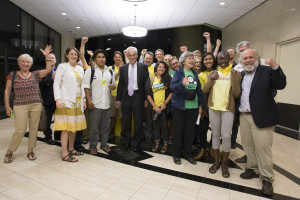
Austinites rally outside campaign headquarters in solidarity with 12,000 in DC

Protestors spell out their message. “SAY NO TO TARSANDS!” – Photo by Don Mason  (http://ow.ly/7nbjY)

AUSTIN, TX – Campaign staff and volunteers working for  President Obama’s re-election got an earful from environmentalists in Austin on  Monday, one day after 12,000 people encircled the White House in Washington DC to protest the proposed Keystone XL pipeline.

“He has given every indication that this decision is his to make,” said Hope Philips, one of the protestors at the rally. “So we’re here to  tell him to stick to his campaign promises and ‘end the tyranny of oil.’”

Many of the signs at both protests featured quotes from President Obama’s 2008 campaign when he made bold claims about reducing oil dependence to the delight of young voters and environmentalists.

Protestor holding the President to his own words

Between chants protestors celebrated signs their actions are making headway in the fight against the tar sands pipeline.

“Just today the inspector general of the US State Department agreed to investigate the environmental assessment process. The relationships between TransCanada and the State Department were too cozy resulting in a deeply flawed process,” said Chris Wilson, a retired chemical engineer who recently authored a report criticizing the State Department’s environmental  impact study.

The Austin protest drew out about 50 people who directed
their voices towards the campaign’s offices inside a small building on the  corner of East 6th and Navasota St. During the protest two representatives from the group were invited in to speak with Hector Nieto, Texas director of  Obama for America.

“It was a good conversation and I think the local and state leaders get why this is an important issue,” said Adam Hammick, one of the two representatives and a volunteer with 350.org. “They promised to take our message straight to the top of the campaign food chain, so we hope the message gets through to the President.”

Monday’s protest comes only a week after a widely reported “oil zombie” themed Halloween protest at City Hall, and organizers show no signs of slowing down. On Saturday November 12th they plan to join forces with Occupy Austin to hold a march on Citigroup who they accuse of helping to fund tar sands giant TransCanada. Then on November 28th they plan to return to the campaign headquarters along with organizers in all 50 states who will be demonstrating outside of local campaign offices.

Read Full Post »

In recent months, the oil and gas industry has been vigorously denying that hydraulic fracturing (fracking), a technique of extracting natural gas from shale formations, is in anyway responsible for small earthquakes in areas where fracking activities have been taking place.  However, (according to Bloomberg) U.K.-based shale explorer Cuadrilla Resources Ltd. said in a report published Thursday, November 3rd it is “highly probably” that fracking caused two small earthquakes near Blackpool in northwest England earlier this year.

Of course they went on to minimize the event saying the geological circumstances were “rare” and the strongest possible tremor, of a magnitude of 3, wouldn’t be a risk to safety or property on the surface.

That being said, the findings may add to concern that fracturing is harmful to the environment.  France has already halted the practice for fear it may pollute drinking water and a small earthquake near Dallas caused concern for local residents who feared fracking in the area might have contributed to the event, even while the industry decried that possibility.

Cuadrilla halted operations earlier this year after two tremors were felt on the surface. The first, on April 1, measured 2.3 on the Richter scale and another on May 27 measured 1.5. Homeowners in the English seaside resort of Blackpool called the police after feeling their houses shake, the British Broadcasting Corp. reported.

Pressure from fluids on a so-called stressed fault zone probably caused the quakes, the report showed.  This should be of concern for other areas around the world where fracking activity is occurring near faults (for instance the Eagle Shale area near San Antonio).

Read Full Post »

San Antonio’s dreams of becoming a solar manufacturing hub have been deferred temporarily.  CPS Energy, the city’s municipally owned utility, couldn’t come to agreement with two unnamed finalists and will restart a bidding process that would put San Antonio into the top tier of solar users around the globe by seeking bids for 400 megawatts of solar power, enough to power 80,000 homes, and will require the winning bidder to bring manufacturing jobs to the Alamo City.

San Antonio is trying to marry investment in renewables with economic development in an effort to keep the cost of electricity as low as possible while getting as many jobs as possible, but the city has had a learning curve in this process, yet they remain confident that this vision can come to fruition.

Thirty two companies initially submitted 111 proposals several months ago. The utility then re-opened the bidding process and expected to make a decision by Sept. 1. Even as CPS Energy zeroed in on two finalists, Lewis said, other companies around the globe approached the utility with their own ideas and CPS Energy officials decided to end negotiations and open a third round of bidding after rewriting the specifications of what it wants.

So the problem lies not with no takers, but with many and new ideas coming forward to possibly make this move by San Antonio more profitable.  What this Central Texas metroplex does with this process could set the trend for the country and remains an experiment to watch.

Read Full Post »

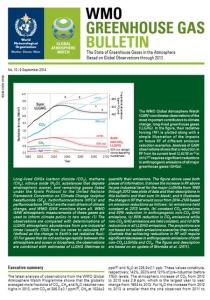
According to the Associated Press, the U.S. Department of Energy calculated the global output of heat-trapping carbon dioxide soared by six percent in 2010, the biggest single year increase on record and a sign of how feeble the world’s efforts are at slowing man-made global warming.

The new figures for 2010 mean that levels of greenhouse gases are higher than the worst case scenario outlined

The world pumped about 564 million more tons of carbon into the air in 2010 than it did in 2009, and extra pollution in China and the U.S. account for more than half the increase in emissions last year.

Burning coal is the biggest carbon source worldwide and emissions from that jumped nearly 8 percent in 2010 with India and China’s increased use of coal contributing to those emission increases.  And while broader economic improvements in poor countries has been bringing living improvements to the people of those countries, doing it with increasing reliance on coal is imperiling the world.

In 2007, the Intergovernmental Panel on Climate Change issued a report on global warming, using different scenarios for carbon dioxide pollution.  At that time the IPCC said the rate of warming would be based on the rate of pollution.  The latest figures put global emissions higher than the worst case projections from the climate panel. Those forecast global temperatures rising between 4 and 11 degrees Fahrenheit by the end of the century with the best estimate at 7.5 degrees.

Even though global warming skeptics have attacked the climate change panel as being too alarmist, most climate scientists have generally found their predictions too conservative. The IPCC’s worst case scenario was only about in the middle of what MIT calculated are likely scenarios.

One bright spot is the developed countries that ratified the 1997 Kyoto Protocol greenhouse gas limiting treaty have reduced their emissions overall since then and have achieved their goals of cutting emissions to about 8 percent below 1990 levels. The U.S. did not ratify the agreement.

In 1990, developed countries produced about 60 percent of the world’s greenhouse gases, now it’s probably less than 50 percent.  The real challenge will be to get buy in from the developing world.  If we don’t, the problem will only get worse . . . and well . . . see yesterday’s blog.

Read Full Post »

burning-worldWith weather catastrophes in abundance this year, the latest warning from top climate scientists paints a grim future: more floods, heat waves, droughts
and with the world’s population nearing 7 billion, greater costs to deal with them.

A soon to be released report from the Intergovernmental Panel on Climate Change marks a shift in climate science from focusing on subtle changes in average temperatures to concentrating on events that grab headlines, hurt economies and kill people, saying that extremes caused by climate change could eventually grow so severe that some areas will become “increasingly marginal asplaces to live.”

The final version of the report will be issued in a few weeks. The draft says there is at least a 2-in-3 probability that climate extremes have already worsened because of human-made greenhouse gases.

By the end of the century, the intense, single-day rainstorms that typically happen once every 20 years will probably happen about twice a decade, the report said.

The opposite type of disaster – a drought such as the stubbornly long dry spell gripping Texas and parts of the Southwest – could also happen more often as the world  warms.

The Texas State Climatologist John Nielsen-Gammon, taking a cue from the state leadership is not is not committing to how much the current drought, Texas’ worst single-year  one on record, is connected to climate change.  But he does acknowledge that the drought is caused by a lack of rainfall and record heat; and at least part of the heat is due to global warming.

In the future, climate change will make droughts even more severe, with higher temperatures causing more evaporation and thus putting a greater strain on water resources.

The report does say scientists are “virtually certain” – 99 percent – that the world will have more extreme spells of heat and fewer of cold. Heat waves could peak as much as 5 degrees higher by midcentury and even 9 degrees by the end of the century.

In the United States this year, we set 2,703 daily high temperature records, compared with only 300 cold records during that period, making it the hottest summer in the U.S. since the Dust Bowl of 1936, according to Weather Underground.

The report’s summary chapter didn’t detail which regions might suffer extremes so severe that they become only marginally habitable, but we may learn more once the report is released.

Read Full Post »

Four environmental groups are preparing a lawsuit that alleges the Obama administration has not adequately studied how the proposed Keystone XL oil sands pipeline would affect several endangered species.

The Sierra Club, National Wildlife Federation, Natural Resources Defense Council and Nebraska Wildlife Federation sent a formal notice of intent to sue Thursday to the State Department – which is heading the federal review of the project – and several other agencies stating, “State and [the U.S. Fish and Wildlife Service] have failed to conduct formal consultation to consider the effects of the Keystone XL Pipeline project (Project) to the Whooping Crane, Interior Least Tern, Piping Plover, Western Prairie Fringed Orchid, Pallid Sturgeon, and Arkansas River Shiner.”

The State Department picked a company called Cardno Entrix to help carry out the environmental impact statement on the Keystone pipeline.  Cardno Entrix listed among its chief clients …TransCanada.  And this apparent conflict puts in question the final report that came out in late August, stating the pipeline would have “no significant impact” on the nearby land and water resources.  The State Department hopes to make a final decision by the end of the year and the letter of notice of intent to sue is designed to ensure the option to litigate if the permit is issued.

The groups, in the letter, allege the “biological assessment” prepared alongside the EIS and a subsequent “biological opinion” prepared by the U.S. Fish and Wildlife Service were shoddy in their analysis of the pipeline’s effect on the species and that the unduly narrow analysis omits impacts such as the effects of habitat fragmentation from the Pipeline’s pump sites, construction camps, and power lines.”

The planned lawsuit comes in addition to separate, ongoing litigation by three other groups: the Center for Biological Diversity, the Western Nebraska Resources Council and Friends of the Earth.

That litigation, filed in a Nebraska federal court, was expanded through an amended complaint this week that alleges the U.S. Fish and Wildlife Service “unreasonably and unlawfully concurred that the Pipeline is ‘not likely to adversely affect’ endangered and threatened species.”

Read Full Post »

« Newer Posts - Older Posts »