Feeds:
Posts
Comments

Archive for the ‘Global Warming’ Category

Access news

ACCESS News! A program about being a better citizen (Presidents included).

What happens when the President of the United States runs afoul of the law? What is a grand jury? Is the future of nuclear energy dead? Is our water supply properly managed?

The Director of Public Citizen’s Texas office, Tom “SMITTY” Smith, discusses impeachment, grand juries, nuclear energy, water supplies, and more on ACCESS News.

New episode of ACCESS News airs on KLRU-PBS TV in Austin, Texas on Sunday, October 30, 2011 at 1:00pm   

Click here if you miss it and want to watch Smitty online.

ACCESS News – If it happens in Austin, it’s happening everywhere . . . or should be

Read Full Post »

This summer, as Hurricane Irene pounded the East Coast of the U.S. and flooded communities far inland, temperatures in Austin soared to 112°F and across the Lone Star State it was bone dry.

Caught in the grip of a heat wave that fed on the drought – where sunlight hit the ground, evaporated any moisture in the soil and raised the temperature of the soil, making the ground a virtual hot plate – Central Texas saw 90 days of 100 plus degree days.  And while the scorching heat finally broke at the end of September, the drought is far from over and is expected to have a ripple effect that will spread beyond the region in the months ahead, impacting the one place Americans do not need to feel the hurt: their pocketbooks.

From beef prices to the cost of a pair of socks to the price of bread, the Texas drought of 2011 will leave its mark on family budgets.

In Texas, losses, so far, are estimated at over $5 billion.  The state lost a little over half of its cotton crop.  Acres of drought parched and wildfire blacken fields are reminiscent of the dust bowl of 1933.

Texas produces 55% of the U.S. crop and two-thirds of America’s yield is exported to mills outside of the country where cheap clothing is manufactured and shipped back to US retail shelves.  Now with shrinking supplies, cotton prices are surging and the price of those inexpensive t-shirts could be going up.

The effects go beyond this year’s cotton harvest. Ranchers are selling off cattle in historic numbers, including breeding stock that ranchers can no longer feed and water. The state has also lost an entire hay crop, making winter feeding an expensive proposition. While that may mean lower beef prices in the short run as plenty of newly slaughtered cattle hit the marketplace, it likely will mean higher prices down the road since valuable breeding stock is being sold off.

The sell-off has profound implications for the U.S. beef industry since ranchers have developed cattle suited to specific environments over generations. Rebuilding herds will be a long, expensive process.

The U.S. cattle herd is down to its lowest count since 1963 and skyrocketing prices and diminished supplies could put the price of prime steak beyond the family budget in 2012 and ’13.

The bad news does not stop there. Winter-wheat-planting season runs from September through October and rain, which Texas still has not seen much of,  is vital to germination. Texas and Oklahoma produce almost a third of winter wheat in the U.S. — the hard wheat used in bread products – and it is expected there will be a 50% jump in winter-wheat prices. If the drought continues, as it is expected to do , prices could climb higher still.

The Texas state climatologist says that weather patterns are setting up to be similar to those of the extended drought of the 1950s and that Texas could be looking at an multi-year drought for the next five years and could even be in place until 2020.   The temperatures may have eased in Texas recently, but pocketbooks around the country and the globe will be feeling the heat for some time to come.

Read Full Post »

The following are the Interim Charges focused on the current drought and wildfires as outlined by Lt Governor Dewhurst:

Business & Commerce Committee

  • Assess the impact of extreme drought conditions on electric generation capacity.
  • Identify those regions of Texas that will be most affected by a lack of capacity.
  • Analyze response plans and make recommendations to improve and expedite those plans.

Natural Resources Committee

  • Review water resources and conservation measures included in the State Water Plan.
  • Evaluate methods to enhance existing water resources and promote water conservation across the state at all times, not just in case of severe drought conditions.

Agriculture & Rural Affairs Committee

  • Review the impact of the drought on the Texas agricultural and ranching industry.
  • Develop methods and legislative recommendations to minimize the effects of drought and respond to the challenges for farmers and ranchers.

Economic Development Committee

  • Assess the economic impact of long-term drought on all sectors of the Texas economy.
  • Include additional analysis of economic consequences of wildland fires.
  • Develop a compendium of federal, state, and local funding and other assistance alternatives for reducing the long-term economic consequences of the drought.

Intergovernmental Relations Committee

  • Analyze ways to better coordinate existing federal, state and local housing resources to increase access to affordable housing following a disaster.
  • Review best practices for fulfilling emergency short-term housing needs and developing long-term housing opportunities using existing tools, such as land trusts, land banks and other available incentives.
  • Review housing and development codes, and guidelines for structures in areas prone to natural disasters, and make recommendations on how these structures can be “hardened” to avoid loss.
  • Make recommendations to educate and enable private landowners to use best practices in fire risk mitigation, fuel reduction and urban forest management to reduce exposure to wildland fires.

Subcommittee on Flooding & Evacuations

  • Investigate and evaluate communication options during evacuations and make recommendations for legislative action.

Transportation & Homeland Security Committee

  • Review state, local and federal emergency preparation and response efforts as they pertain to protecting lives, property and natural resources from wildland fire.
  • Consider ways to facilitate better communication, collaboration and response between all state agencies and stakeholders involved in wildfire prevention, mitigation and control.
  • Review training of emergency responders to ensure that they have the appropriate skills to respond to wildfire events.
  • Review best practices in urban forest management and fuel reduction policies, both regulatory as well as voluntary, to promote safe firefighting operations.

Read Full Post »

While the temperatures have come down from the relentless 100 degree heat wave that blanketed much of the state of Texas this summer, and parts of the state have seen some much needed rain, the state climatologist is warning us that conditions are lining up for us to be in a drought pattern for the next five years and even as long as into 2020.

Last week, the US Drought Monitor showed 73 percent of the state still in the exceptional drought category (down from the 89 percent from the previous week) which means the state still has to have significant rainfall to begin recovery from what has been the single worst drought year on record for Texas. But a La Nina pattern is going to keep us dryer and warmer than normal for a while longer.  In the meantime, Texas will continue to deal with the aftermath of an extreme drought — water restrictions, fire bans, curtailed agricultural activity, and now dust storms.

Check out these photos taken by local Lubbock residents.

Read Full Post »

An Atomic Safety and Licensing Board (ASLB) panel will conduct an evidentiary hearing Oct. 31 in Rockville, Md., in the South Texas Project Combined License (COL) proceeding. The ASLB is the independent body within the Nuclear Regulatory Commission that presides over proceedings involving the licensing of civilian nuclear facilities, such as nuclear power plants.

This evidentiary hearing will consider a contention (or challenge) originally scheduled to be heard in August but deferred due to the unavoidable absence of an expert witness. The Board has also asked all the parties’ attorneys to be prepared for oral argument on a new proposed contention related to the Fukushima Dai-ichi accident in Japan, although the Board is not certain if such oral argument will be necessary. The hearing will begin at 9:30 a.m. EDT in the Atomic Safety and Licensing Board Panel Hearing Facility, Room T-3B45 in the NRC’s Two White Flint North Building, 11545 Rockville Pike in Rockville.

The session is open for public observation, but participation will be limited to the parties admitted to the proceeding (several public interest groups, the applicant – Nuclear Innovation North America (NINA) – and NRC staff). Early arrival at the NRC’s main visitor entrance in the One White Flint North Building is suggested to allow for security screening for all members of the public interested in attending. NRC policy prohibits signs, banners, posters or displays in the hearing room at any time during the proceeding.

The South Texas Project COL application was submitted Sept. 20, 2007, seeking permission to construct and operate two new nuclear reactors at an existing site near Bay City, Texas. The ASLB granted intervenor standing to the Sustainable Energy and Economic Development (SEED) Coalition, the South Texas Association for Responsible Energy, and Public Citizen, and found they had submitted admissible contentions that challenge the COL application. The contention that will be addressed on Oct. 31 involves the question of whether the application and NRC review properly accounts for energy efficient building code rules in assessing the need for power.

Individuals or groups not admitted to the proceeding can submit “written limited appearance statements” to the ASLB. Anyone wishing to submit a written statement may do so by email to hearingdocket@nrc.gov, by fax to 301-415-1101, or by mail to: Office of the Secretary, Attn. Rulemaking and Adjudications Staff, U.S. Nuclear Regulatory Commission, Washington, DC 20555-0001. In addition, copies of written statements should be sent to the Chairman of the Licensing Board by e-mail to Michael.Gibson@nrc.gov and Jonathan.Eser@nrc.gov; by fax to 301-415-5599, or by mail to: Administrative Judge Michael M. Gibson, Atomic Safety and Licensing Board Panel, Mail Stop: T-3F23, U.S. Nuclear Regulatory Commission, Washington, D.C. 20555-0001.

Documents related to the South Texas Project COL application are available on the NRC website. Documents pertaining to the ASLB proceeding are available in the agency’s electronic hearing docket. More information about the ASLB can be found at the NRC website.

Read Full Post »

The expansion of the South Texas Nuclear Project (STP) from 2 units to 4 units has had an interesting financing history.  Initially Austin Energy chose to not pursue a financial partnership with NRG, Toshiba and San Antonio’s municipally owned utility – CPS.  That left CPS with a 50% ownership, which they later dropped to 40% and then, during an upset at the utility when the city of San Antonio discovered that CPS had withheld information about a 4 billion dollar increase in the estimated cost of building the new plant just before the City Council was to vote on a bond issue for the plant, the city and CPS backpedaled and in a final settlement became 7.6% owners with the understanding that they would put no further funding into the project.

CPS’s substantial exit from the NRG/NINA partnership left the project  searching for additional partners and power purchase agreements (PPAs) to keep its expansion alive.  Opponents of the plant were focusing efforts on preventing central Texas public power providers from signing PPAs and had made some progress when the Japanese earthquake and subsequent tsunami triggered the nuclear disaster at Fukushima.

Within two days after the Japanese earthquake, Public Citizen was linking the financial death of the STP expansion project with NRG’s remaining financial partners – Japanese companies Toshiba, TEPCO (the operators of the doomed Fukushima plant) and the Bank of Japan. On May 1, NRG announced it was writing off its financial investment in the STP expansion, effectively killing the project for the foreseeable future.

Most people thought this was the end of this expansion move, but Toshiba, the sole remaining financial partner did not pull the application and at the end of August, Public Citizen, the SEED Coalition and the local opposition group went before an Atomic Safety and Licensing Board (ASLB) panel–an independent body within the Nuclear Regulatory Commission (NRC)–to present oral arguments.

These opponents of two proposed South Texas Project nuclear reactors received a favorable order from ASLB judges allowing a full hearing to proceed regarding the project’s foreign ownership. Licensing efforts may be impacted as a result. In April, the Nuclear Regulatory Commission told Unistar Nuclear Energy it could not get an operating license for its planned reactor at Calvert Cliffs in Maryland because it was fully owned by France’s electricite de France (EDF)—a foreign entity.

“Federal law is clear that foreign controlled corporations are not eligible to apply for a license to build and operate nuclear power plants. The evidence is that Toshiba is in control of the project and this precludes obtaining an NRC license for South Texas Project 3 & 4,” said Brett Jarmer, a lawyer for the Intervenors; SEED Coalition, Public Citizen and South Texas Association for Responsible Energy. “Foreign investment in U.S. nuclear projects is not per se prohibited; but Toshiba is paying all the bills for the STP 3 & 4 project. This makes it difficult to accept that Toshiba doesn’t control the project,” said attorney Robert Eye. “National security and safety concerns justify NRC’s limits on foreign ownership and control of nuclear reactors,” said Karen Hadden, Director of the Sustainable Energy and Economic Development (SEED) Coalition. “What if a foreign company runs a U.S. reactor carelessly? What if a nation that’s friendly today becomes hostile toward the U.S. in the future and tries threaten us with our own reactors?” “Even if the reactors are operated by the South Texas Nuclear Operating Company, they will get their orders from foreign owners. What if their concerns are more about costcutting and less about safety?” asked Susan Dancer, President of South Texas Association for Responsible Energy. “Japanese investors would have us believe that they can come to America and safely build, own and operate nuclear plants, and that we should not concern ourselves with passe laws and regulations, but the Fukushima disaster has demonstrated the flawed Japanese model of nuclear safety. Our nuclear reactors should be controlled by the people most concerned about our country: fellow Americans.” The judges’ order is online at www.NukeFreeTexas.org.

[polldaddy poll=5554454]

Read Full Post »

Punxsutawney Phil is a groundhog resident of Punxsutawney, Pennsylvania. On February 2 (Groundhog Day) of each year, Phil emerges from his temporary home – if he sees his shadow and returns to his hole, he has predicted six more weeks of winter, if he does not see his shadow, he has predicted an early spring.  In Texas we have State Climatologist John Nielson-Gammon who emerged, saw his shadow and told Reuters, “It is possible that we could be looking at another of these multiyear droughts like we saw in the 1950s, and like the tree rings have shown that the state has experienced over the last several centuries.”

Some 95 percent of the state is listed as being in either “severe” or “exceptional” drought by the U.S. Department of Agriculture’s Drought Monitor, and Nielson-Gammon said the last 12 months have been the driest one-year period on record in the Lone Star State.

The state’s worst recorded drought lasted from 1950 through 1957 and prompted the creation of artificial lakes all across Texas to supply water to a state that at the time had a population of 15 million.  Those lakes are in place but after the worst one year drought on record and a population over 25 million, a multi year drought like the one we had in the 50s could be devastating for the state..

The long-term weather patterns, including La Nina currents in the oceans, mirror records from the early 1950s, Nielsen-Gammon said. The current drought, which he said began in earnest in 2005, could wind up being a 15-year stretch if patterns hold, he said.

“We’re very lucky that we had 2007 and 2010, which were years of plentiful rain,” he said. “2010 was the wettest year in record. Were it not for last year, we would be in much worse shape even than we are today.”

Conditions in Texas now are far from good. The drought has dried up many lakes built after the drought of the 1950s, and more than 23,000 separate wildfires fueled by dried brush and trees have destroyed 3.8 million acres and with that 2,800 homes, according to the Texas Forest Service.

Nielson-Gammon said Texas was now 10 to 20 inches of rainfall behind where it should be at the end of September and that rather than being the exception, severe drought could become the rule in Texas going forward, with wet years being more noteworthy.

“We’ve had five of the last seven years in drought, and it looks like it is going to be six out of eight,” he said.

The month is going out the same way it came in, with Texas firefighters on edge.   On September 4, a gust of wind blew a dead pine tree into power lines east of Austin, sparking the deadly Bastrop Complex Fire. That blaze killed two people, destroyed 1,600 homes, and is now the costliest fire in terms of lost property in Texas history.

The Forest Service this week called in two air tankers from Canada to fight wildfires that continue to burn around Texas, citing a shortage of enough planes to fight the state’s fires.

Read Full Post »

MoveToAmendDavid Cobb, a fiery speaker, and former Green Party presidential candidate, is touring Texas giving his talk “Creating Democracy & Challenging Corporate Rule.”  This presentation is part history lesson and part heart-felt call-to-action!

Cobb is an organizer and national spokesman for MoveToAmend.org, a coalition of over 130,000 people and organizations whose goal is to amend the United States Constitution to end corporate rule and legalize democracy.

Events are free and open to the general public, donations requested, no one turned away for lack of funds.

October 2, 2011
2:00pm – 4:00pm
 Bryan/College Station  Clara Monce Public Library
201 E 26th St, Bryan, TX
October 4, 201
7:00pm – 9:00pm
 Houston  1844 Kipling, Houston, TX
October 5, 2011
6:30pm – 8:30pm
 San Antonio The Radius Center
106 Auditorium Circle in the Gallery
San Antonio, TX 78201
October 10, 2011
7:00p.m. to 9:p.m.
 Corpus Christi  Unitarian Universalist Church
6901 Holly Road, Corpus Christi, TX

Read Full Post »

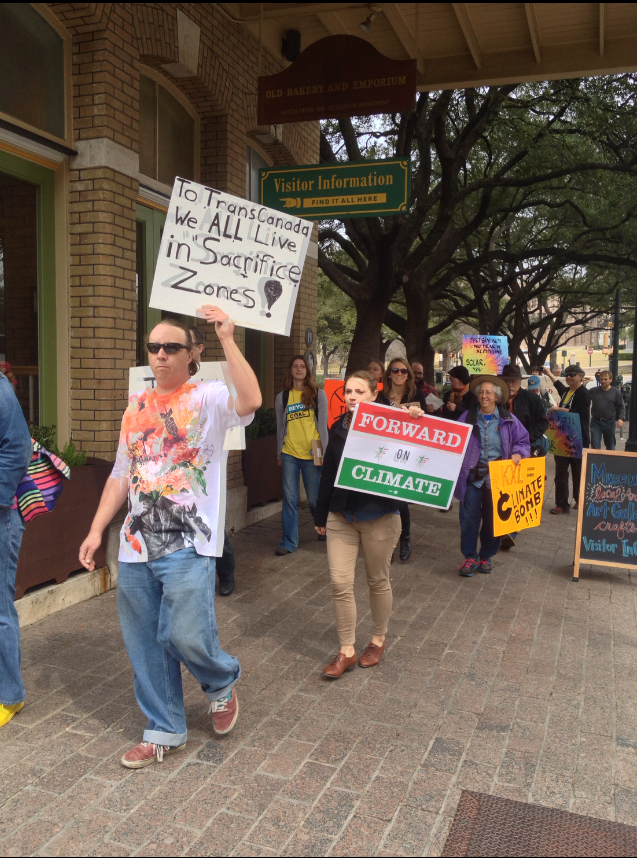
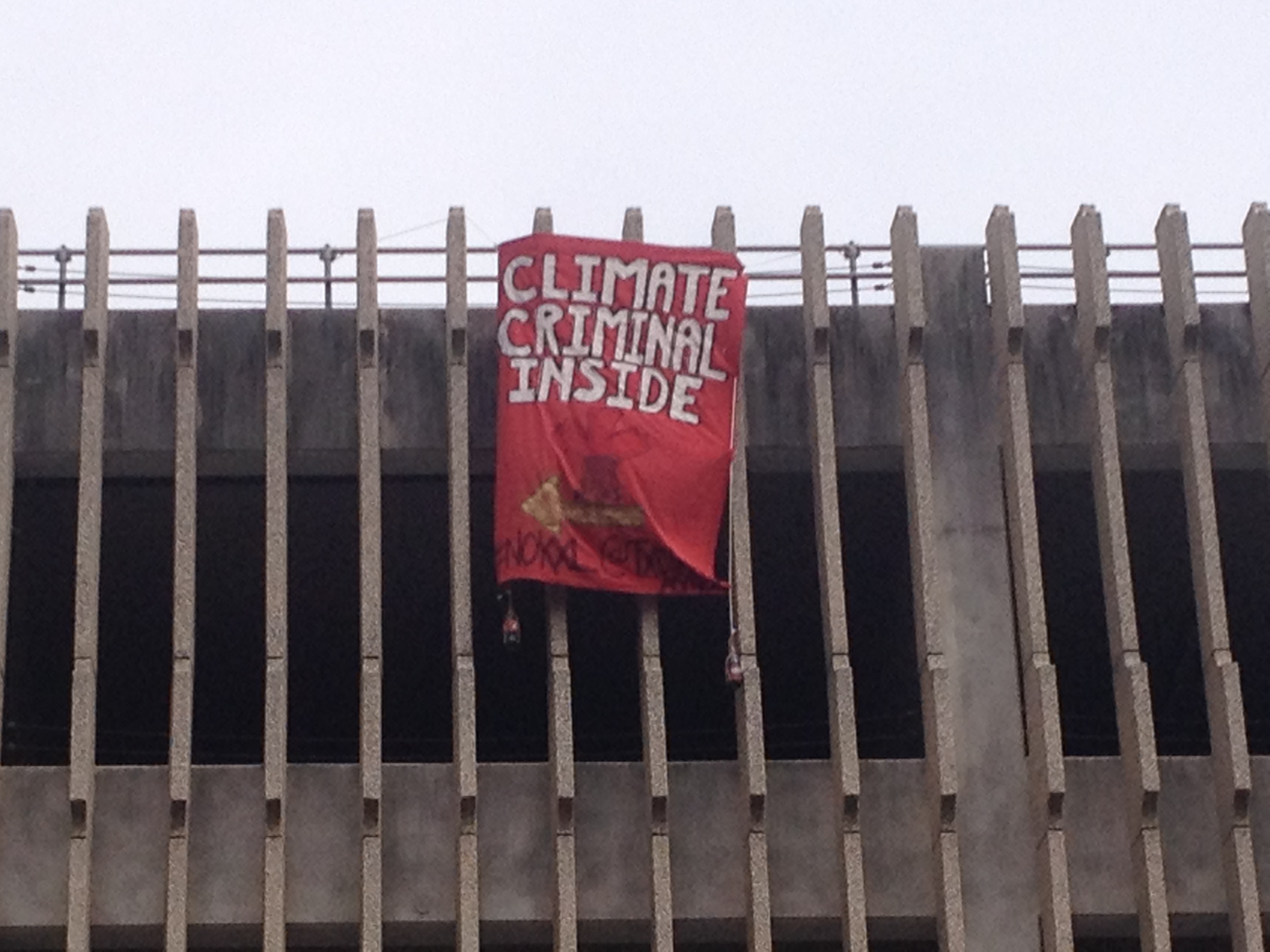
Hundreds of people turned out and many waited for hours yesterday in Austin, TX to testify against the dangerous Keystone XL tar sands pipeline, which is proposed by a foreign company and threatens the health, climate and water of those living along the proposed pipeline route.

Photo by Karen Hadden of man arrested for expressing concerns about the flawed hearing process.

This pipeline would be carrying the dirtiest of oil from Canada through the heartland of American to be refined here in Texas.  The State Department sent contract facilitators who abruptly halted testimony, turning away several dozen speakers.  Federal Security and UTPD then forced people out of the room.  One man expressed concerns about the flawed process and was arrested for “criminal trespass.”

According to Karen Hadden, the Executive Director of the Sustainable and Economic Development (SEED) Coalition, “This was not a hearing, this was a farce.”  Ms. Hadden arrived and had been waiting for a couple of hours to give comments when they cut the hearing off.  Later, when she was attempting to find out what her options were for providing comments to the State Department given she was unable to do so at the hearing, she was told she must leave the premises or she would be arrested.

According to Brad Johnson of ThinkProgress

In a stunning conflict of interest, public hearings on federal approval for a proposed tar sands pipeline are being run by a contractor for the pipeline company itself. The U.S. Department of State’s public hearings along the proposed route of the TransCanada Keystone XL tar sands pipeline this week are under the purview of Cardno Entrix, a “professional environmental consulting company” that specializes in “permitting and compliance.”

Cardno is not only running the State Department hearings, but also manages the department’s Keystone XL website and drafted the department’s environmental impact statement. Comments from the public about the pipeline go not to the government, but to a cardno.com email address.

Cardno Entrix was contracted by TransCanada Keystone XL LP (“Keystone”) to do the work for the Department of State, to assist DOS in preparing the EIS and to conduct the Section 106 consultation process.

Throughout the history of the DOS review of the Keystone pipeline, the work has been conducted not by civil servants but by representatives of the pipeline company. During the Bush administration, the Department of State appointed TransCanada “and its subcontractors to act as its designated non-federal representatives” to assess the potential impact of the Keystone pipeline on endangered species.

Cardno Entrix contractors are running the public hearings from Port Arthur, Texas, to Glendive, Montana. It is not clear from media reports whether the State Department “representatives” at the hearing were in fact Entrix employees. ThinkProgress Green is awaiting information from the State Department.

“All of this adds up to the old saying, the fox is guarding the hen house,” says Jane Kleeb, the Nebraska activist leading the fight to protect her state from the risks of the Keystone XL project.

We will also followup and let you know if there were, in fact, any actual employees of the State Department present at this hearing.

Read Full Post »

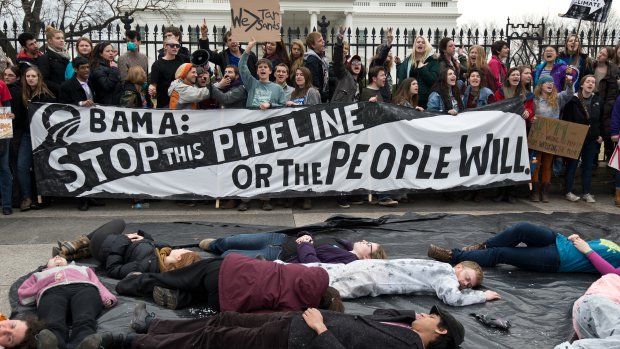
Tar Sands Pipeline Protest By Chip Somodevilla, Getty Images

As thousands rally against the 1,900-mile Keystone XL oil pipeline from the Alberta tar sands which would stretch through Montana, South Dakota, Nebraska, Kansas, and Oklahoma to Texas, Transcanada’s special access to State Department officials have some wondering if special influences will have more sway than concerns about human health and safety in the decision to permit this project – click here to read an update about the cost of cleaning up a tar sands spill into the Kalamazoo River in Michigan.  The Guardian writes about State Department concerns that mysteriously disappeared, possibly because of Transcanada’s (the proposed tar sands pipeline operator) special access to high level State Department officials.

In June of 2010, in the midst of the BP Gulf oil disaster, someone deep in the bowels of the U.S. State Department was considering a two-year delay in the Keystone XL pipeline project, according to documents released last week. Public concerns about the oil industry were peaking, and the $7 billion Canada-to-Texas oil sands pipeline, which had looked like a shoo-in at the beginning of 2010, was getting a closer look.

At one point, the State Department even asked a lawyer for TransCanada, the Alberta-based company that was trying to get a federal permit to build the pipeline, to provide an assessment of how such a delay would impact the company.

What happened to that request—or to the idea of possibly delaying federal approval of the pipeline—remains a mystery, crucial to understanding the decision-making process behind one of the biggest energy projects pending before the Obama administration. The pipeline would allow an enormous supply of a particularly dirty form of oil, locked up in Alberta’s tar sands, to reach refineries in the Gulf of Mexico and markets around the world.

Documents show that TransCanada had special access to key State Department officials during this delicate period, when the future of the company’s most important project hung in the balance.

To read the complete story, click here.

Read Full Post »

With the Austin City Council considering an electric rate increase that, as it is currently structured, would greatly impact low income wage earners, perhaps it would help if if we could see what it would be like to walk in a poor person’s shoes.  Most Americans know the facts about low-wage work, but many have been lucky enough to avoid actually having to live on $8 or $9 an hour.  A computer game called Spent gives you the opportunity to see what it would be like.

The game, by an advertising firm called McKinney and Urban Ministries of Durham, N.C., starts with a choice: Would you like to be a server, a warehouse worker or a temp?Spent

From there, the choices get more difficult.

  • Should you pay to get your pet medical care, or let the animal suffer?
  • Should you go to the dentist or suffer yourself and save some bucks?
  • Should you let your child and a friend get ice cream, or do you need that $5 for bills?

The game is interspersed with facts about the choices people with very little money are making every day, and the consequences of those choices.

Want to see how well you could manage your money on a very low wage?  And when you are done, add $20 to $30 on for a utility service fee increase.   Play it yourself.

Read Full Post »

NASA’s James Hansen, a leading climate scientist who rang the first alarm bells nearly 30 years ago, has called the Keystone XL tar sands pipeline “game over” for the climate. The pipeline cannot be allowed to go forward – it’s as simple as that.

The State Department is hosting an important public hearing on the proposed pipeline on Wednesday, 9/28 in the LBJ Auditorium on the UT campus (2313 Red River). Comments will be accepted from 12pm to 8pm and the environmental community will be there all day. But we need your help!

State Department Hearings on Tar Sands Pipeline from Canada to Texas

Wednesday, September 28, 2011
12:00 noon to 8:00 pm
LBJ Auditorium – 2313 Red River, Austin, TX

There are many ways you can help:

  • Join our prayer vigil – starting at 10:30 am, faith leaders will gather outside the LBJ Auditorium to set the tone for the day in hopes that the best interests of people and the planet will be served.
  • Go to the hearing and sign up to speak – starting at noon, there will be volunteers on hand to help you formulate your thoughts, or you can read letters submitted by people who could not attend
  • Attend our rally at 6pm – we will have a great line up of speakers and hundreds of people to get the momentum going and show our solidarity in opposition to this pipeline.
  • Bring a bike and a friend – our rally will end at 8pm as dozens of bicyclists take to the street and ride through downtown in t-shirts that spell out why this pipeline should be opposed

This is the first big step in Texas towards defeating this pipeline, and there are many more to come. Join us at these events to get plugged into one of the fastest growing environmental campaigns in US history!

Key Links:

RSVP for the hearing and/or rally – http://on.fb.me/nLQx13

RSVP for the bike ride – http://on.fb.me/qv93Kp

More information – texansagainsttarsands.org

Read Full Post »

The States Attorney general is leaping into the environmental fray once again with a filing with the federal appeals court to review the new EPA regulations while the Texas house state affairs hold hearings today, but Governors Perry’s attorney and chief is taking it one step farther filing against  four different rules according to the AGs web site:

“Specifically, Texas petitioned the U.S. Court of Appeals for the D.C. Circuit to stay the EPA’s greenhouse gas Endangerment Finding, the Light-Duty Vehicle Rule, the Prevention of Significant Deterioration (PSD) Interpretive Rule, and the Tailoring Rule.”

After a record-breaking heat wave it seems that its turning out to be better to litigate than try to find a solution (problem what problem), with all the state agencies now following lock step on message. It was back in Pres Bush’s administration that some of the rules were proposed and many of Texas’s and the rest of the countries industries have been gearing up and cleaning up to meet the new rules. After the White House caved on the ozone rules one can guess that they are expecting to get away with anything they want.

Reported shortages of different inhalers for the treatment of breathing difficulties by pharmacies,along with studies showing that Texas can meet the new cross state pollution rule and clean up the air don’t seem to carry any weight with this administration. Recent press releases on the loss of 500 jobs by Luminant (take a look at their stock market filings if you think this is just about federal intervention) and our previous post ,after the state just got done axing over 6000 jobs with its heavy-handed budget process, are making headlines. “Jobs for coal, but not for kids” might be a more appropriate  tag-line.

Its time to turn on the scrubbers, have the PUC come out with a strong energy efficiency rule to cut the load (a proven and cost-effective method) get a move on with the 500Mw non-wind renewable rule  that keeps getting tabled (and not paying companies to try to un-mothball old generation units). Just maybe we can get a little more fresh air and some non polluting peaking energy when we need it.

Leadership not lawyership is more of what we need.

###

By promoting cleaner energy, cleaner government, and cleaner air for all Texans, we hope to provide for a healthy place to live and prosper. We are Public Citizen Texas.

Read Full Post »

Consumer, low income and environmental groups say the low-income and low energy use customers will bear a disproportionate share of the proposed Austin Energy rate increase and are calling on Austin Energy customers to attend the second of four hearings of the Electric Utility Commission (EUC) on Monday night, September 19th at the Austin Energy Headquarters located at 721 Barton Springs Road, Austin, TX at 6PM.

At that hearing, the commission will be hearing customers’ thoughts on $113 million dollar rate increase proposal for Austin Energy (AE).

“Getting the rates right is critical to assuring that people can afford to live in this city and will continue to move here, said Tom “Smitty” Smith, the director of the Texas office of Public Citizen.  “We see five flaws to the current proposal:

  • they haven’t proven they need this much of a rate increase;
  • the proposed rates overcharge residential consumers almost 20% more than previous methods of allocating costs;
  • the proposed rates continue to be a corporate welfare program that subsidizes large industrial consumers and places the burden on average customers;
  • the proposed rates are unfair to low income users; and
  • the proposed rates discourage conservation and renewable energy use.”

The EUC will be hosting a series of hearings on the proposed rate increase. Monday’s hearing is the second of four and will focus on these issues.  Several consumer groups and low-income advocates will present their alternative proposals.

Josh Houston with Texas IMPACT said, “As an essential element of the city’s social safety net, the issue of electric rates intimately links the faith community and disadvantaged ratepayers.  Austin Energy’s proposed rate design adversely impacts both.  However, it is a false dichotomy that there has to be a choice between clean energy and affordable rates for disadvantaged ratepayers.  Austin Energy has always been an innovative leader and we are confident there’s a solution beneficial to both God’s creation and ‘the least of these’.”

There are numerous elements to the Austin Energy proposal that contributed to some residential customers paying more than their fair share of a rate increase.

“This is a case about subsidization:  Residential ratepayers subsidizing industrial ratepayers; and residential small (low energy) users subsidizing residential large (high energy – over 5,000 Wh per month) users,” said Lanetta Cooper, an attorney with Texas Legal Services Center.

Ms. Cooper elaborated saying, “Austin Energy used assumptions that unfairly shifted costs away from the large commercial and industrial customers onto residential customers and has admitted many of its large commercial and industrial customers are paying $20 million below AE’s cost of service.  If AE had followed the methodology that was consistent with City of Austin council’s precedent, residential customers would have had 20 million dollars in costs less allocated to them.  Unfairly, AE is seeking to raise residential rates twice as much as the increase it needs for the whole utility.”

Much of the huge disparity in rate increases for residential users is due to an increase in fixed customer charges that include economic development costs that benefit commercial customers and have nothing to do with the provision of electric service to residential customers and the addition of a new wires charge from $6 to $25. This results in raising residential small user rates 42%.

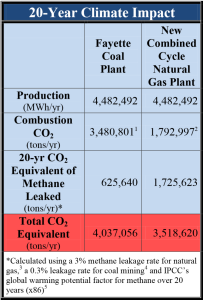
Cyrus Reed, the Conservation Director of the Lone Star Chapter of Sierra Club said of this, “Austin Energy’ s recommended rate increase puts too much of a burden on low energy users working families and the residential sector in general with these proposed new high fixed costs  Instead AE should adopt new rates that are a fairer balance between industrial and residential, support it’s generation plan to encourage energy efficiency and conservation solar and moving away from continuing to rely on burning coal at its Fayette power plant.”

Austin Energy customers are encouraged to attend and participate in the meetings in any of three ways:

  • speak during citizen communications (3 minute limit) at any meeting
  • submit written questions or comments at any time via the rate review website
  • request an opportunity to provide formal comments or a presentation during EUC rate review meetings.

Comments or questions on the rate proposals or a request to make formal comments at an EUC meeting may be submitted directly via email to ratereview@austinenergy.com.

Read Full Post »

The drought in Texas that has fueled wildfires, devastated agriculture and caused water shortages, actually worsened in the past week according to the US Drought monitor’s weekly report.

Much of Texas would need 9 to 23 inches of rain over the next month to emerge from drought and that is unlikely to happen. The forecast for three months out indicates that we will stay in this pattern for a while. Texas was told to expect abnormally warm and dry conditions from October to December thanks to another La Nina weather cycle.

La Nina conditions in the U.S. tend to mean warmer, drier weather in the south and the U.S. Climate Prediction Center said Thursday that over the next three months above normal temperatures are expected in Colorado, Kansas, New Mexico, Oklahoma and Texas — as well as parts of areas along the western Great Lakes.

US Drought Monitor - Sept 13, 2011While some rain fell Thursday morning in parts of hard-hit north Texas, nearly 88 percent of the state is in what is classified as exceptional drought — up from 81 percent the week before.

Nearly 97 percent of Texas is in either exceptional or extreme drought.

From June through August, Texas suffered the hottest three months ever recorded in the United States, according to the National Weather Service. And the 12 months ending on Aug. 31 were the driest 12 months in Texas history, with most of the state receiving just 21 percent of its annual average rainfall.

In Texas alone, agricultural losses have topped $5 billion.

Over the next few days, some 1-2 inches of rain is forecast in some of the drought areas. But Texas will miss most of that, so no relief in sight.  At least the temperatures have dipped below 100, so while the Austin City Limits festival will probably seem unbearably hot for those coming into Central Texas from out of state, for us Texans 95 degrees will seem balmy.

Read Full Post »

« Newer Posts - Older Posts »