Recently the Public Utilities Commission (PUC) denied the emergency petition of State Representative Sylvester Turner (D – Houston) and a number of advocacy groups including AARP Texas, Texas ROSE, Texas Legal Services, and One Voice Texas, to prevent dangerous electricity disconnections during Texas’ hot summer months. This petition was designed to offer relief to elderly, medically frail, and low-income consumers and protect them from dangerously high heat — which causes deaths in vulnerable communities every year.
Just a few weeks ago, a 56 year old man in Houston named Herbert Gaston died inside his home as a result of “a combination of underlying medical issues and heat exposure.” His air conditioner broke the day before. On the day he died, it got up to 113 degrees inside the house. His brother went to the grocery store for a couple hours, and when he came back, Herbert was gone.
It is tragic, but heat-related deaths such as this happen all the time. In the period between 1999 and 2004, 258 Texans died with exposure to heat as the underlying cause. In Houston alone, an average of 24 people die heath-related deaths every year. These deaths are preventable, and Turner’s emergency rule would have provided a cushion to those at risk by making it illegal for retail electric providers to shut people’s power off when they can’t pay their electric bills. Turner’s rule would have allowed consumers to stack their energy bills and pay them off over the next few months.
From Turner’s official press release,
The petition requests the PUC to establish basic market wide protections requiring utility companies to keep the power on if their customers fall behind on their bills but set up proper payment plans and honor them. The proposed rule also establishes a heat threshold protection, disallowing any electricity disconnections in an area when the heat index will reach or exceed 105 degrees Fahrenheit.
“The rule encourages customers to make payments and keep the power on so that their households can keep safe in the extremely hot Texas summer; but it also allows for some much needed flexibility in dealing with what is often for consumers much higher summer electricity bills. Industry is not in the business of turning the power off, and I’m not seeking to give electricity away. This is a win – win situation for consumers and the electric industry,” said Representative Turner.
“Much of Texas is currently experiencing triple digit temperatures and no relief is in sight. We are seeking to establish some basic protections for the safety and welfare of consumers. We can not afford to lose lives simply because someone fell behind on their electricity bill,” said Turner.
Representative Sylvester Turner’s Petition for Adoption of an Emergency Disconnection Rule [Docket No. 37142] was very similar to legislation introduced this session to provide basic consumer protection for vulnerable populations such as low-income communities, the elderly, and medically frail. Unfortunately for Texans, Turner’s petition was denied before the PUC commissioners even listened to testimony.
Sylvester Turner, understandably, was incensed:
[youtube=http://www.youtube.com/watch?v=kGqvb6pAzDE]
The commission argued that Turner’s rule was unnecessary because protections from electricity shut-offs already exist in PUC code (see Subchapter R, section g — disconnection of ill and disabled). This rule provides protection to those that can prove a disconnection would be dangerous to their health with a doctor’s note. Easy, right? I mean, everyone has access to affordable healthcare, right? Just go to your family doctor and ask him to make a call for you, what’s the bid deal?
I hope you sense the sarcasm. Clearly not everyone has access to affordable health care — in fact, according to a report released this March by Families USA, 44 percent of Texans did not have health insurance, many for 6 months or more, in 2007 and 2008. And the same people that don’t have health care are often going to be the same people having trouble meeting high summer electricity bills. So what are those Texans without health insurance– nearly half of the state — supposed to do? Go to the emergency room to get a doctor’s note for the PUC?
Commissioners also argued that since electricity rates are lower this year than normal, folks will be paying lower bills and there’s nothing to worry about. Except, oh, I dunno… that whole “economic downturn” we keep hearing about! Just because rates are a little lower than previous years doesn’t mean that its easier to meet bills this year than any other, because clearly all other factors are not equal. Last year rates may have been higher, but unemployment was also 4.2% then, compared to 7.1% as of this May.
In my opinion, the Commissioners were incredibly insensitive in their reasoning. One also argued that if Turner’s rule were to take effect, people could ostensibly pay zero dollars for their electricity during the summer and then be stuck with tremendous bills in the fall that they couldn’t pay… and then electricity providers wouldn’t get their money.
Turner said it best, and can save me the trouble — “The companies ought to be proud of you because you have argued their case. For people who are more afraid of their electricity bills than they are of the heat itself, you have not argued their case.”
Thankfully, some power providers and local governmental agencies are undertaking voluntary programs to protect their customers from dangerous heat. Reliant Energy in Houston is sponsoring and arranging rides to eight cooling centers spread throughout the city. For specific information on these “Beat the Heat Centers”, or to schedule free rides to and from the Beat the Heat Centers, interested participants can call 713-497-2711.
Dallas County Health and Human Services has also launched a campaign to prevent heat-related deaths, and TXU Energy is working with those having trouble paying high bills this summer. Dallas residents without working air conditioners should call Dallas County health officials on (214) 819-6001 or (214) 819 1848.
During the Public Meeting, Commissioners also raised the point that even if they had passed this rule, it would not apply to municipally owned utilities such as Austin Energy or San Antonio’s CPS Energy.
Austin Energy customers worried about falling behind on their energy bills this summer have a number of options. Eligible customers can sign up for a deferred payment program to spread their bills out a bit, or look into the Customer Assistance program. Folks that aren’t worried about their bills but are worried about Austinites at risk from shut-offs and heat danger can also contribute to this program on the return portion of your energy bill. Eligible customers can also sign up for free home energy improvements to reduce energy use and save money. Family Eldercare also has a summer fan drive to keep central Texans cool and safe. Visit their website for more information on getting a fan or donating to the program.
San Antonio residents can look into two major programs provided by CPS Energy, their Emergency Assistance Program and the Residential Energy Assistance Partnership (REAP) to help disadvantaged elderly, disabled and low-income customers with small children pay their natural gas and electric bills.
Next time you check your energy bill, check and see if your electric provider offers an opportunity to donate towards those less fortunate and keep Texans cool. For those on the fringes of our society, being able to pay electricity bills can be a matter of life and death.
UPDATE: According to Dave Lieber at the Fort Worth Star Telegram, “Under state rules, companies must offer customers deferred payment plans when asked to do so.” Any individual unable to pay their month-to-month bill should definitely contact their electricity provider and ask for this option.
Read Full Post »
 CPS has a meeting today at Firefighters Union Hall (8925-IH10 WEST) from 6:00-8:00 pm. Anyone from District 8 is encouraged to attend and speak for the cause. Each person gets three minutes of talk time and the Local Power/Energia Mia Coalition needs to have its concerns about the South Texas Projects Proposed expansion voiced by as many people as possible. This is especially true of our concerns about the proposed reactors’ heavy water consumption during times of drought (like this one), the proposal’s high cost and the high likelihood of costs over-runs, and the huge financial burden this means for San Antonio ratepayers.

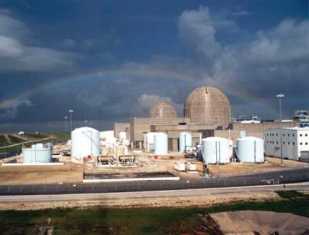 After CPS Energy unveiled its optimistically low $13 billion proposal for South Texas Project reactors three and four, I decided to look into the history of the construction of the first two reactors. What I found was troubling, but it seemed to be pretty much in line with my understanding of problems with nuclear projects during the 70s and 80. Here is a brief time line:
 The word, according to the
  Even though Texas leads the nation in greenhouse gas emissions, Governor Perry balks at making any major stand on producing reliable renewable energy.
 Just four days into summer, and we’re already are setting records for energy consumption in Texas. Yesterday
  It’s Monday, the day after the first day of summer, and it’s time for another Texas Progressive Alliance blog roundup.



