 The Texas Observer just ran an article on the top ten issues the Texas Legislature should address this session. Anybody want to guess what number two was?
If you guessed climate change… you’ve probably been reading this blog. And you’d be right!
The Observer expects for Texas leaders to more amenable to climate change action than they have been in years past. Their reasoning?
Congress and the Obama administration have signaled that major federal climate change legislation is in the works. “The Obama package will give Texas a choice: lead or get left behind,” says state Sen. Eliot Shapleigh, D-El Paso. “Luddites need to move away and let leadership take the day.”
The article continues:
As the nation’s top emitter of carbon dioxide, Texas arguably has the most to lose and the most to gain from federal action, says Bea Moorehead, executive director of Texas Impact, an interfaith advocacy group. States that move sooner to cut their greenhouse-gas emissions will have an easier time adapting to a carbon-restrained world. Advocates like Moorehead want to build on the successes Texas has had with wind power and energy conservation by pushing incentives for the solar industry and expanding efficiency standards. Such measures, they say, will create jobs and cut air pollution while replacing sources of greenhouse gas.
I was particularly excited about this article because we’ve been singing the same tune in informational handouts to all your legislative members.
If you agree that this is the message your legislators need to hear, loud and clear… TELL THEM SO. We can print out brochures and hand them to legislative staffers, and the Observer can print articles on what they think the legislature ought to be doing, but ultimately, politicians respond to what their constituents want.
This is a novel idea, I know. You’re thinking; “But Sarah, I’ve been wanting politicians to pursue a whole host of progressive policies for years, and they haven’t happened.”
Well, have you every straight up asked? Politicians aren’t mind readers, you know. Sometimes we’ve got to count ourselves lucky if they are readers at all. So if you want them to know what you want, you’ve got to tell them. When you contact your legislators, they take it much more seriously than a small record of your personal opinion. As few as five personal letters can key a legislator in that an issue is important. Just ten letters can lead them to think they’ve got “constituent trouble” and cause them to support or vote against a particular bill.
Visit the website Who Represents Me? If you know your address, it will only take about 30 seconds to know who your legislators are as well. Write them a letter. Or pick up the phone and give them a call. You probably won’t get to speak with your rep directly, but you can definitely ask for the staffer that works on energy and give them your two cents. Make your voice be heard!
 Congress is voting on Obama’s much anticipated stimulus package today. If you want this package to include measures to promote renewable energy and a public works project to make public buildings more energy-efficient — and if you read this blog, I bet you do —
  Want Austin to do think outside the box on energy efficiency?
 American homes lose $13 billion in wasted energy every year, averaging a whopping $150 per family. What’s more, the average family spends about $1,900 per year on utility bills.
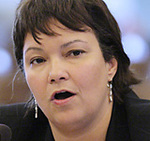 The nominee, Lisa Jackson, told members of the Senate Environment and Public Works Committee that she would “send investigators and samplers out to verify the extent of the problem” and “mobilize” agency efforts within 30 days of her confirmation. Parents, she said, “have a right to know their children are safe when they are in school.”
 Television sets use about 4% of household power nation-wide, and the newest flat screens are even bigger power suckers — LCD screens use 43% more power than the old tube TV models. Despite this situation, government efficiency testing standards for televisions haven’t been updated since Leave It to Beaver appeared in black and white. Energy Star, a voluntary labeling system developed by the EPA, uses modern efficiency tests, but Energy Guide, the mandatory Department of Energy labeling program, still uses standards from the era of Lucy and Ricky in separate twin beds.
 Apparently the islands are remote and for the most part, uninhabited. The article reports, however, that there was some opposition to the designation by commercial and recreational fishing groups, as well as government officials from the nearby Commonwealth of the Northern Mariana Islands who feared potentially negative commercial impacts.
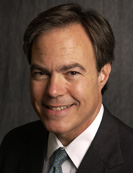 Joe Straus (R- San Antonio) announced in a press conference this morning that he has enough pledged supporters to win the race for Speaker of the Texas House.


