Coming soon, more information about our TV commercials that will air soon to promote solar (there are lots of good solar bills at the Lege) brought to you by Public Citizen, Environment Texas, and the Environmental Defense Fund.
Coming soon, more information about our TV commercials that will air soon to promote solar (there are lots of good solar bills at the Lege) brought to you by Public Citizen, Environment Texas, and the Environmental Defense Fund.
Posted in Energy, Renewables | Tagged environment texas, environmental defense fund, Public Citizen, Texas, TV commercials |
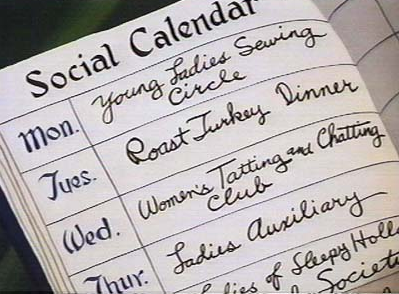 There is too much fun going on in the next few days… I can’t handle it. I wish I could be multiple places at once… and influence climate change legislation by sheer will power.. and attach documents to e-mails telepathically. Ah well, if wishes were horses, I’d have gotten that pony when I was six.
Here’s a quick breakdown of all the good stuff going on over the next couple days:
Old Settler’s Music Festival, Thursday March 16 – Sunday March 20
Old Settler’s Music Festival is a nationally known music festival featuring the best in roots and Americana music. The festival is held in the gorgeous Texas hill country, at the height of the Bluebonnet and wildflower season. Old Settler’s Music Festival offers great music and activities for the whole family.
The Festival is held at Salt Lick Pavilion and Camp Ben McCulloch, just minutes from Austin, located 11 miles south of Highway 290 West on Farm Road 1826.
Public Citizen is an official sponsor of the event, so keep your eyes out for our table, banners, and slide-shows in between sets. We hope to live blog the festivities, so be on the lookout for artist interviews and sneak peaks of shows. And don’t forget your sunscreen, that hill country sun can be brutal!
Fighting Goliath screening, Thursday April 16
When: Thursday, April 16 at 7:00pm
Where: St. Andrew’s Presbyterian, 14311 Wellsport Drive (one block west of the Wells Branch exit off of I-40).
Narrated by Robert Redford and produced by The Redford Center at the Sundance Preserve and Alpheus Media, FIGHTING GOLIATH: TEXAS COAL WARS follows the story of Texans fighting a high-stakes battle for clean air. The film introduces the unlikely partners-mayors, ranchers, CEOs, community groups, legislators, lawyers, and citizens-that have come together to oppose the construction of 19 conventional coal-fired power plants that were slated to be built in Eastern and Central Texas and that were being fast-tracked by the Governor. (34 minutes)
Public Citizen’s Ryan Rittenhosue will do a short presentation on Texas’ current coal threat and have a Q&A session afterward.
Environmental Justice & the Multicultural City: The Transformative Role of Urban Planning City Forum, Friday, April 17
People of color and low-income communities have disproportionately suffered from the environmental burdens generated by consumption and production choices made by others. Responding to these injustices, neighborhood activists have been fighting for over 30 years for the right to live, work, and play in healthy environments. In this City Forum, the panelists will share their insights from research and activist work, and discuss the potential role of planning educators, students and practitioners in addressing environmental justice concerns. Continue Reading »
Posted in Coal, Global Warming, Toxics, Uncategorized | Tagged americana, Austin, Austin Energy, Brewster McCracken, camp ben mcculloch, city forum, climate change, coal block, coal wars, earth day weekend, environmental justice, fighting goliath, focus the nation, green apple festival, hundred acre3s, Lloyd Doggett, old settler's music festival, PODER, Public Citizen, robert redford, Roger Duncan, ryan rittenhouse, salt lick pavilion, St. Edward's University, susana almanza, Texas, texas union, town hall, urban planning, will wynn |
 The City of Austin’s municipal elections are coming up May 9th, which means that throughout the following weeks there will be lots of candidate forums and opportunities to question our potential leaders. From our friends at PODER, here are two upcoming events:
East Austin Candidate Forums
What do this year’s Mayoral and City Council candidates have to offer East Austin? Ask them yourself! By attending these upcoming forums, you’ll find out what the candidates plan to do about quality of life disparities in East Austin. Hear how they respond to tough questions from the community about unemployment, housing, stimulus funding for neighborhoods, and minority representation.
TUESDAY, APRIL 14 AT 6 PM
Southwest Key‘s Mayoral and Place 1 Candidate Forum
6002 Jain Lane, Austin
512.462.2181
*Childcare and refreshments provided by AARP
*Habla Español
THURSDAY, APRIL 23 AT 6 PM
PODER’s Mayoral and City Council Candidate Forum
Space 12 located at 3221 East 12th Street
512.472.9921
*Sponsored by PODER, Space 12, Rosewood & other East Austin Neighborhood Associations & Muntu: Reflections in East Austin
Posted in Uncategorized | Tagged aarp, candidate forum, city of austin, east austin, housing, mayoral race, minority representation, municipal elections, muntu, place 1, PODER, rosewood, southwest key, space 12, stimulus funds, Texas, unemployment |
 Residents Who May Be Affected by Plant’s Pollutants Should Tell the Judge
AUSTIN – Next Monday marks the last chance to register as legal opponents to the White Stallion power plant proposed near Bay City, and Public Citizen is urging people to attend. Opponents have organized a group called the No Coal Coalition around concerns for air quality, water use, the health effects of increased pollution and the plant’s potential contribution to global warming.
The White Stallion Energy Center is slated for construction just 10 miles south of Bay City. The State Office of Administrative Hearings (SOAH) will conduct a preliminary hearing on the White Stallion Energy Center at 10 a.m. Monday, April 20, at the Bay City Convention Center.
Anyone with concerns or who anticipates being affected by air contaminant emissions from the facility may attend Monday’s hearing and request to be a party to the case. A SOAH judge will decide who will be eligible to participate in the case; the actual contested case hearing, which will be in about six months, will be a legal proceeding similar to a civil trial in state district court.
“We are extremely concerned about the White Stallion plant,” said Robert M. Malina, Ph.D, a Bay City resident representing the No Coal Coalition and a professor emeritus with the Department of Kinesiology and Health Education at the University of Texas at Austin.” If built, White Stallion would emit thousands of tons of pollution, which could have serious health consequences for a large number of people and the environment. Emissions from coal plants can complicate asthma, cardiac pulmonary disease, and many other circulatory and respiratory conditions. Mercury and lead, both emitted in large quantities from coal and petroleum coke plants, accumulate in our bodies and the environment and are associated with serious developmental problems in children. Simply stated, the White Stallion plant should not be built.” Continue Reading »
Posted in Coal | Tagged bay city, bay city convention center, coal block, colorado river, hunton igcc, no coal coalition, NRG, Public Citizen, robert malina, ryan rittenhouse, soah, state office of administrative hearings, Texas, Tom "Smitty" Smith, white stallion, white stallion energy center, white stallion power plant |
The Sustainable Endowments Institute, a nonprofit organization that advances sustainability on university and college campuses, has released their 2009 College Sustainability Report Card. An independent evaluation of campus and endowment sustainability activities at colleges and universities with the 300 largest endowments in the United States and Canada, the report card is designed to identify institutions that are leading by example on sustainability.
The Report Card’s grading system seeks to encourage sustainability as a priority in college operations and endowment investment practices by offering independent yearly assessments. The focus is on policies and practices in nine main categories:
How does my school rank?
Twelve Texas schools are represented in the report card but only one school, Rice University, falls in the top third with an overall score of B-. Eight Texas schools land in the bottom third with scores of C- to D. Below is a listing of the Texas schools rated and their overall score.
| Texas University | City | 2008 Score | 2009 Score |
|---|---|---|---|
| Rice University | Houston | C+ | B- |
| University of Texas at Austin | Austin | B- | C+ |
| Texas A & M University | College Station | C- | C+ |
| Southern Methodist University | Dallas | C- | C+ |
| University of Houston | Houston | D | C- |
| Trinity University | San Antonio | D- | C- |
| Baylor University | Waco | C- | C- |
| Southwestern University | Georgetown | D+ | C- |
| Texas Christian University | Fort Worth | D+ | C- |
| University of Texas at Dallas | Dallas | N/A | C- |
| Abilene Christian University | Abilene | N/A | D+ |
| Texas Tech University | Lubbock | D | D |
To find out more about your school’s rankings go to The College Sustainability Report Card.
How can my school participate in the College Sustainability Report Card?
In 2010, the Sustainable Endowments Institute is offering the opportunity for all institutions of higher education in the United States and Canada to be included in the College Sustainability Report Card. Through a new Opt-In Initiative, any higher education institution may apply for inclusion in the 2010 edition of the College Sustainability Report Card. Applications to Opt-In a school may be submitted by administrators, alumni, faculty, staff, students or trustees and must be received by May 8, 2009.
This process will dramatically increase the depth and breadth of school evaluations in the Report Card, however to sustain this increase there is a requirement of a $700 donation. Grant assistance is available to schools that have a demonstrated need.
If you would like to have your school included in the 2010 College Sustainability Report Card you can find links to the application forms here.
Where can I get help if I would like to encourage sustainability at my campus?
ReEnergize Texas, a project of the Texas office of Public Citizen, is a coalition of students fighting climate change across the Lone Star State. We have staff available to assist student groups who want to get active on their campuses. If you would like to have your campus participate in the College Sustainability Report Card or would like ideas about what your campus can do to improve their score, visit ReEnergize Texas to find out how we can help.
Posted in Global Warming | Tagged Sustainability Texas campus reenergize, Texas |
It has been accepted for a while now that the Arctic and the Antarctic Peninsula have been warming, at least partly due to anthropogenic warming. However, recent scientific studies have concluded that the entire continent of Antarctica is warming and is clearly linked to the worldwide warming trend. Based on recent studies and recent events, scientists are extremely concerned that the melting in the Arctic and Antarctic are warming much faster than was previously expected.
One of the most alarming events occurred when an ice bridge that was previously anchoring the Wilkins Ice Shelf to the rest of the Antarctic Peninsula shattered. To use the words of British Antarctic Survey glaciologist Professor David Vaugha, “the ice sheet has almost exploded into a large number, hundreds of small icebergs.”It is also important to note that this ice sheet was formerly thought to be relatively stable, at least for the foreseeable future. This ice bridge was thought to be a critical barrier keeping the rest of the ice sheet in place. Now that it has collapsed, there is nothing to prevent this enormous ice sheet from disintegrating.

Parts of the ice shelf are now beginning to resemble shattered glass.
But this type of phenomena is not a singular occurrence. In fact, the U.S. Geological Survey recently released a report concluding that the “Wordie Ice Shelf, which has been retreating in the past 40 years, is completely gone.” The same study also stated that the Northern part of the Larsen Ice Shelf has also disintegrated. However, it is important to acknowledge that these and other sea based ice shelves will not contribute to any substantial rise in seas level. Instead, the melting of these sheets opens the door for further melting which will very likely affect sea levels in the future.
But scientists now have evidence that this warming trend is not solely represented in the Antarctic Peninsula. In fact, a new scientific report has concluded that, on average, the entire continent of Antarctica has been warming over the past half century. This report disproves the former belief that the Eastern Part of Antarctica has actually been cooling over the past century. The dispute on the warming in this region of the Arctic was largely due to the lack of weather stations in the interior of the continent. However, with the help of satellite images over the past 25 years and several unmanned weather stations in the interior, scientists were able to conclude that the eastern part of the Antarctic is, in fact, warming. The scientists concluded in the study that anthropogenic green house gas emissions is almost certainly a primary cause of this warming trend.
But as well all know, Antarctica is not the only place in the world experiencing the effects of global climate change. On the other side of the world, scientists are predicting that the Arctic ocean may be nearly ice-free in only 30 years. This figure was reached after averaging six of the most specific models dealing with sea-ice released by the United Nations Intergovernmental Panel on Climate Change. The average of these six models was around 32 years, with one of the models estimating an ice-free arctic summer being only an mere 11 years away.
Based on these events and recent scientific studies, it is evident that global climate change is affecting both poles. The effects of global warming are being felt worldwide, on all 7 continents. The time for debate on this issue has passed, the time for action is now.
– Andrew Townsend, Global Warming Intern
Posted in Global Warming | Tagged Antarctic, Antarctic Peninsula, Antarctica, arctic, climate change, Global Warming, Ice Shelf, Larsen ICe Shelf, Melting, Shattered ice, Texas, Wilkens Ice Shelf, Wordie Ice Shelf |
 This week citizens submitted two separate filings to the Nuclear Regulatory Commission (NRC) opposing Luminant (formerly TXU)’s proposed Comanche Peak nuclear reactors. Petitioners include state Rep. Lon Burnam, the SEED Coalition, Public Citizen and the Ft. Worth based True Cost of Nukes.
In the past, NRC has made companies jump through two major hoops before their operating license is granted. First, the company must complete the reactor design certification process which ensures that the design for the plant is safe. If a company decides to choose a pre-certified design that has been built before and the NRC has vetted, they may get their operating license faster because they can skip dealing with design issues. After their design is approved, the company can then file for their license to operate in a separate process. This is when citizens have the opportunity to analyze such documents as the Environmental Impact Statement and file contentions.
But for this new fleet of nuclear plants being licensed, the NRC has streamlined this process, combining both the design certification and licensing process into one. This is a major problem for reactors such as those proposed at Comanche Peak because they are submitting a design that has never been built before anywhere in the world. It hardly makes sense that NRC can approve a plant to operate when they don’t even know if the plant design is feasible or safe, but that is exactly what is happening. This is kind of like getting in car and driving off to the drugstore when you’re not sure where it is and… oops, might not even know how to drive.
“By moving the license forward without having certified the design, the NRC is violating its own rules,” said attorney Robert Eye, “The licensing process should be halted until the NRC can honestly say that the reactor design is safe.”
Rep. Lon Burnam has compared what the NRC is doing to making those living near Comanche Peak “guinea pigs in a radioactive experiment.” Other nuclear plants that have gone forth with construction before their design was finalized and approved by regulators have seen serious complications.
In addition to the madness of the NRC’s licensing process, there were even further contentions filed concerning defects in Comanche Peak’s license application. These contentions include:
The next step in this process is for the NRC to respond to citizen’s petitions and contentions.
For further information on contentions filed, check out SEED Coalition’s press release after the jump. Continue Reading »
Posted in Nuclear | Tagged citizen contentions, comanche peak nuclear plant, environmental impact statement, lon burnam, Luminant, NRC, Nuclear Regulatory Commission, Public Citizen, reactor design certification, SEED Coalition, Texas, true cost of nukes, TXU |
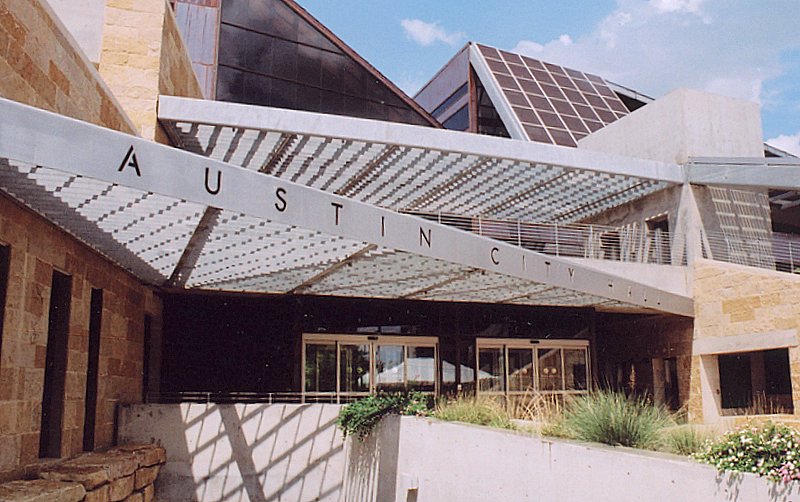 Want to vote in the upcoming City of Austin Municipal Elections? The deadline to vote in the May 9th elections is this Thursday, March 9th.
Says the Statesman:
To be eligible to vote for mayor or city council members or ballot initiatives in Travis County communities, you must mail a registration application to the Travis County Registrar. Those already registered to vote in Travis County do not have to re-apply.
Residents of Austin and other Travis County cities can find a registration application at the Travis County Tax Assessor/Collector’s website or by calling 238-8683. Some parts of North Austin are actually in Williamson County; those voters can obtain applications at www.wilco.org or by calling 943-1630.
To vote in Texas, you must be a U.S. citizen, live in the county you register, be at least 18 years old on Election Day, not have been convicted of a felony, and not have been declared mentally incapacitated by a court of law, according to a release from the City of Austin.
Want to see where the candidates stand on environmental issues? Come to a candidate forum focused on sustainability issues this Thursday, March 9 at 5:30 pm at City Hall. Continue Reading »
Posted in Uncategorized | Tagged american youthworks, Austin, Austin American-Statesman, austin carshare, Austin EcoNetwork, austin metro trails and greenways, Austin Permaculture Guild, Central Texas Zero Waste Alliance, Citizen Gardner, city of austin, Clean Water Action, election day, environment texas, environmental candidate forum, municipal elections, north austin, OHPEN, PODER, Public Citizen, Save Barton Creek Association, Save Our Springs Alliance, SEED Coalition, Sierra Club, Solar Austin, Sustainable Food Center, Texas, Texas Campaign for the Environment, texas climate emergency campaign, Texas Environmental Democrats, Texas Green Network, travis county, Travis County Registrar, voter registration, williamson county |
Yesterday the House Election Committee heard invited testimony on the House version of the notorious Voter Suppression (ID, if you must) bill. Today the committee will hear public testimony on the bill (that’s your cue). Remember, if you don’t want to wait around to testify, you can always sign up in opposition to the bill. A clerk will be there at 10 am to help you sign-up. The actual hearing is expected to start sometime between 12:00 noon and 2:00pm, upon adjournment of the House in Room 120 of the Reagan Building (on the Capitol Grounds, just a few hundred yards NW of the Capitol. Exact address is 105 W. 15th St.)
Still not sure why a Voter ID bill would be bad? Oh, how quickly they forget…
Posted in Good Government, Uncategorized | Tagged house elections committee, public testimony, reagan building, Texas, voter id, voter suppression |
On Wednesday, April 8th, the House Committee on Environmental Regulation will hear testimony on a bill to fast-track coal and other power plants. Issues with the HB 4012 include:
Come testify in Capitol Extension E1.014 on Wednesday at 10:30am. Without the contested-case process, there could have been no public victory against 8 of the 11 proposed TXU coal plants.
Even when a power plant is permitted, it is almost always a better permit for having endured the contested-case hearing process. The process brings out weaknesses in the application and often helps identify opportunities to lower dangerous emissions from these plants.
Two years ago the state showed its disregard for public interest when Governor Perry attempted to grandfather coal plants and protect them from regulation. That attempt was defeated in court, but now the legislature is resurrecting tired arguments in favor of polluting technologies that hurt our health and our economy.
If you can’t make it in person, call in to the Environmental Regulation committee and voice your opposition to HB 4012!
Rep. Byron Cook (Chair) – 512-463-0646, Byron.Cook@house.state.tx.us
Rep. Warren Chisum (Vice-Chair) – 512-463-0736, Warren.Chisum@house.state.tx.us
Rep. Lon Burnam – 512-463-0740, Lon.Burnam@house.state.tx.us
Rep. Jim Dunnam – 512-463-0508, Jim.Dunnam@house.state.tx.us
Rep. Jessica Farrar – 512-463-0620, Jessica.Farrar@house.state.tx.us
Rep. Kelly Hancock – 512-463-0599, Kelly.Hancock@house.state.tx.us
Rep. Ken Legler – 512-463-0460, Ken.Legler@house.state.tx.us
Rep Marc Veasey – 512-463-0716, Marc.Veasey@house.state.tx.us
Rep. Randy Weber – 512-463-0707, Randy.Weber@house.state.tx.us (Rep. Weber authored the bill in question)
 Removing contested case hearings, the public’s only opportunity to challenge power plants, without replacing it with some other mechanism to hear public input is completely ridiculous. Baby does not approve.
Posted in Coal, Global Warming | Tagged coal plant, contested case hearing, EPA, fast track, grandfathered coal plants, hb 4012, house committee on environmental regulation, permit application, power plant, Texas |
If you live in the Waco, Sweetwater, Corpus Christi, or Victoria area, you may have seen this op-ed run in your local newspaper under a variety of titles such as “Stop the Dirty Dozen”, “New generation of grandfathered polluters?”, and “Don’t create another generation of grandfathered power plants.” If not, you should give it a read.
In the early 1970s, when it looked like the passage of the federal Clean Air Act was inevitable, power companies in Texas went on a building boom to construct 12 dirty, old-technology power plants before legislation went into effect. It was more than 30 years before the Texas Legislature addressed pollution from these “grandfathered” plants. Today, just as Congress and the Obama administration are poised to pass a series of tougher air pollution laws and cap global warming gasses, a dozen applications for additional coal fired power plants in Texas have been permitted or are pending. If built, this dirty dozen of coal plants would add an astounding 77 million tons a year of global warming gases to our already overheated air, 55,000 tons of acid rain forming gases, 29,000 tons of ozone forming chemicals and 3,800 lbs of brain damaging mercury. Your call to your state senator this week can help stop another generation of coal plants from being built.
Two years ago, 19 new coal plants were proposed for the state of Texas. Everybody breathed a sigh of relief when TXU withdrew applications for eight of those plants. But other companies are still building their proposed plants, and the cumulative impacts will make it harder to breathe in the DFW, Houston, Tyler- Longview, Waco, Austin, San Antonio, Victoria and Corpus Christi areas. Seven of the plants have already been permitted, but five more are still in the permitting stages and can be more easily stopped.
Sen. Kip Averitt took a strong stand on this issue by adding a provision in his aggressive air qualtity bill, SB 16, to require the Texas Commission on Environmental Quality to look at the cumulative impacts of any proposed new plant along with any others that have already been permitted or are being proposed. This amendment would have gone a long way to protect our air and climate.
Unfortunately the electric companies out-lobbied him and took a red pen to that provision of the bill. What’s left is too little and too late. Continue Reading »
Posted in Coal, Global Warming | Tagged clean air act, coal plant, Congress, corpus christi, grandfathered power plants, Obama administration, stop the dirty dozen, sweetwater, Texas, Texas Legislature, Victoria, Waco |
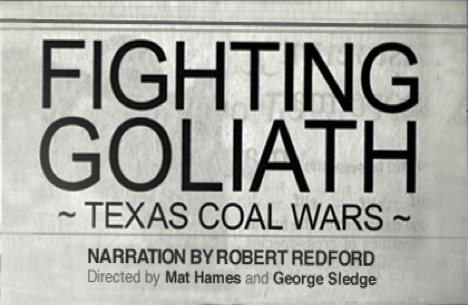 Live in the Houston area? This Wednesday, April 8, at 11:00 am, Houston Community College will be showing both FIGHTING GOLIATH: TEXAS COAL WARS and FLOW: FOR LOVE OF WATER as a part “The Reel” Series, a culture film/speaker series of learning enrichments. Public Citizen’s own Ryan Rittenhouse will be on hand after the screening for a Q&A session and to give an update on the Texas coal fight.
The screening will be held at the Town & Country Center in the “Eagle” room at 1010 W. Sam Houston Parkway N. 77043. The event will be free and open to all HCC students, faculty, staff, and friends.
APRIL 8 Films & Speaker: “The Public Commons: Access to Water/Clean Air”
Posted in Coal, Uncategorized | Tagged fighting goliath: texas coal wars, flow: for love of water, Houston area, Houston Area Environmental Film Screening, houston community college, Public Citizen, robert redford, ryan rittenhosue, ryan rittenhouse, sam houston parkway, Texas, the reel series, town and country center |
Happy Monday everybody! Check out the latest from our friends at Alliance for a Clean Texas. Original post can be found here.
This week, ACT is happy to bring reports from two organizations doing great work on behalf of their local communities. In Houston, the Galveston-Houston Association for Smog Prevention (GHASP) is presenting Houston Earth Day – the City of Houston’s official Earth Day celebration – this Saturday, April 11th. This FREE day-long festival focuses on green-living and features hands-on activities for everyone. There will be an Earth Zone (highlighting air, land, water and renewable energy), an Environmental Education Zone, Kids Energy Zone, and Farmers’ Market. Additional information about Houston Earth Day and Mothers for Clean Air’s Earth Day 5k is available here.
The Hill Country Alliance reports that they support HB 3265 which will be heard in House County Affairs on Monday April 6. This bill represents the culmination of 18 months of collaboration between 15 rural Hill Country counties; it provides this sensitive area with a set of tools to handle growth – particularly the stress placed on water resources.
Posted in Toxics, Uncategorized | Tagged alliance for a clean texas, City of Houston, clean air, earth day, earth day 5k, environmental education, farmers market, galveston-houston association for smog prevention, ghasp, growth, hb 3265, hb 3428, hill country, hill country alliance, house county affairs, houston, houston earth day, mothers for clean air, Texas, water |

Do you, Pedernales Electric Coop member, want to save money on your electric bills? World class energy efficiency programs? Solar Panels on your roof? Shape the future of PEC?
Let your voice be heard!
A public hearing on a proposal to adopt energy efficiency and smart grid policies will be held tomorrow in Johnson City. If you’re a PEC member, this is your chance to weigh in on the standards PEC will adopt that will guide their energy efficiency and conservation policy in the future.
When: Noon, April 4, 2009
Where: Pedernales E. Babe Smith Headquarters, 201 South Avenue F, Johnson City, TX
What’s all this about anyway:
Congress passed a bill in 2007 (the Energy Independence and Security Security Act, or EISA) that included a requirement for all electric coops to consider adopting standards that would make information sharing, energy efficiency and conservation coop priorities.
If adopted, these standards would make it easier for Pedernales to offer energy efficiency programs and develop a “smart grid” which is crucial to develop small-scale renewables like solar panels on your rooftop.
PEC has a draft proposal on the table which modifies the federal standard. They want the public to comment on it and offer suggestions. So…
Now’s your chance! Show up to the meeting or submit written comments. Tell PEC you want them to:
To find out more visit www.cleanenergyfortexas.org. There you will find a bunch of information, including our initial comments on all the good stuff above. Here is the link to PEC’s draft proposal too.
A group of like-minded folks will gather outside the building around 11:30.
Posted in Efficiency, Energy, Good Government, Renewables | Tagged coop, EISA 2007, Johnson City, Pedernales, PURPA, Texas |
And so it begins….
We knew as soon as there was a draft climate bill that it would be falsely attacked and derided disingenuously as “an energy tax.” But we had no idea to what extent the truth-stretchers would go to make their rhetorical points.
Did I say stretch the truth? I meant break, beat, spit upon and then toss it into a cesspool to be feasted upon by worms and vermin, for as little as truth means to these lying liars.
Wednesday, Keith Olbermann named John Boehner his “Worst Person in the World” for his exaggeration lie about the costs of tackling carbon. Watch this video for yourself:
[youtube=http://www.youtube.com/watch?v=7lJWX_xmxco]
This is just the tip of the iceberg. At least some people are willing to check their facts and talk about climate in a rational manner. Look, a Press Release! (emphasis added is mine, not in original)
‘Energy Tax’ Rhetoric Ill Serves Debate on Climate Legislation
Republican members of Congress have taken to calling cap-and-trade legislation an “energy tax” or a “light switch tax” on American families and businesses.
Most recently, congressional Republicans misrepresented a Massachusetts Institute of Technology study analyzing cap-and-trade proposals. They distorted the study’s conclusions to exaggerate the costs of cap-and-trade legislation on individual households, by making faulty calculations based on erroneous assumptions and by ignoring a basic principle of economics – the time value of money.
Conservatives, of all people, should not ignore basic principles of economics. Continue Reading »
Posted in Global Warming | Tagged Carbon Dioxide, climate change, Congress, Global Warming, John Boehner, Kieth Olbermann, not an energy tax, propoganda, Texas, Waxman-Markey bill, Worst Person in the World |

 ">spousal
 Citizen Vox Blog
| M | T | W | T | F | S | S |
|---|---|---|---|---|---|---|
| 1 | 2 | 3 | 4 | 5 | ||
| 6 | 7 | 8 | 9 | 10 | 11 | 12 |
| 13 | 14 | 15 | 16 | 17 | 18 | 19 |
| 20 | 21 | 22 | 23 | 24 | 25 | 26 |
| 27 | 28 | 29 | 30 | |||