Feeds:
Posts
Comments

The Associated Press is reporting that the World Health Organization (WHO) is declaring – what many of us who spend our days in traffic choking on smog or who live near a power plant or other industrial facility have long suspected but now has finally been scientifically validated – air pollution causes lung cancer.

The International Agency for Research on Cancer (IARC), the cancer agency of the World Health Organization based in Lyon, France, declared  that air pollution is a carcinogen, alongside known dangers such as asbestos, tobacco and ultraviolet radiation. The decision came after a consultation by an expert panel organized by IARC declared air pollution an important environmental carcinogen, more so than passive smoking.

IARC had previously deemed some of the components in air pollution such as diesel fumes to be carcinogens, but this is the first time it has classified air pollution in its entirety as cancer causing.

The risk to the individual is low according to their statement, but main sources of pollution are widespread, including transportation, power plants, and industrial and agricultural emissions, and they are difficult for individuals to avoid.

WHO and the European Commission are reviewing their recommended limits on air pollution. Previously, pollution had been found to boost the chances of heart and respiratory diseases, but the recent analysis of more than 1,000 studies worldwide points to enough evidence that exposure to outdoor air pollution is now considered to cause lung cancer and WHO will review their recommended limits on air pollution based on these new findings.

Click here to read the NBC news story on this new finding.

Energy Future Holdings $1 Billion Bonding for Texas Mines Doesn’t Pass the Smell Test

An exclusive report from Public Citizen and Sierra Club reveals that Energy Future Holdings (EFH) and its subsidiaries have not set aside cash or real assets to cover the $1.01 billion cost of cleaning up its strip mines in Texas.  Click here to get a copy of the full report entitled “Energy Future Holdings and Mining Reclamation Bonds in Texas“.

As a result, taxpayers could end up with the bill if mines are abandoned by EFH, which is expected to file for bankruptcy by year’s end.

“The report shows that Energy Future Holdings has been playing fast and loose with its obligations to Texans,” said Tom “Smitty” Smith, director of Public Citizen’s Texas office.  “The law is clear, and Texas regulators should take immediate action to demand a cash bond so taxpayers and the environment are protected.”

The Public Citizen and Sierra Club report, titled “Energy Future Holdings and Mining Reclamation Bonds in Texas,” was authored by Tom Sanzillo, Director of Finance for the Institute for Energy Economics and Financial Analysis. (Sanzillo previously served as first deputy comptroller of New York State and has thirty years of experience in public and private finance.)

Under federal law, mining companies are required to set aside money for clean-up of mines so resources will be available even if the mines are abandoned. The law was created because many mines were abandoned across the United States when companies went bankrupt, leading to contamination of surface water and groundwater.

In Texas, EFH’s subsidiary, Luminant Mining, is responsible for the operation and clean-up of its eleven active strip mines. The reclamation is estimated to cost as much as $1.01 billion.

In many states, Luminant Mining would be required to put up a $1.01 billion cash bond or other financial assets equal to that amount. But Texas’s Railroad Commission, which administers state mining law, has allowed Luminant to “self-bond,” which means it is relying on a “guarantee” without having real cash bonds set aside that the state can readily access.

Sanzillo’s analysis shows that the Luminant Generation assets that are used to pass the Railroad Commission’s financial tests for the $1.01 billion “self-bond” are already committed to secure other debt incurred by EFH.

“Luminant Generation’s revenue-generating assets, its power plants, are pledged as security for Energy Future Holdings debt,” said Sanzillo. “That means there may not be liquid assets available for the cost of reclamation. The fundamental problem is that there does not appear to be any unencumbered capital obligated to the state.”  Sanzillo added, “EFH has been playing a shell-game, and state regulators have allowed it, Sanzillo said. “If EFH is just now trying to come up with money for reclamation, that confirms it wasn’t there before. Any new financing mechanism that EFH comes up with must be reviewed rigorously. EFH has to segregate the money – set cash aside or post a third-party bond specifically for clean-up of the mines.”

Al Armendariz, senior representative in Texas for Sierra Club’s Beyond Coal Campaign, said, “This billion-dollar bonding should be a wake-up call for future buyers of EFH’s oldest coal plants. It may be that these old EFH coal plants are just too expensive to operate. They’re the subject of enforcement actions by the U.S. Justice Department, and EFH may be required to add  hundreds of millions of dollars in additional pollution controls to meet new ozone, mercury, and  carbon standards.”

Smith pointed out that how Texas handles the EFH financing for clean-up of mines could set national precedent.

“One hundred and fifty coal generating units in the United States have announced they plan to retire, and as a result many of the mines that supply them may end up in financial trouble,” Smith said. “This problem is bigger than Texas and regulators across the nation should take steps to protect consumers and the environment in their states.”

Our climate is changing and action is desperately needed, but that message is not getting through to to many of our leaders. Climate-Com will explore how the media can better present current climate science so that the public and our leaders will be convinced to act.

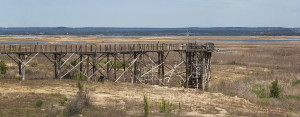
Lake Buchanan
What: A panel discussion on how we can change the way we communicate climate science and facts to the public through the media, particularly broadcast meteorologists. Featuring Jim Spencer of KXAN-TV and Kris Wilson, PhD of UT School of Journalism.

When: Sunday, October 6, 2013 from 3:30pm to 7:00pm

Where: Scholz Garten, 1607 San Jacinto Blvd., North meeting room

Who: Climate Change Now Initiative, Public Citizen’s Texas Office, KXAN-TV, UT School of Journalism, Forecast the Facts, Texas Drought Project, Austin Citizen Climate Lobby

Cost (suggested donation): $10.00 – Adults, $5.00 for students, 16 and under free **Also, free if you calculate your personal carbon footprint using an online carbon calculator and send the tons of carbon per year with your name to qualitykicks@hotmail.com.**
Continue Reading »

The public will soon get a chance to present ideas and feedback to EPA officials on the agency’s plan to require existing power plants to cut their carbon emissions.

The agency will hold a series of 11 public events around the country over the next two months, the agency announced today.

The EPA plans to set guidelines that will allow states to design programs to reduce carbon emissions from power plants, which account for a third of the nation’s greenhouse gas emissions, the agency said in a statement. Those proposals are scheduled to be released in June 2014.

“Before proposing guidelines, EPA must consider how power plants with a variety of different configurations would be able to reduce carbon pollution in a cost-effective way,” the agency said.

The public hearings will be:
Continue Reading »

When:   October 4, 2013
Where:  LBJ School of Public Affairs, The University of Texas at Austin

Central Texas Climate Resilience and Adaptation Strategies: A Capital Area Symposium. This one-day conference will bring Capital Area stakeholders together to identify and assess the shared challenges we face given the specific impacts of climate change in our region. The symposium provides a forum for learning about climate vulnerability in the region and sharing best practices in the area of resilience planning  here in Texas and throughout the U.S. Most importantly, it provides a space for identifying collaborative solutions for making the Capital Area more resilient. For conference agenda details, see Schedule. To register click here.  ($40 regular, $10 students) we encourage you to attend.

The symposium is pleased to bring to Austin some of the brightest minds working in climate change research and adaptation planning today, including keynote speakers Katharine Hayhoe, director of the Climate Science Center at Texas Tech University, and Vicki Arroyo, executive director of the Georgetown Climate Center in Washington, DC.

We also encourage you to come to a special evening forum following the symposium. Hosted by The Texas Observer, this free forum will provide a recap of the symposium and facilitate a much-needed public dialogue about climate change resilience in Central Texas. For more on the forum, stay tuned.

The ‘Capital Area’: The symposium defines the “Capital Area” as the 10-county region adopted by the Capital Area Council of Governments (CAPCOG): Bastrop, Blanco, Burnet, Caldwell, Fayette, Hays, Lee, Llano, Travis, and Williamson.

Not only do these Central Texas counties share in common similar projections for heat, drought, and other climate change impacts, but they have an established history of collaboration across member governments, agencies, school districts, and other regional organizations due to 43 years of coordinated efforts under the auspices of CAPCOG.
Continue Reading »

Community and environmental organizations lodged a formal protest against the Louisiana Department of Natural Resources’s recent permit for a coal export terminal in the already polluted Plaquemines Parish corridor.

In a letter sent to LDNR Secretary Stephen Chustz, the organizations called for reconsideration of the coastal use permit granted this month, charging that the RAM coal  terminal would violate laws created to ensure that the state’s plan for coastal restoration plan is carried out.

The letter charged that “because LDNR did not adequately analyze alternative sites, LDNR cannot assess whether there are feasible and praticable alternative locations, methods and practices for use that are in compliance with the modified standard under the Coastal Use Permit regulations.”

The letter also argued that the RAM terminal conflicts with Louisiana’s Comprehensive Master Plan for coastal restoration. The terminal “will  severely impact wetlands and the $300 million Myrtle Grove with Dedicated Dredging Ecosystem Restoration Project…,” the letter said. Continue Reading »

This coming weekend is a busy one for folks concerned about a variety of issues around climate change and eminent domain focusing around the Texas leg of the Keystone XL and other tar sands pipelines.

Saturday, September 21, 2013 is a national day of action, some of the events happening in Texas:

  • San Antonio – 10am to noon
    San Pedro Springs Park, 1415 San Pedro Avenue, San Antonio, TX
    Part of the 350.org national “Draw the Line” day of action, with Energia Mia, Alamo Chapter of the Sierra Club, Esperanza Center, the People’s Power Coalition, 100 Thousand Poets for Change, Bexar County Green Party, Texas Indigenous Council, and others will gather at the park to voice opposition to tar sands. (Pinata burst at 11 am)
  • Houston
    1:00 pm – Corner of Post Oak Blvd, and Westheimer, in Houston, TX and
    2:00 pm – Hermann Park, at the Street Theater.
  • Dallas
    9:30 am – White Rock Lake (West Lawther between Fisher and Branchfield), Dallas, TX.  Lake spruce up activities
    7:00 pm to Sunset – a roadside rally and candlelight vigil
  • Austin – Rally at the Texas Capitol

Click here to find out more about these actions and to locate actions in other communities.

line-11.jpg

Continue Reading »

Climate change will dramatically alter wildfire patterns in the western United States before the century ends, studies show.

According to a new study of future wildfire activity and smoke pollution “Ensemble projections of wildfire activity and carbonaceous aerosol concentrations over the western United States in the mid-21st century” published by Harvard University, researchers are predicting more smoke pollution — even in communities far from the forest’s edge — as more fires burn because of rising temperatures. Yosemite National Park’s Rim over the Labor Day weekend where iconic views disappeared behind a sudden influx of thick smoke the night of Aug. 30, causing the air quality to be deemed to be unhealthy for outdoor activities, is an omen for the West.

The area burned by wildfires is expected to double in some parts of the West by 2050 and the study found temperature was the primary driver for future wildfires, at least in the West’s near future.  Behind the new forest fire patterns is climate change. Higher average temperatures will result in more wildfires by 2050, especially in August, they found.

Overall, the typical four-month fire season will gain three weeks by 2050, the researchers report. And the probability of large fires could double or even triple. The findings were published in the October issue of the journal Atmospheric Environment.

While wildfires in Texas were not a part of this study, the state has already seen indications of both the devastation, the increased number and intensity of these types of fires.

SAN ANTONIO – The newly formed Re-Energize San Antonio Coalition called on CPS Energy to meet a set of conditions before following through with an October rate hike.

Describing the hike as an increase that will “unfairly burden residential taxpayers,” coalition members called on CPS to take steps to reduce pollution, waste and costs for consumers.

The coalition presented its demands in a petition handed off to the utility during the Monday, Sept. 9 CPS Rate Case Input Session held at the TriPoint Grantham Center.

“We oppose the rate hike because it promotes unsustainable growth, driven by dirty energy, on the shoulders of the poor and working class folks who already pay the most for energy costs relative to income and quality of housing stock,” said Dr. Marisol Cortez, scholar-in-residence at the Esperanza Peace & Justice Center.
Continue Reading »

The newly formed Re-Energize San Antonio Coalition put its opposition to CPS’s proposed rate hike on the record during a Sept. 9 citizen’s input meeting. Coalition representatives presented the utility with a plan of action that they want addressed before an increase goes into effect. Here’s the petition.

PETITION FOR CPS ACTIONS PRIOR TO PROPOSED RATE INCREASE

Submitted to CPS Energy during the CPS Rate Case Input Session, Monday, Sept. 9, 2013.
Continue Reading »

Austin Affordability Summit
Saturday, Sept. 7, 2013, 1pm-4pm
St. David’s Episcopal Church, 301 E. 8th
 
Hosted By:  Liveable City, HousingWorks, Public Citizen Texas, Sustainable Food Center, Austin Creative Alliance
To Register – Email your name and telephone to: info@liveablecity.org 

Scott Bernstein

This article written by Tom “Smitty” Smith, director of Public Citizen’s Texas office, appeared on the editorial page of the San Antonio Express-News on Sept. 2

The newest report from the Intergovernmental Panel on Climate Change, leaked to media earlier this week, is frightening and conclusive.

The panel of several hundred scientists, which won the 2007 Nobel Peace Prize, says the odds are at least 95 percent that humans are the principal cause of climate change. The panel predicts an increase of 5 degrees Fahrenheit by the end of the century and warns that a rise of that magnitude would cause “extreme heat waves, difficulty growing food and massive changes in plant and animal life, probably including   a wave of extinction,” according to the New York Times.

Yet U.S. Rep. Lamar Smith (R-Texas), chair of the Committee on Science and Technology, claims the science is uncertain about how much of the warming is caused by humans.
Continue Reading »

Armstrong Energy is facing challenges from the market that may threaten the viability and profitability of its proposed coal export terminal in Louisiana, a new Public Citizen report (Armstrong Coal final report) finds. A failed company and abandoned export terminal would create significant costs for Plaquemines Parish.

In the report, “RAMming It Down Our Throats: Armstrong Energy Could Leave Louisiana Taxpayers Holding the Bag on Its Proposed RAM Terminal,” Public Citizen looked at Armstrong Energy’s financial condition and the effect of market conditions on the coal export company.

“Armstrong Energy is in hot water,” said Hillary Corgey, researcher for Public Citizen and the report’s author. “Between rising debt, market conditions unfavorable to coal, and climate change, the RAM Terminal may have a good chance of sinking, both in terms of its hurricane-prone location and the viability of the company.”

The RAM Terminal is to be built near the 150-year old community of Ironton in Plaquemines Parish, La., 30 miles south of New Orleans. The terminal is to be fully operational within two years of construction and ship 10 million tons of coal. Two hearings on August 14 and 15 attracted more than 100 residents who oppose the terminal’s latest push for permits.
Continue Reading »

Today the Dallas County Medical Society filed a petition with the Texas Commission on Environmental Quality asking the agency to adopt rules to reduce the pollution from three old coal-fired power plants that contribute disproportionately to high ozone levels in Dallas-Fort Worth and East Texas.

“Evidence is overwhelming that our high ozone levels are causing increasing numbers of area children to develop asthma, and are contributing to the many asthma attacks, chronic lung disease exacerbations, and heart attacks we see every day in our emergency rooms, clinics and hospitals,” said Robert Haley, MD, a Dallas internist and epidemiologist. “A large body of medical research shows that more people of all ages develop respiratory illnesses and die prematurely in cities with high ozone levels, and we have among the highest ozone levels in the country.”

To address this issue, DCMS and the Texas Medical Association sponsored a study by Daniel Cohan, PhD, an environmental engineering scientist at Rice University, to review all the scientific information about ozone pollution in North Texas and identify ways to reduce ozone levels without compromising the state’s energy grid or jobs. Click here for study. 2013 white paper august 1 2013

“The Cohan Report identified these three very old coal-fired power plants south and east of Dallas, built in the 1970s, that have never been required to meet current emission limits and which contribute disproportionately to ozone levels in the Dallas-Fort Worth area,” according to Cynthia Sherry, MD, DCMS president. “With the impending bankruptcy of the plants’ owner, Energy Future Holdings, the plants likely will change hands.” The petition asks that the TCEQ require these plants to meet the same low emission levels for ozone-forming gasses that are required of the company’s two newer lignite-fired power plants. “This is the time to require that the plants lower their emissions to protect the health of North Texans,” Dr. Sherry said.

The three power plants are Big Brown near Fairfield, Martin Lake near Longview, and Monticello near Mount Pleasant.

“Because of their age, these three plants emit large amounts of pollution for a relatively small amount of electricity produced,” said   Cohan, the report’s author. “Today’s technologies offer economically more attractive alternatives that would be far less polluting.”

According to the report, a combination of natural gas, geothermal, coastal wind, and solar production could replace the energy production capacity — and the East Texas jobs — of the three old coal plants at equivalent prices to Texas ratepayers. East Texas, where the three coal plants operate, has uniquely amenable geologic characteristics that make geothermal power generation unusually attractive.

Energy Future Holdings, an investment group that purchased the power plants from TXU, is facing bankruptcy because the drop in energy prices from the boom in natural gas production has reduced the profitability of coal. It also faces new requirements to control mercury emissions, and the Environmental Protection Agency is formulating additional requirements for controls on CO2 emissions.

“The financial press is predicting bankruptcy or restructuring of Energy Future Holdings,” according to Tom “Smitty” Smith of Public Citizen’s Texas office.  “The petition by the physicians and environmental groups will put the company or new owners on notice that they can’t keep running these old, polluting plants without investing in new pollution controls. Concerned citizens can add their names to the petition by visiting PETITION WEB SITE.”

The petition can be found at http://www.ipetitions.com/petition/tceq-please-clean-up-northeast-texas/

To comment on the petition, go to  http://www10.tceq.state.tx.us/epic/efilings/ . To submit comments, use Docket No. 2013-1612-RUL, which was assigned to this Petition for Rulemaking (Dallas County Medical Society Petition: EPA-Compliant Pollution Control on Old Coal Plants).

The scientific report can be found at www.dallas-cms.org/news/coalplants.pdf.

“Bad air day: Report details power plant dangers,” Texas Medicine, June 2013, pp. 45-49, accessed at: http://www.texmed.org/Template.aspx?id=23977

 

Update:

Salem Nuclear Reactor Unit 1 resumed operations Saturday after crews repaired a leak in the containment building that was discovered two days earlier.  The plant operator says about 4,800 gallons of radioactive water leaked out, and the water went through the plant’s drain system as designed. The entire system holds 90,000 gallons.

This was a quick fix compared to STP’s recent outages.  One from November 29, 2011 to April 24, 2012 and one from January 8, 2013 to April 22, 2013.  When outages last this long, it can have an affect on consumers pocketbooks.  These two outages cost just the City of Austin, TX, which owns a 16% portion of the nuclear plant, $27 million in replacement power costs, which the utility just passed along to consumers in the fuel charges.  That averaged out to $64 per customer since November 2011.

Could the cost to consumers of replacing old and deteriorating parts that have the plants down for long periods have been the deciding factor in retiring the San Onofre plant in California permanently.  What will be the fate of the aging nuclear plants across the country.
Continue Reading »
