Feeds:
Posts
Comments

UPDATE 10/2/2012 –

The court in Beaumont has given TransCanada the right to begin building portions of the Keystone XL Pipeline through Johnson County.

County Court at Law Judge Tom Rugg Sr. did blocked access to one parcel of disputed land until the company meets legal requirements giving proper notice to all parties.

Earlier, Rugg made clear that he believes Texas law required him to grant a writ of possession to TransCanada to construct parts of the politically controversial pipeline to carry Canadian tar sands to Gulf Coast refineries. He added that technical issues needed to be resolved first that his further ruling determined that TransCanada file two necessary surety bonds required by law of $20,000. He ruled. “As those bonds have two sufficient sureties, the statutory requirements for the issuance of writs of possession are now met.”

In a central matter in the case, Rugg said a different court would need to determine whether TransCanada is a common carrier with the power to seize land under eminent domain law.

UPDATE:  While Judge Rugg expressed regret for the lack of clarity from the higher courts. “I’m left with no guidance from Denbury,” he said.  He, nevertheless promised to rule by Sept. 24th.  We will let you know as soon as we hear about the ruling.

KEYSTONE PIPELINE V. TEXAS RICE FARMERS SET FOR HEARING – Must TransCanada prove common carrier status before trenching begins?  That is the question Polly Hughes of the Texas Energy Report poses in the article reprinted below.

A battle over the right of pipelines to seize private land heads to court again Wednesday when the Texas Rice Land Partners challenge TransCanada’s use of Texas eminent domain law.

TransCanada has begun construction of the southern leg of the controversial Keystone XL Pipeline from Cushing, Okla., to Texas Gulf Coast refineries. The pipeline, which will carry oil sands, also referred to as tar sands, has stirred controversy with environmentalists who say a spill of the heavier diluted bitumen would be far more treacherous for waterways and aquifers than spills of ordinary crude oil.

“The Keystone XL crosses and exposes threats to water resources for the Carrizo- Wilcox Aquifer, which feeds and supplies water, drinking and agricultural resources for up to 10 million Texans,” Chris Wilson, an anti-tar sands activist opposing TransCanada’s pipeline told members of the Texas Railroad Commission Tuesday.

At issue in the Jefferson County Court at Law case in Beaumont is whether TransCanada has a right to take possession and begin trenching on land before the company proves its has eminent domain rights, according to the activist group known as TURF, Texans Uniting for Reform & Freedom.

The defendants in the case, James and David C. Holland and the Mike Latta Family, make up the Texas Rice Land Partners who sued the Denbury Green Pipeline Co. over its right to seize land under eminent domain law and won at the Texas Supreme Court. The courtunanimously ruled that before the company could seize private property and claim eminent domain rights, it needed to prove it was a common carrier serving a legitimate public use. Merely self-declaring common carrier status by checking a box on a one-page administrative form at the Railroad Commission was not enough.

Debra Medina, a former Republican gubernatorial candidate who has taken up the eminent domain battle with parties opposing TransCanada, said the defendants will ask the court to require the company to prove its common carrier status and right to use eminent domain before it grants a writ of possession allowing trenching to begin.

She said 60 pipelines cross the Holland Family’s land, but only two – Denbury Green and TransCanada – have resorted to using eminent domain law rather than reach a mutually satisfactory financial agreement with the family.

“This landowner wants a fair price,” she said, adding that she thinks the Texas Supreme Court’s ruling means the burden of proof is on TransCanada and not the landowner.

Ramrodded by veteran reporter Polly Hughes, the Texas Energy Report’s Energy Buzz specializes in what is happening on the ground in Texas energy ranging from dedicated coverage of the Texas regulatory agencies to battles in the Legislature that affect the future of the industry.

Copyright September 11, 2012, Harvey Kronberg, www.texasenergyreport.com, All rights are reserved.  Reposted by TexasVox.org with permission of the Texas Energy Report.

We will report on the outcome of this court case when it becomes available.

Did you know that your retail electric provider may be working behind the scenes to drive up energy prices? A review of filings at the PUC show that several Texas retail electric providers are pushing hard for the approval of super high wholesale energy price caps and for a very expensive capacity market that will trickle down to you, the ratepayer, in increased energy bills. These proposals, by their very design, will make energy more costly.

Check out the new blog post at the Recharge Ratepayer Report.

Back in March, the Dallas Observer reported about the chance that Energy Future Holdings (EFH – formerly TXU) the state’s largest power generator, was verging on bankruptcy,  Our question then was – are Texas ratepayers going to have to pay for EHF’s bad bet?

Before and since then, there has been a lot of talk about how the EPA is threatening our ability to keep the lights on in Texas.  It was just last fall that Dallas based Luminant claimed that it would be taking 2 coal-fired generating units at the Monticello plant offline due to the cost of complying with newly proposed EPA regulations.

Now, with EPA’s Cross-State Air Pollution Rule off the table, Luminant is going to take the Monticello plant offline for the winter season anyway.  The reality of the energy market in Texas and across the U.S. is that coal isn’t the cheapest option anymore.

Now comes the Dallas Observer with a new article questioning EHF’s Luminant generation division’s claim that EPA regulations are going to be the cause of plant closures.

Brantley Hargrove writes:

Does Texas’ biggest electricity generator, Dallas-based Luminant, just have one hell of a poker face, or should we not read too much into Friday’s announcement that it will idle two units at its Monticello plant for six months? If you’ll recall, the company threatened to idle the units last summer, a time when record demand almost forced rolling blackouts. It claimed that an EPA rule designed to reduce the amount of harmful air pollution wafting across state lines was going to force the company to remove 1,200 megawatts from the grid, enough to power more than a million homes.

Texas politicos were quick to pile onto the agency’s “job-killing” regulations, which they said threatened the very integrity of the grid. “As expected, the only results of this rule will be putting Texans out of work and creating hardships for them and their families, while putting the reliability of Texas’ grid in jeopardy,” Gov. Rick Perry scolded from the presidential campaign trail.

“The rule will impose great costs on coal-fired power plants, causing some to shut down or curtail operations, threatening the state’s electrical capacity reserve margins needed to avoid power disruptions during times of peak demand,” Texas Commission on Environmental Quality director Bryan Shaw warned. “Such a scenario could lead to blackouts, which create serious health risks for Texans dependent on reliable energy.”

To hear them tell it, Texas was given a brief reprieve when a federal appeals court stayed the rule pending oral arguments. And when it tossed the Cross-State Air Pollution Rule altogether last month, the court’s decision was heralded as a decisive coup for Luminant and Texas electric reliability.

“EPA’s illegal micro-managing of state air-quality plans was so specific that immediately after the rule-making it was clear that coal-powered energy production at Texas-based plants operated by Luminant, a big utility, would have to be cut,” a Wall Street Journaleditorial opined. “Tuesday’s ruling means Luminant will be able to keep 1,300 megawatts of power online in Texas, which needs more electricity because unlike other parts of the U.S. in the Obama era it is growing.”

But no sooner had Texas Attorney General Greg Abbott crowed over his “defeat” of the “EPA overlords” than Luminant announced it would idle those two Monticello units anyway. Awkward. For between six or seven months, starting in December, they will sit dormant. Luminant spokesperson Allan Koenig blames low power prices. Monticello has been running below capacity as it is, he says. They’ll be back online in time for next summer’s heat wave. In the meantime, somehow, Luminant won’t lay anybody off.

What Koenig says about the power market is true: The price of electricity fell along with the price of natural gas back in 2008. Ever since then, their bottom line has gotten pinched, along with everyone else’s.

But Luminant is a special case, troubled by a unique predicament, causing some to wonder whether we can lay everything at the feet of the cruel market. The real problem came (as we examined in a March cover story, “Blackout Blues”) when private equity firm Kohlberg Kravis Roberts saddled the former TXU with tens of billions of dollars in debt. The bull electricity market KKR was betting on went bearish, and the newly reconstituted Energy Future Holdings’ already daunting mountain of debt became insurmountable. Analysts think the company’s preparing for an impending bankruptcy.

So, the coal-fired plants KKR expected Luminant to ride into profitability are now cheaper to shut down, particularly when seasonal electricity demand is low. That makes sense. It made sense, too, that as the generator navigated treacherous financial straits, costly pollution controls on aging, depreciating coal-fired units wouldn’t be the wisest investment. It’s one big expense they can’t currently afford. Nor can it afford to lose money by running a coal-fired plant.

It all causes one to wonder, though: Now that the threat of regulation has, albeit momentarily, passed, and the units it threatened to shut down because of clean air rules have gone dark anyway, what was the point of all that brinksmanship? Was Luminant playing a high-stakes game of chicken to ward off regulations by threatening to idle a plant it was going to idle regardless of the outcome? Luminant’s Koenig says the shut down is “in no way related” to last year’s regulatory standoff. “Federal regulation is very, very different from low power prices,” Koenig says. “We can’t control either, but we can respond to regulation and low power prices. The argument to me, it’s absolutely apples and oranges.”

Yet others in the industry say it’s all about the market. Always has been.

“These regulations will not kill coal,” John Rowe, until recently the leader of one of the country’s largest generators, told an audience at an American Enterprise Institute conference. “In fact, modeling done on the impacts of these rules shows that up to 50 percent of retirements are due to the current economics of the plant due to natural gas and coal prices.”

If fingers need to get pointed anywhere, point them in that direction, and at LBO architects that left the company all but incapable of navigating these choppy Texas waters.

We are wondering the same and believe market factors are impacting the coal industry more than the EPA and the current administration.

Update:

At 11 am this morning, after over 48 hours in the Franklin County jail, the 5 tar sands blockaders who were arrested on Wednesday were freed. They were being held on a $2,500 bail eachClick here to visit the Tar Sands Blockade blog to find out what is happening.

At 7AM Wednesday morning, September 5, 2012, three landowner advocates and climate justice organizers locked themselves to equipment used for clearing large trees in the path of the Keystone XL pipeline.  Shortly thereafter, seven trucks with 20-25 workers showed up at the site to meet their foreman only to be turned away. One truck with a ditch witch continued on to the easement. The trucks that brought the workers to the site all had out of state plates from Oklahoma,  Tennessee, and Pennsylvania.  The protesters didn’t know if any of the workers on those trucks were from Texas or not, but it begs the question about TransCanada’s claims that this will bring jobs to Texas.

This action halted work on a segment of TransCanada’s illegitimate pipeline outside of Saltillo, TX.  The organizers tell us that they are fulfilling their promise of their campaign of nonviolent civil disobedience pushing forward.

You can track what is happening at the site throughout the day at the Tar Sands Blockade blog – http://tarsandsblockade.org/.

Excelon at Victoria, TX

Earlier this week, Exelon Generation announced plans to withdraw its Early Site Permit application for an 11,500-acre tract of land southeast of Victoria, TX.

The company said the decision was based mainly on economics and sited current market conditions that make it impossible to create electricity for less than what the company could sell it for.  This comes down to the price of natural gas which has seen substantial drop making it impossible to build a large base load nuclear plant and make a profit.

Excelon had submitted an Early Site Permit application that would have given them 20 years before they would be required to build a plant.  Given that,  they must believe that the current economic trend is a long-term one.

Citizens in the region opposing the plant had expressed concerns regarding the region’s water supply, the knowledge that most of power generated would have gone to other areas, and safety risks regarding malfunctions and attacks.

South Texas Nuclear Project

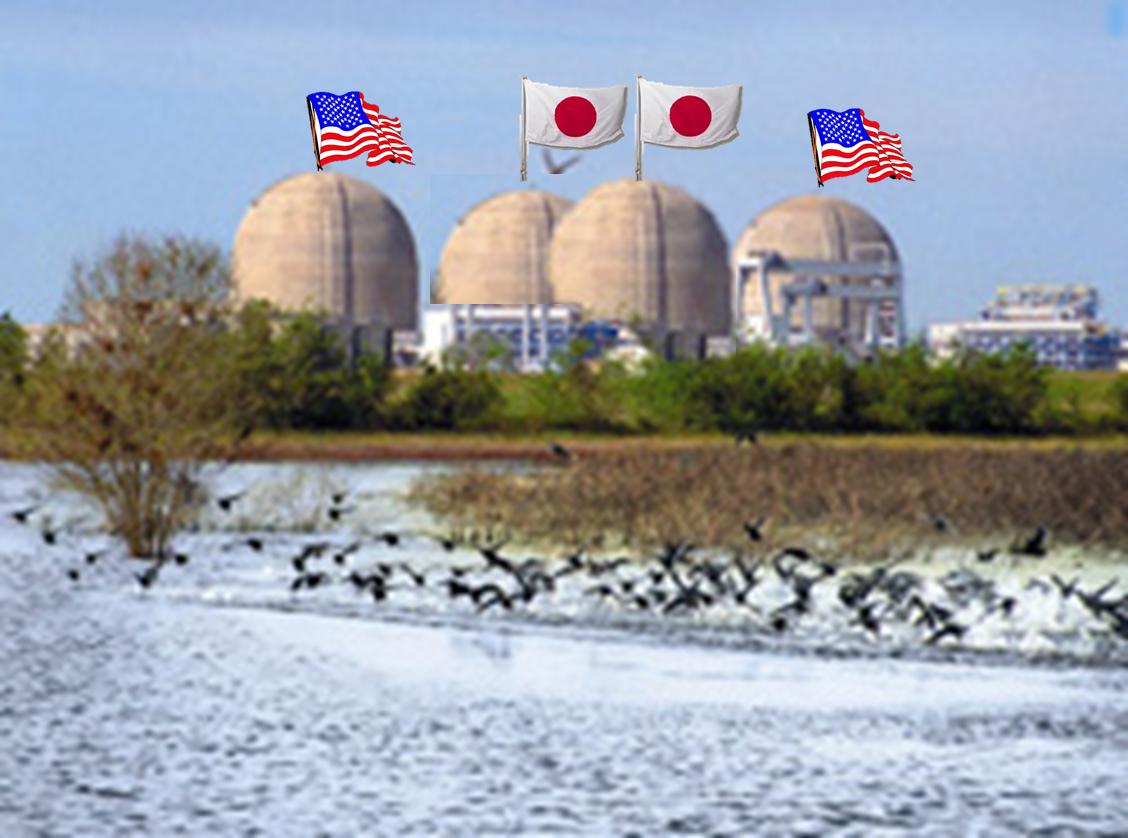
With the NRC rejection of the Calvert Cliffs new site permit because of its foreign ownership (French Électricité de France-EDF), the application for expansion of South Texas Project (for a 3rd and 4th unit) will probably be rejected to because of it’s predominantly Japanese ownership (Toshiba).

The 1954 Atomic Energy Act prohibits the NRC from issuing a reactor license to any company owned by a foreign corporation or government.

STP also has an application in for a license extension.  We don’t know what is happening with license extensions with regard to the issue of long term waste storage.  We will update when we have a better indication of how the NRC is going to handle those applications.

In 1993, the state legislature created the State Employee Charitable Campaign (SECC) to provide a new benefit for state workers.  The ability to make tax-deductible contributions to a wide range of charities through their paychecks has giving state employees an easy way to donate to charities of their choice and raised more than $9 million for charities in 2011.

If your charity is a participant or you are a state employee who donates through this system, a coalition of individuals and charitable organizations are working to find a small number of articulate supporters of SECC to speak at a hearing on Wednesday Sept. 5 at the State Capitol or submit comments to the Commission by September 10th.

Check out their blog at www.SECCTxSunset.com.

4 Tar Sands Blockaders are Locked to Truck Carrying Keystone XL Pipeline in Livingston, TX, bringing construction on the Keystone XL pipeline to a stop!!

Check out this video testimonial of four of today's blockaders!

Follow the action right now on the Tar Sands Blockade LIVE BLOG and tell the world about it.

Just minutes ago four landowner advocates and climate justice organizers locked themselves to the underside of a massive truck carrying 36″ pipe intended for Keystone XL construction. The truck is parked, idled at the entrance of the pipeyard, rendering construction activity impossible. Seven blockaders total are onsite risking arrest. The Tar Sands Blockade will be getting photos and video throughout the day.

This action comes in response to a recent court ruling giving TransCanada the green light to steal a piece of Texas landowner Julia Trigg Crawford’s home. Last week, Lamar County Judge Bill Harris insulted this  hardworking local farmer by sending a 15-word summary judgment to her from his iphone.  It’s an injustice they vow won’t be allowed to stand.

The blockaders tell us this is only the first of many actions coming down the pipeline, and that is how they intend to win—with passion, persistence and people power.

Arrests are expected, and these brave souls will need all the support that we can give them as they are jailed for justice.

TransCanada tried to keep the start of construction on this pipeline a secret, and the Tar Sands Blockade was there to expose it. They are letting them know how serious they are by shutting it down for as long as they can today.

Wednesday evening, Lamar County Court at Law Judge Bill Harris sent an email from his iPhone (complete with new internet slang – MSJ and NEMSJ) ruling in favor of the controversial Keystone XL pipeline, allowing them to act as common carrier and giving them the right to condemn land for use by a pipeline.

Dear Counsel,
My rulings as follows:
Transcanada’s MSJ is GRANTED (that’s internet slang for Motion for Summary Judgment)
Transcanada’s NEMSJ is GRANTED (I don’t know what NEMSJ is)
Crawford’s Plea to the Jurisdiction is DENIED

“The Texas Supreme Court has ruled that taking private property for the private use by a pipeline company requires proof that it will serve some common good – and that can’t be accomplished by merely filling out a form. We believe the judge made a number of mistakes and we will appeal. The supreme court has said that if there is any doubt that a pipeline is a common carrier, the judge has to rule against the pipeline company and he failed to do that,” said Wendi Hammond, the attorney for the landowner.

I guess what this particular judge is trying to tell us is what’s good for oil and gas is good for Texas – period.

“We may have lost this battle here in Paris, Texas, but we are far from done,” said Julia Trigg Crawford, landowner. “I will continue to proudly stand up for my own personal rights, the property rights of my family and those of other Texans fighting to protect their land. The Crawfords, and those who bravely stand with us, have plenty of courage to continue this fight, no matter what it takes.”

Read Julia’s impassioned statement below:

Anyone following this case knows my family and I were in it to win, so of course we are incredibly disappointed in today’s ruling….Disappointed that Judge Harris wholly dismissed our entire case with a 15 word ruling sent from his iPhone…  Disheartened that Texas landowners must still challenge oil corporations in court on what should be State-level permitting issues….and Disturbed that a foreign corporation like TransCanada is allowed to hide behind the skirt of the Texas Railroad Commission and its Common Carrier rubber stamp.

It is absolutely unbelievable to me eminent domain abuse continues in Texas given the revelations made during our court case.   With every turn we found black holes of responsibility, endless loops of (non)accountability, and the cart miles in front of the horse.  The Texas Railroad Commission says they have no power over eminent domain, yet turns a blind eye when pipelines under their jurisdiction state they indeed get the power from the Commission.  The Texas Supreme Court ruled in Denbury Green that “once a landowner challenges…., the burden falls upon the pipeline company to establish its common-carrier bona fides if it wishes to exercise the power of eminent domain”.  So we asked TransCanada to produce their tariff rate schedule, a requirement of all Common Carriers and therefore part of proving the right of eminent domain. TransCanada’s attorney refused to provide anything, responding in court that tariffs will be provided “about the time it gets ready to transport product on the line”.  That means they can’t even produce this proof they qualify as a Common Carrier until after the land is seized and the pipeline built.  Furthermore, the Writ of Possession was granted by the Court and served on us before the ruling was even made on whether TransCanada can legally take our land. There is no question the process is riddled with loopholes and flaws, and Big Oil certainly wants to keep it this way.

Somehow, someway, things must change.  If the courts will not address the problem, we will use our voices and votes to bring about change, and we will champion the cause with those who create the laws. Fortunately the dialogue in Austin has already begun, and we are deeply involved.  As our more enlightened State leaders address the issues with open minds, they admit there are still problems with the eminent domain process.  Thankfully they have begun the steps to shepherd change.

We may have lost this one battle here in Paris, Texas, but we are far from done.  I will continue to proudly stand up for my own personal rights, the property rights of my family, and those of other Texans fighting to protect their land. Winston Churchill once said “Success is not final, failure is not fatal: it is the courage to continue that counts”.  The Crawfords, and those who bravely stand with us, have plenty of courage to continue this fight, no matter what it takes.

Julia Trigg Crawford
Farm Manager, Red’Arc Farm
Direct, Texas

Tea Party leaders and environmentalists alike, but for different reasons, share the Crawfords’ disappointment with this ruling.

“Judge’s Harris disappointing decision today further highlights the vulnerable and precarious position that Texas landowners are in,” said Debra Medina, former Republican candidate for Governor. “These cases are often argued in county courts that are poorly equipped to assess such weighty legal questions.  These courts lack the resources to properly consider the complex and voluminous evidence assembled by multibillion dollar corporations.”

“These are pipelines carrying poisons, not for oil independence in our country, but for export, from a foreign land, through our pipelines, to a port that’s going to ship them to foreign lands. These aren’t common carriers for the common good of Texans — this is a pipeline designed to speed oil through Texas. There are no on or off ramps to this pipeline in Texas and as a result it should not have been permitted, implying they had the use of eminent domain to condemn Texans’ lands,” said Tom “Smitty” Smith of Public Citizen.

“The Texas Supreme Court was clear in the Denbury ruling that private companies have to prove their project qualifies as a true ‘public use’ before it can exercise eminent domain. We’re disappointed in the Judge’s decision, but we’re confident that the Crawford family farm will eventually prevail. This decision puts the onus on the Texas legislature to remedy the outrageous eminent domain abuse taking place in our state,” said Terri Hall, Director of Texans Uniting for Reform and Freedom. “The time for talk is over. Texans are losing their land because of poor oversight and the legislature’s refusal to address the heart of the problem. Texans aren’t going to accept the crumbs we’ve been handed, cloaked as eminent domain reform. It’s time to get serious before irreparable harm is needlessly inflicted upon Texans.”

Recently, the Texas House Land and Resource Management Committee met at the Capitol to hear invited testimony from Crawford and other interested parties regarding the dilemma of industries self-proclaiming they are common carriers with no review from any state agency as to whether a company is truly a common carrier or not. The House Energy Management Committee has also held hearing on pipeline safety issues.

Linda Curtis, director of Independent Texans, noted, “Ms. Crawford’s case is emblematic of the continuing struggle of Texas landowners being tread upon by a private company taking land for private use, and foreign profit.  TransCanada has yet to provide any evidence that they have the legal authority to seize property in Texas.”

“TransCanada used the Commission’s T-4 permit as an authorization to take Texans’ land for a private for-profit, foreign pipeline project.  There was no vetting or review by the Commission of a pipeline company’s self-designation as a common carrier and the commission says that it has no control over eminent domain.  The legislature needs to fix this mess and assure that landowners’ rights and the environment are protected,” said Chris Wynnyk Wilson of the Stop Tar Sands Oil Pipelines (STOP).

Finally a positive ruling for those adversely affected by coal power plants.  Today a federal judge ruled that the Tennessee Valley Authority is liable for a huge spill of toxin-laden sludge in 2008 in Tennessee when containment dike at TVA’s Kingston Fossil Plant burst. About 5 million cubic yards of ash spilled out of a storage pond, into a river and spoiled hundreds of acres in a riverside community 35 miles west of Knoxville.

U.S. District Court Judge Thomas Varlan found TVA was negligent in its conduct and will be liable for damages to be determined later. Ratepayers have had to pay for the spill in the form of higher power costs as the $1.2 billion cleanup of the spill, the Environmental Protection Agency described as one of the worst environmental disasters of its kind, continues.  After damages are awarded it is likely that TVA will pass those costs along to their customers.

And rest assured, the nearly $11 million TVA paid for outside legal help plus the work done by in-house lawyers, for which TVA is saying they can’t provide a total, will also be passed along to ratepayers.

Lesson learned here, if your energy generator messes up, you get to pay for it.

Today, the US Appeals Court in Washington, DC struck down an important pollution rule that would have protected up to 240 million Americans who live downwind from power plants that dump life-threatening pollution into our air like dangerous smog and soot.

The divided ruling to block the Cross State Air Pollution Standard is a setback for EPA’s efforts to protect the public health by implementing clean air standards.

EPA should appeal this decision. The Clean Air Act clearly provides the EPA authority to address this dangerous pollution. A higher court would likely overturn this dangerous decision that puts lives at risk.

EPA estimates that the Cross State Air Pollution Standard would have saved thousands of lives, improved air quality for more than 75 percent of Americans in 2014 alone, and provided vital clean air protections for millions of Americans across the Eastern United States, including:

  • Preventing states from allowing dangerous pollutants which are linked to heart and respiratory illnesses, to enter downwind states.
  • Saving up to 34,000 lives each year
  • Preventing 15,000 heart attacks each year
  • Preventing 400,000 asthma attacks each year
  • Providing $120 billion to $280 billion in health benefits for the nation each year

“Pollution from power plants is killing Texans and our climate,” said Tom “Smitty” Smith, the director of the Texas office of Public Citizen.  “This decision doesn’t mean that we don’t need to reduce power plant pollution and take action promptly.  In the end, failure to act will mean higher medical costs and continued reliance on out of state coal.”

The Cross State Air Pollution Rule (CSAPR) was designed to address smog pollution.  The federal court sent the rule back to the agency for revision and in the interim, told the EPA to administer its existing Clean Air Interstate Rule.  Oddly enough, the 2005 Clean Air Interstate Rule was ruled unlawful in 2008 by the same court that just overturned the new rule.

“Today’s decision only delays for a year at most a new transport rule. Smart utilities will use the temporary delay to develop plans to transition to renewables,” Smith continued. “The days of dirty coal are numbered and today’s ruling does nothing to change that fact.”

More about the Cross State Air Pollution Standard

The Cross-State Air Pollution Standard reduces the sulfur dioxide and oxides of nitrogen pollution emitted from coal-fired power plants across 28 eastern states. That pollution drifts across the borders of those states, contributing to dangerous — and sometimes lethal — levels of particulate (soot) and smog pollution in downwind states.

EPA issued the standard under the “Good Neighbor” protections of the Clean Air Act, which ensure that the emissions from one state’s power plants do not cause harmful pollution levels in neighboring states. While no one is immune to these impacts, children and the elderly are especially vulnerable. The Cross-State Air Pollution Standard would have provided healthier air for 240 million Americans in downwind states.

Nine states (Connecticut, Delaware, Illinois, Massachusetts, Maryland, New York, North Carolina, Rhode Island, Vermont), five major cities (District of Columbia, Baltimore, Bridgeport, Chicago, New York and Philadelphia), the American Lung Association, the Clean Air Council, Environmental Defense Fund (EDF), NRDC, Sierra Club, and major power companies (Calpine, Exelon and Public Service Enterprise Group) have all intervened in support of these vital clean air protections.

The litigation was brought by power companies, including AEP, Southern, DTE, GenOn, and Luminant. The state of Texas, the National Mining Association and the International Brotherhood of Electrical Workers supported their effort in parallel cases.

According to TransCanada, they started construction on the southern leg of their highly controvertial tar sands pipeline on August 9th, even as a trial questioning their right to use eminent domain to take a Texas farmer’s land was scheduled to be held the following day.

At this time, Judge Bill Harris has not issued his final ruling but he did announced first thing the morning of the trial that there would not be a ruling in his courtroom on the pipeline’s status as a common carrier.  He did however, issue a writ of possession to the multinational company giving TransCanada legal possession of the Crawford family’s land and the right to begin trenching on that land at any point.  This emboldened TransCanada to issue a statement that was read on the Canadian National Broadcasting Network on Monday claiming that, “..On the issue of the common carrier status the ruling by Judge Harris reaffirms that TransCanada is a common carrier.” 

Seriously, no one has “verified” that they are a common carrier.  In fact, as far as we can tell, no one in the State of Texas takes ownership of the authority to determine if a pipeline company is a common carrier.

In Denbury Green vs. Texas Rice Land Farmers, the Texas Supreme Court recently upheld their ruling that a land owner has the legal right to challenge a pipeline company’s common carrier status. They also ruled that a pipeline company cannot conclusively acquire the right to condemn private property simply by checking the right boxes on a one-page form filed with the Railroad Commission.

Public Citizen’s Texas director, Tom ‘Smitty’ Smith, said “The answers we need may not lie ultimately in Judge Hill’s decision; the answer may be an appeals court. The final outcome will also be laid at the foot of the Texas legislature to do something about this kind of abuse. We have already begun the process of pointing out the grave inequities of companies being able to walk into the Railroad Commission saying ‘trust us, we’re a common carrier,’ and then seize eminent domain authority without the needed checks and balances or review by an authorized government agency. That needs to change with the next legislative session.”

For updates on the status of the trial and further legal action click here.

Back at the U.S. / Canadian Border

In the meantime TransCanada had to reapply for their presidential permit for a section of the planned Keystone XL pipeline from oil fields in Canada that would cross into the United States.  The earlier permit application was denied after lawmakers in Nebraska objected to original route plans that had the pipeline crossing through its environmentally sensitive sand hills region.  While Nebraska’s objection was the official reason for the permit denial, the initial process was fraught with other controversies that many are pushing to be addressed this go round.

The State Department recently announced on its website that it has chosen a new third-party contractor to conduct the next round of reviews for TransCanada’s controversial permit re-application.

The new contractor, Environmental Resources Management (ERM), replaces Cardno Entrix, a firm that was at the center of the scandal surrounding the State Department’s flawed Keystone XL review process last fall. However, while the department has hired a new contractor, it has also signaled that it will lean heavily on the flawed environmental impact statement largely prepared by Cardno Entrix on behalf of Keystone XL, a study that independent experts concluded grossly downplayed the harm the pipeline is likely to cause and failed to address the impacts on Nebraska’s environmentally sensitive sand hills region.

The State Department’s Environmental Impact Statement, largely prepared by Cardno Entrix and issued in August 2011, was widely criticized for failing to catalogue the tar sands oil pipeline’s full threats to the climate, drinking water and public health, as well as the unique and heightened spill risks of piping tar sands oil across America’s heartland.  As communities across the mid section of the country face an onslaught of extreme weather, the State Department’s review faces a key test: whether its new round of review fully considers these issues.  In the face of  a summer of unprecedented wildfires, droughts and storms, following on the heals of Texas’ unprecedented drought and heat in 2011, it is vital that climate impacts of dirty tar sands oil are taken into account and that the possibility of spills affecting water sources in areas that are prone to droughts be reviewed.

The State Department closed the public comment period for the scope of the new environmental review for the northern leg of the Keystone XL pipeline on July 30. More than 400,000 submitted comments to the agency in staunch opposition to the project.

A New York Times exposé revealed last November that the State Department had “flouted the intent of a federal law” by hiring Cardno Entrix and allowing it to drive the environmental review process while it simultaneously touted TransCanada as a “major client.” An investigation by the State Department inspector general subsequently confirmed that the department had failed to follow its own flawed contractor vetting processes. The investigation also raised fresh concerns about the department’s insufficient scientific expertise to review the pipeline’s likely impacts, adding weight to independent experts’ conclusions that the impacts study was grossly inadequate.

Austin, Texas just hit 100 degrees today (according to weather.com).

This is our 25th day of 100 degree weather this year.  That pales in comparison to 2011, where at this time last year we were counting down to breaking the previous record of 69 days of 100 degree days set back in 1925.  Austin did that and more, setting a new record of 90 days of 100 degree days in a single year a month and a half later.

Nevertheless, this year is still above our average of 13.5 days of 100 degree weather, but to the north of Texas, the midsection of the country is experiencing drought and heat waves comparable to ours of 2011.  That being said, weather forecasters are seeing the development of a moderate El Nino which could bring enough rain to Texas this winter to break our drought.  We can only hope that it is not a strong El Nino like the one that hit in 1997 and 1998 which brought major flooding to the state.  These feast or famine swings of weather are taking their toll on many things in this state – our agriculture, economy, electric grid . . .

If climate change is responsible for these extreme weather events, then maybe our leaders should look more closely at what we can do to slow climate change and mitigate the effects.

TransCanada has begun construction of the southern Keystone XL in Oklahoma and Texas. and while they tried to keep it quiet, the Tar Sands Blockade is there to greet them.

TransCanada is carelessly moving forward with construction and trying to keep it quiet. Important legal cases are still pending regarding their use of eminent domain, and they have failed to conduct environmental review of the southern Keystone XL pipeline route.

[youtube=http://www.youtube.com/watch?v=d9Ys6C58XT4&t=1s]

Texas Landowner Halts TransCanada Surveyors in Their Tracks          

TransCanada plans to clear-cut countless acres of East Texas forest in order to pipe tar sands oil across rivers, streams, and land that many landowners are claiming was seized via an abuse of eminent domain and contract fraud — all to export oil overseas.

TransCanada’s last pipeline spilled 12 times in its first 12 months of operation. During a summer of record heat, and an unprecedented drought, the last thing Texas needs is a tar sands pipeline that could ruin valuable water supplies with toxic oil spills.

In order to halt the onslaught of this international company’s plans to pillage their way across the landscape of the great state of Texas, we have learned that the Tar Sands Blockade, a grassroots-led campaign using non-violent civil disobedience, has initiated a plan to stop construction of the southern leg of the Keystone XL pipeline. They have organized landowners, environmentalists, tea partiers, occupiers and more to stop this disaster-in-the-making in imaginative ways.

The following video shows folks from around the country telling you why they are joining the Tar Sands Blockade.

[youtube=http://www.youtube.com/watch?v=e-WGe7EkNwE&t=1s]

To follow the Tar Sands Blockade, check them out on their facebook page. http://www.facebook.com/TarSandsBlockade

We hope to post more about this action in the coming days.

The agency responsible for approving the construction of nuclear reactors may no longer be able to rely on its old “build reactors now and worry about radioactive waste later” approach.

Learn more about new challenges to nuclear waste policy.

For decades, nuclear reactors have been built under two assumptions:

  • One day there would be a place to permanently store the lethal waste generated from nuclear power.
  • While the final burial place was being determined, the nuclear waste could be safely stored on-site.

But when it comes to waste that remains dangerous for hundreds of thousands of years, assumptions can be a reckless gamble.

A federal court agrees.

In June, the U.S. Court of Appeals in Washington ruled that these assumptions are no longer good enough, prompting the Nuclear Regulatory Commission to address the shortcomings of the two rules which translate these assumptions into policy — the waste confidence decision and the storage rule.

In response, 24 groups, including Public Citizen, challenging both new reactor licenses and license renewals for existing reactors filed a petition urging the NRC to respond to the court ruling by freezing final licensing decisions.

On July 8, the NRC voted to suspend a final decision on all new reactor licenses. No doubt this is a short-term win for us.

But the intermediate and long-term implications for nuclear energy and the policies that govern radioactive waste are still unclear.

As these implications unfold, we will continue to keep you updated and when possible provide opportunities to take action toward improving the safety of our country’s mounting stockpile of nuclear waste.

To get more information on the court’s decision, check out the blog post by Allison Fisher of Public Citizen’s Climate and Energy Program, Will nuclear power continue to hobble along despite its radioactive Achilles’ heel?

As Japan commemorates the anniversary of the Hiroshima atomic bomb attack, Japanese officials are developing new energy policies that will guard the safety and the livelihood of the Japanese public in the wake of the devastating Fukushima nuclear accident.

Sixty seven years ago today, on Aug. 6, 1945, nearly 140,000 people were killed by the first atomic bomb used in warfare. Three days later the United States dropped another bomb in Nagasaki that killed 70,000 more.

In March 2011, Japan was devastated by an earthquake and tsunami which crippled Tokyo Electric Power Co.’s Fukushima nuclear plant and sent it into meltdown.  This caused radiation to spew over large areas from which more than 160,000 people had to flee. Every one of Japan’s nuclear plants were shuttered in the months following the world’s worst nuclear crisis since Chernobyl in 1986.  This is a country that now knows, all too well, the devastation of nuclear power both in war and in peacetime.

Two of the nation’s reactors resumed operations in July, but the Fukushima disaster has turned public sentiment against the country’s dependence on nuclear power.

According to NBC News, a recent parliamentary investigation concluded that past energy policy reliance on opinions of industry experts, bureaucrats and politicians had bred collusion and blindness when it came to ensuring nuclear reactors’ safety.

Now Japan is conducting citizen debates to look at options for the role of nuclear power in their generation mix, and expects to compile a draft of its new energy policy by the end of August.