Feeds:
Posts
Comments

Planning for Texas’ energy future must include drought proofing our energy supply with energy efficiency and renewable energy, not propping up old dirty fossil fuel plants.  To that end, we applaud the Electric Reliability Council of Texas (ERCOT – the Texas electric grid operator) for calling Luminant’s bluff to shut down the aging Monticello coal fired plant in North Texas, and finding that we don’t need to pay a premium to run one of Texas dirtiest coal plants to keep the air conditioners running.

In October of this year, the EPA announced new regulations (called the Cross-State Air Pollution Rule or CSAPR) to reduce air pollution from industrial facilities like coal-fired power plants on downwind communities. Prior to the release of this new rule, TXU/Luminant, the largest power generating company in Texas, blamed the impending EPA regulations for job losses and subsequently announced it would be shutting down two of its coal units at Monticello.

Three Texas Luminant plants (Monticello, Martin Lake, and Big Brown) are some of the dirtiest coal plants in the country, and would be impacted by any new air pollution rules the federal government might impose.  But compared to other coal plants, these three plants alone are:

  • 46.8% of all Texas coal plant      emissions (19 existing coal plants)
  • 41.5% of all Texas coal plant SO2      emissions
  • 36.0% of all Texas coal plant PM-10      emissions
  • 30.6% of all Texas coal plant NOx      emissions
  • 71.7% of all Texas coal plant CO2      emissions

and by all
rights should clean up their act or shut down.  However, a report from TR Rose Associates shows in detail how Luminant’s shuttering of these coal plants is most likely due to poor financial management rather than regulation of their air quality emissions.

Right now in Texas, the drought and the expected heat wave next summer is far more of a problem than U.S. Environmental Protection Agency (EPA) rules for water intensive plants like coal and nuclear electric generation plants.  If we are to keep the lights on next summer, the Governor, the Texas Commission on Environmental Quality and the Public Utility Commission of Texas should develop a plan to use energy more wisely and efficiently during the summer and not worry about the shuttering of dirty old coal plants.

After receiving notice that Luminant, had filed a Notification of Suspension of Operations for Monticello Units 1 and 2, ERCOT – the grid operator – had to make a determination about whether it was okay for Luminant to retire the units rather than idle them so that ERCOT could call on them to run in a grid emergency.  This is what ERCOT calls a “Reliability Must Run” (RMR) status determination.  An RMR status for the old Monticello units would have meant that Luminant might have been getting paid a premium to run these units at full capacity next summer, with almost no limits placed upon the type or amount of emissions during that activity, the implications for Dallas/Ft Worth’s air quality would probably have been significant.

According to a release by ERCOT, “As required by Protocol Section 3.14.1(1), ERCOT has completed its analysis and determined that Monticello Units 1 and 2 are not needed to support ERCOT transmission System reliability (i.e., voltage support, stability or management of localized transmission constraints under first contingency criteria). ERCOT, in coordination with Oncor, has identified Pre-Contingency Action Plans (PCAPs) and Remedial Action Plans (RAPs) which will be used to ensure transmission security without the need for RMR Agreements associated with these Resources. . . Based upon this final determination, the Resources may cease or suspend operations according to the schedule in their Notice of Suspension of Operations.”

So to recap:

  • Luminant threatens to shut down its two old units at Monticello coal-fired generating plant and blames the new EPA Cross State Air Pollution Rules.
  • A report from TR Rose Associates shows Luminant’s shuttering of these coal plants is most likely due to poor financial management rather than regulation of their air quality emissions.
  • ERCOT determines that these Monticello units are NOT needed to maintain grid stability.

Luminant 0 : State of Texas 2

Big Oil’s representatives in the House and Senate are pushing legislation that would rush approval of the Keystone XL tar sands pipeline. Up until now President Obama has stood strong, threatening to reject any bill that includes the pipeline.

But in the last hour, some terrible news has begun to leak from DC. President Obama seems to be on the verge of caving on Keystone. There’s no way to sugarcoat it — if the President allows Keystone to move forward, he will be failing the single biggest environmental test of his presidency.

The next few hours will be absolutely crucial — the President needs to hear from you that cutting a back-room deal with Big Oil on Keystone XL is unacceptable. If he steps up and threatens to veto this bill, he can stop this pipeline in its tracks.

Can you make a call right away? Here’s the White House number: 202-456-1111

Feel free to say what you want on the call, but remember to drive this one message home: to keep his promises, President Obama needs to veto legislation that would rush approval of Keystone XL. This pipeline is a threat to our climate and jobs and needs to be stopped.

After you’ve called the White House, take 30 seconds to let us know how it went by clicking here.

(Don’t worry if you get a busy signal — it’s actually a good sign: it means we’ve flooded the White House switchboard and that the movement is sending an overwhelming message to the President. Just keep on trying until you get through.)

President Obama came into office promising to “end the tyranny of oil.” This is his chance to prove he was serious. If he’s not, he needs to know right now that there will be real consequences.

Big Oil cut a back-room deal with the dirtiest Members of Congress to attach this legislation to a must-pass tax cut bill. These kinds of deals exemplify the tyranny Big Oil exercises over our government, and underscores why the President needs to threaten a veto.

We have just a few hours to convince him to stand strong and veto any legislation to rush the Keystone pipeline. Can you make a call right now and tell him that we expect nothing less? Here’s the number again: 202-456-1111

Your calls right now are absolutely crucial, and you should also be getting ready to get back into the streets in the days and weeks to come. We’re dusting off our plans to go to Obama 2012 offices and raise some ruckus. Call the White House, but also get in touch with your friends to start plotting your next steps locally.

This fight isn’t over yet — not by a long shot — and you can make a difference.

STP US vs Foreign OwnershipThe Nuclear Regulatory Commission has suspended its review of the foreign ownership portion of the application to expand the South Texas Project nuclear plant over concerns that the owners haven’t done enough to ensure domestic control of the plant.

Toshiba Corp., based in Japan, could obtain an 85 percent ownership stake in the two nuclear plants proposed for the site outside of Bay City, the NRC found, meaning the company could have “the power to exercise ownership, control or domination over NINA,” or Nuclear Innovation North America.

NINA is a partnership between Toshiba and NRG Energy, which currently shares ownership of STP’s existing nuclear plants with CPS Energy and Austin Energy.

According to the Express-News, NRC staff, in its Dec. 13 letter to NINA, determined that the plan as submitted doesn’t meet the requirements of a federal law prohibiting foreign ownerships of a nuclear plant because, since NRG will not be investing additional capital in the project, “there is reason to believe that most of the financing going forward will be from Toshiba,” a foreign corporation.

This decision could push back a final decision on the license application:

The commission confirmed that the rest of the licensing application will continue to move ahead, but a license, which has been expected by sometime in 2012, will not be granted until the foreign ownership question is resolved.

Back in April of this year, federal officials said French owned UniStar Nuclear Energy was not eligible to build a third reactor at Calvert Cliffs because it is not a U.S.-owned company.  The Nuclear Regulatory Commission said although a review of the application for the $9.6 billion reactor in Southern Maryland will still take place, a license would not be issued until the ownership requirements were met.  That application now lies languishing for want of U.S. based investors.

Here’s a link: http://www.mysanantonio.com/news/energy/article/NRC-halts-nuclear-expansion-s-review-over-foreign-2402923.php

Earlier this week, Sierra Club, Public Citizen, and Sandy Creek Energy Associates filed a consent decree with a federal court settling legal challenges to the Sandy Creek Energy Station near Riesel, TX. Although the U.S. Court of Appeals had previously ruled in favor of Sierra Club’s and Public Citizen’s lawsuit against this proposed plant for Clean Air Act violations, construction of the Sandy Creek Energy Station is mostly complete. The proposed consent decree requires Sandy Creek to slash its emissions of toxic mercury and particle pollution from this plant and make significant clean energy investments in the local community.

Jen Powis, Campaign Representative with Sierra Club, said, “With this settlement, Sierra Club and Public Citizen were able to secure more than $400,000 for solar generation around the Riesel community, creating clean energy jobs and boosting the state’s solar capacity. This settlement also achieves a significant reduction in pollution, which benefits Texans and our neighbors.”

Specifically, the settlement requires Sandy Creek to lower its pollution levels and reduce the impact this plant will have on Texas’ already severe air quality problems.

“The federal courts found that we were right on the law,” said Tom “Smitty” Smith, Director of the Texas office of Public Citizen, “but the plant is now almost complete, so emission reductions and solar on school rooftops are a good compromise that will both reduce pollution and help bolster reserve capacity for next summer.  This would not have occurred if the citizens in the area had not gotten together to oppose the plant as it was originally proposed.”

The clean energy investments required by this settlement include a proposed solar panel installation at the nearby school. Kent Reynolds, the Superintendent of the Hallsburg Independent School District said, “Hallsburg ISD is very fortunate to be the beneficiary of a settlement allowing Hallsburg School to install solar panels on our facility for electricity production that will directly benefit the district. The savings on electricity realized by this project will allow the school to spend that money on the over-all instructional program for the students.”

“This is a great settlement for our community and our schools,” said Robert Cervenka, co-chair of the local organization, Texans Protecting Our Water Environment and Resources (TPOWER).  “As a result of our efforts, this new settlement will reduce emissions of mercury by 50 percent and particle emissions by another 25 percent.  This in addition to significant reductions we had already achieved as a result of citizens standing up for their rights, with the added bonus of a solar system being built on one of our local schools.  This just shows the power of people in a community working together to maintain the quality of life we moved here for and I’d like to thank everyone for all the help.”

Sierra Club, Public Citizen, and other public health and environmental groups continue to fight Texas’ other proposed coal plants in court and with grassroots pressure. Renewable energy, especially wind power, continues to demonstrate its reliability and affordability across the state.

A draft finding by the U.S. Environmental Protection Agency (EPA) could have a chilling effect on states trying to determine how to regulate the process.

Fracking, or hydraulic fracturing, involves pumping pressurised water, sand and chemicals underground to open fissures and improve the flow of oil or gas to the surface.

The EPA found that compounds likely associated with fracking chemicals had been detected in the groundwater beneath the Wyoming community of Pavillion where residents say their well water reeks of chemicals.

Health officials advised them not to drink their water after the EPA found hydrocarbons in their wells.

The EPA announcement has major implications for the vast increase in gas drilling in the US in recent years. Fracking has played a large role in opening up many reserves.

The industry has long contended that fracking is safe, but environmentalists and some residents who live near drilling sites say it has poisoned groundwater.

The EPA said its announcement is the first step in a process of opening up its findings for review by the public and other scientists.

“EPA’s highest priority remains ensuring that Pavillion residents have access to safe drinking water,” said Jim Martin, EPA regional administrator in Denver. “We look forward to having these findings in the draft report informed by a transparent and public review process.”

At this time, the EPA is emphasising that the findings are specific to the Pavillion area. The agency said the fracking that occurred in Pavillion differed from fracking methods used elsewhere in regions with different geological characteristics.  Further studies need to be done in specific areas and the finding of this report should not be extrapolated to other areas of high activity.

This feels a bit like the EPA is hedging their bets and is scant consolation to those folks in other parts of the country who have the sideshow ability to light their water taps on fire.  Nevertheless, this finding may make it easier for other communities to have their voices heard when they express concerns about pollution of their water supplies.  This will be particularly important in Texas which is looking at a multi-year, record breaking drought in their future.

The fracking occurred below the level of the drinking water aquifer and close to water wells, the EPA said. Elsewhere, drilling is more remote and fracking occurs much deeper than the level of groundwater that anybody would use.

In Colorado, regulators are considering requiring oil and gas companies to publicly disclose the chemicals used in fracking

The public and industry representatives packed an 11-hour hearing on the issue on Monday. They all generally supported the proposal but the sticking point is whether trade secrets would have to be disclosed and how quickly the information would have be turned over.

Industry representatives say Colorado and Texas are the only states to have moved to consider disclosing all fracking chemicals, not just those considered hazardous by workplace regulators.

Waste Control Specialists LLC (WCS) is seeking several amendments to its Radioactive Material License # R04100 from the Texas Commission on Environmental Quality (TCEQ).  Five of the amendments request design changes to the Compact Waste Disposal Facility (CWF) and the Federal Waste Facility (FWF) for commercial and federal low-level radiactive waste disposal. The other two amendment applications set forth new Waste Acceptance Criteria that includes rates and contract considerations and new pavement design considerations.

Just as important, TCEQ is considering revising language and definition for waste of international origin, acceptance criteria, reporting of inventory and liability coverage as well as the issued TCEQ waste water permit.

TCEQ is accepting public comments and requests for a public meeting.  These can be submitted by mail to:

the Office of the Chief Clerk
MC 105
TCEQ
P. O. Box 13087

or electronically at www.tceq.state.tx.us/about/comments.html by December 17th.

If you need more information about the license application or the licensing process, please call the TCEQ Office of Public Assistance at 1-800-687-4040.

We will post the link to the amendment applications as soon as we are able to find them.  TCEQ recently migrated its database and the links no longer work.  Makes finding materials to base written comments on a bit more complicated.

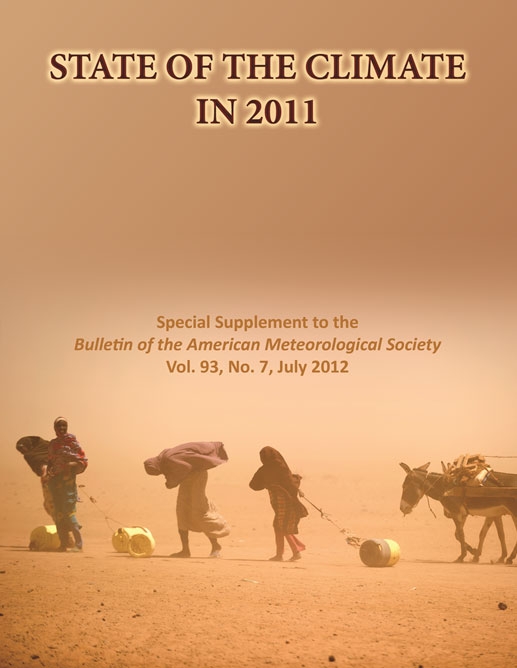
As 2011 winds to a close, the Weather Channel reports that it has been a volatile year of weather across the United States and the tally of weather-related disasters exceeding a billion dollars set a record for the most billion-dollar weather disasters in a single year earlier this year and now the National Climatic Data Center (NCDC) has tacked on another two events to list.

To date, there have been a twelve billion-dollar disasters with a combined cost exceeding $50 billion and a winter storm is heading toward the highly populated East Coast threatening more flooding before the end of the calendar year. The previous record for a single year, since records began in 1980, was nine in 2008.

The additions were to split wildfires and drought into two separate categories plus another severe thunderstorm/tornado event in June. Evaluations are still underway for several other extreme events this year, including Tropical Storm Lee and “Snowtober”. However, the available data to NCDC at this time keeps them below $1 billion.

Below is Weather.com’s look back at these twelve disasters starting with Hurricane Irene and ending with the Groundhog Day Blizzard.

Hurricane Irene

Irene’s path history
  • Irene made its initial landfall over coastal North Carolina and moved northward along the Mid-Atlantic Coast before making a final landfall over New York City as a tropical storm.
  • Highlights:     Caused torrential rainfall and catastrophic flooding in portions of the Northeast. Wind damage in coastal N.C., Va., and Md. was moderate with considerable damage from falling trees and power lines. More than 7 million lost power from Hurricane Irene. Coastal erosion was severe in portions of the North Carolina Outer Banks.
  • Caused more than $7.3 billion in damage and 45 fatalities in the U.S.

Upper Midwest Flooding

River flooding in Minot, N.D. Image: AP
  • Current economic losses are estimated to exceed $2 billion dollars.
  • Highlights: Estimated 11,000 evacuated from Minot, N.D. where estimated 4,000 homes flooded from the Souris River. Numerous levees breached on Missouri River, flooding thousands of acres of farmland.
  • The flooding was caused by melting of an above-average northern Rockies snowpack, and heavy spring and early summer rainfall.
  • Top 10 wettest Jan – July in N. Dakota, S. Dakota, and Montana. Records date back to 1895.
  • A major concern with the flood was rising waters that infiltrated a nuclear power plant on the river whose flood controls nearly failed.
Mississippi River Flooding
River flooding in Memphis (Image credit: NASA)
  • Current economic losses are estimated between $3 billion to $4 billion dollars.
  • Preliminary breakdown:$500 million to agriculture in Arkansas, $320 million in damage to Memphis, Tenn., $800 million to agriculture in Mississippi, $317 million to agriculture and property in Missouri’s Birds Point-New Madrid Spillway, $80 million for the first 30 days of flood-fighting efforts in Louisiana.
  • The flooding was caused by heavy rains in April from northern Arkansas and southern Missouri to the Ohio Valley. This water all flowed downstream into the Mississippi River, resulting in record flooding.
  • April was the wettest month on record in Kentucky, Illinois, Indiana, Ohio, West Virginia and Pennsylvania. Missouri, Arkansas and Tennessee all finished with a top five wettest April.
Major impacts spring into summer in Texas, Oklahoma, New Mexico, Arizona, southern Kansas, and western Arkansas and Louisiana.
  • Much of the range and pasture conditions were rated very poor in Texas and Oklahoma throughout the 2011 crop growing season.
  • Total direct losses to agriculture and cattle are approaching $10 billion.
  • The Texas state climatalogist is predicting the state is in a multi-year drought pattern and that the state can expect the drought and high heat conditions to continue into the 2012 summer.  Some communities are already out of water and are not expected to recover for quite some time.  In the meantime, this summer had record breaking heat shattering records right and left (Austin 90 days of 100+ degree days, blasting past the previous record of 69 days set in 1925, and other Texas cities set similar records)
Texas, New Mexico, Arizona Wildfires (Spring-Fall 2011) 
Las Conchas wildfire in New Mexico (AP photo)
  • Drought conditions and extreme heat fueled a series of wildfires across these states.
  • Bastrop Fire in Texas – Most destructive fire in Texas history. Over 3 million acres were burned across Texas this year.
  • Wallow Fire in Arizona – Consumed over 500,000 acres, making it the largest fire in Arizona history (See Photos).
  • Las Conchas fire in New Mexico – Largest fire in New Mexico history, consuming over 150,000 acres
  • Total losses from wildfire activity across all three states exceeds $1 billion.

June 18-22 Midwest/Southeast Tornadoes and Severe Weather 

Tornado near Benedict, Neb. on June 20, 2011 (iWitness Weather user mistyand chad)
  • Outbreak of 81 tornadoes over central states (OK, TX, KS, NE, MO, IA, IL)
  • Additional wind/hail damage over TN, GA, NC and SC.
  • More than $1.3 billion in total losses.
May 22-27 Tornadoes and Severe Storm Damage  
Destruction in Joplin, Mo. (AP photo)
  • Severe storms and an estimated 180 tornadoes hit a large swath of the country from the Midwest to the South and Northeast. Insured losses are more than $6.5 billion. Total losses are greater than $9.1 billion.
  • EF5 tornado demolishes Joplin, Mo. on May 22, resulting in 158 fatalities. An EF2 tornado killed one in Minneapolis on the same day.
  • An EF5 tornado carved a 75-mile path across Oklahoma on May 24, including near El Reno, Piedmont and Guthrie. A total of 18 people lost their lives as a result of tornadoes that day in Oklahoma, Kansas and Arkansas.
  
April 25-28 Tornado Outbreak  
Tuscaloosa, Ala., tornado
  • Massive outbreak of severe thunderstorms and estimated 343 tornadoes from the South into portions of the Midwest and Northeast. Total losses are now estimated to be at $10.2 billion.
  • 321 fatalities combined in Arkansas, Mississippi, Alabama, Tennessee, Georgia and Virginia. Of those, 240 occurred in Alabama.
  • A deadly EF4 tornado hit the Tuscaloosa, Ala., and Birmingham, Ala., metro areas.
  • EF5 tornadoes struck Smithville, Miss., Philadelphia, Miss., HackleburgPhil Campbell, Ala., Dekalb County, Ala.
April 14-16 Tornado Outbreak
Damage in Tushka, Okla. (AP photo)
  • Three-day siege of severe thunderstorms and tornadoes from the central and southern Plains to Mississippi, Alabama, Virginia and the Carolinas. Total damage estimate over $2.1 billion.
  • Preliminary number of tornadoes: 177
  • Both the Jackson, Miss., and Raleigh, N.C., metro areas were hit by tornadoes.
  • 38 fatalities combined in Oklahoma, Arkansas, Alabama, Mississippi, North Carolina and Virginia.
April 8-11 Tornadoes and Severe Storm Damage
A truck was tossed into this basement in Pocahontas County, Iowa (Image credit: yfrog.com ktivnews)
  • Severe thunderstorms and tornadoes hit portions of the Midwest, South and Plains. Total damage estimate of more than $2.2 billion.
  • Severe damage and several injuries were caused by a tornado in Pulaski, Va., on April 8.
  • An EF3 tornado leveled Mapleton, Iowa, on April 9 .
  • At least 14 confirmed tornadoes in Wisconsin on April 10, a record for any April day in the state. An EF3 tornado heavily damaged Merrill, Wis.
April 4-5 Severe Thunderstorm Outbreak
Tree crushes a car in Memphis, Tenn. (Image credit: twitgoo.com OOHH_My)
  • A massive wind damage event with tornadoes swept from the Ohio Valley to the South and mid-Atlantic. Total damage estimate is greater than $2.8 billion.
  • More than 1,350 damaging wind reports. Estimated 46 tornadoes.
Jan. 29-Feb. 3 ‘Groundhog Day Blizzard’
Cars abandoned in Chicago (Source: twitpic.com/EddiesTPWong)
  • Affected many central and eastern states, causing at least $1.8 billion in total losses.
  • Chicago recorded its biggest 24-hour snow total with 20 inches. Tulsa, Okla., was buried under 14 inches.

This is a guest blog by departing Public Citizen intern Chantelle B.

In recent months, Nebraska’s government has taken a strong stand against the Keystone XL Pipeline’s route, which currently passes through the ecologically fragile Sandhills region and North America’s largest aquifer – the Ogallala – which, if polluted, could have disastrous effects. The majority of this aquifer lies under Nebraska, and provides the state with 70% of its freshwater.  But the Ogallala aquifer’s importance goes beyond Kansas.  It is one of the most important sources of water in the Plains Region, used for residential and industrial purposes as well as agriculture, the base of the economy in the area. Texas is one of the leading states irrigating from the aquifer, accounting for about 40% of Texas’ water use.  Officials in the Nebraskan State government, such as Governor David Heinman, have signed a bill to ensure that TransCanada will not be able to build their behemoth of a Pipeline through the precious Sandhills region.

On November 10th, President Obama delayed the date for granting TransCanada a permit to construct the Pipeline across the U.S.-Canada border until after the 2012 Presidential elections. One component of the President’s decision to postpone the Pipeline’s construction was to ensure a Department of State-approved rerouting that satisfies Nebraska’s demands. Unfortunately for the environment, Nebraskans are showing a proclivity to support the Pipeline generally, and only stress the environmental importance of the delicate Ogallala and Sandhills region. TransCanada is set to collaborate with the Nebraska department of environmental quality and the DoS, which will audit its alternate route to ensure it avoids the regions in question, making it only marginally more environmentally sound. However, TransCanada’s President for Energy and Oil Pipelines, Alex Pourbaix, still affirms his belief that the Pipeline would have been equally safe even if the original route were implemented.

Although a new route will protect the most ecologically sensitive locations in Nebraska, there remains the problem that a daughter project already in play, the Keystone 1 Pipeline in the northern Great Plains, has already exceeded its projected spill figures. Despite TransCanada’s prediction that this smaller pipeline would spill around 11 times throughout its lifetime of approximately 50 years, it has already had more than it’s lifetime number of spills within its first year of operation. So while the Sandhills region and Ogallala may be spared from catastrophe the land traversed in the new route will still be subject to as devastating a fate, like the 6 story geyser of diluted bitumen seen in the worst Keystone 1 spill.

Everyone in the way of this pipeline should become aware of the history of ecological damage these types of pipelines have already experienced.  And those of us near the terminous – where heavy crude oil refineries may be gearing up to refine this most polluting of all crudes, spilling more toxins into the air around Houston, Beaumont and Port Arthur, TX or the ports will load large ships with the diluted bitumen and send them out into the Gulf of Mexico – well, we have other pollution worries to consider.

One of the great things about living in Texas is our winters are mild enough that many outdoor activities are year round activities, including fishing.  BUT . . ., before you eat that fish, be sure to check out the mercury advisories for the state’s waterways on the Texas Department of Health website to make sure that fish is safe to eat – especially for children and pregnant women.

The main source of mercury in Texas waterways comes from coal fired power plants.  Check out www.stopthecoalplant.org for more information.

According to a story in the New York Times, landowners across the country have signed millions of leases allowing companies to drill for oil and natural gas on their land, but some of these landowners — often in rural areas, and lured by the promise of quick payouts — are finding out too late what is, and what is not, in the fine print.

Energy company officials say that standard leases include language that protects landowners. But a review of more than 111,000 leases, addenda and related documents by The New York Times suggests otherwise:

  • Fewer than half the leases require companies to compensate landowners for water contamination after drilling begins. And only about half the documents have language that lawyers suggest should be included to require payment for damages to livestock or crops.
  • Most leases grant gas companies broad rights to decide where they can cut down trees, store chemicals, build roads and drill. Companies are also permitted to operate generators and spotlights through the night near homes during drilling.
  • In the leases, drilling companies rarely describe to landowners the potential environmental and other risks that federal laws require them to disclose in filings to investors.
  • Most leases are for three or five years, but at least two-thirds of those reviewed by The Times allow extensions without additional approval from landowners. If landowners have second thoughts about drilling on their land or want to negotiate for more money, they may be out of luck.

The leases — obtained through open records requests — are mostly from gas-rich areas in Texas.  If you want to read the entire New York Times story, click here.

For the second year, 24/7 Wall St. has reviewed data on financial, health, standard of living and government services by state to determine how well each state is managed. Based on this data, 24/7 Wall St. ranked the 50 states from the best to worst run. The best-run state is Wyoming. The worst-run  state is California. And Texas falls right in the middle at 25 but we tie with California for worst in the country in one category.

25. Texas

  • State debt per capita: $1,240 (2nd  lowest)
  • Pct. without health insurance: 23.7% (the highest)
  • Pct.  below poverty line: 17.0% (9th highest)
  • Unemployment: 8.5% (23rd  highest)

Texas managed to spend the third least per capita in 2009, and as a partial  consequence has the second lowest debt per capita, a mere $1,240 per person.  Austere spending comes at a price, however. Nearly a quarter of the state’s  residents are without health insurance. Also, only 80.9% of Texans 25 years or  older graduated from high school. While this is an improvement from its 2003  rate of 77%, it is tied with California for worst among all states.

Read more:  Best and Worst Run States in America — An Analysis Of All 50 – 24/7 Wall St.

According to the Lower Colorado River Authority (LCRA), at the end of summer 2011, Texas had suffered the driest 10 months since record keeping began in 1895.  Rivers, like the Brazos, actually dried up.

And if that wasn’t enough, the dry weather came with brutal heat.  So brutal, that seven cities recorded at least 80 days above 100°F (Austin logged 90 days and Wichita Falls had 100 days over 100°F, 12 of which were over 110°F).  This left air conditioners around the state straining to keep up, shattering records for the state’s electricity demand, topping 68,000 megawatts in early August. This combination of dry weather and excessive heat, and high electric demand suddenly made state planners begin to take notice of the water-intensive nature of coal plants.

Most electricity power plants require large amounts of water. Coal-fired plants alone account for 67 percent of freshwater withdrawals by the power sector and for 65 percent of the water completely consumed by it. Newer plants include air-cooling or “dry cooling” technologies, but so many plants rely on water-cooling that they accounted for 41 percent of the withdrawals of freshwater in the United States in 2005, according to the United States Geological Survey.

In Texas this summer, one plant had to curtail nighttime operations because the drought had reduced the amount of water available and that which was available was too hot to bring down the temperature of water discharged from the plant. In East Texas, other plant owners had to bring in water from other rivers so they could continue to operate and meet demand for electricity.

Proposed plants were also facing scrutiny around their water use.  The White Stallion coal plant, near Bay City south of Houston, was opposed by a wide variety of Colorado River water users and the LCRA ended up pulling the proposed plant’s 25,000 acre-feet/year water permit from its agenda indefinitely. Citizens of Sweetwater in west Texas were outraged upon hearing that the city was secretly negotiating sale of water rights for a so-called clean coal project.

If the drought persists into the following year (and the State Climatologist has predicted that it is likely much of the state will still be in severe drought through next August with even worse water shortages), the Electric Reliability Council of Texas (ERCOT – the operators of the electricity grid) has warned that power cuts on the scale of thousands of megawatts are possible.

Texas Water Development Board warns that the state’s water shortage is structural. A structural water shortage is a permanent water shortage that can only be addressed through a structural change such as a reduction in agriculture, population or firm water users (such as traditional power plants) or, increasing water supplies by creating lakes (like we did after the 1950s multi-year drought), setting up desalination plants on the coast or piping water in from another state.  All of these options are dramatic and expensive.

As of this writing, the state needs 18 million acre-feet of water, and it has 17 million acre-feet available to it. By 2060, the state is expected to need 22 million acre-feet but only have 15.3 million acre-feet available to it. Because some dry areas simply can’t have water piped, the total shortfall is projected to be 8.3 million acre-feet. Roughly, Texans will have 2 gallons of water available for every 3 gallons they need.

Adding new coal plants or other intense water use generators to this mix is not part of a sane water policy for a state facing a structural water shortage.  Even ERCOT is taking a closer look at coastal wind generation and solar to provide power during peak energy periods (You know, that time of the day – from 3 to 6 or 7 pm – when the temperatures are the hottest and the air conditioners strain to keep us cool).  This current weather pattern may be the push the state needs to move toward a new energy future for the state.

According to the Associated Press, across the land, large and small polluters have regaled Republican-led congressional committees with dire predictions of plant closings and layoffs if the EPA succeeds with plans to further curb air and water pollution.

But their message to financial regulators and investors conveys less gloom and uncertainty.

The Associated Press compared the companies’ congressional testimony to company reports submitted to the Securities and Exchange Commission. The reports to the SEC consistently said the impact of environmental proposals is unknown or would not cause serious financial harm to a firm’s finances.

Companies argue that their less gloomy SEC filings are correct, since most of the tougher anti-pollution proposals have not been finalized. And their officials’ testimony before congressional committees was sometimes on behalf of — and written by — trade associations, a perspective that can differ from an individual company’s view.

The disparity in the messages shows that in a politically divided environment, business has no misgivings about describing potential economic horror stories to lawmakers.

California Rep. Henry Waxman, the senior Democrat on the House Energy and Commerce Committee, said the SEC filings “show that the anti-regulation rhetoric in Washington is political hot air with little or no connection to reality.”

The lesson here, is – every time a company threatens gloom and doom consequences from regulation, we should also take a look at what they are saying to the SEC and their stockholders.

Foreign Pipeline Owners Find a Way to Get Around Federal Permit Process

TransCanada is attempting to outsmart the State Department and bypass federal blocks by using two existing pipelines of poison after the State Department and President Obama delayed approval of the Keystone XL Pipeline permit amidst concerns about bias, conflicts of interest, and environmental issues,  If implemented the pipeline of poison will pose serious threats to Texas water resources that supply 12 million in East Texas and the Dallas/Fort Worth and Houston metropolises, and our climate.  The groups are urging Texans to contact their local and state officials and ask them to stop the pipelines of poison.

“TransCanada is attempting to mislead the public and circumvent the regulatory mandates of Presidential approval, environmental review and public participation,” said Tom “Smitty” Smith, director of the Texas office of Public Citizen.  “They are now proposing to connect their Gulf Coast Segment (from Cushing, OK to Port Arthur and Houston, TX) into the end of their existing Keystone 1 pipeline.  Make that foreign tar sands corporations – 1: the United States – 0.”

“We also believe that Enbridge also plans to do the same by connecting their proposed Wrangler pipeline that runs from Cushing, OK to Houston TX to their existing Spearhead pipeline system that runs from Canada to Cushing, OK. It would be a serious mistake to allow these pipelines to carry toxic tar sands across Texas land,” continued Smith.

Threats to Texas Water Sources

These two pipelines of poison – TransCanada’s Gulf Coast Segment and Enbridge’s Wrangler – would pose serious threats to Texas water resources, including aquifers, drinking and agricultural water resources for up to 12 million Texans in Dallas, Houston and East Texas.

Tar Sands Pipeline Affected Texas WaterwaysTransCanada’s pipeline would cross the Carrizo-Wilcox Aquifer, the Trinity Aquifer and the Gulf Coast Aquifer.  It would traverse 16 large rivers several of which are listed as sensitive and protected, and cross over more than 130 designated floodplain areas in Texas.  These rivers and drainages feed 21 lakes and municipal reservoirs, including Pat Mayse Lake, Lake Tyler and Lake Cypress Springs.

“TransCanada’s Keystone 1 pipeline has already leaked 14 times in its first year,” said Chris Wilson, a chemical engineering consultant for opponents of the pipeline.  “How can we trust them to build it better and not endanger the waterways in Texas?”

In 2011, one of Enbridge’s pipelines leaked over 1 million gallons of tar sands into the Kalamazoo River in Michigan.  Clean-up efforts have cost over $700 million, it’s still not cleaned-up and people and animals are sick and communities are poisoned.

“Sadly, this is what happens when there are no federal pipeline safety regulations and effective cleanup procedure for toxic tar sands spills,” continued Ms. Wilson.  “Tar sands are not like crude oil which floats on water, they are heavier and they sink, making cleanup much more difficult if not impossible.  Congress should protect the public and put an immediate halt on all tar sands pipelines until studies are completed, safety regulations are enacted and effective spill remediation procedures are put in place.”

Other Threats to Texas

“Despite the fact that TransCanada and Enbridge imply that they might not have to undergo environmental review our analysis has identified several major environmental hazards and key red flags to the project that are cause for concern and require addressing,” said Karen Hadden, Executive Director of the Sustainable Energy and Economic Development (SEED) Coalition.  “These include:

  • Toxic spills that would threaten drinking and agricultural water resources for up to 12 million Texans in Dallas, Houston and East Texas;
  • Exposure to benzene, polycyclic aromatic hydrocarbons(PAH’S) and heavy metals;
  • Increases in toxic refinery emissions, greenhouse gases, climate change and associated Environmental Justice issues in the end of market refinery communities in Texas;
  • Increases in refinery wastewater toxicity, toxic solid waste volume and spent catalyst toxicity ;
  • Lack of federal safety pipeline standards and spill remediation standards for tar sands pipelines;
  • Drought and wildfire in Texas;
  • Lack of Emergency Response Plans for volunteer fire departments to address pipeline fires; and
  • Eminent domain abuses, threats and bullying of TX landowners.”

Threats to the Health of Texans

The crude oil that would flow through the pipeline is known as diluted bitumen, or dilbit.  Federal safety officials don’t know precisely which chemicals TransCanada mixes with bitumen to create dilbit, including the levels of benzene used in the diluents. And even industry groups can’t say exactly how corrosive dilbit is.

“The U.S. EPA raised serious health risks over benzene in the diluents in a June 2011 letter to the U.S. State Department based on ambient air data at the Kalamazoo river spill”, stated Dr. Neil Carman, Clean Air Program Director of the Sierra Club Lone Star Chapter.  “In a tar sands pipeline spill Benzene easily volatilizes into the air at ambient temperatures allowing inhalation exposure to occur, its toxicity results in immediate health effects in the low parts per billion range.  Benzene also poses a water contamination risk at low concentrations.”

“These characteristics make benzene the most dangerous chemical to human health in a tar sands pipeline spill because it is a known human carcinogenic agent,” Carman emphasized.  “Short-term benzene exposures may cause a variety of health effects, including nausea, vomiting, dizziness, narcosis, reduction in blood pressure, and central nervous system depression as reported in Michigan from the Kalamazoo tar sands spill in July 2010 where high levels (15,000 parts per billion) were measured in the air.”

Finally, Carman noted that, “Tar sands bitumen contains 11X more sulfur and nickel, 5X more lead, and higher levels of other toxic substances (arsenic, chromium, vanadium, boron, and zinc) compared to conventional crude oil.”  Carman concluded, “The higher toxicity of tar sands bitumen will result in increased toxic emissions in refinery communities already overburdened with too much air pollution where environmental justice issues have been ignored by the state and the oil firms.”

Threats to Air Quality and Climate Change

NASA’s James Hansen, a leading climate scientist who rang the first alarm bells nearly 30 years ago, has called the Keystone XL tar sands pipeline “game over” for the climate.

According to a recent US Environmental Protection Agency (EPA) assessment, tar sands emissions are approximately twice those of conventional oil, making tar sands well-to-tank emissions approximately 82% higher than conventional oil.

“Tar sands oil is far dirtier than conventional crude oil,” said Tom “Smitty” Smith, director of Public Citizen’s Texas office.  “This will significantly increase emissions from Houston and Beaumont refineries, which will further put the region beyond the ability to meet federal air quality standards.”

“The DFW area won’t fare much better as pumps are situated at 20- to 100-mile-intervals along the length of the pipeline to “push” the tar sands crude,” continued Smith. “Pipeline pumps may be powered by burning diesel or natural gas, or by using electricity (which may come from burning natural gas or coal at power plants that feed the area).  This will add to the emissions blowing into the DFW area.”

What Can Be Done If Foreign Corporations Circumvent U.S. Regulatory Process

Texans should contact their elected officials regarding their concerns about TransCanada’s Gulf Coast and Enbridge’s Wrangler proposed tar sands pipelines and they should ask their elected officials to join together to protect Texans from the dangers of toxic tar sands pipeline spills and impacts to end-of-market refinery communities.  The Texas Legislature needs to study tar sands, hold interim hearing about tar sands and work together with their constituents to assure that Texans water, air, land and health are not harmed by toxic tar sands.

Cites:

In a state where regulatory issues are driven by “crony capitalism” a  has proposed federal bill could give industry a blank check here in Texas.

The Regulatory Accountability Act (RAA) (S. 1606/H.R. 3010) is a radical measure that would severely weaken laws that protect our health, safety and the environment. A new paper from the Coalition for Sensible Safeguards, Impacts of the Regulatory Accountability Act: Overturning 65 Years of Law and Leaving Americans Less Protected, reveals how the proposed bill would cripple the federal regulatory process, placing the public in harm’s way.

“The striking examples in this paper show that the Regulatory Accountability Act is designed to undermine our regulatory system, not improve it,” said Katherine McFate, president of OMB Watch. “For decades, agencies have been working to make our air and water cleaner, to improve the safety of the products we buy for our homes and families, and to reduce our children’s exposure to highly toxic lead. This legislation would make their work harder, and everyday Americans would feel the consequences.”

The RAA not only would change procedural and evidentiary requirements, but also would add more delays and set an even higher bar than currently exists for issuing needed protections. In effect, the bill would hamstring all rulemaking agencies and squander their resources, hurting the American people in the process.

The RAA would negatively impact rulemaking in several key ways:

  • Making the “least costly” rule the default choice, instead of promoting the public good
  • Super-mandating cost-benefit analysis even when it would be misapplied
  • Shifting to formal rulemaking processes that thwart appropriate give and take
  • Eliminating hybrid rulemaking that is often the best approach
  • Allowing judicial review of all agency judgments, undermining scientific findings

Agencies have already had unconstructive experiences with similar formal rulemaking procedures and a “least costly” rule provision; industry has used them to interfere with and delay commonsense standards and safeguards.

A classic example of this is the Food and Drug Administration’s “peanut butter” rule, which was developed several decades ago. After a July 1959 press release revealed that the largest brands of peanut butter contained only 20 percent peanuts, the FDA began the rulemaking process according to the formal rulemaking procedures provided in the Food, Drug, and Cosmetic Act (FDCA). The FDA’s proposed rule provided that peanut butter must contain at least 95 percent peanuts; however, after recognizing that consumers preferred peanut butter that spread more easily, the FDA reduced the standard to 90 percent in 1961. The industry petitioned the FDA for a formal hearing (in accordance with the formal rulemaking provisions in the FDCA) to argue for the standard to be set at 87 percent. The formal hearing alone added almost five months to the rulemaking process and resulted in a transcript of approximately 8,000 pages primarily discussing whether peanut butter should contain 87 percent or 90 percent peanuts.

Nine years later, in July 1968, the FDA finalized the standard at 90 percent. Yet, the battle continued for another two years as a result of the industry’s challenge of the rule in the Third U.S. Circuit Court of Appeals. Ultimately, the court affirmed the agency’s finding, noting that, based on the formal record, even if 87 percent was a reasonable alternative, the FDA’s 90 percent standard was equally reasonable and thus should not be overturned.

The paper highlights many other examples of how the Regulatory Accountability Act would severely impede the federal government’s ability to protect its citizens.

Robert Weissman, president of Public Citizen added, “The RAA aims to hamstring consumer, environmental and other regulating agencies and empower Big Business to stop agencies from issuing new rules. The bill delivers a clear message: Giant corporations should not be subject to law and order.”

Click here to read the full white paper – Impacts of the Regulatory Accountability Act: Overturning 65 Years of Law and Leaving Americans Less Protected – by the Coalition for Sensible Safeguards.