Feeds:
Posts
Comments

NOT THIS YEAR!

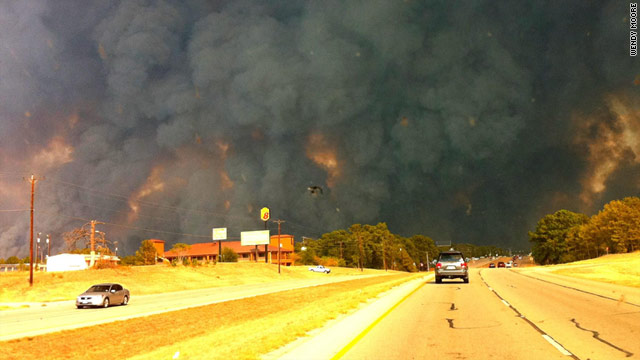
No oohs and aahs this Independence Day holiday in many Texas communities as months of severe drought have led to restrictions on fireworks across much of the state.

Not only are dozens of counties imposing restrictions on small pyrotechnics like firecrackers and bottle rockets, (even sparklers in some places), but cities like Austin, San Antonio, Amarillo, Lubbock, San Marcos, The Woodlands, Magnolia, Tomball, Rosenberg, Plainview, and Round Rock – to name a few – have canceled municipal Fourth of July displays because of the tinderbox conditions.

In Lubbock, temperatures remain in the triple digits without any sign of relief and wildfires this spring have already reached into the city limits and destroyed three homes.  Months without significant rain have left grasslands brown and dry, looking like the dead of winter (for our readers in the northern climes, Texas has a brown  Christmas rather than white).

Canceling the fireworks shows is causing a little bit of a stir in these communities, but it’s an extreme measure in the midst of an “exceptional” drought for the protection of the residents. One errant spark and there could be a major grass fire, as many of these communities have already experienced first hand.

Wildfires have scorched nearly 3.3 million acres of Texas since November, an area larger than the state of Connecticut. Authorities have banned outdoor fires in a record setting 235 of the state’s 254 counties.

Texas is the worst-hit of several states in a band of severe drought that stretches from Arizona to Florida. More than 90% of the state is suffering from “extreme” or “exceptional” drought conditions, according to the U.S. Drought Monitor.

The “exceptional” category — the most severe — covers 72% of the state, according to figures published Thursday. Only a small patch of northeast Texas, from roughly Fort Worth to the Oklahoma state line, has seen anything close to normal rainfall.

The U.S. Department of Agriculture on Wednesday declared disasters in 213 Texas counties due to the drought. The move comes after a loss of pasture, grain and forage crops of more than 30% in the affected district and opens the door to federal support for farmers.

The Texas agricultural extension service estimates that state farmers have suffered $62 million in losses to fires that includes buildings, crops, livestock — and more than 4,100 miles of fences, which can cost $10,000 per mile to build.

In the West Texas oil towns of Midland and Odessa, water is getting to be as valuable as crude oil. Reservoirs managed by the Colorado River Municipal Water District are running dry, forcing the cities to impose new restrictions on water use.  The district has cut Midland’s water allocation by 20% this year, and the city’s biggest water source, the O.H. Ivie Reservoir, is projected to run dry by December 2012 unless conditions change drastically

Suffering its worst drought in more than 50 years, the Llano River is perilously close to running dry. It is the sole source of drinking water for Llano, just 75 miles north of Austin.  As I drove through the town last weekend, the Llano river was a wide, shallow shining pool on the west side of the bridge where a small dam creates the Llano City Lake, and dry river bed on the east side of the bridge, vividly demonstrating the extend of the drought.  Scattered throughout the town were signs posted showing they had moved to Stage 4 water restrictions, which in Llano means no outdoor watering at all – no lawn sprinklers, landscaping, filling of pools, even washing cars. If conditions don’t improve, Llano will more than likely move to Stage 5 restrictions soon. In Stage 5 restrictions, residential customers are limited to half of their normal water consumption and a surcharge is applied to any over usage.

In April, Gov. Rick Perry called on “Texans of all faiths and traditions” to pray for rain. But the state remains parched.

So, throughout the state, this drought has been taking its toll, but as Stephen Colbert decried on his show last week, banning fireworks on the 4th of July is unpatriotic – after all, there’s nothing more American than losing a finger and setting your neighbor’s yard on fire with one bottle rocket. 

No fireworks withstanding, hope everyone has a safe and happy 4th of July.

According to the National Oceanic Atmospheric Administration (NOAA), we’ve already seen eight billion-dollar weather disasters since January!   Before 2011, the most billion-dollar weather disasters recorded in one full year (since 1980) is nine in 2008. This was from a wide variety of weather events including tornadoes, floods, drought, wildfires and three hurricanes.

With half the year and the peak of the hurricane season ahead of us, it’s not out of the question that this undesirable record could be reached in 2011.

From 1980 to 2010 there has been a total of 99 billion-dollar weather disasters.

Use the link below to find out what disasters in 2011 have caused damages of more than a billion dollars. It all started with a colossal winter storm.

2011 billion-dollar weather disasters

Bashing Tokyo Electric Power Co. (Tepco), has become a regular habit in Japan over the past three months. While Tepco managers certainly bungled the response to the crisis at the company’s Fukushima Daiichi nuclear plant following the March 11 earthquake and tsunami, Tepco wasn’t operating in a vacuum.  Indications are that failures of corporate governance policies and the regulatory entity’s cozy relationship with industry contributed to the environment that left the Japanese public angered at both the Fukushima Daiichi operators and their government in the wake of the nuclear disaster that befell their country.   Japanese policy makers still are pretending Tepco is simply one bad apple, while ignoring systemic problems and the Japanese public is intent on going after Tepco.

Protests outside TEPCO shareholder meeting

Protests outside TEPCO shareholder meeting

Angry shareholders of Japan’s Tepco slammed the company for its handling of the nation’s worst ever atomic accident after the March quake-tsunami, amid calls for the firm to abandon nuclear power.  Protests were held outside the shareholder meeting on June 28th.

In the meantime, here in the US policy makers are still debating the future of nuclear power while Mother Nature keeps sending gentle reminders of the risks. Flood waters from the Missouri River breeched a damaged berm around Nebraska’s Fort Calhoun reactor  over the weekend inundating the site under several feet of water. Meanwhile, at Los Alamos, the birthplace of the atomic bomb and home to 20,000 barrels of nuclear waste, wildfires are still raging.

But back at Nuclear Regulatory Commission (NRC), Gregory B. Jaczko, chairman of the NRC keeps telling Congress and the media that the probability of a nuclear disaster on U.S. soil similar to Japan’s Fukushima Daiichi meltdown is “very, very small.”  And the rest of the agency falls into line with federal regulators insisting that U.S. nuclear power plants are operating safely while they move forward with 12 applications for new nuclear power plans and five different reactor designs, as well as more and more applications for re-licensing of the 104 aging nuclear plants now operating. 

“At this time the agency considers that the existing emergency preparedness framework and regulations provide reasonable assurance of adequate protection of public health and safety in the event of a radiological  emergency at a US power reactor facility,” Jaczko submitted in written testimony to Congress on June 16.  But the results of a  special inspection of U.S. nuclear plants after the Fukushima disaster in Japan revealed problems with emergency equipment and disaster procedures that are far more pervasive than publicly described by the Nuclear Regulatory Commission. 

The NRC ordered the inspection to conduct a fast check on the equipment and procedures that U.S. plants are required to have in place in the event of a catastrophic natural disaster or a terrorist attack in response to the March earthquake and tsunami that crippled Fukushima’s reactors. 

Agency officials unveiled the results in May, stating  “out of 65 operating reactor sites, 12 had issues with one or more of the requirements during the inspections.”  But an closer examination of the reports from those inspections by ProPublica found that 60 plant sites had deficiencies that ranged from broken machinery, missing equipment and poor training to things like blocked drains or a lack of preventive maintenance. Some of the more serious findings include:

While the deficiencies don’t pose an immediate risk and are relatively easy to fix, critics say they could complicate the response to a major disaster and point to a weakness in NRC oversight.

In a summary attached to the inspection findings even the NRC expressed some concern.

“While individually, none of these observations posed a significant safety issue, they indicate a potential industry trend of failure to maintain equipment and strategies required to mitigate some design and beyond design-basis events,” the summary says.

The special inspection covered equipment and procedures for use in disasters that are beyond the scope of the plant’s design — major earthquakes, tornadoes, floods, hurricanes and terrorist attacks.

The Fukushima accident has focused the NRC’s attention on the risk that a natural disaster or attack could knock out a plant’s safety systems for an extended period and lead to a radiation release.

Although all plants are designed to withstand natural disasters, U.S. nuclear facilities are aging. Recent studies have shown that earthquake risks are actually higher than they were predicted when some plants were built, although the NRC says reactors can still withstand the highest expected quake (but that’s what Japan thought). Now historic flooding on the Missouri River is testing design limits at two Nebraska plants.

So keep this in mind, like the reports coming from Tepco and the Japanese government after the problems started at the Fukushima Daiichi plant, NRC’s jargon-laden communiques freqently reflect what the operator has reported, and do little to shed light on any issues or events occurring at nuclear power plants throughout our country.  When the agency says that America’s 104 operating nuclear power plants are being inspected to deal with power loss or damage that might follow an “extreme” event, keep in mind the NRC’s loosening of standards over the years at the industry’s urging and the other policies put in place because of the agency’s cozy relationship with the industry.  The nuclear industry here in the US is not so different from Japan’s.  Whose heads will we want if there is some catastrophic failure at one of our own plants?

The full report of lessons learned from the Fukushima incident will arrive on July 19. For now, the world’s other 336 other radioactive reactors are also being pushed by the U.N.’s International Atomic Energy Agency (IAEA) to launch a series of national safety tests backed by international inspections.

Nowhere to run

In a series of investigative stories, the Associated Press (AP) has been reporting on the state of the US nuclear industry in the wake of the Fukushima disaster in Japan.  In this recent report, the AP found that as America’s nuclear power plants have aged, the once-rural areas around them have become far more crowded and much more difficult to evacuate.

Even as nuclear plants run at higher power, posing more danger in the event of an accident, populations around the facilities have swelled as much as 4½ times since 1980.  At the same time estimates of evacuation times have not been updated in decades.  Emergency plans would direct residents to flee on antiquated, two-lane roads that clog hopelessly at rush hour. And evacuation zones have remained frozen at a 10-mile radius from each plant since they were set in 1978.

With about 120 million people, almost 40 percent of all Americans, living within 50 miles of a nuclear plant (using 2010 Census data) this scenario smacks of human tragedy, for any nuclear accident in this country.

Click here to read this segment of AP’s investigative study of Nuclear Power in America.

Stephen Colbert and the FEC squared off today in Washington over the fake news anchor’s SuperPAC request. Colbert testified today in an FEC hearing in which he sought a media exemption so he can form his own Super political action committee. The Comedy Central host has been making fun of campaign finance laws for months and today was the moment of truth for the comedian. Colbert has brought attention to the controversial campaign finance laws and has been largely seen as showing how absurd the laws surrounding a SuperPAC can be.

Public Citizen’s Congress Watch (our colleagues in DC) sent a letter to the FEC urging them to deny Stephen Colbert’s request for a media exemption. Public Citizen’s own Craig Holman said that “This would carve out a gaping loophole in campaign finance laws, allowing any company involved in media to foot, in secret and without limit, the electioneering expenses of political committees. If the press exemption were to be so dangerously expanded by the FEC, the next request will be for media companies to directly finance unlimited candidate campaigns under the press exemption – an abuse that is already being advocated in some quarters.”  What does that mean?  Well, it means if Viacom resources can be used to produce ads for ColbertPAC, then Fox could possibly produce ads for their contributors, such as Karl Rove and his SuperPAC, CrossroadsGPS. It would be a terrible slippery slope and stretch our campaign finance laws to the breaking point.

The members of the FEC appeared to take notice of Public Citizen’s request, voting in favor of allowing Stephen Colbert to have a SuperPAC, but with the narrow media exemption we advocated. In a vote of 5-1, the FEC approved a modified version of the Colbert Advisory Opinion request that is fairly narrow and consistent with the current press exemption.

The FEC today has made a good decision in the minds of advocates for campaign finance reform. They have drawn a line in the sand between media companies and political action committees. They have also not been hypocritical in their decisions, and thus have allowed for a comedian to create a SuperPAC (much like the ones Karl Rove and Sarah Palin have created), who may as well be comedians because their campaign finance activities make us laugh because without laughing we’d cry. With the Supreme Court’s recent controversial ruling on public financing of elections, it’s nice to have some comic relief in the twisted world that is campaign finance.

Thanks to our friends at CREW who posted this video on their blog:

Colbert makes some good points here, but also does what we think is really necessary: by “kidding on the square“, he’s using humor to point out exactly how ridiculous our campaign finance laws are. Because when he starts running his ads, people will notice. And hopefully they’ll realize the real jokes are not Colbert, but the other superPACs out there.

Colbert put it best: “Some of you have cynically asked “Is this some kind of joke?” I, for one, don’t think participating in democracy is a joke… that wanting to know what the rules are is a joke. But I do have one federal election law joke.

Knock Knock

(who’s there)

Unlimited union and corporate campaign contributions.

(Unlimited union and corporate campaign contributions who?)

That’s the thing, I don’t think I should have to tell you.”

The joke is serious. Colbert is right. The Supreme Court with Citizens United have created the most absurd unintended consequences ever. We need real campaign finance reform, but we hope Colbert’s laughs will bring others to the cause.


photo by: Bob Daemmrich

In an interesting twist to what had been a post-session, pre-presidential run period of  crowds chanting “Run, Rick, Run!” everywhere he has shown up, probably reminiscent of the Governor’s A&M yell leader years, Rick Perry was subtly called to task for anti-immigrant efforts during both the regular and special session of the 82nd legislature, then shunned by San Antonio Mayor Julian Castro, and left standing as dead air fell upon the room before someone stepped in to introduce the Governor as he addressed the National Association of Latino Elected and Appointed Officials (NALEO).  Not a good sign from the hispanic community for someone who is considering a run for the presidency.  The San Antonio Current posted this update in thier QueQue blog.

Castro punks Perry

Fresh from his renewed push to dismantle so-called sanctuary cities at the Texas Lege, Governor Rick Perry addressed the National Association of Latino Elected and Appointed Officials to a subdued hostility last week. Harassed and derided by protesters on the street, Perry also took heat from none other than Mayor Julián Castro inside before reaching the podium. Referencing Perry’s effort to, not once but twice, push controversial immigration measures through the Lege, Castro said, “We’ve seen in the State of Texas the call for Arizona-type legislation. We have seen, in this legislative session, easily the most anti-Latino agenda in more than a generation, pursued without shame.” Castro left the stage without even introducing the governor. After an awkward five-minute pause, Republican convert and South Texas state Rep. Aaron Peña took to the mic, introducing Perry by praising him as a tax-cutting, experienced leader.

Protesters outside Perry’s speech scoffed at his presence at the NALEO luncheon, saying it was nothing more than a move to gauge support among Latinos while pondering a White House bid. “It’s insulting for us,” said Diana Lopez, an organizer with Southwest Workers Union. “He wants to run for president, that’s why he’s here. He wants to be seen with these people.” If Perry hopes to sway Hispanics, his San Antonio reception suggests he’s got a lot of work ahead of him. New projections from NALEO released last week estimate at least 12.2 million Latinos will turn out in the next presidential election, an increase of 26 percent from 2008. And Latinos in Texas, NALEO says, are likely to account for over 20 percent of the Latino vote.

If this is the response he got from hispanic leaders here in Texas, will the rest of the Latino’s in the U.S. soon be chanting “Run, Rick, Run – back home to Texas” if he pursues his candidacy for president?

Click here to read about an environmental justice issue for Latinos.

Governor Perry has signed into law several pieces of energy efficiency legislation.  These include:

  • SB 1125 – changes how we measure our progress on energy efficiency from a percentage of growth in energy consumption to a percentage of peak energy usage.  Allows for greater demand side management (DSM) by allowing loads to participate in the daily balancing energy market. It also creates new efficiency programs and standardized forms and reporting for progress.
  • SB 898 – requires a 50% reduction in energy consumption (5% per year for 10 years) by all political subdivisions, schools, and state agencies.
  • SB 924 – requires municipal utilities and large co-ops to report their energy saving programs and results
  • HB 2077 – allows certain nonprofit organizations and churches to have access to the LoanStar revolving loan program to install energy efficiency measures and renewable energy.
  • HB 1728 – allows schools to enter into more flexible energy saving performance contracts

Public Citizen worked on all of these during the regular session, along with Businesses for an Energy Efficient Texas coalition (BEET).  These new laws will  help Texas be more competitive, create jobs, save taxpayer dollars and provide environmental benefits that improve air quality and reduce fresh water consumption. They will also help schools reduce their energy costs, making more money available for the classrooms.

Senator Carona, when asked about energy efficiency this past Legislative Session said, “Capturing more energy and associated economic savings for Texas taxpayers and businesses is a priority – especially with the challenges Texas and Texans face with the economy today.”

The Texas legislature should be applauded for their leadership in improving the state’s laws to help Texans be more energy efficient.

Check out this two-minute film from Public Citizen’s Global Trade Watch about the job-killing NAFTA-style Korea trade deal.

[youtube=http://www.youtube.com/watch?v=YMyQ4OR44pg]

Or, if film isn’t your thing, read the script below. It is replete with links to images and underlying documents. And, if this makes you mad, do something about it. Click here to go to our action page.

Script:

It is heartbreaking, but true: After campaigning against more job-killing NAFTA-style trade agreement, President Obama has adopted Bush’s Korea trade deal.

It is opposed by labor, consumer, environmental and family farm organizations. The Chamber of Commerce and multinational corporations love it.

NAFTA with Korea is projected to cost 159,000 more American jobs and increase our trade deficit. Losers under this deal: the jobs of the future; solar and wind energy; mass transit equipment and more.

NAFTA with Korea is celebrated by the Wall Street firms who wrecked our economy. No doubt, it limits financial regulation.

NAFTA with Korea is opposed by many in Korea because of its financial deregulation and because it would allow up to 65% Chinese parts to go into “Korean” exports to the US–killing Korean jobs.

The Korea deal has the outrageous NAFTA-style provisions that empower multinational corporations to skirt our court systems and directly attack our state and federal laws before World Bank and UN tribunals to demand compensation from us taxpayers for any policies they say undermine their future expected profits. Under trade deals, this system has been used to attack toxics bans, forestry and mining laws, land use and zoning rules — even domestic court rulings.

NAFTA with Korea could also undermine our national security. The sanctions we have to keep the North Korea dictatorship from obtaining hard currency to build up its weapons systems would be undermined. A loophole in the deal would deliver billions to the North Korean regime. It allows goods assembled in South Korea but comprised of parts from the notorious Kaesong North Korea sweatshop zone to obtain special access to our market.

We can stop NAFTA with Korea by ensuring a majority in Congress vote against it. Opposition to more NAFTAs is one of the few issues that unite Americans across the political spectrum. You can make the difference visit www.citizen.org/korea to learn how you can take action to stop the Korea Trade Deal.

 
 Follow Lori Wallach on Twitter: www.twitter.com/PCGTW

There are two main causes of air pollution—diesel engines and coal-fired power plants—both of which are prevalent in Texas.  And these neighborhood contaminants are having grave consequences, particularly on Hispanics in Texas and the rest of the country. 

Because of work or housing availability, Hispanics across the country tend to live near some of the most polluted areas of the country.  In both urban neighborhoods and rural areas, 65 percent of Hispanics live in areas where the air fails to meet federal standards.   According to the Clean Air Task Force, Hispanics take in approximately one-and-one-half times the levels diesel exhaust of the average American, resulting in anywhere between 2,000 to 5,000 premature deaths in the Hispanic community annually. Additionally, Hispanics are 3 times as likely as whites to die from asthma.

Coal-fired power plants are among the biggest polluters in the country and 15 percent of Hispanics live within 10 miles of one.  But it is not only poor air quality that threatens Hispanic neighborhoods.  A recent report released by the Sierra Club indicated that mercury—emitted from coal-fired power plants—is present in high levels in rivers and streams that Hispanics fish. Pregnant women are especially susceptible to the harmful effects of eating contaminated fish because mercury poisoning contributes to babies being born with learning disabilities, developmental delays and cerebral palsy.

A 2007 University of Texas study revealed that children who lived within a 2 mile radius of the Ship Channel in Houston had a 56 percent higher chance of having leukemia than those living elsewhere, and this area of Houston has a large Hispanic population.

The impact on health translates into increased pressure on families juggling caring for a sick family member and their jobs, increased costs to the family from emergency room visits and medication for chronic conditions, all these things are a tremendous burden on families and workers.

The Environmental Protection Agency (EPA) sets air quality standards by setting maximum levels of common air pollutants, which include ozone, particles, sulfur dioxide, carbon monoxide, nitrogen dioxide and lead, which can be present in the air over a set period of time. They also measure for other contaminants that the EPA calls toxic, such as mercury.  States then enforce these standards by issuing permits and

Currently in Texas, when a polluter applies for an air quality permit, the state environmental agency (the Texas Commission for Environmental Quality – TCEQ) looks only at projected air emission levels from that specific plant.  There is no requirement that they look at the cumulative impacts on air quality and efforts to address cumulative impacts failed to pass in the Texas legislature this past session.  This leaves communities dealing with the cumulative impacts of air pollution from several different sources with little recourse, because without one specific polluter, individual families can’t take legal action against companies.

From coast to coast, Hispanics are banding together in a growing environmental justice movement insisting that not only should the earth be protected but also people should be treated equally around environmental issues.  Industry threatens that increasing regulation to protect citizens will cost jobs, but jobs are a poor exchange for the loss of a loved one.  One way to address the current inequities is to VOTE YOUR INTERESTS.  Keeping local, state or federal candidates’ stances on environmental issues in mind when election time rolls around can impact air pollution in your community.

Global Support for Nuclear Power Drops

A new Ipsos/Reuters poll released on June 22nd reveal that global support for nuclear power has plummetted in the wake of the Fukushima disaster. A survey of over 19,000 people in 24 countries showed that three quarters of people now think nuclear power will soon be obsolete.  Only three countries still show support for nuclear power: the U.S., India and Poland.

Recent investigative reporting shows that the relative safety of nuclear power in the U.S. is tenuous, despite what some politicians have claimed. A big problem is that the Nuclear Regulatory Commission (NRC) has been working with the nuclear power industry to keep our country’s reactors operating within safety standards, but they’ve been doing it by either weakening those standards, or not enforcing them at all. A year-long investigation by the Associated Press (AP) revealed that the NRC has extended licenses for dozens of aging U.S. nuclear plants despite their having multiple problems, like rusted pipes, broken seals, failed cables and leaking valves. When such problems are found, the NRC will weaken the standards to help the plants meet them instead of ordering them to be repaired to meet current standards. The nuclear industry argues that the standards they are violating are “unnecessarily conservative,” so the NRC simply loosens the standards.

Just last year, the NRC weakened the safety margin for acceptable radiation damage to nuclear reactor vessels — for the second time. Through public record requests to the NRC, the AP obtained photographs of badly rusted valves, holes eaten into the tops of reactor vessels, severe rust in pipes carrying essential water supplies, peeling walls, actively leaking water pipes and other problems found among the nation’s fleet of aging nuclear reactors.

Fukushima has been a wake up call about the dangers of nuclear power, and some countries are heeding the information. But it seems the U.S. is lagging behind when it comes to this issue. Light-to-absent coverage of TEPCO’s struggles to bring Fukushima under control, legislators who insist on acting favorably towards the nuclear power industry despite the deteriorated state of our current reactor fleet and an ineffective Nuclear Regulatory Commission have all contributed to a bad combination of a dangerous situation and a complacent American public on this issue.

This combination of lax regulations and questionable maintenance at US nuclear facilities is especially concerning with the flooding that two Nebraska nuclear plants are now facing from the swollen Missiouri River. 

Here in Texas, the first hearing to determine what issues would be addressed in the Sustaninable Energy and Economic Development (SEED) Coalition’s intervention in the re-licensing application of the South Texas Nuclear plant in Matagorda County happened Monday.  There are indications that the NRC is being more mindful that they appear more concerned with safety issues in the relicensing process, but we will see whether this is window dressing or if the agency is going to apply some lessons learned from Fukushima to our country’s relicensing process as this application moves forward.

UPDATE

A while back we wrote about a uranium-mining ban that was about to expire in the area surrounding the famous U.S. landmark and one of the seven wonders of the natural world – the Grand Canyon.  Thanks to Arizona resident Suzanne Sparling who led the charge to extend it, collecting 50,000 public comments, last Monday, Interior Secretary Ken Salazar announced his support for another 20-year ban on the dangerous practice.

The U.S. Nuclear Regulatory Commission (NRC) is monitoring events at the Fort Calhoun nuclear power plant after a protective berm holding back floodwaters from the Missouri River collapsed early today.

The plant, located about 19 miles north of Omaha, Nebraska, is operated by Omaha Public Power District.  NRC has been monitoring this plant since  June 6th because of flooding along the river. 

The situation at this plant, in spite of the reassurances of the operators and the NRC, has been a bit nerve wracking following on the heels of the Japanese disaster, especially for those of us who see the NRC more as an industry cheerleader than a safety agency. 

On June 9th, a fire in an electrical switch room briefly knocked out cooling for a pool holding spent nuclear fuel, and just last October, the plant was cited because they failed to maintain procedures for combating a major flood, earning them a “yellow” safety violation.  Since that time, the plant has put measures in place, but there is still concern about how effective these measures will be in the face of this record breaking flood event, especially in  light of the most recent events.

Fort Calhoun Nuclear Power Plant and the flood of 2011 photo by Lane Hickenbottom/Reuters

A 2,000 foot-long, 8-foot-tall by 16-foot-wide, water-filled temporary berm was put in place to provide supplemental flood protection to the plant, but it collapsed about 1:25 a.m. today allowing floodwaters to surround the auxiliary and containment buildings.  The operators and NRC are telling the public that the plant is protected by design to a floodwater level of 1014 mean sea level and that while the Missouri River is currently at 1006.3 feet, river levels are not expected to exceed 1008 feet. 

Worst-case scenario plans are also in place if floodwaters should reach 1,014 feet, breech the levee and prohibit further use of emergency generators. In that circumstance, plant officials plan to tap into power lines running above the facility and/or utilize secondary backup generators housed at 1,036 feet.

Before floodwaters could flow into the cooling pool the river would need to rise to an incredibly unprecedented 1,038.5 feet, which we assume would also knock out those secondary backup generators housed at 1,036 feet.  At that point, “what the Fukushima”, all bets are off.

Aquadam at Ft Calhoun (before failure) is 2000 ft long, 8 ft high and 16 ft wide.

The collapse of the berm also allowed floodwaters to surround the main electrical transformers, forcing the shutdown of electrical power. Operators transferred power from offsite sources routed through the main electrical transformers to the emergency diesel generators. Twelve hours later they were able to reconnect to offsite power.

Oh, and did we mention that there were tornados in the area over the weekend?  Just a little added excitement.

Media coverage should provide updates for this situation and we’ll blog more about it has we receive information.

The Texas Progressive Alliance is ready to say “Sine Die” for the second time as it brings you this week’s roundup.

The Congressional map got its final legislative approval, and Off the Kuff analyzes the new districts.

This week WCNews at Eye On Williamson posts on the (in)action at The Lege. Quorums were broken and tempers flared, This week’s Political wrap-up, GOP laziness was the theme.

Bay Area Houston thinks the Texas Tea Party is calling for an immigration raid on homebuilder Bob Perry for his roll in killing their sanctuary bill.

This week, McBlogger tells us exactly why a federal debt default isn’t a good thing.

Rick Perry’s ‘aids’ (sic) are preparing to respond to the ‘crusted-over rumors’ of the governor’s alleged homosexual liasons. Chief ‘aid’ (sic) Dave Carney emphasizes that Perry is the ‘most tested’ candidate on the Republican side. Seriously, that’s what Politico wrote. PDiddie at Brains and Eggs has a screen shot.

CouldBeTrue of South Texas Chisme sees republican hate meets the greed of Rick Perry crony, Bob Perry. Greed wins.

Libby Shaw gives us the skinny: Rachel Maddow Debunks Rick Perry’s “Texas Miracle” Myth . Check it out at TexasKaos.

Public Citizen’s TexasVox shows us that while Houston implements water restrictions to deal with this global warming-enhanced drought, San Antonio is trying to do something about it by retiring their coal plant and making heavy investments in solar.

Neil at Texas Liberal compiled a Fourth of July reading list. As fun as it might be to blow off your fingers as you set off fireworks in violation of drought-mandated brushfire rules, it is even more fun to learn about your past. If you allow others to define your history—as, for example, we have allowed crazies to take over the symbolism of the Boston Tea Party—such folks will most likely use this power to also screw up your future.

CPS Energy, San Antonio’s municipal utility, has announced plans to shut its two-unit, 871-megawatt JT Deely coal station down by 2018. The utility estimates this move could save as much as $3 billion in environmental upgrades needed for these aging coal-fired units to comply with pending federal regulations.

CPS Energy is the nation’s largest city-owned utility and supplies both natural gas and electricity to the nearly 1.4 million residents of 9th largest city in the US.  San Antonio is on a path to reduce its reliance on fossil-fueled generation and boost its use of renewable resources, such as wind and solar power, to 20 percent, or 1,500 megawatts, by 2020.

Stricter regulations being formulated by the U.S. Environmental Protection Agency to reduce air and water pollution as well as to control coal waste are expected to force retirement of between 30,000 and 70,000 megawatts of coal generation in the next few years, according to industry studies and San Antonio’s efforts to get ahead of these regulations is pushing them to the forefront of a new energy future here in Texas.

Summer has barely set in and the City of Houston has issued stage one conservation measures in the wake of the current drought in Texas:

City of Houston Implements Stage One Water Conservation Measures

Lack of rain and record high temperatures that have plagued 98 percent of the state have made it necessary for the City of Houston to institute Stage One Water Conservation Measures, as outlined in the city’s code.

Houston is asking its residents to limit lawn watering to the hours of 8:00 p.m. and 10:00 a.m. and NO more than two days per week.

Residents are asked to abide by the following schedule:

  • Sundays and Thursdays for customers with even-numbered street addresses
  • Saturdays and Wednesdays for customers with odd-numbered street addresses

The City will also be contacting large commercial water customers to request voluntary reductions in their water consumption.

City departments are instituting a water use reduction program which includes but is not limited to:

  • Reducing water use by 10 percent
  • Implementing corrective measures to eliminate water waste

While the City of Houston currently has adequate water capacity to meet the demands of its customers, the following tips can also help our customers be good water stewards during one of the most severe droughts in Texas history and into the future in a state where water is a precious and finite resource:

  • Keep showers under five minutes
  • Remember to turn water off while brushing your teeth
  • Wash only full loads of dishes or clothes
  • Replace older model showerheads and older faucet aerators with new low-flow ones, and install water conservative toilets
  • Inspect toilets for silent leaks by putting food coloring in the toilet tank. If colored water leaks into the toilet bowl before it is flushed, water is being lost due to a worn flapper.

If you live in Houston and want more information on the city’s water conservation measures, please contact Alvin Wright at Alvin.Wright@houstontx.gov or call 832.395.2455.

The restrictions are the latest prompt in the series of drought related events and measures ranging from Rick Perry’s plea for divine intervention and the recent decision by the LCRA to extend the debate and final vote to approve a contract giving a water to the poorly planned White Stallion Energy Center.

The issuance by the city emphasizes personal responsibility in the face of questionable water availability and residents throughout the state should consider implementing water saving measures even in times were rain isn’t a distant memory.  Some utility companies offer incentives for installing low-flow systems, and conversion kits continue to get cheaper, so purchasing them at any time could reduce your monthly costs and help out the environment too.

Consider, purchasing a rain barrel to capture water when it does rain.  This can keep your gardening investments more viable in times of drought.  Consider landscaping decisions such as xeriscaping (using drought tolerant plants that need less water even in times when drought is not a consideration, and reduces some of you landscape maintenance), minimizing lawn space in favor of beds for plants or replacing thirstier grasses like the very popular St. Augustine for more drought resistant varieties.

Everyone knows Texas weather is one of the more unpredictable things in the world, so carefully monitoring and rationing water usage at all times is most definitely a good decision.