Feeds:
Posts
Comments

Archive for July, 2016

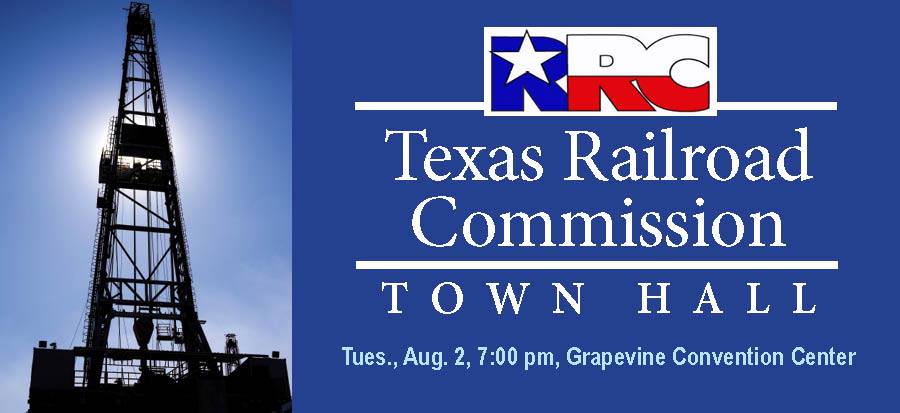
RRC townhallTuesday, August 2 at 6:30 PM

Grapevine Convention Center

1209 S Main St, Grapevine, Texas 76051

The Texas Railroad Commission governs all oil and gas activities including the building of pipelines within the state. The RRC is up for Sunset Review this coming legislative session. Sunset works by setting a date on which an agency is abolished unless the Legislature passes a bill to continue it. Sunset staff evaluates the agency and issues recommendations for positive change. The Commission considers the recommendations, hears public testimony, and decides on a package of changes to bring to the full Legislature.

If you are concerned about the lack of enforcement and fines related oil and gas drilling, about deep injection and earthquakes and about Commissioners taking donations from companies with cases pending before the RRC, then come learn about the Sunset process, express your concerns and your questions about this agency, and how you want it reformed.

Also, public testimony in Austin is tentatively set for Monday, August 22.

For more info,
https://www.sunset.texas.gov/reviews-and-reports/agencies/railroad-commission-texas-rrc

https://www.sunset.texas.gov/meetings#meeting_1764

Sunset of an agency happens once a decade. Real reform for the RRC has been pushed aside in recent years for Legislative budget wrangling and other politics around the Capitol.

Numerous legislators have been invited to the event and we are awaiting confirmation. But this is your opportunity to come together with others where we can document your concerns and comments regarding this agency. This event is sponsored and being put on by Public Citizen, Sierra Club and Earthworks.

Read Full Post »

A rate case is fundamentally about determining how much money an electric utility needs to collect from ratepayers to pay for expenses (and make some return on investment), how those expenses will be divided among the different customer classes (residential, commercial, industrial), and how customers in those different rate classes will be billed.  It’s probably obvious that these decisions can impact affordability and equity among customers.  Rate cases can also have significant environmental impacts though.

The Austin Energy rate case is an opportunity to make changes that can allow the utility to transition away from fossil fuels and towards greater reliance on clean energy solutions, including solar energy at homes and businesses, energy efficiency, energy storage and demand response (temporarily reducing usage when energy demand and prices spike).  What the utility spends money on, what programs are offered, and how rates are designed have profound impacts on climate change, air quality, water pollution, water use, land use – all of which impact society in a variety of ways, including public health and vulnerability to natural disasters.  So, it might sound boring at first, but if you care about the environment or social equity, you should care about how your electric utility is doing business.

What we’re advocating for:

  • 2009-08-21-fayette

    Fayette Power Project

    Budget to allow Austin Energy’s portion of the coal-fired Fayette Power Project to retire.  It is responsible for 80% of Austin Energy’s greenhouse gas emissions (and over 28% of Austin’s greenhouse gas emissions from all sectors).  It’s also a major source of other air pollution that causes and worsens respiratory diseases (sulfur dioxide, and nitrogen oxides – which contributes to ground level ozone formation) and cause neurological disorders mercury.  And it requires over 5 billion gallons of water to operate.  The latest adopted plan for Austin Energy calls for the retirement of the utility’s portion of Fayette by 2023, and Austin Energy staff say its remaining debt associated with the plant must be paid off before it can be retired.  The plan calls for that money to be collected in a dedicated fund through annual budgeting, but that isn’t happening, putting the retirement plan at risk.  Please use our action page to email City Council about budgeting to retire Fayette.

  • Maintain residential rates that encourage energy conservation and allow thrifty customers to keep their bills low.  Austin Energy has proposed to increase electric rates for those who use the least energy and reduce them for those who use the most.  For those trying to reduce their electric usage for environmental reasons or because their household budgets are strained, Austin Energy’s proposal will increase bills.  Austin Energy’s proposal will also make it more difficult to project from year to year how higher much summer rates will be from winter rates.  Both of these changes would reduce the incentive to conserve energy and invest in energy efficiency upgrade.  And these changes were proposed despite a study that Austin Energy commissioned that said that the existing rate structure is succeeding in encouraging conservation.  These proposed changes to how residential customers are billed would be a step backwards.
  • LegalZoom Austin Solar Installation - Meridian Solar

    LegalZoom Austin Solar Installation – Meridian Solar

    Adopt a policy to fairly compensate businesses for energy they produce from solar energy systems.  The City Council has adopted goals solar energy on homes and businesses, but Austin Energy’s current policy doesn’t include any way for most commercial customers to receive compensation for the energy they provide to the utility.  Incentives have temporarily filled that gap, but they are coming to an end.  The value of solar (VoS) rate is used to provide bill credits to residential customers, based on the calculated value of local distributed solar energy.  The same method should be used to compensate commercial customers.  Making this policy change will help grow solar adoption, while shifting away from incentives.

  • Ensure that enough money is collected to fully fund energy efficiency, solar energy and demand response programs.  Helping customers reduce their electric bills by making energy efficiency improvement or install solar energy systems doesn’t just benefit those customers who participate in those programs, it benefits all customers by allowing the utility to avoid purchasing expensive power that would drive all of our bills up.  The Energy Efficiency Services fee is used to collect money for this purpose.  With more people moving to Austin all the time, Austin Energy needs to ensure that budgets are set to match the need for local energy improvements.

Public Citizen and Sierra Club jointly participated in the Austin Energy rate case over the past several months, in an effort to push the utility to make environmentally sound decisions about both spending and billing customers.  That was just a warm-up for the real decision-making process though.  Because Austin Energy is owned by the city of Austin, the Austin City Council will make the final decisions about the rate case.  That’s where you come in.  City Council members, including Mayor Adler, need to hear from Austin Energy customers.  There will be a public hearing on Thursday, August 25th at 4:00 p.m. at City Hall.  Meet at 3:00 p.m. for a rally to support fair rates that meet Austin’s environmental goals.

Read Full Post »

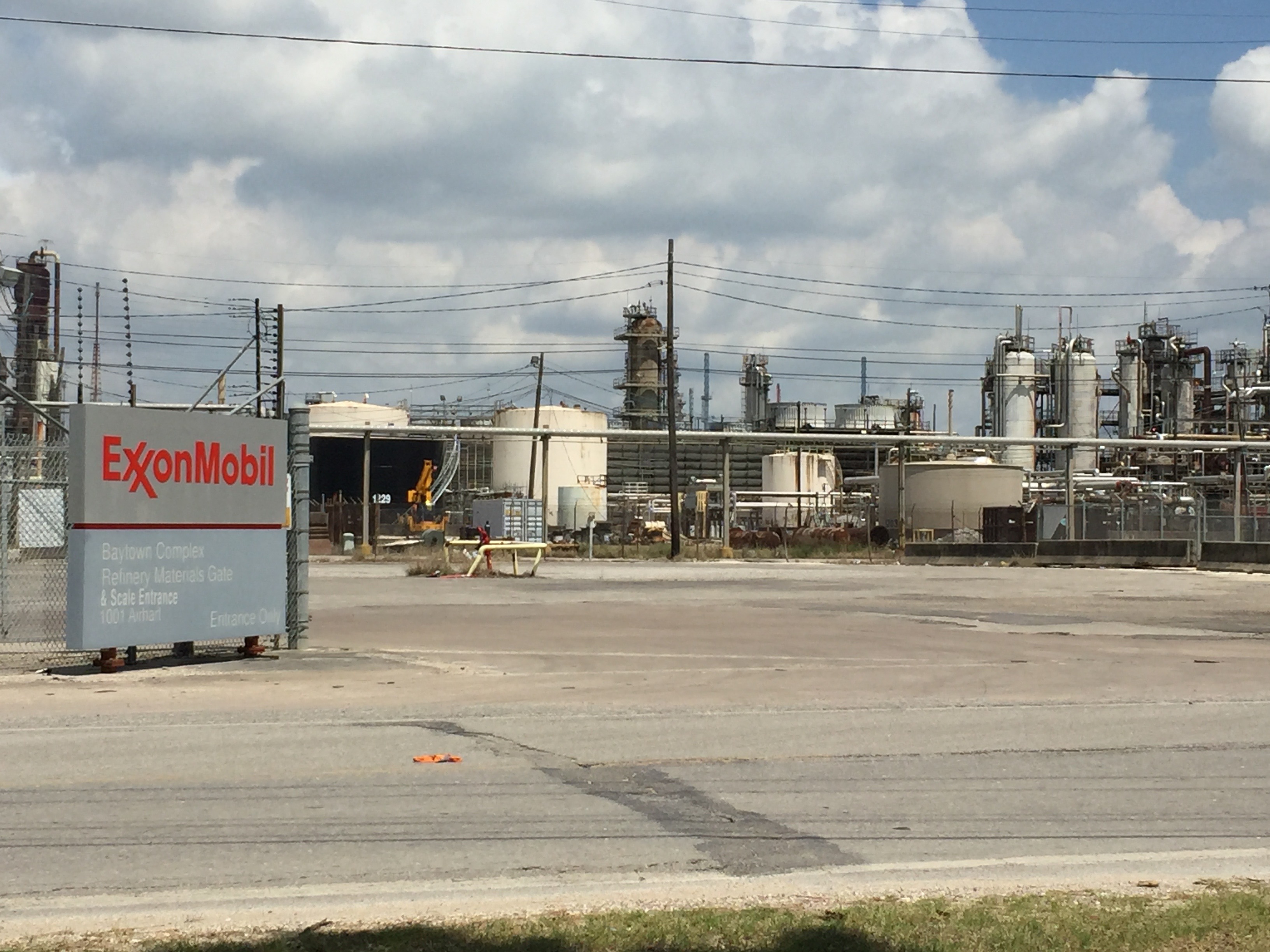
IMG_1653Around 10:10 AM on Sunday July 17th, a pipeline leaked propylene in the community of Baytown, TX, near the ExxonMobil Baytown refinery. Propylene is a dense, colorless gas that is considered non-toxic but flammable. The pipeline leak highlights some of the challenges associated with emergency response along within the Houston region.

At 10:30 AM, according to the Houston Chronicle, three houses were evacuated and all others within the vicinity of the leak were told to shelter in place. The emergency response was mixed. Residents who signed up for city notifications through Baytown Alert were apparently notified by phone and by email around 10:30 AM about the order to shelter-in-place. Yet some confusion remained – who exactly did the shelter-in-place include? What had happened, and what kind of chemical was released – something flammable or something toxic? Should residents downwind be concerned?

The CAER line, which is supported by the East Harris County Manufacturers Association, provides a hotline for Harris County residents to call to obtain more information regarding emergency situations. During the incident on Sunday, several people known to us called CAER to hear the messages it posted regarding the situation. It is unclear how quickly the first message regarding the incident was posted to CAER; a Baytown resident stated that it took about an hour following the incident before CAER posted a message. On Sunday at 1:05 PM, there were no current messages, even though the shelter-in-place had not yet been lifted. At 2:30 PM, CAER’s message stated that a propylene leaked resulted in the shelter-in-place warning. The City of Baytown reported via twitter that the shelter-in-place had been lifted at 2:38 PM. At 3:30 PM, CAER’s message line mentioned the leak without any mention of a shelter-in-place. Around 4:20 PM there were no current messages on the CAER line.

Although the City of Baytown notified residents of the shelter-in-place, the residents we spoke with never received the all clear and were not informed when the shelter-in-place had been lifted either via siren or via email and phone. In fact, it is unclear if sirens were used to communicate the shelter-in-place, which is an important way to inform people who may be visiting the area or who may not have access to other technology. Many questions remain unanswered and the Healthy Ports Community Coalition (HPCC) is actively researching to fully understand the emergency response.

The HPCC is also proposing a system like an amber alert system to make use of our modern technology so that residents can be informed immediately when emergency evacuations or a shelter-in-place is called for, notified when it is all clear to return to normal, and they can be instructed specifically on what steps to take to keep themselves and their families safe and healthy. In this case, Baytown residents were lucky that the chemical leaked was not deemed toxic and that no one suffered any known health impacts from the leak. HPCC is working to keep residents safe and informed for when the next incident happens.

hpcc


The Healthy Port Communities Coalition is growing a strong base of well-informed and active local residents who engage public and private stakeholders directly on priority issues including jobs, pollution, health, neighborhood safety, and economic opportunities.


Read Full Post »

2016 Gonna Be Too Hot To Handle

melting earthMany of us are asking, can it get any hotter?  The National Weather Service is issuing heat alerts for more than a dozen states from Minnesota to Louisiana this week.  In the meantime, NASA says 2016 is already on track to be the hottest year ever on record, with each of the first six months, from January to June, setting new temperature records.  Click here to read LiveScience’s report on what NASA is projecting.


Read Full Post »

photo by Kevin Lamarque, Reuters

photo by Kevin Lamarque, Reuters

During the last week of June, President Obama, Mexican President Enrique Peña Nieto, and the Canadian Prime Minister Justin Trudeau met for the North American Leaders Summit (known as the Three Amigos Summit) in Ottawa to focus primarily on climate-related issues. These climate accords are essential not only in combating climate change, but also in seeing how countries can forge multi-lateral partnerships in addressing environmental issues.

This summit was the first in two and a half years. The trilateral summit last year was postponed due to disputes over the Keystone oil pipeline between President Obama, who saw the pipeline as a threat to the environment, and Canada’s former Conservative Prime Minister Stephen Harper, who was a strong advocate of it. Now, with Prime Minister Justin Trudeau, head of the Liberal Party, and President Enrique Peña Nieto, a close ally of President Obama’s, US, Canada, and Mexico are unifying their energy policies more than ever.

The new agreement calls for 50 percent of North America’s electricity to come from clean power sources by 2025. According to the agreement, clean power sources include renewable energy, efficiency, nuclear power and fossil fuels with carbon capture and storage technology. Currently, 37% of North America’s electricity is powered by non-carbon-emitting power plants, mostly nuclear and hydro. Among the three countries, Canada is leading in carbon-free energy with 81 percent (if nuclear energy is included), coming from clean energy sources. United States and Mexico lag behind. In Mexico, only 22 percent of its energy is carbon-free. The statistics for the United States are not much better given that only 33 percent of electric power (including 20 percent nuclear) comes from carbon-free energy sources. Another 33 percent of our electricity is fueled by coal which is primarily composed of carbon.

The trilateral agreement opens up new avenues for carbon-dependent states to replace their energy sources through the transmission of power from Canada’s electricity grid. Another way the countries are looking to decrease carbon emissions is by boosting deployment of clean vehicles in government fleets, as well as cutting emissions from the shipping and airline sectors.

The agreement’s main targets are methane and carbon dioxide (CO2), along with other greenhouse gas pollutants. Cutting down on methane emissions should be a priority for North America given that it produces 20% of the world’s methane emissions.  The pollutant traps 25 times more heat over a 100 year period and 87 times more over a 20 year period, compared to CO2. The pressure of being accountable to your neighbor will hopefully bring all three of the North American states to significantly reduce their methane emissions.

A part of the accord that U.S. and Canada had previously decided on before the summit, promises to reduce methane, black carbon, and hydrofluorocarbons (HFCs), which are used in refrigerators, by 40 to 45 percent. During the Three Amigos Summit, the Mexican President agreed to the terms as well.

Finally, the Three Amigos also agreed on protecting biodiversity, particularly preserving migratory birds and butterflies that fly every year between the three countries, but are losing their habitat due to environmental threats.

The climate change goals of the North America Leaders Summit are aligned with the Paris Agreements of 2015, in which U.S. committed to reducing its greenhouse gas emissions by 26-28 percent of 2005 levels by 2025.
(more…)

Read Full Post »

HPCC-Dee-Blast-Zone-768x1024

Dee Arellano (t.e.j.a.s.) shows the oil train blast zone for East Houston.

The news of the fiery explosion of two trains in Panhandle, Texas broke as organizers in Houston were discussing how to reduce the high risks of accidents involving toxic trains in Houston. That day, June 28th, two trains collided, resulting in a fiery explosion, the presumed death of three workers and the hospitalization of another. The trains in Panhandle, TX, were fortunately not carrying crude. However, the collision and explosion reminded us of the importance of standing up for safety in rail transport during the Stop Oil Trains Week of Action, July 6th – 12th.

The Healthy Port Communities Coalition (HPCC) kicked off the week of action on July 6th with a press conference and a community meeting to discuss the risks that we Houstonians face as a result of rail traffic within our communities. This was especially poignant as less than a week earlier, on June 28th, two trains collided near Panhandle, TX, leaving 1 employee injured and 3 employees presumed dead. Fiery and fatal incidents over the past few years have increased concerns around rail, public safety, and chemical security, and we shared our concerns with media (“Exigen a autoridades frenar la contaminación por el transporte de combustible” and “Crude-by-Rail Plummeting In Texas But Critics Insist Risk Of Accidents Remains“) and with community members. From our discussion, community members wanted to find out more information about exactly what kind of chemicals are transported through their neighborhoods to better understand the risks. The HPCC is taking a stand against oil trains because we are concerned with hazardous, flammable materials coming into the Houston area. Toxic trains put Houstonians at risk through the possibility of explosion and by polluting the air with cancer-causing diesel and other toxic gases, through collisions, and by trapping folks behind stalled trains. One person reported being trapped behind a train for 90 minutes! (more…)

Read Full Post »

CT-JoReprinted from CleanTechnica
https://cleantechnica.com/2016/07/04/coal-royalty-fraud-loophole-closed-export-terminal-nixed/
July 4th, 2016
by Tina Casey

 

cleantechnica 1Now what, indeed. The domestic market for US coal has been shrinking faster than you can say Clean Power Plan, and now it appears that the door is shutting on the export market, too. In the latest development, last week the US Interior Department announced a new rule aimed at closing off a coal royalty loophole. The loophole enabled exporters to pocket millions in revenue that could have gone back to the taxpaying public.

The Coal Royalty Loophole

The new rule comes under Interior’s Bureau of Land Management. It is included in a new regulatory package that also covers oil and gas as well as coal leases on federal and American Indian lands.

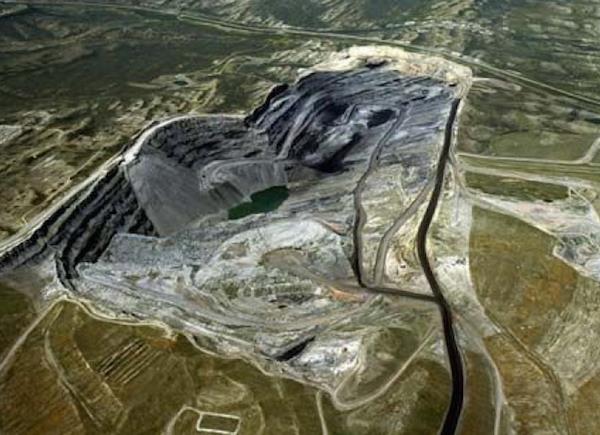
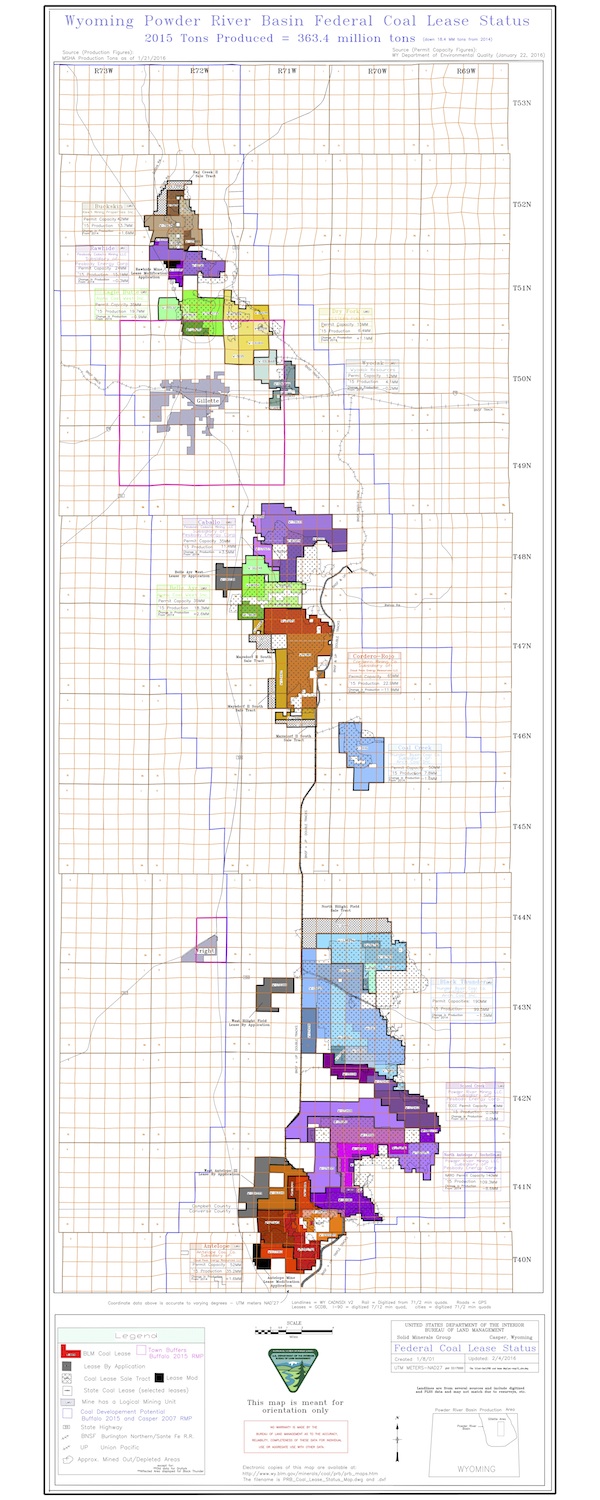
We’re zeroing in on the coal royalty rule because it has been the focus of considerable attention by regulators and industry observers, especially as applied to coal from federal lands in the Powder River Basin of Wyoming.

The region is home to the largest coal reserves in the US, as illustrated by this recent snapshot of federal coal leases:

cleantechnica 2The coal royalty loophole has been described in detail by a series of reports in Reuters, which trace the scheme to a 2003 loophole that applied only to natural gas exports. Coal industry stakeholders have argued that the Interior Department gave it the go-ahead to apply that regulatory framework to coal exports in 2009.

The scheme worked by using affiliated brokers to buy US coal at artificially low prices, then sell high in coal-hungry Asia. US taxpayers received royalties based on the lower price, not the higher price.

By 2011, the Interior Department was well aware that US taxpayers were getting the short end of the stick. At least one regulatory reviewer argued that the coal industry clearly misapplied the 2003 natural gas loophole, and the agency began taking steps to tighten up its regulations.

In the meantime, in February 2013 the Interior Department launched an investigation into the practice on the request of US Senator Ron Wyden (D-OR), chair of the Senate Energy and Natural Resources Committee.

Aside from the lost revenue, US taxpayers are also left holding the bag for the environmental impacts of coal extraction and transportation, so there’s that.

Closing The Coal Loophole

The new coal royalty regulations took a while in coming, but they’re finally here under the moniker of “Consolidated Federal Oil & Gas and Federal & Indian Coal Valuation Reform Rule,” which took effect on July 1.

The rule was last updated in the 1980’s, which is where the modernization comes in. Here’s the money quote from Interior:

…the rule reaffirms that valuation, for royalty purposes, is best determined at or near the lease and that gross proceeds from arm’s-length contracts are the best indication of market value.

The rule specifically eliminates non-arm’s-length sales (that’s regulatory parlance for transactions with a hidden agenda) between affiliated companies as a benchmark for valuation. Instead, valuation is based on gross proceeds from the first arm’s-length-sale, which generally means the sale closest to the lease.

The idea is to ensure a more accurate valuation of the actual coal marketplace, rather than continuing the historically difficult task of benchmarking transactions down the line.

The End Of Coal: But Wait, There’s More

The new rule puts another dent in the profitability of the US coal industry, and BLM isn’t finished yet. In a press release announcing the new rule, BLM reiterated its intent to fold public health and environmental impacts into the federal coal program. The review, now under way, was motivated in part by “many concerns” raised during the public comment period for the coal rule:

For that and other reasons, Interior recently launched a comprehensive review to identify and evaluate potential reforms to the Federal coal program in order to ensure that it is properly structured to provide a fair return to taxpayers and reflect its impacts on the environment, while continuing to help meet our energy needs.

Yikes!

The coal industry is also facing pushback from other federal agencies. Most notably that includes the Environmental Protection Agency, but the US Army Corps of Engineers has also stepped into the fray.

Earlier this year, the Army Corps halted the permit process for a key coal export terminal in Washington State. The agency based its decision on the relatively narrow issue of treaty rights with Native American tribes in the region, but it also evoked a set of environmental principles that date back to the early years of the Bush Administration.

Whither Coal?

We’re not saying that the US coal industry will eventually vanish from the face of the earth — for that matter, BLM is still issuing new leases in the Powder River Basin — but it will play a marginal role in the sparking green future.

Over the short term, the domestic market for US coal has been hit by competition from low cost natural gas, a fuel that is “cleaner” at the burn point but is also fraught with public health and environmental issues including water and air pollution, greenhouse gas emissions and other side effects including earthquakes.

A more sustainable approach to energy management is well under way with the growth of renewable energy, energy storage, energy efficiency, transmission infrastructure, “smart grid” technology and related fields.

There is also a movement afoot to revive nuclear energy as a key element in low-carbon economies, spearheaded by billionaire Bill Gates, founder and chair of the nuclear company TerraPower.

If you have some thoughts about that, drop a note in the comment thread of the original story.

Follow Tina Casey on Twitter and Google+.

Images: via US Bureau of Land Management.

Read Full Post »