Feeds:
Posts
Comments

Archive for the ‘Global Warming’ Category

Austin, Texas just hit 100 degrees today (according to weather.com).

This is our 25th day of 100 degree weather this year.  That pales in comparison to 2011, where at this time last year we were counting down to breaking the previous record of 69 days of 100 degree days set back in 1925.  Austin did that and more, setting a new record of 90 days of 100 degree days in a single year a month and a half later.

Nevertheless, this year is still above our average of 13.5 days of 100 degree weather, but to the north of Texas, the midsection of the country is experiencing drought and heat waves comparable to ours of 2011.  That being said, weather forecasters are seeing the development of a moderate El Nino which could bring enough rain to Texas this winter to break our drought.  We can only hope that it is not a strong El Nino like the one that hit in 1997 and 1998 which brought major flooding to the state.  These feast or famine swings of weather are taking their toll on many things in this state – our agriculture, economy, electric grid . . .

If climate change is responsible for these extreme weather events, then maybe our leaders should look more closely at what we can do to slow climate change and mitigate the effects.

Read Full Post »

TransCanada has begun construction of the southern Keystone XL in Oklahoma and Texas. and while they tried to keep it quiet, the Tar Sands Blockade is there to greet them.

TransCanada is carelessly moving forward with construction and trying to keep it quiet. Important legal cases are still pending regarding their use of eminent domain, and they have failed to conduct environmental review of the southern Keystone XL pipeline route.

[youtube=http://www.youtube.com/watch?v=d9Ys6C58XT4&t=1s]

Texas Landowner Halts TransCanada Surveyors in Their Tracks          

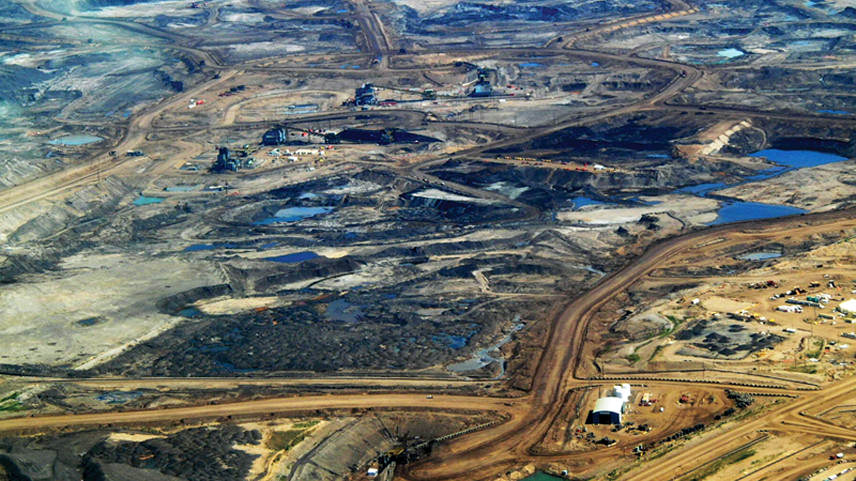
TransCanada plans to clear-cut countless acres of East Texas forest in order to pipe tar sands oil across rivers, streams, and land that many landowners are claiming was seized via an abuse of eminent domain and contract fraud — all to export oil overseas.

TransCanada’s last pipeline spilled 12 times in its first 12 months of operation. During a summer of record heat, and an unprecedented drought, the last thing Texas needs is a tar sands pipeline that could ruin valuable water supplies with toxic oil spills.

In order to halt the onslaught of this international company’s plans to pillage their way across the landscape of the great state of Texas, we have learned that the Tar Sands Blockade, a grassroots-led campaign using non-violent civil disobedience, has initiated a plan to stop construction of the southern leg of the Keystone XL pipeline. They have organized landowners, environmentalists, tea partiers, occupiers and more to stop this disaster-in-the-making in imaginative ways.

The following video shows folks from around the country telling you why they are joining the Tar Sands Blockade.

[youtube=http://www.youtube.com/watch?v=e-WGe7EkNwE&t=1s]

To follow the Tar Sands Blockade, check them out on their facebook page. http://www.facebook.com/TarSandsBlockade

We hope to post more about this action in the coming days.

Read Full Post »

With the passing of the Summer solstice and temperatures expected to hit triple digits several days next week in the Lone Star State, the Electric Reliability Council of Texas (ERCOT), the electric grid operator for most of the state, is looking closely at anticipated electric use and available electric generation.

Following on the heels of 2011’s second hottest summer on record in the U.S. with Texas experiencing the warmest summer on record of any state and its hottest summer on record,  ERCOT is going to be carefully looking at demand in the coming months.  Peak electric demand is expected to exceed 65,000 megawatts on Monday and Tuesday, and ERCOT expects to have adequate electric generation resources available to serve the residents of Texas without issuing an Energy Emergency Alert. This takes into account current outages and the possibility of losing additional resources in the first heat wave of summer.

ERCOT will use a variety of channels to keep the public informed throughout the summer. ERCOT Energy Saver, a new mobile app now available for Apple and Android devices, will provide real-time alerts when conservation is most critical in the ERCOT region. Users of the free app need to enable push notifications to receive these messages. ERCOT also will provide information through the news media, Facebook, Twitter and ERCOT’s new subscription-based EmergencyAlerts list (http://lists.ercot.com).

ERCOT will provide updates as needed, especially if actual energy use or loss of generation through unplanned outages exceeds current expectations.

Although the grid operator anticipates sufficient electric generation to meet this early summer heat wave, consumers are urged to conserve, especially between the hours of 3 and 7 pm.

Some steps everyone can take to reduce demand on the grid during these peak demand hours include the following:

  • Turn your thermostat up by two or three degrees in the late afternoon.
  • If you will be away from home throughout the day, turn your thermostat up before leaving home in the morning.
  • Set pool pumps to run late at night or early in the morning.
  • Avoid using large appliances, especially hot stoves and clothes dryers, during the peak.

For more conservation tips, download the ERCOT Energy Saver app or visit the Public Utility Commission of Texas website.

Read Full Post »

According to a story on MSNBC, scientists can’t blame any single weather event on global warming, but they now believe they can assess how climate change has altered the odds of such events happening,   Click here to read the AP story, Global warming tied to risk of weather extremesClick here to download a copy of NOAA’s State of the Climate 2011 Report.

Tom Peterson of the National Oceanic and Atmospheric Administration is an editor of the report that includes the analyses published by the Bulletin of the American Meteorological Society one of which looked at the Texas drought last year.  If you are from Texas you know that we suffered through record heat and low precipitation in 2011 that left most of the state in “exceptional” drought (the highest level of drought classification) well into 2012.

Meterologists attribute last year’s weather in the south to a La Nina weather pattern, caused by the cooling of the central Pacific Ocean, La Nina generally cools global temperatures but tends to make the southern United States warmer and drier than usual.  In the report analysis, scientists wondered, beyond that, would global warming affect the chances of such an extreme event happening?

To find out, they studied computer climate simulations for La Nina years, focusing on Texas. They compared the outcome of three such years in the 1960s with that of 2008. They used 2008 because their deadline for the study didn’t allow enough time to generate thousands of new simulations with fresh data from 2011.  The two years were similar in having a La Nina and in amounts of greenhouse gases in the air.

The idea of the study, they said, was to check the likelihood of such a heat wave both before and after there was a lot of man-made climate change, which is primarily from burning fossil fuels like coal and oil.

Their conclusion: Global warming has made such a Texas heat wave about 20 times more likely to happen during a La Nina year.

This has grave implications for Texas for the next La Nina pattern.  Over the last several months, Texas legislators have been meeting and taking testimony about the drought’s impacts on the states’ water supplies and stability of our electric grid.  Right now, policies are being put in place that makes it more attractive for electricity generators to pull old polluting plants out of mothball and run them full out during times of electrical shortage emergencies rather than investing in peak energy use forms of renewable energy (like solar and coastal wind).  This creates a vicious cycle – increasing global warming gasses emitted, that increase global warming, that increases the likelihood that we will have more extreme heat waves during La Nina years, and on and on.

Texas needs to incentivise a move away from sources of electric generation that contributes to both global warming gas emissions and intensive water use.

Read Full Post »

The Electric Reliability Council of Texas, Inc. (ERCOT), system operator for the state’s bulk transmission grid, is asking consumers and businesses to reduce their electricity use during peak electricity hours from 3 to 7 p.m. today.

Consumers can help by shutting off unnecessary lights and electrical appliances between 3 and 7 p.m., and delaying laundry and other activities requiring electricity-consuming appliances until later in the evening. Other conservation tips from the Public Utility Commission’s “Powerful Advice”  include:

  • Turn off all unnecessary lights, appliances, and electronic equipment.
  • When at home, close blinds and drapes that get direct sun, set air conditioning thermostats to 78 degrees or higher, and use fans in occupied rooms to feel cooler.
  • When away from home, set air conditioning thermostats to 85 degrees and turn all fans off before you leave. Block the sun by closing blinds or drapes on windows that will get direct sun.
  • Do not use your dishwasher, laundry equipment, hair dryers, coffee makers, or other home appliances during the peak hours of 3 to 7 p.m.
  • Avoid opening refrigerators or freezers more than necessary.
  • Use microwaves for cooking instead of an electric range or oven.
  • Set your pool pump to run in the early morning or evening instead of the afternoon.

Businesses should minimize the use of electric lighting and electricity-consuming equipment as much as possible.   Large consumers of electricity should consider shutting down or reducing non-essential production processes.

How to Track Electricity Demand

  • View daily peak demand forecast and current load at  http://www.ercot.com/
  • View daily peak demands by the hour at this link
  • Get real-time notices of energy emergency alerts by following ERCOT on Twitter

Read Full Post »

The following story on testimony provided to the Texas House Energy Resources Committee about the threat the proposed Tar Sands pipeline poses for the state was reprinted with the permission of the Texas Energy Report.

House Energy Resources Committee Chairman Jim Keffer on Tuesday promised environmental advocates warning of dangers posed by pipelines carrying Canadian tar sands – especially under outdated Texas regulations – that his committee will do its “due diligence’ on the issue.

“You have certainly helped me in things I didn’t know. I want to assure you this committee is going to take everything you said very seriously with the utmost respect it deserves,” Keffer (R-Eastland) said during a day-long hearing on Texas energy and regulations governing it.
Comparing pipeline safety and transparency to his landmark legislation on public disclosure of hydraulic fracturing chemicals, Keffer said he is committed to ensuring “we disclose everything we can to really help the industry going forward.
“We will certainly do it with all due diligence and make sure it is done right,” he added.
He lamented that no one from the pipeline industry attended the hearing to answer questions raised in detail about the safety of pipelines carrying tar sands, also known as oil sands, and commonly referred to as diluted bitumen when in transport.
Julia Trigg Crawford, a family farmer battling TransCanada Corp.’s use of eminent domain to condemn easements on her farm for the controversial Keystone XL Pipeline, testified that diluted bitumen is not akin to heavy Venezuelan crude, as many in the industry insist. (Texas Railroad Commissioner Barry Smitherman also made the comparison earlier in the hearing.)
“Please don’t allow our land to be taken and then endanger it by allowing old standards to be used for something that is an entirely new product that’s going to come across Texas soil. One does not have to pull back many layers to discover that Canadian tar sands are not your mother’s crude oil,” Crawford told the committee.
Noting that she’s learned TransCanada could begin pipeline construction on her land as early as August, Crawford said state officials have an obligation to ensure the “highest and most stringent” pipeline construction regulations are in place when transporting diluted bitumen.
She underlined that her family is fighting TransCanada’s use of eminent domain law to condemn easements on her land, claiming it is a common carrier. Diluted bitumen is not one of seven products listed in the state’s natural resources code that fall under current pipeline regulations, she pointed out.
The Crawford family’s fight against TransCanada will be aired next at a hearing July 18 in the Lamar County Court of Law with Judge Bill Harris presiding, she said. The family will argue the company cannot claim common carrier status in order to employ eminent domain. It also has raised legal issues regarding Native American artifacts that could be disturbed by the proposed pipeline construction route.
“The proposed pipeline that’s going to cross my land will transport Canadian tar sands,” she said. “This product has never come across our soil before. Our current state regulations have never had to address this specific product,” Crawford said, adding officials need to study ample existing data to prevent a repeat of a tar sands catastrophe in Michigan’s Kalamazoo River. “We really don’t know what we’re up against with this product. I don’t think we should use our Texas lands and resources as guinea pigs.”
Trevor Lovell, environmental program coordinator of Public Citizen’s Texas office, told the committee that he coauthored an op-ed in the Dallas Morning News warning about Enbridge Inc.’s repurposing of the 36-year-old Seaway Pipeline to carry a “poisonous mix of chemicals and tar sands bitumen up to 20 times more toxic than traditional crude.” The pipeline crosses three major water sources for the Dallas-Fort Worth area.
The articl,e co-written by Public Citizen-Texas Executive Director, Tom “Smitty” Smith, raised several concerns: tar sands are solid at ambient temperatures, far more acidic than crude oil, and chemical diluents must be added to move them through a pipeline. Yet companies like Enbridge have refused to disclose the chemical mixes, calling them proprietary information.
They added that data from tar sands pipeline spills show the blend is heavy in benzene at toxic levels and other chemicals that are “far more deadly” than contents in ordinary crude oil pipelines.
While a chemical engineer formerly employed at Mobil responded that he agreed with the op-ed points on dangers posed by the Seaway pipeline conversion, Lovell said, a dueling op-ed submitted by an Enbridge executive did not address even one of the 10 key points Public Citizen had made.
Instead, it attacked the two authors, accusing them of distortion and misinformation. It cited statistics showing that no tar sands pipelines have ruptured due to corrosion, a point Lovell said the two did not assert.
After the hearing, Lovell said he felt “pretty good” about Keffer’s pledge to investigate the subject further to ensure safety and continued economic contributions from oil and gas activities in the state.
“It was very encouraging,” Lovell told Texas Energy Report. “I think that Keffer’s done a lot of leadership on that committee. He didn’t make any statements he can’t back up. He framed it in the terms he’s comfortable with, which is protecting the industry from itself, so to speak.
“At the end of the day,” he added, “what we care about is safety on these pipelines.”

By Polly Ross Hughes

Ramrodded by veteran reporter Polly Hughes, the Texas Energy Report’s Energy Buzz specializes in what is happening on the ground in Texas energy ranging from dedicated coverage of the Texas regulatory agencies to battles in the Legislature that affect the future of the industry.

Copyright June 21, 2012, Harvey Kronberg, www.texasenergyreport.com, All rights are reserved.  Reposted by TexasVox.org with permission of the Texas Energy Report.

Read Full Post »

We’ve recently realized that TCEQ allowed stock from Waste Control Specialists (WCS) sister company, Titanium Metals Corp to be put up as the financial assurance for their radioactive waste dump and that stock isn’t performing well right now. So we want to know, where does that leave the state of Texas and its citizens?

We hope to have this addressed at the upcoming Texas Low Level Radioactive Waste Disposal Compact Commission (Compact Commission) meetings that are coming up this week.

  • Thursday, June 28th 5:30 PM – Joint subcommittee meeting at the Capitol – E1.028 Technical and Legal Committees
    (The process for addressing applications is yet to be determined, although the applications could be voted on the next day)
  • Friday, June 29th – 9 AM Full Compact Commission Meeting – at the Capitol – E1.028
    The Friday meeting should be televised live (but won’t be archived) and will be available for viewing at “Texas legislature online

Do come to these hearings if you are able.

Read Full Post »

According to the National Oceanic and Atmospheric Administration (NOAA), the last 12 months have been the warmest in the U.S. since record keeping began in 1895, averaging 55.7 degrees Fahrenheit — nearly three degrees warmer than the average May-April, and depending on the numbers for May 2012, the June 2011-May 2012 period will likely surpass this 12-month record.

But more importantly, NOAA is concerned about the lack of precipitation and the development of drought going into summer and the agricultural growing season. This includes the regions of: the Southeast, the Southern Rockies and Southern Plains, and the Northeast.  But parts of Texas are already slipping back into drought status.  We hope that the current rains will help Central Texas, but we have a lot of summer to go and our groundwater levels are still at lower than levels than many communities like.

Highlights from the NOAA report:

12-month temps: Between May 2011 and April 2012 temperatures were 2.8 degrees above average, topping the earlier record of 2.7 degrees warmer set in November 1999 to October 2000. All 10 warmest consecutive 12 months have been since 1999.

Cities with record warmth in January-April include: Atlanta, Boston, Chicago, Detroit, New York City, Philadelphia, Tampa and Washington.

April temps: Last month was the third warmest April on record at 55 degrees — 3.6 degrees above average.

The monthly report follows one issued by the agency for March that found 15,000 records were broken in what is now the warmest March on record.

NOAA does not attribute the warmer temperatures solely to manmade global warming since other, natural factors influence weather as well. Instead, it notes that that the warmth is indicative of what one would expect with climate change.

Texas contributed greatly to the warmth of the nation for the past 12 months.

All-Time Record Highs (Any Month)

These Texas cities recorded temperatures in 2011 that exceeded any temperature on record for any month.

  • Amarillo, Texas – 111 on June 26 (records since 1892)
  • Borger, Texas – 113 on June 26 (records since 1949)
  • Dalhart, Texas – 110 on June 26 (records since 1948)
  • Childress, Texas – 117 on June 26 (records since 1893)
  • Austin, Texas – 112 (tie) on August 28 (records since 1897)
  • Houston, Texas – 109 (tie) on August 27 (records since 1889)

Heat Streaks & Days of 100+ Heat

  • Midland, Texas – Record 64 days with 100+ degree highs in 2011. Previous record: 52 days in 1964.
  • Wichita Falls, Texas – Record 52 straight days with 100+ degree highs June 22 through August 12. Record 100 days of 100+ highs and 12 days of 110+ highs. All previous records from 1980.
  • Austin, Texas – 27 consecutive days with 100-degree highs July 17 through August 12. Breaks previous record of 21 straight days (July 12 – Aug. 1, 2001). 85 days of 100-degree heat in 2011 breaks record of 69 days in 1925.
  • Dallas, Texas – 70 days with 100-degree heat sets new record for any year. Previous record: 69 days in 1980.
  • Waco, Texas – Record 44 straight days with 100-degree highs June 30 – August 12. Record 87 total days of 100+ heat in 2011 (old record from 1980).
  • Tyler, Texas – 46 consecutive days with 100-degree highs June 28 through August 12. 79 days with 100+ highs in 2011 also sets new record.
  • Amarillo, Texas – 50 days with 100-degree heat in 2011 sets new record for any year. 58 straight days of 90+ heat also sets new record.
  • San Angelo, Texas – 98 days with 100-degree heat sets new record for any year.
  • Abilene, Texas – 80 days with 100-degree heat sets new record for any year.
  • Houston, Texas- 24 straight days with 100-degree heat August 1 through August 24 breaks the longest streak on record of 14 days in 1980. 46 days with 100-degree heat      in 2011 breaks record of 32 days in 1980.
  • College Station, Texas – 66 days with 100-degree heat in 2011. Old record 58 days in 1917.
  • Lufkin, Texas – 62 days with 100-degree heat in 2011 breaks record of 42 days in 1998. Record 26 straight days of 100+ degree heat (previous record: 14 straight days in July 1980).
  • Del Rio, Texas – 83 days with 100-degree heat in 2011 breaks record of 78 days in 1953.
  • Victoria, Texas – 56 days with 100-degree heat in 2011 breaks record of 42 days in 1912.

While all indications are that this summer will not be as bad as last summer, there are still concerns about the state’s water supplies, the stability of our electric grid and the impact another drought, even a mild one, will have on the state’s agricultural industry.  So let’s all hope for more rain in May to fill up our lakes and our aquifers.

Read Full Post »

The wildfire season has started in Texas as two large fires rage in Jeff Davis County.  The Texas Forest Service, working with Texas A&M University, has developed a website that can provide some information about your area’s risk of wildfire and also tells you what you can do to diminish your risk.

Click here to get to the Texas Wildfire Risk Assessment site.

While the drought has diminished somewhat in parts of the state, we are not out of the woods yet.  Given the devastation of last year’s wildfires here in Texas, knowing more about your risk can help you plan for this possibility.

Read Full Post »

MSNBC reports that a scientific paper published in the peer-reviewed journal Nature on Wednesday concluded that during the end of the last Ice Age (12,000 years ago), global temperatures rose after carbon dioxide levels started to rise.  This provides even more scientific evidence that there is a connection between warming temperatures and rising carbon dioxide.

For this study, which was funded by the National Science Foundation, researchers reconstructed temperature records from ice and soil cores at 79 sites around the world from around the same time period.

Earlier studies postulated that changes in Earth’s orbit may have triggered the warming trend by causing ice sheets to melt, but the new study suggests CO2 played a more important role.

Click here to read the MSNBC story that also includes comments by skeptics.

Read Full Post »

The Dallas Observer is reporting that there is a good chance that Energy Future Holdings (EFH) (or TXU for most of us) the state’s largest power generator, will go broke – click here to read their story.

The question now becomes – are Texas ratepayers going to have to pay for EHF’s bad bet?  Two weeks ago, in an op-ed by Public Citizen’s Texas director, Tom “Smitty” Smith, and its policy and outreach specialist for coal and renewable energy, Kaiba White, they wrote about this question.  We have published that op-ed below.

Energy Future Holdings is going broke because of coal and it may be time to pull the plug on the old and dirty coal plants that are bankrupting the company.

Utility after utility has looked at the future of coal and made the decision to retire more than 100 coal plants rather than to retrofit them. If we wait for them to go bankrupt, the choice will be made by the courts, who will sell the plants to the highest bidders and you’ll pay the price in higher costs and unrelenting air pollution.

Energy Future Holdings bet on the wrong fuel when it bought the old TXU. The company got smoked.

TXU was worth about $32.3 billion; EFH paid $45 billion at a time when the price of natural gas was high and the cost of coal was lower than it is now. Today, the costs are reversed. Natural gas prices are at a 10-year low and it’s now cheaper to generate electricity with gas or wind than it is with older, inefficient coal plants. EFH’s generating subsidiary Luminant is very dependent on coal and, as a result, EFH is losing money quarter after quarter, and is losing customers as well.

The losses can’t go on much longer. The big Wall Street analysts and even Warren Buffet, a major EFH investor, are predicting that this company will fold unless natural gas prices rise.

We have known for years that pollution from the big coal plants to the south and east of the DFW area affect air quality in North Texas. Pollution from Big Brown, Martin Lake and Monticello, all owned by Luminant, was estimated to cause 136 early deaths; 204 heart attacks and 149 asthma hospitalizations a year, according to an Abt Associates study commissioned by the Clean Air Task Force in 2010. These three plants are the largest sources of sulfur dioxide emissions in Texas and are some of the worst in the country. They also graced the EPA’s top 10 list for nitrogen oxides emissions in Texas.

For more than 20 years the EPA worked on the recently announced rules to reduce pollution from power plants. In order to meet the lower emissions limits, EFH estimates it will have to spend $1.5 billion on pollution controls. The Sierra Club estimates those controls could cost as much as $3.6 billion.

EFH doesn’t have the cash or credit to retrofit these plants. So it has gone on a PR warpath, claiming that the new pollution rules will make the lights go out. Officials are just blowing smoke. We predict they will ask the Texas Legislature to bail them out. Lawmakers shouldn’t rescue these Wall Street slicksters who made a bad investment.

Other Texas coal companies have begun to invest the money and add the pollution control devices needed. CPS of San Antonio looked at the cost to upgrade one of its old coal plants and decided to retire it and invest the money in renewable energy projects, rather than sink the cash into an outdated technology.

Just two weeks ago, GenOn Energy announced it was closing eight coal plants in three states between June 2012 and May 2015 because it would be less expensive to shut them than to fix them up to protect public health.

So what do we do to keep the lights on in Texas? CPS in San Antonio has a plan to replace its old coal plants and create local jobs with energy efficiency, solar and wind energy, and a new natural gas plant. Utilities across the country are doing the same because it’s cheaper than fixing up their old coal plants, reduces healthcare costs and creates local jobs rather than ones at Wyoming coal mines.

The Texas Senate will be studying this issue over the next several months and should develop a plan to reduce air pollution and the risk of bankruptcy while developing new cheaper ways to meet Texas’growing energy needs. But money talks, and EFH has long learned it’s cheaper to invest in politicians and lobbyists than pollution controls. Texans should call their senators and tell them not to let EFH’s smoke get into their eyes. Your tax dollars shouldn’t be used to bail out Wall Street bankers

We’d like to know what you think.            [polldaddy poll=6090363]

Read Full Post »

With the Texas Low Level Radioactive Waste Disposal Compact Commission (TLLRWDCC) approving rules that open up of the WCS dump site to out of compact waste, we may soon see low level radioactive waste from Nebraska Public Power District’s nuclear facility heading to Texas.

The deal between WCS and Nebraska’s Cooper Nuclear Station still must be finalized, but the waste they are looking to send would include radioactive resins, filters and other equipment.  Currently, low-level waste from Cooper Nuclear Station is stored in on-site pools that also hold used nuclear fuel rods because no other disposal site took either out of compact waste, or did not take the “hotter” C level waste.

With the opening up of the Texas waste site, you can bet other nuclear power plants around the country are looking to free up space in their spent fuel pools as these aging plants near the end of their planned life.  Many of these plants are at a point where they are looking to get relicensed, and with the lack of a national respository for the spent fuel rods, will need to show that they have adequate on site storage for another 20 years of spent fuel.  Removing “low-level” radioactive waste from on site is going to be important to that process, and Texas is looking good to them as an option to making that happen.

While there was concern about there being enough room at the WCS site for Texas and Vermont (the two states in our Compact), the commission set aside space for our two states, however you can be sure other states will be clamoring for what’s left.  Then what – an expansion of the site?

Oh, just another thing to ponder over.  The San Antonio Current reported in their Que Que blog that in 1992, an earthquake measuring 4.7 on the Richter scale struck Lea County, New Mexico, just across the Texas-New Mexico border from the radioactive waste dump operated by Waste Control Specialists in western Andrews County.

Read Full Post »

Today, the Environmental Protection Agency issued the first limits on greenhouse gas emissions from new power plants.

“Today we’re taking a common-sense step to reduce pollution in our air, protect the planet for our children, and move us into a new era of American energy,” EPA Administrator Lisa P. Jackson said in a statement announcing the limits. “Right now there are no limits to the amount of carbon pollution that future power plants will be able to put into our skies – and the health and economic threats of a changing climate continue to grow.”

This rule has been years in the making and was approved by the White House after months of review.  The rule will require any new power plant to emit no more than 1,000 pounds of carbon dioxide per megawatt of electricity produced. The average U.S. natural gas plant, which emits 800 to 850 pounds of CO2 per megawatt, meets that standard; coal plants emit an average of 1,768 pounds of carbon dioxide per megawatt which could essentially end the construction of conventional coal-fired facilities in the United States.

The rule provides an exception for coal plants that are already permitted and beginning construction within a year. There are about 20 coal plants pursuing permits; two of them would meet the new standard with advanced pollution controls.  The proposal does not cover existing plants.

Read Full Post »

On Friday, Governor Perry announced he is appointing Toby Baker, a former policy and budget advisor to Perry on energy, natural resources and agriculture, to replace Garcia who continues to serve in a TCEQ commissioner’s spot that officially expired in August 31, 2011.  Mr. Baker’s term will begin April 16 and will expire Aug. 31, 2017.

At the governor’s office, Baker has also served as a liaison between the office and Texas Legislature, Railroad Commission, TCEQ, Texas Parks and Wildlife Department, Texas Department of Agriculture and the Texas Animal Health Commission. Formerly, he also worked as a natural resources policy advisor to Sen. Craig Estes (R-Wichita Falls) and is a former director and clerk of the Texas Senate Subcommittee on Agriculture, Rural Affairs and Coastal Resources.

Read Full Post »

Statement of Trevor Lovell, Environmental Program Coordinator,  Public Citizen’s Texas Office

It is unfortunate that President Barack Obama has decided to ignore news stories in Business Week, the Wall Street Journal, Bloomberg News and Financial Post, among others, explaining in simple terms how the southern leg of the Keystone XL pipeline will raise gas prices for American consumers.

Public Citizen has long warned about Keystone’s health and safety risks, the environmental devastation associated with tar sands mining and its disproportionate impact on global climate change, and the unconscionable contributions to local air pollution in Port Arthur, Texas. Port Arthur is one of the Environmental Protection Agency’s (EPA) “Environmental Justice Showcase Communities” due to a concentration of environmental health risks that disproportionally burden minority communities.

But Keystone XL also poses another risk – a risk to U.S. consumers and the fragile economic recovery. Analysts and economists agree that building the southern leg of this pipeline will alleviate a glut of oil in Cushing, Okla., and allow more oil products to be exported to other countries, thereby reducing domestic supply and raising gas prices.

The southern leg of this pipeline does not bring oil into the country (a goal our organization does not endorse), but does create a clear path to get oil out to export markets. Since refined oil products are now the largest export commodity in the U.S., it is obvious that pushing more oil to the Gulf Coast will result in more export activity and less supply for Americans.

Today, Public Citizen renews its call for the president and relevant agencies to treat this pipeline as a tar sands pipeline. As construction has not yet begun, it would be imprudent to build the pipeline when we anticipate new findings from a congressionally mandated study on the unique dangers of tar sands pipelines, which may inform new regulations for this industry.

Texas may be an oil and gas state, but the health and safety of our citizens is no less important than it is anywhere else. Our water resources are threatened now more than ever, and this pipeline would cross the Carrizo-Wilcox Aquifer in East Texas, which serves 60 counties and as many as 12 million people. When the presidential permit was denied earlier this year, the inadequate study of threats to Nebraskan water resources was cited as a central concern. Apparently water resources in Texas do not require the same kind of thorough review. Texans deserve protection from our elected and appointed leaders, and today President Obama has shown he is ready to sacrifice that protection for election-year politics.

—————————————————————————————————————————

Below is a statement issued by Independent Texans by Julia Triggs Crawford

Response from Julia Trigg Crawford to President Obama’s support for TransCanada’s Keystone Pipeline Project

Julia Trigg Crawford, a Texas farmer who is challenging TransCanada’s use of eminent domain to take an easement across her property for TransCanada’s Keystone pipeline, issued the following statement in response to President Obama’s Thursday morning press conference in Cushing, OK:

“Today President Obama indicated he’s taking an “All of the Above” strategy to his energy policy, and in doing so will expedite the Cushing to Houston leg of TransCanada’s pipeline. While his decision was not unexpected, it is disappointing that this issue continues to be a political football during this election game.”

“Where I come from you’re only as good as your word, and I am proud to stand by my principles no matter the pressure that’s applied. And there’s no doubt about it, TransCanada’s applying pressure anywhere they can, from Washington D.C. to small towns along the proposed pipeline route, and not everyone can hold up.”

“I stand by my belief that TransCanada illegally asserts that its pipeline is a common carrier and is for the public good. My attorneys tell me we have a strong case and we are eagerly awaiting our day in court. Should we win, and I wouldn’t be in this fight if I didn’t think we would, I hope that our case will give strength to other landowners who are still fighting for their property, and to those being bullied by a company falsely wielding the club of eminent domain.”

“I’m just a farmer caring for a piece of good Texas earth, up against a foreign corporation with the power to bend the will of a President, so I’m under no delusion that this will be easy. I am reaching out to my fellow Americans and anyone who believes in an individual’s right to private property to help me in this fight. You can go to www.standwithjulia.com to take action and to contribute to our legal defense fund so that we can face TransCanada on an even playing field.”

“So here is my “All of the Above“ strategy. Stand by one’s principles, hold onto and protect those property rights afforded to every American by the United States Constitution, and never bow to pressure that runs contrary to the promises you’ve made”.

“Thank you and God bless.”
Julie Triggs Crawford

Read Full Post »

« Newer Posts - Older Posts »