Check out the League of Conservation Voter’s newest ad supporting Obama’s plan to jump start the economy and solve the climate crisis. If only he really did have super powers…
[youtube=http://www.youtube.com/watch?v=vEBzRP-ZJuQ]
Posted in Coal, Energy, Global Warming, Nuclear, tagged Cartoon Super Obama, DUH, League of Conservation Voter, Texas on December 24, 2008 |
Check out the League of Conservation Voter’s newest ad supporting Obama’s plan to jump start the economy and solve the climate crisis. If only he really did have super powers…
[youtube=http://www.youtube.com/watch?v=vEBzRP-ZJuQ]
Posted in Coal, Efficiency, Energy, Global Warming, Renewables, Toxics, tagged cap and trade, Christmas, clean coal technology, Coal, coal ash pond, coal companies, Global Warming, natural gas, particulate matter, pickens plan, PM, soot, Texas, texas vox on December 23, 2008 |
The real question is, will we at Texas Vox run out of holiday references before tomorrow or not?
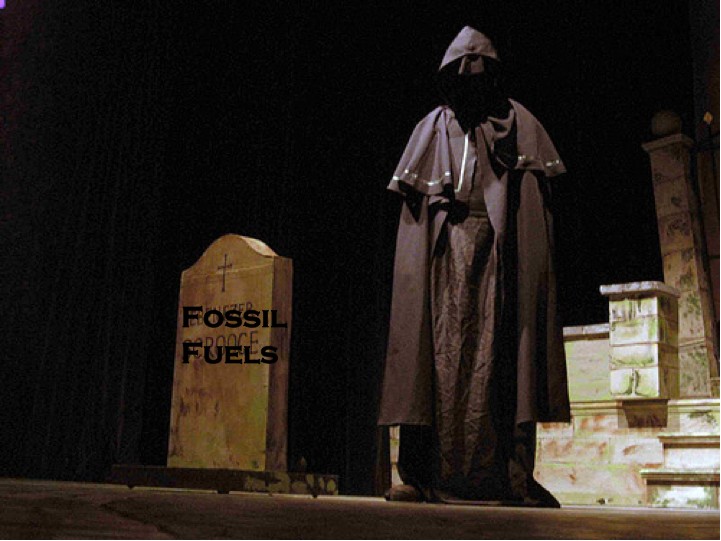
Some scary, scary stuff out there in the past few days we wanted to show you, plus some extra holiday snark for all of you.
“This is a perfect chicken and egg policy. The coal companies say they’ve got a solution and don’t want lawmakers to do anything until the solution is ready. But they’re not doing much to make this solution a reality.”
~~Citizen Andy
Posted in Energy, Global Warming, tagged Amy Goodman, Arches National Park, Bureau of Land Management, Civil Disobedience, Democracy Now!, Ed Abbey, Hayduke Lives, Monkeywrenching, National Parks Service, Oil and Gas Leases, Salt Lake Tribune, Texas, Tim DeChristopher on December 23, 2008 |
 Ed Abbey would be proud.
At an auction held by the Bureau of Land Management for oil and gas leases on 149,000 acres of public land in Utah, a University of Utah student and environmental activist named Tim DeChristopher posed as a bidder and bought up 22,000 acres to keep it from industry clutches. Much of this land was from the area right around Arches National Park, a beautiful swath immortalized in Ed Abbey’s book Desert Solitaire. DeChristopher also drove up prices for oil and gas leases on other parcels to the tune of about half a million dollars.
Reports the Salt Lake Tribune:
He didn’t pour sugar into a bulldozer’s gas tank. He didn’t spike a tree or set a billboard on fire. But wielding only a bidder’s paddle, a University of Utah student just as surely monkey-wrenched a federal oil- and gas-lease sale Friday, ensuring that thousands of acres near two southern Utah national parks won’t be opened to drilling anytime soon.
Tim DeChristopher, 27, faces possible federal charges after winning bids totaling about $1.8 million on more than 10 lease parcels that he admits he has neither the intention nor the money to buy — and he’s not sorry.
“I decided I could be much more effective by an act of civil disobedience,” he said during an impromptu streetside news conference during an afternoon blizzard. “There comes a time to take a stand.”
The land was being auctioned off in another last-ditch effort by the Bush administration to win Big Industry some holiday goodies before Obama takes office in January. The BLM didn’t have time to do adequate environmental impact statements, leave much time for public comment, or even take in input from other federal agencies such as the National Parks Service. Apparently in BLM’s intial announcement of the auction, private property with houses on it and land the agency didn’t have rights to drill on was also included. BLM won’t re-open the land DeChristopher’s won for auction until February, when the new administration will be in place. They are also giving bidders who won parcels with inflated prices the chance to withdraw those bids within a ten-day period — but since the Obama administration is unlikely to offer the leases again, most bidders will probably hold on to the land they’ve won.
Watch Amy Goodman from Democracy Now! interview DeChristopher below:
[youtube=http://www.youtube.com/watch?v=I1t9PniD-bY]
And a final Ed Abbey parting shot:
A patriot must always be ready to defend his country against his government.
Posted in Coal, Global Warming, tagged Attorney General, Attorney General Michael Mukasey, Barbara Boxer, boo-yah, Deseret Power Electric Cooperative, EPA, EPA Administrator Stephen Johnson, Michael Mukasey, Senator Barbara Boxer, Stephen Johnson, Texas on December 23, 2008 |
 Remember last week, when I was pissed off at EPA Administrator Stephen Johnson for making up last minute rules to get coal plants permitted?
Today this anger is tempered by my love for Senate Environment and Public Works chair Barbara Boxer, who basically told Johnson he was CHEATING AND MAKING UP FAKE RULES.
Boxer sent a letter to Attorney General Michael Mukasey asking that he make Johnson withdraw his “blatantly illegal memo.”
Spake Mrs. Boxer:
Administrator Johnson issued the document without legal authority under the Clean Air Act, and in spite of the clear opinion of the EPA’s Environmental Appeals Board in In re: Deseret Power Electric Cooperative, PSD Appeal No. 07-03 (EAB November 13, 2008). Johnson’s guidance also flies in the face of the U.S. Supreme Court in Massachusetts v. EPA (2007).
BOO-YAH! Sometimes, you gotta love a tattle-tale. Let’s just hope the Attorney General puts Johnson’s ruling in time-out.
Read Boxer’s full letter here.
Posted in Global Warming, tagged coal power plants, Department of Energy, lump of coal, Texas on December 20, 2008 |
Good news, coal activists-
According to the Department of Energy in a new report released this week, coal use will actually decline slightly in coming years. This is partially because of the recession and economic problems. Power consumption growth is on the decline, and less capital is available for financing coal plants. However, the data also shows an uptick for renewable energy.
The DOE has also shaved back their predictions of building new coal power plants in the next few years from 104 to 45.
Now if only we can make that number zero.
Posted in Coal, Global Warming, tagged A Christmas Story, Bonanza, Coal, Coal Plant Permitting Process, coal-fired power plants, Desert Power Electric Cooperative, Environmental Protection Agency, EPA Administrator Stephen Johnson, Global Warming, greenhouse gas emissions, Lisa Jackson, Massachusetts v EPA, Stephen Johnson, Texas on December 19, 2008 |

The EPA’s newest decision definitely brought the dreaded “F-dash-dash-dash” word to mind.
Reports Grist.org:
Just as I was getting into the holiday spirit, Stephen Johnson has to hit us with this.
In case you’re not quite as obsessed with carbon dioxide regulation and coal plants as we are here at Texas Vox, let me provide a little background. In November the EPA’s governance board ruled that its regional office had been too hasty in approving a new coal-fired power plant in Bonanza, Utah because the plant didn’t include carbon dioxide emissions or control techniques in their permit application. The Sierra Club helped secure this victory by filing a suit against Utah’s Deseret Power Electric Cooperative for not controlling carbon dioxide. Their argument was based upon the landmark Massachusetts v EPA case, which required the agency to regulate CO2 as a pollutant under the Clean Air Act.
The Bonanza decision was, in a word, wicked awesome (okay, two words). It gave environmentalists a great new tool for stopping coal-fired power plants and signalled a sea change in the government’s willingness to take action over carbon dioxide emissions. So the fact that the EPA is now telling permitters that they cannot consider greenhouse gas emissions when processing applications is a major kick in the pants. It could mean slated plants that wouldn’t have been approved could get the green light during these last weeks of the Bush administration. In a New York Times article, Vickie Patton, from the Environmental Defense Fund estimates that as many as 8,000 megawatts of new coal-fired power plants could skate through as a result of this ruling.
I’m still rather uncertain of what this decision means for the incoming administration. Lisa Jackson, Obama’s new pick to head the EPA, is considerably more progressive on greenhouse gas emissions than Johnson, and could theoretically reverse this decision.
It was unclear yesterday what the ruling’s real-world impact will be. The EPA says that about 50 plants — either new or significantly remodeled — must obtain a permit under this provision every year. But Meyers said he does not know if any are positioned to receive final approval before President-elect Barack Obama takes office on Jan. 20.
The Obama administration is likely to review the case, and Democratic officials close to the president-elect’s team say that the Supreme Court ruling and the EPA’s power to regulate carbon dioxide can serve as powerful levers to bring corporations and other parties to a bargaining table about broad framework for controlling greenhouse gases.
Posted in Global Warming, tagged Arctic Sea Ice Melt, Christmas, Global Warming, Inconvenient Truth, Santa Claus, Texas on December 16, 2008 |
The fossil fuel industry should get a lump of coal this holiday but I’m sure they’d be happy with that. Scientists at the annual meeting of the American Geophysical Union in San Francisco this week are giving us some alarming news about polar ice cap melt, glacier loss, and other threats from climate change.
Global warming is causing massive ice melting at the poles of over 2 trillion tons of ice this year. This creates even more warming as less of the sun’s rays are reflected off the white ice cap and are absorbed by the dark ocean. Scientists are incredibly alarmed at this rate. This amount of arctic warming and ice loss was predicted to occur decades from now, meaning we are warming much faster than scientists had expected. One article in the UK Times this morning even asked Has Arctic Melt Passed the Point of No Return?
There isn’t much good news to be had, but at least melting arctic sea ice doesn’t add significantly to sea level rise. Melting ice from Greenland’s glaciers, however, does– and they lost a piece of ice last year more than twice the size of Manhattan. Scientists are concerned because Greenland lost three times more ice this year than only a few years ago, showing the speed at which warming is accelerating.
NOAA has shown just how bad this ice melt has been in the last few years:
[youtube=http://www.youtube.com/watch?v=bXhcKyYOb9Y]
And why is this bad news for Mr. Claus? Continued ice melt like this, will, most likely, put Santa’s workshop underwater, which I guess will look something like this:
[youtube=http://www.youtube.com/watch?v=JHgYYc20Pws]
So what do we do? The most recent climate conference in Posnan left a lot of people hoping for more. We need to plot a course that will keep climate change from under 2 degrees worldwide, which probably means stabilizing CO2 at 350 parts per million or less. That would require strong federal legislation in this next year which will cut our emissions by at least 80% by mid century and 25% by 2020.
~~Citizen Andy
Posted in Global Warming, tagged biofuels, Department of Energy, geothermic, redmonk, Renewables, scott sklar, smitty, solar, sustainable energy, Texas, the energy collective, tom raftery, wind farms on November 6, 2008 |
The Energy Collective, an online blogging group, hosted a webinar Wednesday about developing a roadmap for large-scale installation of renewable energy sources. The online seminar’s expert participants described Texas as a world leader in wind energy, yet at the same time focused on the U.S. as lagging behind many countries in wide scale renewable installation.
“The audience is primarily American and you may not want to hear this, but you guys are lagging behind,” said Tom Raftery, a sustainable industry analyst for Redmonk and Energy Collective blogger who is Irish, but recently moved to Spain.
“All the markets are very different . . .Ireland is at about 7 percent (of renewable power sources), Spain is at 10 percent. The U.S. is at about 1 percent. The U.S. needs to (increase renewables), and do it fast,” Raftery said.
One attendee asked webinar participant Scott Sklar, who is president of the Stella Group and a chair of the Sustainable Energy Coalition’s steering committee, whether Sklar supported selection of an American “Energy Czar”.
“Yes,” replied Sklar. “Because most of what the Department (of Energy) does are wonderful things but in the end have nothing to do with our energy policy. Renewables don’t get due attention outside of photo opportunities because they are such a small part of the agency’s agenda. It needs to be a cabinet post.”
Sklar said that converging interests demand fast development in the energy sector. He said that presidential candidate John McCain cited renewable development as a necessity for improving national security; Barack Obama cited it as a source of job creation, and environmentalists cite the need for the planet’s health.
“The U.S., by not having resolved our energy policy and letting our policy be driven by energy price has really harmed our own standing within these technologies,” Sklar said.
He added that the U.S. is now importing wind and solar (more…)
Posted in Global Warming, tagged Texas on October 31, 2008 |
We had a great time at our press event this week talking about the dangers of nuclear… ahhem, sorry… “Nuke-u-lar” energy.
I hope you’ll enjoy our little Halloween play, complete with monsters, dragons, and radiation… Oh My! And the worst part– billionaires trick-or-treating for our taxpayer money in Congress and State Legislature!
As I say in the video, “Stick the nukes where the wind don’t blow and the sun don’t shine– and that ain’t Texas!”
[youtube=http://www.youtube.com/watch?v=zwz7PWHG0FM]
For more info, visit NukeFreeTexas.org.
Posted in Global Warming, tagged climate change, financial crisis, global financial crisis, Nicholas Stern, Texas on October 27, 2008 |
Nicholas Stern, formerly of the British Treasury, said over the weekend that the risks of inaction over climate change far outweigh the turmoil of the global financial crisis.
The risk consequences of ignoring climate change will be very much bigger than the consequences of ignoring risks in the financial system… That’s a very important lesson, tackle risk early.”
Suggestion noted. And just as people were sounding the alarm about the unsustainability of the housing market and the risks in the subprime lending market, so too have people been sounding the alarm about climate change. We can still tackle the risk early or we can face the consequences.
Stern also warned not to use the current financial problems as a reason to not tackle climate change now. Investments in efficiency will put people to work immediately and start bringing down electric bills for consumers. Investing in solar and wind will put people to work in manufacturing, constructing, and installing these new forms of low carbon energy.
We have the technology, we can do it. We can choose a new energy future and receive the economic benefits of investing in it, or we can face the consequences of inaction, which we are already seeing today.
Now all we need is a catchy slogan, easily shouted at campaign rallies. Weatherstrip, baby, weatherstrip?
Posted in Global Warming, tagged EPA, Texas on October 19, 2008 |
From our contributor Sarah McDonald:
Usually when a problem suddenly becomes much more severe, you expect whatever is being done to solve the issue to also ramp up a notch. For example, if a tropical storm in the gulf suddenly turned into a category 3 hurricane, hurricane preparedness efforts would increase dramatically over night. Or if your Aunt Mildred had been sick for some time and her doctor announced that she was in fact seriously ill, you’d hope that her physician would boost treatment. And if the EPA announced that Houston had a “severe”, not a “moderate” smog problem, you’d think that region would be required to put extra effort into emissions reductions.
Well, you’d be wrong.
Because the EPA did in fact reclassify Houston’s smog problem as “severe”, and rather than ordering the 8-county regional area to intensify their clean up plans, the agency actually extended the deadline to meet federal health standards for ozone. Governor Rick Perry requested the change from “moderate” to “severe” – skipping over a “serious” ranking entirely. The region was supposed to have met the EPA’s standards by 2010, but now has until 2019 to come into compliance. What’s worse, this extension is still for the EPA’s 1997 ozone standard, which is no longer considered sufficient to protect public health. The EPA reduced allowable amounts of ozone from 84 parts per billion to 75 ppb earlier this year (which is still significantly higher than the 60 – 70 ppb range recommended by the EPA’s science advisory committee as the safest measure to protect human health — but what do those scientists know anyway?) Houston may not be required to meet the current standard until as late as 2030.
Now, not that I wouldn’t trust Governor Perry and the EPA with my life… (more…)
Posted in Global Warming, tagged Energy, nuclear energy, solar, Texas, uranium mining, wind on October 10, 2008 |
Nuclear power is not an answer to our collective energy problem. Essentially, turning to nucle ar power as a primary solution to the current carbon-based system is like borrowing from Peter to pay Paul. It is not an “alternative”. Considering that, in resource-availability terms, we could already be powering most structures in this state with solar power, and that we have not done so out of adherence to constructs and public policies rooted in economic interests, it seems ridiculous to suggest that our power problem demands we dig up metal and devise ingenious was of containing and storing radioactive dust. For me, there are three levels upon which nuclear power as a primary power source does not work.
1) Forming a larger industry around the mining of uranium would recreate the oil-based market system that has contaminated the global markets, has instigated war, has tainted laws. Wind is free. Sunlight is free. Yes, solar panels are built with silicon-but the silicon we use comes from sand and is the second-most common element on the earth (after oxygen). If we want to progress as a planet, we must focus not only on outcomes, but the means of attaining them. We need a new system that is not primarily driven by mining minerals-because that system can be too easily dominated by a relatively few people with the right land. In a wind and solar-based system, opportunity to participate and regulate is inherently more accessible. Wind is free. Sunlight is everywhere. So without even considering environmental impacts, a nuclear energy-based system is a repugnant proposition to me. This is my number one reason for opposing nuclear energy. We must question advocates of nuclear energy and consider whether they stand to benefit from mining, conversion of coal burning plants, or processing.
2) We need to recognize and heed the signs (the glaring billboards!) that uranium mining and nuclear power are wrong at a deeper level. At this point in our global evolution, we know what can lay ahead when indigenous people and “progress” meet. In hindsight of world history, we now see how many of the worst aspects of contemporary society were foreshadowed in interactions with native peoples at the outset of a progressive undertaking. So where indigenous people react adversely to something today, we should listen. To ignore the response of native people to uranium mining would be a monumental failure-the prospect of so doing reminds me of the Zora Neale Hurston book Their Eyes were Watching God, when the workers watched the Native Americans leaving the land only to later find themselves in the worst hurricane in the nation’s history. Culture is the heart of the planet. How can we advocate what causes the heart to bleed?
Posted in Coal, Energy, Global Warming, tagged Coal, corpus christi, Global Warming, las brisas, las brisas energy center, plant, TCEQ, Texas on October 8, 2008 |

Corpus Christi – October 7, 2008
The “Sparkling City by the Sea” has been losing its sparkle through the years, as more and more refineries pollute its air and water. Now a new threat looms to increase the pollution that is damaging and degrading what should be the glistening jewel of the Texas Gulf Coast.
A by-product of the refining industry is petroleum-coke (or pet-coke). It is the toxic-filled waste that is left over after the refining industry gets all it wants out of crude oil. The Las Brisas Energy Center is a proposed facility that will burn this waste in what is, basically, a coal plant on the shores of Nueces Bay.
I attended a public meeting held by the TCEQ on Tuesday that allowed for comments and questions to be asked of the TCEQ and representatives of Las Brisas. Many concerns were raised by concerned citizens and few, if any, of the questions were answered satisfactorily.
The main proponents of the facility seemed to be, as usual, those who were happy at the proposed jobs this facility would create. One of the points I brought up was how green jobs (jobs from energy efficiency programs and from renewable energy generation) would provide far more employment opportunities for the area: permanent jobs (as opposed to temporary construction jobs) which couldn’t be outsourced.
Posted in Global Warming, tagged ethanol, Global Warming, oil prices, solar, Texas on September 24, 2008 |
I’ve been wanting to write a piece arguing that just because ethanol isn’t a complete solution to global warming and oil prices, it is still an alternative to oil and therefore good. Unfortunately, I can’t honestly say that because ethanol isn’t even a partial solution; it’s just a bigger problem. 
I really wanted to like ethanol because corn is good. And I really wanted to quote Hardin from his 1968 article in Science magazine where he said: “. . .we can make a rational decision which will not involve the unworkable assumption that only perfect systems are tolerable.” I love the quotation, however, I sadly cannot honestly say that it applies to ethanol. In my mind I hear that blind Native American in the Oliver Stone film U-turn.
I’m generally wary of arguments purely rooted in economics, so I wanted to address some of those. But it turns out there’s pretty much no good argument in favor of ethanol and if there were one, I wouldn’t want to make it. Turns out, according to Nobel prize winners and writers for Science and world news sources, ethanol has a pretty big carbon footprint when you take into account the carbon emissions released from burning forests to plant crops for use as diesel fuel. Turns out the amount of nitrogen needed to grow corn or switchgrass for fuel emits atmospheric nitrous oxide in levels that are worse for the planet than ozone. Turns out that the production of corn-based ethanol results in “dead zones” in our water sources, like a huge swath of the Mississippi. Turns out that people starve in-part because selling the crops for fuel rather than food reaps more profit. Turns out that hungry people are rioting around the world. Turns out that the nitrogen reaction used to grow the corn is produced using natural gas, which is not only a non-renewable carbon-based resource but which, in Texas, dictates prices on the energy markets. Yes, ethanol from sugarcane works for Brazil, but who knows what the lasting effects of massive deforestation will be and should we encourage the potential loss of more?
I asked a friend of mine why U.S. and E.U. legislators aren’t doing less to prop up the crop-fuel industry, like halting the subsidies and mandates, and doing more to find real solutions to global problems in the face of the evidence. He said, “They don’t want to find solutions. They want to sell corn for high prices.”
Posted in Global Warming, tagged colbert, Global Warming, Stephen Colbert, Texas, tyson slocum on September 17, 2008 |
Many of us here at Public Citizen love The Colbert Report. We had to give a brief shout-out to our very own Tyson Slocum who works in our DC office for appearing on Stephen Colbert’s eponymous Report last night.
http://www.colbertnation.com/the-colbert-report-videos/184943/september-16-2008/tyson-slocum
Listen to Tyson explain how energy companies are fleecing us while people run amock at the Department of the Interior. Also, stick around for the Threatdown and how global warming is getting rid of the threat from icebergs……

 ">spousal
 Citizen Vox Blog
| M | T | W | T | F | S | S |
|---|---|---|---|---|---|---|
| 1 | 2 | 3 | 4 | 5 | ||
| 6 | 7 | 8 | 9 | 10 | 11 | 12 |
| 13 | 14 | 15 | 16 | 17 | 18 | 19 |
| 20 | 21 | 22 | 23 | 24 | 25 | 26 |
| 27 | 28 | 29 | 30 | |||