Feeds:
Posts
Comments

Today, Thursday August 14th, the Texas Low Level Radioactive Waste Disposal Compact Commission (TLLRWDCC) is holding a regularly scheduled meeting in the Equinox in Manchester, Vermont.

They are not making a live feed for the meeting available, but say they will record the meeting and make it available on the TLLRWDCC website.  However, they have the technology available if you are present  in Building E, Room 201S, 12100 Park 35 Circle, 78753 Austin, Texas at the TCEQ beginning at 8:00am on August 14th so you can participate in the meeting.

The agenda for the August 14, 2014 meeting of the TLLRWDCC is attached and is also available on the TLLRWDCC website at http://www.tllrwdcc.org/.

http://www.tllrwdcc.org/about-the-comission/public-meetings/

vegetarian benefits 5Producing animals for consumption takes one of the biggest tolls on our environment and is increasing as developing countries and the earth’s population grows to new heights. Today about 70 billion farm animals are produced annually for consumption with approximately 2/3 raised in factory farms under harsh and abnormal conditions. What this is doing to the earth is more damaging than all transportation impacts combined. To start with, it takes a lot of plant calories to produce the same amount of meat calories. Through the long process of raising, slaughtering and transporting livestock, this market is contributing to 75% of annual deforestation, while polluting water from pesticides and fertilizers used to grow feed instead of crops that directly feed the human population.

Like so many other economically efficient yet environmentally awful routines America has, livestock farming is another sector that needs to be reformed… or everyone needs to become vegetarian or vegan. The environmental impacts of meat consumption are no small thing.

vegetarian benefits 65 reasons to be vegetarian:

  1.  Consuming less meat, especially red meat like beef and lamb, reduces your carbon footprint better than buying a Prius would!
  2. Both methane and nitrous oxides (byproducts of livestock waste) have drastically more climate change impact than CO2 over the next couple decades.
  3. More land would be available for direct food crops in a growing population
  4. Reforesting lands that have been stripped of their vegetation to make room for cattle
  5. Feeling good about yourself for being sustainable!

Although consuming less meat would help decrease the negative effects of livestock farming, the farmers themselves have the ability to do their big part as well. According to a report by FAO, the most GHG emitting step in the livestock farming process was feed production and processing, which accounted for 45% of the total GHG emitted by livestock farming. Using low-emission feed or keeping the livestock grass fed, which eliminates transportation costs for the feed, is a large change that could be made to drastically reduce GHG emissions into the air. Other changes include the use of energy saving equipment, recycling the manure produced from cattle instead of producing fertilizer and improve graze and farming management to use rotational land use and crop harvesting. These are just a few necessary changes that need to be made in the livestock farming business which effects would drastically lessen greenhouse gas emissions, pollution and deforestation.

Either our diet or our demand for sustainable livestock farming needs to change and it starts with the consumer. If eating meat is too good to give up then, try eating less meat and choosing the more climate-friendly options. Some animals are more efficient at converting plant calories into meat calories than others and therefore have impacts relating to feed production.  If you have to get beef, choose grass-fed beef which eliminates the production and transportation of grain feed. These small changes can make a big difference if people can take the leap and change.

The Subcommittee on Seismic Activity will meet to hear testimony from the Railroad Commission of Texas and members of the public.  This hearing will be held in Austin at the Texas Capitol in E2.010 starting at 1pm on Monday, August 25th.

Texas-EarthquakeCOMMITTEE:   Energy Resources
SUBCOMMITTEE: Seismic Activity

TIME & DATE: 1:00 PM, Monday, August 25, 2014

PLACE:       E2.010
CHAIR:       Rep. Myra Crownover


NOTICE OF ASSISTANCE AT PUBLIC MEETINGS: Persons with disabilities who plan to attend this meeting and who may need assistance, such as a sign language interpreter, are requested to contact Stacey Nicchio at (512) 463-0850, 24 hours prior to the meeting so that appropriate arrangements can be made.


According to NBC News, NBC News ACthe United States uses more air conditioning than the rest of the world combined. Dealing with the high energy peaks has led utilities to try everything from new technology to “behavioral science.”  Check out their story.


photo by Brian Skerry

photo by Brian Skerry

Bigger, healthier fish, free of hormones, colorants, pesticides and prophylactic antibiotics free fish live in gigantic round or diamond shaped holding tanks off coasts. This is the next generation of fish harvesting called Open Ocean Fish Farming, which strives to be a sustainable and healthier source of fish for the rapidly growing human population.

There is a growing global fish crisis as the world population rises and consumes more fish in its wake. According to World Watch Institute, as of 2009 wild fish stocks around the world are 57% fully exploited, 30% overexploited and just 13% underexploited which is causing destructive effects on marine life. Every year there is about 7.3 million tons of bycatch, unintended marine life caught in fishing net, which is thrown back into the ocean either dead or severely injured such as dolphins, sharks, turtles, whales and many other species. These problems are associated with open water fishing, but there are also hoards of problems that come with fish farm plants where fish live in an unnatural environment that requires antibiotics, antifungal and antiparasitical agents to keep them alive. Conditions such as these are not only bad for the fish, but also transfer to the humans who eat them.

photo courtesy of NatGeo

photo courtesy of NatGeo

The difference between open ocean and conventional fish farms is basically the difference between free range grass-fed animals and animals raised in feedlots. In open ocean farms:

  • The fish are in pods located off shore where their waste is taken with the ocean, allowing a constant flow of new water.
  • Their diet is all-natural and does not include hormones, colorants, pesticides, or prophylactic antibiotics
  • The fish are able to swim more freely and actively
  • Coastal shores are not polluted by concentrated fish waste
  • The fish grow more rapidly – at a pace that can reach 10lb per year compared to 1lb per year
photo by Bryce Groark

photo by Bryce Groark

This new technology of fish farming could bring sustainability to a market that is currently destroying the earth’s aquatic environment. Through a man named Brian O’Hanlon, the start of open ocean fish farming has begun with the birth of Open Blue, a small business founded in 2007 that is currently producing 20-25 tons of Cobia in 1 harvest and is working with new innovative technologies to improve the way we harvest fish. With the earth’s human population expected to grow to 9.6 billion by 2050, according to the UN, there is a huge change that needs to be made in the way we harvest marine life.

Sheep grazing at 45 acre San Antonio OCI Solar Power farm Photo by Charlie Pearce

Sheep grazing at 45 acre San Antonio OCI Solar Power farm
Photo by Charlie Pearce

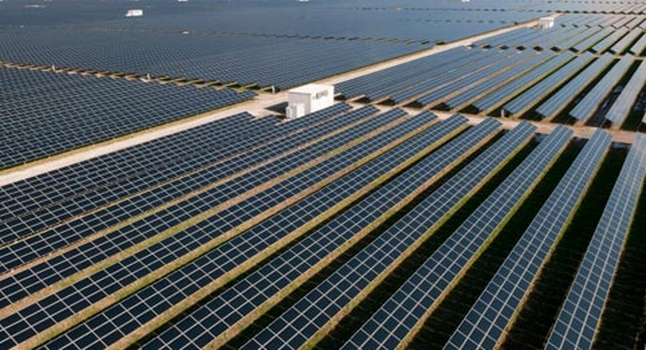
As solar power continues to expand, more companies are trying to find ways to cuts costs and be more efficient in the process of providing us with wonderful, clean, renewable energy. One solar company in San Antonio, OCI Solar Power, thought of an idea that leaders there say is sheer genius. They’ve put sheep to work on the grounds of a solar farm on the far northeast side of San Antonio to keep the grass cut.

As solar panels soak up plenty of hot Texas sunshine, there’s plenty of landscaping work to do at the Alamo 2 Solar Farm. But instead of people, OCI Solar Power is employing lambscapers. The solar farm isn’t the largest, however it is still difficult for man and mower to tackle, which would increase costs across the board.

The company started using sheep three months ago to maintain the grass at the 50-acre site. It’s the first time in Texas this has been done although it’s nothing new in California and Europe.

The 4.4-megawatt solar farm where the sheep graze is part of a series of 400-megawatt solar power plants that CPS Energy plans to have completed by 2016. Typically, a megawatt of solar energy can heat and cool as many as 100 homes on a hot summer day. When the temperatures aren’t as dreadfully hot, it can power many more.

At the San Antonio plant, which is home to thousands of solar panels, OCI Solar describes its grazing as an experiment that has worked well. The roaming sheep appear to have done their job; the grass reaches no higher than one foot despite recent heavy showers. When you have shrubbery growing over the panels you start losing effectiveness. The sheep have been a very important part in helping this site put out the maximum amount of power that it can. The sheep have been very well behaved. Unlike their equally hungry cousins goats may have done, the sheep have not chewed on cables or jumped on panels. The sole accident thus far came when one devious sheep snuck through a gap in a locked gate. OCI staff members teamed up with a police officer and a local resident to corral the animal within 30 minutes. At least the sheep had a bit of fun.

Sheep grazing is not a prevalent practice at solar farms in Texas however it has been used elsewhere, particularly in California and parts of Europe. Hiring a local breeder to bring sheep to a solar system is far less expensive than hiring human groundskeepers, companies say, and easier than trying to operate lawn equipment in tight spaces and around cables. In return the sheep receive fresh water and shelter from the glaring Texas sun beneath the panels. Sharing the land also benefits and supports the local agricultural economy, industry leaders say.

While the initial idea of mixing solar power and sheep might seem silly, it has actually proved to be incredibly beneficial to OCI’s farm. The first site was used as a guinea pig. Since the results have been positive, they hope to implement the lambscaping on other farms as well.

1303 San Antonio in 2008

1303 San Antonio in 2008

Public Citizen’s Texas office had the fortune to office in this building for the past six years.


1303 San Antonio St, Monday July 28, 2014

1303 San Antonio St, Monday July 28, 2014

Until it was demolished last week to make way for an 8 story office building.

toxic cleaning productsAlthough we buy cleaning products thinking they will protect us and kill all the nasty germs that lurk in our kitchen sinks and toilets, many of these home cleaning products are packing in a bigger punch that can have serious effects on our health and environment.

Take for example antibacterial hand soap that became so widespread after the H1N1 virus scare. Antibacterial hand soap was in every restaurant, school, and office space, ever since and became a normal commodity in American lives. Now the chemical found in antibacterial soaps called triclosan, has been banned in Minnesota for potentially promoting triclosan-adapted super bugs along with being no more effective, but more expensive than normal hand soap according to a study posted on the Oxford Journal.

Air fresheners use about 18.4 kWh of electricity and about half a gallon of oil every year while also containing higher levels of phthalates in some major air freshener brands that can cause birth defects. Many of these chemical ingredients are not listed on the label because they don’t have to be. Febreze alone has 87 chemicals, including BHT, which is a known neurotoxin, and acetaldehyde and propylene glycol, which are both carcinogens. Cleaning products aren’t required to include their ingredients on their label, which can be potentially dangerous when dealing with chemicals designed to kill bacteria, viruses and mold.

Bathroom and home cleaners are the worst as far as environmental and health risks. Brands as “family friendly” as Scrubbing Bubbles and Lysol have chemicals banned in the EU and statements on their label that say “harmful or fatal if swallowed” and can cause “irreversible damage to the eyes”. Environmental Working Group has a list of the top 10 worst bathroom and household cleaners to stay away from.

Having so many toxic cleaning products around the house is not worth it especially with animals or children exploring wherever they can fit their paws and fingers. There are alternative ways and products that can not only create a safer environment but also save you money like using the old fashioned white vinegar and water or various plants that have the power to remove 90% of chemicals in a room in under 24hrs. If you want something stronger there are plenty of organic, non-toxic cleaning chemicals that can make good replacements that can be found at ewg.org.


IMG_4488Even the best policies are rarely perfect from the onset.  Sometimes circumstances change and sometimes certain outcomes simply weren’t considered.  Either reality can result in a potentially great policy being only mediocre, or even bad. Part of what makes a great policy, is a willingness to make corrections as needed.

Austin Energy’s value of solar tariff (VoS) was the first effort of it’s kind.  Across most of the country, solar customers are billed for energy used, minus energy produced – a policy called net metering.  Instead, Austin Energy’s VoS establishes a monetary value for the energy produced from local solar installations.  Customers are billed for all of the energy they use at their regular tiered rates and are then credited for all the energy they produce at the VoS rate.

IMG_4517 (2)

Austin Energy solar customer have 2 meters, one to measure energy consumption and one to measure energy production.

The VOS was intended to ensure that both the solar customers and the utility were getting fair and accurate value for the energy that each was providing.  And, the incentive to reduce electric consumption that is provided by the tiered rates is maintained.  That’s because even if an energy hog offsets some of his use with solar, he will still be charged a higher rate for that consumption.  Solar is great, but using less energy is even better.  The VoS was a lofty new idea, adopted by a utility known for it’s renewable energy innovation.

A couple years into using the VoS, it is working, but needs a bit of perfecting.  On Monday evening, the Austin Electric Utility Commission (EUC) voted to support a few key changes, as proposed by Commissioner Clay Butler.

  1. Remove the year-end credit sweep, allowing credits to roll over until participant ceases to be AE customer – This will protect customers from having bill credits they have accrued from solar production taken from them.  Those credits can be used to offset energy use in future months or even years.
  2. Remove the 20 kW tariff cap – This will allow larger solar systems to be an economical choice for some customers.
  3. Set a floor on the VoS tariff tied to the residential electric rate – Setting a floor for the VoS will give customers some certainty of the value they can count on from their investment.  The VoS would still fluctuate, but not below a certain point. That exact point needs to be set, but tieing it to the second tier rate would preserve the incentive to conserve energy (to avoid higher rate tiers), while ensuring that VoS credits would be fairly valued in comparison to energy charges low and medium use customers.
  4. Allow leased system “hosts” to receive VoS credits – Leasing is an option that will help expand solar adoption.  Applying the VoS equally to all residential solar systems will help making leasing a viable option in Austin.
  5. Adopt 5 year rolling average in calculating annual VoS assessment – A rolling 5 year average for the VoS will smooth out the changes from year to year and therefor provide more stability for customers.
  6. The City Council and City Manager reject the price quote on the 25 year guaranteed fuel price ($5.28 per MMBtu ) proposed by Austin Energy for the 2015 rate assessment. – The projected future price of natural gas is the single most significant factor in the calculation of the VoS.  Projections of natural gas prices are notoriously wrong and under projecting those future prices results in a lower VoS and less value going to solar customers.

Austin Energy has already endorsed several these recommendations (#’s 1, 2, 4, and 5).  The next step will be for the Austin City Council to act on these recommendations. There will be opportunities for the public weigh in on these issues before Council as part of the budget process in August.

When you ask most people what they think of solar power, they image rooftops covered in panels, and talk of going green. However, if you ask a government or private scientist what they think of solar power, you might get a very different answer. Give these guys enough time and money, and they’ll come up with some pretty mind blowing applications for the modest solar cell.  Solar PV technology isn’t just becoming for affordable for existing applications, it’s also being contemplated for a variety of new uses.

Space Based Solar Power

Space Based Solar Power

One of the most cutting edge ideas in the solar world is the concept of Space Based Solar Power (SBSP). The concept involves launching huge solar arrays into space, where the sun is always shining at 100% intensity. Most designs involve a set of mirrors that collect solar radiation, and then condense it on to a super efficient lower orbit solar PV array. Once the energy is collected, its beamed down to Earth in the form of microwaves. A massive rectenna on earth, about 10km in diameter, receives the energy and converts it back to electricity. This set-up could produce more than 1GW of power, or about as much as the average nuclear power plant. While the technology exists to make this a reality, its wildly expensive because of the high cost of launching anything into space.

Along the same line of thought is the creation of laser solar satellites. These little guys collect solar energy from PV cells, and then blast it back to Earth in the form of a high powered laser. Each device produces about 1 to 10MW, so it would take an army of them to power a good sized city. In fact, the military has been quite interested in this technology for a long time. The idea of being able to instantly fry something from space has made people skeptical of developing this technology further.

Transparent Solar Cells

Transparent Solar Cells

A more peaceful, and ultimately more profitable idea, comes in the form of see-through solar power windows. A company called New Energy Technologies has created tiny, transparent, spray on solar cells that can be applied to windows. New Energy estimates that out fitting a building with electricity generating glass windows would only increase the cost of construction by about 10%. Developing a way to retrofit existing buildings with this product could usher in a new wave of the solar revolution. It could come sooner than people think too. There are a lot of companies and agencies all over the world working on this exact type of technology.

And of course there’s Solar Roadways, which you can read about in our previous post.

While all of these technologies are pretty futuristic, there is a true possibility of making them mainstream. With the right policies and funding, a world powered by extraterrestrial solar, sun fueled lasers, and self-generating buildings could be a reality.

The University of Texas at Austin Solar Vehicles Team serves as local university host for the Formula Sun Grand Prix, an annual collegiate solar car race. This year, the event takes place at the Circuit of The Americas track, the first time Formula Sun has occurred on an official F1 track. Circuit of The Americas is also a sponsor of the UT team.

Come out and support your favorite team! This week, the Circuit of The Americas is hosting American Solar Challenge and Formula Sun Gran Prix for solar cars.

The American Solar Challenge is an 8 day, 1700+ miles distance race from Austin TX to Minneapolis MN that tests how long each car can run under specific specs for the car. The Formula Sun race, hosted at the Formula One track in Austin, is a qualifying race with a focus on maneuvering around curves and corners while trying to complete the most laps.

Formula Sun logoThe Formula Sun race takes place July 17-19th   with doors open from 8am-9pm. The first two days are dedicated to prequalifying rounds and the 19th is the actual race to determine who wins and also who qualifies for the American Solar Challenge.

There will be 23 teams, including the University of Texas, who will race spaceship looking solar cars with a speed limit of 65mph. The event does not allow camping on the premises, but is free for the public to watch and root for their favorite team which is mostly colleges and universities from around the country.

There will be a children’s solar car workshop on the 19th about every hour during the day where they will be able to build and race small model solar cars.

If you and your family are interested in weird looking sustainable cars racing around the Circuit of The Americas then this event is one to mark on your calendar.

Back in the 1990s, the EPA introduced rules to stop acid rain by cutting the emission of sulfur dioxide and nitrogen oxide. Critics thought it couldn’t be done, but inventive engineers came up with new and better ways to scrub the pollutants out of the smokestacks.

Now the same is believed for the newly proposed EPA regulations on carbon emissions, but there are many reasons to disagree with the skeptics. Many opposed are saying that the new regulations will bring elevated electricity bills and even plunge the nation into blackouts. But, in reality, emissions cuts have already been achieved in some states and those states are faring better economically than many other parts of the United States.

The new EPA carbon rules in a nutshell:

  • EPA logoBy 2030 the EPA seeks to reduce America’s carbon dioxide emissions 30% from 2005 levels.
  • States will have until June 30, 2016 (with the potential for some extensions) to come up with a plan on how to implement the rule and reduce their average emissions per megawatt-hour of electricity. If they refuse the EPA says it will impose its own plan.

Success Stories:

One way that some states have got a foot up on meeting the emissions standards is by joining the Northeastern cap-and-trade program known as the Regional Greenhouse Gas Initiative, which first put in a carbon cap in 2009. In the cap-and-trade system, the participating state governments placed an upper limit on total carbon emissions and issued permits for those emissions, which companies bought and sold from one another.

Nine northeastern states have already entered the program and have substantially reduced their carbon emissions in recent years. At the same time, those states have had stronger economic growth than the rest of the country.

Since 2009, the nine states have cut their emissions by 18 percent, while their economies grew by 9.2 percent. By comparison, emissions in the other 41 states fell by 4 percent, while their economies grew by 8.8 percent.

The states in the program reduced emissions faster and more efficiently than was previously assumed, and this gives a ray of hope to the rest of the United States. The sharp cut in emissions in the Northeast did not inhibit the economy there from doing just as well as elsewhere.

What’s the Problem, then?

Martin_LakeSome of the biggest opposition to the new regulations comes from heavily coal dependent states. However, many of them have been given more moderate goals to meet with the new regulations due to their reliance on coal and their limited renewable energy resources. But even in states that have made big cuts, the Obama plan is inciting some wariness with officials in those regions, who are pointing out that the plan would burden them with rigorous targets requiring them to go further in reducing emissions.

There are many different options that states can choose between when determining how to cut carbon emissions though. While cutting emissions in general is the goal, the ways of achieving those cuts can either push progress forward even more or just do what little needs to be done in order to meet the requirements. By choosing to rely on energy storage and renewable energy sources states will be able to not only cut emissions but help the world to move forward in a more sustainable way, with economic benefits for those states.

Why is Energy Storage a good option?

Energy storage has the potential to not only cut costs, but also allow us to keep energy in reserves for the future and times of emergency. Energy Storage systems are also fuel neutral, which means regardless of how the energy was generated the storage systems can save it.

Energy storage cuts costs primarily by lowering the overall cost of electricity. It also allows customers to avoid premium pricing when demand for electricity is highest. But most importantly, energy storage helps to reduce the amount of power outages and equipment failures that take place as well as limiting the amount of time the power is out. This not only helps to save time and money but it also can help to save lives.

Why are renewables a good option?

solar installationRenewable resources are inexhaustible. They can be utilized without any fear of depletion. Unlike the burning of fossil fuels, which spew dangerous greenhouse gases that lead to global warming, wind and solar farms are emissions free. That is just one of the many reasons to convert to renewables. By switching there is also a great increase in job creation. In total there were 142,698 solar workers in the U.S. as of November 2013. This is a 20 percent increase over 2012 figures and ten times higher than the national average employment growth rate, which was 1.9 percent. Veterans also make up about 9 percent of the solar workforce compared with 7.5 percent of the national economy. These numbers are all very optimistic, but while the U.S. could see million of new jobs in renewable energy and energy efficiency, this will only happen with the necessary leadership, research, development, and public policy at the federal and state levels. The new EPA regulations took that first step.

The potential ways of meeting the new EPA emissions regulations are in abundance, but the only way we will start seeing change is if we begin to implement those solutions. By turning to renewable energy sources and supporting energy storage we can make sure that our country is not only able to meet the EPA regulations but goes above and beyond and to help clean up and protect our earth to make it safe for our children and their future. It is already evident that states can cut emissions and still see economic growth, so what are we waiting for?

Photo courtesy of Xconomy

Photo courtesy of Xconomy

For the last 4 or 5 years, cheap solar panels flooding over from China have helped fuel a boom for U.S. solar installers. The nation installed a record shattering 4,750 MW’s of solar in 2013, a 41% increase over 2012. Utility scale, rooftop, and all other kinds of solar energy are benefiting from rock bottom Chinese module prices, which now stand as low as $0.50 per watt. However, there is a downside to these low prices. Domestic U.S solar manufacturers have been reeling from the intense competition. In an all too familiar story of domestic manufacturing being shipped off shores, observers have predicted that a sizable amount of the 75 U.S solar manufacturers may go out of business by 2015.

Fearing such a drastic shock to the industry, the U.S has recently imposed punitive tariffs on Chinese panels. Many U.S manufacturers claim that Chinese solar companies were able to sell panels below cost because of government subsidies that broke fair trade laws. The tariffs are stiff, ranging from 18 to 36%. Manufactures have cheered the ruling, but its hard to say how the tariffs might affect installation prices in the near term. However, it seems likely that they won’t do too much damage to the trend of falling prices.

Graph courtesy of GTM

Graph courtesy of GTM

Some U.S manufacturers already have plans to revolutionize the U.S solar industry now that they feel protected from aggressive Chinese economics. U.S based First Solar recently announced that they were able to produce modules at $0.59 per watt, which is only $0.09/W higher than the Chinese record. They project domestic prices to fall into the low $0.40’s/W in the near future. Another company named Solar City, which is run by Tesla CEO Elon Musk, has plans to open a solar manufacturing facility capable of being able to produce 1GW of panels per year. Solar City hopes to use economies of scale to produce very high efficient solar modules at the same price as cheap low efficiency Chinese panels.

Success in ventures like these could put U.S solar manufacturing back on the map, while at the same time support, or even accelerate the rapid demand for solar installations. Regardless of the short term volatility the industry may experience, solar energy is posed for great things.

World Cup 2014 BrasilThe FIFA 2014 World Cup in Brazil has so far been the biggest and most expensive tournament in soccer history. With ticket sales almost reaching full capacity and an estimate of over 500,000 visitors from around the world, the economic impact of this year’s World Cup has reached an all-time high. However, keeping this incredible event eco-friendly has been a daunting task with large amounts of pressure from environmental protection agencies around the world.

World Cup 2014 Eco Stadium

World Cup 2014 Eco Stadium

This year’s World Cup has exceeded CO2 emissions of the last World Cup in South Africa by over 1 million tons of CO2 with a total of 2.7 million tons. According to a study done by FIFA, and estimated 60% of the CO2 emissions are produced by transportation of personnel, equipment, teams, and fans coming from all over the world. Measures have been made to help prevent and offset the environmental impact such as building stadiums that run on solar power, rainwater collection facilities, and a large recycling program, but with any event on a scale and this grand is always a large environmental toll.

World Cup 2014 - I Take Care of My DestinationUNEP and Brazil’s Ministries of Environment, Sports, Tourism, and Social Development have teamed up to create and promote Green Passport Tours which promotes sustainable tourism specifically for World Cup 2014. FIFA’s head of corporate social responsibility, Federico Addiechi, pledges to offset 100% of the 2.7 million tons of CO2 emissions starting next summer with programs in reforestation and investment in wind energy and hydroelectric power.

Even with the changes that have been made to create a more sustainable World Cup, significant environmental improvements need to be made when hosting an event like the Olympics or World Cup; which emissions can equate to having 560,000 cars on the road for a year or the burning of 1.46 million tons of coal. Aside from emissions, the materials that were needed to improve Brazil’s infrastructure, build the stadiums and other buildings, power all telecommunications and TVs around the world, which has reached up to 3.2 billion viewers according to Bloomberg, also added to the degradation of the environment. With over $4 billion in untaxed revenue FIFA received for this World Cup alone, more time and money should be allocated towards the sustainability of our environment.

Environmental improvements for future World Cups have great potential if more leadership and requirements from FIFA were to be made. With hosting the World Cup being highly desirable for countries around the world, requiring more and stricter environmental standards for the host country would drastically improve environmental quality for these events. FIFA holds great power with its sponsors and host country and has the ability to use that leverage with changes such as requiring an amount of funding specifically for environmental health, eco architectural standards for all new stadiums, positioning all new stadiums to be near public transportation for less vehicle carbon emissions, or requiring an environmental advisor to assist the planning process for stadiums, hospitality and transportation.

All of these changes have the potential of making a large positive impact on the environment along with creating more awareness to the importance of sustainability. With great the support of FIFA, the World Cup could become an event not just for the love of soccer, but for new sustainable ideas that could be showcased to the world.

Overturn the Citizens United ruling, urge your senator to support a constitutional amendment.

Read the following statement of Robert Weissman, President, Public Citizen to learn more about what the proposed constitutional amendment being put forward will and won’t do.

Note: The Constitution, Civil Rights and Human Rights Subcommittee of the U.S. Senate Judiciary Committee today approved an amended S.J. Res. 19, a constitutional amendment proposed by U.S. Sen. Tom Udall (D-N.M.) that aims to overturn Citizens United v. Federal Election Commission and other U.S. Supreme Court decisions relating to campaign finance.

Here’s how the world will be different after final ratification of the constitutional amendment today approved by the Constitution, Civil Rights and Human Rights Subcommittee of the U.S. Senate Judiciary Committee:

The 28th Amendment will give Congress and the states authority to regulate and limit the raising and spending of campaign funds, eliminating various barriers and obstacles imposed by the U.S. Supreme Court. It will overturn Buckley v. Valeo, Citizens United v. Federal Election Commission (FEC) and McCutcheon v. FEC, among other Supreme Court decisions that have facilitated the rise of a de facto oligarchy. Specifically, Congress and the states will be able to:

  • Limit or forbid all corporate spending on elections.
  • Regulate campaign spending to advance the objectives of democratic self-government and political equality, rather than just to prevent criminal bribery.
  • Impose robust controls and strict limits on outside spending by super PACs and dark money conduits like the U.S. Chamber of Commerce and the Koch Brothers organizations, potentially forbidding significant outside spending altogether.
  • Impose limits on the total amount any person can donate to candidates, parties and PACs.
  • Regulate the amount of spending by self-financed candidates.
  • Adopt limits on the total amounts candidates and their supporters may spend.
  • Adopt small-donor empowerment and public financing systems that provide extra funding to candidates who face heavily funded opponents who do not opt into the system.
  • Adopt mandatory public financing systems.

Following the public mobilization that will eventually obtain ratification of the 28th Amendment, we should expect Congress and the states to respond to that same public demand to restore our democracy – by enacting robust public financing systems, major curbs on outside spending and prohibitions on corporate spending in elections.

The amendment and subsequent legislation will not cure all of our nation’s ills, but it will help restore our democracy and remove key blocks to addressing the great problems facing the nation: putting people back to work, addressing deepening inequality, averting catastrophic climate change, fixing our schools, ensuring quality and affordable health care for all, and much more.

It shouldn’t need saying, but because of an intentional disinformation campaign by U.S. Sen. Ted Cruz (R-Texas) and other opponents of the amendment, it’s worth emphasizing what the amendment will not do: It will not “shred” or otherwise amend the First Amendment. It will not enable Congress and the states to adopt rules that discriminate on the basis of race, ethnicity or viewpoint. It will not permit Congress to adopt a law banning campaign expenditures by just the Sierra Club, or just the National Rifle Association.

What the amendment will do is strengthen and restore the First Amendment, which has been weakened and distorted by the Supreme Court. The 28th Amendment will amplify the voices of the People, and make their speech meaningful. As Supreme Court Justice Stephen Breyer noted in his McCutcheon dissent, “Speech does not exist in a vacuum. Rather, political communication seeks to secure government action.” And, he explained, “Where enough money calls the tune, the general public will not be heard.”

With the 28th Amendment, we put an end to the plutocrats paying the piper, and enable the people to again call the tune.  Urge your senator to support a constitutional amendment.