Feeds:
Posts
Comments
Asian Tiger Mosquito - Aedes Albopictus

Asian Tiger Mosquito – Aedes Albopictus

There’s a new pest invading many American towns, the Asian tiger mosquito.

According to NBC Science, this mosquito is as menacing as it sounds since it is effective at transmitting more than 20 diseases, and its success at spreading throughout the world is due to a warming climate, with eggs tough enough to survive a cold winter.

Click here to read the article.

There’s a lot to like in the president’s plan that he announced today, but there is a lot that falls short, too. Certainly on the most important measure, reducing coal-burning plant emissions, the president is a day late and a dollar short. The lack of specificity on the standard eventually to be issued makes it impossible to know how far reaching it will be.

But Texas shows how it can be done!  See below.

Associated Press/Charles Dharapak - President Barack Obama wipes perspiration from his face as he speaks about climate change

Associated Press/Charles Dharapak – President Barack Obama wipes perspiration from his face as he speaks about climate change

Catastrophic climate change poses a near-existential threat to humanity. We need a national mobilization — and indeed a worldwide mobilization – to transform rapidly from our fossil fuel-reliant past and present to a clean energy future. We need a sense of urgency – indeed, emergency – with massive investments, tough and specific standards and binding rules which are missing from the president’s plan.

The administration is finally using the authority ratified by a conservative Supreme Court to regulate greenhouse gas emissions under the Clean Air Act. The Administration will re-write rules for new plants and develop rules for all existing power plants. This is the most important tool the Administration has, and if the rules are written the way they should be, it will go a long way towards protecting consumers and our climate. This initiative builds on the successful and strong automobile tailpipe standards that have already been successfully rolled out. The downside is that the late 2015 final rule date is far off in the future, and will likely see lengthy legal challenges.

The plan also, helpfully, builds on existing programs and plucks some low-hanging fruit to reduce carbon emissions: Increasing renewable targets and efficiency on federal land, in the federal government’s operations, in the Pentagon, and in federally-assisted housing.

The Administration set the table recently by increasing the estimated cost of greenhouse gas (GHG) emissions to society, from $23.80/ton to $38.

Targeting oil industry subsidies, as the Administration proposes here, is also commonsense, and much needed policy.

However, there is no mention in the plan of using a uniform, strong climate change impact assessment under the National Environmental Policy Act, which would require the costs and impacts of GHG in every federal environmental impact statement. The failure to utilize NEPA for GHG assessment is a huge oversight.

Reserving the troubled loan guarantee program for “clean coal” is a taxpayer boondoggle waiting to happen. A case in point is the Obama-backed Kemper IGCC coal plant owned by Southern Co, which has seen costs balloon from $2.4 billion to $4.2 billion, with costs still rising further.

In general, the President’s embrace of an “all of the above” strategy, including oil and gas expansion, is a disaster. His focus on fossil fuel exports — including the explicit promotion of LNG (liquefied natural gas) and his failure to curtail coal exports – threatens to undo any positive elements of the plan. By promoting LNG, the Administration is moving full-speed-ahead on fracking – with no mention of how to control fugitive emissions, water contamination and other environmental problems posed by the controversial process. And while the proposed EPA rules over existing and new coal power plants will result in significant GHG reductions here at home, all of that will be negated (and more) if we ramp up our coal exports to China. Using NEPA and other statutes to ensure that the emissions of coal exports – and the fugitive emissions of fracked gas – are included in the environmental impact study (EIS) for export projects is essential.

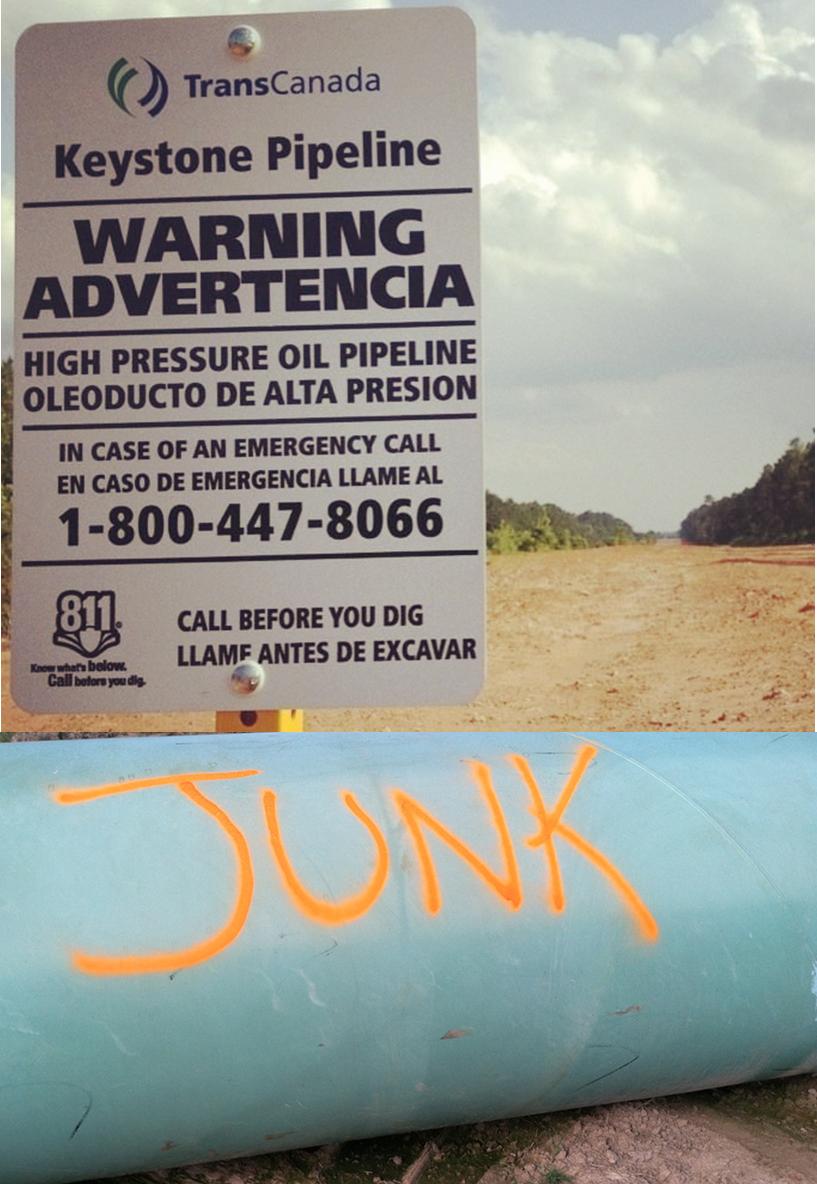
The same goes for Keystone XL. Awaiting approval by the State Dept, the Keystone XL pipeline’s EIS is fatally flawed. The Administration has a chance to re-write the EIS to take into account the true GHG impact of the tar sands, which would require this gas-price boosting project to be rejected.  And Obama’s welcome announcement on KXL won’t affect the southern segment of the line being built from Oklahoma to Houston, nor will it stop the conversion of existing pipelines to carry tar sands. These are the back door ways that tar sands and its carbon pollution will leak into the international markets

At the end of the day, it would be helpful if the Administration would lend its support to an existing climate bill – the Climate Protection Act of 2013. This legislation places a price on carbon, sending revenues back to families and into investments for a sustainable energy economy (not to mention regulating fracking and repealing oil industry subsidies).

“Texas Shows How It Can Be Done”

The good news is that the solutions to global warming from the energy sector are within reach — and Texas shows how it can be done. We can power our state with renewable energy, energy efficiency demand side management and energy storage technologies and techniques that exist or are being developed right now.

“Here’s what Texas has shown in recent years:

  • In 1999 Texas adopted renewable energy goals – partially to reduce global warming. Now Texas leads the nation in production of wind energy, which is now so cheap that it is reducing consumers bills;
  • Renewable energy is now employing more people than coal plants and coal mines are  in Texas;
  • If we were to  develop more solar and geothermal, and employ energy  storage, we could meet our energy needs around the clock without relying on coal;
  • With the combination of those tools we could phase out and shut down our 22 climate killing coal plants;
  • Adopting building energy codes has reduced statewide carbon emissions by as much a coal plant would produce.”

wind_turbine_aalborgProbably not overall, but the City of Houston has made a historic commitment – to buy half its power from renewable sources.

Houston was built around the oil and gas industries and has long suffered the consequences of being home to many of the nation’s most polluting refining and chemical manufacturing facilities.  Purchasing clean energy for the City’s facilities won’t change all that, but it does represent a significant change in mindset.

In the absence of federal legislation to address the increasingly pressing problem of climate change, local action has become essential.  At the very least, the energy used in public buildings – that taxpayers pay for – should be clean energy.  Houston is taking a huge step in that direction.

Wind energy is already one of the cheaper energy sources in Texas and solar energy is becoming competitive, especially as prices increase with higher energy demand.  These trends will be helped by large-scale investments like the one Houston is making.

Moving away from energy from coal-fired power plants will also help keep jobs growing in Texas.  Luckily, this isn’t an issue of jobs vs. the environment.  It’s an easy choice of supporting both.  Kudos to Houston to for recognizing an opportunity to take a leadership role.

Talk to your local elected officials about using clean energy to power your public buildings.

Texas Capitol - north viewWith the regular session behind us and energy and environmental issues not likely to find a place in the special session, it’s a good time to look at what we accomplished.

Our wins came in two forms – bills that passed that will actually improve policy in Texas and bills that didn’t pass that would have taken policy in the wrong direction.

We made progress by helping to get bills passed that:

  • Expand funding for the Texas Emissions Reduction Plan (TERP) by about 40%;
  • Create a program within TERP to replace old diesel tractor trailer trucks used in and around ports and rail yards (these are some of the most polluting vehicles on the road);
  • Establish new incentives within TERP for purchasing plug-in electric cars; and
  • Assign authority to the Railroad Commission (RRC) to regulate small oil and gas lines (these lines, known as gathering lines, are prone to leaks); and
  • Allows commercial and industrial building owners to obtain low-cost, long-term private sector financing for water conservation and energy-efficiency improvements, including on-site renewable energy, such as solar.

We successfully helped to stop or improve bad legislation that would have:

  • Eliminated hearings on permits for new pollution sources (the contested case hearing process is crucial to limiting pollution increases);
  • Eliminated additional inspections for facilities with repeated pollution violations;
  • Weakened protections against utilities that violate market rules and safety guidelines;
  • Eliminated property tax breaks for wind farms, while continuing the policy for other industries;
  • Granted home owners associations (HOAs) authority to unreasonably restrict homeowners ability to install solar panels on their roofs; and
  • Permitted Austin City Council to turn control of Austin Energy over to an unelected board without a vote by the citizens of Austin.

We did lose ground on the issue of radioactive waste disposal.  Despite our considerable efforts, a bill passed that will allow more highly radioactive waste to be disposed of in the Waste Control Specialists (WCS) facility in west Texas.  Campaign contributions certainly played an important roll in getting the bill passed.

We were also disappointed by Governor Perry’s veto of the Ethics Commission sunset bill, which included several improvements, including a requirement that railroad commissioners resign before running for another office, as they are prone to do.  Read Carol’s post about this bill and the issue.

With the legislation over and Perry’s veto pen out of ink, we now shift our attention to organizing and advocating for a transition from polluting energy sources that send money out of our state to clean energy sources that can grow our economy.

We’re working to:

  • Promote solar energy at electric cooperatives and municipal electric utilities;
  • Speed up the retirement of old, inefficient, polluting coal-fired power plants in east Texas;
  • Protect our climate and our port communities throughout the Gulf states from health hazards from new and expanded coal export facilities;
  • Fight permitting of the Keystone XL and other tar sands pipelines in Texas;
  • Ensure full implementation of improvements made to TERP; and
  • Develop an environmental platform for the 2014 election cycle.

Our power comes from people like you getting involved – even in small ways, like writing an email or making a call.  If you want to help us work for a cleaner, healthier, more sustainable future, email me at kwhite@citizen.org.  And one of the best things you can do is to get your friends involved too.

Texas’ governor is at it again.  Just 15 minutes ago, dozen’s of bills went down in flames under the governor’s veto pen.  This included a bill essential to providing more efficient enforcement of ethics violations in the Texas political process: the Ethics Commission sunset bill (SB 219), which passed by 97 percent in the House and 94 percent in the Senate.

Why veto such an overwhelmingly popular bill? It is because of a provision in the bill that would require members of the Railroad Commission to step down if they announce their candidacy for another office. This again demonstrates that the governor is more interested in protecting powerful politicians than protecting Texas residents.

Members of the Railroad Commission frequently seek higher office. Recently, two commissioners ran against each other for the same U.S. Senate seat. The commissioners, who serve more like judges than elected state officials, oversee complex oil and gas cases that require familiarity with the law and impartiality. When commissioners use their position as a springboard to run for another office, they often go absent from the commission, and the demands of campaigning reduce their ability to do their job.  This portion of the legislation could have been used as a model for how to adequately reform the Railroad Commission, but instead the governor shot it down.

It is worth noting that 81-93 percent of the total campaign donations to the commissioners come from the oil and gas industry, which is overseen by the Railroad Commission. Perhaps that’s why in 2012, despite handling 82 contested cases, the commission didn’t deny a permit to an oil and gas company even once. Clearly, the industry doesn’t want to risk losing members of the Railroad Commission who have been carefully cultivated.

It is a bad sign for democracy when a single person can veto the will of almost an entire legislature, and when a sunset bill for an entire state agency is sunk because of just one provision that would inconvenience the oil and gas industry.

Click here to see other bills vetoed by the governor and his justification for some of them.

Fire season started early in California this year because the winter rains that usually tide this area over until July or August, barely materialized. Last year, the focus was on wildfires in Colorado and New Mexico. In 2011, Texas was a hotbed of drought and wildfire.  Now, all signs point to a destructive 2013 season, given how parched the earth is in the southwest and west, and we are starting to see that materialize.

Typically, this would be the height of the wildfire season in the southwest – New Mexico, Arizona, parts of Colorado, but despite how dry it is and how hot it’s been, a lot of the region had been spared until the big fire started in Colorado this week near Colorado Springs.

According to several scientists on a Climate Nexus panel on Tuesday (Climate Nexus is a strategic communications group dedicated to highlighting the wide-ranging impacts of climate change and clean energy solutions in the United States), major wildfires could occur across the Southwest this year, including in Texas.  Now that Texas is in its third year of drought, the state is likely to experience a longer fire season as a result of dry conditions and rising summer temperatures. High fire risk conditions raise the concern that Texas could again experience severe wildfires. Fires on Labor Day weekend in  2011 destroyed more than 1,600 Texas homes

A draft report by the federal National Climate Assessment and Development Advisory Council (NCADAC) shows that in recent decades, the frequency of large wildfires and the length of the fire season have increased substantially.  Earlier spring snowmelts and warmer spring and summer temperatures have increased the risk of fire in the Southwest. Fire models predict that more wildfires will occur in the future, with increased risks to communities throughout the region.

US wildfires May to June 2013

US wildfires May to June 2013

To see this interactive map click here

Earlier today, Southern California Edison (SCE) announced that they will retire Units 2 and 3 of the San Onofre Nuclear Generating Station (SONGS), essentially closing the troubled nuclear power plant which is located between San Diego and Los Angeles.

SONGS, which has been in operation for 45 years, may be a harbinger for the future of our aging nuclear fleet, many of which are near the end their original license period and are applying for extensions.

  • Unit 1 began commercial operation on January 1, 1968 and ceased operation on November 30, 1992.  Since then it has been dismantled and is used as a storage site for spent fuel for Units 2 and 3,
  • Units 2 and 3 were both licensed in 1982 and by license amendments in March, 2000 are currently licensed until 2022. However, unit 3 has been shut down since the detection of a leak in one of the steam generator tubes on January 31 and Unit 2 is off line, for routine inspections which found that design flaws appeared to be the cause of excessive wear in tubing that carries radioactive water at San Onofre.

SCE cited continuing questions about when or if the remaining SONGS units might return to service as the cause for their decision, concluding that the uncertainty was not good for customers or investors.

In a statement Friday, California Public Utility Commission’s President Michael R. Peevey called the decision “understandable,” and that the closure of the nuclear power generating station “will require even greater emphasis on energy efficiency and demand response programs.” Utility companies will also need to add transmission upgrade and find new generation resources.

Concerns in Texas

In Texas, both nuclear plants (Comanche Peak outside of Fort Worth, and South Texas Nuclear Generating Station (STP), between Houston and Corpus Christi on the Texas Gulf Coast) are nearing the end of their life expectancies as reflected in their original licenses which are due to expire in 2027 and 2028, and have filed for a license extension.  STNP’s unit two has experienced nine months of outage during 2 prolonged shutdowns in 2 years. The second outage was triggered by a fire that occurred only days before the public hearing on the license extension application.

Environmentalists expressed concerns about the plant’s ability to operate safely beyond the original life expectancy of the plant.

“Relicensing should be halted while a serious, in-depth examination occurs,” said Karen Hadden, executive director of the Austin-based SEED coalition, which advocates for sustainable energy, and member of the Austin Electric Utility Commission (Austin Energy owns 16% of STP Units 1 and 2). “I think it’s becoming increasingly unreliable, and it’s costing us money to fix it.” She noted that it was difficult to get information about the plant’s problems and she expressed concern that these aging plants will experience problems more often and of greater threat to the safety of the plant and the surrounding communities.


The Centers for Disease Control and Prevention warns climate change means we should continue to expect hotter summers and more intense storms that could knock power out for days — and kill people.

According to an article by NBC news, data on heat-related deaths suggest that public health officials have been underestimating them, as summers get longer and hotter due to climate change, and as storms that can cause widespread blackouts become more common and more intense.  The latest numbers, part of the CDC’s weekly report in death and illness, list non-residents for the first time, a group that includes illegal immigrants, tourists, migrant workers and others. These groups suffer especially when it gets hot.

Forty percent of heat related deaths over the last 10 years were in just three states – California, Arizona and Texas, all border states in the south.

Weather experts stress that it’s impossible to say whether any individual storm or heat wave was caused by climate change. But is clear that climate change is contributing to changing patterns and that the sheer magnitude of these extreme weather events present a challenge to public health.

Climate predictions and observations are suggesting that the magnitude of extreme weather events is increasing.

Click here to read the entire article.

Guest Blog by Marion Mlotok

On Thursday, May 30, 2013, the Texas Senate held a public hearing on redistricting as a launch of the 83rd 1st special session.  The hearing started at 9:00 am and closed at 11:30 am after everyone had testified.  Testimony was for 3 minutes each. I arrived early to a nearly empty auditorium, and when the hearing started, the hearing room was far from packed.

A number of attendees at the hearing, including some of the Senators, pointed out that this was mighty short notice for a public hearing with such far-reaching consequences.  The announcement of the hearing was made Monday, May 27 at 5:30 pm, 62 hours before the hearing, according to Chair, Kel Seliger.  Also the hearing was set for 9:00am on a work day.  No field hearings were or will be scheduled.  It was also brought up that the minorities most affected by this redistricting were the least likely to be able to arrange and afford to take time off work, arrange and afford childcare and afford transportation to Austin.

There will be two more Senate redistricting hearings, Thursday, June 6 and Wednesday, June 12, both at 9:00 a.m. in the Finance Room, E1.036.  All amendments and alterations must be submitted by noon June 10 for consideration for the June 12 meeting.

Most of the testimony was opposed to the maps in SB1, SB2, SB3 and SB4 on the basis of disenfranchisement of minorities.

My testimony was about Austin being split into 6 US Congressional districts, one snaking to Houston, one to Fort Worth, two to San Antonio and one to Laredo.  I pointed that Austin would have no US Congressional representation in Washington.  Austin is big enough to have 7/8 of it as one Congressional district.  In a world that made sense, the other 1/8 of Austin would be in a compact district contiguous with the main Austin district.  Likewise, Travis County is big enough to be almost two US Congressional districts and shouldn’t be split into 5 districts, effectively disenfranchising Travis voters in Washington.

The only elected officials from Travis County or Austin represented were the Travis County Commissioners who registered opposition to the US Congressional map splitting Travis County into 5 US Congressional districts, each having less than 35% of the voters from the district living in Travis County.  The objection was that effectively Travis County would have no representation in the US Congress.

The maps in these bills are the interim maps that were drawn so we could have 2012 elections.  You’ll find interactive maps on the official Texas Redistricting website here: http://www.tlc.state.tx.us/redist/redist.html

You can choose cities and choose to overlay various maps that have been submitted as well as overlay the interim maps for US Congress, Texas Senate and Texas House.

Parallel to this, court is in session in San Antonio with various minority plaintiffs on our redistricting vis a vis the Voting Rights Act.

House Hearings
The House will be having hearings on the companion bills HB1, HB2, HB3 and HB4 tomorrow, Friday, May 31 and Saturday, June 1, both days at 9:00 a.m. in the Capitol Extension Auditorium, E1.004, opposite the cafeteria.

I would urge those who can to attend the hearings and record your opposition to these bills.  They disenfranchise the minority vote and they disenfranchise Austin and Travis County.  To that end,  I’ve reached out to a number of our City Council members and Texas House Reps from Austin and our Austin/Travis Senator Kirk Watson to please come to the hearings and get on record with their voice on this significant issue for the area.

Video of the hearing is at http://www.senate.state.tx.us/avarchives/ramav.php?ram=00006247

by guest blogger Jane Dale Owen

GP-ExxonOn May 9, carbon dioxide (CO2) concentration in the earth’s atmosphere surpassed 400 parts per million for the first time since measurements began in 1958, according to National Oceanic and Atmospheric Administration (NOAA) scientists. Climate experts consider this to be the tipping point when unimaginable disastrous climate change is inevitable.

As if to illustrate this point of no return, monster tornadoes raged across the middle of this country completely obliterating Moore, Oklahoma. Pieter Tans, a senior scientist in NOAA’s Global Monitoring Division told a New York Times reporter,  “It symbolizes that so far we have failed miserably in tackling this problem.”

For years, responsible investor groups have called for ExxonMobil to address climate change. The company’s board of directors seems to hardly notice. Again this year, there are resolutions calling for greenhouse gas emissions goals.

But a major shift in shareholder resolution themes is emerging. 2013 shareholder resolutions call for ExxonMobil to disclose what the company is doing to adapt to extreme weather and climate change. This shift in resolution themes illustrates how neglecting to address climate change has contributed to a global crisis in which disasters are anticipated and preparedness for such events is a priority for any company’s business plan.

The situation reminds me of a Winston Churchill quote:

Want of foresight, unwillingness to act when action would be simple and effective, lack of clear thinking, confusion of counsel until the emergency comes, until self-preservation strikes its jarring gong — these are the features which constitute the endless repetition of history.

As I cast my votes this year, I hope that more shareholders will get involved to move ExxonMobil toward a life-sustaining future. ExxonMobil’s $44.9 billion in earnings for 2012 came close to a world’s record. Instead of wildcatting in costly, unproven non-conventional fossil fuel technologies such as fracking and tar sands that add greenhouse gas to the atmosphere, the company could show foresight and leadership by investing in clean, renewable energy such as wind, solar and geo-thermal.

At the very least, ExxonMobil could invest some of its vast resources in best available technology to clean-up the emissions from its refineries and chemical plants. In addition to increasing CO2 levels, these emissions endanger the lives and health of the people living on the fence lines of these operations.

Unless citizens get involved, we can expect ExxonMobil to continue business as usual. Of course we should expect our company to disclose to us it’s plan for adapting to climate change and how much it will cost.  But I regret that this company, the U.S. government and others did not heed NASA Scientist James Hansen’s warning to the U.S. Congress about climate change in 1988. If action had been taken then, I believe we could have avoided much of the loss and suffering due to storms, fires and drought we recently have seen and are likely to see in the future.

If you are an ExxonMobil shareholder, I urge you to exercise your power — review the shareholder resolutions and vote.  We must continue to work toward getting this company to take responsibility for its role in climate change. As Ralph Keeling, geochemist at the Scripps Institution of Oceanography noted in the report about CO2 levels, “There’s no stopping CO2 from reaching 400 ppm. That’s now a done deal. But what happens from here on still matters to climate, and it’s still under our control. It mainly comes down to how much we continue to rely on fossil fuels for energy.”

– Jane Dale Owen is granddaughter of Robert Lee Blaffer, one of the founders of Humble Oil and Refining Company, the parent company of Exxon Mobil. She is president and founder of Citizens League for Environmental Action Now (CLEAN) www.cleanhouston.org, an organization that provides news, information and education about global and local environmental issues.

The democratic governance of Austin Energy has been preserved thanks to all the citizens who have turned out and did so again last night.

It was a late night at City Hall yesterday. By the time many of us testified it was after midnight, but our efforts and those of our partners — the SEED Coalition, Texas Campaign for the Environment, other advocates and concerned Austin residents — made the difference.

The City Council paid attention to your emails and comments.

Recognizing good governance will help us ensure that our elected officials continue to be responsive to us in the future.
Instead of handing governing responsibility of Austin Energy to an unelected board, the City Council created a committee on Austin Energy to dedicate more time to the important issues facing our utility. All members of the City Council will serve on the new committee.

The City Council did exactly what we wanted by maintaining democratic control of Austin Energy and dedicating more time to our most important city asset.
Of course, we’ll continue to monitor the discussions of the new City Council Committee on Austin Energy and we’ll let you know when we need your help again to protect democracy, clean energy, fair rates and funding for our city services.

Help us show our appreciation — email City Council members and thank them.

Press Conference RE: Austin Energy Governance 2-13-13

UPDATE

This morning, Mayor Lee Leffingwell pulled Item 29 from the consent agenda indefinately.  Item 71 has been set for 7PM

May 22, 2013

Our basic premise that governance by an elected body is more accountable is proving true.  Over the past couple months, many Austinites have expressed their concerns to City Council about a proposed ordinance that would establish an un-elected board to govern Austin Energy.

Before citizens got involved in the process, this ordinance seemed destined to pass and we all would have found ourselves with less power over an important piece of our local government.

As citizen’s began to voice their concerns the majority of city council members heard their constituents and the ordinance was substantially changed. Councilmembers deserve a lot of credit for the work that they have done to improve this ordinance.  However, it would still establish an un-elected board, which is a dangerous road to go down because such a board could be granted more powers in subsequent ordinances.

Discussion of the ordinance that would establish an un-elected board to govern Austin Energy has been set for 7 pm this Thursday (5/23).  It is item #29 on the agenda. (click here and select item 29 to watch the portion of today’s work session concerning this ordinance)

If you wish to sign up to speak on it or just to register your opinion, you can do so at the kiosks inside City Hall.

Because of the changes made to the ordinance in response to citizen participation in the process, the primary supporters of the ordinance, including Mayor Leffingwell, now no longer support it.  Thus, the ordinance may be withdrawn on Thursday morning, so look at the agenda before heading to City Hall Thursday evening.

pants on fireAccording to PolitiFact Texas, State Representative Wayne Smith’s pants are on fire.  PolitiFact Texas recently analyzed a statement regarding global climate change by Mr. Smith, a Republican from Baytown.

During floor discussion of his greenhouse gas permitting bill, HB 788, he said, “Science has not shown greenhouse gases to be a problem.”  Then Smith went on to say, “There’s no need to regulate greenhouse gases.”  Well, Politifact Texas disagreed.  They throughly researched Mr. Smith’s statements and found them to be totally false, or “pants on fire” as they put it.

Take a look at the PolitiFact Texas analysis and give Representative Smith’s office a call and tell them what you think about his inaccurate statements: (512)463-0733.

Excerpted from Julia Trigg Crawford’s facebook page.

Julia on her ranch before Keystone starts work

Julia on her ranch before Keystone starts work

Crews from TransCanada/Michels/Universal Field Services and others I don’t recognize started arriving yesterday in preparation for the destruction on our place. Within hours of their arrival the pasture inside “their” fenced in area was shredded, road signs designating “work area” went up, hundred of timbers used to support heavy machinery were unloaded from 18 wheelers and stacked, and most gut wrenching was the “blading” of our land by a trackhoe in preparation for even more heavy equipment. I’ve attached a photo of my land a few months ago and what I witnessed yesterday. I intend to share as much of this process with you as I can.

But just as the workers were really getting going, yesterday afternoon a monstrous wind and thunderstorm blew in, forcing all the men off their equipment, scurrying for cover in their nearby pickups. A sign perhaps?

I was told our place is the final link, the last piece of property needed to complete TransCanada’s conveniently uncoupled and renamed Gulf Coast Segment of their Keystone Project. Furthermore, they will work 7 days a week if needed to overcome any delays, weather or otherwise. All eyes are on us folks, we really are The Last Stand.

Day one of Keystone's destruction of Julia Trigg Crawford's ranch

Day one of Keystone’s destruction of Julia Trigg Crawford’s ranch

All this while our appeal is freshly delivered and active at the 6th Circuit Court of Appeals in Texarkana. Unbelievable. TransCanada’s decision to move forward and initiate construction during our legal case just strengthens my family’s resolve to continue fighting. We maintain, now more than ever, that they never had the right to take our land in the first place. Their claimed Common Carrier status? A rubber stamp handed out by the embattled Texas Railroad Commission. This pipeline? An interstate project, even the Railroad Commission says it is out of their jurisdiction. The product to be carried? Tarsands, a product mined in Canada, and one of the most toxic and destructive products borne by Mother Earth. Just ask the residents in Kalamazoo and Mayflower what it did to their communities and waterways when it could not be contained. And sadly ask the First Nations in Alberta how is is destroying their lands and lives.

I hear the beeping of heavy equipment being moved, I guess they’re back at it already today, so I’m headed out to watch and take more photos. If you thought I was a mad and motivated landowner before, well, you’re about to see me hit a new gear. Stay tuned.

We’ll keep you updated about her appeal and the work on her land.

Plant in Point Comfort

Plant in Point Comfort

The Calhoun County Port is located an hour southeast of Victoria, Texas, and across the bay from Port Lavaca, in Point Comfort. In March, I took a trip to this port city and was astonished by some of the issues I found there.

The port has submitted documents to TCEQ for operating a bulk material handling dock.  Our coalition was told it will be used for coal imports, most likely for the plants there.  The permit application allows for the handling of coal and petcoke.  The main facilities there are Alcoa and Formosa plants for plastics.

I first noticed the lack of wildlife near the site.  On the Port Lavaca side of the bridge over the bay there are seagulls flying around, but in Point Comfort I did not see any wildlife.  No birds, insects, or even squirrels.  There was a deathly silence surrounding the area, broken only by the whirring of port-related trucks.  No one was fishing on the Point Comfort side of the bridge, while the Port Lavaca side was bustling with people fishing on piers.

On Texas 35 I saw a large elevated area that I first assumed would be used for a landfill.  There were Caterpillar bulldozers pushing around dirt up a 15 foot tall, mile-wide manmade hill.  However, it may also be a site of the coal import facility since it is right next to a ship dock.

I drove further and saw many TCEQ air quality permit signs, including for the Formosa plastics plant.  Some of the plants with TCEQ air quality permit signs were emitting some kind of steam.  At the end of the road was a large chute with huge piles of bauxite, the ore from which aluminum is made.

The residential areas were empty and had very few cars in front of them.  I wasn’t sure if that was because few people in the area had cars, but later on I was told that a lot of the residents died of cancer or the houses were condemned.  There were playgrounds right next to the plastics plant, but it is doubtful that Point Comfort was an area with a lot of children.

At the gas station as I was leaving I picked up a copy of the local newspaper, the Port Lavaca Wave.  On the front page was a news story about how Point Comfort was getting one more police officer in addition to the sheriff because the plant workers were driving too fast.  On a hunch I decided to look into the crime rate in the area and found something shocking.  There is a correlation between lead exposure and violent crime.  The violent crime rate in Port Lavaca is extremely high for a municipality of its size (11,405).  The violent crime rates are comparable to mid-sized cities like El Paso that are many times larger than Port Lavaca.

What I saw there was straight out of a nightmare, the result of when too little regulation and overpowering industry meet residential areas.  However, workers aren’t safe either, as there was a recent fire that resulted in injuries at the Formosa plant there.  These horrific industrial areas are not limited to isolated areas where people move out.  This is a common theme across the Gulf Coast in more populated areas like Plaquemines Parish near New Orleans, LA and Houston, TX.  In the face of disasters like the one in West, TX issues like these need to be raised to policymakers and community leaders to prevent the deaths of both persons and communities.