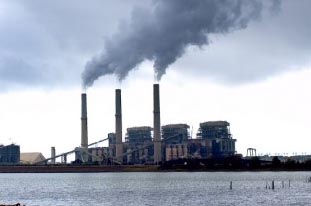
For those living near high traffic and pollution areas, such as the Port of Houston, this among other health impacts of such an environment, should be taken into consideration as the Port looks to expanding.
Posted in Air Quality | Tagged Attention deficit hyperactivity disorder, Hyperactivity, Mental health, Texas |
Just before Earth Day, the House of Representatives once again demonstrated its commitment to protecting the fossil fuel industries that fund many of the members campaigns instead of protecting the people of our state from the devastating impacts of climate change by passing HB 788. The bill requires the Texas Commission on Environmental Quality (TCEQ) to permit greenhouse gas emissions, which cause climate change, but would remove the agency’s authority to limit such emissions.
You might wonder “what’s the point?” The point is to take control of greenhouse gas permitting for Texas facilities from the Environmental Protection Agency (EPA) and place it in the hands of our state environmental agency – which has a much cozier relationship with industry. While EPA may ultimately prefer that states take responsibility for such permitting, we hope they wouldn’t support such a ineffective system as is proposed in HB 788.
Adding insult to injury, the author of the bill, Representative Wayne Smith, took advantage of the opportunity to spread misinformation. Smith stated, “…the terms ‘climate change’ and ‘global warming’ are based on an unfounded science,” claiming this language was struck to remove the politics from the bill. His remarks epitomizes a legislature that continues to threaten the health and safety of the people it should protect through weakened environmental regulations.
In fact, removing language which has been in Texas’ Health and Safety Code for 22 years which gives TCEQ the authority to limit greenhouse gases put the politics in the bill and took the science out of it. Governor Rick Perry is an avid climate change denier and may have influenced the drafting of HB 788.
This type of misinformation does a disservice to Texas citizens who must endure the harmful impacts of climate change, such as drought, wildfires, sea-level rise and more volatile weather patterns. These changes have already cost our state billions of dollars and numerous lives. Climate change is happening now and given the big jump in carbon dioxide (CO2) emissions last year, we’re probably in for more harmful impacts than many predicted just a few years ago.

This graph compares increasing CO2 levels (dark line) to increasing average global temperature over the last century (blue and red bars).
Although our efforts to stop or amend HB 788 in the Texas House were unsuccessful and it was disheartening to hear Representative Smith’s comments, Earth Day brought a refocusing on facts.
The Committee on International Trade and Intergovernmental Affairs held a hearing on Global Climate Change and Trade. Attendance was sparse in the audience, but a stellar line-up of scientists, delegates, and business representatives took the witness stand to testify on the fact of climate change.
HB788 was mentioned in anonymous fashion as a bad greenhouse gas bill on several occasions. But, the most glaring comments were directed at Texas’ lack of policy to address climate change. Cynthia Connor, the Resource Security Policy Adviser for the British Consulate General in Houston spoke in serious tones. Her message was that Texas has a responsibility to adopt climate change policies to protect $20 billion in Texas investments by UK-owned business, which are responsible for 70,000 jobs.
Almost all of the witnesses addressed Texas’ policy of climate change denial. To their credit, most of the Representatives on the committee asked questions to confirm the scientific findings, how climate change affects Texas, and how our climate change policies compare to the rest of the modernized world. The general consensus is that Texas lags far behind the rest of the world. Texas fails to acknowledge the potential harms of climate change and ignores its responsibility to lead the nation in ethical energy policies as the top producer of oil and natural gas.
While these weren’t messages of hope, at least they were based in scientific facts and observations. At least for a brief time, science was recognized in our state capitol.
We must each do what we can to reduce our personal impact and we must convince our elected officials that the time for climate change denial is over.
HB 788 is now being considered in the Texas Senate.
Email your Texas state senator to oppose HB 788 and protect Texas’ climate, economy and people.
Posted in Climate Change, Global Warming, Good Government, Texas Legislature | Tagged Carbon Dioxide, climate change, Committee on International Trade, earth day, EPA, Global Warming, greenhouse gas, Public Citizen, public citizen texas, rafael anchia, TCEQ, Texas, Texas Commission on Environmental Quality, Texas Legislature, texas senate, United States Environmental Protection Agency |
While Austin City Council continues to move forward with an ordinance to transfer governing authority of Austin Energy from our elected City Council to an unelected board, Austin democracy is being attacked at in the state legislature as well. Senate bill 410, sponsored by Senator Kirk Watson and Representative Paul Workman, would allow the city to establish an unelected board without a charter election, as our city charter calls for.
The issue of who should govern Austin Energy is important, but it’s also local in nature. There is no need for state to amend Austin’s charter. That is a right reserved for the citizens of Austin. If the changes proposed by City Council are truly in the best interest of our city, that case should be made to the voters and decided upon at the ballot box.
To have a state representative who doesn’t even live in Austin carrying a bill to change our charter is unacceptable.
The Austin City Charter was adopted by the people of Austin and the people of Austin approved a governance structure for Austin Energy that is accountable to the people through elections.
An unelected board won’t be directly accountable to the ratepayers and wouldn’t necessarily represent our values. As we debate this issue in Austin the unelected board at San Antonio’s CPS Energy is slashing the rate customers with solar installations will receive for their energy in half without first consulting the public or the solar industry. Austin Energy customers could be facing similar changes if we don’t act now to protect our rights.
SB 410 has passed the Senate and will be heard by the House Committee on State Affairs tomorrow.
Please consider attending the hearing and speaking against SB 410.
What: Hearing on SB 410 to change Austin’s charter to move Austin Energy governance to an undemocratic board without a vote by the citizens of Austin, as our charter requires.
When: 1:00pm on Wednesday, May 1
Where: John H. Reagan (JHR) building, room 140 – 105 W. 15th St., Austin, TX, 78701
Why: Because Austin Energy’s governance structure will impact decisions going forward, including on renewable energy and energy efficiency programs and rates. This is the decision that will determine how other decisions are made.
You can register against the bill at the kiosks outside of room 140. Even if you don’t wish to speak, registering against the bill would be helpful. We hope you’ll consider saying a few words about the value of local democracy though. Speakers will be limited to 3 minutes each.
SB 410 is anti-democratic and is one more example of the state government trying to interfere with Austin’s internal policies and governance.
We need your help to stop this bill.
Public opposition to SB 410 at Wednesday’s hearing may be the only thing that can ensure that our Austin representatives don’t let this bad bill move forward.
Please email Kaiba White at kwhite (at) citizen.org if you can attend the hearing at 1:00pm on Wednesday.
Posted in Consumers, Efficiency, Energy, Good Government, Renewables, solar, Texas Legislature, Utilities | Tagged Austin, Austin Energy, CPS Energy, Energy, Energy Efficiency, Public Citizen, public citizen texas, solar, solar power, Texas, Texas Legislature |
Hundreds of residents living near the Port of Houston attended a Town Hall meeting Thursday evening at Holland Middle School to learn about the changes coming to their communities with the expansion of the Port.

Residents filled the Holland Middle School auditorium to hear the preliminary results of neighborhood surveys and to share their concerns with local officials.
“For far too long, the voices of community members living with the health and safety impacts of the Port of Houston have been ignored in the decision making about the Port’s economic growth, routing of hazardous and heavy truck traffic, strategic positioning of pollution control devices, and disposal of hazardous wastes. The Healthy Port Communities Coalition was created in response to this void.” said Hillary Corgey, originally from the Houston area and representing Public Citizen at the meeting, “We seek to provide information and to give a voice to portside communities that have historically been left out of this decision making process as they organize to make their communities safer and healthier for all who live there.”
Preliminary results of Port Side Community Survey Released
The Coalition is currently conducting surveys in port-side communities to determine the full extent of port impacts on residents of these communities and to raise awareness about their causes. The preliminary results of this ongoing survey were discussed at the town hall. Some notable early results include:
The only good news, if you can call it that, while 54% of the respondents do not have health insurance, nearly 80% reported they have had a routine exam in the last two years. What we don’t know is if this is high because of higher rates of disease. Residents may have characterized more frequent trips to the doctor, the emergency room, or another clinic as “a routine” exam.
During the town hall, Patricia Gonzales, a mother of three from Pasadena and member of the Texas Organizing Project, spoke up saying, “All of my children have asthma, and after moving to Pasadena, I too have asthma. We need to know what impact these changes will have on our health.”
“The Coalition is here to help port-side community residents speak with a unified voice on issues that affect their health and well-being,” said Adrian Shelley, Executive Director of Coalition member Air Alliance Houston. “These communities have borne the burden of Houston’s intense industrial development.”
Also attending the Town Hall meeting to listen to and address residents’ concerns were Bob Allen, the Director of Harris County Pollution Control Services Department, Marcus Woodring, Managing Director of Health Safety Security and Environment at the Port of Houston, Jerry Peruchini, chief of staff of Houston City Councilman Ed Gonzales, Edna Campos with Councilmember Melissa Noriega’s office, Rhonda Sauter of the Mayor’s Citizens Assistance Office, State Representative Mary Ann Perez, Linda Jamail with State Representative Ana Hernandez-Luna’s office, Marisol Rodriguez from Senator Sylvia Garcia’s office, and Myriam Saldivar from State Representative Armando Walle’s office.
“We recognize our constituents living near the port of Houston/ship channel area have to contend with issues not common to the rest of Houston and want to thank these residents for taking the time to make them known to us. The survey will be helpful as we try to address the impacts of the port and its expansion on these communities; that’s why I’ve urged the Port Authority’s Chair to create a Community Advisory Board: said State Senator Sylvia R Garcia. “Such an advisory board would provide continuing communication and dialogue between the community and the Port’s leadership on this and other issues that impact all the Ship Channel area communities.”
The attendees were divided into groups to begin outlining the concerns of port community residents.
“We want to know what’s going on around us and how it will affect our everyday lives,” concluded Gonzales. “This town hall meeting is an opportunity for us to begin that conversation.”
“One of the recommendations posed to the residents living near the ports was to ask for community representation on the Port of Houston Authority Commission,” said Debbie Allen, a resident of Pleasantville and member of the Pleasantville Environmental Coalition. “While my neighbors in the community are concerned about local hiring for port jobs, job training for port jobs, environmental protection and access to healthcare, I believe representation on the Port Commission would give our communities a seat at the table so that we can begin addressing these issues. One way this could be done is by putting this change into Representative Dennis Bonnen’s Port of Houston Authority Sunset Bill – HB 1642.”
###
The Healthy Port Communities Coalition is an open-ended collaboration that names among its members: Air Alliance Houston, Pleasantville Environmental Coalition, Public Citizen, Texas Environmental Justice Advocacy Services and the Texas Organizing Project.
Ryan Korsgard reports on Houston’s Channel 2
Concerns over Port of Houston cancer risks
Houston Univision45 coverage
Posted in Air Quality, Global Warming | Tagged houston, Port, Port of Houston, Public Citizen, Texas |
Guest post by the Coalition for Sensible Safeguards
Texas Plant Disaster Shows Fragmented System of Oversight
The specific cause of the West, Texas, fertilizer plant disaster is still being investigated, but one thing is clear: Tragedies like this shouldn’t happen in America. Our country can and should do more to prevent these kinds of tragedies from occurring, and businesses must be required to develop safety and emergency plans, said the Coalition for Sensible Safeguards (CSS), an alliance of groups working to protect and strengthen public protections. The victims of the tragedy at the West, Texas, fertilizer facility will be honored today in a memorial service in Waco, which President Barack Obama is scheduled to attend.
The fire and explosion last Wednesday at the West Fertilizer Company killed at least 15 people and injured more than 200. It demolished up to 80 homes and damaged other buildings nearby, including an apartment complex, a middle school and a nursing home.
“You’d like to think something like this could never happen, that there’d be tight oversight by some agency, but that’s not how it looks,” said Peg Seminario, director of Safety and Health for the AFL-CIO. “In reality, the regulation and oversight systems are often fragmented, so a small but potentially hazardous facility like this one in Texas can get what appears to be little scrutiny. There’s a lot we don’t know yet about what happened, but we do know there are gaps in the regulation and oversight systems. The president should provide leadership in coordinating the investigation and response from federal and state agencies.”
West Fertilizer filed an emergency response plan update in 2011 with the U.S. Environmental Protection Agency (EPA) listing anhydrous ammonia on site, but did not indicate there was a risk of fire or explosion at the plant. And no one can explain the enormous quantity of ammonium nitrate (the substance used in the Oklahoma City bombing in 1995) that was on site but unreported to the Department of Homeland Security.
Local firemen and volunteers who rushed toward the facility represented the majority of the deaths from the incident, indicating that first responders may have been unprepared for the dangers of explosion. But the company was supposed to have a risk management plan developed and shared with local first responders. The law requiring such a plan – the Clean Air Act Amendments of 1990 – was passed in response to earlier tragedies.
Almost 10,000 facilities across the United States are storing or handling anhydrous ammonia, according to the Center for Effective Government’s RTK NET (www.rtknet.org). There is currently no way to determine whether these facilities have up-to-date risk management plans, and whether these plans have been shared with plant employees, residents of the surrounding community and local emergency personnel. The EPA does not require facilities to include ammonium nitrate in their risk management plans.
The Occupational Safety and Health Administration (OSHA) last inspected the West facility in 1985. But OSHA is generally only able to inspect facilities with fewer than 10 employees in response to a complaint or incident, and in 2011, the West plant reported only seven employees. Small facilities like this one scattered throughout the nation are “regulated” by a system rife with gaps in oversight, limited enforcement and unclear rules.
Loopholes that allow lapses in health and safety standards must be closed if we’re going to avoid future tragedies. Companies have to be required to create and register emergency plans and share this information with emergency personnel and the communities in which they operate. And oversight agencies must have staff and resources to ensure this happens.
“As we mourn the human losses West has had to endure and grieve for the courageous people who rushed in to help, let’s commit ourselves to creating a system that prevents other communities from having to experience similar events,” said Katherine McFate, president and CEO of the Center for Effective Government and a CSS co-chair. “That would be a most fitting tribute to those who lost their lives in West, Texas, and other industrial accidents across the country.”
The Coalition for Sensible Safeguards is an alliance of consumer, small business, labor, scientific, research, good government, faith, community, health, environmental, and public interest groups, as well as concerned individuals, joined in the belief that our country’s system of regulatory safeguards provides a stable framework that secures our quality of life and paves the way for a sound economy that benefits us all. For more information about the coalition, see: http://www.sensiblesafeguards.org/about_us
Posted in Global Warming | Tagged Occupational Safety and Health Administration, OSHA, Texas, United States Environmental Protection Agency, west texas |
Keystone XL opponents are asking President Obama to reject the tar sands pipeline based on the new EPA report that assessed “environmental objections” and found that the State Department’s analysis included “insufficient information”.
The State Department’s own Draft Environmental Impact Statement (DEIS) made the case that Keystone XL would provide no tangible benefits for the U.S.—and now the EPA’s comments highlight the serious risks that the pipeline would create for the U.S. and for the communities along the pipeline route.
EPA’s letter to Assistant Secretary Fernandez and Assistant Secretary Jones outlined serious concerns regarding missing information from the DEIS, namely:
Per the two reports from his own Administration and the over 200 pages of comments on the DEIS submitted by opponents, President Obama has no choice but to reject Keystone XL because it is not in our national interest.
Posted in pipelines, Tarsands | Tagged deis, draft environmental impact statement, keystone xl, president obama, Texas |
Statement of Keith Wrightson, Worker Safety and Health Advocate for Public Citizen’s Congress Watch Division
The West Fertilizer Company facility that exploded in a deadly blast Wednesday evening had not been inspected by the federal Occupational Safety and Health Administration (OSHA) in at least 10 years. While we leave it to investigators to determine what exactly happened, we already know that this facility and ones like it operate with very little oversight, and that this is a problem.

A fire burns at a fertilizer plant in West, Texas after an explosion Wednesday April 17, 2013 (AP Photo/Michael Ainsworth/The Dallas Morning News)
Records show that the facility in West, Texas, owned by Adair Grain Incorporated, has not been inspected by OSHA in the past 10 years.
In the past five years, only two Texas facilities in the same classification – that produce fertilizer using ammonia – have been inspected by OSHA, records show. The agency, with a budget of roughly $568 million, lacks the resources to regularly inspect these types of facilities, including the many with high danger levels. Often facilities do not see an inspector for decades at a time.
While OSHA’s budget had increased slightly in the past several years, it was recently reduced yet again by budget , which means fewer inspectors to monitor facilities like the West Fertilizer Company. Small budgets also make it even harder for the agency to issue new safety standards. The agency’s budget is similar to what it was several decades ago, but the size of the economy – and the number and complexity of workplaces to inspect – has grown tremendously.
Though total occupational deaths are far lower today than they were decades ago, more than 4,000 workers still die every year on the job in the United States, most in incidents that could have been prevented. Last night’s tragic explosion in Texas is a reminder of the work still ahead to make our nation’s workplaces safer.
Devoting only a miniscule portion of our budget to protecting workers is a policy choice – and it’s the wrong one.
Contact: Ben Somberg (202) 588-7742 or Keith Wrightson (202) 454-5139
Posted in Budget, Safety | Tagged Adair Grain Incorporated, budget sequestration, fertilizer explosion, occupational deaths, OSHA, Public Citizen, public citizen texas, safety, sequestration, Texas, West Fertilizer Company, West TX |
Two years after the earthquake and accompanying tsunami that resulted in three of the reactors melting down at the Fukushima Dai-Ichi plant, nuclear engineers are still grappling with how to bring the facility under control. This plant was heavily damaged and to date, no one has been able to repair it. So it’s still badly broken and it is no wonder that power outages and water leaks continue to hamper the clean-up.
The United Nations atomic monitors, the International Atomic Energy Agency (IAEA), arrived at the Fukushima Dai-Ichi nuclear plant to review how contaminated water is being stored at the disaster site and assess decommissioning risks. Their arrival was met with reports that a large amount of radioactive water had leaked from the plant. The IAEA has made irregular visits to the Fukushima site since the March 11, 2011, disaster occurred. Their last visit was in December, 2012.
Currently, about 280,000 tons of highly radioactive water are stored at the Fukushima plant, according to Tokyo Electric Power Company (Tepco), the company that owns the plant. That’s enough to fill about 112 Olympic-sized swimming pools, according to Bloomberg News calculations.
So here is how we got to that much radioactive water. The reactor cores still have fuel inside that needs to be kept cool. To cool the cores, Tepco has had to continuously bring in water from outside and pour it in. That water flows down into the basement of the plant. From there, they pump it out, do an initial decontamination (they are able to remove some radioactive elements like cesium from the waste water, but other elements, like tritium, require more time to scrub) and store it. Initially, they were storing the radioactive water in metal tanks on site, but these tanks have been filling up because groundwater has also been coming into the basements so they recently switched to reservoirs – really just earthen pits that have been lined with sheets of plastic. It is somewhere in this complex process that these leaks have occurred and right now they believe the reservoirs are leaking. Here is a cleanup strategy as jaw-droppingly “maybe should have gone with something a bit less duct-tape home repair” short-sighted as the cleanup of the Pegasus Tar Sands spill in Arkansas with what appears to be paper towels that was ridiculed on the Rachel Maddow Show and the Colbert Report.
There are monitors around all the reservoirs, so they have pin pointed which ones are leaking, but they don’t know how much has leaked. What we do know is that fish and mollusks within 12.4 miles of the Fukushima plant have surpassed baseline measures of radioactivity, according to Tepco’s most recent environmental monitoring report published April 12. One specimen tested near the port entrance to Fukushima Dai-Ichi was 4,300-times more radioactive than what Japanese officials consider standard and may pose health risks.
Some say clean up is decades away, I say that is a nice fairy tale. Fukashima still has fuel inside, the spent fuel that was being stored above the reactors is still there, and no one can get to any of it right now. The area is just too radioactive. So they will have to wait for all the fuel to cool down and then figure out how to go in there and get it out. It will be years before they can even open up the reactors. But the reality is that nuclear power plant disasters of this magnitude will take generations to clean up.
In six days we will commemorate the 27th anniversary of the nuclear disaster at the Chernobyl Nuclear Power Plant. Only 2 miles away from the reactor, the company town of Pripyat, remains deserted and unfit for human habitation for hundreds of years to come.
Chernobyl sits inside a fenced area known as the Exclusion Zone. Radioactive remnants of the failed reactor continue to smolder inside a modern day sarcophagus, a concrete and steel encasement hastily erected after the accident. Leaky and structurally unsound, it now threatens to collapse, shaking loose enough radiation to cause a second disaster of similar magnitude. Work has already started on a new encasement, which will slide over the existing sarcophagus to seal in the remaining nuclear fuel. In the mean time desperate efforts are underway to shore up the sarcophagus to protect it from collapsing.
While our nation has avoided a disaster equal to these, our nuclear fleet of 104 reactors is an aging one, many of which are close to heavily populated areas of the country, and there is no absolute guarantee that the U.S. is invulnerable to a disaster of this magnitude. We should all keep this in mind as nuclear plant after nuclear plant applies for a license extension that will go well beyond the expected life planned for these plants.
Posted in Nuclear, Nuclear Plants, Water | Tagged Fukushima Dai-Ichi, Nuclear power plant, Texas |
Julia Trigg Crawford, a Texas landowner fighting a legal battle with TransCanada over the rights to her family’s farm, will be in Washington on Thursday to testify in front of the Subcommittee on the Constitution and Civil Justice during a hearing on the Private Property Rights Protection Act. Ms. Crawford will be discussing her personal experience with the use of eminent domain by a foreign company, as it is being used by the Keystone XL pipeline.
The bill filed in the 112th Congress as H.R.1433 can be read here.
The hearing will begin at 9am ET on Thursday and may be covered on C-Span in case you want to catch Julia’s testimony.
Posted in Property Rights, Tarsands | Tagged Eminent Domain, Keystone Pipeline, keystone xl, Texas, transcanada, washington |
I was part of and witnessed an inspiring evening at Austin City Hall yesterday. Engaged citizens came together to speak passionately about the importance of maintaining democratic leadership for Austin Energy, our city’s electric utility.
Many people talked about wanting the right to vote on a change in governance, about the importance of accountable leaders and about the need for multiple public hearings to discuss this important issue. Others spoke about our utility continuing to invest in renewable energy and energy efficiency and maintaining our commitment to assisting low income families with their electric bills. The voices were many and varied and the process took hours.
And we made a difference.
Several important amendments were added to the ordinance that, if they remain, limit the powers granted to the unelected board and increase oversight by our elected City Council. Councilwoman Laura Morrison continued to be our champion on the Council, but Councilmen Chris Riley and Mike Martinez also emerged as allies on numerous amendments to lessen the negative impact of establishing an unelected board. I commend them on their willingness to listen to the public and make changes to address some of our concerns. (It should be noted that Councilwoman Tovo was in China for City business, but has also stood by the people throughout this debate.)
There is still a lot of work to be done to eliminate the threat of an unelected board, but it’s clear that public participation does make a difference. And that’s our fundamental point. We, the people, wish to retain our direct access to and influence on those who govern Austin Energy. An unelected board wouldn’t be accountable to the ratepayers.
Please visit CleanEnergyForAustin.org to stay informed over the next week. Email me at kwhite(at)citizen.org to receive email updates. This isn’t over yet.
I remember the feeling of community brewing
Of democracy happening
~Ani Difranco
Posted in Consumers, Energy, Good Government | Tagged Austin, Austin Energy, Energy, Public Citizen, public citizen texas, Texas |
While EPA nominee, Gina McCarthy is likely to be confirmed, the confirmation hearing on Thursday was dominated by a debate on the future of coal as a source of electric power in the U.S. according to a report by NBC News.
Click here to read NBC’s story on this confirmation hearing.
Posted in Air Quality, Climate Change, Coal, Global Warming | Tagged confirmation hearing, EPA, Gina McCarthy, NBC News, Texas |
If you weren’t already convinced that Austin would be misguided to hand over governance and oversight of our municipal electric utility, Austin Energy, to an unelected board, CPS Energy’s unelected board just provided a great example of what we can expect under such a regime.
CPS Energy on Tuesday proposed cutting the amount it pays for solar power generated from residential customers roughly in half, angering clean-energy activists and system installers who say the cuts would cripple the local solar industry.
“There was zero consultation with the solar industry in the development of this proposal,” said Lanny Sinkin, executive director of the advocacy group Solar San Antonio, who was made aware of the plan Monday night. “They’re going to kill the solar industry.”
Two important things to note:
In Austin, we have come to expect that the public will be consulted on changes to our community. An unelected board doesn’t fear political blow-back and will therefore be beholden not to the ratepayers (that’s you and me), but to special interests. I don’t know who was behind this proposal at CPS, but it wasn’t the people of San Antonio.
Please, stop by City Hall and register against item #11 on today’s City Council agenda. If you have time to say a few words on behalf of democracy, arrive by 4pm if you can. Council doesn’t always run on time though, so even if you can’t get there until 5:00 or after, you might still get a chance to speak.
Posted in Consumers, Good Government, solar, Utilities | Tagged Austin Energy, CPS Energy, San Antonio, Texas |
Today, Thursday (April 11th) at 4 PM Austin City Council will vote on ordinance that would hand control of the city’s municipal utility, Austin Energy, to an unelected board chosen by corporate headhunters. This change could open the door to industry insiders and special interests controlling Austin Energy, the city’s largest asset, valued at $3.9 billion. It’s OUR utility and we should elect those who manage it.
There will be a first vote on this ordinance comes tomorrow despite great public outcry about the rushed nature of this plan, the failure to hold a real public hearing and the failure to acknowledge the millions of dollars wasted at other utilities, such as CPS Energy, at the hands of unelected boards.
A percentage of the profits of Austin Energy currently goes to fund programs for the city, but that funding could be at risk with an unelected board in charge. Reduced funding could seriously jeopardize our parks, roads, libraries, clinics and public safety department. There is also some concern that the move to make our public utility more of a corporate model could mean that our green energy and low-income programs are at risk.
This is your utility and we encourage you to come to City Hall this afternoon. Speak if you can, or, if you prefer, donate your time to a friend. While the “time certain” has been set for 4 pm, please don’t let that deter you. Come even if you can’t arrive by 4 pm. City Council has been known to be hours late in getting started on an item. We’ll have food on hand.
The backup material (attachment 3 on item #11) includes the draft ordinance, the new report (which is an interesting compilation of data, but doesn’t support the concept of changing Austin Energy’s governance), and a list of 15 ways that the ordinance conflicts with the City Charter.
Even if you can’t attend, but can come by City Hall at some point in the day, please go by and register against agenda items #11 and #45 at the kiosks inside.
You can also call or email council members, specifically Mayor Lee Leffingwell and Council Members Sheryl Cole, Bill Spelman, Chris Riley and Mike Martinez, and ask them to halt this fast-tracked, undemocratic ordinance. Remind them that the utility is ours – not theirs to give away.
| City Clerk | 974-2210 | |
| E-mail all City Council Members at once: | http://www.austintexas.gov/mail/all-council-members | |
| Lee Leffingwell | 974-2250 | Lee.Leffingwell@austintexas.gov |
| Sheryl Cole | 974-2266 | Sheryl.Cole@austintexas.gov |
| Chris Riley | 974-2260 | Chris.Riley@austintexas.gov |
| Mike Martinez | 974-2264 | Mike.Martinez@austintexas.gov |
| Kathie Tovo | 974-2255 | Kathie.Tovo@austintexas.gov |
| Laura Morrison | 974-2258 | Laura.Morrison@austintexas.gov |
| Bill Spelman | 974-2256 | Bill.Spelman@austintexas.gov |
More info is online at www.CleanEnergyforAustin.org.
Posted in Good Government, Utilities | Tagged austin city council, Austin Energy, City Council, Texas |
Earthday is coming up and we’d like to share two ways to support Public Citizen’s Texas office through EarthShare programs!
H-E-B Tear Pad Campaign
For those who are able to give to EarthShare through your work place charitable giving campaign, we thank you. For those who do not have that option, Public Citizen is pleased to announce that H-E-B has selected EarthShare of Texas to be the April beneficiary for its in-store coupon promotion for the fifth year in a row. As an EarthShare partner, Public Citizen will benefit from this promotion as well!
Whenever you shop at H-E-B from now until May 4, grab one of the tear-off coupons at the register to add $1, $3, or $5 to your total bill. Those extra dollars go to EarthShare, and at the end of the campaign, BikeTexas will get a portion of EarthShare’s total proceeds for the month. You can join in at any H-E-B in Texas. Support bicycle advocacy while you pick up your lettuce!
Reliant EcoShare Program
Reliant Energy customers also contribute to the EarthShare campaign making a donation every time a Texas customer purchases a carbon offset. All the Earthshare programs receives a portion of those donations. If you live in a competitive electric service area that Reliant serves and are a customer, consider making Earthday year round by participating in their carbon offset program.
Public Ctizen is happy to be partnered with many organizations across this state who support making Texas a leader in clean, sustainable energy. Thank you for supporting Public Citizen!
Posted in Global Warming | Tagged earth day, earthshare, Public Citizen, Texas |