Feeds:
Posts
Comments

This is a reprint of a post by Jake Dyer from the RechargeTexas.com blog

The rolling blackouts that swept through Texas last February have been blamed on the unexpected failure of generation plants. The temperature dropped during a cold snap, the plants froze up, and then — before anybody really knew what hit them — the lights went out.

And now we’re in the middle of another weather event – this time a heat wave – and just as before a large number of generation plants have failed. The loss of capacity during the February event sent wholesale electricity prices soaring to $3,000 per megawatt/hour, or more than 50 times higher than typical. The same occurred this week as well.

Clearly somebody is making money off the bad weather.  One expert, Oregon-based economist Robert McCullough, raised the possibility that there was  “artificially-created scarcity” last February. That’s regulatory lingo for market manipulation. Although not leveling any specific accusations, McCullough concluded that the cold weather alone could not explain the failure of the state’s power grid to operate reliably.

However, another expert,  the state’s independent monitor of the wholesale energy market, concluded the punishingly high price spikes in February were understandable, given the circumstances. He found no evidence of hanky-panky by electric companies.  Likewise, a federal report largely blamed the inclement weather, although it said plant operators could have done a better job.

This week’s event has not drawn such scrutiny. What’s clear, however, is that more than 20 generating plants unexpectedly failed during the middle of a heat wave. In February, 80 plants went down during a cold snap. Although the ERCOT grid operator hasn’t again ordered blackouts, the organization has taken other emergency steps this week. And if the situation gets worse, some businesses could have their power cut or there could even be more forced outages.

The fact that the lights went out in February prompted a statewide demand for answers.  If ERCOT is able to stave off rolling blackouts during this heat wave, it is unlikely that there will be a widespread outcry for a market manipulation investigation but Texans should be aware, that in a deregulated, market driven energy market, the potential for market manipulation is always there.

August 10 LCRA Board meeting canceled after White Stallion water contract pulled from agenda

Discussion and possible action by the LCRA Board of Directors on a contract to provide water to a proposed new coal plant in Matagorda County has been postponed indefinitely. This decision comes after the company proposing the plant substantially changed the terms of the contract on Monday, Aug 1st which prompted the cancellation of the special-called Aug. 10 meeting of the LCRA Board.

The new proposal by White Stallion asks for more time to pay the $55 million ($250,000 a year instead of $55 million upfront) and significantly reduces the amount of water reservation fees White Stallion would have to initially pay. The new proposal included other changes, some unprecedented for an LCRA water contract.

We say, good for the LCRA Board and thank you Senator Fraser for stepping in and asking the LCRA to call a moritorium on water contracts in light of this exceptional drought that blankets three quarters of the state.

Finally, thank you to the 2,200 Texas citizens who sent in cards and letters to the LCRA opposing this contract.  You made a difference.

Despite the fact that NRG/Toshiba (formally know together as NINA) has been unsuccessful in their multi-year efforts to expand by two units, the South Texas “Nuclear” Project (STP) – the process for their Combined License (COL) is proceeding. 

An Atomic Safety and Licensing Board (ASLB) panel will hear oral argument and conduct an evidentiary hearing, beginning Aug. 17 in Austin, Texas which will begin at 9:30 a.m. CDT, in Room 2210, Building F of the Campus of the Texas Commission on Environmental Quality, 12100 Park 35 Circle in Austin. The session is open for public observation, but participation will be limited to the parties admitted to the proceeding (Sustainable Energy and Economic Development Coalition, the South Texas Association for Responsible Energy, Public Citizen, the applicant – Nuclear Innovation North America (NINA) – and NRC staff).

The ASLB is the independent body within the Nuclear Regulatory Commission (NRC) that presides over proceedings involving the licensing of civilian nuclear facilities, such as nuclear power plants.

The South Texas Project COL application was submitted Sept. 20, 2007, the first such application in the United States in nearly 30 years.  STP was seeking permission to construct and operate two new nuclear reactors at the site near Bay City, Texas.  The ASLB granted intervenor status and an opportunity for a hearing to the Sustainable Energy and Economic Development Coalition, the South Texas Association for Responsible Energy, and Public Citizen. The groups have submitted objections, or contentions, challenging the COL application, most recently regarding the question of whether NINA meets NRC requirements prohibiting foreign ownership, control or domination of a nuclear facility in the U.S.

Over the past four years, this project has experienced:

  • An increase in their estimate to build the new units from 5.6 billion dollars to over 18 billion dollars
  • A major pull back by their local partner, San Antonio’s CPS from a 50% ownership to 7%
  • A struggle to find new partners with the only interest from TEPCO – the operators of the doomed Fukushima Dai-ichi plant and the Bank of Japan,
  • The melt through of the Fukushima Dai-ichi plant following the earthquake and tsunami that devastated Japan’s eastern coast and subsequently caused the meltdown of the nuclear industry throughout the world.

We would encourage any interested to attend.  Early arrival each day is suggested to allow for security screening for members of the public attending. NRC policy prohibits signs, banners, posters or displays in the hearing room at any time during the proceeding.

Individuals or groups not admitted to the proceeding can submit “written limited appearance statements” to the ASLB. Anyone wishing to submit a written statement may do so by email to hearingdocket@nrc.gov, by fax to (301) 415-1101, or by mail to: Office of the Secretary, Attn. Rulemaking and Adjudications Staff, U.S. Nuclear Regulatory Commission, Washington, DC 20555-0001. In addition, copies of written statements should be sent to the Chairman of the Licensing Board by e-mail to Michael.Gibson@nrc.gov and Jonathan.Eser@nrc.gov; by fax to (301-415-5599), or by mail to: Administrative Judge Michael M. Gibson, Atomic Safety and Licensing Board Panel, Mail Stop: T-3F23, U.S. Nuclear Regulatory Commission, Washington, DC 20555-0001.

Documents related to the South Texas Project COL application are available on the NRC website. Documents pertaining to the ASLB proceeding are available in the agency’s electronic hearing docket. More information about the ASLB can be found at the NRC website.

NOTE: Anyone wishing to take photos or use a camera to record any portion of a NRC meeting should contact the Office of Public Affairs beforehand.

ERCOT announced a yellow alert at 3:15 today when they smashed through the state electric use record by over 2,000 MW.  With only 1800 MW of reserve available around 4:30, we are periously close to triggering rolling blackouts. 

With no end in sight for this excessive heat wave, it is imperative that Texans severely curtail their electric use.

The leading cause of weather related deaths in the U.S. is due to heat, yet during one of worst heat waves in state history, Texas is holding onto millions of dollars intended to help hundreds of thousands of elderly and low-income residents pay their electric bills.

The Dallas Morning News reported that the state has collected $130 million this fiscal year to help financially strapped Texas residents pay for the cost of electricity used for cooling, but has spent only $28 million so far, half as much as it did to help the poor and elderly get through the summer a decade ago.

The reason: State lawmakers have diverted the money to deal with the budget shortfall. Saturday was the 29th consecutive day that it reached at least 100 degrees in the Dallas-Fort Worth area and Austin had seen 46 days of triple digit days so far this summer. The much hoped for relief that tropical storm Don was predicted to bring to parts of South and Central Texas fizzled as the storm came ashore and the National Weather Service forecast called for the oppressive heat to continue this week as the ridge of high pressure settles once more over the Lone Star state.

Texas leaders have said that until the economy recovers and lawmakers overhaul the state tax code, they have no choice but to use the dedicated-fee money elsewhere.  Chief Senate budget writer Steve Ogden, R-Bryan, said the only alternative to providing all the funds to help elderly and low-income citizens pay their electricity bills in this record breaking heat, would have been to cut more out of education, public safety and other key programs.

The money for the energy bill assistance is paid by fees collected from more than 6 million households and businesses. It is attached to utility bills and for the average residential ratepayer, it is about $1 a month.

Gov. Rick Perry proposed ending the assessment four years ago because the money was being diverted, but it was left in and is once again being diverted.

With the backing of major carmakers, President Obama announced a plan to increase the fleet average fuel economy of new cars and trucks to 54.5 miles per gallon by 2025, nearly double the current levels.

The new standards are the result of a compromise with the industry after the White House initially proposed raising the Corporate Average Fuel Economy, or CAFE, standard to 62 mpg.

The compromise was a bit of a surprise and looked unlikely even a few days ago,and key parties didn’t sign off on the final language until nearly midnight Thursday.

Seems like everyone is jumping onto the “Fracking” bandwagon. 

In an earlier blog we talked about the US Department of Energy’s entrance into the “Fracking” fray with Secretary Steven Chu appointing an Energy Advisory Board subcommittee on natural gas, led by former CIA director John Deutch, who plan to have recommendations on the table in the next few weeks.

The U.S. Environmental Protection Agency (EPA) is the other federal agency looking at the environmental impact of drilling for huge volumes of shale gas, but EPA doesn’t plan to release its initial findings until 2012 at the earliest. Nevertheless, this week they unveiled proposals to regulate air pollution from oil and gas operations, taking aim for the first time at the fast-growing practice of hydraulic fracturing.

Environmental activists say the regulations would mark the first significant steps taken by the EPA since 1985 to control harmful emissions released during production and transport of oil and gas, and the Texas Oil and Gas Association is already characterizing the proposed rules as an “overreach.”

The EPA’s suggested regulations fit into four categories, including new emissions standards for (1) volatile organic compounds (VOCs), (2) sulfur dioxide, (3) air toxics during oil and gas production, and (4) air toxics for natural gas transmission and storage.

The EPA expects the following emissions reductions would result if the new standards were fully implemented:

  • VOCs: 540,000 tons, or industry-wide reduction of 25 percent
  • Methane: 3.4 million tons, which is equal to 65 million tons of carbon dioxide equivalent, or a reduction of about 26 percent
  • Air Toxics: 38,000 tons, a reduction of nearly 30 percent.

Now Texas Railroad Commissioner David Porter has put together the Eagle Ford Task Force, whose top concerns include:

  • Protecting water resources while tapping into millions of gallons to help shake oil and gas out of tight shale formations
  • Waging good community relations via public education of how the oil and gas industry will operate in the area
  • Listening and working with concerns of locals citizens concerning noise levels and wear and tear on county roads and state highways
  • Developing a well-trained, technical workforce to fill thousands of entry-level jobs with starting pay of $60,000
  • Exercising stewardship over the area’s natural resources while balancing environmental concerns with cost-effective regulatory practices

Individuals named to the task force include:

  • Stephen Ingram, Halliburton Technology Manager
  • Brian Frederick, southern unit vice president of for the east division, Houston, of DCP Midstream, a gatherer and processor of natural gas
  • Trey Scott, founder of Trinity Minerals Management of San Antonio
  • Leodoro Martinez, executive director of the Middle Rio Grande Development Council, Cotulla.
  • Webb County Commissioner Jaime Canales, Precinct 4, Laredo.
  • Teresa Carrillo, Lone Star Chapter of the Sierra Club executive member and Eagle Ford landowner.
  • James E. Craddock, senior vice president of drilling and production operations, Rosetta Resources, Houston.
  • Erasmo Yarrito, Texas Commission on Environmental Quality, Rio Grande Water Master, Harlingen.
  • Steve Ellis, senior division counsel, EOG Resources, Corpus Christi.
  • Dewitt County Judge Daryl Fowler, Cuero.
  • Anna Galo, vice president, ANB Cattle Company, Laredo.
  • Mike Mahoney, Evergreen Underground Water Conservation District, general manager, Pleasanton.
  • James Max Moudy, senior client service manager, MWH Global, Inc., Houston.
  • Mary Beth Simmons, senior staff reservoir engineer, Shell Exploration and Production Co., Houston.
  • Terry Retzloff, founder, TR Measurement Witnessing, Campbellton.
  • Greg Brazaitis, vice president government affairs, Energy Transfer, Houston.
  • Glynis Strause, dean of institutional advancement, Coast Bend College, Beeville.
  • Susan Spratlen, senior director of corporate communications and public affairs, Pioneer Natural Resources, Dallas.
  • Chris Winland, Good Company Associates; University of Texas at San Antonio, interim director, San Antonio Clean Energy Incubator, Austin/San Antonio.
  • Paul Woodard, president, J&M Premier Services, Palestine.

 It will be interesting to see what kind of a production this cast of thousands puts on.

Earlier this week, NPR reported on the anticipated arrival of nearly 1,000 tons of nuclear waste from Germany at Oak Ridge, TN. The Nuclear Regulatory Commission approved a plan in June for an American company to import and burn low-level nuclear waste from Germany.  The radioactive residue left over from the process will be sent back to Germany for disposal.  That’s a lot of travel for waste, and Germany isn’t the only country looking for means of disposing of its radioactive waste.

Located just outside Knoxville, Oak Ridge was created from scratch in 1942 to help build the atomic bomb and has become a world-renowned center for nuclear research. Operations there generate a great deal of radioactive waste and some of that waste ends up at EnergySolutions’ Bear Creek incinerator plant in Oak Ridge.

With the recent permitting of WCS in Texas, there are now four low-level waste facilities in the U.S, Barnwell in South Carolina, Richland in Washington, and Clive in Utah are the others. The Barnwell and the Clive locations are operated by EnergySolutions, the Richland location is operated by U.S. Ecology and the Texas site is operated by Waste Control Specialists.  WCS, Barnwell and Richland accept Classes A through C of low-level waste, whereas Clive only accepts Class A. The Department of Energy (DOE) also has dozens of LLW sites under management which includes the Bear Creek incinerator.

When you start to talking about managing the rest of the world’s waste, the German waste looks like the beginning of what could be a large flood of material from other countries.  And given the blank check the Texas legislature handed WCS this past legislative session, you can bet they will be back at the table trying to get a piece of that operation.  Let’s hope the Texas legislature stands firm in their resolve to not accept foreign radioactive waste, ‘cause there is a lot of it that could come our way.

US Department of Energy Secretary Steven Chu

US Department of Energy (DOE) Secretary Chu may play a role in sorting out the entangled mess of misinformation and spin about the environmental impacts of gas drilling.

U.S. gas producers are looking to ramp up industrialization in rural areas outside of some of the nation’s largest cities.  Secretary Chu has indicated that the White House has charged the DOE with helping to develop this industry, but in an environmentally responsible way, but no one knows what that looks like at this point.

The Obama administration enforcement of the Clean Air Act is pushing the oldest and dirtiest coal-fired power plants out of the nation’s electricity fleet. That means tapping and burning trillions of cubic feet of newly booked gas reserves is quickly becoming a de facto energy policy in the absence of federal policies designed to cut greenhouse gas emissions, and gas producers are hoping that gas will replace the coal burners.

Because of these “game changing” new gas discoveries near population centers in Pennsylvania, Texas and New York  have entered the public consciousness through environmental lenses, and the EPA coming under siege because of their new rulemaking on air quality, the DOE is looking to play a larger role.

U.S. energy debate around this industry is dominated by a fear that extracting this gas through “fracking” is too invasive and fouls air and water.

Impacted States and U.S. EPA have been searching for a balance that allows companies to expand their drilling operations, while government agencies craft policy that addresses public concern about contaminating water aquifers, toxic waste pits and air pollution.

The nation’s massive shale and tight gas reservoirs are spread across the Northeast; in the upper Midwest; under Texas, Louisiana, Oklahoma and Arkansas; and north into the Rocky Mountain region.

In May, Chu appointed an Energy Advisory Board subcommittee on natural gas, led by former CIA director John Deutch and which includes Daniel Yergin, chairman of IHS Cambridge Energy Research Associates, and Fred Krupp, president of the Environmental Defense Fund.

EPA is the other federal agency looking at the environmental impact of drilling for huge volumes of shale gas, but EPA doesn’t plan to release its initial findings until 2012 at the earliest. Chu’s panel plans to have recommendations on the table in the next few weeks.

Where DOE’s report will fit into the broader array of  investigations into the environmental pitfalls of the gas boom is hard to say.  Regardless, DOE’s authority is limited. Land and water management tied to gas production on private and state lands is left to state and local regulators.

A report by the Tennessee Valley Authority’s (TVA) Office of Inspector General found that the groundwater at some coal ash sites is contaminated with arsenic and other toxic pollutants and is a health hazard.

Levels at the Gallatin plant site in Sumner County and at the Cumberland site, 50 miles northwest of Nashville, are at health-hazard levels.  Beryllium, cadmium and nickel levels are above drinking water standards at Gallatin, as are arsenic, selenium and vanadium at Cumberland and arsenic was found above allowable levels repeatedly in groundwater at TVA’s’ Allen coal-fired plant in Memphis.

Coal ash, once considered harmless, has been shown to contain a variety of heavy metals in low concentrations that can leach into drinking water sources and pose “significant public health concerns,” an Environmental Protection Agency (EPA) report has said.

Currently, the EPA is evaluating rules for coal ash waste as a pollutant.  If the EPA regulates coal ash waste, it could have a much greater effect on many coal-fired plants in Texas coming into compliance than the new air quality rules will have.

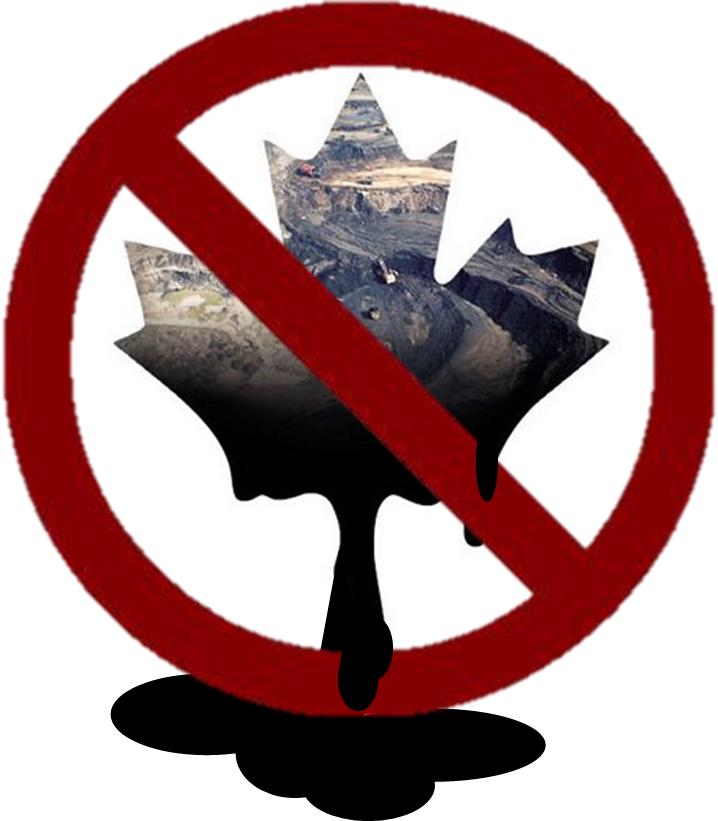
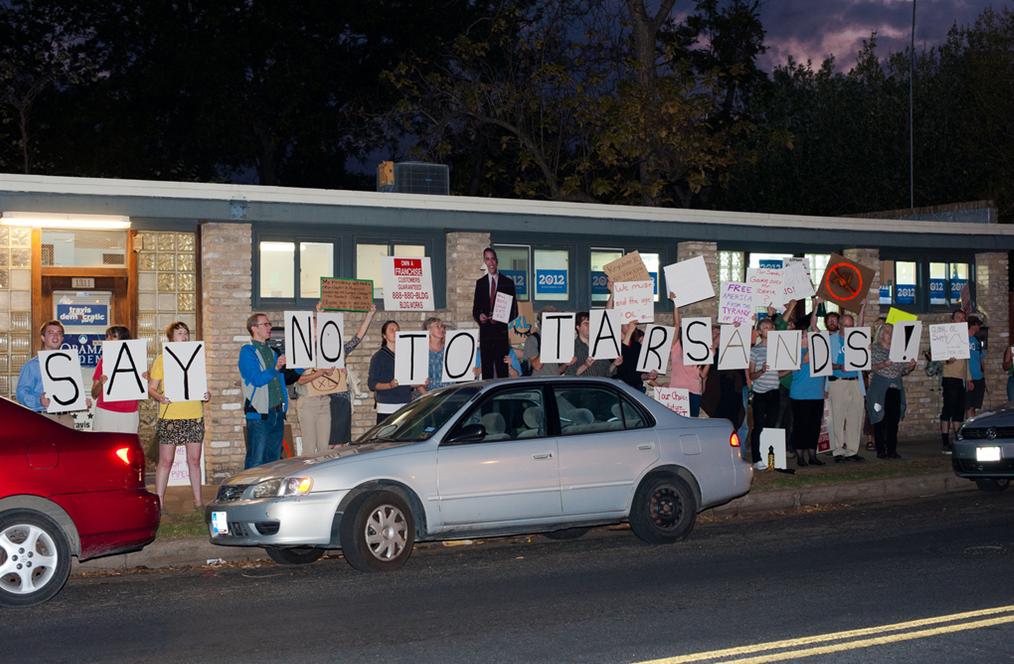
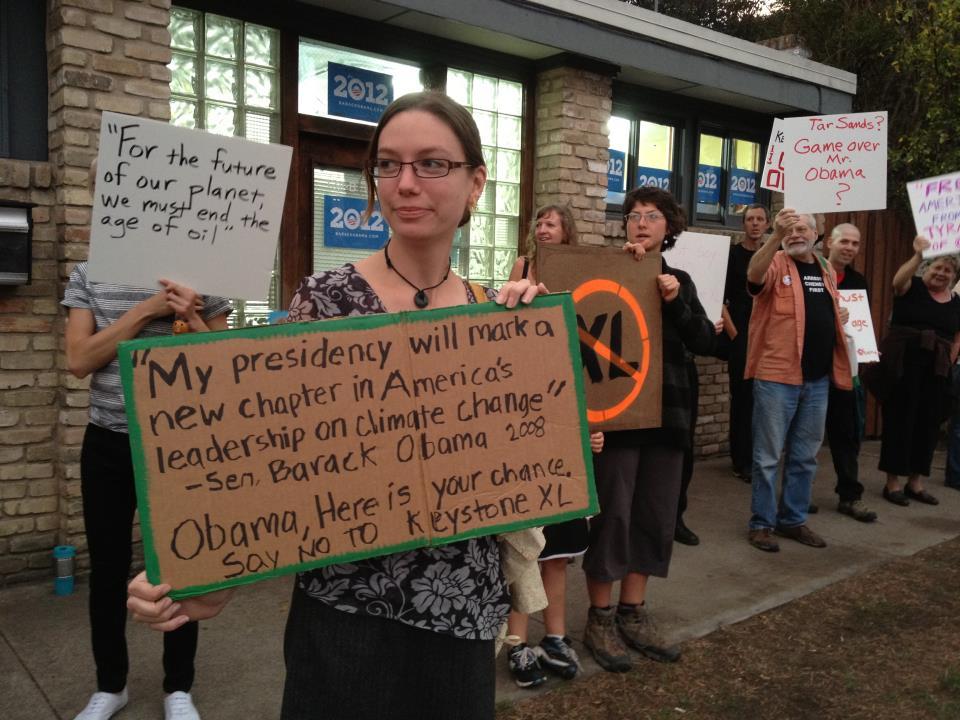
The Terry-Greene Tar Sands Resolution Would Allow Hasty Decision to Be Made Regarding an Oil Pipeline Through Texas

 The Terry-Greene Tar Sands Resolution (H.R .1938), which is scheduled for a vote Tuesday, would expedite the approval for construction of the Keystone XL pipeline, requiring a decision by Nov. 1 of this year, causing important objections to the pipeline to be overlooked.

Public Citizen, ReEnergize Texas, and the Sustainable Energy and Economic Development (SEED) Coalition told Congressional members in a letter that the construction of this pipeline would increase gas prices and release pollutants into the air, with no benefit for Americans. and that they should vote against a bill that would reduce the review of a proposed oil pipeline running through the Ogallala Aquifer in Texas.

The proposed TransCanada Keystone XL pipeline would run from Canada through the Ogallala Aquifer in Texas to the Gulf of Mexico, where refineries would make oil available for export. The pipeline would transport the dirtiest oil in the world through America’s largest freshwater aquifer, risking a major oil spill and causing dangerous pollutants to be released into the air during the refining process, the groups said. This tar sands oil contains three to four times as much carbon, five times as much lead, six times as much nitrogen and 11 times as much sulfur as is found in conventional crude oil.

A spill from the proposed pipeline would be devastating because the Ogallala Aquifer supplies water to approximately a quarter of the country’s irrigated land. A recent study by University of Nebraska professor John S. Stansbury shows that TransCanada has vastly underestimated dangers posed by the pipeline. The study reveals that the Keystone XL pipeline could have up to 91 spills over 50 years, compared to TransCanada’s claims that there would be only 11.

In addition, the pipeline would drive up fuel costs in the United States. According to TransCanada’s own documents and oil industry economist Philip Verleger, the pipeline would bypass Midwestern refineries, which help keep fuel costs low for American farmers by boosting competition. TransCanada predicts this would drive up fuel costs in the U.S. by up to $4 billion annually, and Verleger anticipates gas prices rising 10 to 20 cents a gallon. So TransCanada’s proposed pipeline would require America to bear the burden of transport and raise gas prices only to send the profits to Canada and the oil to global markets.

“While this might appear to some to be an economic trade-off worth considering, a major issue is that the oil is being transported to the Gulf of Mexico to make it available for export. In other words, Texans would bear the burden of the pollution, but the oil would either supply our global competitors or be priced equivalent to the export market set primarily by the OPEC nations,” the letter said.

Click here to see the letter and click here to see the fact sheet.

According to the Austin Business Journal, Donna Nelson has been appointed by Gov. Rick Perry to be chairman of the Public Utility Commission of Texas.

Ms. Nelson will replace Barry Smitherman in that position.  Smitherman resigned earlier this month and Gov. Rick Perry quickly appointed him to the Texas Railroad Commission.

Nelson is a former special assistant and advisor on energy, telecommunications and cable budget and policy issues in the governor’s office, and has served on the PUC as a Commissioner since 2008.

Review Highlights of a Decade of Texans for Public Justice’s Perry-related Research

NOW

THEN (as TAMU Yell Leader)

Texas Governor Rick Perry is unknown to much of America.  Texans for Public Justice (TPJ) has followed this politician since he became governor in late 2000, publishing numerous reports on Perry’s politics and policies.  With talk of a Perry presidential campaign escalating, “The Rick Perry Primer” summarizes the highlights of a decade of TPJ’s Perry-related research.

“The Rick Perry Primer” is available at TPJ.ORG.

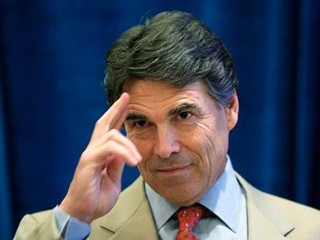
The EPA under Perry . . . what would that look like?  I don’t know about you, but that thought sends cold shivers down my spine, even on a 104 degree day.

The Austin American Statesman takes a look at what the EPA might become with a Perry White House.  Public Citizen’s own “Smitty” weighs in:

Perry environmental stance would transform EPA

By Asher Price
AMERICAN-STATESMAN STAFF

As governor of Texas, Rick Perry has argued that the U.S. Environmental Protection Agency has strangled business and interfered with state environmental efforts, and he has championed a half-dozen lawsuits challenging federal air pollution and greenhouse gas regulations.

The dispute with the EPA serves as a proxy for larger Perry arguments about states’ rights versus federal power. It “illustrates how Washington’s command-and-control environmental bureaucracy is destroying federalism and individuals’ ability to make their own economic decisions,” Perry wrote in his book “Fed Up! ”

So, should he run for the White House and win, how would a President Perry treat the EPA?

From his rhetoric and record as governor, one might think that he’d be tempted to dissolve the agency. He has actively loosened regulations in the name of economic development and denied that scientific consensus exists on climate change, ascribing anxieties about greenhouse gases to a “secular carbon cult.”

But on the campaign trail, he is likely to tell a story about environmental accomplishment. He will point to improvements in air quality in the state’s major cities, and he will note that the state leads the nation in wind power. And he will say that Texas has done it by working with industry, not being its adversary.

“If the EPA thinks a sweeping mandate is required to spur the creation and adoption of alternative energy sources, they need to know the private sector is already making that happen here in Texas, helped by incentives from this state,” he said in a news conference after Obama’s victory in 2008 .

The state’s wind industry won its greatest boost from a 1999 mandate by the Legislature that Texas utilities buy a certain amount of power from renewable sources as part of a grand bargain to deregulate the state’s electricity market. In other words, wind power got a foothold because of just the sort of big government edict that Perry abhors.

To his credit, he encouraged a $5 billion ongoing plan to build transmission lines from West Texas and Panhandle wind farms to the state’s population centers, said Tom “Smitty” Smith, the head of the Austin office of Public Citizen, a government watchdog group. The lines will be paid for by utilities, which will pass costs on to ratepayers.

Perry also could repeat a claim about improvements to the state’s air quality. Between 2000 and 2010 , he noted in a news release last year and in a letter to President Obama, “the Texas clean air program (has) achieved a 22 percent reduction in ozone and a 46 percent decrease in (nitrogen oxide) emissions.”

PolitiFact Texas rated that statement as Half True: UT chemical engineering professor David Allen told the Statesman that it’s difficult to say quantitatively whether federal or state regulations were primarily responsible for the emission reductions. A quarter of the state’s nitrogen oxide pollution comes from industrial sources, which are mainly what the state regulates, but much of the rest comes from cars and other mobile sources, which the federal government regulates.

The point of Perry’s statement, in any case, was to say to the federal government, “Hands off; we can handle environmental issues ourselves.”

“It isn’t necessary to bludgeon job creators with hefty fines and penalties in order to make progress,” he writes in “Fed Up!” “It is better to work with business and harness American innovation — the same innovation that drives our economic success — in the realm of pollution control.”

One example: In the mid-1990s, Texas opted to issue so-called flexible permits that set facilitywide emission limits. The permits, strongly defended by Perry, set overall emission caps for facilities, rather than particular limits on emissions from a single boiler.

The flexible permit program “is like saying, ‘As long as you go 55 miles per hour, on average, in a month, you can go 100 or 125 some days,'” Neil Carman, air quality specialist at the Lone Star chapter of the Sierra Club, once told the American-Statesman . “It allows excessive kinds of pollution if you play that game.”

Federal regulators say the permits leave them in the dark about how many gases particular parts of a plant are belching into the air, and they are demanding an overhaul to the permitting program. The upshot has been hot rhetoric over the past two years between Perry and EPA officials. (The EPA now appears to have the upper hand, as some refiners, utilities and manufacturers have been working with federal authorities to revamp their permits.)

According to several measures tracked by the Environmental Defense Fund, Texas is the nation’s leading polluter. Its national rank among emitters of sulfur dioxide, which contributes to acid rain and smog, actually rose during Perry’s tenure from fifth in 2000 to third in 2009.

But the state’s pollution might be as much a reflection of the richness of Texas’ industrial base as a comment on environmental compliance.

Perry “approaches the issues from a very libertarian bent,” said Jim DiPeso , policy director of Republicans for Environmental Protection. “The EPA would be in for some significant budget reduction. There would be no new intiatives, no regulatory programs that would be initated. There’d be litigation from environmental groups that believe he’s not enforcing the Clean Air Act and Water Act as robustly as the law provides.”

“Any regulatory programs would be really throttled back,” he said. “He has shown no interest in climate policy at all. He doesn’t accept the science.”

With the governor’s blessing, Texas Attorney General Greg Abbott is challenging at least six EPA greenhouse gas-related regulations. The state’s underlying argument: The fundamental finding that greenhouse gases are a public health threat is scientifically flawed.

The federal government is pushing “hastily enacted, cascading regulations” on states and businesses, Abbott argued in a June brief filed on behalf of nine states in federal court.

Perry’s approach to energy, DiPeso said, “would be to produce more,” rather than discourage the development of energy projects, such as coal plants, that emit greenhouse gases associated with global warming.

“In terms of energy, (Perry) would pursue what many Republicans call the ‘all of the above’ strategy, with more energy development offshore and onshore,” DiPeso said.

Individuals and committees associated with energy, the extraction of natural resources and waste disposal contributed just short of $14 million to Perry’s campaigns between Jan. 1, 2001, and Dec. 31, 2010, according to Texans for Public Justice, a nonprofit that tracks money in politics. Overall, donors gave more than $102 million to his campaign during that period.

His top individual donor during that time was homebuilder Bob Perry, who contributed $2.5 million and has supported property rights efforts unsympathetic to endangered species protections. Ranking behind him was investor Harold Simmons, who owns Waste Control Specialists. In 2008, over the objections of environmental groups and its own staffers, the state environmental commission approved a license for Waste Control Specialists to build a dump near the New Mexico border for disposal of radioactive waste related to Cold War-era uranium processing. Three agency staffers quit in protest.

Broadly speaking, the Texas Commission on Environmental Quality has shown itself to be sympathetic to business interests. In several prominent cases, its commissioners, appointed by Perry, have ignored the recommendation by the agency’s public interest counsel to deny major air and waste disposal permits.

In requests for permission to build a coal plant about 100 miles northeast of Austin, to reopen a copper smelter in El Paso and to dispose of various kinds of waste at the West Texas radioactive waste landfill, the commission sided with recommendations by its executive director over those of the public interest counsel. By some empirical measures, its enforcement arm is weak. A 2009 Notre Dame Law Review article comparing 15 states found that Texas spent less on environmental programs than all but one on a per capita basis. And in the recent round of budget cuts, the commission suffered disproportionately high cuts of 30.2 percent.

Perry himself earned the ire of environmental groups for trying to fast-track the permitting of as many as 17 new coal-fired power plants in 2006. Most were never built.

An EPA under a President Perry “would be more effective, accountable, pragmatic and realistic,” said Kathleen Hartnett White , a former environmental commission chairwoman and a Perry appointee to the board of the Lower Colorado River Authority. She also is a fellow at the Texas Public Policy Foundation, a small-government think tank.

Under Perry, the commission “operated under the rule of law and has not stretched it or contracted it,” she said.

“The current EPA really stretches the limits of law in which they operated,” she said. “They need to be more accountable to Congress and to the states. Needless to say, the governor would give more respect for state authority.”

Perry also would have “higher standards for science,” she said, echoing arguments that the attorney general has made in disputing the EPA’s finding that carbon dioxide emissions endanger public health.

Despite those claims, there is consensus among scientists that humans contribute to climate change. An international climate change panel of more than 2,000 scientists came to just that conclusion in 2007.

“Climate change is occurring, is very likely caused by human activities, and poses significant risks for a broad range of human and natural systems,” concluded a May report of the National Research Council, which is charged with advising Congress on health and science policy. “Each additional ton of greenhouse gases emitted commits us to further change and greater risks.”

The best guide to a Perry EPA might be an early Bush EPA, which was concerned with energy development.

Among other things, the Bush administration downplayed and edited work by EPA scientists warning about climate change and sought to loosen rules about putting power plants near national parks.

But upon Bush’s departure from office, Richard Greene , then the head of EPA’s regional office in Dallas, told the Statesman, “A claim can rightfully be made by the Bush EPA that air is cleaner, water is purer, and land is better protected than it has been in three generations.”

Environmentalists would beg to differ. But a Perry administration could be even worse for environmentalists’ interests, Smith said.

He said Perry criticizes EPA initiatives that had roots — if weak ones — in the Bush administration, such as more stringent smog standards, and tougher rules on power plant emissions.

A Perry EPA, Smith said, “would pander to the polluters.”

asherprice@statesman.com;445-3643

Lights. Camera. Help is a nonprofit film festival dedicated entirely to nonprofit and cause-driven films.  This 3-day event held in Austin Texas, July 28th through July 30th, gives films-for-a-cause the attention they deserve by putting them up on the big screen in a theater setting.  One of the films, On Coal River,  showing at Lights. Camera. Help. is of particular interest to the community in Austin interested in energy.

We sometimes forget that turning on a switch at home affects people on the other side of the country or in other countries, and not necessarily in a good way.

Coal River Valley, West Virginia is a community surrounded by lush mountains and a looming toxic threat. ON COAL RIVER follows a former miner and his neighbors in a David-and-Goliath struggle for the future of their valley, their children, and life as they know it. Ed Wiley once worked at the same coal waste facility that now threatens his granddaughter’s elementary school. When his local government refuses to act, Ed embarks on a quest to have the school relocated to safer ground. With insider knowledge and a sharp sense of right and wrong, Ed confronts his local school board, the state government, and a notorious coal company’ Massey Energy’ for putting his granddaughter and his community at risk.

This film will be showing at the festival on Saturday, July 30th Saturday, sometime during the festival hours of 3pm – 6pm at t he The RGK Center for Philanthropy and Community Service  located at 2311 Red River Street – Free Parking in lot on Red River.  Single day passes are $13.00 and are available for Thursday, Friday, and Saturday, but only holders of the festivals exclusive three-day pass, which is $28.00, get in to all screenings, events, and after parties!

Film Summary and Trailer of “On Coal River” http://lightscamerahelp.org/2011/films/386-on-coal-river

To learn about other selections at the festival this year: http://lightscamerahelp.org/2011/selections

###

By promoting cleaner energy, cleaner government, and cleaner air for all Texans, we hope to provide for a healthy place to live and prosper. We are Public Citizen Texas.