November 7, 2010 by Citizen Carol
Republican gains in Congress were the major stories for the national media, but it is the party’s gains in down-ballot local state house races that may have created the most lasting protection for the GOP‘s new majority in the House of Representatives.
Once every decade, state legislators begin the process of redrawing congressional districts to reflect changes in population. A by-product of this process is that it can serve to insulate representatives from future difficult re-elections.
According to the nonpartisan National Conference of State Legislatures, Republicans will now hold about 53 percent of state legislative seats across the country, gaining at least 680 seats this election, the largest gain by either party since the mid 60s.
At issue are two different procedures:
Reapportionment: The number of seats in the U.S. House is fixed by law at 435. Every 10 years, after the Census has counted the population, some states gain House seats, others lose them to reflect shifts in populations.
Redistricting: In most states, state legislators, with advice from expert demographers and lawyers, obligatory input from citizens and with the final say of the governor, draw the new congressional district lines. State legislators draw the maps for 383 of the 435 seats in the House.
In most cases, governors can veto remapping plans and sometimes force legislatures dominated by the opposing party to alter plans to help protect his party’s incumbents. This will not be the case in Texas this go-round since the Republicans dominate both state houses and hold the governorship.
The remapping takes into account the population shifts within states, the desire to protect incumbents and, of course, partisan advantage. At the margins, partisan mapping, or gerrymandering, can help one party keep a seat or make the party competitive in a place where it hadn’t been before. (In a 2004 decision, the Supreme Court essentially ruled that the partisan gerrymandering doesn’t violate the Constitution.)
In eight states, bipartisan or nonpartisan commissions handle the task. This is not the case in Texas.
Currently, the House Committee on Redistricting is taking public testimony at hearings around the state regarding redistricting that will help shape the districts for both the house and senate of the Texas legislature and Texas congressional districts.
TexasVox will post information about hearings in your area as the information becomes available. Click here to read an earlier blog about hearings with links to archived video of hearing around the state that have already happened. If you are concerned about the impacts of redistricting on your state and congressional representation, plan on attending and testifying.
###
By promoting cleaner energy, cleaner government, and cleaner air for all Texans, we hope to provide for a healthy place to live and prosper. We are Public Citizen Texas.
Posted in Campaign Finance, Texas Legislature | Tagged Democratic, gop, redistricting, republican, State legislatures, Texas, United States Congress |
We use more electricity now than ever, and since 2007 our energy usage in Texas is outpacing population growth. How many of us charge our cell phones or laptops all night so they’re ready for use in the morning? Or perhaps run the AC 24 hours a day during the blazing Texas summers? Several years ago the Legislature passed a bill to bring down our consumption, but there’s still much to be done. On one hand, legislation can continue to push down the maximum levels of energy consumption, thereby compelling energy companies to utilize more efficient forms of energy. On the other, consumers and business owners can decide to individually pursue energy efficient technology, such as light bulbs, solar panels, and more efficient appliances.
Both suppliers and consumers must pursue energy efficiency to push it into the mainstream. It’s the simple market equation of supply and demand—but who is going to push first? Will energy companies supply more efficient forms of energy, or will consumers demand it until it really catches on?
While trolling the halls of Legislature during the last session and passing around information on efficient energy, I was pulled into a conversation between two gentlemen in one of the offices. We discussed a slew of topics, including the Austin rodent problem of Fall 2008, the general usefulness of cats, and (prompted by my flier) light bulbs. One gentleman was insistent that LEDs do not provide near the quality of incandescent bulbs, and therefore refused to use them in his home. I was not exactly sure how to respond to that (I’m no bulb expert) but in my research I found the video posted below.
[youtube=http://www.youtube.com/watch?v=pv-mr3VLW34]
So why aren’t these alien light bulbs everywhere? Some are too expensive for the average consumer, but I had no idea that so many varieties exist. Since they save so much on energy usage, why aren’t they more popular? Continue Reading »
Posted in Efficiency, Energy, Global Warming | Tagged bulb, CFL, Compact fluorescent lamp, consumer, demand, efficient, Efficient energy use, Energy, energy conservation, Hot Flat and Crowded, incandescent, Incandescent light bulb, LED, Light-emitting diode, supply, Texas, Thomas Friedman |
November 5, 2010 by Citizen Carol
NRC ANNOUNCES AVAILABILITY OF LICENSE RENEWAL APPLICATION FOR SOUTH TEXAS PROJECT NUCLEAR POWER PLANT
The 22 year old South Texas Project (STP) Units 1 and 2 are up for renewal and the Nuclear Regu latory Commission announced today that an application for a 20-year renewal of the operating licenses is available for public review.
The plant’s current operating licenses for Units 1 and 2 will expire on Aug. 20, 2027, and Dec. 15, 2028, respectively. A 20 year license extension would have the two units in production well past their initial life expectancy, and the onsite spent fuel rod storage, well – that’s a whole other can of worms.
South Texas Project Units 1 and 2 are both pressurized-water nuclear reactors, located 12 miles southwest of Bay City, Texas. When they were built, these plants were projected to have a 30 to 40 year life expectancy and STP says it has enough underwater storage capacity on site to safely store spent fuel for the licensed life of the plant. Since it is up for a 20 year renewal, let’s hope that that means they have enough spent fuel storage capacity for at least that long. They haven’t been very forthcoming about what their hoped for expansion would mean for their spent fuel storage capacity, continuing to hold forth the promise of a long-term storage solution (Yucca Mountain being the most frequently touted option). But with the development of Yucca Mountain in limbo, and the NRC extending the period for onsite storage past the production life of a plant, it seems likely that an off site long term storage solution is unlikely anytime soon.
The licensee, STP Nuclear Operating Co., submitted the renewal application Oct. 26. The application is available on the NRC website at this address: http://www.nrc.gov/reactors/operating/licensing/renewal/applications/south-texas-project.html. The NRC staff is currently conducting an initial review of the application to determine whether it contains enough information for the required formal review. If the application has sufficient information, the NRC will formally “docket,” or file, the application and will announce an opportunity to request a public hearing.
For further information, contact Carmen Fells or Tam Tran at the Division of License Renewal, Office of Nuclear Reactor Regulation, U.S. Nuclear Regulatory Commission, Mail Stop O11-F1, Washington, D.C. 20555; telephone (301) 415-6337 for Carmen Fells and telephone (301) 415-3617 for Tam Tran.
###
By promoting cleaner energy, cleaner government, and cleaner air for all Texans, we hope to provide for a healthy place to live and prosper. We are Public Citizen Texas.
Posted in Energy, Global Warming, Nuclear, Toxics | Tagged Energy, Life expectancy, Nuclear Power, Nuclear Regulatory Commission, South Texas Nuclear Generating Station, Texas |
Two (possibly three) members of Congress in Texas lost their seats in the Republican (and outside money) tsunami that swept the country-Rep. Chet Edwards, Ciro Rodriguez, and Solomon Ortiz – whose race is at this point still too close to call, but he trails his opponent by several hundred votes. Many in the punditocracy have tried to come up with one common denominator to explain the Republican tidal wave, and some have settled on the vote on climate change legislation, HR 2454, the American Clean Energy and Security Act (ACES) or Waxman-Markey. Politico jumped (the shark?) to this conclusion: “House Democrats who voted for the 2009 bill to cap greenhouse gas emissions – dubbed cap-and-tax by GOP opponents – had a terrible night.”
But this is widely debunked, first in this piece from Think Progress’s Wonk Room blog: Continue Reading »
Posted in Campaign Finance, Global Warming | Tagged 2010 elections, ACES, Campaign Finance, chet edwards, ciro rodriguez, independent expenditures, outside money, Solomon Ortiz, stealth PACs, Texas |
November 4, 2010 by Citizen Carol
The Texas Low Level Radioactive Waste Disposal Compact Commission TLLRWDCC will meet in Midland, Texas a week from Saturday (November 13th) to reconsider adopting a rule that was withdrawn in July that would allow for export of low-level radioactive waste for management and disposal from facilities outside of the Texas Compact, this will be followed by a host of generator petitions to ship low-level radioactive waste to Texas facilities. For those that have been following our blogs on this, that means to the Waste Control Specialists (WCS) facility in Andrews County out in West Texas. The Compact Commission will receive public comment, discuss and take formal action, as appropriate, on items on the agenda below until it adjourns.
November 13, 2010 at 10:00 a.m.
University of Texas of the Permian Basin
Center for Energy and Economic Diversification
1400 Farm-To-Market Road 1788 N
Midland, Texas.
To see the proposed rule, click here.
To see the proposed additions to the draft rule from Compact Commision chair, Mike Ford, click here.
TEXAS LOW-LEVEL RADIOACTIVE WASTE DISPOSAL COMPACT COMMISSION AGENDA Continue Reading »
Posted in Nuclear, Toxics | Tagged environment, Low level waste, Nuclear, nuclear waste, radioactive waste, Texas, Texas Commission on Environmental Quality, united states department of energy, WCS |
November 3, 2010 by Citizen Carol
Texas House Speaker Joe Straus of San Antonio (District 121) has released the names of 122 lawmakers who he says have pledged him their vote for speaker, giving him enough support for another term (of that number 79 of the 99 elected Republicans are included).
Speaker Straus says he believes the race for speaker is over, but he is being challenged by Rep. Warren Chisum, a conservative Republican from Pampa, TX (District 88), who says the race is not over.
Texas Speaker races can be quite interesting. We’ll keep you updated.
Posted in Global Warming | Tagged Joe Straus, Speaker (politics), Texas, Texas Legislature, warren chisum |
November 3, 2010 by Citizen Carol
According to Bloomberg, electricity producers such as NRG Energy Inc. and Southern Co. will benefit as the new house Republican majority promotes nuclear power as part of clean-energy legislation. They go on to point out that cap-and-trade was denounced in ads by candidates of both parties, and they expect a fight over plans by the Environmental Protection Agency to impose its own restrictions on carbon emissions.
They also anticipate that renewable-energy legislation next year would encourage construction of nuclear and “clean- coal” plants.
For those close to the Barnett Shale, House Republicans will probably resist efforts to limit hydraulic fracturing, a technique used in drilling for natural gas in which chemically treated water is pumped underground to loosen rock and let gas flow, and a process that has been of significant concern to Texans in the Dallas-Fort Worth air shed. The EPA is currently conducting a study of potential environmental impacts of the practice.
The Republican takeover of the House also puts Representative Doc Hastings of Washington state, an opponent of new restrictions on offshore oil and gas drilling, in line to take over the Natural Resources Committee. Hastings denounced a measure, that would have removed a $75 million cap on liability for leaks, and would bar BP (the company responsible for the Gulf of Mexico deep water oil spill off the coast of Louisiana) from new U.S. leases.
I’m sure you can see where this could be taking U.S. energy and environmental policy. If you are concerned, consider making a donation to Public Citizen as we head into a new political era.
###
By promoting cleaner energy, cleaner government, and cleaner air for all Texans, we hope to provide for a healthy place to live and prosper. We are Public Citizen Texas.
Posted in Air Quality, Energy, Global Warming, Nuclear | Tagged Barnett shale, Coal, Energy, Natural Resources Committee, Nuclear, public citizen texas, renewable, Texas, United States House Committee on Energy and Commerce, United States House Committee on Natural Resources |
November 2, 2010 by Citizen Carol
As the Tom Delay trial got underway, the State’s first two witnesses were Craig McDonald, a former Public Citizen Texas director and now the executive director for Texans for Public Justice, and Austin attorney Fred Lewis, both of whom the defense characterized as being from the left end of the political spectrum which they attempted to capitalize upon. Twice the defense moved for a mistrial, claiming there was an effort by prosecutors to push political opinions on the jury. Both motions were ignored by Judge Priest.
Craig McDonald said he focused solely on campaign donations while with Public Citizen and that there were discrepancies between what Texas Republican Majority PAC (TRMPAC) reported to the Texas Ethics Commission in terms of its income and what Republican National State Election Committee (RNSEC) reported to the IRS.
The defense, in examining McDonald, reviewed 60 candidate names on Public Citizen’s website — only one of which was a Democrat (gubernatorial candidate, Bill White, and that was from a blog on yours truly, Texas Vox, which showed up on the site through an RSS feed). DeLay, however, was mentioned 100 or more times on the site. But McDonald maintained political neutrality in his testimony, noting that DeLay’s appearance on the website did not mean he was the only subject of Public Citizen’s research. Continue Reading »
Posted in Campaign Finance, Consumers, Good Government | Tagged money laundering, Public Citizen, public citizen texas, republican, texans for public justice, Texas, Texas Ethics Commission, Tom Delay, Travis County Texas |
November 1, 2010 by Citizen Carol
Jon Stewart explains what the Rally to Restore Sanity is about in his speech at the rally in DC.
I can’t control what people think this was. I can only tell you my intentions. This was not a rally to ridicule people of faith. Or people of activism or to look down our noses at the heartland or passionate argument or to suggest that times are not difficult and that we have nothing to fear. They are and we do. But we live now in hard times, not end times. And we can have animus and not be enemies.
Continue Reading »
Posted in Good Government | Tagged jon stewart, Public Citizen, Rally to Restore Sanity, Texas, transcript |
November 1, 2010 by Citizen Carol
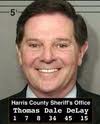 A jury for Tom DeLay‘s money laundering trial was selected quickly last week, but only after the prosecution challenged whether the defense was striking African American jurors without good cause.
The defense cut five African Americans from the jury because, in several instances, he said the would-be jurors appeared angry at him after he had criticized the lead prosecutor, who is black. Continue Reading »
Posted in Campaign Finance, Good Government | Tagged campaign contributions, democratic party, money laundering, republican, Texas, Tom Delay, Travis County Texas, trial |
October 31, 2010 by Citizen Carol

A new online film, the “Story of Electronics”, will be released on Tues, November 9. This is the newest in the series of the excellent, user-friendly Story of Stuff web-films about excessive consumerism and waste.
The Story of Electronics tells the story of how electronics are really “designed for the dump” and not made to last or made for recycling. View the trailer at: www.storyofelectronics.org
Posted in Consumers, Efficiency, Energy, Global Warming, green jobs, recycling, Toxics | Tagged Business, Electronic waste, Electronics, environment, recycling, Texas, The Story of Stuff, United States, Waste Management |
Come join us tomorrow, Saturday morning, for a satellite rally of John Stewart’s “Rally to Restore Sanity” which is happening in Washington D.C. The festivities start at 11am and go till 2pm (a march against the death penalty starts at 3). Continue Reading »
Posted in Global Warming, Good Government, Renewables | Tagged Austin, capitol, john stewart, Public Citizen, rally, restore, sanity, Texas |
October 29, 2010 by Citizen Carol

The No Coal Coalition brings their mascot, Pancho the Donkey, to the TCEQ hearing, but he is turned away. Photo by Susan Dancer
On Thursday, the TCEQ (Texas Commission of Environmental Quality) held a public meeting for the White Stallion Energy Center at the Bay City Civic Center to hear feedback on the plant’s application for a wastewater permit. Continue Reading »
Posted in Air Quality, Coal, Global Warming, Toxics | Tagged bay city, Coal, colorado river, Donkey, lower colorado river authority, Matagorda County Texas, Pancho the Donkey, Public Citizen, Sierra Club, TCEQ, Texas, Texas Commission on Environmental Quality, waste water, water, white stallion |
October 29, 2010 by Citizen Carol
With states scrambling to align their own rules with U.S. EPA‘s new regulations, which are set to take effect on Jan. 2, 2011 and require regulators to start issuing Clean Air Act permits next year for large stationary sources of greenhouse gas emissions, Texas is now the lone holdout, according to an analysis by the National Association of Clean Air Agencies (NACAA). Click here to see a copy of the analysis. Continue Reading »
Posted in Air Quality, Coal, Energy, Global Warming, natural gas, Renewables, TCEQ | Tagged clean air act, EPA, flex permits, fort worth star telegram, George W. Bush, greenhouse gas, greenhouse gases, Major stationary source, TCEQ, Texas, Texas Commission on Environmental Quality, United States Environmental Protection Agency |
« Newer Posts - Older Posts »


