Feeds:
Posts
Comments

Archive for the ‘Global Warming’ Category

Recently the Public Utilities Commission (PUC) denied the emergency petition of State Representative Sylvester Turner (D – Houston) and a number of advocacy groups including AARP Texas, Texas ROSE, Texas Legal Services, and One Voice Texas, to prevent dangerous electricity disconnections during Texas’ hot summer months.  This petition was designed to offer relief to elderly, medically frail, and low-income consumers and protect them from dangerously high heat — which causes deaths in vulnerable communities every year.

Just a few weeks ago, a 56 year old man in Houston named Herbert Gaston died inside his home as a result of “a combination of underlying medical issues and heat exposure.”  His air conditioner broke the day before.  On the day he died, it got up to 113 degrees inside the house.  His brother went to the grocery store for a couple hours, and when he came back, Herbert was gone.

It is tragic, but heat-related deaths such as this happen all the time.  In the period between 1999 and 2004, 258 Texans died with exposure to heat as the underlying cause.  In Houston alone, an average of 24 people die heath-related deaths every year.  These deaths are preventable, and Turner’s emergency rule would have provided a cushion to those at risk by making it illegal for retail electric providers to shut people’s power off when they can’t pay their electric bills.  Turner’s rule would have allowed consumers to stack their energy bills and pay them off over the next few months.

From Turner’s official press release,

The petition requests the PUC to establish basic market wide protections requiring utility companies to keep the power on if their customers fall behind on their bills but set up proper payment plans and honor them. The proposed rule also establishes a heat threshold protection, disallowing any electricity disconnections in an area when the heat index will reach or exceed 105 degrees Fahrenheit.

“The rule encourages customers to make payments and keep the power on so that their households can keep safe in the extremely hot Texas summer; but it also allows for some much needed flexibility in dealing with what is often for consumers much higher summer electricity bills. Industry is not in the business of turning the power off, and I’m not seeking to give electricity away. This is a win – win situation for consumers and the electric industry,” said Representative Turner.

“Much of Texas is currently experiencing triple digit temperatures and no relief is in sight. We are seeking to establish some basic protections for the safety and welfare of consumers. We can not afford to lose lives simply because someone fell behind on their electricity bill,” said Turner.

Representative Sylvester Turner’s Petition for Adoption of an Emergency Disconnection Rule [Docket No. 37142] was very similar to legislation introduced this session to provide basic consumer protection for vulnerable populations such as low-income communities, the elderly, and medically frail.  Unfortunately for Texans, Turner’s petition was denied before the PUC commissioners even listened to testimony.

Sylvester Turner, understandably, was incensed:

[youtube=http://www.youtube.com/watch?v=kGqvb6pAzDE]

The commission argued that Turner’s rule was unnecessary because protections from electricity shut-offs already exist in PUC code (see Subchapter R, section g — disconnection of ill and disabled).  This rule provides protection to those that can prove a disconnection would be dangerous to their health with a doctor’s note.  Easy, right?  I mean, everyone has access to affordable healthcare, right?  Just go to your family doctor and ask him to make a call for you, what’s the bid deal?

I hope you sense the sarcasm.  Clearly not everyone has access to affordable health care — in fact, according to a report released this March by Families USA, 44 percent of Texans did not have health insurance, many for 6 months or more, in 2007 and 2008.  And the same people that don’t have health care are often going to be the same people having trouble meeting high summer electricity bills.  So what are those Texans without health insurance– nearly half of the state — supposed to do?  Go to the emergency room to get a doctor’s note for the PUC?

Commissioners also argued that since electricity rates are lower this year than normal, folks will be paying lower bills and there’s nothing to worry about.  Except, oh, I dunno… that whole “economic downturn” we keep hearing about!  Just because rates are a little lower than previous years doesn’t mean that its easier to meet bills this year than any other, because clearly all other factors are not equal.  Last year rates may have been higher, but unemployment was also 4.2% then, compared to 7.1% as of this May.

In my opinion, the Commissioners were incredibly insensitive in their reasoning.  One also argued that if Turner’s rule were to take effect, people could ostensibly pay zero dollars for their electricity during the summer and then be stuck with tremendous bills in the fall that they couldn’t pay… and then electricity providers wouldn’t get their money.

Turner said it best, and can save me the trouble — “The companies ought to be proud of you because you have argued their case.  For people who are more afraid of their electricity bills than they are of the heat itself, you have not argued their case.”

Thankfully, some power providers and local governmental agencies are undertaking voluntary programs to protect their customers from dangerous heat.  Reliant Energy in Houston is sponsoring and arranging rides to eight cooling centers spread throughout the city.  For specific information on these “Beat the Heat Centers”, or to schedule free rides to and from the Beat the Heat Centers, interested participants can call 713-497-2711.

Dallas County Health and Human Services has also launched a campaign to prevent heat-related deaths, and TXU Energy is working with those having trouble paying high bills this summer.  Dallas residents without working air conditioners should call Dallas County health officials on (214) 819-6001 or (214) 819 1848.

During the Public Meeting, Commissioners also raised the point that even if they had passed this rule, it would not apply to municipally owned utilities such as Austin Energy or San Antonio’s CPS Energy.

Austin Energy customers worried about falling behind on their energy bills this summer have a number of options.  Eligible customers can sign up for a deferred payment program to spread their bills out a bit, or look into the Customer Assistance program.  Folks that aren’t worried about their bills but are worried about Austinites at risk from shut-offs and heat danger can also contribute to this program on the return portion of your energy bill.  Eligible customers can also sign up for free home energy improvements to reduce energy use and save money.  Family Eldercare also has a summer fan drive to keep central Texans cool and safe.  Visit their website for more information on getting a fan or donating to the program.

San Antonio residents can look into two major programs provided by CPS Energy, their Emergency Assistance Program and the Residential Energy Assistance Partnership (REAP) to help disadvantaged elderly, disabled and low-income customers with small children pay their natural gas and electric bills.

Next time you check your energy bill, check and see if your electric provider offers an opportunity to donate towards those less fortunate and keep Texans cool.  For those on the fringes of our society, being able to pay electricity bills can be a matter of life and death.

UPDATE: According to Dave Lieber at the Fort Worth Star Telegram, “Under state rules, companies must offer customers deferred payment plans when asked to do so.” Any individual unable to pay their month-to-month bill should definitely contact their electricity provider and ask for this option.

Read Full Post »

After CPS Energy unveiled its optimistically low $13 billion proposal for South Texas Project reactors three and four, I decided to look into the history of the construction of the first two reactors. What I found was troubling, but it seemed to be pretty much in line with my understanding of problems with nuclear projects during the 70s and 80. Here is a brief time line:

1971: Houston Lighting and Power presents proposal for South Texas Nuclear Project, with an estimated cost of 1 billion dollars for the entire project.

1973: Construction begins, with contractor Brown and Root. A $1 billion cost is agreed upon and the first reactor is projected to be finished by 1980 and the second by 1982.

1979: Brown and Root Inspector Dan Swayze gives interview with CBS Magazine, discussing his decision to stop inspecting concrete pours after a 1977 incident at STP in which concrete workers at STP threatened his life and physically assaulted another inspector. “They beat the hell out of him” -Swayze

1979: Estimated costs rise to $2.7 Billion and completion of the reactors is postponed

to 1984 for the first and 1986 for the second.

1979: Three Mile Island accident. San Antonio reevaluates its role in the project.

1980: After 3,000 complaints reports of work deficiencies, the Nuclear Regulatory Commission issues a report citing 22 violations and fines HL&P $100,000 and issues a “show cause order” requiring the company to explain why the project should be allowed to continue.

1980: HL&P voluntarily stops work after problems are discovered in the welding and concrete. The projected is rated below average by Ralph Nader’s Critical Mass Energy Project. It is ranked among the top 4 worst ongoing projects.

1981: HL&P fires original contractor Brown and Root (who had no previous experience with nuclear reactors) and replaces them with Bechtel Corporation. Estimated completion costs increase to $4.5 billion.

1985: Brown and Root looses a $750 million law suit, filed by Houston Lighting & Power, San Antonio City Public Service, Central Power, Light of Corpus Christi and the city of Austin. At the time this was the largest cash legal settlement in U.S History.

1987: HL&P receives low-power operating license for Unit 1 nuclear reactor.

1988: The Nuclear Regulatory Commission conducts last minute inspection of facility after hundreds of allegations of poor construction, over 50 of which were made by plant workers through the Government Accountability Project. Among the allegations was a claim that roughly 20% of the plant’s safety valves were installed backwards. This was never corrected after it was concluded that the plant could still function with backwards safety valves.

1988: Completion is announced 7 years late and 500% over budget.

1989: City of Austin files lawsuit against Houston Lighting and Power for unexpected expenses and delays during the construction of STP. Texas Court in Dallas Rules in HL&P’s Favor.

Since 1990: STP and other nuclear plants spend an average of $45 million each year disposing of waste. To clarify that is average is per plant.

CPS energy is giving an optimistically low estimate of the total cost of the project.  Estimates that consider the cost overruns and construction delays that plagued STP and similar projects last time  peg the plant at no lower than $17 billion. This look at STP’s history provides a good example of what can happen when we don’t recognize the likely additional expenditures an expensive project like this will have and operate on an unrealistic time frame.  San Antonio is on the verge of repeating many of the mistakes of the past, and it is the citizens that will have to pay.

The Disappointed Environmentalist

Read Full Post »

frameworknewThe word, according to the Lone Star Chapter of the Sierra Club:

The Texas Legislature failed to update state energy codes for new commercial, industrial, and residential buildings. That doesn’t mean Texas can’t move forward. We can get the job done in other ways.

There is a silver lining to this spring’s legislative shortfall: proposed rulemaking at the State Energy Conservation Office (SECO) to update the state minimum building codes from 2001 to 2009 may move faster than the proposed legislation would have required.

Adopting the 2009 IECC or IRC will lead to the following changes in residential construction:

  • Homes will be tested or inspected to allow less air leakage and less thermal infiltration, leading to less energy use.
  • Ducts will be sealed and tested or located in conditioned space to ensure that heating and cooling equipment functions efficiently.
  • Windows will meet lower U-factor and lower SHGC requirements, leading to substantial reductions in the amount of air conditioning needed. (Note that the IECC sets a more stringent SHGC requirement than the IRC.)
  • At least half of light fixtures will have to be “high efficacy.” (Lights have not been included in previous residential energy codes.)

On June 5th, SECO opened a 30-day comment period on updating the residential energy codes based on the 2009 IRC Codes. Take a moment today to send your comment of support for updated energy codes! Comments are due to SECO before 5 pm on July 5.

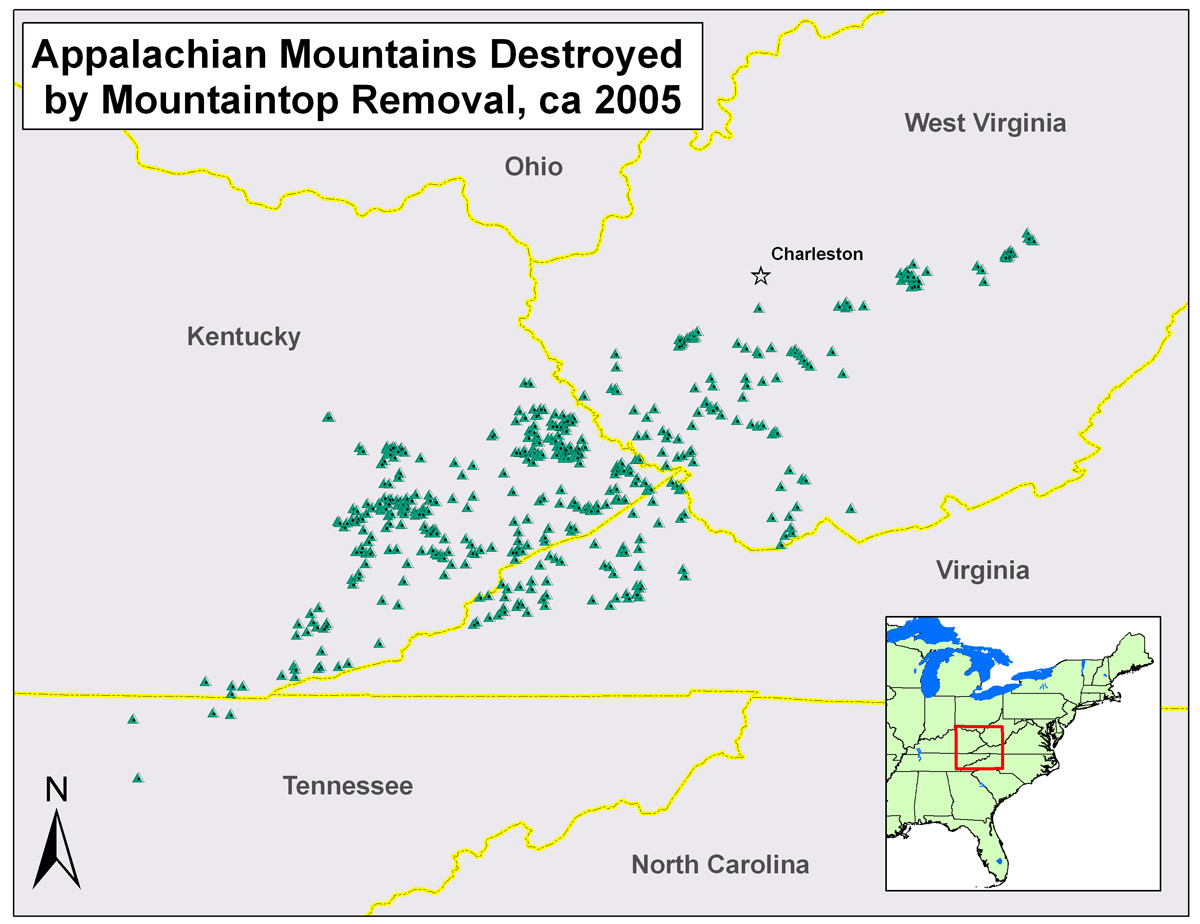
Failure to update our standards quickly and effectively would be a step backwards and could potentially impact current or future funding from the federal government.  Texas lags behind many states on its Energy Codes (see map). The nation is moving to update energy efficiency codes, with Congress considering a single national building code standard.  Under the American Renewal and Recovery Act (the federal economic stimulus program), Texas has submitted a letter to the Department of Energy saying it has a process to update its standards, allowing SECO to accept certain grants for energy efficiency.

Take action today and send your comment to SECO to support new, green energy codes in Texas!

For more information, check out Sierra Club’s factsheet.

Read Full Post »

ReEnergize Texas is having a party to kick-off our Summer of Solutions program and your 4th of July weekend! Join us at Public Citizen (1303 San Antonio St.) this Thursday 6pm-9pm for music, food, and beer (for those of age)!

Come show your support for joint projects being run by Resolution Gardens, ReEnergize Texas, American Youthworks, Rosewood-Zaragosa Community Center, PODER, and more all with the support of Austin Energy and Public Citizen. You can learn more about these groups, sign up to volunteer, or make contributions at our silent auction or in the tip jar!

Bring some food to share if you have it, and enjoy beer on the house. Music, food, and good company… what better way to start your 4th of July weekend?

For more information and to RSVP, add yourself to the Facebook event and come on out!

At our last party, Ryan spun fire.  I’m not saying that that’s going to happen again tomorrow… but I am saying we are awesome and know how to have fun.  Come check it out.

[vimeo 5113297]

Read Full Post »

By: Citizen Brem

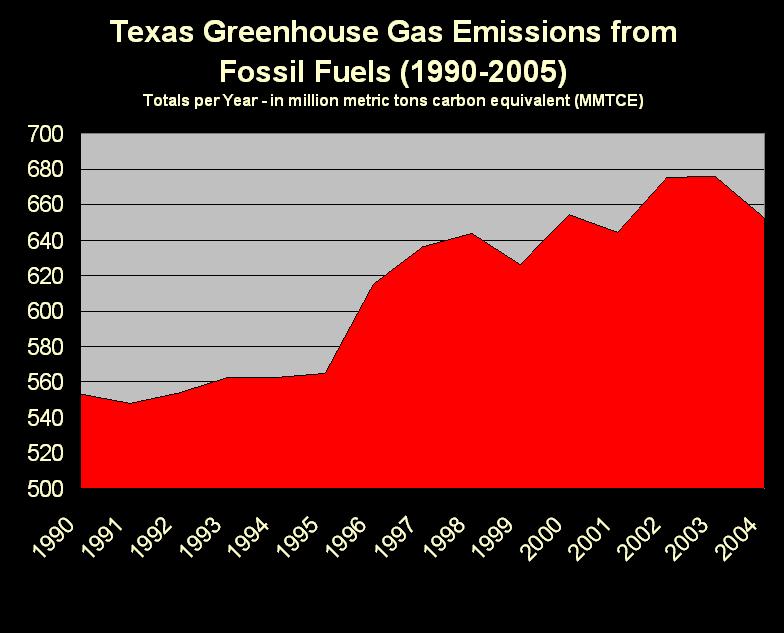
rick-perryEven though Texas leads the nation in greenhouse gas emissions, Governor Perry balks at making any major stand on producing reliable renewable energy.

“Are the Democrats willing to say we’re fixing to raise everyone’s cost of living in America, on science yet to be solidified?” said Rick Perry several weeks ago.  Perry has vowed to veto any legislation with the phrase, “Global Warming” present in bill, while Republican members in Congress continue to protect the oil industry.

It is important to understand the rhetoric being proposed by representatives such as Perry.  They are siding with big oil and manufacturing lobbyists; who argue renewable energy would increase electric bills.  However, the latest studies have shown renewable energy and energy efficiency can dramatically decrease energy consumption.  This decrease in electric bills will be especially helpful for low-income families, who could save up to 30% on future electric bills.

Rick Perry claims, “renewable energy would be devastating to Texas economy,” but research indicates otherwise.  A recent study done by the University of Massachusetts has declared renewable energy and energy efficiency programs would, “save low-income families 4% for their annual income, and the programs would pay for themselves in three years due to the savings by each family.”

Global warming is a real, scientifically confirmed problem, despite what governor Perry would like to believe — and our best answer to this global problem is renewable energy and energy efficiency programs.  Renewable energy and energy efficiency programs have been dramatically effective in Europe and other states through the United States. It is time to examine these successes and find an energy solution right for Texas.

Explained in a report by Green for All, “The most powerful way in which clean-energy investments will expand economic opportunities is through the channel of job creation, especially by increasing the availability of jobs for people with relatively low formal credentials.”

The renewable energy industry can provide thousands of jobs for Texans, which should be welcomed during a time of economic uncertainty.  However, we need to invest in the future of renewable energy before it is too late.  The renewable energy market, from research to production, is a prime opportunity for economic development in Texas.  We must not let Texas be out-competed by states such as California and Vermont, which is sure to happen if Texas does not chose to invest in renewable technology.

Governor Perry’s claim renewable energy will hurt the Texas economy is completely off base.  With renewable energy proving to be a reliable and affordable alternative for energy production, now and in the future, it is time we make active steps towards developing renewable energy in Texas.

Read Full Post »

HEAT_WAVE_072605Just four days into summer, and we’re already are setting records for energy consumption in Texas.  Yesterday Reuters reported that the Texas grid had set a new record for peak energy consumption in the month of June.  With temperatures already in the 100s in our largest urban ares, thermostats are cranking across the state, and energy bills are going up.

Texas consumers used 60, 452 MW of energy in the hour ending at 5 o’clock yesterday, blowing last year’s June record of 59,642 MW out of the water.

But today ERCOT is predicting that Texas will set a new record for electricity consumption.  Period.  By about five o’clock this afternoon, the time of day when the the sun is shining brightest and A/Cs run hardest, Texas will be consuming more energy at one time than we ever have in our history.

According to the Ft. Worth Star Telegram,

The Electric Reliability Council of Texas, which oversees the power grid that serves about 22 million Texans, forecasts that power demand will peak today at 62,450 megawatts and at 63,589 megawatts Thursday. The record is 62,339 megawatts, set Aug. 17, 2006, ERCOT spokeswoman Dottie Roark said.

If we’re reaching record energy use this early in June, I don’t even want to think about how bad its going to get in July and the dreaded August.  Global warming, indeed.  Don’t say we didn’t tell you so.

But no need to worry about outages, ERCOT says.  The grid has more than 72,700 megawatts of available generation capacity, plenty to serve on even the hottest days.

So wait a minute.  If we have 10,000 MW of extra power lying around, why is Texas rushing to build 12 new coal plants to provide tons of baseload power?  Judging by this recent run of records, looks like what we really need is *peak power.

Not sure of the difference?  An aside for the uninitiated.  There are two main classifications of power that run our modern lives: baseload, and peak.  Baseload is steady amount of power we need under normal circumstances (because as a society we’re always doing something that requires energy), and peak is the extra energy we need when we are all doing something at the same time.  Think about baseload and peak power as you would about keeping your body hydrated.  We always need to be drinking a certain amount of water to stay healthy and functioning (baseload aqua), but when we are working out or being active outside, need even more on top of that (peak gatorade).

Baseload power is largely provided by the old dirty standbys — coal and nuclear (unless you’re in Houston, in which case it is gas in abundance, baby — one of the reasons power in H-town is so expensive).  Baseload is the huge, slow, steady sort of power — the kind we have plenty of.

In Texas, peak power is generally produced by gas turbines.  When it starts to reach that key hot afternoon time, your energy provider flips the switch to turn on a quick revving gas turbine to turbo charge the grid with enough power to keep all those fans spinning and air conditioners blowing.

Another source of peak power, though less common currently, is of course solar power.  Solar produces peak power because just as the day gets hottest, and we need power to keep us cool the most — the sun is shining brightest!  Match made in heaven, really — solar and the need for peak energy.

So why  is Texas trying to build 8500 MW + 9149#of coal MW of additional baseload power from coal and nuclear plants when what we really need is peak power, and solar is such a natural fit to produce peak energy?

Good question.

Read Full Post »

Join Public Citizen and dozens of Austin environmental groups in welcoming the newly inaugurated Austin City Council. In this time of economic and environmental crisis, we have an opportunity to reshape our future, now. Our community is coming together to make Austin a model of a sustainable city, and we want our elected officials to be leaders in this effort.

Welcome Austin’s New City Council in an Eco-Change Exchange this Thursday, June 25th from 5:30 – 9:00 PM at City Hall.

If You Care About:

• Healthy Food

• Clean Water

• Clean Energy and Reducing Carbon Emissions

• Landfill Expansions and Reducing Waste

• Alternatives to More Highways and Sprawl

• Participatory Democracy

• Climate Change

• Environmental Justice

Come on Thursday evening to learn, engage, and build momentum for making Austin the national environmental leader we ought to be!

Program for the Evening:

5:30 – 6:30 Sustainable Future Fair and Reception with new City Council Members. Enjoy some delicious local, organic food, learn about great work being done in Austin, and help create a vision for the sustainable future you want to see in Austin.

6:30 – 7:00 Opening Presentations: Building a Sustainable Future in Austin

7:00 – 8:00 Eco-Priorities Sessions: Breakout on Key Issue Areas

8:00 – 9:00 Charting Our Future including reflections from City Council Members.

Participating Groups so far include: Austin Eco-Network, Ecology Action, Central Texas Zero Waste Alliance, Public Citizen, Coal Block, Alliance of Community Trainers, Save Our Springs Alliance, Save Barton Creek Association, Texas Campaign for the Environment, Environment Texas, PODER, Austin Sierra Club, Solar Austin, PowerSmack.org, and Clean Water Action.

For more information, contact colin@sosalliance.org or visit www.AustinEcoNetwork.org

If you plan to attend, please let us know by emailing texasfeedback@citizen.org

Read Full Post »

round upIt’s Monday, the day after the first day of summer, and it’s time for another Texas Progressive Alliance blog roundup.

President Obama, Bill White, and John Sharp are all in the same sinking DOMA boat. The Texas Cloverleaf comes off of hiatus to tell you why.

CouldBeTrue from South Texas Chisme cheers the impeachment of Judge Kent. 4 articles passed without a single nay. Lets hope the Senate is through with him by August.

BossKitty at TruthHugger finally signed up for Twitter to get updates on the Iran protests. What a day of drama and emotion it brought, Icons and Martyrs – All Day On Twitter Watching Iran. I was really meaning to highlight the regressive influences causing upheaval in personal lives, especially in Texas. Immigration Policies and Gay Rights – Contradictions

Unlike Nevada Republican Senator John Ensign, Neil at Texas Liberal makes a promise he’ll keep – He’ll never cheat on his wife! Also, Neil sings the Damned’s Wait For The Blackout at the Houston Ship Channel.

Off the Kuff takes a look, then a second look, at the bills Governor Perry vetoed.

WCNews at Eye On Williamson knows in order to solve big problems it takes leadership, Who is willing to lead, who has enough LBJ in them?.

Castle Hills Democrats heard candidates Tom Schieffer, John Sharp, Bill White, and Neil Durrance speak at the Dual County Fish Fry in north Texas. The blogger reviews their messages–and reports on feedback from the Dems in the audience. (more…)

Read Full Post »

Joint Center for Political and Economic Studies National Commission to Engage African Americans on Climate Change and Commission Co-Chair State Senator Rodney Ellis
present

A TOWN HALL MEETING ON

CLIMATE CHANGE and

GREEN JOBS

Moderated by: Gene Norman
Chief Meteorologist, KHOU Channel 11

WHO

  • Congressman Al Green
  • Congresswoman Sheila Jackson Lee
  • State Sen. Mario Gallegos
  • Rep. Garnet Coleman
  • Rep. Sylvester Turner
  • Rep. Ana Hernandez
  • Rep. Alma Allen
  • Rep. Carol Alvarado
  • City Councilmember Ronald Green
  • City Councilmember Jolanda Jones
  • NAACP – Houston Branch
  • American Association of Blacks in Energy- Houston Chapter
  • Houston Citizen’s Chamber of Commerce
  • Houston Area Urban League
  • Public Citizen
  • Environment Texas
  • Environmental Defense Fund
  • Sierra Club
  • Houston ACORN

WHERE
Communications Workers of America, Local 6222
1730 Jefferson Street, Houston, TX 77003

WHEN
Wednesday, June 17, 2009 6:00 p.m. – 8:00 p.m.
Registration will open at 5:30 p.m. and refreshments will be provided.
 

For more information, contact:
Dallas Jones or Brandon Dudley
Office of Texas State Senator Rodney Ellis
713-236-0306
Dallas.Jones@senate.state.tx.us

or

Royce Brooks
Joint Center for Political and Economic Studies
202-789-3528
rbrooks@jointcenter.org

Read Full Post »

For any of you global warming denier trolls lurking out there, here you finally have it: ANOTHER final study that undeniably shows a link between manmade greenhouse gas emissions and the warming that has occurred.

Yes, yes, and the sky is blue as well.  AND the Earth revolves around the sun.  I know most of us don’t need more scientific evidence that putting pollution in the atmosphere fundamentally disrupts the climate, but what is most interesting about this study is it calculates a precise amount of warming per ton of CO2 or equivalent:

Until now, it has been difficult to estimate how much climate will warm in response to a given carbon dioxide emissions scenario because of the complex interactions between human emissions, carbon sinks, atmospheric concentrations and temperature change. Matthews and colleagues show that despite these uncertainties, each emission of carbon dioxide results in the same global temperature increase, regardless of when or over what period of time the emission occurs.

These findings mean that we can now say: if you emit that tonne of carbon dioxide, it will lead to 0.0000000000015 degrees of global temperature change.

If we want to restrict global warming to no more than 2 degrees, we must restrict total carbon emissions — from now until forever — to little more than half a trillion tonnes of carbon, or about as much again as we have emitted since the beginning of the industrial revolution.

The full article will eb published in the June 11 edition of Nature.

And if that wasn’t enough, this from the HuffPo about coal ash:

Aerial photo of the Kingston fly ash spill

Aerial photo of the Kingston fly ash spill

Just how bad has the coal ash situation gotten in the United States? So bad that the Department of Homeland Security has told Sen. Barbara Boxer (D-Calif.) that her committee can’t publicly disclose the location of coal ash dumps across the country.

The pollution is so toxic, so dangerous, that an enemy of the United States — or a storm or some other disrupting event — could easily cause them to spill out and lay waste to any area nearby.

There are 44 sites deemed by the Environmental Protection Agency to be high hazard, but Boxer said she isn’t allowed to talk about them other than to senators in the states affected. “There is a huge muzzle on me and my staff,” she said.

“Homeland Security and the Army Corps [of Engineers] have decided in the interests of national security they can’t make these sites known,” she said.

There are several hundred coal ash piles across the nation, she said, all of them unregulated.

“If these coal ash piles were to fail they’d pose a threat to the people nearby,” she said. While keeping it from the public, DHS is alerting first responders as to the location of the piles.

“I believe it is essential to let people know,” said Boxer, arguing that if people knew what was in their backyard they’d press public officials to clean it up and protect the area. “I think secrecy might lead to inaction…I am pressing on this.”

Especially in the wake of Kingston fly ash disaster, which was the worst environmental disaster ever in the US– worse even than the Exxon Valdez- this seems pretty simple to me: climate change is caused by greenhouse gases, coal is the major contributor to CO2 emissions, coal ash is so dangerous we can’t even know where the dumps are because of national security… so, let’s stop burning coal? That’s a solution so easy, it’s not surprising anyone in Washington (or for that matter, Austin) hasn’t proposed it.  Oh wait, we have.  It’s called a coal moratorium, and we should be doing it.  For more info, visit www.coalblock.org

Read Full Post »

stop nukeOral Hearing Set for June 10th-11th in Granbury, TX

Citizen opposition to more nuclear reactors in Texas continues. On June 10th-11th an oral hearing will be held before the Nuclear Regulatory Commission’s Atomic Safety and Licensing Board on Citizens’ petition to intervene in Comanche Peak Nuclear Power Plant Units 3 and 4.

“I have many grave concerns about building more nuclear reactors in Texas,” said Texas Representative Lon Burnam, District 90, Ft. Worth, one of the petitioners seeking to intervene in the proposed expansion of Comanche Peak. “The risks are simply too high. As the most expensive and most water intensive energy source, and with the unsolved problem of how to handle the radioactive waste, Texans deserve better.”

SEED Coalition, Public Citizen and the Ft. Worth-based True Cost of Nukes are also petitioners. Attorney, Robert V. Eye, will go before the designated Atomic Safety and Licensing Board Panel and argue the admissibility of the 19 contentions citizens filed with the Nuclear Regulatory Commission on April 6th. These contentions point out the inadequacies and the incompleteness of Luminant’s combined operating license application (COLA) to construct and operate Comanche Peak Units 3 and 4.

“Luminant has failed to comply with new federal regulations regarding aircraft impacts,” stated Mr. Eye. “These new regulations are very specific and require the applicant to plan for catastrophic fires and/or explosions that would cause the loss of major critical functional components in the plant. After 9-11, an aircraft attack on a nuclear power plant is a real and credible threat. Moreover, fire hazards represent about half of the risk of a nuclear reactor meltdown. Luminant’s noncompliance with these regulations puts citizens around Comanche Peak in a dangerous position, which is completely unacceptable.”

“Nuclear power is dangerous, expensive and obsolete,” says Karen Hadden, Executive Director of Sustainable Energy and Economic Development (SEED) Coalition. “Wind energy is booming and the cost of solar is coming down, while the costs of proposed nuclear plants is skyrocketing. Although they’re required to do so, Luminant failed to fully consider safer, more affordable alternatives to nuclear in their license application.” (more…)

Read Full Post »

Yesterday the Texas Attorney General Greg Abbott filed an official injunction against BP Products’s Texas City Refinery for “violating state health, safety and environmental protection laws, including the Texas Clean Air Act, the Texas Water Code, and the Texas Health & Safety Code.”  The refinery was cited for 46 separate emissions of unlawful pollutants, a violation of the Clean Air Act.  Among these was the emisssion responsible for the March 2005 explosion that killed 15 workers and injured 170.

Between 2000 and 2007, the TCEQ filed 15 enforcement orders to get BP to clean up its act.   But it doesn’t look like the authority of the TCEQ was enough to stop the refinery from emitting hundreds of thousands of pounds of unauthorized pollutant emissions, including volatile organic compounds (VOCs), carbon monoxide, hydrogen sulfide, sulfur dioxide and nitrogen oxides.

According to the Attorney General’s press release,

Under Texas law, BP was required to report unlawful emissions to the Texas Commission on Environmental Quality and take corrective action to prevent future emissions. However, BP not only failed to report emissions to environmental regulators within the legally mandated deadlines–but also did not take the necessary measures to prevent additional unlawful emissions in a timely manner.

The injunction requires BP to implement all necessary measures to eliminate future unlawful emissions, which includes installing additional air quality monitors to ensure future compliance. The state is also seeking civil penalties, fines and attorneys’ fees.

It’s really good to see the government stepping in to enforce clean air laws.  Kudos to Abbott for stepping in to keep Texans safe and our air clean.

Read Full Post »

meltingAction Alert!

Climate change legislation currently being debated in Congress will prove a boon to the coal and oil industries, will fail to protect consumers and may very well not even curb global warming.

Lawmakers have conducted closed door negotiations with polluters.

The result: The bill was radically altered to accommodate the financial interests of big energy corporations while giving nothing new for the environment or for working families. Lawmakers have decided to give away most of the pollution allowances for free for the next two decades – an approach that would hurt working families and households the most. It will deprive the government of the money needed to invest in clean technologies and thwart the very goal of curbing global warming.

This is hardly the transformation this country needs to jump-start its economy and curb climate change. This is more of the same old wait-and-see, special-interest-bailout approach that has gripped Washington, D.C., for ages.

Tell your representatives that climate change legislation should not be weakened by the corrupting influence of big money, and that the people’s business should be done in front of the people.

Read Full Post »

Las Brisas Storm SurgeIf we look at the distribution of the U.S population, we notice there are huge concentrations along the coasts. I was once told that more than half the population lives within 5 miles of the coasts. With so many people living on the coasts, our population is extremely susceptible to destruction from hurricanes. Recent examples of hurricane damage from Katrina, Rita, and Ike loom large in our collective memories.

Recently I came across a study by Jen Irish, an Assistant Professor of Coastal Engineering at Texas A&M, that looked at how Corpus Christi Bay would fare in the event of a hurricane under the conditions describe in the Intergovernmental Panel on Climate Change (IPCC)’s future climate scenarios. The study found that if the Scenarios are realized hurricane flood levels could increase 3 to 27% over the next 20 years. This will cause damage to homes from flooding to increase by 60% to 100% in the event of a hurricane.

Corpus Christi is already on very low ground that has been slowly sinking for many years. Corpus’ barrier islands, Mustang and Padre, are also eroding. This study particularly interests us at Public Citizen Texas because Corpus Christi is the proposed site of The Las Brisas Pet Coke Plant, which is a project we have been fighting at Public Citizen since it was proposed.

Pet-coke is an incredibly dirty fuel source that emits large quantities of pollutants into the air. For this very reason, pet-coke plants are generally not built in highly populated areas like Corpus Christi. There is also no reason why a pet-coke plant should be built in Texas when better energy sources are available.

To top off the list of objections, Las Brisas will be located directly in the path of the storm surges predicted in Dr. Irish’s model. The proposed location is on a dredge island in Nueces Bay which is barely above sea level, though the developers have proposed raising it another 13 ft (a measure that will only have a minimal effect in the event of a major hurricane).

The Hurricane Research Team at Colorado has already predicted a that this hurricane season (which started Monday) there is 28 to 30% chance that we will see another major hurricane make landfall. In the past, Corpus Christi has been a vulnerable to hurricanes, and considering the IPCC’s finding that warming will increase hurricanes, the facility could be at great risk.

I fear for the residents of Corpus Christi, but I also can’t help but note the irony of a pet-coke facility being one of the first victims of global warming.

–The Disappointed Environmentalist

Read Full Post »

For real, we gotta act now before it escalates.

[youtube=http://www.youtube.com/watch?v=08z-Hw7s54E]

Read Full Post »

« Newer Posts - Older Posts »