Feeds:
Posts
Comments

Archive for February, 2014

2014-02-28 Drilling Rig explores the shale - Mladen Antonov AFP Getty Images

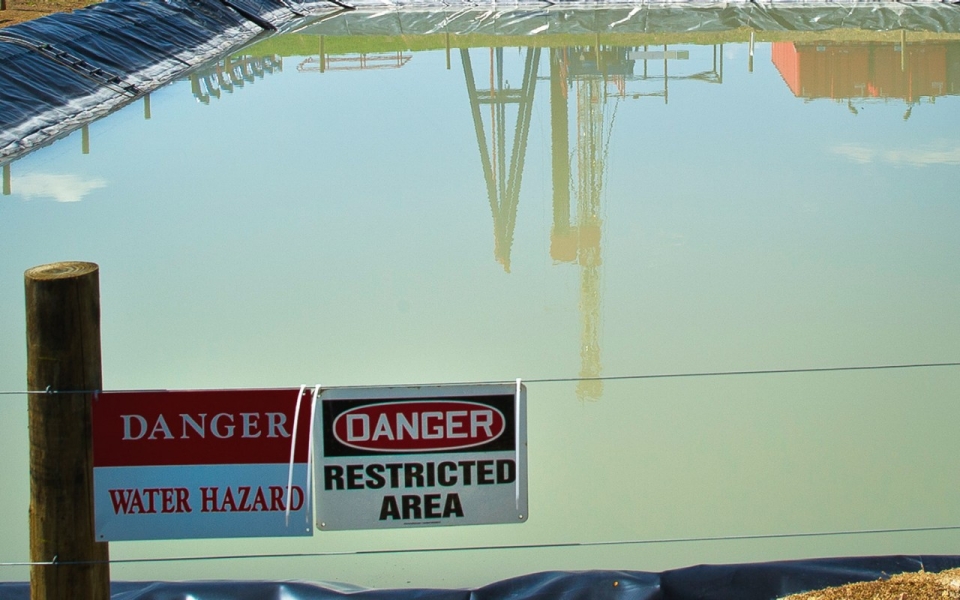
Drilling Rig Reflected in Wastewater Holding Pond
Photo by Mladen Antonov, AFP/Getty Images

Studies released over the past few months have linked pollution from natural gas extraction with birth defects.

In a study released in January by Environmental Health Perspectives, researchers examined data from 124,842 births between 1996 and 2009 in rural Colorado. They examined correlations between how close and dense natural gas development was to the pregnant mother and incidences of various birth defects, including congenital heart defects, neural tube defects, oral cleft, preterm birth and low term birth weight.

The study found that the most exposed mothers, who lived in areas containing over 125 natural gas wells per mile, were 30% more likely to have a child born with a congenital heart defect than a mother who does not live near any wells. One might ask – how is this possible?

Many pollutants from the natural gas extraction processes, including toluene, xylenes and benzene, are suspected to cause physiological abnormalities and mutations in human DNA. These pollutants are known to be able to cross the placenta blood barrier, raising the possibility of fetal exposure to these and other air pollutants.

Of course, air pollutants are not the only danger posed by natural gas extraction. The fluid used in this process is already known to contain over a hundred known or suspected endocrine disruptors – chemicals that can interfere with the body’s responses to estrogen and testosterone – which can lead to many health problems including infertility and cancer. What researches found in a late 2013 study was that groundwater samples taken from areas around natural gas extraction contained very high levels of these endocrine disruptors, while groundwater taken from an area without natural gas had much lower levels. In other words, natural gas extraction is linked with the contamination of groundwater with chemicals that cause infertility.

While researchers cannot say that their studies definitively prove that the natural gas extraction process causes birth defects or groundwater contamination, it is clear that more research needs to be done and the process needs to be further regulated before America continues on an ‘All of the Above’ energy policy. These studies suggest that the future health of generations to come depends on it.

Read Full Post »

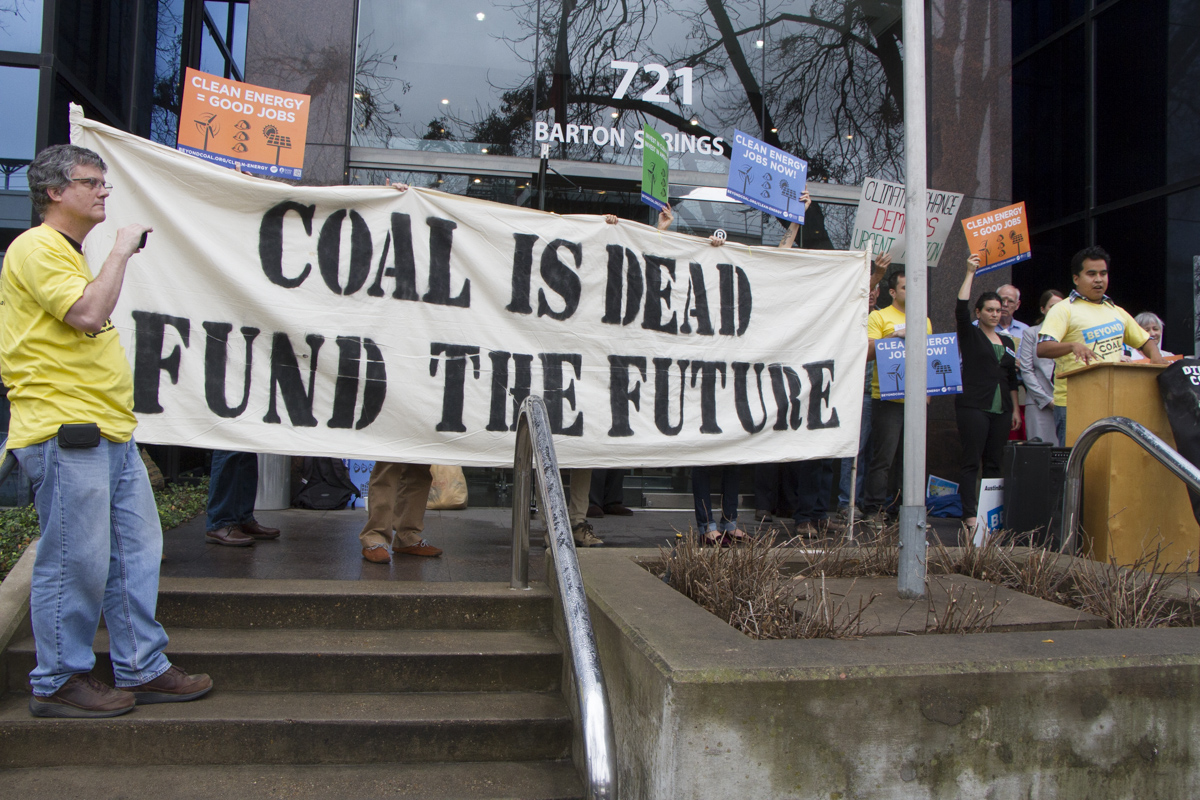
Austin Energy Ratepayers Rally for a Transition to Affordable Renewable Energy Photo by Al Braden

Austin Energy Ratepayers Rally for an Accelerated Transition to Affordable Renewable Energy
Photo by Al Braden

Read this post, then click here if you want to submit comments online to Austin Energy.

With 2 stakeholder meetings behind us and the final one ahead this afternoon, a lot of people are wondering what the purpose of of updating the Austin Energy Resource, Generation and Climate Protection Plan is if we aren’t going to update the goals in it.

To be fair, Austin Energy has done a decent job of providing information about how it is progressing with achieving current goals, and giving people an opportunity to share their views and ask questions.

What is so disconcerting though, is that Austin Energy has attempted to craft the whole update to exclude what is arguably the most important elements of the Resource, Generation and Climate Protection Plan – setting new goals for carbon reduction and renewable energy.  We’re told we can submit proposals that will be analyzed and considered for some future update, but that there’s not enough time to update those goals now.  Not enough time?  We’re only 2 months in to 2014 and Austin Energy has been talking about this update since mid 2013.  Let’s hope Austin Energy is more nimble than its giving itself credit for.

2014-02-26-Front-Page-Austin American-Statesman

Read the excellent coverage we got in the Austin American-Statesman yesterday.

When it comes to solar energy, this idea that no new goals will be set is especially frustrating because the issue has been postponed for 2 years now.  Increasing Austin Energy’s solar goal was on the table during the 2012 rate case, but Austin Energy wanted the issue studied.  So City Council established the Austin Local Solar Advisory Committee (LSAC) to study options for a way forward for solar in Austin.  The LSAC recommended several changes, including doubling the 2020 solar goal to 400 megawatts.   It’s important to note that the LSAC analysis showed that increasing the goal would actually result in net savings to Austin Energy ratepayers, as well as a net of $300 million in economic benefits to the Austin area.  When we tried to get that recommendation adopted in 2013, Austin Energy said it would be best taken up in the 2014 Generation Plan update, so City Council split the difference and passed a resolution recommending that the goal be adopted.  Now Austin Energy says that it doesn’t intend to update any of it’s goals as part of this process.  I’m starting to feel like the kid in the car on a long road trip and mom and dad just keep saying “we’re almost there.”  After you hear that a few times, you just stop believing.

When it comes to the overall renewable energy goal, Austin Energy’s resistance to increasing it as part of this process makes even less sense for 2 reasons.  First, renewable energy has become cheap energy.  Wind is our cheapest energy option and solar is now competitive with natural gas, but without the risks of rising fuel costs and pollution.  Second, Austin Energy has contracts that will allow it to meet it’s current 35% renewable energy goal 4 years early in 2016.  They should build on that success and expand the goal to 50% for 2020 and 60% for 2024.

For anyone who isn’t stuck at work or class from 1pm to 3pm today, I suggest going to the last of Austin Energy’s 3 scheduled stakeholder meetings.  Just don’t let them box you into a corner where the important issues are off the table.  Tell the leadership and staff there that you want all of the goals updated over the next few months.

If you can’t go, then click here to submit comments online to Austin Energy.

Read Full Post »

Updating the the Austin Energy Resource, Generation and Climate Protection Plan to 2020 to become the Austin Energy Resource, Generation and Climate Protection Plan to 2024 probably doesn’t sound super exciting, but there’s almost certainly some aspect of the choices that will soon be made on your behalf that you care about.
IMG_48691. Climate Change: I’m not going to try to convince anyone reading this that our planet’s climate is changing and that humans are largely responsible for that change.  Nor am I going to try to convince you that those changes are going to be largely detrimental to human prosperity.  But if you already recognize those two basic truths, then you will definitely want to listen up.  Austin Energy is proposing to not only run Austin’s portion of the Fayette coal plant until 2025, but also to dramatically increase its use of natural gas by adding a new 800 megawatt gas plant to its energy portfolio.  That’s bigger than Austin’s portion of Fayette.  And although natural gas emits less carbon dioxide per kilowatt hour of energy production than burning coal, once the substantial impact of the roughly 3% of gas that leaks into the atmosphere during extraction, processing and transportation is accounted for, natural gas is almost as harmful to the climate as coal.  That’s because the primary component of natural gas, methane, is 87 times more powerful of a greenhouse gas than carbon dioxide over 20 years.  Although many people focus on the 100 year time frame when talking about climate change, we can’t afford to ignore our more immediate future.  Central Texas has already experienced its share of climate impacts over the past few years in the form of drought, wildfires and floods.  We must stop those impacts from worsening at a greater rate than they already will be.  Natural gas isn’t going to save us.  Even without the massive problem of leaking methane, burning gas instead of coal only decreases our climate impact by about half, so it’s not a long term solution anyway – the best it could have been was a stopgap.  Instead of investing in infrastructure that won’t get us where we need to be, we can make better decisions now.

Attend one of Austin Energy’s stakeholder meetings this week and ask the staff to consider the full climate impacts of energy sources.

2. Jobs: Developing renewable energy sources creates 3 times as many jobs as developing fossil fuel energy sources per dollar invested.  Whereas a large chunk of the cost connected to a coal plan or a gas plant is for the coal and gas, the wind and sun are free.  So, instead of paying for the privilege of burning a limited resource, we can pay people to harness the energy from free and unlimited resources.

Across the U.S., solar energy jobs grew 20% from 2012 to 2013, compared to average job growth across all industries of 1.9%.  A large percentage of that growth was in Texas, but Texas still ranks 44th in solar jobs per capita.  Increasing Austin Energy’s solar goal will bring more jobs to Texas, but it’s increasing the local solar goal that will have the most impact on local job creation.  The Austin Local Solar Advisory Commission unanimously recommended that Austin Energy’s solar goal for 2020 be increased from 200 megawatts (MW) to 400 MW.  It also recommended that at least half of that solar development be local and at least half of that local solar be customer controlled (that’s what you see on residential and business rooftops and yards).  According to the LSAC’s calculations done using the National Renewable Energy Laboratory (NREL) Jobs and Economic Development Impact (JEDI) model, the $60 million it would take to develop that amount of local solar would bring the Austin area a net of $300 million in local economic benefits – wages, taxes, etc.  If Austin Energy adopts policies to give preference to local companies who hire local workers, our community can benefit even more.  On the other hand, we are currently sending $80 million to Montana each year for the coal we burn in the Fayette coal plant.

Tell Austin Energy that you support growing local jobs by increasing our solar goals, including the local and customer owned solar goals.

3. Water: If you live in central Texas, I don’t need to tell you that water is a huge issue – in fact it’s just a big issue for Texas that the Legislature, with voter approval appropriated $2 billion dollars to fund water projects, with 20% of those funds to be used on water conservation efforts.  We can’t make it rain more, so we are going to have to make some choices about what we want to use water for.  The Fayette coal plant, which Austin Energy owns one third of, needs about 5 billion gallons of water per year to operate.  And lest you start thinking natural gas plants are the answer, know that over 39 billion gallons of water was used in fracking jobs in Texas between January 2011 and May 2013.  Producers in the Eagle Ford Shale play are especially wasteful, using an average of 4.4 million gallons of water per well.  That’s water that can’t be used for domestic, commercial, industrial, agricultural, or ecosystem uses.

Tell Austin Energy to focus investment on drought proof energy sources like wind and solar.

4. Health: Air pollution from burning coal and extracting natural gas are taking a real toll on human health in Texas.  The Fayette coal plant is responsible for over $55.5 million in health impacts from air pollution.  Those impacts include asthma attacks, chronic bronchitis, heart attacks and the associated hospital visits and deaths.  Even so, Austin Energy has proposed running its portion of Fayette until 2025.

Lack of regulation over the natural gas industry, which has operations strewn across vast areas has resulted in a tragic disregard for human well being.  If you haven’t already, read this excellent piece of investigative journalism about how your fellow Texans are being assaulted with toxic chemicals in the Eagle Ford Shale area.  Instead of building a large new gas plant to drive up demand for dangerous fracking, Austin Energy should focus on growing its renewable energy portofolio with more wind and solar and perhaps some geothermal energy.

Air pollution is much more than an environmental issue – it’s a public health issue.  That’s why you find medical professionals and health advocates supporting a transition to clean energy.

Sign up for one of Austin Energy’s stakeholder meetings and ask them to give up their plans for a giant new gas plant and to examine more options for retiring the Fayette coal plant in an affordable way.

5. Affordable Energy: Wind and solar energy are competitive with coal and natural gas already.  Meanwhile, electricity from coal plants is going to get more expensive because of various regulations to limit pollution.  Natural gas prices are low now, but have fluctuated greatly over time, making a big bet on natural gas risky.  When natural gas prices go up, Austin Energy raises our fuel charge to recover those costs.  Since affordable wind and solar are available now and can assure us a predictable price for 10-20 years, why would we not make those energy sources our priority?  Austin Energy has done a great job getting good wind contracts to keep customer rates low and is set to achieve its 35% renewable energy goal 4 years early in 2016.

Tell Austin Energy to keep up its momentum by expanding the renewable energy goal to 50% for 2020 and 60% by 2024.

Take Action:

Austin Energy is holding 3 stakeholder meetings to gather public input on the Austin Energy Resource, Generation and Climate Protection Plan update to 2024.

  • Tuesday, February 25: 10 am – 12 pm (noon)
  • Tuesday, February 25: 6 pm – 8 pm
  • Thursday, February 27: 1 pm – 3 pm

This is your chance to help determine how the money you pay for your electric bills is invested by our publicly owned utility.

Please sign up to attend one of the meetings.

Read Full Post »
While we’ve all grown accustomed to seeing the words “natural”, “healthy” and “environmentally-friendly” thrown around in advertisements for a variety of consumer goods, it’s important to remember that household items are not the only things capable of being greenwashed – case in point, natural gas.

The word “natural” has been used to connote things such as ‘green’, ‘healthy’, ‘non-toxic’. Many people’s cursory understanding of natural gas is that if it’s “natural”, it must be good, right? Unfortunately the truth about natural gas is more complicated. While it is true that natural gas emits far less CO2 than coal upon combustion, there are a host of other ‘fine-print’ problems that come along with the switch, most notably, fugitive emissions.

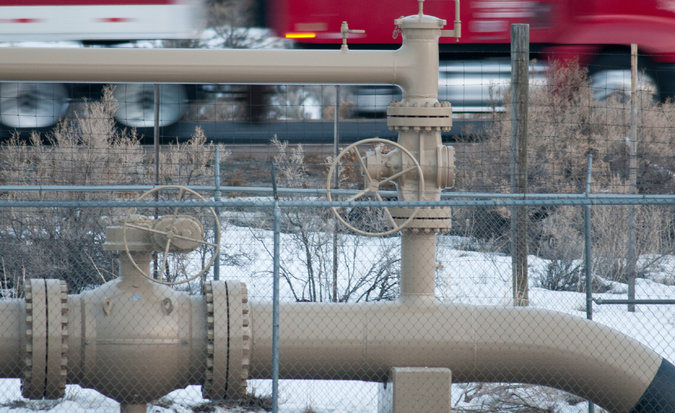
Leaky pipes and valves allow methane, a powerful greenhouse gas, to escape into the atmosphere.  Photo by Kevin Moloney, NYT

Methane, a powerful greenhouse gas, escapes from wells and leaky pipes and valves into the atmosphere.
Photo by Kevin Moloney, NYT.

Fugitive emissions are the emissions not intended to take place and that usually result from pressurized equipment leaks. While these leaks are relatively tiny, when expanded to a large enough scale the amount of methane being leaked into the atmosphere can have a large impact on climate. While the EPA originally reported that average leakage rate in natural gas production was somewhere around 1.5%, a collaborative study by scientist from several universities and government agencies released this past October revealed that the figure should be much closer to 3%. Even worse, there have been reports of methane leakage upwards of 12% at some production sites.

Many climate change mitigation plans focus on reducing CO2 emissions, but methane and its effects should not be overlooked. The IPCC has reported that over a 100-year period, methane is 35 times more potent of a heat-trapping gas than CO2. When looking at the effects of methane over 20 years, this figure jumps to 87. Suddenly, that comparatively small amount of methane being leaked out of wells, pipes and valves is incredibly important. In other words, 1 ton of methane being released into the atmosphere has the same heat-trapping effect over a 20 year period as releasing 87 tons of CO2.

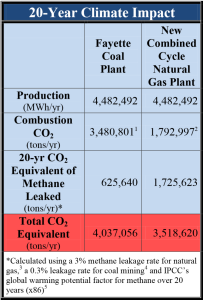
20 Year Climate Impact of Natural Gas vs CoalWhile the CO2 emissions from burning natural gas are about half what is produced by burning coal plant to produce the same amount of power, after accounting for fugitive emissions and converting leaked methane into CO2 equivalent (using the IPCC 87x factor referenced earlier), natural gas climate change impact is almost as bad as coal.

(more…)

Read Full Post »

Energy Secretary Ernest Moniz announced on Wednesday, February 19th, that his agency approved a multibillion dollar taxpayer-backed loan guarantee for the first nuclear reactors to be built in the U.S. in more than 30 years.  We view this as a costly act of desperation for a failing project.

An $8.3 billion loan guarantee was conditionally approved four years ago for two new reactors at Southern Company’s Vogtle plant in Waynesboro, Ga.  Since then, negotiations around the terms of the loan guarantee have been extended five times. Secretary Moniz’s announcement – that the government has finalized terms with two of three companies – accounts for just $6.5 billion of the loan. With approval for $1.8 billion of the loan still pending, the agency is clearly attempting to give momentum to the stalled project.

The construction of the two new reactors at the Vogtle plant are 21 months behind schedule and $1.6 billion over budget.  The original two units at Vogtle resulted in 1000% cost overruns from the original $1 billion dollar estimate as well as decades-long set-backs and construction delays.  This not only calls into question the decision to underwrite this risky project with taxpayer dollars, but proves that the same issues that plagued reactor construction more than three decades ago have not been resolved.

Nuclear energy continues to be beset with safety issues and produces toxic wastes that we still don’t have a solution for – hardly a technology the government should be promoting and propping up with taxpayer funds.

We berate wall street for their high-risk investments, yet the Department of Energy seems to have little to no risk aversion for these types of loan guarantees.  This is a bad deal for the American people who have been put on the hook for a project that is both embroiled in delays and cost overruns and to a company that has publicly stated that it does not need federal loans to complete the project.

This is a classic case of throwing good money after bad.

Read Full Post »

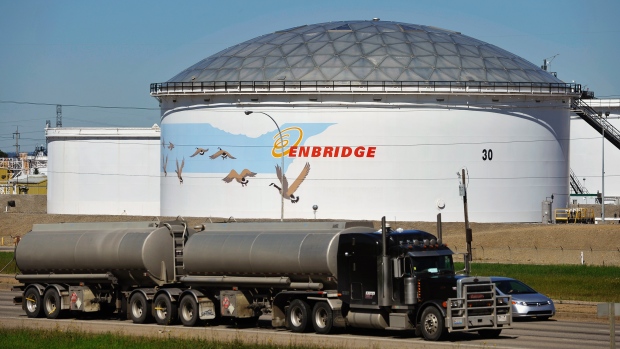
Enbridge storage tank - photo from Dan Riedlhuber, Reuters

Enbridge storage tank – photo by Dan Riedlhuber, Reuters

A second Canadian pipeline company has its permit tied up in the State Department’s approval process. Enbridge, Canada’s largest pipeline company, is trying to expand its Alberta Clipper line, but is now facing delays.

Enbridge started up its first phase of the line, which has a capacity of 450,000 barrels per day (bpd), in 2009, after obtaining a U.S. federal permit from the State Department. Enbridge is now looking to expand its capacity, but the State Department says it needs to do further environmental analysis before granting Enbridge the go ahead to expand its Alberta to Wisconsin pipeline.

Enbridge is not looking to build another pipeline; rather, they are trying to increase capacity by 120,000 bpd for a total of 570,000 bpd. Beyond that, they would like to expand from 570,000 bpd to 800,000 bpd in the near future, which is almost as much tar sands oil as the proposed Keystone XL would carry.

“Obviously, things take longer in this environment that we’re in. I don’t think we want to draw any conclusions about the political environment. It’s not something that we can control. What we control is the fullness of our application,” CEO Al Monaco told reporters and analysts on a conference call to discuss the company’s fourth-quarter results, which included a net loss. “In this case, this is a fairly routine matter. The pipeline’s already in the ground, so we’re hoping that we move this along as quickly as possible.”

Another Canadian pipeline company, TransCanada, has been seeking U.S. approval of their Keystone XL pipeline since 2008. The Keystone XL would cut across the heartland of America bring up to 830,000 bpd of Canadian tar sands into the U.S. The Keystone XL has become highly politicized with many environmental groups lobbying and taking direct action against the pipeline.

Although Enbridge has managed to escape the same level of scrutiny as their competitor TransCanada, they have still faced opposition from activists in Canada and Michigan.

Enbridge is also the company behind the largest on-shore oil spill in U.S. history. Enbridge spilled more than one million gallons of diluted bitumen (dilbit, or tar sands oil) into Talmadge Creek in Marshall, MI, which then flowed 30 miles downstream into the Kalamazoo River in the late summer of 2010. Enbridge has spent nearly a billion dollars trying to clean up the spill over the last three years, but latest reports confirm that there is still oil in the Kalamazoo River.

Enbridge also owns several other tar sands pipelines aroung the country, including the Seaway pipeline system in Texas. Enbridge is currently expanding the Seaway pipeline system by the process of twinning. The new twin Seaway line will be a 30-inch diameter pipeline, and havea capacity of 450,000 bpd. Company officials are expecting a service date in 2014.

Read Full Post »

On Wednesday, February 19, 2014, Nebraska’s recently passed law allowing TransCanada Keystone XL Pipeline Co. to proceed with construction across Nebraska was declared unconstitutional and void.

The ruling came from Lancaster County District Court Judge Stephanie Stacy. The Court ruled for three Nebraska landowners who challenged the law. The ruling includes a permanent injunction preventing Gov. Dave Heineman, and the Nebraska Department of Environmental Quality from taking any further action to authorize or advance the pipeline under the unconstitutional law.

Judge Stacy concluded the law unconstitutionally conferred upon the Governor of Nebraska the authority to approve a crude oil pipeline route, and to authorize the crude oil pipeline company to exercise the power of eminent domain against Nebraska landowners.

Siding with three landowner plaintiffs, the District Court concluded that under Nebraska’s State Constitution, exclusive regulatory control over pipeline companies like TransCanada Keystone XL must be exercised by the Nebraska Public Service Commission, and cannot be given to the Governor.

Judge Stacy also concluded that TransCanada was not empowered to take land from Nebraska property owners.

The court’s action effectively rescinds Gov. Heineman’s notification to Pres. Barack Obama that Nebraska legal procedures had been satisfied.

Dave Domina, the lawyer who handled the case for the landowners summarized the Ruling: “Under the Court’s ruling, TransCanada has no approved route in Nebraska. TransCanada is not authorized to condemn the property against Nebraska landowners. The pipeline project is at standstill in this State.”

A copy of the Court’s Opinion is found HERE: http://www.dominalaw.com/documents/LB-1161-Court-Order-Feb-19-2014.pdf

Read Full Post »

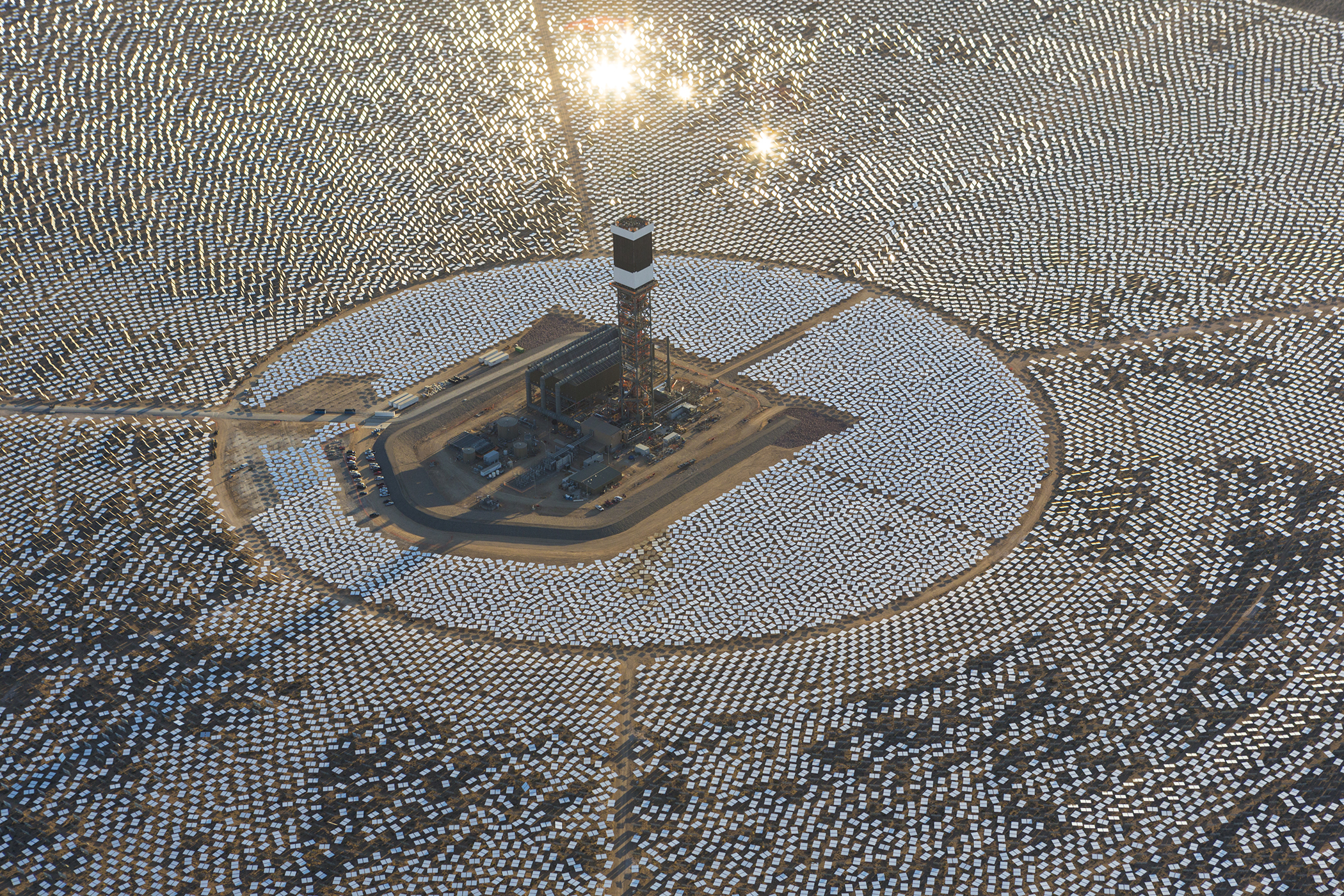
Ivanpah Solar Electric Generating System

1 of 3 Power Towers at the 392 MW Ivanpah Solar Electric Generating System in California

Late last week, NRG Energy, Inc. announced that Ivanpah Solar Electric Generating System is in operation after six years of construction.  Located in the Mojave Desert, 300,000 software-controlled mirrors and three 450-foot towers at full capacity can produce up to 392 megawatts of solar power.  That will provide solar electricity for 140,000 California homes and will avoid 400,000 metric tons of carbon dioxide per year. The Ivanpah project received a guaranteed loan of $1.6billion from the US department of Energy’s Loan Programs Office, which became a joint investment made up of NRG Solar, Google and BrightSource Energy.

Cleantech innovations such as Ivanpah are critical to establishing America’s leadership in large-scale, clean-energy technology that will keep our economy globally competitive over the next several decades,” said Tom Doyle, president, NRG Solar. Ivanpah accounts for nearly 30 percent of all thermal energy currently operational in the US and is the largest solar project in the world. This solar power tower technology is the first Ivanpah project to be used to produce electricity for company’s signed contracts with PG&E and Southern California Edison.

Ivanpah Solar Electric Generating System - Credit BrightSource Energy Flickr

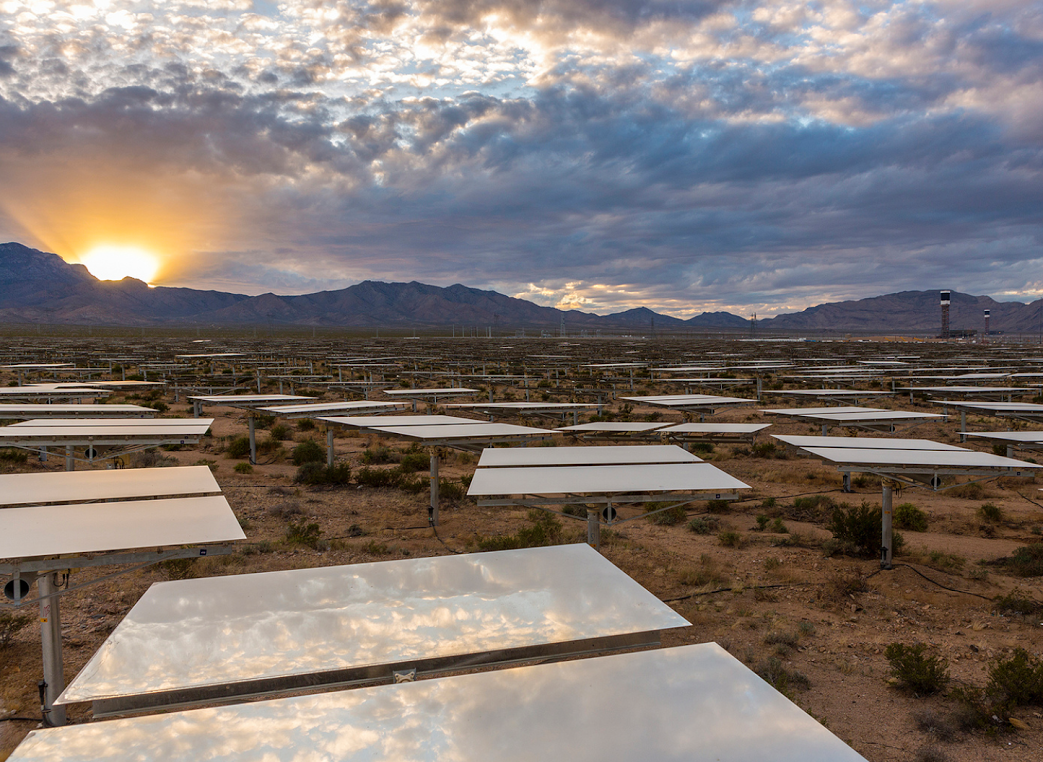
Heliostats at Ivanpah Solar Electric Generating System
Photo from BrightSource Energy Flickr

Solar thermal power plants use solar mirrors to heat water in boilers thus produce steam to turn the electricity generating turbines. This creates usable electricity by using large-scale magnification. The technology used in the Ivanpah plant comes from Bright Source and includes 173,500 heliostats that follow the sun’s trajectory, solar field integration software and a solar receiver steam generator.

Although solar thermal plants do require the use of water, as opposed to solar photovoltaic panels, this project utilizes dry cooling technology, which vastly reduces the amount of water needed. As Energy Secretary, Ernest Moniz says, “This entire facility will use roughly the same amount of water as two holes at the nearby golf course.”

Ivanpah produces solar power on a large scale rather than on rooftops.  While some solar thermal power plants can store the sun’s thermal energy in the form of molten salt to produce energy when the sun isn’t out this project does not store energy after dark. BrightSource does plan to incorporate thermal storage in future next-generation designs.

Read Full Post »

Less than two weeks ago, we reported on a fire at the New Mexico Waste Isolation Pilot Plant (WIPP) in our blog about a Texas interim charge to “study the rules, laws, and regulations pertaining to the disposal of high-level radioactive waste in Texas and determine the potential economic impact of permitting a facility in Texas. Make specific recommendations on the state and federal actions necessary to permit a high-level radioactive waste disposal or interim storage facility in Texas“. 

WIPP is an underground low-level radioactive waste disposal site that began operations in 1999 and is the nation’s first repository for the permanent disposal of defense-generated transuranic radioactive waste left from research and production of nuclear weapons.  On February 5th, WIPP entered emergency status, after a vehicle used to transport salt in the north area of the underground (not an area where radioactive waste was stored) caught fire. Several employees were taken to the hospital with smoke inhalation and WIPP’s underground operations have been suspended since the incident.

This weekend, airborne radiation was detected around 11:30 p.m. on Friday near Panel 7, Room 7, in the south salt mine., according to officials with the Department of Energy. No injuries were reported and no personnel were underground when the facility’s continuous air monitors, or CAMs, detected radiation downstream of where nuclear waste is disposed.  The Department of Energy has told the public that:

  • this incident is the first time in WIPP’s 15-year history that the facility has had a CAM alarm detect this level of radiation underground,
  • they have not detected any above normal radiation levels above ground, and
  • that the radiation leak is not related to last week’s fire.

I hardly feel reassured that there have been two, not insignificant (related or not) incidents at a 15-year-old facility that was designed to contain the waste for 10,000 years.  And I am truly concerned that Texas thinks it can manage a high-level radioactive waste site in West Texas that will need to be designed to contain waste for 100’s of thousands of years.

Read Full Post »

KXL Climate ChangeWith the release of the State Department’s Final Environmental Impact Statement (FEIS) on the Keystone XL tar sands pipeline, there has been a lot of buzz about the project. The report concluded that Keystone XL could create carbon pollution equivalent to nearly six million cars, or eight coal-fired power plants. Last Week the State Department began accepting comments from the public, and with only a few weeks (until Mar 07, 2014 11:59 PM ET) left the need for citizens to weigh in has never been more urgent. Now is the time to tell Secretary of State John Kerry that this dirty pipeline is not in our national interest.

This is our final opportunity to officially weigh in on the decision. Submit a comment right now to tell the Obama Administration that the “game over for the climate” Keystone XL pipeline is NOT in our national interest.

Here are some facts to consider including in your comment to Secretary Kerry and the State Department:

  • The evidence is clear that Keystone XL could increase production levels of tar sands oil in Alberta, and therefore significantly add to carbon emissions. The massive investment would lock us into dependence on this dirty fuel for decades, exacerbating carbon pollution just when we need to go in the other direction.
  • Beyond the effects on our climate, this dangerous pipeline would also put the water supply of millions of Americans at risk, including the precious Ogallala Aquifer, Platte and Niobrara rivers, and hundreds of individual families’ wells. After a year in which many communities were harmed by spills from existing pipelines, we cannot allow any more of the dirtiest, most toxic oil on earth to spill into our lands and waterways.
  • The jobs numbers touted by industry are exaggerated. Oil industry lobbyist and pro-pipeline politicians claim that the Keystone XL would create 20,000 to half a million jobs, but these jobs numbers are grossly exaggerated. Construction of the Keystone XL pipeline will only create about 3,900 jobs over a two year period, and after that the project would only provide jobs for 35 permanent employees and 15 temporary contractors.
  • The Keystone XL is an export pipeline. According to presentations to investors, Gulf Coast refiners plan to refine the cheap Canadian crude supplied by the pipeline into diesel and other products for export to Europe and Latin America. Proceeds from these exports are earned tax-free. Much of the fuel refined from the pipeline’s heavy crude oil will never reach U.S. drivers’ tanks. Therefore, not reducing gas prices for Americans.

This is our last chance to voice concerns to the State Department before the public comment period ends on March 7. We need to get our message across to Secretary Kerry, because what he says could be one of the biggest determining factors in President Obama’s decision.

Submit your comment: Keystone XL is NOT in our national interest.

In addition to submitting your comment electronically, comments may also be mailed directly to:

U.S. Department of State
Bureau of Energy Resources, Room 4843
Attn: Keystone XL Public Comments
2201 C Street, NW
Washington, DC 20520

#NoKXL

Read Full Post »

“CREZ will turn out to be the most visionary thing this state has ever done electricity-wise,” predicts Jeff Clark, executive director at the Wind Coalition, a regional partner of the American Wind Energy Association (AWEA).

201-02-06  - Wikipedia

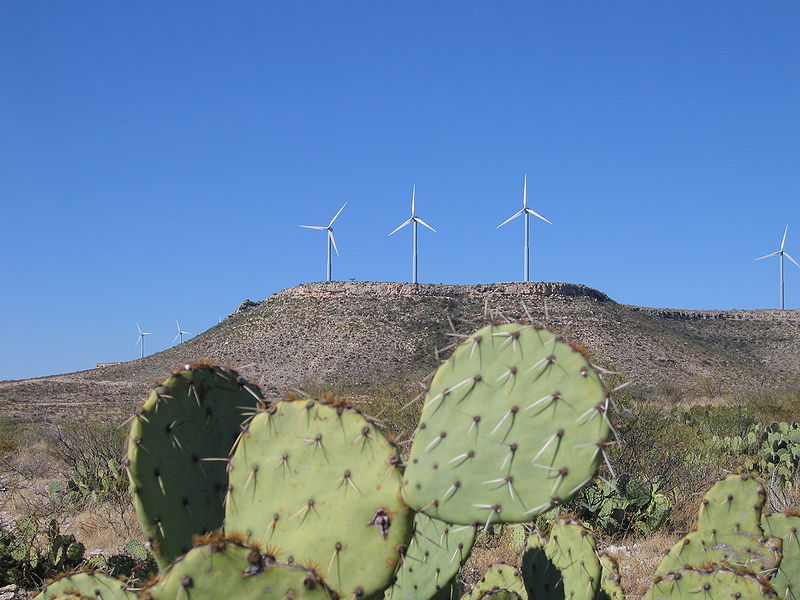
Wind turbines in west Texas

Only a few days ago, the final segment of Texas’s $6.8 billion, 3,600 mile Competitive Renewable Energy Zone (CREZ) transmission build-out was completed. The project, which has been in the works for over eight years, could signal the beginning of another era of wind power development in Texas.

In 2008, the Public Utility Commission of Texas (PUCT) identified five competitive renewable energy zones (CREZs) – geographic areas ideal for wind farms – in the Lonestar State . However, in order to get the energy generated in these CREZs to the areas that need energy most (Dallas-Fort Worth, Austin, Houston and San Antonio), transmission lines needed to be built. Instead of waiting for wind developers to come to Texas, and then begin the multi-year, multi-billion dollar project, the PUCT decided to put in the lines beforehand to entice developers to take advantage of the already existing infrastructure.

The new transmission lines, which will be able to transmit up to 18,500 megawatts of power across the state, will increase the wind capacity in Texas by over 50%, which will be three times as much as any other state in the nation. The large amount of potential wind energy in Texas, along with the new infrastructure, has already resulted in more wind developers coming to Texas, including a project in the panhandle by Pattern Energy Group that broke ground back in October.

All in all, the completion of the Texas CREZ Project is a huge step forward to moving our state towards absolutely clean, renewable energy. Instead of waiting for developers, PUCT has been proactive in creating a better future for our state.
(more…)

Read Full Post »

USAS solidarityUnited Students Against Sweatshops (USAS) is holding a national conference at the University of Texas in Austin. It began yesterday, despite the campus being closed, and continues today, Saturday, February 8th.  Hundreds of students from USAS joined with UT Save Our Community Coalition to rally against UT’s plan to outsource jobs to the global firm Accenture.  The plan would cut 500 jobs and displace hundreds of community members.

2014-02-07 UT Save Our Community Coalition Rally

USAS & UT Save Our Community Coalition rallied against outsourcing jobs to Accenture on the UT Austin campus on Friday, Feb 7.

According to USAS’ website, “USAS member voted to hold the conference at UT …where the weather is as unpredictable as its citizens. Here in the birthplace of right to work (for less), women’s health care is under attack, our immigrant community is under attack and minorities are being attacked left and right.” UT students are taking action with the community and campus workers to stop privatization of the University of Texas and the outsourcing of hundreds of jobs. These jobs include on-campus positions and workers abroad who make the collegiate apparel for the university.

2014 USAS and UT community coalition

Students from USAS marched to the UT Austin campus with UT Save Our Community Coalition to rally against outsourcing jobs to Accenture on Friday, Feb 7.

Students at the conference are learning to plan national USAS campaigns, sharpen organizing skills, get new ideas, and work to build a student-labor movement. Workshops are lead by labor organizers and veteran student organizers.

USAS is the nation’s largest youth-led, student labor campaign organization. The organization has won precedent-setting campaigns and works to educate students of the dominance corporations have in a globalized economy. Successful and significant campaigns include organizing rights, fair contracts and living wage policies across campuses, communities and the United States. The organization also supports ensuring university support of good employment standards in local economies.

Read Full Post »

After years in the making, this past Tuesday the Senate voted 68-32 in favor of the new Farm Bill, which is expected to be signed into law by President Obama in the next few days. While the nearly trillion dollar bill has received a lot of media attention on its relation to its cut of the Supplemental Nutrition Assistance Program (SNAP) which composes 80% of the bill’s budget, it’s crucial to look at the other 20% of the bill and its environmental implications.

Senate Votes On 2014 Farm Bill

Senate votes on 2014 Farm Bill
Photo by Alex Wong, Getty Images

The bill, for the most part, has drawn a lot of praise in regards to its environmental provisions . So-called ‘highlights’ of the bill include :

• Provisions for farmers to meet certain standards of environmental protection if they wish to be eligible to receive federal crop insurance
• Funding for farmers to create wildlife habitats on their land
• Funding for on-farm renewable energy
• Removal of so-called ‘anti-environmental’ riders

However, it is possible that one of the non-environmental provisions of the bill will have an unintended consequence – stripping soils of their nutrients and increasing runoff . Perhaps the most popular provision of the bill is the fact that it cuts ‘direct payments’ to farmers, or what many people have called “welfare for farmers” . These payments are subsidies for farmers based on how many acres of land they have, regardless of whether or not that land is farmed.

To cease what many see as handouts, the government as slashed this program and expanded its crop insurance program, one where the government pays the difference to farmers when slips in revenue and/or crop yield occur. While this is particularly useful in ensuring that there is ‘stable’ agricultural production, it also continues to incentivize producers (including many mega ‘agribusiness’ conglomerates) to produce as much as possible. Such large scale agricultural production can and has led to increased fertilizer runoff (causing aquatic ‘dead zones’ and contaminated drinking water ), nutrient-depleted soil and increased greenhouse gas emissions , due to insufficient environmental protection requirements.

(more…)

Read Full Post »

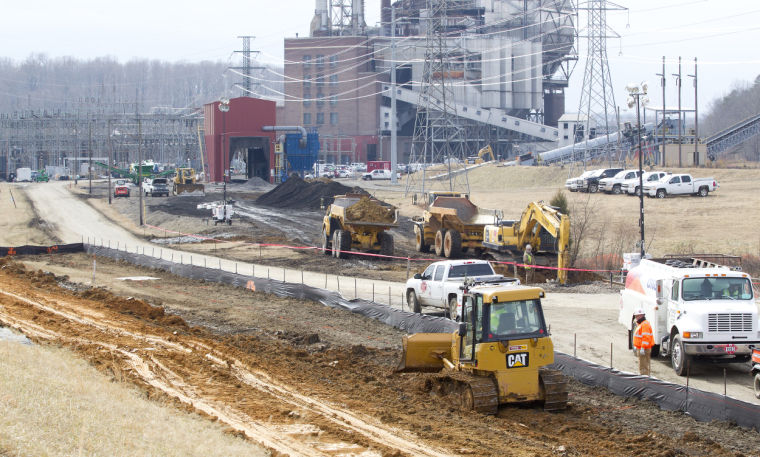
Duke Energy said on Monday afternoon that between 50,000 to 82,000 tons of coal ash and up to 27 million gallons of water were released from a pond at its retired coal fired power plant in Eden, NC, and spilled into the Dan River.

2014-02-04 Re-enforcing and patching the berm to the ash basin at the Duke Energy Dan River Steam Station in Eden, N.C.Joseph Rodriquez - News & Record

Re-enforcing and patching the berm to the ash basin at the Duke Energy Dan River Steam Station in Eden, N.C.
Photo by Joseph Rodriquez, News & Record

Duke said a 48-inch stormwater pipe beneath the unlined 27-acre ash pond broke Sunday afternoon, and tens of thousands of tons of coal ash and water drained into the pipe before spilling into the Dan River. Duke Energy says that the dam along the river remains secure and has not been affected.

Duke did not issue a press release to inform the public until Monday afternoon, more than 24 hours after the spill occurred.  Duke said it notified local emergency managers and the N.C. Department of Environment and Natural Resources on Sunday afternoon. Duke says the leak has been temporarily stopped and they are working on a permanent solution. Duke has 14 coal fired power plants in the state, seven of which have been retired.

The closest community downstream from the spill is Danville, VA, which takes its water from the Dan River only six miles from the pond. Officials are saying that water samples confirm that the water leaving the city’s treatment facility meets public health standards.

“All water leaving our treatment facility has met public health standards,” said Barry Dunkley, division director of water and wastewater treatment for Danville Utilities. “We do not anticipate any problems going forward in treating the water we draw from the Dan River.”

Coal ash, the toxic waste material left after coal is burned, contains arsenic, mercury, lead, and more than a dozen other heavy metals. Studies from the EPA have found that people living within one mile of unlined coal ash ponds can have a 1 in 50 risk of cancer.

This coal ash spill is the third-largest in U.S. history. In 2008, more than a billion gallons of coal ash slurry spilled at the Tennessee Valley Authority’s Kingston coal plant in Tennessee.

The Dan River coal ash spill is the latest in a string of industrial accidents that have jeopardized the environment and health of citizens downstream.

Read Full Post »

Between legislative sessions, the Texas Lieutenant Governor and Speaker of the House of Representatives appoint Interim Committees to study important issues that help guide the Texas Legislature’s decisions in the future. These interim committees hold hearings and take public testimony. Their findings will affect actions taken during the next regular session.  Public Citizen will be closely following several interim charges during the coming year.  After each charge, we have included a brief explanation about why we consider these important charges about which you should be concerned.  The interim charges include, but are not limited to:

House Committee on Environmental Regulation Interim Charges
# 1.  Study the environmental permitting processes at the Texas Commission on Environmental Quality (TCEQ), specifically the contested case hearing process at the State Office of Administrative Hearings (SOAH) and the timelines associated with the process. Study the economic impact that the state’s permitting processes have on Texas manufacturing sectors and how neighboring states’ and the federal permitting processes and timelines compare to those in Texas.
(Why are contested case hearings important for Texas citizens?  This is the only opportunity that neighbors of proposed facilities have to contest an air or water quality permit before a license is approved.  Once approved, any contentions must go through the Texas court system, which can cost a citizen or group of citizens thousands of dollars to litigate and the likelihood of getting a license revoked is extremely minimal.  You will note that the only concerns voice about this process has to do with economic impact and the impact on industry – NOT on how it would impact you and your family if you ended up with a facility next door that had to be permitted because it impacts on air and water quality.) 
# 2.  Study the rules, laws, and regulations pertaining to the disposal of high-level radioactive waste in Texas and determine the potential economic impact of permitting a facility in Texas. Make specific recommendations on the state and federal actions necessary to permit a high-level radioactive waste disposal or interim storage facility in Texas
(Can you say Yucca Mountain?  Yucca Mountain, a ridge of volcanic rock about 100 miles northwest of Las Vegas, has been the leading candidate site for a high-level radioactive repository since the 1980s, but Nevada has fought the project bitterly in court and in Congress. The spent fuel that emerges from nuclear power plants has been accumulating for decades in steel-lined pools or giant steel-and-concrete casks near the reactors.  A final decision to abandon the repository would leave the nation with no solution to a problem it has struggled with for half a century, but some in Texas seem determined to take on the task of making west Texas the new home for this nuclear waste.  While you may not be concerned about all that radioactivity sitting on land near Big Spring, TX, halfway between Midland and Sweetwater, you may want to consider the impact of all that waste being transported across the state on our highways, possibly through your neighborhood.  We will be following this charge and will post when we know about hearings.)

Consider this story that broke as I was writing this post. The Waste Isolation Pilot Plant (WIPP), an underground radioactive waste disposal site that began operations in 1999 and is the nation’s first repository for the permanent disposal of defense-generated transuranic radioactive waste left from research and production of nuclear weapons, was evacuated this morning when an underground salt truck used to haul mining debris caught fire.  Two WIPP rescue teams were activated and an unconfirmed number of WIPP employees were transported to a hospital for potential smoke inhalation. Operations at WIPP have been suspended until further notice.  According to WIPP, none of the nuclear waste was disrupted during the incident, but emergency crews were still battling the fire at this writing.

House Committee on State Affairs Interim Charge

# 3. Study the different financial assurance options used by state agencies to ensure compliance with environmental clean-up or remediation costs. Determine whether the methods utilized by state agencies are appropriate to ensure sufficient funds will be available when called upon.
(An example of how this can affect you – Currently, mines associated with a coal-fired plant can disposed of toxic coal ash waste from the burning of that coal in the depleted mines – click here to read more about coal ash waste .  Federal law requires those facility to post a bond for cleanup and remediation of the land where coal ash waste is disposed of.  In Texas, we allow a financially solvent company to pledge existing assets against future reclamation claims related to mine operations and seem to have no recourse to require changes if the company no longer meets financial health benchmarks. This is a practice that leaves Texas tax payers at risk of having to bail failing companies out from this obligation if those companies are unable to meet it.)

Click here to see all the Texas House Interim Charges.  We will keep you updated as hearings for these charges are announced.  Your input can have significant impact on what our legislature does regarding these issues.

Read Full Post »

Older Posts »