Feeds:
Posts
Comments

Stop Keystone XL ObamaNow is the time to stand up and tell President Obama that the Keystone XL pipeline fails his climate test and he must reject it. People from across the country have mobilized to plan more than 230 vigils in 47 states to protest Keystone XL.  Join us tonight, Feb. 3rd, in Austin.

With the release of the State Department’s final environmental impact statement last Friday, this is a vital moment to speak out against the Keystone XL pipeline. A 30-day public comment period begins on February 5, 2014 and will close on March 7, 2014. Let’s do all we can to make our voices heard.

What: Tell President Obama to reject Keystone XL
Where: Pickle Federal Building, 300 East 8th Street, Austin, TX (click here for MAP)
When: Tonight – Monday, February 3rd, 6 PM
RSVP

If we do not stop it, Keystone XL pipeline will cut through the breadbasket of America and transport 830,000 barrels of tar sands diluted bitumen (tar sands) everyday for 50 years or more. In addition to the climate impact it will have, the pipeline will ruin some of the last habitat for endangered species like the whooping crane and swift fox. It will cross the Ogallala Aquifer, which provides water to farms in eight states, accounting for a quarter of the nation’s cropland, as well as drinking water for millions of people. For the people living along the route of the pipeline it is all risk and no reward.

This is our moment to say “No Keystone XL.” Please join us tonight. Be sure to bring candles, signs and noise-makers.

The No KXL protest vigils are organized by CREDO, Rainforest Action Network, and the Sierra Club, and supported by 350.org, The Other 98%, Center for Biological Diversity, Oil Change International, Bold Nebraska, Energy Action Coalition, Natural Resources Defense Council, The Hip Hop Caucus, Overpass Light Brigade, Environmental Action, League of Conservation Voters, Waterkeeper Alliance, Friends of the Earth, Forest Ethics, Forecast the Facts, Public Citizen, Environmental Texas and others.

#NoKXL

Most of us, when watching “the big game” do not really stop to think about the enormous amount of energy it takes to power such an event. This year, the Super Bowl, as well as the parties and events surrounding it, are going to use about 18 megawatts of energy, enough to power about 12,000 homes, according to the San Francisco Gate.

That article also points to efforts that the National Football League has been making efforts over the years to “green” the big game. The league has even gone as far as to hire an environmental communications firm to oversee the process of reducing the footprint of the game. This year they will be using several different innovative solutions to reduce the footprint of the game. A couple of the big efforts are biodiesel and composting. The biodiesel will be used to power the events around the game, and the composting will be for the food waste in the stadium.

Solar Panels on an NFL stadium (http://m.sportsbusinessdaily.com/Daily/Issues/2012/03/02/Facilities/Eagles.aspx)

Solar panels on an NFL stadium
(Sports Business Daily)

This is not the only step the NFL has taken towards becoming greener. There are at least five NFL stadiums that use solar power in some capacity. The San Francisco 49er’s new stadium will be the first net-zero professional sports arena in the United States. Net zero means that its power generation will offset its consumption over a year.

So, while watching the big game this year, keep in mind the efforts the NFL and its teams are making to reduce their carbon footprint and reduce waste.

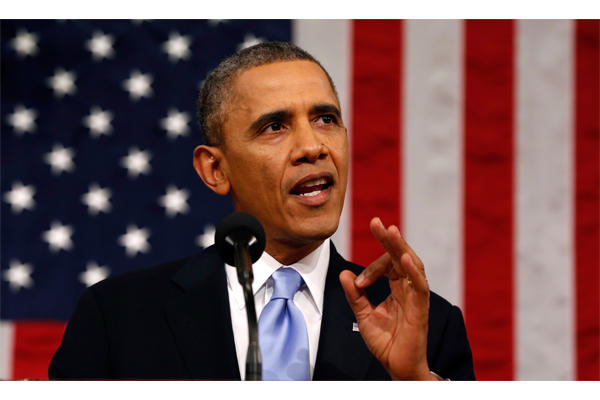
During Tuesday’s State of the Union address, President Obama pledged to have it both ways on climate change and energy – taking action on climate change while touting an “all of the above” energy strategy.

Obama SOTU - credit Larry Downing,AP

President Barack Obama delivers the State of Union address before a joint session of Congress in the House chamber Tuesday, Jan. 28, 2014.
Larry Downing/AP

On the one hand, President Obama renewed his commitment to reducing carbon emissions and battling climate change. But on the other hand, he pushed for the expansion of domestic fossil fuel extraction and pledged his support for natural gas as part of his “all of the above” energy plan. He said, “The ‘all the above’ energy strategy I announced a few years ago is working, and today America is closer to energy independence than we have been in decades.”

The president threw his weight behind natural gas, saying, “If extracted safely, it’s the bridge fuel that can power our economy with less of the carbon pollution that causes climate change.” He promised to “cut red tape” to spur the construction of natural gas fired factories and fueling stations for cars and trucks.

Even though natural gas emits half as much carbon dioxide as coal when combusted, the primary component, methane, is also released into the atmosphere during production. Methane is a potent greenhouse gas and traps significantly more heat in the short term than carbon dioxide. New reports are concluding that fugitive methane emissions from extraction, processing and transportation could be much worse than previously thought. An article from OilPrice.com says, “If the latest figures are accurate, it could mean that the greenhouse gas advantage that natural gas has over coal could be a mirage.”

The president also gave a shout-out to solar energy, saying, “It’s not just oil and natural gas production that’s booming; we’re becoming a global leader in solar, too.” “The shift to a cleaner energy economy won’t happen overnight, and it will require tough choices along the way,” said Obama. “But the debate is settled. Climate change is a fact. And when our children’s children look us in the eye and ask if we did all we could to leave them a safer, more stable world, with new sources of energy, I want us to be able to say yes, we did.”

Although the president has made tremendous strides to address climate change, his administration is still encouraging the extraction of coal, oil and natural gas from our public lands and water. (Click here to see a report from the EIA: Sales of fossil fuels from Federal and Indian Lands) Fossil fuel industries are also looking to expand coal and liquid natural gas (LNG) export terminals. All of this on top of recent proposals to end a 40 year ban on crude exports extracted in America.

Sometime this year the proposed Keystone XL pipeline will come across the president’s desk. If approved, the Keystone XL pipeline will provide tar sands producers in Canada a supply line to refineries on the Texas Gulf Coast and an export strategy. Although the president made no mention of the pipeline in his speech, he will have to make a decision on the project later this year. He has said his decision will be based on whether or not the Keystone XL pipeline “significantly exacerbates” carbon pollution and is in the national interest. On Friday, the State Department released its environmental assessment that says the Keystone XL pipeline would cause minimal climate impact because the tar sands would get to market some other way without the Keystone XL pipeline – a strikingly fatalist position.

Both sides of the president showed up on Tuesday to address the nation. His “all of the above” energy side showed up to cheerlead the fossil fuel industry, while at the same time tossing a bone to environmentalists, pulling from his Georgetown Speech he made last summer. President Obama’s climate legacy still has yet to be shaped, and if wants be viewed by future generations as the president that made a firm commitment to fighting climate change, then he needs to quit talking out of both sides of his mouth.
Continue Reading »

Small towns like Azle and Springtown, in the North Texas area have experienced about 32 earthquakes over the past two months leaving citizens concerned about what is happening to their home.

According to a recent study from the University of Texas, most earthquakes that are coming from the area are a few miles from the Barnett Shale region. The study also found correlation between injection wells and small earthquakes.  These disposal wells contain chemical contaminated wastewater from oil and gas drilling..  This is part of the process of hydraulic fracturing or “fracking”.

The Railroad Commission has not publicly acknowledge the link between disposal wells and quakes, even with evidence from several studies from Duke University, Cornel University, University of Texas, Texas Christian University, Southern Methodist University and other universities.

According to a story on NPR StateImpact, studies found that oil and gas wastewater disposal wells are a reason for the Eagle Mountain Lake quakes. Disposal wells that inject at higher rates are likely causing quakes.  Studies show that these large amounts of wastewater can cause inactive faults to slip, which causes an earthquake to occur.

In another NPR StateImpact story by Terrence Henry, he writes that under state law, the Commission cannot suspend a disposal well permit unless the operator is in violation of commission rules. There are currently no rules on seismicity, and without this rule the commission has no authority to shut it down. The article also goes on to say that the Railroad Commission is aware of such studies and research linking disposal wells and other drilling activity to man-made quakes, but publicly calls this evidence “theories.”

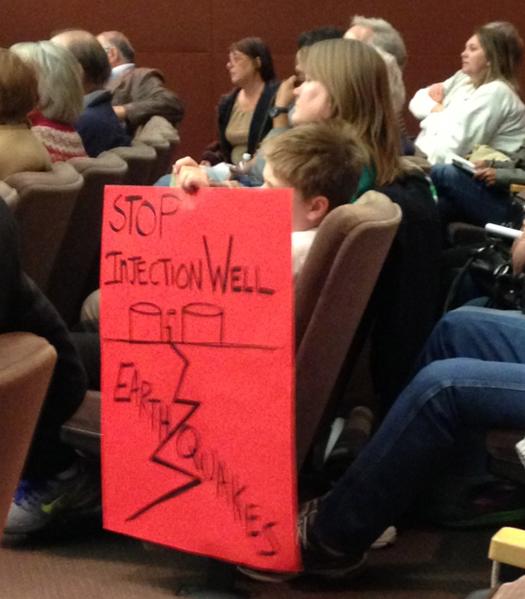
Young witness at RRC Hearing on Seismic Activity in North Texas - Photo by Sierra Club

Young witness at RRC Hearing on Seismic Activity in North Texas – Photo by Sierra Club

A town hall meeting in Azle, Texas hosted by the Texas Railroad Commission on January 2nd drew 850 residents. The residents had concerns about cracks in their property, sinkholes, earthquake insurance, and possibly having their ground water affected.  They wanted the commission to explain what was happening and asked if disposal wells were the reason for the recent problems. Click here to read more.

The Commission told attendees it would further study the issue of injection wells and quakes, but residents felt they were getting a runaround. Days after this first meeting the Commission announced it would hire a seismologist to investigate local drill sites.
Continue Reading »

After several major accidents involving crude oil trains derailing and exploding, the National Transportation Safety Board [NTSB] is warning that “major loss of life” could result from an accident if tougher regulations on oil-by-rail shipments are not implemented.

The NTSB’s recommendations were echoed by the Transportation Safety Board of Canada. Regulators in both countries are urging their governments to adopt stricter rules.

The NTSB’s recommendations on Thursday came just days after a train derailed in Philadelphia, and just weeks after a train exploded in North Dakota. These two accidents are just the latest in a string of accidents that have happened over the last seven months, the worst killing 47 people in Canada.

“The NTSB is concerned that major loss of life, property damage and environmental consequences can occur when large volumes of crude oil or other flammable liquids are transported on a single train involved in an accident,” said the NTSB in a press release. “Crude oil shipments by rail have increased by over 400 percent since 2005.”

Philadelphia had a close call on Monday when seven of the train’s 101 cars slide off the rails – including tankers carrying oil from North Dakota – on a bridge over the Schuylkill River, a tributary of the Delaware River. Luckily none of the oil spilled out, but other communities across the United States and Canada have not been so lucky.

Last July, a runaway train carrying Bakken crude oil derailed and exploded in the center of the Quebec town of Lac-Magantic, killing 47 and destroying 30 buildings.

Last November, 30 cars of another 90-car train carrying Bakken crude derailed in rural Alabama, sending more than a dozen of the cars into flames before being extinguished several days later. No one was injured or killed in this accident.

North Dakota Oil Train explosion - Dan Gunderson

North Dakota Oil Train Explosion – Dan Gunderson

On December 30th, a train carrying crude oil from the Bakken shale derailed outside of Casselton, North Dakota. Residents reported several loud explosions that sent huge fireballs into the sky. Authorities urged residents within five miles of the explosion to evacuate and avoid contact with the smoke, while residents living 10 miles away were asked to stay indoors.

The common theme between all of these accidents is that they were all carrying crude oil from the Bakken shale formation. The Pipeline Hazardous Material Safety Administration [PHMSA] issued a safety alert earlier this month warning that “crude oil being transported from the Bakken region may be more flammable than traditional heavy crude oil.”
Continue Reading »

The Green Sanctuary Committee is hosting a free screening of Robert Redford’s film, WATERSHED, in Austin, TX

Robert RedfordWATERSHED tells the story of the threats to the once-mighty Colorado River and offers solutions for the future of the American west.

JANUARY 31st  at  7 PM
First Unitarian Church
4700 Grover Ave. ,  Austin, TX     
free – all welcome


The film panelists: 

  • Tom Mason, formerly with Lower Colorado River now advisor for Environmental Defense Fund.
  • Jennifer Walker, Sierra Club Water Resources Coordinator
  • Paul Robbins, Water activist and publisher of Austin Environmental Directory.

Solarize Texas

Solarize Texas websiteLet’s Solarize Texas! Texas has more solar energy potential than any other state in the nation, but it’s going to take lots of us working together to utilize this great resource.

In 2013, Plano Solar Advocates launched the first Solarize program in Texas. The first phase of Solarize Plano was a great success and has inspired me help promote the model in other parts of the state.

Solarize is group purchasing with a strong educational component. Some programs in other states have official agency or utility backing, but many are run by nonprofit organizations and community groups.

If you are interested in getting a solar system installed on your home and want to use the opportunity to help educate others and get a discount on your installation, email me at kwhite@citizen.org.  It doesn’t take a huge group to get started, just a couple passionate volunteers.

Solarize Plano grew from a couple volunteers to a group of over 200, of which 25 are getting solar installed on their homes right now.  In fact, the program was so popular, Solarize Plano is already starting a second phase, which will likely be even more successful because of all the great community education they have already done. Solarize Garland just launched and I’m working with the enthusiastic folks at Fredericksburg SHINES to launch Solarize Fredericksburg.

Solarize is all about taking control of your own energy production, educating yourself and your community and saving money. What’s not to love about that?

Visit SolarizeTexas.org to learn more and keep track of where new Solarize Texas programs are launching.

unacceptable levels Unacceptable Levels examines the results of the chemical revolution of the 1940s through the eyes of filmmaker Ed Brown, a father seeking to understand the world in which he and his wife are raising their children. To create this debut documentary, one man and his camera traveled extensively to find and interview top minds in the fields of science, advocacy, and law. Weaving their testimonies into a compelling narrative, Brown presents us with the story of how the chemical revolution brought us to where we are, and of where, if we’re not vigilant, it may take us.
According to Dr. Neil Carman of the Sierra Club, 80,000 – 100,000+ toxic synthetic industrial chemicals are made by large oil refineries-chemical-petrochemical plants, which in Texas is the largest group of such toxic plants in the nation (in the hundreds of plants!). Their air/water pollution and synthetic chemicals end up everywhere and their toxic synthetics are used in thousands of consumer products with little or often no testing as to toxic health effects.
A screening of this film is scheduled for Austin, TX on Feb. 03 , 7:30PM At AMC Barton Theater, but only if an additional 50 tickets are reserved by Sunday, January 27th.  Click here if you wish to reserve your ticket now.

Other upcoming locations in Texas are in Dallas, Plano and Webster.  Tickets can only be reserved online.  Click here for a full list of upcoming screenings.
Watch the trailer
[youtube=http://youtu.be/PVB6XSyBTVE]


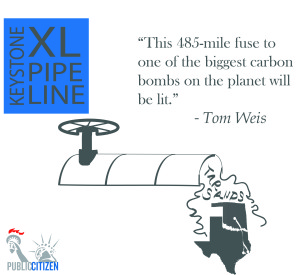
TX Keystone Tar Sands - Carbon BombKeystone XL’s southern half is scheduled to start operating for commercial purposes tomorrow, Wednesday, January 22nd. As much as 700,000 barrels per day of bitumen extracted from tar sands in Alberta, Canada, could be pumped through Oklahoma and Texas, igniting the fuse to the greatest carbon bomb on the planet.

The southern leg, rebranded the “Gulf Coast Project” by TransCanada, stretches 485 miles from Cushing, Okla., to Texas Gulf Coast refineries in Port Arthur and Houston. Last month, on Saturday December 7, 2013, TransCanada began injecting crude oil into the Gulf Coast Project. Spokesman Shawn Howard said they planned to “inject about 3 million barrels of oil into the system” in the weeks leading up to the start of commercial operation. In an interview with Reuters, TransCanada’s CEO Russ Girling said that they are now connected from Canada to Texas through the existing Keystone pipeline.

“We are now actually connected all the way to the Gulf Coast,” Girling said. “So we actually have …a contiguous system that has the ability, once Gulf Coast is up and running, to deliver 600,000 barrels per day to the coast.”

TransCanada’s Gulf Coast Project may very well be up and running by tomorrow, but questions about the safety of the pipeline remain, as do concerns for those living along the path of the pipeline and in refining communities.

Full of Flaws

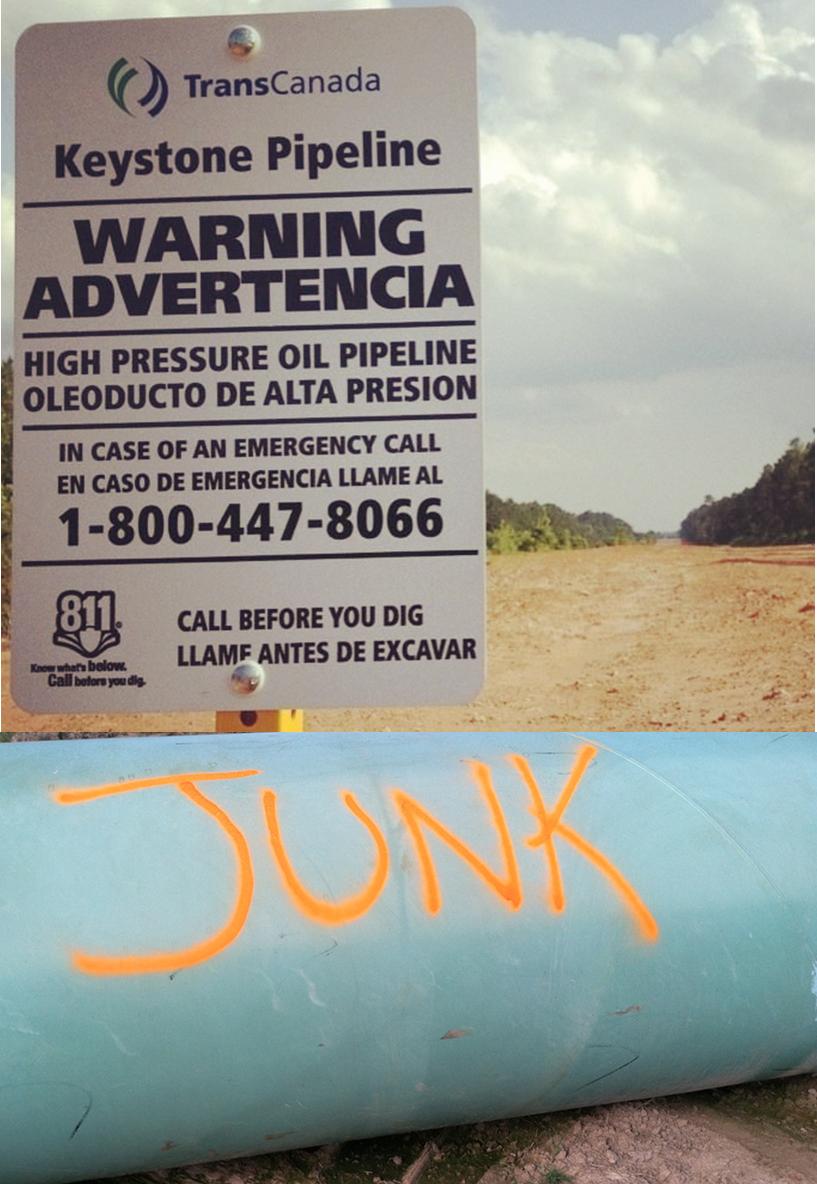
Since Public Citizen came out with its report last November (TransCanada’s Keystone XL Southern Segment: Construction Problems Raise Questions About the Integrity of the Pipeline), PMHSA, the federal agency that oversees pipelines, has not re-inspected Keystone XL South. Public Citizen’s report details hundreds of anomalies at over 125 sites along the Texas route, which includes: dents, sags, faulty welds, coating damage, insufficient support of pipe in trench and improperly handled soil. (See also CBS report)
Continue Reading »

The Environmental Protection Agency will host a community meeting, tentatively scheduled for Thursday, January 30th, to discuss plans to deal with pollution from the San Jacinto River waste pits. During this meeting residents can voice their concerns, and the EPA will be discussing planned construction to repair the temporary cap. It is imperative that the EPA hear from the community and acknowledge our desire for the toxic chemicals to be removed permanently.

For decades, two waste pits located along the San Jacinto River have been leaking some of the most toxic chemicals known to man into the river. PCBs, Mercury, even cancer causing dioxin compounds such as Agent Orange have contaminated the River and its fish, seriously endangering the thousands of East Harris County residents who swim, boat, and fish there.

Please join and make your voice heard.  Click here to see the facebook invitation.

Thursday, January 30 at 6:00pm

Highlands Community Center Park

604 E Wallisville Rd

Highlands, TX 77562

The Keystone XL pipeline in Texas is slated to start up next week, pumping toxic tar sands to refineries along the Texas Gulf Coast, unless Texas Attorney General Greg Abbott steps up to protect our land and water.

Now is the time to email Texas Attorney General Abbott and ask him to use his broad powers to demand the federal government conduct safety inspections of the Keystone XL before it starts.

Junk pipe with signLast November Public Citizen came out with a report detailing hundreds of anomalies at over 125 sites where pipeline was dug up along the route in Texas. CBS News reported on Public Citizen’s report and on warning letters (click here and here to see two from last September) issued by PHMSA, the federal agency that oversees pipelines, to get TransCanada to fix their faulty pipes.

We already know the dangers that communities face from toxic tar sands, whether it’s the land owners whose property is at risk from a spill or the fence line communities that live adjacent to the referies and have to breathe the toxic emissions .

Director of Public Citizen Texas Tom “Smitty” Smith says, “Attorney General Abbott claims to believe in private property rights. If he really does, he should take action now to protect landowners in East Texas from tar sands contamination.”

Click here now to help pressure Attorney General Abbott to protect Texas landowners and water supplies before it is too late.

NBC news reports a spike in air pollution readings over 20 times the recommended exposure levels suggested by the World Health Organization (WHO) in Beijing on Thursday, cloaking China’s capitol in a thick, gray haze .  Click here to read the NBC story.

The resultant air warning was just the first of 2014. In January 2013, China suffered through a week of sustained poor air quality that finally forced China’s ruling Communist Party to acknowledge and address serious environmental issues, including the country’s extensive use of coal-fired power plants..

As the United States reduces its use of coal to power electric plants, the coal industry has been looking to increase exports to countries like China and India.  However the environmental and health impacts as well as the economic realities of propping up this industry paint a bleak future for this centuries old fuel source.

The following is re-posted from EcoWatch.

On Jan. 9, Senate Finance Committee Chairman Max Baucus (D-MT) and Rep. Camp (R-MI) introduced the Bipartisan Congressional Trade Priorities Act of 2014, otherwise known as “fast track,” which could facilitate passage of deeply flawed trade agreements including the Trans-Pacific Partnership (TPP) trade pact with limited public and Congressional input. If fast-track legislation is approved by Congress, President Obama would be able to sign the TPP and then send it to Congress for a straight up-or-down vote—with no room for amendments and limited floor debate.

Watch this video by the Delaware Riverkeeper Network showing how the TPP could threaten environmental protections and public health. This video examines the potential impacts of the TPP if approved by Congress.

Visit EcoWatch’s FRACKING pages for more related news on this topic.

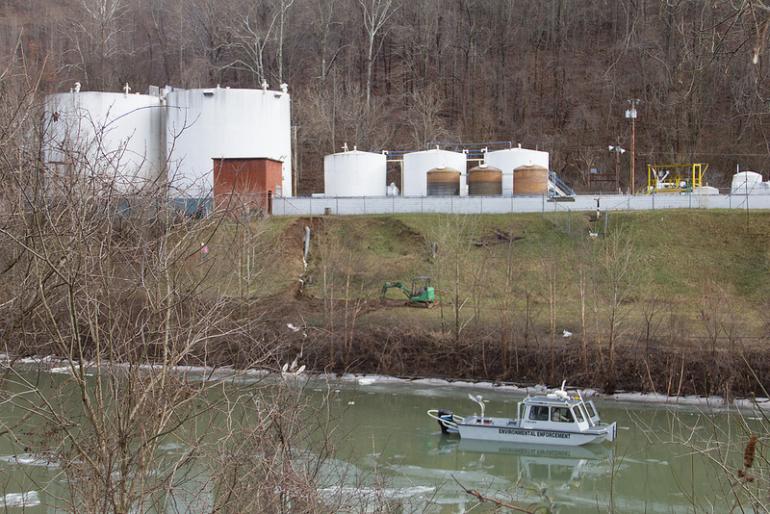
The chemical spill into West Virginia’s Elk River, which left more than 300,000 people without water for over five days (many are still without water), comes in a state with a long history of lax regulatory standards over the coal and chemical industries that form a major part of its economy. The chemical spill is yet another example of how lax regulations are setting the stage for disasters, and the concerns are being felt all the way in Texas.

Photo Credit: www.flickr.com/photos/iwasaround

The chemical at the center of this disaster is 4-methylcyclohexane methanol, also known as MCHM, and it is used to wash coal. About 7,500 gallons of the chemical leaked from a storage tank, owned by Freedom Industries, and into the Elk River. The leak happened about one mile upstream from the West Virginia American water plant, which supplies drinking water to the local population. State officials are urging citizens to use bottled water for drinking, washing and cooking. Authorities say that at least ten people have been admitted into three hospitals, and 169 patients have been released from emergency rooms. Although MCHM is considered toxic, it is not lethal to humans. The effects on humans range from skin irritation, nausea, vomiting or wheezing.

West Virginia Governor Earl Ray Tomblin declared a state of emergency for nine counties, including the state capital of Charleston. President Obama also issued an emergency declaration. West Virginia has received water from the Federal Emergency Management Agency (FEMA) and Department of Homeland Security (DHS) for its residents. It may be days before the water is safe enough for anything other than flushing a toilet or firefighting. Authorities are waiting until the chemical level meets 1 part per million, set by the federal Center for Disease Control and Prevention, before they lift the ban.

The coal and chemical industries, which make up a large part of West Virginia’s economy, exercise great political influence in the state. They have long railed against federal safety, health and environmental standards. The West Virginia chemical spill is yet another example of what can go wrong when you have an inept polity that is influenced by big business. Texas also suffers from a similar affliction as West Virginia, except in addition to coal, we also have the petroleum and chemical industries.

Texas has had its fair share of industry related disasters. An explosion last April at the West Fertilizer Co. in West, Texas killed 15 people. In 2005, an explosion at the BP refinery in Texas City killed 15 workers and left 170 others injured.

With the West Virginia chemical spill making national headlines, let us remember that this kind of disaster is preventable. What we need is stronger safety standards and improved enforcement to make for a safer environment.

Sign our petition asking EPA to improve chemical safety and protect our communities.

As promised, the Environmental Protection Agency (EPA) has published its proposed standards to limit toxic carbon pollution from new power plants in the Federal Register.  Today, January 8, 2013, starts the 60-day period for public comment period.  Click here to read the proposed standards.

Power plants are responsible for much of our country’s air pollution. In fact, coal- and gas-fired plants emit more than 2.3 billion metric tons of carbon emissions, approximately 40 percent of U.S. energy-related carbon pollution. These dangerous emissions make their way into our air, food, and bodies, threatening the health of our children and communities. As if that weren’t bad enough, carbon pollution is also the main contributor to climate disruption.

Strong carbon pollution protections, will help us clean up and modernize the way we power our country — a move that will make for healthier kids, families, and workers, while creating badly needed jobs, fighting climate disruption, and keeping America competitive in the global economy. Several states and foreign countries already have limits on carbon pollution from new power plants, including Oregon, Washington, California, Montana, Illinois, Maine, Australia, and the European Union. It’s time for the first-ever national standards for coal-fired plants to be set in place.

The proposed carbon pollution standards will be a powerful tool to keep our air clean, but they could be even better. Now it’s your turn to take action. The fossil fuel industry and its political allies are doing everything they can to block the EPA’s efforts, but you can push back and make your opinion count.

The official public comment period starts today and won’t last long. Make your voice heard by submitting a comment here to the EPA in support of strong standards for reducing dangerous carbon pollution. Your voice matters!