Feeds:
Posts
Comments

Senate Bill 875 by Sen. Troy Fraser (R-Horsehoe Bay) would take away a Texan’s right to sue a company for “nuisance” or “trespass” resulting from greenhouse gas emissions if that company is compliant with air emissions permits issued by Texas Commission on Environmental Quality or an agency of the federal government.

The bill would roll back Texas nuisance law that predates the Clean Air Act, protecting businesses that emit greenhouse gases from enforcement actions, civil lawsuits or criminal claims.

The Texas Chemical Council, Association of Electric Companies of Texas, Texas Association of Business, Texas Association of Manufacturers and Texas Pipeline Association and other business groups back the bill, but environmental groups oppose the measure.

The bill is designed to put a halt to a trend of public nuisance claims as a way to regulate greenhouse gas emissions. Although the EPA has announced plans to issue rules governing greenhouse gas emissions, air quality permits held by Texas businesses do not currently regulate greenhouse gas emissions.

Our ownTom “Smitty” Smith of Public Citizen’s Texas office, testified against the bill in committee, telling the committee that greenhouse gases are effectively a nuisance because they can cause adverse health effects, change the fertility cycles in plants and animals, and require retrofitting of roads and bridges to withstand greater temperatures. The bill would take away a legal tool citizens have used that predates the Clean Air Act and one that has been used by citizens to sue oil and gas companies.

Smitty further testified that if the standards are unclear, the fallback position you have is nuisance. It interferes with your enjoyment of the environment or causes health effects making the bill far more nefarious than it appears on the surface.

Sen. Kirk Watson (D-Austin) argued, “It’s not right, to say you can do whatever you want with greenhouse gases simply because you are in general compliance with some permit that doesn’t cover greenhouse gases.”

Even the TCEQ has reported that the bill could “hamper the agency’s ability to cite a nuisance violation for greenhouse gases” and allow the “nuisance” to persist and result in lower revenues from penalties, according to the bill’s fiscal note.

Bill by bill, this legislature seems intent upon whittling away protections for individual Texas citizens in favor of the rights of industry.
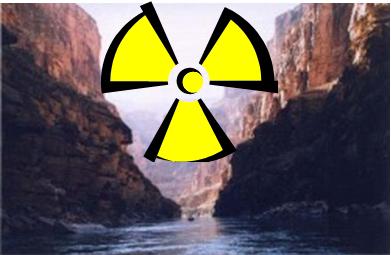

A crucial ban on mining uranium around the Grand Canyon is about to expire, and corporations have already staked more than 1,100 claims to drill.

Ripping up radioactive material around a national landmark, with its fragile ecosystem and designation as one of the seven natural wonders of the world, will cause irreversible damage to its beauty and wildlife, put nearby communities at risk (especially the Havasupai, a Native American tribe who inhabit the canyon itself) and contaminate the water supply for millions who live nearby.

Thousands have already signed a petition started by Suzanne Sparling of Arizona calling on the U.S. Bureau of Land Management to extend the ban on uranium mining around the Grand Canyon.

A nationwide outcry has forced the Interior Department to extend the time window for public comment about the decision.

To read more about the impacts of uranium mining on the Grand Canyon, click here to visit the Grand Canyon Trust’s website whose mission is to protect and restore the Colorado Plateau — its spectacular landscapes, flowing rivers, clean air, diversity of plants and animals, and areas of beauty and solitude.

You can click here to send an email to your representatives in Congress telling them you support U.S. Interior Secretary Ken Salazar’s new Bureau of Land Management “Wild Lands” policy.

There is just a short time to protect one of America’s most important national parks, click here to sign Suzanne Sparling’s petition.

On April 13th, the Uptown Marble Theater at 218 Main Street in Marble Falls will present the world theatrical premiere of Green Dreams, a 50 minute documentary about the revolution at the Pedernales Electric Cooperative. Following the screening will be a meet & greet with PEC’s newly-hired CEO, R.B. Sloan.

[vimeo 21828817]

Former PEC General Manager Bennie Fuelberg has been sentenced to 300 days in jail, the entire former board of directors has either resigned or been voted out. The co-op has been wracked with scandal and tales of intimidation and mismanagement.

But a new day has dawned. PEC has a new, leaner, reform-minded board of directors, new bylaws and a member Bill of Rights. Transparency and member input have become desirable goals when once they were forbidden. And, some say, it all began with a phone call.

In 2006, filmmaker Ric Sternberg called the PEC, his electric co-op, for information about any “green” programs that the co-op might offer. This phone call led to more calls until he began to realize that decisions were being made by what appeared to be a rubber-stamp board of directors who maintained their well-paid positions, some for as many as 40 years, by a proxy voting process that was rigged – no competition.

Ric registered a web domain and organized a loose-knit group of PEC members who called themselves PEC4U. That rag-tag organization began the struggle for democracy and transparency at the Pedernales Co-op, which soon led to a member lawsuit and the “house of cards” crumbling. Meanwhile Ric, being a documentarian, started to record the process. Green Dreams is the result. It tells the story of the revolution and then talks about the future as it might be. The film is being presented as a conversation-starter – the beginning of a dialogue among members about where PEC should be headed.

The film screening will be followed by a meet & greet – an opportunity for PEC members to meet R.B. Sloan, the Pedernales Electric Co-op’s brand new CEO.

The theater will open at 7:00pm for casual socializing. The program will begin at 7:30pm. After the screening, the filmmaker and some of the people seen in the film will be available for Q&A. The meet & greet with Mr. Sloan will be in the theater’s lobby, beginning at about 8:45pm. Admission is free and all are welcome.

The documentary will be shown at other theaters in the PEC service area.  Watch for other scheduled showings.

In another effort to stave off critics who call a $1 billion annual tax break for high-cost gas producers in Texas outrageous, a study paid for by the industry has emerged intended to scare folks into believing that for every $1 the state spends in tax breaks it gets back about $4 in related economic activity and that will disappear if we take their tax break away.

Former Deputy State Comptroller and current lobbyist Billy Hamilton has produced an industry-backed study for the American Natural Gas Alliance on what they claim the impact of the withdrawal of the tax incentive would have on Texas.   The  industry is rightly concerned that the tax break would come under attack as the state tries to close a $27 billion budget gap.

Hamilton’s analysis concludes that ending the tax break would result in an immediate loss in 2012 of 35,000 and $3.8 billion in economic output, estimating Texas would lose 94,400 jobs each year and $10.4 billion each year in economic output.

The industry has been saying for some time that if Texas dumps this tax break, states like Pennsylvania will get the driller’s business, but Texas has the largest reserve of natural gas in the nation and it is hard to believe the industry would pull up stakes to move elsewhere.  It is not like they aren’t making plenty of money here in Texas.  And the state hasn’t seemed concerned that they are losing renewable energy manufacturing jobs by not providing that industry with tax breaks/incentives, so no sympathy here.

Worthy of discussion here is exactly who is getting these state tax cuts, and according to the Houston Chronicle, it’s mostly companies from out of state.

Not surprisingly, the top five firms that saved the most as a result of the exemption represent the largest oil and gas producers in Texas:

Oklahoma-based Devon Energy, saved $113.8 million in fiscal year 2010 under the exemption. Devon reported net earnings last year of $4.6 billion.

Next on the list was XTO Energy Inc., a subsidiary of Exxon, which saved $113.2 million on its “high cost” gas operations in Texas. XTO reported $2 billion in net earnings last year. Others who received top financial benefits were: Canadian-based EnCana, which saved $60.6 million, Oklahoma-based Chesapeake Energy, which saved $59.4 million and Enron spin-off EOG Resources of Houston, with $58.6 million in savings.

These tax breaks really amount to little more than subsidies of some of the most profitable companies around. It would be one thing if these were Texas companies, but when Texas taxpayers are subsidizing Oklahoma and Canadian companies, something is very, very wrong. We can expect the corporate welfare queens to cry when their gravy train is threatened, but their protected status at the Legislature, thanks to millions in campaign contributions to Texas politicians, insures that they won’t actually be in danger of cuts.  Not like our schools, or grandma’s nursing home. Perhaps if our teachers and the elderly were represented by out of state special interests who can dip into their huge profits to bribe donate to politicians, they could be safe from cuts, too.

If, in fact, there are no sacred cows as the legislature tries to deal with the budget deficit, then this tax break needs to be on the table too.

The Texas Progressive Alliance would have voted against HB1 as well as it brings you this week’s blog roundup.

Off the Kuff notes that when one Bradley goes away, another one gets nominated.

Three Wise Men examines the possibility of a federal government shutdown and what Republicans are doing with the budget in Texas.

Musings rounds up news on teacher layoffs across Texas.

Presenting the comedy gold of the Honorable Anthony Weiner of The Bronx, NY, now showing for a limited time at Brains and Eggs.

CouldBeTrue of South Texas Chisme says you just have to read the paper to see how republicans are destroying every thing and everybody they can.

WCNews at Eye On Williamson says It’s time for the left to join the class war.

At TexasKaos, more on Perry’s assult on our State’s future. See GOP Robs Texas of its Future. If this doesn’t make clear what Perry is doing, you will never get it.

Marking the 43rd annivesary of the death of Martin Luther King, Neil at Texas Liberal reposted his 2011 MLK Reading & Reference List. Every day is the right day to be hopeful. Study MLK’s life and make the decision to take action for a better America. Nobody will do the work of freedom and democracy for you.

Who would have guessed that the biggest problem we have in the US is that taxes are too low? Turns out, that’s THE problem with the budget, not spending.


What a week. And here’s a little something for today:

Wanted: Short term, possibly long term position that pays thousands of dollars for up to an hour of work requiring little training working in perilously radioactive environments.

A Tokyo Electric Power Co. (TEPCO) official said this week that the company has tasks fit for “jumpers” (ジャンパー) — workers so called because they “jump” into highly radioactive areas to accomplish a job in a minimum of time and race out as quickly as possible.  Sometimes jumpers can make multiple runs if the cumulative dosage is within acceptable limits — although “acceptable” can be open to interpretation.  In cases of extreme leaks however the radiation might be so intense that jumpers can only make one such foray in their entire lives, or risk serious radiation poisoning.

Asked how the contaminated water could be pumped out and how long it would take, a TEPCO official replied: “The pump could be powered from an independent generator, and all that someone would have to do is bring one end of the pump to the water and dump it in, and then run out.”

Translation: Jumpers wanted.

In its attempts to bring under control its radiation leaky nuclear power plant that was severely damaged by last month’s massive earthquake and tsunami,  TEPCO is trying to get workers ever closer to the sources of radiation at the plant.

Workers are reportedly being offered hazard pay to work in the damaged reactors of up to $5,000 per day.

So if you aren’t concerned about the quality of your life 10 to 15 years down the line and are not planning on having children, this may be the job for you.

In a New York Times piece, they report on a study by the Ochs Center for Metropolitan Studies in Chattanooga, TN, which takes an in-depth look at the promises of jobs made by builders of new coal plants.

No one should be surprised to learn that when wooing a community, developers in just about every industry tend to overestimate the number of jobs they expect to create when they they build that new shopping mall, industrial park, widget factory or coal plant.

The Ochs Center findings  suggest that the trade-off that many cash-strapped communities make — specifically, accepting the health and environmental risks that come with having a new coal-burning power plant in their midst, in return for a boost in employment — is not what it’s cracked up to be.  In all cases they studied, what these communities were promised, isn’t what was delivered.

The analysis looked at the six largest new coal-fired power plants to come online between 2005 and 2009, including facilities in Pottawattamie County, IA; Milam and Robertson Counties, TX.; Otoe County, NE.; Berkeley County, SC; and Marathon County, WI.  All of the plants had capacities that exceeded 500 megawatts.

Researchers looked at each project’s initial proposals and the job projection data, from public statements, published documents and other material. They then looked at employment — before, during and after construction — in the areas where the projects were built, relying chiefly on the Bureau of Labor Statistics’ Quarterly Census of Employment and Wages.

The results: only a little over half, or 56 percent of every 1,000 jobs projected, appeared to be actually created as a result of the coal plants’ coming online. And in four of the six counties, the projects delivered on just over a quarter of the jobs projected.

So communities are left with fewer jobs than promised and a plethora of  harmful emissions like sulfur dioxide and nitrogen oxide, mercury and planet-warming carbon dioxide.  These emissions contribute to a long term legacy of  thousands of deaths over the lifetime of a plant, according to an estimate by the Clean Air Task Force.  Hardly a bargain in our estimation, but what a good deal for the coal plants.

Click here to read the New York Times blog: Coal, Jobs and America’s Energy Future by Tom Zeller.

Click here to read the report, A Fraction of the Jobs, by the Ochs Center for Metropolitan Studies.

In a stunning press release this morning, 20th Century Fox announced that the tiny Texas town of Andrews, home to a new nuclear waste dump owned by Waste Control Specialists, will hold a gala event to premiere one of this summer’s blockbusters, X-men: First Class.  For those not familiar, X-men follows a team of super-powered mutants. For those not familiar with the WCS facility, please read previous posts on our blog here, here, here, and here. From their press release:

FOR IMMEDIATE RELEASE

APRIL 1, 2011

HOLLYWOOD, CA — X-men are “gone to Texas” for their premiere, which will take place on the grounds of the country’s newest and potentially largest nuclear waste dump.

Fox executive Tim Rothman said, “The X-men have been referred to as ‘The Children of the Atom’- so we decided to showcase that in our premiere”

Harold Simmons

While the site, owned by Waste Control Specialists and Dallas supervillain billionaire Harold Simmons, only contains so-called “low level” radioactive waste, the waste site will house all of the radioactive waste created by a nuclear reactor except for spent fuel rods, meaning there is plenty of radiation emitted by some waste products to have its desired effect:

“We’d really like to cut costs for future sequels by creating actual super-powered mutants,” said Rothman. “Who better to start irradiating than our actual cast?”

Rothman also noted that the proximity of the waste site to the Ogalalla Aquifer, which provides water to 11 states, is also ideal. “There’s how many million people who might drink this water? Surely some of them will have to get superpowers!” Several Texas environmental regulators quit their jobs in protest of the waste dump possibly leaking into the water.

Executive Producer Bryan Singer and Director Matthew Vaughn also added this statement, “We love the idea. This is the type of groundbreaking marketing we ought to do more of, and will allow us to use more practical effects in future… no, stop! They have guns to our heads and have kidnapped our families. We’re being forced to say this.This is a &#$%ing TERRIBLE IDEA. Don’t believe anything…” They were unavailable for further comment.

In an unprecedented display of corporate synergy, this will further tighten the bonds between billionaires, campaign finance spending, and Fox.  Simmons, who is known for his political contributions to Republican candidates, will donate the use of his site rather than making more ad buys attacking Barack Obama on Fox News, a sister company of  20th Century Fox. “It’s all Rupert [Murdoch]’s  money anyway, so who cares? We billionaires have to stick together. We thought we’d help out our team indirectly this time instead of giving more campaign bribes, err donations to politicians, as those usually have to be disclosed, ” a spokesperson for Simmons stated.

###

We here at Public Citizen Texas are aghast at this proposal and will keep our eye on further developments to try to keep you informed. We’d like to remind everyone of the date today, April 1, and to keep an eye out for tricksters who might try to pull any sort of sort of trick on folks here in Texas.  Like, say, storing a bunch of nuclear waste here, making us the dumping ground for the country. Or opening the state to radioactive waste from all over the country, turning Texas into the nation’s dumping ground.

That’s the real trick. And it’s not very funny.

Earthshare - HEB campaign 2011Thanks to all who donated to EarthShare of Texas through H.E.B.’s charitable giving campaign.  Every dollar of this  money will be distributed to all the environmental and conservation non-profit organizations that participate in EarthShare so they can continue the good work that they do.

The deadline for citizen comments to the NRC on re-licensing of the South Texas Nuclear Project units 1 and 2 is tomorrow, April 1st.

The applicant for license renewal is STPNOC – the South Texas Nuclear Operating Company. The Matagorda County nuclear reactors are owned by NRG South Texas LP, CPS Energy and the City of Austin. Austin gets 16% of its power from the two units.

For information on how citizens can comment on re-licensing of the reactors call Carmen Fells at 1-800-368-5642, ext. 6337.

Related documents are online at www.nrc.gov/reactors/operating/licensing/renewal/applications/south-texas-project.html.

Click here to submit your comment online.

SB 655 by Hegar, or the Texas Railroad Commission Sunset Bill, suffered a setback in the Senate today. Continue Reading »

HB 2184 was voted out of the Texas House State Affairs Committee earlier today.  HB 2184 is a piece of  legislation that impacts how much, from where and how safely radioactive waste will be transported and stored at a West Texas site, and who will pay for it if something goes wrong.

While this bill has been moving rapidly through the Texas legislature, today when being reconsidered in State Affairs, a number of members offered amendments, none of which were agreeable to the bill’s author, Representative Tryon Lewis (R-Odessa) and none of which were amended to the bill that passed out of the committee.  Nevertheless, the issues raised by the proposed amendments got the attention of several members of the committee. Continue Reading »

HB 2184 will probably be voted out of the Texas House State Affairs Committee later this afternoon and so far, legislation that impacts how much, from where and how safely radioactive waste will be stored at a West Texas site is moving forward in favor of the private operator, giving them the power to negotiate private deals to import waste, make a gigantic profit and do it without any oversight by Texas regulatory agencies or the Texas Low-level Radioactive Waste Disposal Compact Commission.

According to an article in Mother Jones:

The compact allows him (Simmons) to get paid for burying other states’ nuclear trash while outsourcing much of the risk to Texas taxpayers. Though the state will receive a cut of disposal fees and $36 million to cover “corrective action” and “post-closure” expenses, it will have to bear any other cleanup costs on its own. According to a report by the Texas Sunset Advisory Commission: “Potential future contamination [from the waste] could not only have a severe impact to the environment and human health, but to the State, which bears the ultimate financial responsibility for compact waste disposal facility site.

Click here to read the recent Mother Jones article on the history and issues with this site.

In light of the massive cleanup that faces Japan from the radiation that is flooding the area around the Fukushima Dai-ichi nuclear plant in the wake of its ongoing recovery efforts – seemingly contributed to by Japan’s failure to adequately regulate and reign in the runaway plant operator, is it in Texas’ best interest to just let this company have their way with us?

This bill will go next to the floor of the House and if it continues to move, as we expect it will given the money and influence behind it, on to a Senate committee.  If we are to have any chance of making this bill more protective of the health, well-being and pocketbooks of regular Texans, regular Texans are going to have to let their lawmakers know they are concerned.

House State Affairs

Radiation hotspots of Cesium-137 from Chernobyl

Radiation hotspots of Cesium-137 in 1996 resulting from the Chernobyl nuclear power plant accident. -Wikipedia

Experts believe the radioactive core in reactor No. 2 at the crippled Fukushima nuclear power plant has melted through the bottom of its containment vessel and on to the concrete floor of the drywell below.  This new development has raised fears of a major release of radiation at the site, and some nuclear industry experts are saying that while they don’t believe there is a danger of a Chernobyl-style catastrophe, it’s not going to be good news for the environment.

The major concern when molten fuel breaches a containment vessel is that it will react with the concrete floor of the drywell, releasing radioactive gases into the surrounding area. At Fukushima, the drywell has been flooded with seawater, which was a last ditch effort to cool any molten fuel that escapes from the reactor and reduce the amount of radioactive gas released.

The drywell is surrounded by a secondary steel-and-concrete structure designed to keep radioactive material from escaping into the environment. But an earlier hydrogen explosion at the reactor may have damaged this, and the detection of water outside the containment area that is highly radioactive and can only have come from the reactor core, is a good indication that the containment area has been breached.

In the meantime, countries around the world are reassessing their nuclear power programs.  Britain has signaled that they could take a step back from nuclear power in the wake of the disaster.  Germany ordered a temporary halt to the country’s seven oldest reactors, and China is considering scaling back their program.

France, which gets about 80 percent of its energy from atomic power and has been the poster child for nuclear power during the recent nuclear renaissance, wants threats from airplane crashes and terrorists excluded from safety checks planned on European reactors following the Fukushima nuclear accident.  An interesting stance to take considering as recently as October of 2010, the French defense minister, Herve Morin told the French people that a terrorist threat exists, and could hit them at any moment.

At a minimum, governments should insist on two conditions for the future of the next generation of nuclear power plants: they have to be safe and they can not let the taxpayer be ripped off.  This is a opportunity for investment into renewable energy sources such as solar, wind and energy storage that don’t have the potential to be really, really bad news for the environment and the people who live in that environment.

World News with Diane Sawyer is airing a segment tonight on the Bokoshe fly-ash dump in Oklahoma. Public Citizen first worked with the people of Bokoshe and others throughout Oklahoma back in 2008 to oppose the expansion of the Shady Point coal plant in Poteau, OK – the plant that dumps its coal ash in Bokoshe. In one of the swiftest coal plant battles in US history the expansion was defeated, but the people of Bokoshe continue to deal with the problem of toxic coal-ash from the existing coal plant.

The main problem is that coal ash is almost completely unregulated despite the fact that coal ash contains heavy, metallic neurotoxins like mercury and lead as well as other toxins like selenium, cadmium, arsenic, and can even contain radioactive isotopes. Though the EPA is attempting to initiate new, stricter regulations on this toxic and hazardous waste product there is a large push back from the coal industry to weaken these standards, and the implementation of those standards has been continually delayed. Continue Reading »