While at Netroots Nation a few weeks back, I had the opportunity to listen in on a panel discussing climate change, Texas’ energy future, and energy security featuring Houston Mayor Bill White (you might have also heard he is running for US Senate).
Mayor White gave very measured, political answers. Throughout the panel, never did the words “Cap and Trade” leave his lips, but he did remain skeptical of anyone who claimed to have it all figured out and that their answer would be easy and painless. He also showed legitimate concerns about the impacts of renewable energy mandates done wrong on low-income consumers. As a representative from a consumer advocacy organization, it is refreshing to hear White’s commitment to protecting our most vulnerable even as we chart a new energy future.
Mayor White’s stated goals are to become more energy independent for basic security reasons and to be in control of our energy future. To do so, he maintains that we must reduce our pollution based on sound science, and do so in a way which does not burden low-income households. He proposes three main mechanisms to meet these goals:
- Cut the amount of fuel we use in vehicle travel without impinging on people’s ability to travel freely– specifically by increasing our efficiency per mile traveled.
- Cut the amount of energy consumed in buildings. Why drive up the cost of business by paying for electricity?
- Decrease the amount of power we get from coal and substitute that power with cleaner sources
Despite some skepticism, Mayor White certainly showed that our energy future could have our cake and eat it too, namely through increased efficiency in building codes, fuel efficiency standards for vehicles, and use of cost-effective renewables. See the edited video here:
[vimeo 6300204]
Public Citizen does not and would never endorse candidates. Even if we could, it’s hard to get an exact read on Mayor White and how he would act as the next Senator from Texas on the issue of federal climate policy — so even so we could offer little endorsement other than a candid analysis of his words and his record.
When asked off-camera about how he would vote on the American Clean Energy and Security Act (ACES), the climate bill which passed in the House in June and due up for debate in the Senate over the next 2-3 months, he remained committed to energy efficiency but overall rather vague. White showed skepticism as to large long term goals rather than smaller but gradually increasing cuts in emissions. His version of the bill, he said, would have strong building code mandates, a renewable energy efficiency standard (which is it, Bill?) with a price cap on renewables to protect consumers, and change dispatch priorities to wean the nation off of coal fired power. He did not, however, indicate whether or not he would support implementing a federal cap on carbon dioxide emissions or the cap and trade mechanism.
This is a question likely to come up in the next few months when ACES comes to a Senate vote, and hopefully Mayor White will have a clearer answer prepared when that time comes. But if the final answer is no on ACES, would he have some specific policy solutions about how to improve the bill, or would he just cast the same “no way, never” vote that we’ll likely get from John Cornyn or Kay Bailey Hutchison?
That being said, it is refreshing to hear a candidate speak so fluently about energy policy. Mayor White’s record on energy as Deputy Secretary of Energy stands on its own, as does his impressive work on making Houston a national leader on energy efficiency. We may still be uncertain as to where he stands on ACES, but we certainly know his feelings on energy efficiency both in word and deed – which is nothing to sneeze at.
Posted in Efficiency, Energy | Tagged #nn09, bill white, building codes, cap and trade, consumer advocacy, Efficiency, Energy, fuel efficiency, Global Warming, houston mayor, low-income consumers, netroots nation, Nuclear, renewable energy, science, senate, Texas |
Rule #1 for being an organization even pretending to be a grassroots movement: Actually have some grassroots supporters. Even manufactured outrage groups ginned up by Freedomworks or the Tea Bag people or United Health Care actually have people who believe and will regurgitate their corporate PR spin. But, presumably because the coal industry couldn’t find and photograph any actual human beings who supported their agenda, they have had to resort to buying and using internet stock photos.
As DeSmogBlog had previously reported,
“The Federation for American Coal, Energy and Security (FACES of Coal).” the latest “grassroots” organization to join the public conversation on behalf of the coal industry, appears to be a project of the K-Street public relations firm, the Adfero Group, one of industry’s most accommodating voices in Washington, D.C.
The FACES website, which includes no contact information, is registered to Adfero.
And now the Front Porch Blog from Appalachian Voices has reported that
We’ve touched on the fact that the new coal industry front group “FACES” has yet to come forward with a list of their members. Well, thanks to a few new media> gumshoes, including our own Jamie Goodman and our friends at DeSmogBlog, we’ve learned that not only is FACES hosted by a K-Street firm called Adfero, but all of the “FACES” of coal are actually just istockphotos. They couldn’t even get real photos of their supporters.
You can see the actual photos and screencaps by going to the Front Porch Blog.
If Big Coal wanted to hire models to be the faces of coal, we could’ve saved them the trouble and recommended these photos:
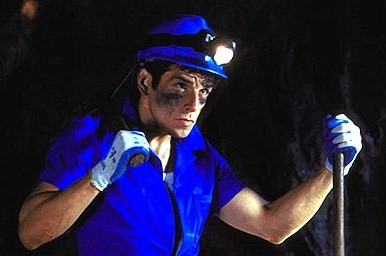

"I think I'm getting the black lung, pop!"
And let’s remember that it is not that far of a drive to get out to coal country even from Washington DC, where both West Virginia and Pennsylvania coal-centric communities are less than a 3 hour drive. It just must really be that hard for fat cat K Street lobbyists to take time out of their busy schedules wining and dining at $2300 / plate fundraisers and take a camera out to coal country to see the actual faces of coal.
Here’s an example of what they might actually find if they did:
[youtube=http://www.youtube.com/watch?v=RPixjCneseE]
[youtube=http://www.youtube.com/watch?v=ats3dClc0No]
Real voices from coal country know that coal is killing us. It kills their local economies and destroys precious landscapes and water supplies and kills workers because greedy mine owners care more about profits than human lives, such as in the case of the Crandall Canyon disaster in Utah last year. It pollutes our air and contaminates our water when we burn it, so much so that a USGS study this week found that every fish they tested in the US had mercury contamination. And even after it’s burned, the coal ash waste is a problem. From when they dig it up out of the ground to when they try to store the ash, coal is dirty, cradle to grave. And grave here is meant in the literal sense.
Don’t be fooled by expensive-cocktail-drinking, $1000-shoe-wearing lobbyists in Washington and their stock photos. The real faces of coal are against it, and we should be moving away from it as quickly as possible.
Posted in Coal | Tagged american coalition for clean coal electricity, astroturf, clean coal, Coal, coal ash, coal ash slurry spill, coal ash spill, coal ash waste, coal industry, coal mines, coal mining, coal plant, Energy, Faces of Coal, Federation for American Coal, mountain top removal, Texas, United Health Care |

UPDATE: Bill Richardson was cleared of any wrongdoing in this fund raising scandal and we wanted to briefly comment on it and also resurrect this post, which to this day remains one of our most read blogs ever.
As I commented in response to some of your reader’s comments below, the point was never to drag Gov. Richardson through the mud. Indeed, considering his eventual vindication, it re-emphasizes the point that if we had a system of public financing, no politician would ever face erroneous charges such as this.
Money muddies the water, both for the good public servant and the bad politician , and anyone we force to raise private campaign cash we are asking them to prostitute their opinions on the altar of political expediency. And we get the system we deserve because of it.
Original Post: Jan 5, 2009
I’ve heard it said that churches are supposed to make bad men good and good men better. Our campaign finance system seems to do the opposite: make good men bad and bad men worse (ie, Governors Richardson and Blagojevich, respectively). As far back as Socrates, outside observers have noticed the corruptive influence of money on public policy. Our public servants worshiping at the altar of campaign donations is sure path to hell for most of us. But the fact that we force them to do so by not providing a public financing system begs the question: Are we getting what we deserve?
As Richardson withdraws his name for consideration of being Commerce Secretary, more and more details are coming out about his ethical problems. Did he take campaign donations that changed his votes? Possibly, or at least there’s enough of an ethical cloud there that no one can know for sure.
And that’s the problem with how we finance our campaigns. No one can ever be truly sure that their Legislators, Representatives, Senators, Mayors, Governors, or Presidents are taking a position because of the merits of the proposals themselves, or because someone with deep pockets convinced them that’s how they should vote. The same can be said of incoming Senatorial appointee Roland Burris. It’s surely not his fault that Blagojevich is a slimeball, but the public just can’t be certain that he was appointed based on his merits alone and not because Blagojevich had some ulterior motive.
The only way to remove all doubt is by supporting public financing. We can only hope during this next Congress that we see some real leadership on this issue so that We the People can know that we are, indeed, still the ones in charge of our government and not the other way around.
Posted in Campaign Finance | Tagged Bill Richardson, Blagojevich, Campaign Finance, corruption, Fair Elections, Fair Elections Now Act, money, politics, public financing, Roland Burris, scandal, Texas |
 UPDATE: The streaming audio from last night’s event was, unfortunately, very hard to listen to — but folks who weren’t willing to wade through the feedback can watch our video of the town hall in its entirety, which we should be able to post in the next couple days 🙂
Tonight KSTX will host a Town Hall on Energy in San Antonio to provide the forum we’ve all been waiting for — an honest and open debate of whether or not SA should invest in two new nuclear reactors and the safe, clean alternatives that SA can choose to meet its future energy needs.
The Clean Technology Forum will provide an opportunity for a similar opportunity for this discussion — but at $50 a pop, only the most well-heeled San Antonians will be able to attend. KSTX’s Town Hall, by contrast, will be free and open to the public. Folks who would like to attend in person should plan on being at the McAllister Auditorium at San Antonio College (SAC) from 6:30 pm to 8:30 pm — but if you can’t make it, never fear. KSTX will be streaming the conversation live from their website www.tpr.org, as well as carrying the town hall on the radio at 89.1 FM. You can also submit your question on Facebook or Twitter — three cheers for interactivity!
Should be a good show — maybe even a bit of a sparring match, judging by the panelists. In one corner we’ve got: Michael Kotara, Executive Vice President for Energy Development, CPS Energy and Mayor Julián Castro, who supports the nuclear option even though he would rather San Antonio own 20% rather than 40% of the new reactors. In the other, Lanny Sinkin, Executive Director, Solar San Antonio and co-founder of Citizens Against Nuclear Power and Public Citizen’s own Tom “Smitty” Smith, whitehat extraordinaire and lifelong agitator of the nuclear bad guys (because, as Smitty likes to repeat “you’ve got to agitate to get the dirt out“).
Texas Vox will be on hand to videotape the town hall, and you can follow our tweets live from @publiccitizentx. Be sure to look for a follow up blog post and video in the next couple days!
Our regular readers already know how we feel about the issue at Public Citizen: San Antonio citizens can’t afford the huge 50% rate hikes that would result from involvement in the proposed nukes at South Texas Project. The billions that San Antonio would sink into the nuclear money pit should instead be spent in San Antonio, creating local jobs in energy efficiency, retrofitting homes and businesses, and developing clean renewable energy technologies including solar, wind and geothermal power.
Hope you can make it out to the event, listen in, or follow up on our post and videos tomorrow! Look for event details and panelist bios after the jump.
Continue Reading »
Posted in Nuclear | Tagged clean technology forum, CPS Energy, facebook, julian castro, kstx, lanny sinkin, michael kotara, Nuclear, Nuclear Power, Public Citizen, public radio, San Antonio, san antonio town hall, solar san antonio, South Texas Project, STP, terry gildea, Texas, texas public radio, Tom "Smitty" Smith, Twitter |
Sen. Edward Kennedy was a dear friend of Public Citizen and a unique person in the Congress whose history and leadership will never be forgotten. Few did as much to advance civil rights and social justice issues as Sen. Kennedy, who also was an early and longtime champion of health care for all. Over the years, he worked with Public Citizen on issues key to the public health and safety. He conveyed a message to our members at our 35th anniversary, calling Public Citizen “an effective voice protecting the fundamental rights of all Americans.” In fact,the most effective voice over the past four decades was Sen. Kennedy’s.
For decades, Sen. Kennedy played a pivotal role on issues important to consumers. He was a leader in advocating health care reform, strong and effective regulation of drugs and medical devices, and maintaining injured consumers’ access to the court system. Sen. Kennedy also succeeded in expanding the Freedom of Information Act, thereby ensuring the public had access to more government records. In each of these areas, his leadership was invaluable to helping Public Citizen achieve its goals.
Along with Public Citizen, he was an early proponent of curbing the influence of drug companies over doctors. Almost 20 years ago, in December 1990, when the topic was largely unheard of, Sen. Kennedy held hearings on the bribing of doctors by pharmaceutical companies. His early leadership raised public awareness about the issue and paved the way for state legislation designed to curb industry influence over doctors.
He was a champion for so many and will be greatly missed.
Posted in Uncategorized | Tagged civil rights, edward kennedy, health care, memoriam, Public Citizen, social justice, ted kennedy, Texas |
The US Chamber of Commerce wants to put the science of global warming on trial. Not only that, they themselves claim they want this trial to be similar to the Scopes Monkey Trial where a Tennessee teacher was put on trial for teaching evolution, made even more famous by the play and film “Inherit the Wind.”
Seriously? SERIOUSLY?
Because the only way to respond to this is through mockery and derision (surely they can’t actually be serious?), we present to you:
INHERIT THE HOT AIR!!! (a comedy in 3 acts)
[vimeo 6282295]
We apologize for the numerous Saturday Night Live circa 1989 references (especially the somewhat obscure “Unfrozen Caveman Lawyer“) and the blatant callbacks to Inherit the Wind, and also ask people to please NOT place plastic bags on their heads and inhale deeply. No Andys were harmed in the filming of this video and I was able to breathe freely at all times. I promise.
On a serious note, what the Chamber is trying to do is to overturn and stall a process which is well underway. In 2007, the Supreme Court in Massachusetts v EPA stated that CO2 is a greenhouse gas, it is linked to climate change, and the EPA should regulate it under the Clean Air Act. In compliance with this ruling, (and only after delays by the Bush Administration which kept this action from occurring), the EPA earlier this year presented an initial endangerment finding, the first step in allowing them to regulate CO2 and other greenhouse gases. They then opened the finding for public comment, which could be sent in by writing, and also held public meetings in Arlington, VA and Seattle, WA to gather public input.
According to documents posted at the Wonk Room, the US Chamber’s main argument is that previous public comment periods have somehow “Tainted” the process and that only an elaborate show trial, orchestrated by them and by putting their junk scientists on the stand, can eliminate the “taint.” (And you know, “Tainted Endangerment Finding” was one of my favorite 80’s songs.)
So, according to the Chamber, public comment is bad, but the opinion of big business and their sham scientists can remove the stain from input by the witless masses.
All of this seems far too much like the plot of a Coen Brothers (or Marx Brothers) movie. These are serious times which require serious thought and reflection, not comical misdirection. But like the Fool in King Lear, only through comedy can we confront the tragedy that surrounds us and point out the serious misdeeds taking place. And this sham by the Chamber of Commerce is even more destructive, because as long as we keep endlessly debating “Is It Happening?” we will never get around to “How Do We Solve It?”
In the words of Stan Lee, “Nuff Said.”
Posted in Global Warming | Tagged ACES, american clean energy and security act, American Clean Energy and Security Act of 2009, astroturf, Carbon Dioxide, climate change, Congress, endangerment finding, EPA, funny, Global Warming, Massachusetts v EPA, Public Citizen, public citizen texas, scopes monkey trial, SEED Coalition, SNL, Texas, unfrozen caveman lawyer, US Chamber of Commerce, video, waxman-markey |
 School is starting, and the Texas Progressive Alliance is prepared as always to ace the test. Here is this week’s roundup of blog highlights.
From TXsharon: Woo Hoo! EPA testing has now confirmed wells are contaminated “with various substances connected with gas drilling”–proof that hydraulic fracturing contaminates our drinking water. Even Motley Fool supports the FRAC Act and says industry is “crying wolf.”
Should Texans care about NJ? The Texas Cloverleaf examines why the GOP thinks we should.
CouldBeTrue of South Texas Chisme says a ‘Wise Latina‘ kicks Republican butt once again.
For a long time it has been universally agreed upon that people should engage in end-of-life planning, at least until right-wing pundits made end-of-life planning an easy but incidental target of their battle against health care reform. Xanthippas at Three Wise Men takes aim at these critics, and the very real harm they do to people with their dishonest and partisan attacks.
WCNews at Eye On Williamson shows why everyone must call their Representatives and Senators because It’s time to end America’s health care emergency.
Off the Kuff spent the week following the Sharon Keller trial. He wasn’t impressed by her defense.
Over at TexasKaos, jaxpagan gets us the scoop on Ted Poe’s Town Hall meeting in a funeral parlor. Snark , with a wicked point!
At McBlogger, Harry Balczak takes a few moments to tell us what he thinks about Whole Foods and it’s ‘health care for all’ hating CEO.
Neil at Texas Liberal is back from a two-week vacation that took him to Chicago, Kenosha, Wisconsin, Indianapolis, Cincinnati, Dayton, Ohio and Northern Kentucky. This itinerary is consistent with a post Neil made earlier this summer encouraging folks to visit the industrial midwest. With vacation over, it’s time now to think of school and swine flu. It sure would help if more working people had paid sick days to help manage getting sick themselves and having kids sick at home.
John Coby at Bay Area Houston has some questions to ask Congressman Pete Olson at his town hall mtg on Aug 29.
Some of the very worst of Texas was on full display last week, and PDiddie at Brains and Eggs documented the atrocities.
BossKitty at TruthHugger is still appalled at the chaos and conflict demonstrated by a Bi-Polar America trying to decide Who is Worthy of a Healthy Life and Who is Not.
Posted in Uncategorized | Tagged bay area houston, bosskitty, brains and eggs, eye on williamson, frac act, mcblogger, off the kuff, pdiddie, pete olson, Texas, texas kaos, texas liberal, texas progressive alliance, the texas cloverleaf, three wise men, truthhugger, txsharon |
A new line of intrigue in the Energy Citizen astroturf events: turns out that, on top of being funded by the American Petroleum Institute and stocked with (at the Houston event, exclusively) energy company employees, the majority of them are also being organized by oil-industry lobbyists.
Kate Sheppard from Grist reports:
Here’s more evidence that the “Energy Citizens” rallies against climate legislation are anything but grassroots uprisings. We already knew that the American Petroleum Institute was behind the whole idea. Now it turns out that even the local organizers of individual rallies are oil-industry lobbyists.
Grist obtained a copy of API’s list of coordinators for the 21 planned rallies, and 15 of them are registered lobbyists, mostly for API or its state-level affiliates.
There have already been three “Energy Citizens” rallies—in Houston, Texas, on Tuesday; in Roswell, N.M., on Thursday; and in Lima, Ohio, on Friday. Others are planned for cities around the U.S. during the rest of the August congressional recess.
Posted in Energy | Tagged american petroleum institute, astroturf, company picnic, Energy Citizens, grist, houston rally, kate sheppard, oil lobbyists, Texas |
Citizen opposition to more nuclear reactors at Comanche Peak continues. On August 6th the Atomic Safety and Licensing Board (ASLB) Panel found that Luminant had failed to adequately analyze issues brought by concerned citizens in their Petition to Intervene in the proposed expansion at Comanche Peak Nuclear Power Plant.
“This is a major victory for those living near Comanche Peak and throughout Texas,” says Karen Hadden, Executive Director of Sustainable Energy and Economic Development (SEED) Coalition. “The ASLB Panel has recognized in their decision that Luminant has not sufficiently analyzed alternatives to nuclear power as the law requires.”
The Comanche Peak Interveners (formerly referred to as Petitioners) include SEED Coalition, Public Citizen, Ft. Worth-based True Cost of Nukes and Texas Representative Lon Burnam, District 90, Ft. Worth. On June 10th-11th, the Interveners’ attorney, Robert V. Eye, went before the designated ASLB Panel and argued the admissibility of the 19 contentions filed with the Nuclear Regulatory Commission on April 6th challenging the adequacy of Luminant’s application to construct and operate Comanche Peak Units 3 and 4. Four months later, the ASLB Panel found that two of the contentions deserved further inquiry and delayed a decision on the Interveners’ contention dealing with the Luminant’s lack of plans to deal with catastrophic fires and/or explosions.
“The Environmental Report in Luminant’s application is seriously flawed,” says Mr. Eye. “The collocation of Comanche Peak Units 1 and 2 and the proposed Units 3 and 4 is never considered in light of various accident and radiological release scenarios. A radiological accident at one unit could cause collateral impacts and disruptions in operations at the other units, and Luminant should have considered this.”
The contentions admitted for further adjudication in the August 6th ASLB decision are as follows:
Contention 13. Impacts from a severe radiological accident at any one unit on operation of other units at the Comanche Peak site have not been, and should be, considered in the Environmental Report.
Contention 18. The Comanche Peak Environmental Report is inadequate because it fails to include consideration of alternatives to the proposed Comanche Peak Units 3 and 4, consisting of combinations of renewable energy sources such as wind and solar power, with technological advances in storage methods and supplemental use of natural gas, to create baseload power.
Posted in Nuclear | Tagged alternative energy, atomic safety and licen, atomic safety and licensing board, bob eye, comanche peak, Comanche Peak Nuclear Power Plant, Karen Hadden, Luminant, Nuclear Regulatory Commission, SEED Coalition, solar, Texas, Texas Representative Lon Burnam, true cost of nukes, wind |
Kudos to the North Carolina Conservation Network for rallying the troops for a real grassroots protest outside of today’s Energy Citizen company picnic in Greensboro. Fifty protesters turned out to show their support for clean energy and green jobs development, NCCN reports:
Local folks gathered on the sidewalks surrounding the coliseum to make sure that voices in support of federal action on energy were heard. While a drum corps provided the entertainment, the citizen-activists held signs and banners calling on Senator Kay Hagan (North Carolina) to support efforts in the US Senate to pass strong clean energy and climate legislation this year.
State Representative Pricey Harrison (from Greensboro) was there as well as representatives from clean energy businesses, labor and faith communities. State Representative Harrison along with U.S. Representative Howard Coble attempted to enter the event. While Representative Coble was allowed entry, Representative Harrison (who represents the district in which the event was held) was denied access. Also allowed into the event were activists from FreedomWorks, a right-wing group that has ties to big business and the oil industry.
[youtube=http://www.youtube.com/watch?v=Jy7ycMh7pKk&feature=player_embedded]
Rep. Coble was invited inside because he voted against the American Clean Energy and Security Act, but Rep. Harrison (who voted for it) was denied entry. How completely ridiculous. At least the “Energy Citizens” American Petroleum Institute has wised up enough to let their supporters from FreedomWorks inside — looks like they learned their lesson from the Houston rally, where anti-cap and trade activists were rudely turned from the door for trying to bring in American flags.
Posted in Global Warming | Tagged astroturf, cap and trade, citizen, climate change bill, costs, Energy Citizen, energy legislation, gas prices, greensboro, jobs, Jon Cornyn, kay bailey hutchinson, labor, north carolina, north carolina conservation network, Public Citizen, Senator Cornyn, Senator Hutchinson, taxes, Texas |
Even though we were denied access, our intrepid Citizen Sarah was able to blend in with a crowd walking in and starting talking to energy company employees about climate change legislation. You know, Energy Company Employees Can Say the Darndest Things:
[youtube=http://www.youtube.com/watch?v=2gp6mVn0XWE]
Look for:
- Global Warming Deniers!
- People Who Have NO IDEA What is actually in the American Clean Energy & Security Act!
- Misrepresentations about the bill–and our energy policy and energy sector– all spouted back like they got the memo of Big Oil’s talking points!
- And…. a guy from a natural gas company who really understands what made the climate bill bad: too much special interest influence and lobbying! (irony, much? But he does have a point….)
Posted in Campaign Finance, Energy, Global Warming | Tagged astroturf, cap and trade, citizen, climate change bill, costs, Energy Citizen, energy legislation, gas prices, jobs, Jon Cornyn, kay bailey hutchinson, labor, Public Citizen, Senator Cornyn, Senator Hutchinson, taxes, Texas |
The Energy Citizens’ rallies company picnics, such as the one we crashed yesterday in Houston, have been getting a lot of attention through the Netroots, in national publications, and even last night on Rachel Maddow (where one of our videos was featured, even if credit was not given — no worries this time Rach, we love you anyway).
Though the Netroots has gotten the message loud and clear: these are really just company picnics, not uprisings of real grassroots support, there has still been some hedging on the part of the traditional media — who is still reporting that “many of the people attending the demonstration were employees of oil companies who work in Houston and were bused from their workplaces.”
But the truth is that the Houston rally was attended ONLY by energy company employees and retirees (at least that’s the way they wanted it). It’s no big surprise that a few rabble-rousing enviros were kicked out, but when even those that oppose cap and trade were turned away– that should raise major red flags about the true nature of these events. This isn’t even Astroturf anymore, this is asphalt.
But don’t take my word for it, listen to the anti-cap and trade folks from Freedom Works that were from yesterday’s rally:
[youtube=http://www.youtube.com/watch?v=n2Mv6bXJ8fQ]
Or watch the higher quality version on Vimeo:
[vimeo 6199393]
Here is another guy we caught up with outside who was also barred from entering– he[youtube=http://www.youtube.com/watch?v=2hyuEIZVuhk] called it “a circus” and “a county fair”.
Posted in Global Warming | Tagged astroturf, cap and trade, citizen, climate change bill, costs, Energy Citizen, energy legislation, gas prices, jobs, Jon Cornyn, kay bailey hutchinson, labor, Public Citizen, Senator Cornyn, Senator Hutchinson, taxes, Texas, unemployment, waxman-markey |
[youtube=http://www.youtube.com/watch?v=_IUdPPbeYns]
Posted in Global Warming | Tagged ACES, API, astroturf, Big Oil, cap and tax, cap and trade, climate change, crap and trade, Energy Citizens, energy rally, Global Warming, houston, Public Citizen, Texas, waxman-markey |
As you may have read elsewhere on our blog, we tried to attend the “Energy Citizens” rally in Houston yesterday but were turned away.
Even far-right teabaggers, brought out to the event by FreedomWorks and a promise of a free meal, weren’t allowed in, despite actually being sympatico with Big Oil’s agenda.
[youtube=http://www.youtube.com/watch?v=mkGSuYzg8z4]
The offending item that got one kicked out? An American flag. Why does Big Oil hate our freedom?
This is just the 30 second trailer– a longer, more in-depth interview with people who were not allowed in the rally will be posted in the next 24 hours.
Posted in Campaign Finance, Global Warming | Tagged #FrontGroupFAIL, ACES, API, astroturf, Big Oil, cap and tax, cap and trade, citizen sarah, climate change, crap and trade, Energy Citizens, Global Warming, Public Citizen, Texas, waxman-markey |
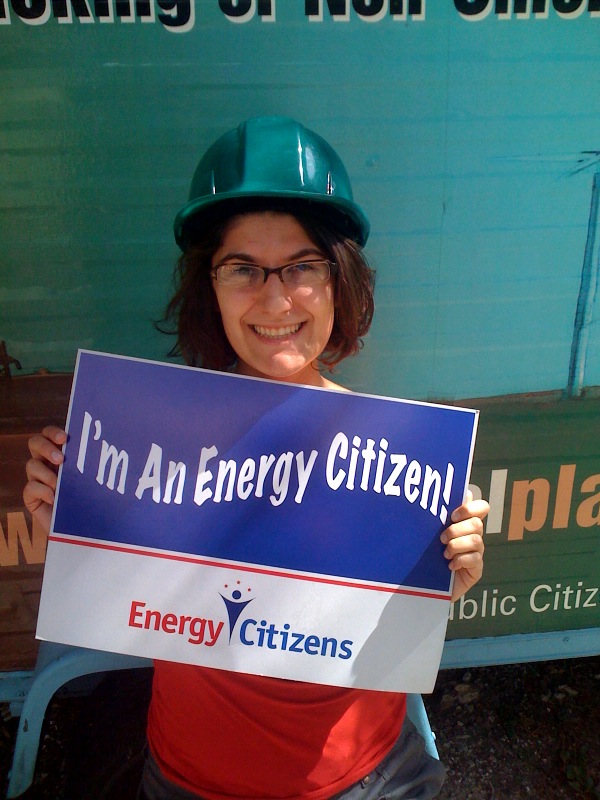 Yesterday the Public Citizen Texas team drove down to Houston to crash the American Petroleum Institute’s Energy Citizen event. Billed as a “grassroots” rally against the cap and trade bill currently before Congress, this event was nothing more than a company picnic.
About 2500 energy employees were brought by charter bus to the Verizon Wireless Theater, a private location that could be easily secured to keep undesirables out. David, Ryan, and Andy were all denied access, but stealthily dressed in Banana Republic and spectator pumps, I was able to blend in with the crowd and slip into the hot dog line.
Inside the theater it became evident quickly what a polished, professional event this was. Right at the door you could pick up a bright yellow t-shirt with a clever slogan on it like “I’ll pass on $4 gas”, “I’m an Energy Citizen!”, and “Congress, Don’t Take Away My Job!” The same lines could also be found on bumper stickers and the same kinds of cardboard signs you would wave at a football game.
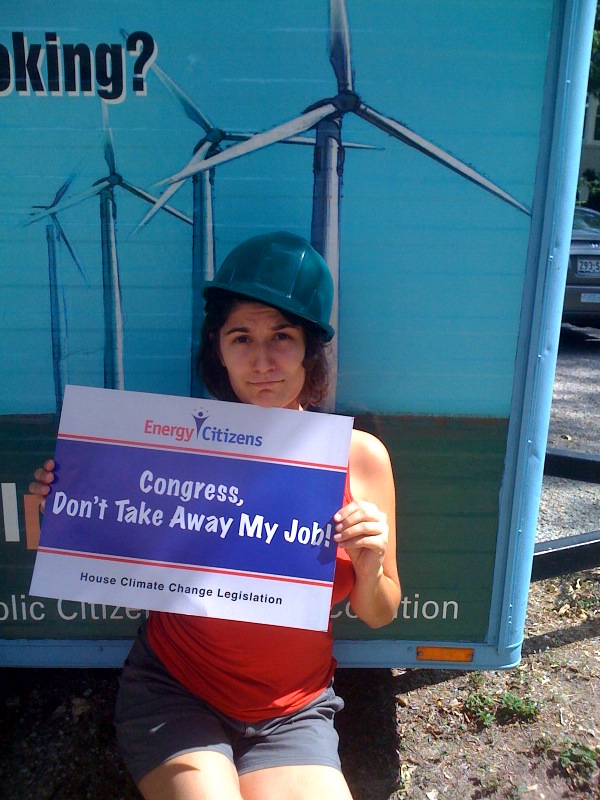
In the middle of the arena was a giant action center where employees could voice their disapproval of climate change legislation through a variety of mechanisms. Six or seven computers were cued up with petitions to Sens. Hutchison and Cornyn, and attendees were invited to text JOBS to 363749(ENERGY) to get involved. Drop boxes for postcards were also positioned in the corners of the room, and “activists” could sharpie their signatures to 8 foot tall “shame on you” or “thank you” letters to Congressmen that voted for or against the American Clean Energy and Security Act.
My favorite aspect of the rally by far, however, was the high school marching band and star spangled dance team. When I asked one of the teenage dancers what she thought the rally was about, she told me she thought that it was about conserving energy.
I was able to interview several rally attendees, but the majority of folks regarded me with suspicion or didn’t want to talk to me. Others clearly didn’t have much of an opinion on the bill other than what they’d been told, but one gentleman I spoke to was actually concerned about the special interest carve-outs in the bill for dirty coal. Stay posted for the video of these interviews later today, with the working title “Energy Workers Say the Darndest Things.” Teaser:
[youtube=http://www.youtube.com/watch?v=bEXFt8fwh_0]
After about an hour I started to run out out of room on my camera, so I moved toward the front doors to see if I could trade off cameras with Andy, who was still stationed outside. Big mistake. Once the chief security guard saw me make eye contact with a marked man, I was out of there. He grabbed my shoulder and asked “what energy company do you work for?” When I said I wasn’t with an energy company but was a member of the media, he said I was misrepresenting myself and summarily kicked me out.
I was a little disappointed to miss out on the great list of speakers, especially rodeo man Bill Bailey, who was master of ceremonies (irony, irony, irony, seeing as this rally was all hat and no cattle). But speaking to other individuals who had been denied access was even more enlightening than listening to Big Oil preach their sermon.
This was such a fake, Astroturf event that they didn’t know how to handle legitimate grassroots support. A couple of women who had been to some of the teabagger events and townhalls came down, armed with American flags and excited to protest “crap and tax” — but even THEY weren’t allowed in. Several others who had heard about the rally through Freedom Works, on right wing radio, or in the paper were also locked out.
Yesterday’s rally was the first of about twenty rallies that will be staged nationwide over the next few weeks. Thanks to Greenpeace, we already knew Big Oil’s game plan: rally up a bunch of Astroturf support to kill cap and trade. But now we know the full story — they don’t even want to hear the voices of their real grassroots. These events are by invitation only, and all other members of the public — for or against climate legislation — will be shut out. If you don’t work for the company, you’re not invited to the picnic.
Posted in Global Warming | Tagged ACES, API, astroturf, Big Oil, cap and tax, cap and trade, citizen sarah, climate change, crap and trade, Energy Citizens, Global Warming, Public Citizen, Texas, waxman-markey |
« Newer Posts - Older Posts »


