March 12, 2014 by kaibawhite
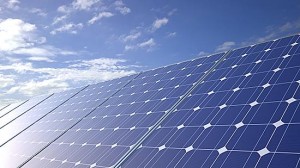 Late last week, Austin Energy announced that it will bring contracts for two large new solar projects to City Council for approval at the March 20th meeting. The contracts that Austin Energy is poised to sign, after Council approval, are for 150 megawatts of solar power from SunEdison and the price agreed to is nothing short of phenomenal. At less than 5 cents per kilowatt-hour, Austin will have solar energy for the same price as electricity from natural gas generators.
Austin Energy predicts that this solar project will actually LOWER RATES slightly. That’s right folks – we’re getting clean renewable energy AND lower bills.
These new solar facilities will be completed by 2016, and will provide Austin Energy with power for 25 years. That’s 25 years of electricity at a fixed cost, something that simply can’t be obtained from a gas or coal plant. When natural gas prices go up, so does that “Power Supply Adjustment Fee” on bills. The beauty of wind and solar projects as that there are no fuel costs, so consumers are protected from unexpected price hikes.
Austin Energy should be commended for it’s excellent work in seeking competitive bids for this project and for capitalizing on an opportunity to contract for more than the 25 to 50 megawatts it initially planned for when it became clear that prices were lower than expected. This significant Austin Energy solar expansion is big news, not just for the utility and the city, but for the state of Texas.
Show your utility some love on Facebook and Twitter (@austinenergy) for a job well done. Use the hashtag #solarsaves.
Posted in Austin Energy, Consumers, Energy, solar | Tagged Austin Energy, solar power, SunEdison, Texas |
March 11, 2014 by Adrian Shelley

Photo by Max Anderson
Above All Else had their world premiere to a full audience at South by Southwest in Austin on Monday, March 10, 2014. The film takes an intimate look at a group of landowners and activists in East Texas who tried to stop construction of the Keystone XL pipeline, which carries tar sands oil from Canada to refineries on the Texas Gulf Coast.
The film focuses on David Daniel, a former circus performer who settled down with his family in the woods of East Texas. David and his family wanted to settle down for a quiet life in the country when something unexpected happens: TransCanada tells him they want to put a pipeline through his property. David begins to build a tree-sit on his property with the help of organizers from the Tar Sands Blockade. The film takes a personal look at how David begins to rally his neighbors and allies to try and stop the Keystone XL pipeline.
Photo by Vanessa Ramos
After the film John Fiege, director, his crew and several people featured in the film answered questions about the film from a lively audience. Julia Trigg Crawford, one of the landowners featured in the film, said, “It is an unbelievable travesty what happened with David. They’ve taken away his First Amendment right.”
John Fiege and his crew made an excellent film that tells the personal stories of individuals who risked financial ruin, their personal safety, and the security of their families. Above All Else will give anyone interested in the Keystone XL and tar sands issue a different perspective of the fight on the ground.
Above All Else will have two more showings at SXSW this week. The next showing is today, March 11, at SXSatellite: Alamo Village from 4:30 PM to 6:04 PM. The final showing will be Saturday, March 15, at the Topfer Theatre at ZACH from 2:00 PM to 3:34 PM. Check out the Above All Else website and the film’s SXSW page.
Posted in Climate Change, Energy, Global Warming, pipelines, Privacy, Property Rights, Tarsands, Transportation | Tagged Above All Else, david daniel, East Texas, John Fiege, Keystone XL pipeline, public citizen texas, Tar Sands Blockade, Texas |
March 10, 2014 by Adrian Shelley
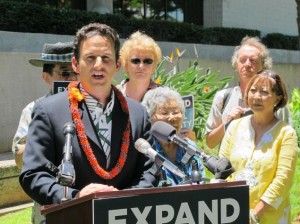
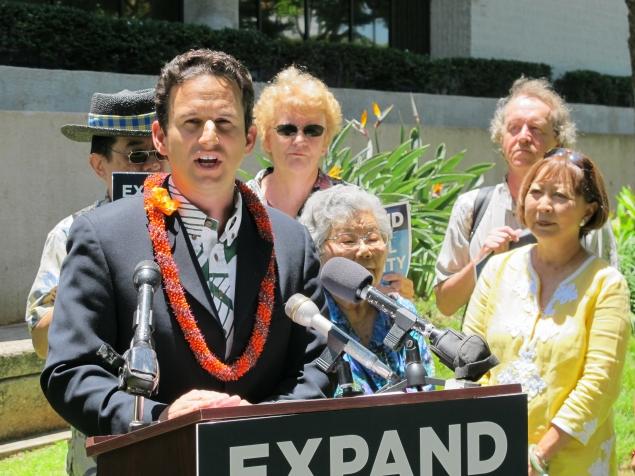
Senator Brian Schatz (D – Hawaii) will lead the Talkathon
Photo by Audrey McAvoy, AP
Tonight, 28 US Senators will stay up discussing climate change all night to get Congress to ‘wake up’ to the realities of the issue.
The so-called talkathon is scheduled to begin after Senate’s last votes today and continue until 9 AM tomorrow morning. During the night the Senators, comprised of 26 Democrats and 2 Independents, will be tweeting from the talkathon using the hashtag #Up4Climate, hoping to get the attention of Congress and the American people.
The talkathon is organized by the Climate Action Task Force, a group launched in January whose goal is to take an aggressive stance on climate in Congress, and led by Brian Schatz (D – Hawaii).
You can follow the Senate’s Climate Change Talkathon on Twitter with the hashtag #Up4Climate and sign the Climate Action Task Force’s petition here.
Posted in Climate Change, Global Warming, Good Government | Tagged Brian Schatz, Climate Action Task Force, climate change, Congress, senate, Texas, US Senators |
March 8, 2014 by Adrian Shelley
Blog post by Vanessa Ramos and Max Anderson
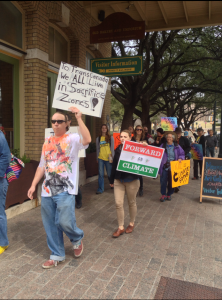
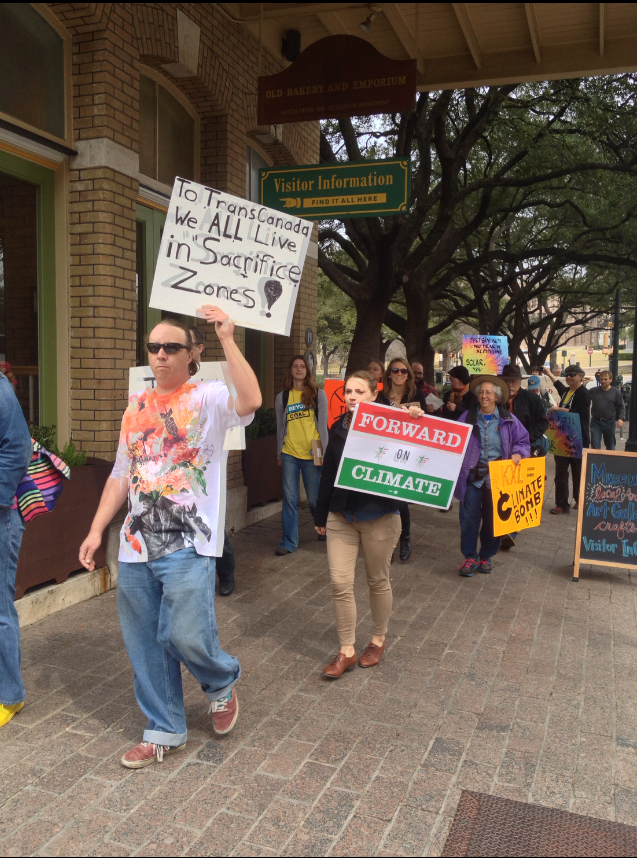
KXL protesters march to the Austin Club
Photo by Kaiba White
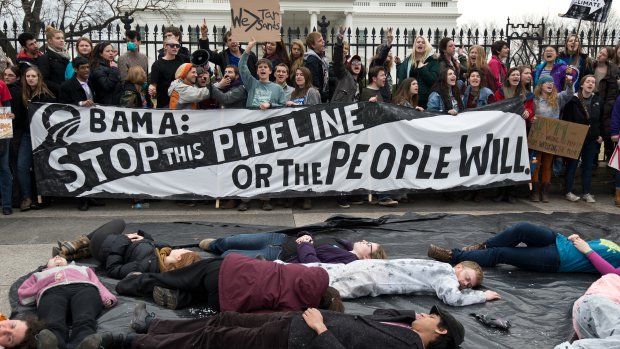
The heat has been turning up on the State Department and President Obama this past week from KXL Dissent. Nearly 400 youth were arrested while protesting against the Keystone XL tar sands pipeline in front of the White House this past weekend, which was the largest youth act of non-violent civil disobedience at the White House in more than a generation. On Monday, nine people were arrested at the State Department building in San Francisco during a youth led protest of the Keystone XL pipeline. The momentum to stop this climate-killing pipeline has been building all across the country, and yesterday people in Austin made their stand against toxic tar sands.
People gathered at the south gates of the Texas Capitol and marched to Austin Club to have a welcoming demonstration for Canadian Ambassador Gary Doer, who was in town to give a speech promoting the Keystone XL pipeline, among other things. Public Citizen, Sierra Club, Austin Climate Action Network, and Environment Texas organized the event, but opposition to the pipeline extends well beyond environmental groups and includes many conservative landowners.
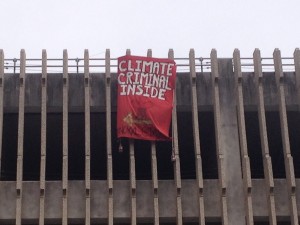
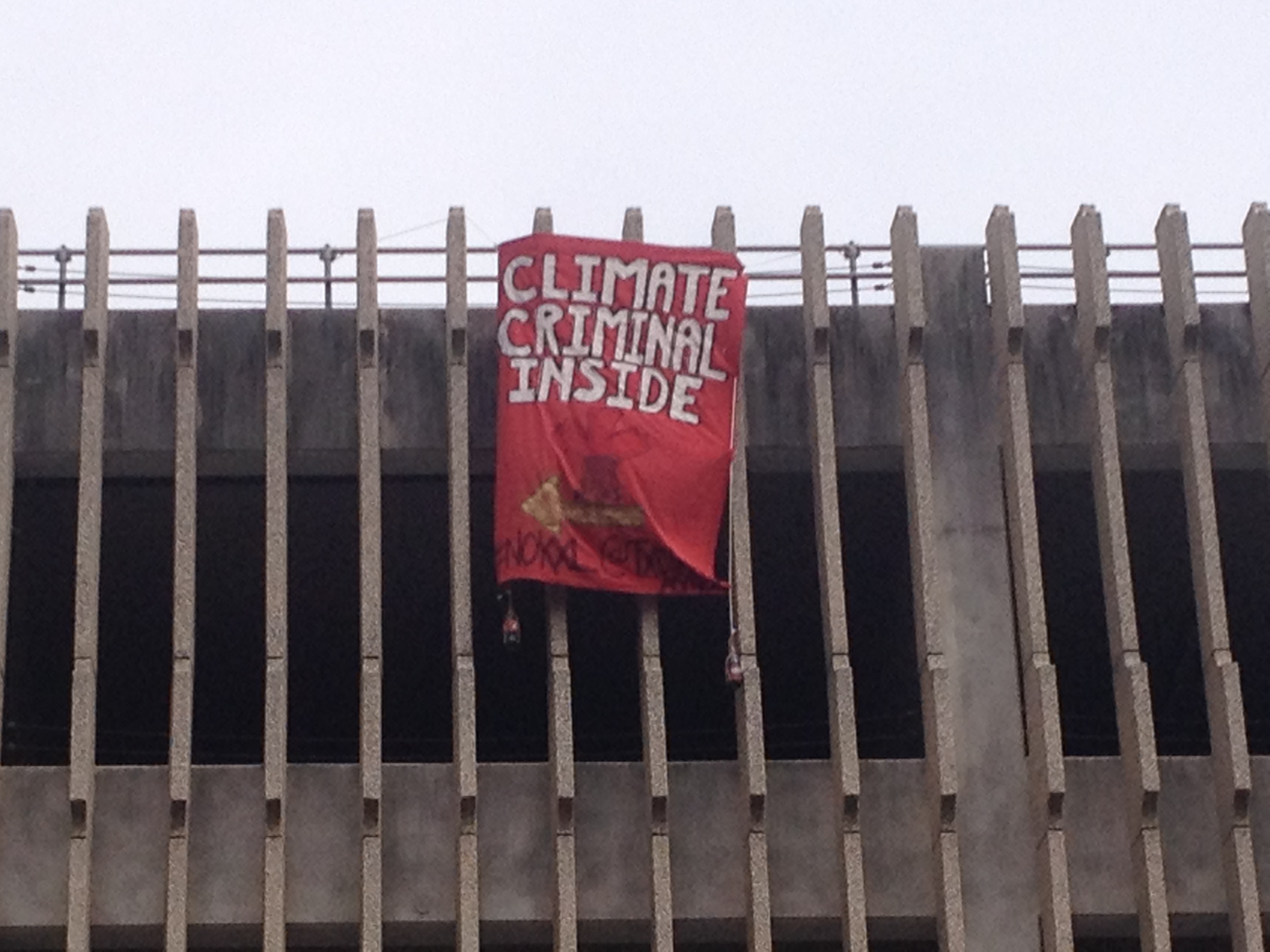
Banner pointing to the Austin Club
Photo by Kaiba White
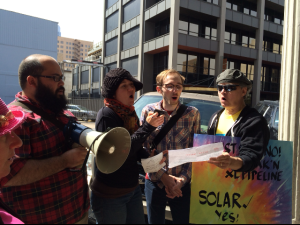
Banners hung from the parking garage next door to the Austin Club greeted the protesters. People carried signs and marched to the sounds of djembe, pots and pans, cornet and chanting.
Attendees for Ambassador Doer’s luncheon had to walk through the crowd of about 30 chanting protesters who formed a picket line in front of the entrance.
 Yesterday marked the end of the public comment period with the State Department for the Keystone XL pipeline. This was the last chance for citizens to officially weigh in on the issue. President Obama still has 60 more days to hear from the different government departments as to whether they think the pipeline will be in our national interest. President Obama is expected to make a final decision on whether or not to approve the pipeline by the middle of summer.
Posted in Climate Change, Global Warming, Tarsands | Tagged #nokxl, #xldissent, Canadian Ambassador Gary Doer, climate change, president obama, state department, Texas |
March 6, 2014 by kaibawhite
 Good governance advocates got a win at City Hall today when the Austin City Council approved a resolution to create the Austin Generation Resource Planning Task Force. The task force will examine energy options and make recommendations regarding the 2014 update to the Austin Energy Resource, Generation, and Climate Protection Plan, which will be approved by City Council later this year.
A similar task force was instrumental in developing the original Austin Energy Resource, Generation, and Climate Protection Plan, which was approved in 2010 and advocates representing a variety of interests where dismayed to discover that a task force wasn’t part of the panned process this time around. Luckily though, City Council saw the need for greater public involvement and worked quickly to approve a task force. The resolution was sponsored by Council Members Tovo, Spelman and Morrison and passed on a 6 to 0 vote (Mayor Leffingwell was absent).
In addition to providing greater transparency and public involvement in the update process, the task force will afford an opportunity to more thoroughly analyze the the energy options available. The full costs and benefits of Austin’s energy choices, including climate change, air quality, water use, water contamination, health impacts, local economic development, and short and long term impact on rates need to be considered.
The task force will also provide a value able opportunity to examine what goals are being set and what programs are being implemented in other cities and states that could be favorably applied to Austin Energy. Carbon reduction and renewable energy goals and community solar and energy efficiency and renewable energy programs for low income customers deserve a closer look. Likewise, the task force will be able to gather more information on energy sources that are viable in Texas, but have been underutilized, such as concentrating solar power (CSP), thermal energy storage, compressed air energy storage, and geothermal energy.
The task force will be appointed by the end of March and will have three months to complete its work. It’s meetings will be open to the public, so all will be welcome to attend.
Posted in Austin Energy, Climate Change, Consumers, Energy, Global Warming, Good Government | Tagged austin city council, austin climate protection plan, Austin Energy, Generation Plan Task Force, Texas |
March 4, 2014 by Adrian Shelley
 The deadline is fast approaching for the public’s last chance to register an official comment against the Keystone XL pipeline. The State Department’s public comment period will end on Friday, March 7th. Right now is your last chance to tell Secretary of State John Kerry that the Keystone XL tar sands pipeline is not in our national interest. Secretary Kerry’s opinion will weigh heavily in President Obama’s decision.
This is our final opportunity to officially weigh in on the decision. Submit a comment right now to tell the Obama Administration that the “game over for the climate” Keystone XL pipeline is NOT in our national interest.
Now President Obama must choose whether he wants to take us down the road of expanding the use of dirty fossil fuels, like tar sands, or fight for a sustainable future. The Keystone XL is central to increasing production of the Alberta tar sands, which will significantly add to carbon emissions. The massive infrastructure would lock us into dependence on this dirty fuel for decades to come. Last June, standing in the sweltering heat before an outdoor audience at Georgetown University, President Obama pledged that he would not approve the pipeline if it would “significantly exacerbate the problem of carbon pollution.” Now, he should reject the Keystone XL tar sands pipeline.
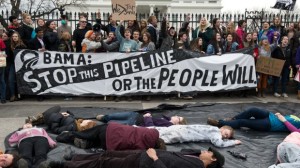
March 2nd Keystone XL Youth Protest in Washington D.C
Photo credit: Nicholas Kammafp, Getty Images
From Coast-to-Coast People Are Standing Up Against Tar Sands
- Last Sunday, more than 1,200 youths from across the country marched from Georgetown University to the White House to protest the Keystone XL. Nearly 400 youths were arrested for zip-tying themselves to the White House fence and staging a mock oil spill. This protest is the largest youth act of non-violent civil disobedience in front of the White House in more than a generation.
- On Monday, nine people were arrested at the State Department building in San Francisco during a youth led protest of the Keystone XL pipeline.
- Last month, thousands of people got together and held more than 280 vigils in 49 states across the country to say NO to Keystone XL.
Crash the Keystone XL Party: No KXL in ATX
The momentum to stop this pipeline is building all across the country. On Friday, March 7th, Austin will join Washington D.C. and San Francisco in telling President Obama that we do not want the Keystone XL. Join us at 10:30 a.m. at the South Gates of the Texas Capitol (11th and Congress). Be sure to bring your signs, pots-n-pans, walking shoes and conviction to stop this climate killing pipeline.
This is our last chance to voice concerns to the State Department before the public comment period ends on March 7th. We need to get our message across to Secretary Kerry, because what he says could be one of the biggest determining factors in President Obama’s decision.
Submit your comment: Keystone XL is NOT in our national interest.
Posted in Climate Change, Energy, Global Warming, green jobs, pipelines, Property Rights, Tarsands | Tagged #nokxl, #xldissent, keystone xl, president obama, Secretary Kerry, state department, Tar Sands, Texas |
March 3, 2014 by Citizen Carol
ERCOT asks folks to set their thermostats no higher than 68 degrees
On March 2nd, the Electric Reliability Council of Texas (ERCOT), the Texas electric grid operator, issued a watch due to the strong arctic front that made its way into Texas and through the ERCOT system. ERCOT is experiencing resource and transmission issues and is appealing to Texas customers to continue limiting their electric use as much as possible through 9 a.m. Tuesday, March 4, as these late winter weather conditions continue.
Power demand at ERCOT exceeded the previous March record of 43,033 MW every hour since 5 p.m. Sunday, March 2. ERCOT’s Report on the Capacity, Demand, and Reserves for 2013 shows a projected firm load forecast for winter 2014 of 53,742 MW, with operational generation of 72,476 (assuming there is not a sudden loss of generation during a winter event) with potential resources of 80,164. Of course, some units are down for scheduled maintenance so the potential resources and operational generation can be significantly lower at any given time and if there is sudden loss of generation as the state experienced in early February 2011, the state could experience rolling blackouts.
On February 2nd in 2011, ERCOT declared an energy emergency after unusually frigid weather unexpectantly shut down numerous power generators that produced 7,000 megawatts, about 8 percent of the installed capacity. That day, Texas imposed statewide rolling blackouts for only the second time in over two decades. Texans across the state were frustrated and cold, many initially blaming wind energy for the loss of power, but in fact, wind was performing as expected. It was coal and gas plants that destabilized the grid that day, but because ERCOT does not release information for 30 days after an outage about who is to blame, renewables were the scapegoat. So if we go into rolling blackouts, wait for thirty days before you start blaming one power source over others.
Concerned About Rolling Blackouts? There’s an app for that!
Because of the 2011 heat wave and drought, ERCOT introduced an app for smartphones intended to alert Texas users about emergencies to the electric grid that could trigger rolling blackouts. This alert system would urge consumers to conserve energy during those times.
In the midst of the record breaking heat in the summer of 2011, the Electric Reliability Council of Texas called on Texans to conserve when power generators weren’t able to keep up with extreme demand on several days. That conservation helped ERCOT avoid rolling outages. The new app will notify users of Apple and Android devices when the grid operator needs people to cut back usage to avoid blackouts.
iPhone, iPad and Android users can find the free ERCOT Energy Saver app by searching for ERCOT in the Apple and Google app stores, or you can link to the app below.
ERCOT will also use traditional methods of alerting the public about grid emergencies, but for the tech obsessed – this is an option. As for me, armed with my smart thermostat, its smartphone app and the ERCOT app, I stand ready to do my part this winter.
Posted in Renewables | Tagged conserve energy, ercot, rolling blackouts, Texas |
March 3, 2014 by Adrian Shelley
In a recent blog post, I reported on the completion of a large amount of CREZ transmission lines – infrastructure that incentivizes the production of wind energy – here in Texas. While the discussion around wind energy is usually around environmental responsibility, it is important not to overlook some of the more salient effects of wind energy – namely, consumer savings.

Photo from Renewable Energy Magazine
A recent report by the American Wind Energy Association notes that states that get more than 7% of their energy from wind have seen electric rates go down by .37% over the last five years, whereas all other states have seen a 7.79% increase in electric rates. Luckily, Texas is one of these 11 states that get more than 7% of its energy from wind, along with Wyoming, Oregon, Oklahoma, Idaho, Colorado, Kansas, Minnesota, North Dakota, South Dakota and Iowa.
There’s still more good news to come – as more wind develops in Texas, your electric bill could be lowered even more. Some reports show that when wind provides 14% of electricity, prices drop 10%, and when it reaches 24%, prices decline 15% .
Wind’s not just good for the environment, it’s good for your wallet, too.
Posted in Consumers, Energy, Renewables, Utilities, wind | Tagged American Wind Energy Association, CREZ, electric bills, Texas, wind energy |
March 1, 2014 by Adrian Shelley
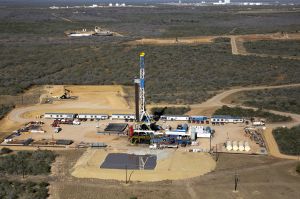
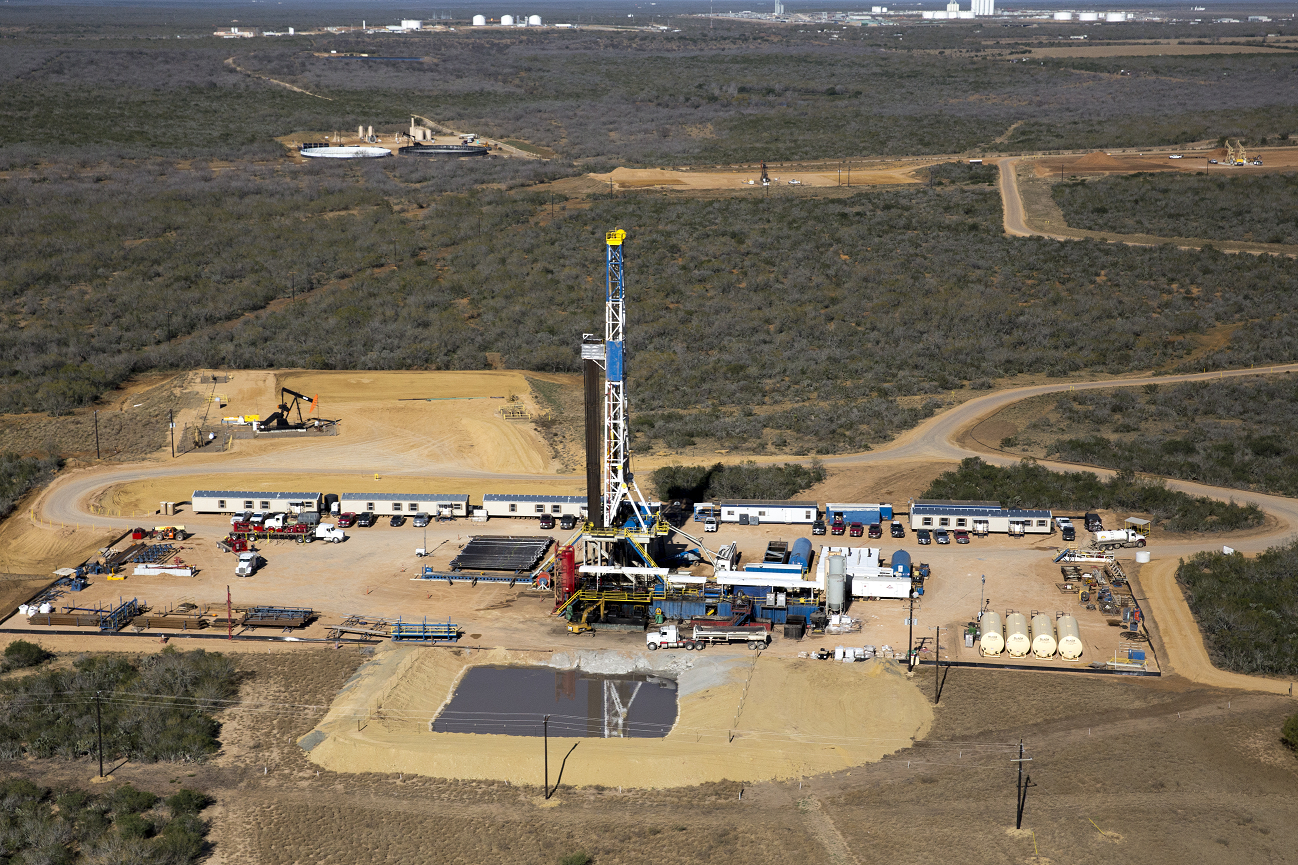
Oil drilling site, w/ pond for fracking water, Cotulla, TX
Photo by Al Braden
The Eagle Ford Shale play in south Texas is the 400-mile-long area that has become home to one of the country’s biggest energy booms in the past six years. The thousands of oil and gas wells producing in the region have brought dangerous air pollution to residents.
The Center for Public Integrity, InsideClimate News and The Weather Channel released a new exposé titled, “Fracking the Eagle Ford Shale: Big Oil & Bad Air on the Texas Prairie,” last week. Their eight month investigation reveals the dangers that come with fracking in the form of toxic chemicals released into the air as a result of the complicit culture of the government of Texas. In case you just want to read the highlights of the report, the team was nice enough to summarize their major findings:
- Texas’ air monitoring system is so flawed that the state knows almost nothing about the extent of the pollution in the Eagle Ford. Only five permanent air monitors are installed in the 20,000-square-mile region, and all are at the fringes of the shale play, far from the heavy drilling areas where emissions are highest.
-
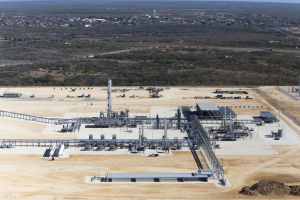
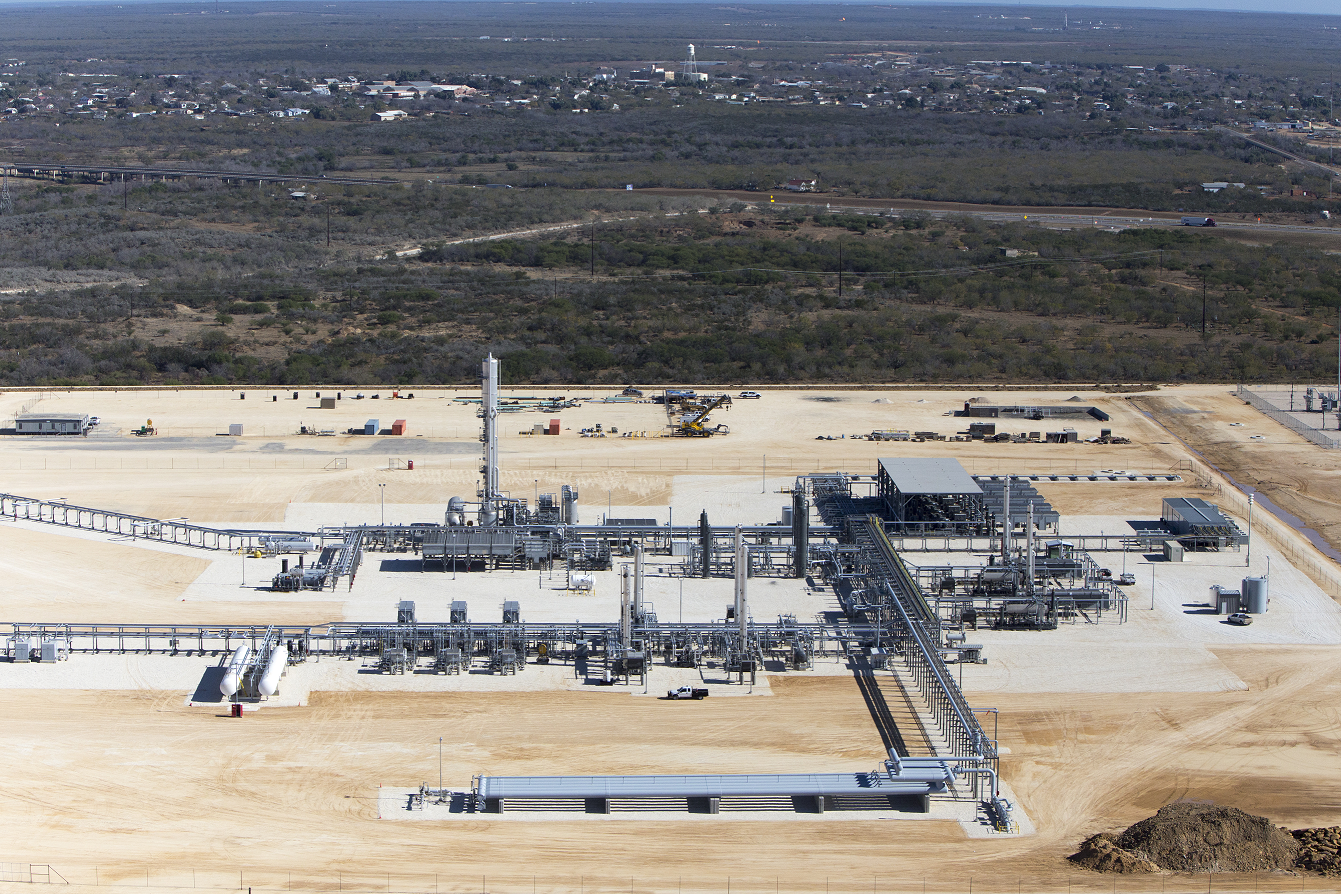
Anadarko Brasada Cyro Gas Plant, Phase 1 of 3, Cotulla, TX.
Photo by Al Braden
Thousands of oil and gas facilities, including six of the nine production sites near the Buehrings’ house, are allowed to self-audit their emissions without reporting them to the state. The Texas Commission on Environmental Quality (TCEQ), which regulates most air emissions, doesn’t even know some of these facilities exist. An internal agency document acknowledges that the rule allowing this practice “[c]annot be proven to be protective.”
- Companies that break the law are rarely fined. Of the 284 oil and gas industry-related complaints filed with the TCEQ by Eagle Ford residents between Jan. 1, 2010, and Nov. 19, 2013, only two resulted in fines despite 164 documented violations. The largest was just $14,250. (Pending enforcement actions could lead to six more fines).
- The Texas legislature has cut the TCEQ’s budget by a third since the Eagle Ford boom began, from $555 million in 2008 to $372 million in 2014. At the same time, the amount allocated for air monitoring equipment dropped from $1.2 million to $579,000.
- The Eagle Ford boom is feeding an ominous trend: A 100 percent statewide increase in unplanned, toxic air releases associated with oil and gas production since 2009. Known as emission events, these releases are usually caused by human error or faulty equipment.
- Residents of the mostly rural Eagle Ford counties are at a disadvantage even in Texas, because they haven’t been given air quality protections, such as more permanent monitors, provided to the wealthier, more suburban Barnett Shale region near Dallas-Fort Worth.
Continue Reading »
Posted in Air Quality, Climate Change, Energy, Fracking, Global Warming, Health, natural gas, Safety, TCEQ, Toxics | Tagged Air Quality, benzene, Big Oil Bad Air, Cottulla, Eagle Ford Shale, fracking, hydrogen sulfide, karnes city, Karnes County, natural gas, Texas, toxic |
February 28, 2014 by Adrian Shelley
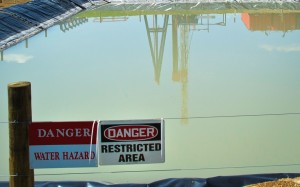
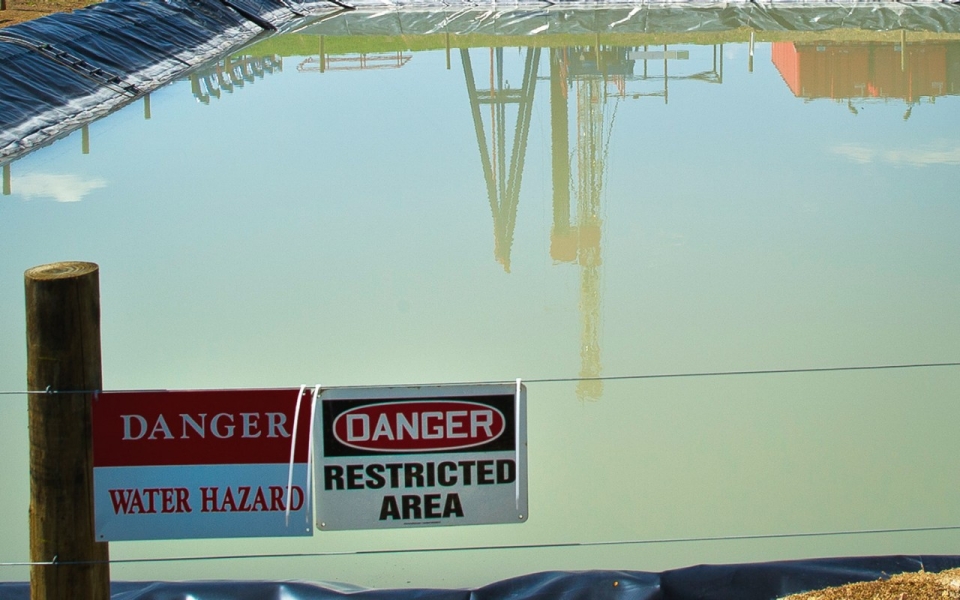
Drilling Rig Reflected in Wastewater Holding Pond
Photo by Mladen Antonov, AFP/Getty Images
Studies released over the past few months have linked pollution from natural gas extraction with birth defects.
In a study released in January by Environmental Health Perspectives, researchers examined data from 124,842 births between 1996 and 2009 in rural Colorado. They examined correlations between how close and dense natural gas development was to the pregnant mother and incidences of various birth defects, including congenital heart defects, neural tube defects, oral cleft, preterm birth and low term birth weight.
The study found that the most exposed mothers, who lived in areas containing over 125 natural gas wells per mile, were 30% more likely to have a child born with a congenital heart defect than a mother who does not live near any wells. One might ask – how is this possible?
Many pollutants from the natural gas extraction processes, including toluene, xylenes and benzene, are suspected to cause physiological abnormalities and mutations in human DNA. These pollutants are known to be able to cross the placenta blood barrier, raising the possibility of fetal exposure to these and other air pollutants.
Of course, air pollutants are not the only danger posed by natural gas extraction. The fluid used in this process is already known to contain over a hundred known or suspected endocrine disruptors – chemicals that can interfere with the body’s responses to estrogen and testosterone – which can lead to many health problems including infertility and cancer. What researches found in a late 2013 study was that groundwater samples taken from areas around natural gas extraction contained very high levels of these endocrine disruptors, while groundwater taken from an area without natural gas had much lower levels. In other words, natural gas extraction is linked with the contamination of groundwater with chemicals that cause infertility.
While researchers cannot say that their studies definitively prove that the natural gas extraction process causes birth defects or groundwater contamination, it is clear that more research needs to be done and the process needs to be further regulated before America continues on an ‘All of the Above’ energy policy. These studies suggest that the future health of generations to come depends on it.
Posted in Air Quality, Fracking, Health, natural gas, Safety, Toxics, Water | Tagged air pollution, birth defects, cancer, clean water act, fracking, infertility, natural gas extraction, Texas |
February 27, 2014 by kaibawhite
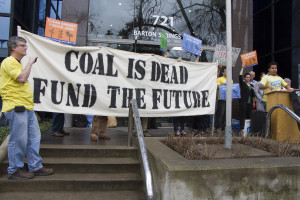
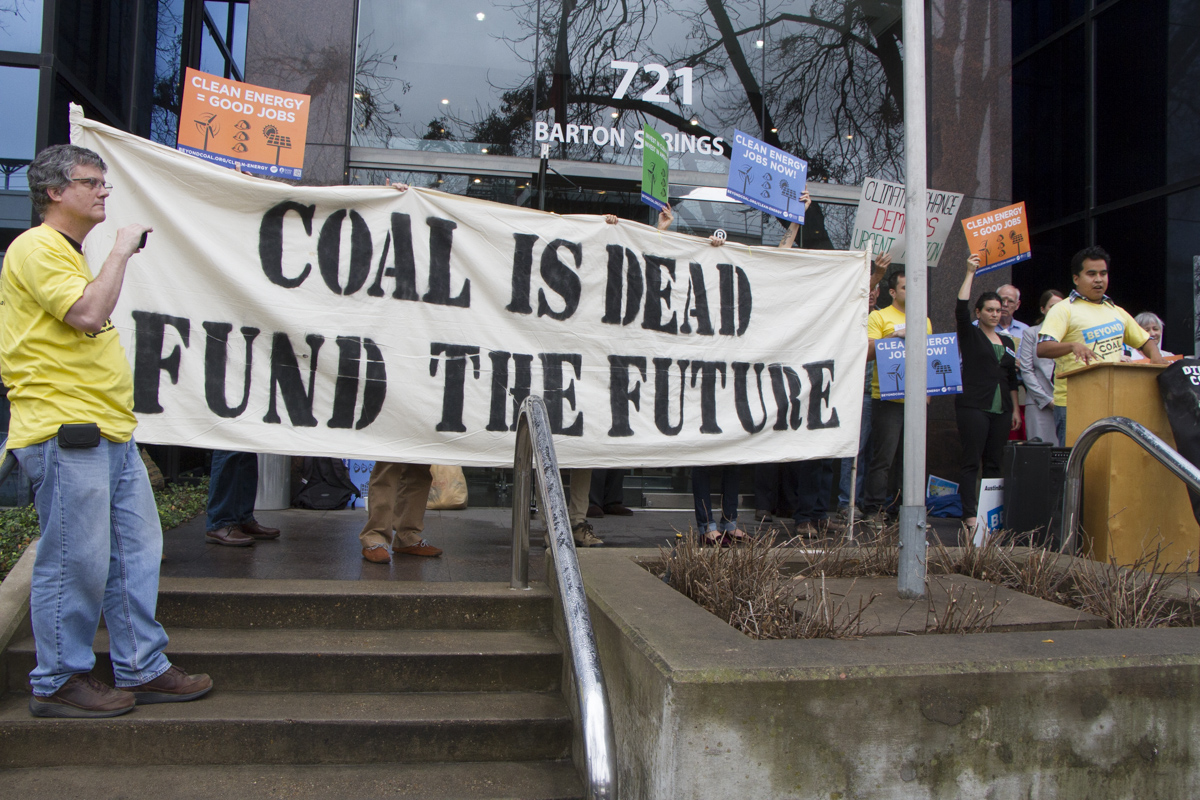
Austin Energy Ratepayers Rally for an Accelerated Transition to Affordable Renewable Energy
Photo by Al Braden
Read this post, then click here if you want to submit comments online to Austin Energy.
With 2 stakeholder meetings behind us and the final one ahead this afternoon, a lot of people are wondering what the purpose of of updating the Austin Energy Resource, Generation and Climate Protection Plan is if we aren’t going to update the goals in it.
To be fair, Austin Energy has done a decent job of providing information about how it is progressing with achieving current goals, and giving people an opportunity to share their views and ask questions.
What is so disconcerting though, is that Austin Energy has attempted to craft the whole update to exclude what is arguably the most important elements of the Resource, Generation and Climate Protection Plan – setting new goals for carbon reduction and renewable energy. We’re told we can submit proposals that will be analyzed and considered for some future update, but that there’s not enough time to update those goals now. Not enough time? We’re only 2 months in to 2014 and Austin Energy has been talking about this update since mid 2013. Let’s hope Austin Energy is more nimble than its giving itself credit for.
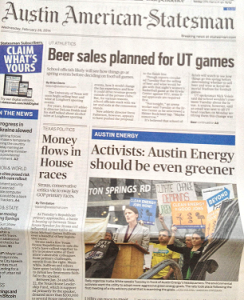
Read the excellent coverage we got in the Austin American-Statesman yesterday.
When it comes to solar energy, this idea that no new goals will be set is especially frustrating because the issue has been postponed for 2 years now. Increasing Austin Energy’s solar goal was on the table during the 2012 rate case, but Austin Energy wanted the issue studied. So City Council established the Austin Local Solar Advisory Committee (LSAC) to study options for a way forward for solar in Austin. The LSAC recommended several changes, including doubling the 2020 solar goal to 400 megawatts. It’s important to note that the LSAC analysis showed that increasing the goal would actually result in net savings to Austin Energy ratepayers, as well as a net of $300 million in economic benefits to the Austin area. When we tried to get that recommendation adopted in 2013, Austin Energy said it would be best taken up in the 2014 Generation Plan update, so City Council split the difference and passed a resolution recommending that the goal be adopted. Now Austin Energy says that it doesn’t intend to update any of it’s goals as part of this process. I’m starting to feel like the kid in the car on a long road trip and mom and dad just keep saying “we’re almost there.” After you hear that a few times, you just stop believing.
When it comes to the overall renewable energy goal, Austin Energy’s resistance to increasing it as part of this process makes even less sense for 2 reasons. First, renewable energy has become cheap energy. Wind is our cheapest energy option and solar is now competitive with natural gas, but without the risks of rising fuel costs and pollution. Second, Austin Energy has contracts that will allow it to meet it’s current 35% renewable energy goal 4 years early in 2016. They should build on that success and expand the goal to 50% for 2020 and 60% for 2024.
For anyone who isn’t stuck at work or class from 1pm to 3pm today, I suggest going to the last of Austin Energy’s 3 scheduled stakeholder meetings. Just don’t let them box you into a corner where the important issues are off the table. Tell the leadership and staff there that you want all of the goals updated over the next few months.
If you can’t go, then click here to submit comments online to Austin Energy.
Posted in Austin Energy, Energy, Renewables, solar | Tagged Austin Energy, generation plan, LSAC, solar goals, Texas |
February 25, 2014 by kaibawhite
Updating the the Austin Energy Resource, Generation and Climate Protection Plan to 2020 to become the Austin Energy Resource, Generation and Climate Protection Plan to 2024 probably doesn’t sound super exciting, but there’s almost certainly some aspect of the choices that will soon be made on your behalf that you care about.
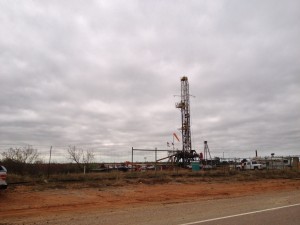 1. Climate Change: I’m not going to try to convince anyone reading this that our planet’s climate is changing and that humans are largely responsible for that change. Nor am I going to try to convince you that those changes are going to be largely detrimental to human prosperity. But if you already recognize those two basic truths, then you will definitely want to listen up. Austin Energy is proposing to not only run Austin’s portion of the Fayette coal plant until 2025, but also to dramatically increase its use of natural gas by adding a new 800 megawatt gas plant to its energy portfolio. That’s bigger than Austin’s portion of Fayette. And although natural gas emits less carbon dioxide per kilowatt hour of energy production than burning coal, once the substantial impact of the roughly 3% of gas that leaks into the atmosphere during extraction, processing and transportation is accounted for, natural gas is almost as harmful to the climate as coal. That’s because the primary component of natural gas, methane, is 87 times more powerful of a greenhouse gas than carbon dioxide over 20 years. Although many people focus on the 100 year time frame when talking about climate change, we can’t afford to ignore our more immediate future. Central Texas has already experienced its share of climate impacts over the past few years in the form of drought, wildfires and floods. We must stop those impacts from worsening at a greater rate than they already will be. Natural gas isn’t going to save us. Even without the massive problem of leaking methane, burning gas instead of coal only decreases our climate impact by about half, so it’s not a long term solution anyway – the best it could have been was a stopgap. Instead of investing in infrastructure that won’t get us where we need to be, we can make better decisions now.
Attend one of Austin Energy’s stakeholder meetings this week and ask the staff to consider the full climate impacts of energy sources.
2. Jobs: Developing renewable energy sources creates 3 times as many jobs as developing fossil fuel energy sources per dollar invested. Whereas a large chunk of the cost connected to a coal plan or a gas plant is for the coal and gas, the wind and sun are free. So, instead of paying for the privilege of burning a limited resource, we can pay people to harness the energy from free and unlimited resources.
Across the U.S., solar energy jobs grew 20% from 2012 to 2013, compared to average job growth across all industries of 1.9%. A large percentage of that growth was in Texas, but Texas still ranks 44th in solar jobs per capita. Increasing Austin Energy’s solar goal will bring more jobs to Texas, but it’s increasing the local solar goal that will have the most impact on local job creation. The Austin Local Solar Advisory Commission unanimously recommended that Austin Energy’s solar goal for 2020 be increased from 200 megawatts (MW) to 400 MW. It also recommended that at least half of that solar development be local and at least half of that local solar be customer controlled (that’s what you see on residential and business rooftops and yards). According to the LSAC’s calculations done using the National Renewable Energy Laboratory (NREL) Jobs and Economic Development Impact (JEDI) model, the $60 million it would take to develop that amount of local solar would bring the Austin area a net of $300 million in local economic benefits – wages, taxes, etc. If Austin Energy adopts policies to give preference to local companies who hire local workers, our community can benefit even more. On the other hand, we are currently sending $80 million to Montana each year for the coal we burn in the Fayette coal plant.
Tell Austin Energy that you support growing local jobs by increasing our solar goals, including the local and customer owned solar goals.
3. Water: If you live in central Texas, I don’t need to tell you that water is a huge issue – in fact it’s just a big issue for Texas that the Legislature, with voter approval appropriated $2 billion dollars to fund water projects, with 20% of those funds to be used on water conservation efforts. We can’t make it rain more, so we are going to have to make some choices about what we want to use water for. The Fayette coal plant, which Austin Energy owns one third of, needs about 5 billion gallons of water per year to operate. And lest you start thinking natural gas plants are the answer, know that over 39 billion gallons of water was used in fracking jobs in Texas between January 2011 and May 2013. Producers in the Eagle Ford Shale play are especially wasteful, using an average of 4.4 million gallons of water per well. That’s water that can’t be used for domestic, commercial, industrial, agricultural, or ecosystem uses.
Tell Austin Energy to focus investment on drought proof energy sources like wind and solar.
4. Health: Air pollution from burning coal and extracting natural gas are taking a real toll on human health in Texas. The Fayette coal plant is responsible for over $55.5 million in health impacts from air pollution. Those impacts include asthma attacks, chronic bronchitis, heart attacks and the associated hospital visits and deaths. Even so, Austin Energy has proposed running its portion of Fayette until 2025.
Lack of regulation over the natural gas industry, which has operations strewn across vast areas has resulted in a tragic disregard for human well being. If you haven’t already, read this excellent piece of investigative journalism about how your fellow Texans are being assaulted with toxic chemicals in the Eagle Ford Shale area. Instead of building a large new gas plant to drive up demand for dangerous fracking, Austin Energy should focus on growing its renewable energy portofolio with more wind and solar and perhaps some geothermal energy.
Air pollution is much more than an environmental issue – it’s a public health issue. That’s why you find medical professionals and health advocates supporting a transition to clean energy.
Sign up for one of Austin Energy’s stakeholder meetings and ask them to give up their plans for a giant new gas plant and to examine more options for retiring the Fayette coal plant in an affordable way.
5. Affordable Energy: Wind and solar energy are competitive with coal and natural gas already. Meanwhile, electricity from coal plants is going to get more expensive because of various regulations to limit pollution. Natural gas prices are low now, but have fluctuated greatly over time, making a big bet on natural gas risky. When natural gas prices go up, Austin Energy raises our fuel charge to recover those costs. Since affordable wind and solar are available now and can assure us a predictable price for 10-20 years, why would we not make those energy sources our priority? Austin Energy has done a great job getting good wind contracts to keep customer rates low and is set to achieve its 35% renewable energy goal 4 years early in 2016.
Tell Austin Energy to keep up its momentum by expanding the renewable energy goal to 50% for 2020 and 60% by 2024.
Take Action:
Austin Energy is holding 3 stakeholder meetings to gather public input on the Austin Energy Resource, Generation and Climate Protection Plan update to 2024.
- Tuesday, February 25: 10 am – 12 pm (noon)
- Tuesday, February 25: 6 pm – 8 pm
- Thursday, February 27: 1 pm – 3 pm
This is your chance to help determine how the money you pay for your electric bills is invested by our publicly owned utility.
Please sign up to attend one of the meetings.
Posted in Air Quality, Austin Energy, Climate Change, Coal, Coal Plants, drought, Energy, Fracking, geothermal, Global Warming, green jobs, Health, Jobs, natural gas, Renewables, solar, Water, wind | Tagged Austin Energy, Austin Energy Generation Plan, natural gas, solar jobs, Texas |
February 23, 2014 by Adrian Shelley
While we’ve all grown accustomed to seeing the words “natural”, “healthy” and “environmentally-friendly” thrown around in advertisements for a variety of consumer goods, it’s important to remember that household items are not the only things capable of being greenwashed – case in point, natural gas.
The word “natural” has been used to connote things such as ‘green’, ‘healthy’, ‘non-toxic’. Many people’s cursory understanding of natural gas is that if it’s “natural”, it must be good, right? Unfortunately the truth about natural gas is more complicated. While it is true that natural gas emits far less CO2 than coal upon combustion, there are a host of other ‘fine-print’ problems that come along with the switch, most notably, fugitive emissions.

Methane, a powerful greenhouse gas, escapes from wells and leaky pipes and valves into the atmosphere.
Photo by Kevin Moloney, NYT.
Fugitive emissions are the emissions not intended to take place and that usually result from pressurized equipment leaks. While these leaks are relatively tiny, when expanded to a large enough scale the amount of methane being leaked into the atmosphere can have a large impact on climate. While the EPA originally reported that average leakage rate in natural gas production was somewhere around 1.5%, a collaborative study by scientist from several universities and government agencies released this past October revealed that the figure should be much closer to 3%. Even worse, there have been reports of methane leakage upwards of 12% at some production sites.
Many climate change mitigation plans focus on reducing CO2 emissions, but methane and its effects should not be overlooked. The IPCC has reported that over a 100-year period, methane is 35 times more potent of a heat-trapping gas than CO2. When looking at the effects of methane over 20 years, this figure jumps to 87. Suddenly, that comparatively small amount of methane being leaked out of wells, pipes and valves is incredibly important. In other words, 1 ton of methane being released into the atmosphere has the same heat-trapping effect over a 20 year period as releasing 87 tons of CO2.
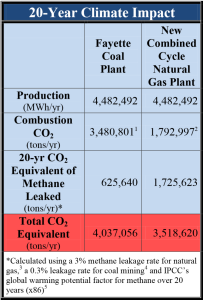 While the CO2 emissions from burning natural gas are about half what is produced by burning coal plant to produce the same amount of power, after accounting for fugitive emissions and converting leaked methane into CO2 equivalent (using the IPCC 87x factor referenced earlier), natural gas climate change impact is almost as bad as coal.
Continue Reading »
Posted in Climate Change, Energy, Fracking, Global Warming, natural gas | Tagged climate change, CO2 emissions, Coal, fugitive emissions, Global Warming, methane emissions, natural gas, Texas |
February 22, 2014 by Citizen Carol
Energy Secretary Ernest Moniz announced on Wednesday, February 19th, that his agency approved a multibillion dollar taxpayer-backed loan guarantee for the first nuclear reactors to be built in the U.S. in more than 30 years. We view this as a costly act of desperation for a failing project.
An $8.3 billion loan guarantee was conditionally approved four years ago for two new reactors at Southern Company’s Vogtle plant in Waynesboro, Ga. Since then, negotiations around the terms of the loan guarantee have been extended five times. Secretary Moniz’s announcement – that the government has finalized terms with two of three companies – accounts for just $6.5 billion of the loan. With approval for $1.8 billion of the loan still pending, the agency is clearly attempting to give momentum to the stalled project.
The construction of the two new reactors at the Vogtle plant are 21 months behind schedule and $1.6 billion over budget. The original two units at Vogtle resulted in 1000% cost overruns from the original $1 billion dollar estimate as well as decades-long set-backs and construction delays. This not only calls into question the decision to underwrite this risky project with taxpayer dollars, but proves that the same issues that plagued reactor construction more than three decades ago have not been resolved.
Nuclear energy continues to be beset with safety issues and produces toxic wastes that we still don’t have a solution for – hardly a technology the government should be promoting and propping up with taxpayer funds.
We berate wall street for their high-risk investments, yet the Department of Energy seems to have little to no risk aversion for these types of loan guarantees. This is a bad deal for the American people who have been put on the hook for a project that is both embroiled in delays and cost overruns and to a company that has publicly stated that it does not need federal loans to complete the project.
This is a classic case of throwing good money after bad.
Posted in Nuclear, Nuclear Plants | Tagged Department of Energy, Ernest Moniz, financial risk, loan guarantee, nuclear loan guarantees, nuclear reactors, Texas, Vogtle |
February 21, 2014 by Adrian Shelley
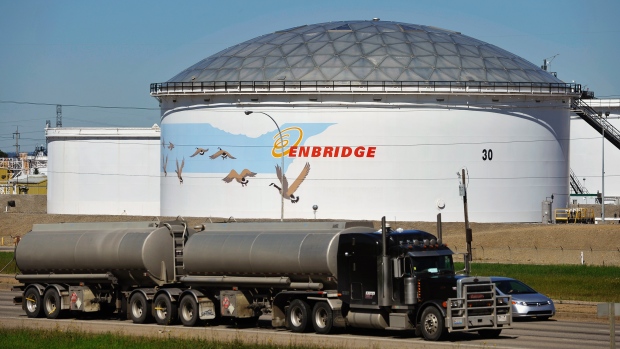
Enbridge storage tank – photo by Dan Riedlhuber, Reuters
A second Canadian pipeline company has its permit tied up in the State Department’s approval process. Enbridge, Canada’s largest pipeline company, is trying to expand its Alberta Clipper line, but is now facing delays.
Enbridge started up its first phase of the line, which has a capacity of 450,000 barrels per day (bpd), in 2009, after obtaining a U.S. federal permit from the State Department. Enbridge is now looking to expand its capacity, but the State Department says it needs to do further environmental analysis before granting Enbridge the go ahead to expand its Alberta to Wisconsin pipeline.
Enbridge is not looking to build another pipeline; rather, they are trying to increase capacity by 120,000 bpd for a total of 570,000 bpd. Beyond that, they would like to expand from 570,000 bpd to 800,000 bpd in the near future, which is almost as much tar sands oil as the proposed Keystone XL would carry.
“Obviously, things take longer in this environment that we’re in. I don’t think we want to draw any conclusions about the political environment. It’s not something that we can control. What we control is the fullness of our application,” CEO Al Monaco told reporters and analysts on a conference call to discuss the company’s fourth-quarter results, which included a net loss. “In this case, this is a fairly routine matter. The pipeline’s already in the ground, so we’re hoping that we move this along as quickly as possible.”
Another Canadian pipeline company, TransCanada, has been seeking U.S. approval of their Keystone XL pipeline since 2008. The Keystone XL would cut across the heartland of America bring up to 830,000 bpd of Canadian tar sands into the U.S. The Keystone XL has become highly politicized with many environmental groups lobbying and taking direct action against the pipeline.
Although Enbridge has managed to escape the same level of scrutiny as their competitor TransCanada, they have still faced opposition from activists in Canada and Michigan.
Enbridge is also the company behind the largest on-shore oil spill in U.S. history. Enbridge spilled more than one million gallons of diluted bitumen (dilbit, or tar sands oil) into Talmadge Creek in Marshall, MI, which then flowed 30 miles downstream into the Kalamazoo River in the late summer of 2010. Enbridge has spent nearly a billion dollars trying to clean up the spill over the last three years, but latest reports confirm that there is still oil in the Kalamazoo River.
Enbridge also owns several other tar sands pipelines aroung the country, including the Seaway pipeline system in Texas. Enbridge is currently expanding the Seaway pipeline system by the process of twinning. The new twin Seaway line will be a 30-inch diameter pipeline, and havea capacity of 450,000 bpd. Company officials are expecting a service date in 2014.
Posted in Climate Change, Energy, Global Warming, pipelines, Tarsands | Tagged #nokxl, Alberta Clipper, Enbridge, keystone xl, MICATS, Seaway pipeline, state department, Swamp line 9, Tar Sands, Texas, transcanada |
« Newer Posts - Older Posts »