Feeds:
Posts
Comments

Would you decide who manages your retirement account by closing your eyes and pointing?  Probably not.

Press Conference RE: Austin Energy Governance 2-13-13Yet, Austin City Council is moving forward with a rash plan to hand over the bulk of its power to govern and oversee Austin Energy to an appointed board.  A well thought-out Austin American-Statesman editorial reveals the fool-hardness of making such a substantial governance change without even studying if it is needed or if the proposed change would yield better results than the current system of governance by the City Council.

This is one of those times when we need to remember that “the only thing we have to fear is fear itself.”  City Council (and a couple of our state legislators) have been reacting out of fear that Austin Energy, or parts of it, could be deregulated.  But, in light of the recent settlement reached with the out-of-town ratepayers, that is unlikely to happen.  We need City Council to stare their fear in the face and make a rational, fact-based decision.  Panicking now could cost our utility and our city for years to come.

Our city’s most valuable asset should be accountable to us, the citizens of Austin and the customers it serves.  Elections don’t always turn out the way I wish and some appointees do their jobs well, but I’m a populist, so at the end of the day, I want the power in the hands of the people.  With elections, we give power to individuals to do jobs an with elections we can take that power away.  An appointed board wouldn’t have to be responsive to citizen concerns and could make the vast majority of decisions about how Austin Energy is run and what to prioritize.

If, after studying the pros and cons of governance by City Council vs. governance by a board, City Council still believes that they are not the best people to oversee Austin Energy, an elected board would be a better option than an appointed board.

Let’s keep the power in our hands.

Tell Austin City Council not to approve an appointed board.


San Antonio Kick-Off is scheduled for Wednesday, March 13, 2013 at the Whole Foods Market Meeting Room, 255 E. Basse Rd. #130, San Antonio, TX, 78209

RSVP here!

This past year, Texas experienced one of its worst droughts: Reservoirs dipped to record lows, and as many as 500 million trees across Texas died.  In San Antonio, it seems everyone knows the level of the Edwards Aquifer, and recent storms have not brought adequate relief or repaired this damage.

The good news is that we can save millions of gallons through common-sense, cheap solutions like fixing leaky pipes and recycling water that we have already collected. But we need YOUR help. The best way to learn more and get involved is to join San Antonio’s Save Texas Rivers Kick-Off Wednesday, March 13 at 6:30PM.

Environment Texas will discuss Texas water policy, the importance of conservation, and ways to ensure a sustainable water future. RSVP here and bring a friend!

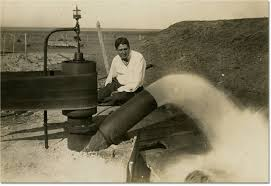
Under The Pipe

beforenafter1[1]The Keystone XL pipeline is embroiled in controversy from coast to coast. Environmentalists are rallied by its giant carbon footprint, the damage caused by spills, and the destruction of Canada’s boreal forests. Meanwhile, landowners are being forced to give up their property rights and cope with unacceptable safety issues.

More than thirty Texas waterways will be threatened by Keystone XL pipeline spills.  Tar sand is very difficult to clean up, especially in water.  And, Keystone XL is not required to pay the standard eight cents per barrel tax into the Oil Spill Liability Trust Fund, which means the cost to clean up any spills along the pipeline could become the tax burden of U.S. Citizens.  When tar sand comes into contact with water it begins to separate, leaving the heaviest, thickest product on the bottom.  Meanwhile, benzene and other airborne toxins are lifted to the surface of the water and evaporate into the atmosphere, directly threatening human life.

Burst pipelineLandowners in Texas have been confronted with having a tar sand pipeline cross their farms and ranches.  Ranchers and farmers have no choice where the pipeline lays down on their property.  The easement around the pipe is fifty feet wide, and there will be a kill zone around and under the pipe due to its temperature, which may exceed 158 degrees F. A running pressure of 1,600 pounds per square inch introduces the possibility of a stream with enough force to cut a person in two should a small rupture in the pipe occur.  But, problems with the pipeline do not stop at inherent danger.  The land owners are given a choice of payment for the easement, which requires them to pay taxes on the land under the pipe or, they can have the easement condemned, which leaves them without the right to use that property.  In truth, the land owners have no option when companies such as Keystone XL decide that a pipeline should cross their property, except to deal with the risks, or leave.

To make matters worse, the tar sands that would flow through the Keystone XL pipeline won’t even be used in the U.S. – they are destined for export to foreign countries.  So, we will incur the risks to our land and water and will suffer the consequences of climate change, but we won’t have any more energy security than we do now.  That’s a bad deal.  The risks associated with the Keystone XL pipeline are unacceptable. Most importantly, these risks are avoidable.  Let President Obama know that you want him reject the Keystone XL pipeline because the risks don’t outweigh the benefits.  The recently released draft Supplemental Environmental Impact Statement (SEIS) from the U.S. Department of State acknowledged that construction of the Keystone XL pipeline would create “numerous” and “substantial” impacts on the environment, but it claims the project is better than the alternatives.  If you disagree, as I do,  send comments on the draft SEIS via email to: keystonecomments@state.gov.

Today, the the Department of State released a Draft Supplemental Environmental Impact Statement (SEIS) for the new Presidential Permit application for the proposed Keystone XL pipeline.

The SEIS acknowledges that the construction of the controversial Keystone XL pipeline would create “numerous” and “substantial” impacts on the environment, but they are claiming that the project is a better than any of the alternatives, essentially clearing the project to go ahead.

The report concluded that the tarsands diluted bitumen (dilbit) that the pipeline will transport into and across the U.S. produces 17 percent more greenhouse gases than heavy crude oil refined on the Texas Gulf Coast. In addition, it said the construction phase of the project would result in carbon dioxide emissions equivalent to about 626,000 passenger vehicles operating for a full year.

The Draft Supplemental Environmental Impact Statement, once published by the EPA, starts the clock on the public comment period.  At this time, we expect the SEIS to be published sometime next week.  Our best guess is Wednesday.  From that point, the public will have 45 days to comment on the document, so let’s dust off our legal pads and pens and start drafting our comments.  Having spent three days on a bus and marching around the mall in Washington DC in freezing weather with many of you, I know you have a lot to say.

Comments can be addressed to the following mailbox: keystonecomments@state.gov.

We Texans and Public Citizen  Support Crawford Family as Legal Action Continues Against Keystone XL Southern Segment – #NoKXL

Yesterday, Landowner Julia Trigg Crawford and her attorney Wendi Hammond announced that they have filed their appeal against TransCanada with the 6th Judicial Court in Texarkana.  The brief disputes TransCanada’s attempt at taking Crawford’s property on the basis that TransCanada has yet to prove the company is a common carrier, but is instead a private foreign company utilizing its pipeline for private gain.

“Our appellate brief is now in front the Sixth Circuit Court of Appeals and we are confident this panel of experienced judges will give all the issues the thoughtful consideration and thorough review they deserve,” noted landowner Julia Trigg Crawford.  “Since the lower court’s ruling against us in August we’ve worked diligently to elevate the dialogue around property rights and eminent domain abuse.”

“Since before 1920, the Texas legislature wisely limited the enormous power of eminent domain authority to a common carrier subject to the Texas Railroad Commission’s (RRC) jurisdiction and other legal requirements. In the Crawford family’s case, the RRC admitted it does not have jurisdiction over TransCanada’s pipeline, but the trial court allowed TransCanada to take the Crawford’s private land anyway,” commented Hammond, Crawford family farm attorney. “This decision highlights a serious problem, not just for the Crawfords, but for many families across Texas.  Now this important matter will be decided by a higher court.”

Groups including We Texans and Public Citizen are supporting Crawford and her family in their continuing resolve to pursue this landowner’s case to a higher court.  The groups view this precedent setting case as a private company attempting to take land for private use and foreign profit.

Debra Medina, executive director of We Texans, applauded the Crawford family’s courage in continuing their opposition to the taking of their property.  “We agree with the Crawford family in believing that there has been an erroneous ruling against them and hope that the appellate court will right that wrong.  In doing so, the court can protect not only the Crawford Family farm, but also set a precedent that will ensure the law is followed and all private property in Texas is duly protected.”

“What’s at stake here is whether the state should allow a public agency to allow condemnation for private gain. The Crawford case is emblematic of the failure of the Texas Railroad Commission to effectively ensure that companies doing business in Texas are indeed a common carrier,” commented Tom Smitty Smith of Public Citizen.  “The State has laid this burden of proving up common carrier upon landowners such as the Crawfords, while the proof should be incumbent upon those who want to business here in Texas. The entire process needs to be overhauled.”

“The Railroad Commission allowed TransCanada to have the status of a common carrier, yet the agency has stated that it doesn’t not have the authority to give eminent domain powers to TransCanada,” added Smith.  “TransCanada has yet to prove to the court that they are transporting the product for the public good or for the public for hire as required by law.”

“Currently, there is a loophole in Texas law that allows a company to simply check a box on a one page form at the Railroad Commission that allows companies to declare themselves a common carrier without any checks and balances,” noted Rita Beving, North Texas Public Citizen organizer.  “Last summer we started a dialogue with the Texas Land & Resource Management Committee regarding this problem.  We are hoping the matter of common carrier and eminent domain gets rectified during this year’s legislative session.”

“I’ve testified to legislative subcommittees at our state Capitol, shared my story with the Sunset Commission in their review of the embattled Texas Railroad Commission, and traveled to Washington, D.C. twice to speak to governmental agency representatives and support groups,” Crawford added.  “At the heart of this issue is the fact the Texas Railroad Commission has seemingly abandoned Texas landowners.  By their own admission, they are aware that companies use the T-4 form to demonstrate to the public that the company is operating as a common carrier pipeline with eminent domain authority when, in fact, the RRC operating permit provides no evidence of that fact at all.”

“What was once just the voice of Texas landowners is now a national issue, with all eyes upon Texas and how our Legislature will step up to repair this grossly flawed land condemnation process,” Crawford concluded. “I stand at the ready to continue shining a light on what’s really happening on the ground to Texas landowners as we protect our land, and we look forward to a positive outcome in our appeal.”

TransCanada has initiated construction of the southern segment of the Keystone XL pipeline along its 485-mile trek from Cushing to the Texas coast. TransCanada will pump Canadian tar sands crude or Dilbit to refineries on the Gulf coast.  The northern segment of the Keystone XL awaits approval by the State Department for its presidential permit.

In the meantime Enbridge, TransCanada’s Canadian competitor, has begun surveying for an additional twin line to the existing Seaway pipeline near the DFW area.  Both Enbridge’s 36-year old repurposed Seaway pipeline and the new twin line will carry tar sands from Cushing to the coast.  The dual Enbridge lines are expected to exceed Keystone’s capacity with 850,000 barrels per day of tar sands crude.

Enbridge is currently responsible for the largest and most expensive onshore spill in history.  The Michigan spill occurred in July 2010 carrying tar sands crude through a 43-year old repurposed line.  Two years and more than $850 million later, the spill is still being cleaned up on the Kalamazoo River.

“Landowner fights such as that of the Crawford family with TransCanada have sparked a new battle on a whole new front with another Canadian company,” Beving concluded.  “Many of us are now getting calls from landowners now worried about Enbridge, which also plans to carry dangerous Dilbit crude through its pipelines from Cushing to the coast.”

Click here to read a copy of the brief.

On February 17th, environmental activists gathered in front of the Whole Foods headquarters in Austin, TX to show their support for the Tar Sands Blockade and to raise climate change awareness, adding their voices to the over 40,000 that gathered on the Mall in Washington, DC that same day.

The Keystone XL Pipeline would carry oil from Canada to the Texas Gulf Coast. Around 200 people in attendance at the Austin rally, from many organizations, said the pipeline is environmentally toxic. The protestors chose Whole Foods as the best location for their action because CEO John Mackey recently said “Climate change is not that big a deal.” Chris Wilson with S.T.O.P. (Stop Tar Sands Oil Pipelines) said the oil that will come out from the pipeline will be exported overseas and none will stay in the United States.

Click here to watch the local CBS news affiliate’s coverage.

2013-02-17 Forward on Climate Rally on the National Mall

Texans who rode on a bus for 36 hours to Washington, DC to participate in the Climate Forward rally in 30 degree weather with 6 degree wind chill.

Austin Rally - Sasha Violette

Rally in Austin for those unable to make the trip to DC. – Photo by Sasha Violette

2013-02-17 Forward on Climate Rally on the National MallI have been a Public Citizen intern since January of this year.  As a Political Science graduate student, in both Undergraduate and Graduate studies I have been immersed in the political process and the theories behind the ideas that have formed our nation.  When I was a bit younger, I dabbled in political activism, with issues like civil rights and equal rights, which are still very near and dear to my heart.  But, I never took the plunge into becoming a full on activist.

Thursday, February 14th, I had the opportunity, through Public Citizen and The Sierra Club, to get on a bus with 48 other Texans and make the long trek to Washington D.C. for the Forward on Climate Rally.  I had been to D.C. several times before, but never for a cause.  Our bus departed from Austin, Texas and made stops in Dallas and Tyler.  At each stop, new people joined us.  Each person on the bus had their own reasons for engaging in this somewhat grueling 30 plus hour bus ride.  Each person was motivated enough to take time out of their schedule and commit to a less than comfortable ride on a bus to our nation’s capital.

In the early part of our journey, many people did not know each other.  Many of us were coming from different places geographically and in life.  As the hours wound on, conversation and ideas began to flow on the bus.  People began to relax and conversations began to percolate throughout the bus.  After the formalities, discussions began on why we were on this trip.  There were people directly affected by the Keystone Pipeline.  Others were concerned with climate.  Some were just champions of the Earth.  For quite a few of my fellow bus riders, activism was old hat.  Others, such as one older, retired gentleman, still were hesitant to call themselves activists.  Some were believers in the cause, but just there for the exchange of ideas and to observe.  But, within the varying reasons for attending the trip, a common thread was clear.  Something needs to be done about climate change.  That was something everyone could agree upon, regardless of what school of thought they were coming from.

As for me, when I got on the bus, I did not really know which one of these types I was.  Climate change has always been a concern to me.  I try to live a “green” life.  I knew the Keystone Pipeline was bad news from things I had read and heard, but I suppose that I was never mad enough to do anything about it.  For me, civil rights and related social issues had always been the most important…

As the trip wore on, we all began to become friends.  We shared experiences and ideas.  By the time we arrived in D.C., we were no longer a bus full of strangers.  There was a feeling that we were a team, and some of us had become quick friends.  Our group spanned many different generations and encompassed many different levels of involvement in the cause. 

Friday night and Saturday, through some downtime and tourism, the group continued to solidify.  Our bonding was increased through a night on the town and sightseeing, but the main event was yet to come.

Sunday, February 17th began by loading on the bus and heading to the Public Citizen D.C. office for breakfast and some interviews with a reporter.  Outside, the cold was biting, with a wind chill of 6 degrees.   As we prepared to depart for the National Mall, the excitement level was high despite a lack of sleep and the cold weather. 

2013-02-17 Forward on Climte Rally March on the White HouseWe arrived near the Washington monument to a sea of busses.  Hundreds of busses.  We arrived about an hour early, and there were people as far as the eye could see ready to participate in democracy.  The estimates of number of people at the Forward on Climate rally ranged from 35,000 to 50,000.  As the rally began, speakers began to deliver messages from many different points of view.  Some were directly affected by the pipeline, other were speaking of climate change and activism.  The excitement level of the crowd increased with every speaker.  The climax of the rally was the 10’s of thousands of us marching to the White House.  The street was packed from curb to curb all the way around the White House.  We now know that President Obama was playing golf with Tiger Woods and oil executives, so he did not see the awe –inspiring site of that many people united for our climate.  Everywhere you looked there were signs.  When you stopped to listen, you could hear chants that would begin with one person and end with a united crowd chanting in solidarity.  While marching around the White House, you almost forgot how cold it was. (It was really cold)  When we returned to the National Mall, I had a sense of accomplishment.  You could not help but feel that we had done something important, united together as a group as varied as any ever assembled.  People of different ages, races, economic backgrounds, and geographic locations; all united in for the planet.  It was then that something I should have realized all along dawned on me.  Climate change and human/civil rights are intertwined.  They are so deeply related, that it is almost hard to see the preverbal forest for the trees.  Without one, there cannot be the other.  It also dawned on me that this is the fight of our generation.  This is the legacy that we should pass on to our children and their children. Our Earth and our climate is intrinsically a human right.  If we do not take action, there may not be an inhabitable planet for future generations, which would be the greatest violation of human rights in our history.  Through the interactions on the bus, the speakers, the sights and the sounds, something that should have been painfully obvious to me was finally made clear.

We cannot be passive observers in this fight against climate change.  We cannot be passive observers in things like the Keystone XL, even if we think they do not directly affect us.  (It does)  The time to remain silent is gone.  It is time to call on everyone who knows these things are terrible to use their voice, their right to free speech, and the democratic process to put an end to this insanity.  The Earth cannot wait while we sit idly by and do nothing while corporations destroy her under the guise of “progress” and “economics.”  We need to stand up and let them know that we will not stand for irresponsible practices and violations of our planet.  We must activate to preserve our climate and Earth for future generations.  We must let President Obama know that we won’t stand for the Keystone XL. 

For me, it is now no longer an option to passively oppose what is going on.  Activism is now a necessity.   I would urge everyone to use their voice, stand up and be heard.    


$10 million to Cut the Tape!

The reason that the U.S. is lagging behind in solar energy isn’t because of the cost solar photovoltaic (PV) panels. Solar PV is becoming increasingly more affordable as technologies advance to increase efficiency and manufacturing costs continue to decline. However, the cost associated with getting a solar system actually installed up on your roof rather has not declined as quickly. “Soft costs” make up more than 50% of the entire cost of solar PV systems in the U.S.  This isn’t the case everywhere though.  The graph below demonstrates the difference between solar installation costs in the U.S. and Germany (currently leading the world in solar generated power).  Soft costs in for solar installations are just a fraction of what they are in the U.S.

US and Germany soft cost of solar graphThis is why the U.S. Department of Energy is enticing communities around the nation to focus their efforts on burning through the red tape that drives project costs up. $10 million in cash awards go to the teams that install the most PV systems in American homes. How these teams will do it is completely up to them. If they are clever enough, maybe they will get through to city and state officials where environmental organizations could not.

There is a maze of rules and regulations to get through, but $10 million is a good incentive to find a way through it.

Graph from Grist (http://grist.org/climate-energy/why-is-rooftop-solar-cheaper-in-germany-than-in-the-u-s/).

While the proposed resolution to give Austin Energy governance responsibilities to an appointed board has been taken off the “consent agenda”, it’s still alive and kicking.

City Council will take up the issue at 6 p.m. this evening (Thurs, 2/14) and I hope you can take a bit of time before dinner to stand up for your rights. 

Austin Energy is a owned by us, the citizens of Austin.  Currently, we can influence the direction the utility takes by showing up at City Council meetings (just as I’m hoping you will tonight) and voicing your opinions.  The people of Austin have spoken passionately and convincingly on a variety of issues including development of strong solar energy programs,  assistance for the poor and keeping rates affordable for everyone.  City Council has often changed it’s course as a result of public outcry.  They do so because they know that they can be held accountable at the ballot box (or the electronic voting machine, as the case may be).

An appointed board could dramatically limit the ability that each of us has to ensure that Austin Energy is governed in a way that aligns with our values.

Some have argued that a board could focus more on the important issues at Austin Energy, but an appointed board is not the only option.  With City Council soon to be enlarged – when we move to the 10-1 system with geographic representation – there could easily be a subcommittee that focuses on the governance and oversight of Austin Energy.  If some members of City Council don’t wish to be burdened with the responsibility of governing our most (monetarily) valuable asset, then they could decline to serve on such a subcommittee.

Some Austin Energy customers who live outside Austin have complained that they have no representation in the governing body of Austin Energy (which is Austin City Council).  That’s a fair point and could easily be remedied by reserving one seat (or whatever is proportional based on population) on the subcommittee for an elected representative of those customers residing outside city limits.  What doesn’t make sense it to disenfranchise everyone just because some people aren’t currently represented.

Yes, the system could be more perfect and we at Public Citizen are always working toward making it so, but with all the awards and national recognition that Austin Energy has received, we must be doing something right.

So, please, make your voice heard at City Hall tonight.  The proposed resolution is “Item #46” and will be taken up at 6 p.m.  You can register to speak or register your opposition at the kiosks in the City Hall lobby.  You can donate your speaking time to someone else, but you must be present at the meeting to do so. If you drive, you can park in the garage underneath City Hall and get your parking validated in the lobby.

If you can’t make it to the meeting tonight, send City Council a letter letting them know you oppose the formation of an appointed board to govern Austin Energy.

For more information, please visit www.cleanenergyforaustin.org.

Costs Would Increase; Existing Power Plants Would Get Windfall

The state’s electricity shortfall won’t be solved by paying utilities based on how much power they can generate, rather than how much they actually generate, a new Public Citizen report finds.

The report comes as debate rages among regulators and state lawmakers over how to keep the lights on in Texas. Demand for electricity is increasing while new power plant construction is slowing down.

Some want a “capacity market” – one in which power plant owners are paid for being ready to generate electricity. Others prefer to create incentives for reducing electricity consumption. A new study released today by Public Citizen found that the state’s electricity shortfall won’t be solved by a capacity market. Instead, a capacity market would just reward the owners of existing power plants with substantial windfall profits.

“Our study has found that a capacity market takes too long, costs too much and won’t be enough to keep the lights on,” said Tom “Smitty” Smith, director of Public Citizen’s Texas Office. “We’d be better off developing a new market structure that creates incentives for people to use less electricity.”

The debate about whether to pay electric companies for the energy they produce or the capacity to produce energy has occurred in many parts of the country over the past 10 years. The state’s Public Utility Commission (PUC) has been discussing this issue for more than a year and will consider it again on Thursday. It could vote on whether or not to create a capacity market.

To answer the question of whether a capacity market would benefit Texas, energy experts hired by Public Citizen analyzed a capacity market run by PJM, a regional transmission organization that coordinates electricity movement in 13 states and the District of Columbia, which is the market model most similar to the approach the PUC is discussing. Researchers found that replicating the PJM-run capacity market would take until 2015 and would cost between $1.2 billion and $2.3 billion a year.

In addition, such a market would divert resources from new, more efficient power sources. In the PJM market, $54 billion went to existing power plants while just $4.2 billion went to new resources such as gas, wind and solar.

“Creating a capacity market would take way too long and would cost way too much,” said Anna Sommer, president of Sommer Energy and the report’s principle author. “In addition, it would prop up dirty and inefficient energy plants. A capacity market clearly is not the solution.”

Added David Schissel, president of Schlissel Technical Consulting and a report co-author, “We looked at the other grid operators and their capacity markets and found that in those markets, existing fossil fuel and nuclear plants were the big winners.”

David Power, deputy director for Public Citizen’s Texas office said, “We have been debating this issue for several years. It’s time to act. Even consultants who are recommending a capacity market have concluded that the cheapest, fastest way to keep the lights on is to develop new ways to reduce the demand or the amount of energy we use at peak times when customer demand is highest. The commission can and should develop a one hour ahead demand reduction market.”

This is the first of two studies to be released this week by Public Citizen. The second study will focus on whether a shift to a capacity market would be enough to keep Energy Futures Holdings from slipping into bankruptcy.

The report is available here.

Couldn’t make it to the rally in Washington D.C. to protest the Keystone XL pipeline? It’s okay, neither could we! So instead we’re going to have a rally of our own to show our support and to raise climate change awareness here in Austin. Please join us at 5th and Lamar (in front of Whole Foods) on Sunday, February 17th at 2 P.M. Wear a blue shirt (or a No K XL shirt if you have one) and bring an anti Keystone XL/climate change awareness sign. Let’s make a statement that we won’t tolerate dirty energy any longer.

Texas Capitol - north viewTwo bills have now been filed in the Texas House that would expand the state’s goals for renewable energy.  Representative Rafael Anchia‘s bill, HB 723, would establish goals for growing renewable energy installations other than large-scale wind through 2022.  Similarly, Representative Eddie Rodriquez‘s bill, HB 303, would establish a goal for solar installations and increase the existing goal (which was met 15 years ahead of schedule) for all renewable energy for 2020.

We applaud these efforts and the leadership that Rep. Anchia and Rep. Rodriquez are showing by filing these bills.  These proposals recognize that success is a good thing and something we want more of.  You wouldn’t think that would need saying, but when a state agency recommends tossing out a successful policy, I start to wonder.  Texas’s renewable energy goals have been extraordinarily successful.  Not only have the goals been met ahead of time, but they have spurred development of the wind industry in Texas, bringing economic benefits to rural parts of West Texas, as well as to manufacturing centers.  On top of that, wind energy is helping to keep electric bills lower.

A carpenter doesn’t throw away her hammer just because she finished building her first book shelf and Texas shouldn’t repeal it’s renewable energy policies, just because we’ve met some of our goals (remember, the non-wind goal was never enforced).  Wind energy does now makes a substantial contribution to meeting the state’s electrical needs – it contributed a record 26% this past Christmas day, but solar energy is still very underutilized (accounting for less than 1% of energy on the ERCOT grid, which serves 85% of the Texas population) and the geothermal energy industry is still getting off it’s feet.  As Rep. Anchia and Rep. Rodriquez’s bills show, this successful policy tool can be adjusted to keep moving Texas forward.

Nuclear Electric Insurance Ltd. (NEIL), the company that insures all 104 U.S. nuclear power plants has just around $3.6 billion on hand to pay for claims from broken nuclear plants in California (San Onofre nuclear power station), Texas (South Texas Nuclear Project), Michigan (Cook nuclear power station) and Florida (Crystal River).  Crystal River alone represents such a financial threat that the insurance company may have to demand that its member utilities shell out more money.

As a mutual insurance company, NEIL’s members agree to cover each other in the event of a catastrophe. NEIL was formed in 1980 in response to the Three Mile Island disaster and is allowed to raise as much as $2 billion from its members in a 20 day period drawing from the owners of all 104 nuclear plants in the United States.

NEIL’s policies allows for a payment up to $2.25 billion for damage to a plant, plus up to an extra $490 million for replacement power while the plant is idled.

Damage to Crystal River nuclear plant's containment wall

Damage to Crystal River nuclear plant’s containment wall

Repairing the Crystal River plant could cost as much as $3.5 billion for construction work and $300 million a year for related costs such as purchasing alternative electricity while the plant remains off line. That could push the total cost above $5 billion, but there are questions about whether the damage was an accident or whether the 2009 replacement of old steam generators inside the nuclear plant’s 42-inch thick concrete containment wall was mishandled when the managing company chose a do-it-yourself approach in order to save about $15 million by using one of the two companies that handled all similar projects in the nation. An attempt to repair the resulting crack in the containment wall and bring the plant back online resulted in more cracks.

Most of the 104 reactors in the United States were built in the 1970s and early 1980s. A few date back to the 1960s and they are starting to show their age, putting additional pressure on the insurer as is evident in the additional claims in the works.

Turbine loss at the Cook nuclear power station in Bridgman, MI. resulted in a claim for which NEIL had already paid out $400 million by the end of 2011.

The insurer also faces “the meaningful” claim for the South Texas Nuclear Project, which suffered damage to a turbine generator in its number two unit and is not expected to be back online until as late as July this year. It is unclear how much that will cost the insurance company.

And now NEIL must ready itself for the troubles at California’s San Onofre nuclear power station, where two generators have been offline since January 2012.  The replacement power alone for San Onofre’s out-of-service units reached $221 million through September of this year and it is unclear what the repair costs would add to that bill.

In the past, NEIL has paid out annual distributions to all its members after the insurer reaches a comfortable reserve — generally about $3.5 billion. The money is distributed to the members based on the premiums they pay each year. Between the loss of the annual distributions and charges to these power companies to cover shortfalls from these claims, nuclear plants around the country could be looking some unexpected financial hits in the coming year or two.

Chasing Ice  is an environmental documentary film, listed in the top 15 best documentaries for the Oscars, coming to Austin TX on Feb 8-10 at Regal Arbor.

Chasing Ice follows acclaimed photographer James Balog on an epic journey as he deploys time-lapse cameras at glaciers around the world.

“You’ve never seen images like this: it deserves to be seen and felt on the big screen.” – Robert Redford

Generous support of a grant from the Kendeda Fund is allowing people to see the film for free to support education and outreach. This program features a limited number of complimentary tickets, on an invitational basis, to openings in select cities – including Austin TX!

To claim your complimentary tickets, please click on the below link and use the group code provided below.

Chasing Ice Ticket Request Form

Group Code: PCITIZEN

According to a report yesterday by Terrance Henry of NPR’s StateImpact Texas (click here to read the article), the Las Brisas coal power plant proposed for Corpus Christi has not only been suspended, but Chase Power’s parent company, which was financing the project, has gone out of business.
wicked witch of the westLas Brisas was one of the last remaining coal plants still proposed for Texas. Now only one major coal plant is still being considered.  The White Stallion coal project in Matagorda County is also experiencing problems getting permitted and funding could be the final blow for this proposed plant too.  So we say to White Stallion, to quote the wicked witch of the West, “Just try and stay out of my way. Just try! I’ll get you, my pretty, and your little dog, too!”