Feeds:
Posts
Comments

The Texas Progressive Alliance is ready to say “Sine Die” for the second time as it brings you this week’s roundup.

The Congressional map got its final legislative approval, and Off the Kuff analyzes the new districts.

This week WCNews at Eye On Williamson posts on the (in)action at The Lege. Quorums were broken and tempers flared, This week’s Political wrap-up, GOP laziness was the theme.

Bay Area Houston thinks the Texas Tea Party is calling for an immigration raid on homebuilder Bob Perry for his roll in killing their sanctuary bill.

This week, McBlogger tells us exactly why a federal debt default isn’t a good thing.

Rick Perry’s ‘aids’ (sic) are preparing to respond to the ‘crusted-over rumors’ of the governor’s alleged homosexual liasons. Chief ‘aid’ (sic) Dave Carney emphasizes that Perry is the ‘most tested’ candidate on the Republican side. Seriously, that’s what Politico wrote. PDiddie at Brains and Eggs has a screen shot.

CouldBeTrue of South Texas Chisme sees republican hate meets the greed of Rick Perry crony, Bob Perry. Greed wins.

Libby Shaw gives us the skinny: Rachel Maddow Debunks Rick Perry’s “Texas Miracle” Myth . Check it out at TexasKaos.

Public Citizen’s TexasVox shows us that while Houston implements water restrictions to deal with this global warming-enhanced drought, San Antonio is trying to do something about it by retiring their coal plant and making heavy investments in solar.

Neil at Texas Liberal compiled a Fourth of July reading list. As fun as it might be to blow off your fingers as you set off fireworks in violation of drought-mandated brushfire rules, it is even more fun to learn about your past. If you allow others to define your history—as, for example, we have allowed crazies to take over the symbolism of the Boston Tea Party—such folks will most likely use this power to also screw up your future.

CPS Energy, San Antonio’s municipal utility, has announced plans to shut its two-unit, 871-megawatt JT Deely coal station down by 2018. The utility estimates this move could save as much as $3 billion in environmental upgrades needed for these aging coal-fired units to comply with pending federal regulations.

CPS Energy is the nation’s largest city-owned utility and supplies both natural gas and electricity to the nearly 1.4 million residents of 9th largest city in the US.  San Antonio is on a path to reduce its reliance on fossil-fueled generation and boost its use of renewable resources, such as wind and solar power, to 20 percent, or 1,500 megawatts, by 2020.

Stricter regulations being formulated by the U.S. Environmental Protection Agency to reduce air and water pollution as well as to control coal waste are expected to force retirement of between 30,000 and 70,000 megawatts of coal generation in the next few years, according to industry studies and San Antonio’s efforts to get ahead of these regulations is pushing them to the forefront of a new energy future here in Texas.

Summer has barely set in and the City of Houston has issued stage one conservation measures in the wake of the current drought in Texas:

City of Houston Implements Stage One Water Conservation Measures

Lack of rain and record high temperatures that have plagued 98 percent of the state have made it necessary for the City of Houston to institute Stage One Water Conservation Measures, as outlined in the city’s code.

Houston is asking its residents to limit lawn watering to the hours of 8:00 p.m. and 10:00 a.m. and NO more than two days per week.

Residents are asked to abide by the following schedule:

  • Sundays and Thursdays for customers with even-numbered street addresses
  • Saturdays and Wednesdays for customers with odd-numbered street addresses

The City will also be contacting large commercial water customers to request voluntary reductions in their water consumption.

City departments are instituting a water use reduction program which includes but is not limited to:

  • Reducing water use by 10 percent
  • Implementing corrective measures to eliminate water waste

While the City of Houston currently has adequate water capacity to meet the demands of its customers, the following tips can also help our customers be good water stewards during one of the most severe droughts in Texas history and into the future in a state where water is a precious and finite resource:

  • Keep showers under five minutes
  • Remember to turn water off while brushing your teeth
  • Wash only full loads of dishes or clothes
  • Replace older model showerheads and older faucet aerators with new low-flow ones, and install water conservative toilets
  • Inspect toilets for silent leaks by putting food coloring in the toilet tank. If colored water leaks into the toilet bowl before it is flushed, water is being lost due to a worn flapper.

If you live in Houston and want more information on the city’s water conservation measures, please contact Alvin Wright at Alvin.Wright@houstontx.gov or call 832.395.2455.

The restrictions are the latest prompt in the series of drought related events and measures ranging from Rick Perry’s plea for divine intervention and the recent decision by the LCRA to extend the debate and final vote to approve a contract giving a water to the poorly planned White Stallion Energy Center.

The issuance by the city emphasizes personal responsibility in the face of questionable water availability and residents throughout the state should consider implementing water saving measures even in times were rain isn’t a distant memory.  Some utility companies offer incentives for installing low-flow systems, and conversion kits continue to get cheaper, so purchasing them at any time could reduce your monthly costs and help out the environment too.

Consider, purchasing a rain barrel to capture water when it does rain.  This can keep your gardening investments more viable in times of drought.  Consider landscaping decisions such as xeriscaping (using drought tolerant plants that need less water even in times when drought is not a consideration, and reduces some of you landscape maintenance), minimizing lawn space in favor of beds for plants or replacing thirstier grasses like the very popular St. Augustine for more drought resistant varieties.

Everyone knows Texas weather is one of the more unpredictable things in the world, so carefully monitoring and rationing water usage at all times is most definitely a good decision.

from http://www.flickr.com/photos/rmgimages/4882451468/The Texas Legislature has taken steps to offer more transparency in government this legislative year. As a Texas Tribune article  written by Becca Aaronson points out, lawmakers hope this will provide a lot of information to be available online. However, some people are worried that private information could be leaked to the public because of the recent breaches in security online on the Department of Assistive and Rehabilitative Services website. Some experts are concerned that with the amount of information being released some private information could become public.

As quoted in the article, Sherri Greenberg, former State Representative and interim director at the Center of Politics and Governance at the LBJ School of Public Affairs, says that “we must be very careful when we talk about personal privacy, security and certain data that should never… be online”.  Public Citizen’s own Andy Wilson was also quoted in the article saying that it should not be a problem to take out the private information and that “it should be fairly simple if it is in the form of a spreadsheet or a database to just simply eliminate those columns of [private] data.” Adding that it is “a technical issue, not a privacy issue”.

Many lawmakers and experts hope that the new bills will help with efficiency as well as transparency. Representative Kirk Watson from Austin thinks that when the information is released, some people will “offer ideas for efficiency in government”. Although lofty thinking by Rep. Watson, the public disclosure laws passed in the Legislature will be a major victory in the fight for good government. It is difficult to predict the ramifications of the new laws, but at least now it is up to the public to determine the outcome.

According to an Associated Press investigative report, three-quarters of the nation’s commercial nuclear power sites have had tritium leaks (a radioactive form of hydrogen), often into groundwater from corroded, buried piping and the number and severity of the leaks has been escalating as the reactors age, even as federal regulators extend the licenses of more and more reactors across the nation.  Leaks from at least 37 of those facilities contained concentrations exceeding the federal drinking water standard — sometimes at hundreds of times the limit.  Click here to read the entire AP story.

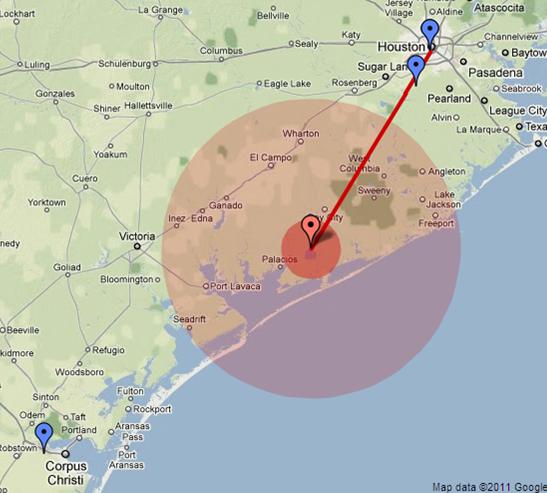
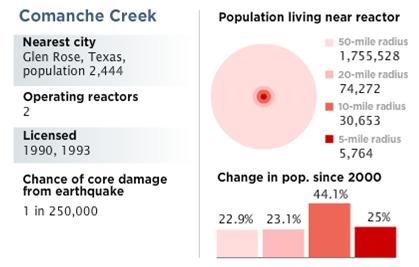
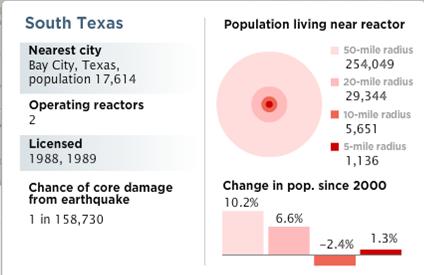
Population near aging Texas nuclear plants.

Comanche Peak

South Texas Project


Facilities that process large quantities of radioactive material have the potential for significant environmental contamination due to the scale of their operations. Over time, leaks from these facilities can lead to significant radioactive contamination of the subsurface soil and groundwater.  In addition, the high costs of disposing of radioactive material off-site may lead these facilities to store more waste on site, increasing the potential for subsurface radioactive contamination and significantly higher decommissioning costs.

Currently these facilities are required to perform surveys to verify that radioactive releases are below regulatory requirements and do not pose public health hazards.  However, the NRC believes that existing regulations were not clear enough concerning subsurface contamination.

A new Nuclear Regulatory Commission (NRC) rule would now require these facilities to minimize the introduction of residual radioactivity at their sites during operations. It also requires reporting of additional details about a facilities cost estimates for decommissioning and tightens NRC control over certain financial instruments set aside to cover eventual decommissioning costs.

These new regulations, which will take effect December 17, 2012, were designed to prevent future “legacy sites” with insufficient funds for decommissioning. A legacy site is a facility with an owner who cannot complete complex decommissioning work for technical or financial reasons, causing those costs to fall to the taxpayer.

An unintended consequence will be that there is that much more low-level radioactive that will need to be disposed of in sites such as the Andrews County site that the Texas legislature just passed legislation on opening it up to accept waste from outside the original two state compact (Texas and Vermont).  Click here to read more about radioactive waste disposal in the US.

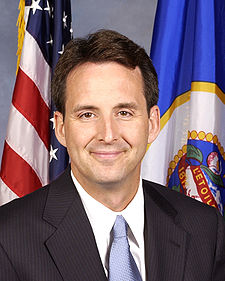
Tim Pawlenty

Mit Romney

With the 2012 presidential race heating up, candidates have begun to boast about their high-profile donors. In particular, Texas millionaire Bob Perry has been a significant contributor to both Tim Pawlenty and Mitt Romney’s campaigns.  It is not uncommon for big donors to give to multiple campaigns, explains Alexander Burns in his Politico article, but Burns goes on to say “the real test of loyalty here will be who –if any– Perry actually bundles contributions for.”  Bundling is when a large group of fundraisers get together to form their own PAC allowing individuals to funnel more money into an election.

Perry also gave to multiple candidates in the 2008 presidential election. He gave the maximum amount of $2,300 to both Romney and McCain in the Republican primary.  However, Perry is hardly alone in hedging his bets.

Michael Beckel’s OpenSecrets blog shows many donors give to multiple campaigns.  The most interesting discovery from Beckel’s report is that many people cross party lines even when they give a substantial amount to each candidate (talk about hedging your bets).  Perhaps the most surprising of the cross-overs are that two donors gave the maximum amount to Rep. Ron Paul and now Secretary of State Hillary Clinton.

Beckel offers a quote from an anonymous Democratic campaign operative to explain the multiple donations. The operative said “donations like these are about access. At that level of contribution, you probably get to meet the candidate and have a conversation with them.”

Perry seems to be all about access and creating chances to be in the “winner’s circle” as Larry Sabato describes.  Perry has been a influential person not only in Texas politics but also national politics. He has donated millions of dollars to 527 groups or PACs,  such as Karl Rove’s PAC American Crossroads, Tom Delay’s TRMPAC and ARMPAC (both instrumental in Tom Delay’s criminal conviction) and the highly controversial group Swift Boat Veterans for Truth.  It appears the 2012 election cycle will be no different for Perry who will continue to use his large amounts of money for access and influence.

In an earlier blog we mentioned the hearings on Capitol Hill being held by the Senate Committee on Environment and Public Works on the implications of Japan’s nuclear accident for the United States.  Besides the concern that the nation’s nuclear safety rules had failed to consider the possibility of losing both off-site power from the electric grid and on-site emergency diesel generators. (NRC Commissioner George Apostolakis said that this condition produces a station blackout, and the commission has a rule covering such blackouts, but Mr. Jaczko said that the thrust of the statement was that the agency had not thought enough about a single event that would damage both the grid and the diesel backup generators, causing a plant to take longer to recover), there was testimony about the spent fuel rods.

At Fukushima, the spent fuel rods stored on site posed as grave a threat as the reactor cores. They are packed with uranium, are very unstable and generally not well-protected. NRC Chairman Gregory Jaczko, when asked by Sen. Tom Carper about the spent fuel pools in the United States, admitted that “we have not given that enough attention.”

Jaczko also said that until Fukushima, the NRC had never really considered the possibility that multiple reactors or even multiple plants could fail at the same time, due to some sort of large-scale natural disaster or other event. “Our traditional approach has always been to assume a single incident at a single reactor,” he said. “Clearly Fukushima-Daiichi showed us that we have to consider the possibility of multiple units at a single site, perhaps multiple spent fuel pools being affected at the same time.”

Commissioners also had no answers about how to fix backup power systems so that they continue to cool nuclear material in the event of a major power outage. The batteries at Fukushima ran for only eight hours, in the United States, the standard length is only four hours.  NRC commissioner George Apostolakis testified that he was not sure what action would/could be taken to address the problem.

Amidst these less-than-inspiring answers, larger questions loom about nuclear regulation. The NRC has frequently been criticized as too close to the nuclear industry (not unlike Japan’s admission in a draft report to the IAEA, that its nuclear regulator was run by a ministry, which has been the chief promoter of nuclear energy for decades – click here to read our earlier blog on the IAEA report).

During the 2008 campaign, President Obama, while promoting nuclear energy as the electric power source of our future, called the NRC “a moribund agency…captive of the industry it regulates,” but little was done to bring it back to it’s primary mandate of being the watchdog for nuclear safety.  Rather, the NRC has been more of a cheerleader for the industry, even after the Fukushima disaster.  A Wall Street Journal MarketWatch article highlights this point:

The Obama administration is considering whether to intervene in a legal dispute between Entergy Corp and Vermont over continued operation of the state’s only nuclear plant, two officials familiar with the matter said Thursday.

At issue is whether the state has the authority to block Entergy’s bid to continue operating the Vermont Yankee plant beyond March 2012. Typically, federal regulators have jurisdiction over the licensing of nuclear reactors.

During a Senate hearing Thursday, Sen. Bernie Sanders (I., Vt.) and Kristine Svinicki, a member of the U.S. Nuclear Regulatory Commission, said the Justice Department is weighing whether to intervene in the case.

“The litigation posture of the United States is under active deliberation by the Justice Department and they’ve asked that in our testimony today we not comment any further,” Svinicki said, citing an exchange between her staff and the department.

A Justice Department spokesman declined to comment.

Sanders also said the Justice Department had consulted the five-member nuclear commission about the issue and that on Wednesday, commission had privately voted, 3-2, in favor of federal intervention in the case. None of the commissioners would confirm the specifics of that vote, citing the need to keep legal matters private.

Another member of the commission, William Ostendorff, said the discussions between the Justice Department and the nuclear agency were “a matter of whether or not the NRC has an interest in this case, dealing with pre-emption issues.”

“The political reality is that the DOJ is going to have to make a decision,” Sanders responded. Earlier in the hearing, he told the commissioners, “in my very strong opinion, it is not your business to get involved in that fight.”

Entergy wants to extend the life of its Vermont Yankee plant beyond March 2012, but has run into opposition to nuclear reactors that has escalated across the country following a nuclear crisis in Japan and revelations about potentially inadequate disaster preparedness at nuclear plants in the U.S.

Both the nuclear industry and regulators have said they will make changes as a result of the events in Japan. At the hearing Thursday, the NRC members again said they expect to tighten rules governing backup power for nuclear plants.

At the same time, the regulators have not backed away from their normal business of reviewing license extensions and new reactor designs.

In March, the NRC gave the green light to Entergy, approving operations at Vermont Yankee for another 20 years. But when Entergy bought the Vermont facility in 2002, it agreed to give state regulators say over the license extension.

The state passed a law in 2006 requiring Vermont legislators to approve the extension. Now, Entergy says that law invalidates their agreement and the decision should be up to federal regulators.

Senator Sanders (I-VT) repeatedly criticized the commissioners on this point during the hearings, urging them to step back from the issue. “If the state of Vermont chooses energy efficiency and sustainable energy for its future, instead of an aging and trouble-ridden nuclear power plant, it is not the place of the NRC to prevent us from doing that,” he told them. “The NRC’s mandate is very clear. Its concerns begin and end with safety. It is not supposed to be the arbiter of political or legal disputes between a $14 billion dollar energy company and the people of Vermont.”

To view the archived webcast of the hearing, click here.

Solar Austin held a debate between Austin City Council Place 3 candidates Randi Shade and Kathy Tovo. The focus was on energy issues. Here is a brief excerpt from the debates where each candidate addresses a question about how an increase of electricity rates should be handled.

[vimeo=25250426]

The election is this Saturday, June 18. You can view the entire debate here:

[vimeo=25244125]

Public disclosure forms released Wednesday show that Texas lawmakers have widely varying financial situations.  In an OpenSecrets blog post, Tarini Parti breaks down how many members of Congress invest in media organizations.  Parti explains that this could be a conflict of interest because many members have a “vested interest…in the performance of the same organizations that are supposed to be their watchdogs”.

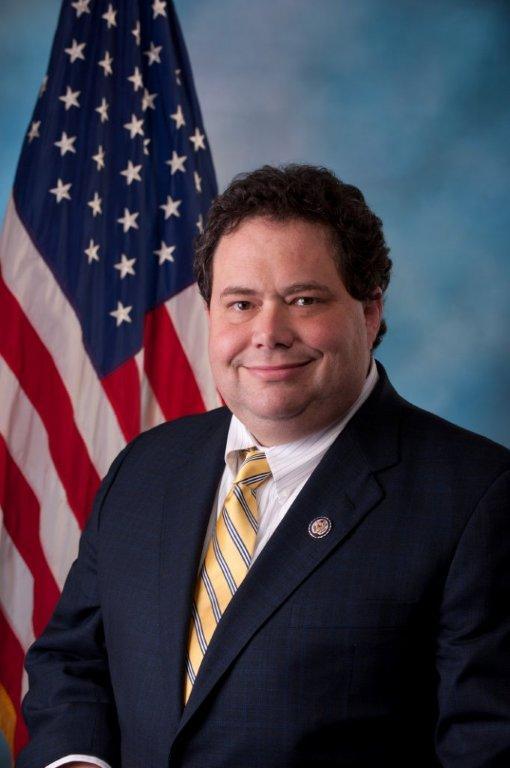
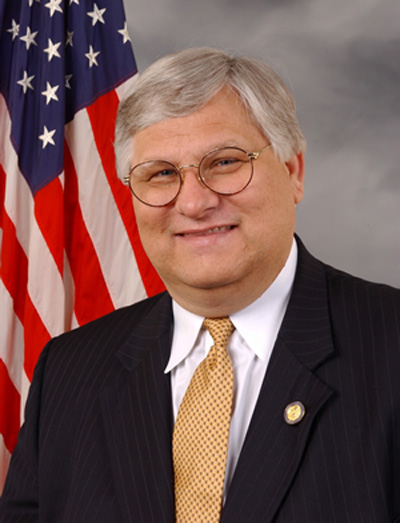
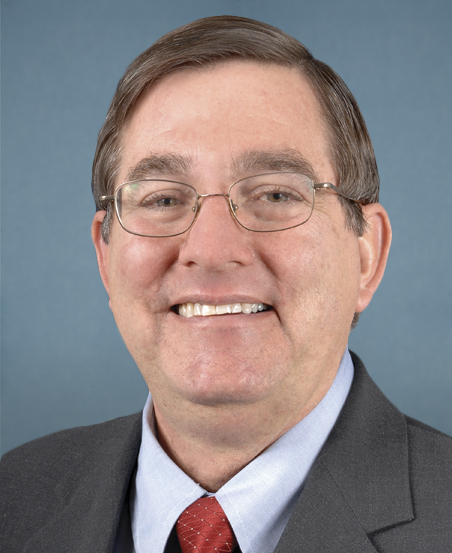
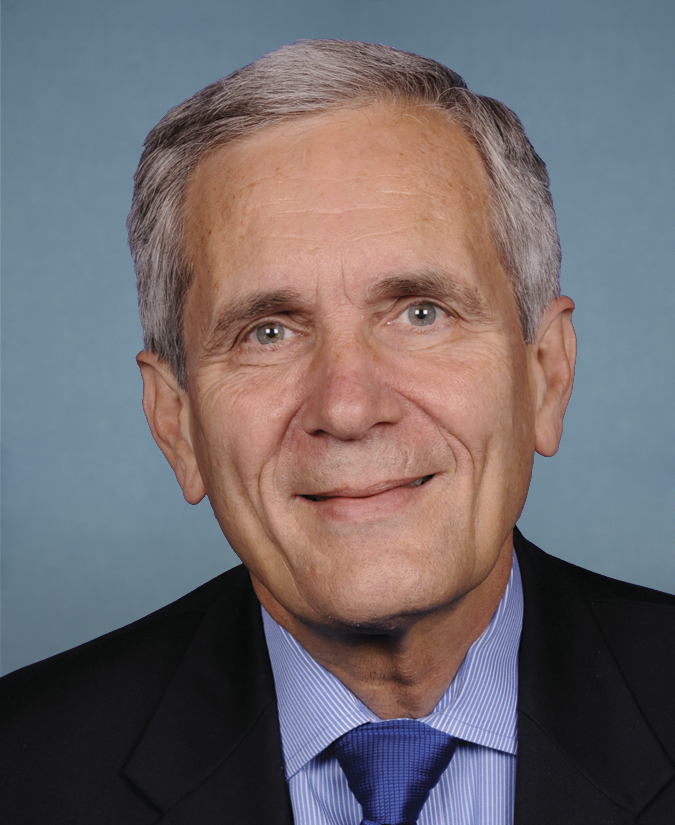
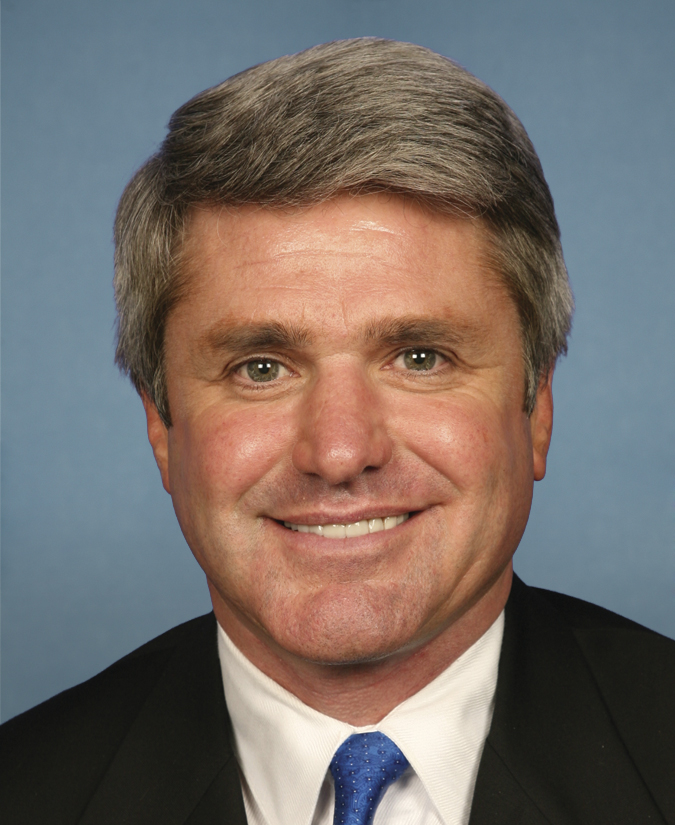
Of the 60 lawmakers that have media organizations investments, 6 of them come from Texas.  They are Congressmen Michael McCaul (R-TX26), Kenny Marchant (R-TX24), Michael Burgess (R-TX10), Lloyd Doggett (D-TX25), William Flores (R-TX17) and Blake Farenthold (R-TX27).

          From left to right: Congressmen Bill Flores, Blake Farenthold, Kenny Merchant, Michael Burgess, Lloyd Doggett, and Michael McCaul.

The largest investor in media organizations from the Lone Star State is Rep. Michael McCaul with anywhere from $179,018 to $505,000 invested in companies like Comcast Corp., Walt Disney Co. and CBS Corp. The disclosure reports only require members of Congress to list their assets and debts in broad ranges.

Disclosure reports also show that not all members of Congress from Texas are wealthy enough to invest in media organizations however. A Washington Post article points out that many Republican freshman lawmakers who campaigned on reducing the federal debt are in substantial debt themselves.  One such freshman lawmaker is Congressman Farenthold.  The disclosure reports show that the Congressman could have anywhere between $45,000 and $150,000 in credit card debt.  However, Flarenthold does list that he has anywhere from $2,002 to $30,000 in personal media investments in the Walt Disney Co.

The public disclosure reports that came out this week provide the public with a better understanding of how lawmakers chose to spend their money. The reports show that some lawmakers have chosen to invest in companies that are supposed to report in a fair and unbiased manner on campaign issues and congressional ethics. The documents show yet another example of why disclosure laws are important. The public has a right to know how lawmakers spend their own money so they can trust them with their tax dollars.

The Shroud of Fukushima

Artist rendering of the Shroud of Fukushima

According to the London Telegraph, Tokyo Electric Power Co (Tepco) has announced that they will start construction of a shroud over the No. 1 reactor at the ill-fated Fukushima Dai-ichi power plant where a hydrogen explosion destroyed the walls and roof of the reactor building on March 12, the day after the cooling system was knocked out by the Japanese earthquake and the tsunami that it triggered.

The shroud will stand 177 feet high and be 154 long with a roof that can be opened to give cranes access to the interior. It will also be fitted with filters that, over time, will scrub the air inside the building of radioactivity, enabling workers to enter the plant.  The frame of the shroud will be put together off-site and once in place, it will be covered with polyester fiber panels coated with a resin designed to prevent further radiation leaking into the atmosphere – at least that’s the plan.

Tepco is using the operation at the No. 1 reactor to test the construction methods and effectiveness of the shroud.  In truth, they are not sure how effective the temporary cover may be in limiting emissions of radiation from the reactors and spent fuel pools, but it will at least prevent more rainwater entering the buildings and becoming contaminated with radiation.  If it proves effective they have plans to build similar covers over the No. 3 and No. 4 reactor buildings, which were also damaged by explosions after the tsunami.

Eventually, Tepco plans to erect a concrete structure around the reactors, but that will take several years to achieve.  A similar concrete sarcophagus was built over the remains of the reactors at the Chernobyl power plant after that facility was destroyed in an accident in April 1986.

In hearings on Capitol Hill, the Senate Committee on Environment and Public Works was questioning the NRC’s chairman, Gregory B. Jaczko about the implications of Japan’s nuclear accident for the United States.  A statement by a commission official on Wednesday indicated that the nation’s nuclear safety rules had failed to consider the possibility of losing both off-site power from the electric grid and on-site emergency diesel generators.

NRC Commissioner George Apostolakis said that this condition produces a station blackout, and the commission has a rule covering such blackouts, but Mr. Jaczko said that the thrust of the statement was that the agency had not thought enough about a single event that would damage both the grid and the diesel backup generators, causing a plant to take longer to recover.

Let’s hope the US is not the next country designing a sarcophagus for a nuclear facility.

Lake Travis Levels Plummeted During 2009 Drought

Today the Lower Colorado River Authority (LCRA) Board of Directors delayed a vote on providing water to the “White Stallion” coal plant proposed for Matagorda County. Though White Stallion’s Chief Operation Officer, Randy Bird, was expecting and asking for approval of a contract today, the board chose to delay action until August 10. This makes sense considering that they were confronted with more than 30 people who signed up to speak against the coal plant, some driving from as far away as the Gulf Coast (some taking off work) in order to be there. This delay is a victory for those opposing the coal plant and a step in the right direction in convincing the LCRA that this project is not a beneficial or responsible use of water from the Colorado River Basin.

Key concerns included the general aspect of this project and the negative effects it would have on the people, environment (and watershed) of the region. There were also, as expected, many concerns regarding the current drought and many agreements that the last thing LCRA should consider is adding more, firm water commitments particularly when LCRA is already asking customers to conserve and scale back their water use. Concerns about how global warming would further worsen dry conditions in the region over the next 55 years (the length of the proposed contract) were also voiced by many of the speakers.

“Even though they haven’t denied it yet, we’re glad they’re taking their time to look into the serious implications of this coal plant request” said Lydia Avila with Sierra Club.  “We’re confident that when they look at the facts they will realize this is a bad deal for Texans and reject it.”

Only one or two people spoke in favor of granting the contract, one of whom was Owen Bludau, Executive Director of the Matagorda County Economic Development Corporation – one of the original entities that worked to bring the White Stallion proposal to Bay City. Those speaking against the contract included Matagorda County Judge Nate McDonald, Burnet County Judge Donna Klaeger, David Weinberg (Executive Director of the Texas League of Conservation Voters), Doctor Lauren Ross (who recently released this report on how White Stallion would affect water in the Colorado watershed), and many others including concerned residents throughout the LCRA region and landowners located right next to the proposed plant site.

Public Citizen applauds LCRA’s decision to table this vote. It shows that the LCRA takes the concerns of their stakeholders seriously. The next two months should prove to the LCRA that this coal plant is both unnecessary and a waste of our most precious and dwindling resource: our water.

Update and thank you!

Public Citizen wants to thank all of you who responded to our emails, blogs, tweets and phone calls and either called, mailed, or emailed comments in, and to those who showed up and packed the meeting room today.  This decision would probably have been very different if you had not made your concerns know to the board.  You are all awesome!

Critiques of nuclear generation have generally revolved around safety risks and high construction fees, but relatively little attention has been paid to what happens when a nuclear plant powers down for good.

Costs Can Reach Over $1 Billion

Nuclear plants must be decommissioned at the end of their useful life, and operating licenses are generally for 40-60 years. The costly, labor-intensive process involves two major actions: nuclear waste disposal and decontamination to reduce residual radioactivity.

There are currently 104 commercial nuclear power plants operating in the US, most of which were built in the 1970s and are slated for decommissioning during the next three decades.

At least one nuclear plant now running will be shut for good in the next several years, namely Exelon Corp’s Oyster Creek plant in 2019. Before then, we could see Entergy Corp’s Vermont Yankee plant shutter as early as next year, should the state’s veto of a license already granted by the NRC hold up in court.  And New York State politicians continue to wield whatever pressure they can to keep Indian Point from winning a license extension in ongoing proceedings.

South Texas Nuclear Project (STP) in Matagorda County licenses expire in 2027 and 2028, they recently applied for a license renewal which would extend the life of the plants 20 years, and they would expire in 2047 and 2048 respectively.  The license renewal application is being contested and you can click here to find out how you can listen in to the 1st Atomic Safety and Licensing Board (ASLB) hearing on this license renewal application.  However, even if the license renewal is approved, there is a possibility that at some point before the license expiration dates, the costs of repairs could exceeded the value of the plant, and dismantling it could offer a better financial option.

As of April 2011, there were 23 nuclear units in various stages of decommissioning. Only ten out of the 23 have been completely cleaned up.

Decommissioning costs typically run at $500 million per reactor unit. But actual costs vary based on size and design, and some have reached over $1 billion — that is between 10 percent and 25 percent of the estimated cost of constructing a nuclear reactor today.

About 30 percent of the cost of decommissioning goes towards waste disposal.

A decommissioned plant creates several different streams of waste

  • Spent nuclear fuel rods are kept in dry storage or in spent fuel ponds at the reactor sites. An average nuclear plant generates 20 metric tons (44,092 lbs) of used nuclear fuel annually, or 1,200 metric tons over a plant’s 60-year lifespan. Every 3 to 5 years, one-third of the fuel assembly rods in the reactor are removed and stored in storage pools for about 10 to 20 years. During this period, the fuel loses much of its radioactivity and heat.  After that period, the fuel can be stored in large sealed metal casks that can be cooled by air. Typically a 1000 MWe reactor will discharge about 2 metric tons of high level waste each refueling. A PWR will discharge 40 to 70 fuel rods; a BWR will discharge 120 to 200 fuel rods.
  • Anything contaminated with lower levels of radiation — pipes, tools, workers’ clothing, reactor housings, really, pretty much everything but the spent fuel rods — are sent to special low-level nuclear waste facilities around the country. The remaining non-radiated waste can be disposed of in regular landfills.

Three pathways to decommissioning

The Nuclear Regulatory Commission offers utilities three options for decommissioning plants.

  • The first option is immediate cleanup after the plant shuts down.
  • In the second option, called SAFSTOR, the plant is closed and awaits cleanup at a later time, offering plants extra time to increase their decommissioning funds.While there is a requirement for operators to set aside funds for decommissioning, some plants have had to shut down before they had sufficient decommissioning funds and once they shut down, the revenue stream dries up.  This means they must wait until their funds accrue sufficient interest to begin decommissioning.The NRC gives utilities up to 60 years to complete decommissioning.This waiting period adds flexibility for plant owners with multiple reactors that shut down at different times. Once all the reactors cease operation they will be decommissioned together to save money and resources.

Of the 13 reactors currently being decommissioned, six chose immediate decontamination and seven remain in SAFSTOR conditions.

  • No U.S. plant has ever chosen the third decommissioning option, called ENTOMB.Workers would begin by moving the fuel rods into dry storage casks removing 99.9 percent of the plant’s radiation, but which currently must be stored on site.  Next, they use solvents and filters to clean up other contaminated surfaces.The other radioactive material onsite is sent to low-level waste facilities, and the plant is left to sit for decades.With ENTOMB there is no requirement to build extra containment buildings because the NRC postulates that most of the radiation will already be gone, though plant operators would continue to monitor the site for security.After 80 to 100 years, the plant would be safe enough to enter while wearing street clothes, and workers could dismantle the plant with just “a plasma torch and dust mask”.Still utilities don’t like the ENTOMB option because they don’t want to deal with the long-term liability.

Radioactivity for Volume

Low-level radiation waste comes in three varieties: Class A, B and C. Class A waste contains the lowest levels of radiation.

There are three low-level nuclear waste facilities in the United States — in Clive, Utah; Barnwell, South Carolina and Hanford, Washington. Clive only accepts Class A waste; the other two sites accept Class B and C waste but only from select northwestern and eastern states.

The new low-level waste facility under construction in Andrews County, Texas will accept Class A, B and C waste, and originally limited its intake to nuclear waste from Texas and Vermont, but the Texas legislature just opened the site up to take waste from outside the original compact, meaning it could take waste from anywhere in the United States.  However, a study by the Texas Commission on Environmental Quality indicates the site only has the capacity to take the low-level radioactive waste from the six Texas and Vermont reactors.

When Barnwell and Hanford started restricting their operations, nuclear plants adjusted their practices. Operators began changing filters more often to selectively create Class A waste that could be sent to Clive.  As a result, Class B and C now make up less than 15 percent of low-level nuclear waste.

So after nearly 60 years, with 104 nuclear reactors approaching the end of their useful life, it remains unclear how this country is going to deal with the decommissioning waste.  How foolish would a nuclear renaissance be in the face of this unsurmounted problem?  The industry continues to insist, over-optimistically, that we will find a long-term solution, yet ,pessimistically, doesn’t think we can find a replacement renewable energy source in the same time frame.  The industry dost protest too much, methinks.

Becky Motal has just been named the first female to become general manager of the Lower Colorado River Authority in its 76-year history.

Motal, executive manager of external affairs, was chosen by a unanimous vote of the LCRA board of directors and assumes the helm of the energy and water management agency effective July 2. She replaces Tom Mason who is resigning July 1.

The news ends speculation that Ken Armbrister, the former Texas senator and current legislative director for Gov. Rick Perry, would be chosen for the job.

We don’t know much about Ms. Motal, but will post more as we learn more about her history.

Residents living near the WCS low-level radioactive waste dump in Andrews County in West Texas near the New Mexico border will soon be asked to complete a health survey commissioned by state environmental and health officials and conducted by the University of North Texas to assess about 24,000 people who live within a 35-mile radius of Waste Control Specialists LLC’s site.

The survey, which was part of legislation passed in 2003, will provide a baseline assessment before material is buried for the first time at the site later this year. Letters encouraging residents to participate will go out in the next few days and the results will not be made public.