 The Texas Progressive Alliance congratulates the city of New Orleans for its first Super Bowl as it provides an instant replay of its blog highlights for the week.
Something stinks about the recent TCEQ Barnett Shale air quality testing in Fort Worth and in Flower Mound. Bluedaze: DRILLING REFORM FOR TEXAS.
Off the Kuff looked at a report on the economic impact of dropouts.
CouldBeTrue of South Texas Chisme sympathizes with Lamar Smith’s constituents who were told they must contact Smith’s office if they want him to stop illegally calling their cell phones. Smith’s breaking the law and his solution is to make his constituents ask him to stop.
WhosPlayin reposted a article from 2007 about the corporation: Don’t hate the player, change the game, which is especially apropos this week.
A Republican in Democrats clothing tries to ride into office in Dallas County. SDEC members and precinct chairs say no way to this Eagle Forum darling at The Texas Cloverleaf.
Citizens of Texas say &^%$ Governor Perry! for screwing up the state after 10 years. Add your own!
WCNews at Eye On Williamson takes a glass half-full approach in analyzing the muffed election last week Let’s HOPE it’s seen as a wake up call.
Right-wing bloggers gathered in Austin to worship Rick Perry’s pistol. Seriously. Read the entire revolting display of sycophancy at Brains and Eggs.
BossKitty at TruthHugger is continually amazed at general ignorance concerning the actual words in the US Constitution. Interpretations abound from the mouths of people who have never read the document, or do not comprehend the words in context. Embellishments and fantasy surrounding this document are spoken every day. What is especially disturbing is how these fantasies infiltrate America’s politics. To be elected in some regions, a politician must fertilize the fantasy. Perspective must return to how Americans regard the Law of the Land. American Theocracy divorces US Constitution, promotes terrorism.
Over at TexasKaos, Boadicea offers a little not so subtle advise to Democrats who find themselves unmanned by the events of last week. She calls it Dear Democrats: Balls.. Trust me, you will like the video she found to illustrate her point!
Neil at Texas Liberal made note of the fact that just two months remain before his tenth wedding anniversary. Neil is damned glad about his marriage. Neil is not certain he could advocate for liberal causes if he did not have such a solid personal relationship in his life to help him manage his frequent anger at the world. The personal and the private are often connected in many ways that we may not often consider.
###
By promoting cleaner energy, cleaner government, and cleaner air for all Texans, we hope to provide for a healthy place to live and prosper. We are Public Citizen Texas.
Posted in Uncategorized | Tagged Barnett shale, bluedaze, boadicea, bosskitty, brains and eggs, constitution, couldbetrue, drilling reform, eye on williamson, flower mound, fort worth, gas drilling, governor perry, lamar smith, new orleans, off the kuff, republican, south texas chisme, super bowl, TCEQ, Texas, texas cloverleaf, texas liberal, texas progressive alliance, Texas Progressive Alliance Weekly Round, texaskaos, truthhugger, weekly round up, whosplayin |
 Wednesday January 27th in Houston the Center for the Study of Environment and Society and the Shell Center for Sustainability are holding a public talk on climate change. Check out the infos below:
“The Great Climate Change Debate: Global Climate Models and the Evidence”
with Dr. Richard S. Lindzen
Alfred P. Sloan Professor of Meteorology, Dept. of Earth, Atmospheric and Planetary Sciences, MIT and member of the National Academy of Sciences
and Dr. Gerald North
Distinguished Professor in the Departments of Atmospheric Sciences and Oceanography at Texas A&M
Wednesday, January 27th, 2010
7:00 PM
McMurtry Auditorium, Duncan Hall
Rice University
OPEN TO THE PUBLIC
Posted in Global Warming | Tagged center for the study of environment and society, climate change, Climate Change Debate, Climate Change Wednesday January 27th, climate skeptic, denier, dr. gerald north, dr. richard s. lindzen, Global Climate Models, Global Warming, rice university, shell center for sustainability, Texas |

Austin is not alone in preparing for clean and affordable energy.
When good news like this comes across the internet like this, we have to share. From the cloudy northwest:
Portland General Electric Co. would shut down the state’s only coal-fired power plant 20 years earlier than planned under a proposal it hopes to finalize with state and federal regulators in the coming months.
Essentially, the new plan to shut the Boardman plant down 20 years earlier than planned is to avoid extra costs for pollution controls (more than $500 million by 2017) and avoid carbon risks. PGE still owes $125 million on the plant, and replacing the 500 MW of power will have its costs too, but read on…
Based on its analysis of carbon and natural gas prices, however, PGE maintains that a 2020 shutdown would be the low-cost, least-risk plan for utility ratepayers and shareholders [emphasis mine]. Under the existing plan, both face the risk of making the huge investment to control haze causing pollution – which does nothing to control the plant’s carbon emissions — then seeing the plant close anyway if global warming legislation or a carbon tax makes its output prohibitively expensive.
Read the full article here. Coal represents about a quarter of PGE’s generation mix. (Los Angeles also has a goal to get out of coal by 2020.)

Austin Energy has similar plans to get out of its only coal plant, the Fayette Power Project. No target date is set yet, but the utility’s 2020 generation plan would reduce Austin’s dependence on it by 20-30%. The next two years will be important as Austin works with the Electric Reliability Council of Texas (the grid operator for most of Texas) and the Lower Colorado River Authority (co-owner of Fayette) to see what the most practical and fair way out. Learn more about the resource plan and some excellent additional recommendations at www.cleanenergyforaustin.org. You can also learn a lot from AE’s website www.austinsmartenergy.com.
###
By promoting cleaner energy, cleaner government, and cleaner air for all Texans, we hope to provide for a healthy place to live and prosper. We are Public Citizen Texas.
Posted in Coal, Energy, Global Warming | Tagged 20/20, Austin Energy, boardman, boardman plant, carbon emissions, carbon tax, Coal, coal plant, electric reliability council of texas, fayette power project, global warming legislation, haze, lower colorado river authority, PGE, pollution, portland general electric, Texas |
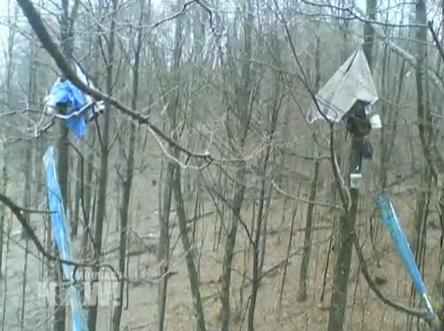 Blasting on Coal River Mountain was halted due to a tree sit by three activists: Eric Blevins, 28, Amber Nitchman, 19, and David Aaron Smith, 23. On standby at the trees’ base were the direct supporters Josh Graupera, 19, and Isabelle Rozendaal, 22. Associated with Climate Ground Zero and Mountain Justice, these activists are opposed to the devastating process of mountain top removal (MTR) going on at Coal River Mountain. Perched 60 feet in the air in tulip poplars and oak trees just a stone’s throw from the blasting site these activists risked their own well being in a direct action attempt to halt the exploitation of Appalachia.
Too often people talk about how terrible something is without any action behind their words. These individuals not only understand that MTR mining must be stopped, they are willing to risk their safety and liberty to non-violently bring its operations to a halt – if even for only a day. If every person in this country who was concerned about MTR mining followed their example it would be shut down forever.
The time is long past when we should have stopped using coal for fuel in general. That we are now destroying the second most biologically diverse ecosystem on the surface of the planet in order to allow companies like Massey to stay competitive with other coal mining companies is grossly obscene. These individuals should be commended by anyone who cares in the slightest about the health of our environment and the health of the general public – and as many people who can should join in their acts of non-violent civil disobedience.
###
By promoting cleaner energy, cleaner government, and cleaner air for all Texans, we hope to provide for a healthy place to live and prosper. We are Public Citizen Texas.
Posted in Coal, Global Warming | Tagged activists, amber nitchman, Coal, coal mine, coal river mountain, david aaron smith, eric blevins, Global Warming, Massey, mtr, Texas |
Live anywhere close to Stephenville? Next Tuesday, January 26th there will be a forum there titled “Renewable Energy Opportunities for Rural Communities and Agriculture.” Speakers will present information on how rural communitities, agriculture, and landowners can benefit from partnering to develop renewable resources such as wind and solar. It will be held from 8 am to 5 pm at the Texas AgriLife Research and Extension Center, 1229 N. Hwy 281. For more information, read the Jacksboro Newspaper posting.
###
By promoting cleaner energy, cleaner government, and cleaner air for all Texans, we hope to provide for a healthy place to live and prosper. We are Public Citizen Texas.
Posted in Energy, Renewables | Tagged Agriculture, renewable energy, rural communities, solar, stephenville, Texas, wind |
SEED Coalition opposes any radioactive waste dumping in Texas, but at minimum seeks to prevent our state from receiving waste from more than just the two Compact States and becoming the nation’s radioactive waste dump. With support from Public Citizen, Environment Texas and Nuclear Information and Resource Service and other groups, they will submit comments today to the Texas Low-Level Radioactive Waste Disposal Compact Commission. The Proposed Import/Export Rule under consideration may open the door for Texas to becoming the nation’s nuclear dumping ground and we’re making recommendations to strengthen the rule and protect public health as safety .
State Rep. Lon Burnam (District 90, Ft. Worth) will ask a series of questions of the Compact Commissioners, and try to get answers as to why they are considering the weak and risky approach taken by the draft rule under consideration.
Some of SEED Coalition’s comments can be summarized as follows:
- The site should be limited to radioactive waste from Texas and Vermont, and have volume and radioactivity caps that match the license for the facility.
- Waste from Texas and Vermont would more than fill up the facility, and no Out of Compact Waste should be imported.
- The proposed import/ export rule needs to be strengthened and deemed a Major Environmental rule, so that more careful analysis can be done.
- Radionuclides must be carefully tracked and monitored. The public has a right to know what is shipped to the site and the level of radioactivity in curies.
- The public should be informed as to health risks from various radionuclides and meetings held in accord with the Open Meetings Act
The Compact Commission meets today beginning at 9 AM in Austin, Texas in the State Capitol Auditorium, E1.004, 1400 North Congress.
Visit www.NukeFreeTexas.org to find SEED’s comments, Rep. Burnam’s questions, a NIRS factsheet and the memo by nuclear expert Dr. Arjun Makhijani. Press release after the jump… Continue Reading »
Posted in Good Government, Nuclear | Tagged andrews county, Arjun Makhijani, compact commission, environment texas, fort worth, import/export rule, Karen Hadden, lon burnam, low level radioactive waste disposal compact commission, no bonds for billionaires, nuclear information and resource service, open meetings act, Public Citizen, public radio, SEED Coalition, south texas association for responsible energy, state capitol, Texas, vermont, waste control specialists, we can |

 Thursday evening at 6:30pm Robert F. Kennedy Jr will debate Don Blankenship, the CEO of Massey Energy – the largest coal producer in West Virginia. The subject of debate is the future of coal, Mountain Top Removal (MTR) mining, and economic opportunities for Appalachia. Kennedy is the chief litigator for the Waterkeeper’s Alliance and a staunch opponent of coal power and MTR coal mining. The debate can be watched online Thursday night, January 21, 2010 at 5:15pm here. It will also be available on that website on-demand following the broadcast.
Blankenship is infamous for his denialist stance on global warming, and Massey Energy is infamous for violating the Clean Air Act with thousands of instances of environmental pollution violations – so bad that environmental groups have filed a lawsuit against them. Let us hope Blankenship and his company’s gross irresponsibility and criminal behavior will not be tolerated much longer, and that Kennedy will mop the floor with him tonight during the debate.
Stephen Colbert did a bit recently on the ills of MTR. Though in this segment they discuss how traditional mining would be better than MTR (and that is true) it is far more important to get us off of all coal mining and burning altogether. The efforts here are reciprocal – helping to end MTR mining will help stop coal plants and stopping coal plants helps stop MTR. Click on the photo to go to the video:

Hardest of all for Blankenship and his ilk will be to dispute this recent call by scientists to put a moratorium on all new MTR permits. A peer-reviewed study recently published in Science Magazine “unequivocally documents irreversible environmental impacts” due to MTR coal mining. Basically there is now hard, scientific proof of what we “crazy enviros” have been saying for years – that MTR mining is one of the most destructive practices in existence and must be ended. For some more previews of Blankenship and his anti-enviro rantings you can check out this video – but be sure to tune in tonight to see Kennedy go round for round with this baron of pollution and champion of denial.
###
By promoting cleaner energy, cleaner government, and cleaner air for all Texans, we hope to provide for a healthy place to live and prosper. We are Public Citizen Texas.
Posted in Coal, Global Warming | Tagged Appalachia, Blankenship, Clean Skies, Coal, coal mining, debate, Don Blankenship, economy, Global Warming, Kennedy, Massey, massey energy, mountain top removal, mtr, Robert F. Kennedy Jr, Robert Kennedy, Texas, Waterkeeper Alliance |
2 big upcoming events for the Texas Green Network:
January 21st — an inaugural San Antonio networking event, an introduction to San Antonio’s green business community
January 27th — green tradeshow workshop & show featuring members of Texas Green Network (Austin)
Posted in Global Warming | Tagged Austin, San Antonio, Texas, Texas Green Network |
With climate legislation held up in the Senate and the Copenhagen climate talks’ failure to produce a binding, international agreement, the Environmental Protection Agency (EPA) has emerged as the critical agency in regulating greenhouse gas emissions. Through application of the Clean Air Act, the EPA has the authority to curb climate change. Unfortunately, U.S. Senator Lisa Murkowski of Alaska and lobbyists for some of the biggest polluters in the country have other plans for the Clean Air Act.
Tomorrow, Senator Murkowski is planning to introduce an amendment that would halt the EPA’s implementation of the Clean Air Act and undermine one of our most important environmental laws.
We know that big energy likes the amendment, since they helped draft it. In the Washington Post, a lobbyist for energy giants like Southern Co. and Duke Energy, Jeff Holmsted, admitted to working with Murkowski’s staff on the exact language of the amendment.This is after Senator Murkowski received more than $124,500 from Holmsted’s clients.
Don’t let Big Energy write the law to pollute more! Tell your Senator to protect the Clean Air Act.
The Murkowski amendment seeks to reverse the EPA’s critical finding that greenhouse gas pollution endangers public health. The endangerment finding triggers the Clean Air Act and prompts the EPA to take the first step toward curbing climate change pollution.
Murkowski’s attempt to eviscerate our best existing tool for reducing greenhouse gas pollution not only threatens our ability to reduce the carbon in our atmosphere, but also serves as another shameful example of the role Big Polluters are playing in stalling climate change action.
Please act today to tell the Senate we need the Clean Air Act to curb global warming, and to oppose the attempts of Murkowski and Big Polluters to gut the Act.
Thank you for all you do!
###
By promoting cleaner energy, cleaner government, and cleaner air for all Texans, we hope to provide for a healthy place to live and prosper. We are Public Citizen Texas.
Posted in Uncategorized | Tagged big polluters, clean air act, copenhagen, duke energy, Environmental Protection Agency, EPA, Senator Lisa Murkowski, southern company, Texas |
 According to this article from the New York Times, a “major trade group for the insurance industry” has taken the stance that global warming may, after all, be the scam all those talk radio and Fox News pundits are claiming it is. This group is the National Association of Mutual Insurance Companies, or NAMIC.
In a letter to insurance regulators, NAMIC makes statements denying the legitimacy of global warming science, making outlandish claims such as the University of East Anglia climatologists “actively colluded to subvert the peer-review process,” amongst other things. Apparently NAMIC prefers the cherry-picked misquotes of personal emails to the vast array of climate science available. That’s what they’ve armed themselves with to challenge the established scientific theories on anthropogenic global warming. None of these insurance businessmen are climatologists, but they feel they have the expertise and qualifications to make judgments about policy and how it relates to the threat of global climate change.
Overall, however, insurance companies still seem concerned about climate change, and for good reason. Insurance companies stand to lose vast amounts of money due to the changes scientists predict – some companies could go bankrupt depending on how bad and how quickly the effects occur. Perhaps this is just fear run amuck through certain insurance company circles, but that doesn’t make it any less irresponsible or dangerous. At a time when we need focused calculation and attention paid to the ever-increasing threats of global warming we are, instead, getting hysteria and misinformation. If NAMIC wants to join the likes of Glen Beck and Mark Levin let us at least hope that insurance regulators will take them just as seriously as those fine gentlemen.
###
By promoting cleaner energy, cleaner government, and cleaner air for all Texans, we hope to provide for a healthy place to live and prosper. We are Public Citizen Texas.
Posted in Coal, Global Warming | Tagged climate change, denial, Global Warming, insurance, insurance companies, insurance group, NAMIC, Texas |
 The Texas Progressive Alliance wishes you a happy MLK Day as it brings you this week’s blog highlights.
Off the Kuff takes a look at some demographic trends in the Houston area.
Something STINKS about TCEQ’s recent Fort Worth air study. Considering that the Barnett Shale has a staggering asthma rate of 25% compared to 7.1% statewide, TXsharon thinks it’s time for an intervention in Texas. Bluedaze: DRILLING REFORM FOR TEXAS.
CouldBeTrue of South Texas Chisme, along with every other progressive, knows why Democrats are having a hard time. Even the Tea Party activists know that our country should not be run by corporate lobbyists.
WCNews at Eye On Williamson discusses the importance of the election this year, 2010 races loom large for 2011 legislative redistricting.
Mary Peters loves her some private toll roads which is understandable since her income depends on stupid people at TXDOT selling off our roads. McBlogger, understandably, has a problem with the fact that taxpayers have to get screwed for Mary and her masters to make money.
A few of PDiddie’s friends around the state are taking a crack at public office this year. See who they are at Brains and Eggs.
Bay Area Houston notices What they didnt talk about at the Republican debates.
Neil at Texas Liberal updated his Martin Luther King Reading & Reference List for 2010. This list is the best such resource on the web.
MUD? FWSD? WTF? Developer welfare comes back into the light in Denton County, at the Texas Cloverleaf.
###
By promoting cleaner energy, cleaner government, and cleaner air for all Texans, we hope to provide for a healthy place to live and prosper. We are Public Citizen Texas.
Posted in Global Warming | Tagged air study, asthma, Barnett shale, bay area houston, bluedaze, brains and eggs, couldbetrue, denton county, dr. martin luther king, drilling reform, eye on williamson, fort worth, houston, jr, mary peters, mlk day, off the kuff, south texas chisme, TCEQ, Texas, Texas Commission on Environmental Quality, texas liberal, texas progressive alliance, Texas Progressive Alliance Weekly Round, txdot, wcnews, welfare |
Two proposed nuclear reactors in Florida were put on hold this week after the Florida Public Service Commission denied the lion’s share of a rate increase necessary to fund the project’s construction. The utility Florida Power and Light (FPL) requested a record rate hike of $1.27 Billion, but was only granted a a $75.5 million base-rate increase. Stripped of their authority to make ratepayers bear the financial burden and risk of new reactors, FPL announced
it would halt $10 billion in projects, including plans to build two new nuclear reactors at the Turkey Point plant near Miami and upgrade two new generators.
If the economy improves, FPL can ask for a larger rate increase at a later date — but for the time being, this is a major victory for consumers and anti-nuclear advocates alike. Florida has seen the folly of forcing citizens to pay large rate increases and bear the long-term burden for risky investments in nuclear power — let’s just hope that the San Antonio City Council comes to the same conclusion. They’re set to vote on $400 million in bonds to continue their stake in two additional proposed reactors at the South Texas Nuclear Project facility later this month.
###
By promoting cleaner energy, cleaner government, and cleaner air for all Texans, we hope to provide for a healthy place to live and prosper. We are Public Citizen Texas.
Posted in Energy, Nuclear | Tagged florida, florida power and light, florida public service commission, miami, Nuclear, nuclear reactors, San Antonio, south texas nuclear project, Texas, turkey point |
Original post can be found at our sister blog, Citizen Vox.
How much does a pro-pollution amendment cost? From the looks of recent reports about the relationship between Sen. Lisa Murkowski (R-Alaska) and a big energy lobbyist, at least about $35,000. That’s how much Duke Energy, Southern Co. and their executives gave to Sen. Murkowski’s campaign and leadership PAC so far in the 2009-2010 election cycle, according to the Center for Responsive Politics.
It’s no surprise then that Jeffery Holmstead, a registered lobbyist for clients Duke Energy and Southern Co., had extraordinary access to Murkowski – access to help craft an amendment to allow his clients to continue polluting. The amendment proposed by Sen. Murkowski would gut key provisions of the Clean Air Act. The Washington Post reports that Holmstead (also a former top official at the Environmental Protection Agency under George W. Bush) and another lobbyist, Roger Matella, were very hands-on in drafting the amendment:
In an interview, Holmstead said of the Murkowski amendment, ‘I certainly worked with her staff’ on the exact phrasing of the measure in September.
The Obama Administration has moved forward to regulate pollutants that cause climate change using the Clean Air Act. This critical step to rebuild our economy with clean energy, and to protect our health and our climate from global warming and pollution is under attack by the big polluters. And they have friends in high places.
As early as Wednesday, Jan. 20, the Senate could vote on the “Murkowski amendment” to prohibit the U.S. EPA from using the Clean Air Act to regulate carbon dioxide emissions. She may attach the amendment as a “rider” on a bill that has nothing to do with climate. Tyson Slocum, head of Public Citizen’s Energy Program said, “This amendment is all about letting fossil fuel polluters keep their outrageous profits and continue business as usual.”
Of course, the big polluters also have deep pockets. It’s obvious that Murkowski has wrapped herself up with big energy lobbyists and their money. She has received by far the most money from electric utilities and big oil – at least $389,313 so far since 2009. In fact, she’s the top recipient of contributions from the energy industry.
This kind of pay-to-play politics is not new to Washington or Murkowski, but it is the reason the public holds little faith that members of Congress are representing their interests. The story is the same whether the issue is climate change, the financial crisis or health care reform – big industry fuels elections and the policy falls far short of what the American people want and need.
To remove the appearance of corruption, Murkowski should give back the $35,000 and any other contributions she has received from clients of Holmstead and Matella. But if she really wants to show Alaskans that she values representative democracy over pay-to-play politics, then she should become a part of the solution to the underlying problem. She should support an alternative to the current corrosive electoral system and become a co-sponsor of the Fair Elections Now Act. This bill would allow candidates for Congress to run without taking a dime over $100 from individual supporters.
But then again, a fair system with real accountability might make it tougher for polluters to prevail. It might not appeal to Murkowski and her big oil buddies, but it sure sounds like a good idea to us.
###
By promoting cleaner energy, cleaner government, and cleaner air for all Texans, we hope to provide for a healthy place to live and prosper. We are Public Citizen Texas.
Posted in Global Warming | Tagged Big Oil, Campaign Finance, clean air act, corporate power, energy & climate, EPA, Ethics, government reform, lobbyists, money in politics, murkowski, Texas |
Statement of Tom “Smitty” Smith, Director of Public Citizen’s Texas Office
The latest interim charge of the state Senate Business and Commerce Committee provides a welcome opportunity for Texas to rein in rogue utilities like CPS Energy of San Antonio. Now tasked with studying the costs of municipally owned utilities’ generation plans and their impacts on residential and commercial customers, the Senate committee has the opportunity to protect Texans, especially low-income families, from the machinations of a utility bent on pleasing its industrial consumers at the cost of its most vulnerable customers.
CPS Energy is pursuing a risky investment in a nuclear expansion project that, depending on the final cost of the project, would raise rates between 36 percent and 60 percent over the next 10 years. The municipally owned utility has failed to adequately involve the citizenry and city government in its generation planning process. CPS Energy’s nuclear energy plan lacks any mechanism to protect consumers or low-income families, despite the fact that those customers would have to pick up the tab if the deal gets more expensive.
In comparison, the city of Austin’s generation planning process spanned two years and involved public input and roundtable stakeholder negotiations, leading to the development of special policies to protect low-income families from higher bills. Policies like built-in periodic reassessments of cost and feasibility will protect Austin residents and businesses from runaway energy costs that are so typical of large-scale nuclear construction projects. San Antonio residents need to see the same protections.
As Austin’s process clearly shows, CPS Energy can be much more inclusive and transparent. Public Citizen is grateful that the members of the Senate Business and Commerce Committee can step in and act as responsible figures in this process.
###
By promoting cleaner energy, cleaner government, and cleaner air for all Texans, we hope to provide for a healthy place to live and prosper. We are Public Citizen Texas.
Posted in Energy, Good Government, Nuclear | Tagged Austin, Austin Energy, CPS Energy, low income families, municipal utilities, Nuclear Power, public citizen texas, San Antonio, senate business and commerce, South Texas Project, Texas, Tom "Smitty" Smith |
If you were as frustrated as I was watching world leaders dither in Copenhagen while the Earth heats up and island nations continue making evacuation plans, there is good news on the horizon for Austin.
Austin Energy has developed a consensus plan that would establish our own CO2 cap and reduction plan. The great news is that by 2020, Austin’s investments in solar, wind and energy efficiency would allow us to reduce our dependence on the Fayette coal plant by nearly 30 percent! This energy plan will also bring a wide variety of jobs to the city, from innovative clean technology companies to installation, retrofit and construction jobs.
We need support to pass the plan now!
Public Citizen has helped form a coalition called Clean Energy for Austin. We’ve brought together businesses large and small, from Applied Materials to Greenling Organic Delivery, and 12 nonprofits such as the Sierra Club and Environmental Defense Fund to call on City Council to pass the energy plan.
The more individuals and businesses that join the coalition, the stronger the message to City Hall that our world-renowned green city must remain a leader in reducing pollution and creating a green economy.
Sign on as an endorser of Clean Energy for Austin!
Thanks,
Matt Johnson
Some background: This fall, I had the privilege of representing Public Citizen on the city’s task force charged with analyzing Austin Energy’s 2020 plan and making additional recommendations. We voted unanimously to upgrade Austin Energy’s energy efficiency goal, create a special self-sustaining market for local renewable power like solar rooftops and parking lots, and protect consumers’ pocketbooks by conducting periodic reviews in case costs change dramatically.
###
By promoting cleaner energy, cleaner government, and cleaner air for all Texans, we hope to provide for a healthy place to live and prosper. We are Public Citizen Texas.
Posted in Energy, Global Warming, Renewables | Tagged Applied Materials, Austin, Austin Energy, Carbon Dioxide, co2, copenhagen, Energy Efficiency, energy plan, environmental defense fund, fayette coal plant, greenling organic delivery, matt johnson, Public Citizen, Sierra Club, solar, Texas, wind |
« Newer Posts - Older Posts »
 The Texas Progressive Alliance congratulates the city of New Orleans for its first Super Bowl as it provides an instant replay of its blog highlights for the week.