Feeds:
Posts
Comments

From the Fourth of July to the halls of Congress, PRICELE$$ is a filmmaker’s personal journey across America to answer a burning question: why are some of our government’s most basic policies, like food and energy, so out-of-date, and can anything be done about it? Sharing the suspicion of fellow-citizens, including a class of young civics students, that campaign money is involved, the filmmakers set out on a spellbinding—at times hilarious—ride from rural America to the halls of Congress to learn more, because democracy is a precious resource, PRICELE$$ even!

PRICELE$$ airs on November 4 in Austin, TX @ 9:30 pm on KLRU-Q.  The award-winning documentary is a FUN and compelling film about the need for a new way to elect lawmakers without the help of billionaires, lobbyists and SuperPACs.  A winner of the Grand Jury Prize at the Washington DC Independent Film Festival PRICELE$$ has received big thumbs up from lawmakers on both sides of the aisle who are fed up with the money chase and the entanglements. 

[vimeo=38125159]

Check out the trailer above and watch the full film on Sunday, November 4th before election day.  And check out the reviews from elected officials below.  If you live in other parts of the country, contact your local PBS station to see if they intend to air it in the near future.

The USA is the greatest nation in world history, but it is not as good as it could be.  This film tells us how we can be all we should besimply, but not simplistically.

-Former Governor of New York, Mario Cuomo (D)

I would urge every single Member of Congress (or their fine staff!) to watch this movie. It’s high time that our leaders bring an end to the corrupting and stifling influence of special interest money on our democracy.  This just isn’t about right and left.  It’s really about right and wrong.

-Former Senator Alan Simpson (R)

We are taking our Clean Energy Works for Texas campaign to the doorstep of the Public Utility Commission (PUC) next week.  We hope you will join us for a rally on Thursday, October 18 at 12 p.m. in front of the William B. Travis building at 1701 N. Congress Avenue, Austin, TX 78701

We are urging the PUC to create rules to enforce and expand the non-wind renewable portfolio standard (RPS). Passed into law in 2005, the non-wind RPS has languished at the PUC, thanks to pressure from certain lobby interests not to enforce the law. 7 years is too long to wait.

The PUC needs to hear that the people of Texas are ready to get to work building 21st century energy economies. With more solar potential than any other state, Texas should be an epicenter of the solar industry. Our workers should be supplying solar panels, inverters and other equipment to the rest of the country and the world. Enforcing the non-wind renewable portfolio standard will send a message to investors that Texas is open for business.

http://www.facebook.com/events/186701511465498/

For more information on the campaign and to sign on in support, visit www.CleanEnergyWorksForTexas.org.

Contact kwhite@citizen.org with any questions.

Actress Daryl Hannah has been arrested along with Winnsboro ranch owner Eleanor Fairchild, 78, while staging a protest against Keystone XL construction on Mrs. Fairchild’s farm. The duo where defending Mrs. Fairchild’s home and business, Fairchild Farms, a portion of which has been expropriated by TransCanada, for its toxic tar sands pipeline.

More details on their blog: http://tarsandsblockade.org/darylandeleanor/

Bill McKibben, founder of 350.org, and technical adviser to the Texas Drought Project, will appear Thursday, October 4th, at 7 PM at the Belo Center for New Media Auditorium (BMC 2.106), at the northeast corner of Dean Keeton and Guadalupe, University of Texas, Austin, TX.

McKibben is known for his provocative books, Eaarth: Making Life on a Tough New Planet, The Global Warming Reader, and Deep Economy, among others. He is considered by Time Magazine to be “the planet’s best green journalist” and by the Boston Globe as “the country’s most important environmentalist.”

As the founder of the grassroots climate campaign, 350.org, he has helped to co-ordinate over 15,000 rallies in 189 countries. He is also a leader against tar sands oil.

Don’t miss it!

The event is sponsored by the University of Texas School of Journalism and the Third Coast Activist Resource Center. It’s free and open to the public, and seating is limited on a first-come, first-served basis.


The House Committee on Environmental Regulation held a public hearing today to take invited testimony on an interim charge before the 83rd legislative session starts in January of 2013.  They examined the federal eight-hour ozone standard under the National Ambient Air Quality Standards program and its impact on the State Implementation Plan.  They were also looking to identify counties expected to be in non attainment, the state’s proposed designations of those counties, the time lines for meeting the applicable standard, and the status of the state’s ability to attain the standard.

  • Click here to see the presentation that went along with the testimony of Public Citizen’s Texas office director, Tom “Smitty” Smith.
  • Click here to watch the archived video of the hearing.
  • Click here to see the presentation that went along with the testimony of the Lone Star Chapter of Sierra Club’s interim director, Cyrus Reed.

The controversial 2010 Supreme Court decision Citizens United – that gave corporations untold influence in our electoral system and said “money” is “speech” – has created an environment in which millions of dollars in corporate cash is drowning out the voices of Texans.

It is time for Texans to demand the end of unlimited money in our elections and take action on a local level.

We are proud to support a homegrown Texas grassroots movement called Texans United to Amend in their efforts demanding local governments across the state of Texas pass resolutions supporting a constitutional amendment to reverse Citizens United and declare that only human beings are entitled to rights under our constitution.

We are joining Texas United to Amend to ask for you to make a difference in your community and sign this petition urging your local government to pass a resolution that seeks an amendment of the U.S. Constitution that firmly establishes that money is not speech, and that only human beings, not corporations are entitled to constitutional rights.

Sign the petition today and call on your local government to pass a resolution.

You might be asking – why local governments? Isn’t this a federal issue?

Social change has always come from grassroots groups, with speeches and marches in the street. This has been true of both the direct election of Senators (17th Amendment) and Women’s Suffrage (19th Amendment). The movement for a constitutional amendment to remedy Citizens United is, at its core, a grassroots one. It is driven by real concerns about the health of our democracy that reverberate in each and every community in Texas.

Passing local resolutions at the local level in Texas is the necessary first step toward restoring free and fair elections to the American people, both locally and nationally. Your work, along with coalitions like Texas United to Amend, can make a difference.

Click here and join Texans United to Amend in calling on your local government to pass a resolution that seeks an amendment of the U.S. Constitution that firmly establishes that money is not speech, and that only human beings, not corporations are entitled to constitutional rights.

Across the country, ordinary citizens like you are making their voices heard.  Nine states have already passed resolutions calling for a constitutional amendment to overturn Citizens United, and many more states are considering the same. If you want to do more, let us help you set up an organizing meeting the week of October 8.  This will be an exciting way to begin planning for the third anniversary of the Citizens United v. Federal Election Commission ruling and to prepare to gather petition signatures on election day when millions of potentially interested voters go to the polls.  Click here to get more information and sign up.

When you subtract out shady roofs, renters, and other factors, only about 25% of Americans have a place to install solar power. With the high upfront cost of a complete system, the potential solar universe shrinks further.

That changes with “community solar.”

After a long wait on the state’s Public Utilities Commission to finalize the rules, Colorado’s “community solar gardens” program ( summary here) sold out in 30 minutes when it opened , testament to the pent-up demand for solar among those who don’t own a sunny roof. The program allows individuals to subscribe or buy shares in a local solar project, and in return receive a share of the electricity output.

The community solar garden policy offers several significant benefits:

  • Individuals can go solar without a sunny roof or without owning one at all.
  • Individuals can buy as little as a 1 kW share or as much as produces 120% of their own consumption.
  • The solar garden projects capture economies of scale by building more panels at a single, central location and capture the advantages of decentralization by interconnecting to the distribution (low voltage) part of the electricity grid close to demand.
  • Solar gardens cultivate a sense of ownership and geographic connection, requiring subscribers to live in the same county as their shared solar array. This can reduce political opposition to solar projects and increase local economic benefits.

Fortunately, Colorado isn’t the only state considering this policy. California’s legislature is currently debating SB 843 to allow “community shared solar” and other renewable energy. Several other states offer a blanket policy called “virtual net metering” that lets customers share the output from a single renewable energy facility, although sometimes it’s limited to certain types of customers (municipalities, residential, etc.) and we can do this in Texas.

This post was written by John Farrell and originally appeared on ILSR’s Energy Self-Reliant States blog.

Editor’s Note: California’s SB 843, mentioned in this article, failed to pass.

Eight Tar Sands blockaders just climbed 80 feet into trees in the path of Keystone XL construction, and pledged not to come down until the pipeline is stopped for good. TransCanada workers are starting to arrive on the scene. The tar sands blockade folks will be tweeting and live blogging as today’s action unfolds so check for live updates throughout coming days…weeks?!

You shall not pass!

Update:

Around 11 am today, after 48 hours, the five tar sands blockaders who were jailed on Wednesday in Franklin County were freed! They were being held on a $2,500 bail each. Click here to keep up with what is happening with the blockade.

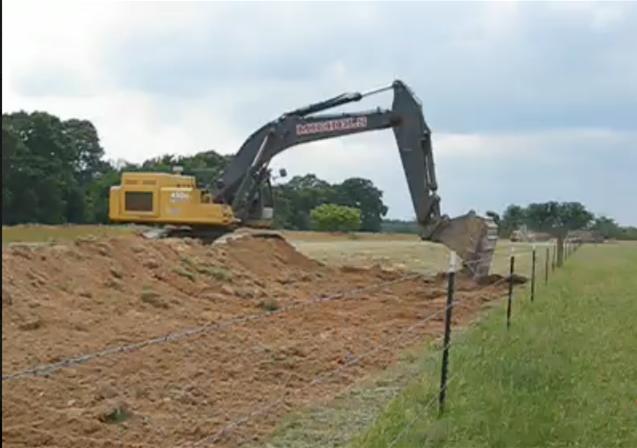
On Wednesday, September 19, 2012 around 8:00AM, three landowner advocates and climate justice organizers locked themselves to a piece of machinery critical for Keystone XL construction in Franklin County, Texas. They did so to defend David Hightower’s. As construction crews arrived at Mr. Hightower’s to begin clear-cutting his trees and home vineyard, Tar Sands Blockade supporters were in David’s front yard continuing their vigil

By 11:30 am, five arrests had been made at the Keystone XL construction site outside Winnsboro, Texas. The three brave blockaders locked to tree clear-cutting machinery delayed operations at the site for the day.

All 5 of the arrested blockaders were still in jail at the end of the day on Thursday since the four Franklin County justices of “peace” refused to hold a bail hearing. None of them are “available.”  They are scheduled to go before the judge around 8 or 9 this morning, Friday, September 21.

As of this time, we have not heard whether they have been released.

The Nuclear Regulatory Commission has reported that a reactor at Three Mile Island, the site of the nation’s worst nuclear accident, shut down unexpectedly on this afternoon when a coolant pump tripped and steam was released.  Right now they are saying the plant is stable with no impact on public health or safety.

Still, this is a story we should follow.  The following news outlets have stories as of 5:50pm CT and will probably add updates as they become available.


Somewhere between Pecos and Odessa in southwestern Texas, Halliburton has lost a seven inch radioactive rod used in natural gas fracking.

Workers discovered the rod was missing on September 11th.  A lock on the container used to transport the radioactive rod was missing, along with the rod inside. Trucks have retraced the route of the vehicle, but have had no luck tracking it down so far.

This rod contains americium-241/beryllium which the health department says is not something that produces radiation in an extremely dangerous form. (Not sure what that means – I mean who even knew they used radioactive rods for fracking) But it’s best for people to stay back, 20 or 25 feet. (Seriously, what does this mean?)  Apparently you would have to have it in your possession for several hours before it is considered dangerous.

The National Guard has been asked to step in and help search for the missing rod, so if you are out driving in that 130 mile area and find a seven inch stainless steel cylinder about an inch in diameter, marked with the radiation warning symbol and the words ‘Do Not Handle’, well . . . DO NOT HANDLE, stay back at least 20 feet, and call the National Guard.

According to the Huffington Post, not one, but two, whistleblower engineers at the Nuclear Regulatory Commission have accused regulators of deliberately covering up information relating to the vulnerability of U.S. nuclear power facilities that sit downstream from large dams and reservoirs and failing to act to despite being aware of the risks for years.

One plant in particular — the three-reactor Oconee Nuclear Station near Seneca, S.C. — is at risk of a flood and subsequent systems failure, similar to the tsunami that devastated the Fukushima Daiichi nuclear facility in Japan last year, in the event that an upstream dam fail.

The Fort Calhoun nuclear facility in Nebraska was surrounded by rising floodwaters from the nearby Missouri River in 2011.

Given the extreme weather patterns the world has seen in the last decade, that likelihood seems greater than it did when these plants were built.

A report, completed in July of 2011, after the earthquake and subsequent tsunami flooded the Fukushima Daiichi nuclear power plant was heavily redacted in a move, the whistleblower claims, to prevent the public from learning the full extent of these vulnerabilities, and to obscure just how much the NRC has known about the problem, and for how long.

The report examined vulnerabilities at the Oconee facility, the Ft. Calhoun station in Nebraska, the Prairie Island facility in Minnesota and the Watts Bar plant in Tennessee and concluded that the failure of one or more dams sitting upstream from several of these nuclear power plants “may result in flood levels at a site that render essential safety systems inoperable.” High floodwaters could conceivably undermine all available power sources, the report found, including grid power, emergency diesel backup generators, and ultimately battery backups. The risk of these things happening, the report said, is higher than acceptable and warranted a more formal investigation.

The heavily redacted copy of the report is publicly available on the NRC website.

Click here to read the Huffington Post’s entire investigatory story.

Don't blame the windCheck out Public Citizen’s Texas director’s, Tom “Smitty” Smith, response to CPS Energy CEO Doyle  Beneby‘s op-ed in the San Antonio Express last week that blamed Texas wind power plants for creating problems by producing such cheap power that it made it hard to build new gas plants or profitably operate those we have.

Click here to read “Don’t blame wind energy for lack of new power plants”

Orbach: $1 billion for energy storage research could launch state’s next energy era

Watch for the University of Texas at Austin to soon make a $1 billion pitch to lawmakers aimed at unleashing the state’s vast potential to lead the nation and even the world in renewable energy production.

Ray Orbach, director of UT’s Texas Energy Institute, has compiled what he considers a compelling case for a large public investment in battery storage research meaningful enough to launch Texas into a new energy economy that taps the state’s enormous potential capacity for solar, wind and geothermal power generation.

“I really would like to have a crash program. My thought is it could be comparable to the cancer initiative,” he told Texas Energy Report. “I would like to see it in the billion-dollar range. My point is the potential is there. I just think it’s crazy not to sit down and optimize it for Texas.”

Orbach said a new study found that Texas has the potential to lead the nation in nearly every form of renewable energy. In concentrating solar alone – which allows for fluctuations that make it more economical – tapping just one percent of Texas’ total capacity could generate electricity equivalent to the entire needs of the ERCOT (Electric Reliability Council of Texas) power grid, he said.

“We have as much energy potential above ground as we do below ground,” Orbach said this week to an audience attending a symposium sponsored by the Texas Public Utility Commission called “Renewable Solutions for Energy Prosperity in Texas.”

Citing a just released July study called “U.S. Renewable Energy Technical Potentials: A GIS-Based Analysis,” Orbach laid out what’s in it for Texas if the state’s leading scientific minds solve the energy storage puzzle:

Urban utility-scale photovoltaics:  Texas has the highest estimated potential (13 percent of the U.S.)

Rural utility-scale photovoltaic: Texas has the highest estimated potential (14 percent of the U.S.

Rooftop photovoltaic’s: Texas has the second-highest estimated potential (9 percent of the U.S.)

Concentrating solar power: Texas has the highest estimated potential (20 percent of U.S.)

Onshore wind power: Texas has the highest estimated potential (17 percent of U.S.)

Offshore wind power: Hawaii has the highest estimated potential, while Texas has 6 percent of U.S.

Enhanced geothermal systems: Texas has the highest estimated potential (10 percent of U.S.)

“The opportunities are so enormous. I was stunned,” Orbach said of his reaction when he read the study that takes into account environmental and land-use constraints, and topographical limitations.

Because each of the renewable capacity calculations is based on the same total land, Orbach said Texas leaders need to determine how to best optimize the state’s renewable resources with decisions about which fuel mix to pursue and where. In an interview, he acknowledged that political and economic considerations would pose major challenges, but he suggested a planning commission appointed by the governor and legislators could help navigate those.

Think of the planning concept as akin to the Texas Railroad Commission’s early history in setting production limits to ensure that oil and gas resources would last longer with conservation measures such as adequate well spacing, he said.  And think of state’s commitment to building CREZ (Competitive Renewable Energy Zones) transmission lines to transport wind energy as a parallel to the research commitment needed to solve the problem of energy battery storage for wind and solar.

With its federal production tax credits, Orbach said wind has posed pricing issues for ERCOT’s wholesale competitive market. But he insisted he’s a free-market advocate who does not think wind or solar would need any subsidies to compete. As for kick-starting research to solve energy storage issues, he said Texans should think of that as an investment that would repay itself many times over.

“Our future will depend on our ability to store base load electricity from fluctuating sources. We are truly blessed with intellectual and energy sources. It’s time for a zoning, an optimization of how we use these wonderful resources for the benefit of citizens in this state,” Orbach said. “This is not just a Texas issue. The market for what we produce in Texas is global. You can think outside the boundaries of our state for these opportunities.”

In addition to the big picture, some of Texas’ energy opportunities have hardly been discussed, he said. The potential for enhanced geothermal energy alone, he said, is 384 gigawatts. That’s equivalent to five times the total ERCOT load.

Geothermal energy taps into underground heat, and fracturing underground rock is one way to release the heat. He points to natural gas wells hydraulically fractured in the Barnett Shale of North Texas and their future to be repurposed in 10 to 20 years for renewable energy production. The wells have already fractured rock at a depth of 8,000 to 10,000 feet where temperatures range from 200-300 degrees Fahrenheit, he noted.

“What happens when those wells are played out? Do we just cap them and walk away? They are a source of potential enhanced geothermal energy. We have the sources now that we’re using for liquids and gas and oil that in fact may well be available in the future for enhanced geothermal,” Orbach said.

Meanwhile, the price of solar panels is dropping sharply as China floods the market with panels at 80 cents a watt, he said. Consequently, solar installations in the first half of this year doubled to 1,254 megawatts over the 623 installed in the first six months of 2011. That’s the size of a nuclear reactor, he said, and this year it will amount to two.

“It’s a revolution,” he added. “It’s a sign for those of us interested in solar and wind and renewable energy that there’s an opportunity here for Texas to be mined.”

By Polly Ross Hughes

Copyright September 14, 2012, Harvey Kronberg, www.texasenergyreport.com, All rights are reserved.  Reposted by TexasVox.org with permission of the Texas Energy Report.

Yesterday, Clean Energy Works for Texas – a coalition consisting of Public Citizen, Sierra Club, Texas BlueGreen Apollo Alliance, Progress Texas, Clean Water Action, Environment Texas, North Texas Renewable Energy Group, North Texas Renewable Energy Inc., SEED Coalition, Solar Austin, Solar San Antonio, Texas Campaign for the Environment and  Texas Pecan Alliance – filed a petition with the Public Utility Commission of Texas (PUC) asking for a rule-making to implement the non-wind renewable portfolio standard (RPS).

A law passed by the Texas Legislature in 2005 established that at least 500 megawatts (MW) of the electricity used in Texas would come from renewable energy sources other than wind by 2015.  The PUC, however, has failed to establish rules to ensure that this goal is reached.  Clean Energy Works for Texas calls on the PUC to fulfill its statutory duty and create rules to ensure that the goal is reached.  The petition also proposes and expansion of that goal to 3,000 MW by 2025.

The non-wind RPS would provide a level of certainty for investors considering Texas for clean energy projects.  While the wind industry has thrived in Texas, thanks, at least in part, to the RPS, other renewable energy industries have lagged behind.  Implementation of the non-wind RPS would send a signal to investors that Texas is open for business.   At at time when nearly a million Texans are looking for work, developing 21st century industries here in Texas should be a priority.

Texas has immense solar resources, as well as substantial geothermal resources that, if developed, could be providing the State with additional electricity that it needs.  Electricity market regulators and policy-makers have had numerous discussions about electricity generation shortages over the past year.  The petition filed by Clean Energy Works for Texas offers a solution – and it’s one that can be expanded upon in the coming years.

Please visit www.CleanEnergyWorksForTexas.org to learn more and send an email to to the PUC in support of the non-wind RPS.