For any of you global warming denier trolls lurking out there, here you finally have it: ANOTHER final study that undeniably shows a link between manmade greenhouse gas emissions and the warming that has occurred.
Yes, yes, and the sky is blue as well. AND the Earth revolves around the sun. I know most of us don’t need more scientific evidence that putting pollution in the atmosphere fundamentally disrupts the climate, but what is most interesting about this study is it calculates a precise amount of warming per ton of CO2 or equivalent:
Until now, it has been difficult to estimate how much climate will warm in response to a given carbon dioxide emissions scenario because of the complex interactions between human emissions, carbon sinks, atmospheric concentrations and temperature change. Matthews and colleagues show that despite these uncertainties, each emission of carbon dioxide results in the same global temperature increase, regardless of when or over what period of time the emission occurs.
These findings mean that we can now say: if you emit that tonne of carbon dioxide, it will lead to 0.0000000000015 degrees of global temperature change.
If we want to restrict global warming to no more than 2 degrees, we must restrict total carbon emissions — from now until forever — to little more than half a trillion tonnes of carbon, or about as much again as we have emitted since the beginning of the industrial revolution.
The full article will eb published in the June 11 edition of Nature.
And if that wasn’t enough, this from the HuffPo about coal ash:

Aerial photo of the Kingston fly ash spill
Just how bad has the coal ash situation gotten in the United States? So bad that the Department of Homeland Security has told Sen. Barbara Boxer (D-Calif.) that her committee can’t publicly disclose the location of coal ash dumps across the country.
The pollution is so toxic, so dangerous, that an enemy of the United States — or a storm or some other disrupting event — could easily cause them to spill out and lay waste to any area nearby.
There are 44 sites deemed by the Environmental Protection Agency to be high hazard, but Boxer said she isn’t allowed to talk about them other than to senators in the states affected. “There is a huge muzzle on me and my staff,” she said.
“Homeland Security and the Army Corps [of Engineers] have decided in the interests of national security they can’t make these sites known,” she said.
There are several hundred coal ash piles across the nation, she said, all of them unregulated.
“If these coal ash piles were to fail they’d pose a threat to the people nearby,” she said. While keeping it from the public, DHS is alerting first responders as to the location of the piles.
“I believe it is essential to let people know,” said Boxer, arguing that if people knew what was in their backyard they’d press public officials to clean it up and protect the area. “I think secrecy might lead to inaction…I am pressing on this.”
Especially in the wake of Kingston fly ash disaster, which was the worst environmental disaster ever in the US– worse even than the Exxon Valdez- this seems pretty simple to me: climate change is caused by greenhouse gases, coal is the major contributor to CO2 emissions, coal ash is so dangerous we can’t even know where the dumps are because of national security… so, let’s stop burning coal? That’s a solution so easy, it’s not surprising anyone in Washington (or for that matter, Austin) hasn’t proposed it. Oh wait, we have. It’s called a coal moratorium, and we should be doing it. For more info, visit www.coalblock.org
Posted in Coal, Energy, Global Warming | Tagged Barbara Boxer, Carbon Dioxide, climate change, co2, Coal, coal ash, coal ash slurry spill, coal ash spill, coal ash waste, Global Warming, greenhouse gas, greenhouse gas emissions, Kingston, Texas |
We were ecstatic when we heard from Congressman Doggett’s office that he would be signing on as an original cosponsor of the Fair Elections Now Act, a bill which would create a public financing system for Congressional candidates. 
Public financing means that instead of spending hours a day raising money on the phone, our elected leaders can instead take money allocated to them by the government for their campaigns. No longer would any constituent have to worry that their leaders could be “bought” by their campaign donations, and no campaign donor could ever try to attach any strings, real or implied, to their donations.
Public Citizen has long been an advocate for getting money out of Washington. This is the biggest and best step we can take to make this happen.
Congressman Doggett is a leader on this issue, and will hopefully bring more attention to this issue as it moves along. We’d like to thank him, and hope you will as well, by calling his Austin office 512-916-5921 or by writing a letter to the editor of the Austin American Statesman or your other local paper (I’m looking at you, Hays County — he’s your Rep too!)
We’re all incredibly lucky to have a Representative like Congressman Doggett. He is joined in support of Fair Elections Now by Rep. Gene Green of Houston. Silvestre Reyes of El Paso is also on the record for supporting public financing, but has not yet signed on to the bill.
Posted in Campaign Finance | Tagged Austin Congressman Lloyd Doggett, Congressman Doggett, Fair Elections, Fair Elections Now Act, Lloyd Doggett, public financing, Texas |
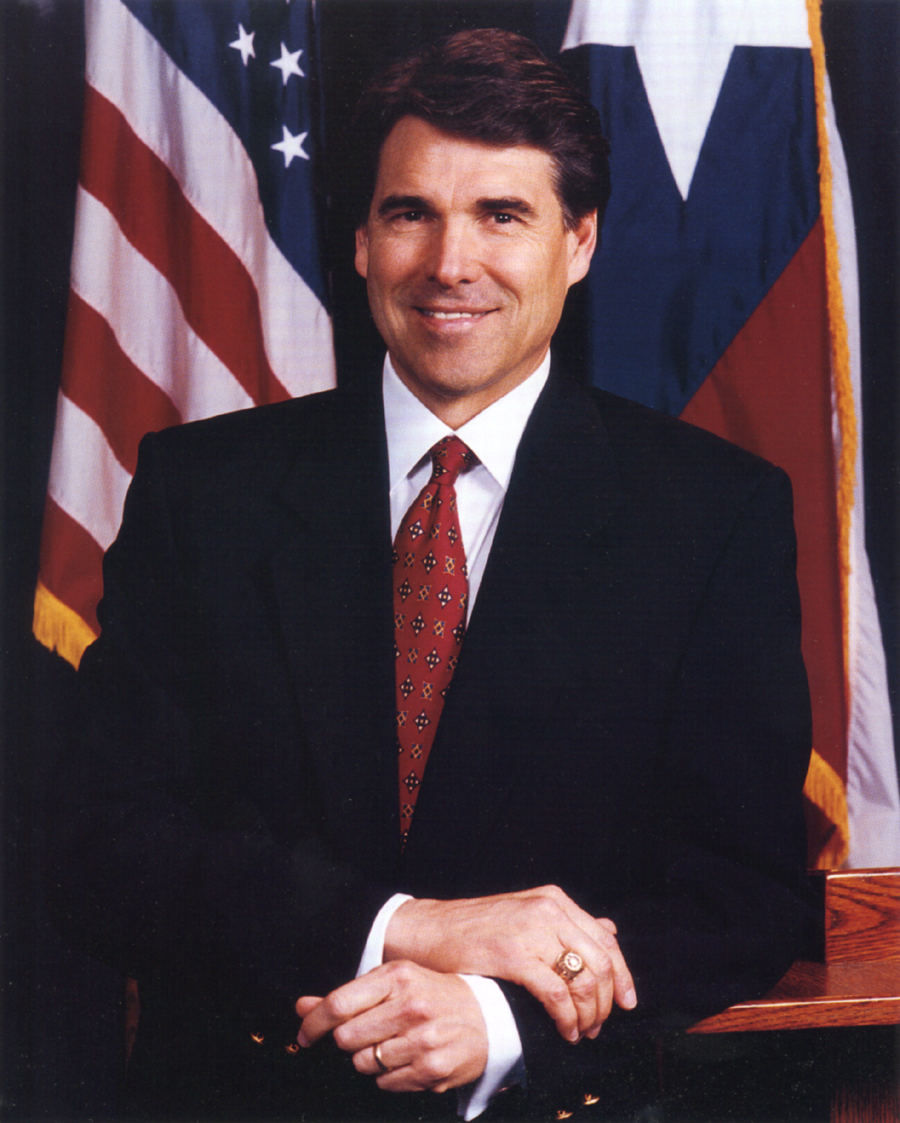 Earlier this week, Governor Perry announced that he would, in fact, call back legislators for an extended special session. What exactly this session will cover (voter ID? please no!) remains unclear, but the Governor has committed to addressing the “sunset safety net” bill that was left on the table.
The Houston Chronicle reports,
The governor had hoped to avoid a special session to keep intact the Texas Department of Transportation and the Texas Department of Insurance, as well as three others that were not renewed, but calling lawmakers back to the Capitol proved to be the only option.
The other agencies are the Texas Racing Commission, which regulates horse and dog tracks; the Office of Public Insurance Counsel, which represents the public in insurance rate cases; and the State Affordable Housing Corporation, which links low-to-moderate-income people with potential home purchase lenders.
The five agencies are set to go out of existence on Sept. 1, 2010, because the legislation reauthorizing them did not pass.
If the specter of having no department at all for transportation, insurance, or affordable housing is scary enough to call a special session, I wonder what other issues the Governor will decide are important enough to address in a special session.
Certainly of note is the specter of Texas losing its leadership role in creating jobs tied to clean energy. According to a new study by Pew Charitable Group on the clean energy economy, Texas ranks 2nd in businesses (4,802) and jobs (55,646) tied to the sector.
This is an exciting piece of information, especially considering that the clean energy industry grew twice as fast as the rest of the economy over the last decade. Furthermore, Pew cited our renewable energy policies as a critical aspect of the state’s wind power explosion.
This information makes it even more painful that we weren’t able to pass similar legislation to jump-start Texas’ solar economy. Especially when as soon as the session ended with solar still on the table, Tennessee Senators started saying they would be happy to take the solar jobs Texas snubbed.
Senator Jim Kyle of Memphis was actually quoted as saying, “Legislators in Texas have yanked the welcome mat for an industry that could pay huge dividends for their economy. To any company that had an eye on Texas, we say come on up to Tennessee.”
Salt, meet my wounds. Not only has Texas missed out on a great economic opportunity, but now we’re going to be one-upped by Tennessee? Unacceptable.
But with a special session upcoming, Texas may have another chance to revisit that solar legislation — which, by the way, passed with bipartisan support. Everyone was on board for solar, we just ran out of time to get the nuts and bolts right. Tragic.
Senator Rodney Ellis of Houston recently announced that he would like for the special session to take up lost clean energy legislation. In a statement earlier this week, he said
Texas became rich from fossil fuels, but we could easily lose our position as an energy leader because of fossilized thinking. We could create far more wealth and jobs from wind and solar energy, but only we aggressively pursue clean energy opportunities. Unfortunately, we missed a golden opportunity this session one the governor should address if he calls a special session.
Posted in Energy, Renewables | Tagged Clean Energy, economic growth, governor perry, green jobs, jim kyle, memphis, Office of Public Insurance Counsel, pew, renewable energy, Rick Perry, Rodney Ellis, solar, special session, State Affordable Housing Corporation, sunset safety net, Tennessee, Texas, Texas Department of Insurance, texas department of transportation, Texas Racing Commission, voter id, wind |


The Nuclear Regulatory Commission and the Federal Emergency Management Agency will hold two public meetings tomorrow in Irving, Texas, on a proposed new rule that would change the emergency preparedness requirements for existing and proposed nuclear power plants. Since 9/11, there has been growing concern that the country’s 104 existing reactors are potential terrorist targets and are more vulnerable to major disasters if attacked. There is additional concern that the nuclear reactors being proposed across the country, six of which are in Texas, would not be able to sufficiently mitigate a terrorist attack such as by aircraft.
In their 2007 report, Nuclear Power in a Warming World, the Union of Concerned Scientists issued a set of recommendations that address shortcomings of current NRC regulations including a recommendation that the NRC treat the risks of sabotage and attacks on par with risks of nuclear accididents, and require all environmental reviews during licensing to consider such threats. This issue is particularly relevant to Texas because the NRC is currently hearing oral arguments by the SEED Coalition, Public Citizen, Rep. Lon Burnam, and the local citizen’s group True Cost of Nukes, who seek to intervene in the application by Luminant to expand the Comanche Peak nuclear plant near Glen Rose, Texas.
A contention regarding the lack of safeguards and emergency preparedness for the crash of an airliner into nuclear reactors is among the issues being raised by the groups, who point out that concerned citizens and groups have not had access to the full information needed in this regard.
Public Citizen intends to file comments on the proposed rule, which are due no later than August 3.
The meeting is an opportunity for the public to learn about the proposed rule and ask questions. It will take place at the Westin Dallas Fort Worth Airport; 4545 W. John Carpenter Freeway; Irving, Texas. The meeting will have two sessions, from 2:00 to 4:30 and from 7:00 to 9:30 PM.
The NRC press release for the meeting is available at http://www.nrc.gov/reading-rm/doc-collections/news/2009/09-019.iv.html.
For those who cannot attend in person, the meeting will be webcast. To participate, register ASAP at https://www.livemeeting.com/lrs/8001607981/Registration.aspx?PageName=bg8044041h843dp2 and call in to 1-800-779-8609 (PIN 21726). For more information, contact Annette Stang with the NRC at 1-800-368-5642.
The proposed rule is published in the Federal Register at http://edocket.access.gpo.gov/2009/pdf/E9-10947.pdf
The UCS report is available at http://www.ucsusa.org/assets/documents/nuclear_power/nuclear-power-in-a-warming-world.pdf.
Posted in Energy, Nuclear | Tagged comanche peak, emergency preparedness rulemaking, FEMA, Glenrose, NRC, Texas |
 Oral Hearing Set for June 10th-11th in Granbury, TX
Citizen opposition to more nuclear reactors in Texas continues. On June 10th-11th an oral hearing will be held before the Nuclear Regulatory Commission’s Atomic Safety and Licensing Board on Citizens’ petition to intervene in Comanche Peak Nuclear Power Plant Units 3 and 4.
“I have many grave concerns about building more nuclear reactors in Texas,” said Texas Representative Lon Burnam, District 90, Ft. Worth, one of the petitioners seeking to intervene in the proposed expansion of Comanche Peak. “The risks are simply too high. As the most expensive and most water intensive energy source, and with the unsolved problem of how to handle the radioactive waste, Texans deserve better.”
SEED Coalition, Public Citizen and the Ft. Worth-based True Cost of Nukes are also petitioners. Attorney, Robert V. Eye, will go before the designated Atomic Safety and Licensing Board Panel and argue the admissibility of the 19 contentions citizens filed with the Nuclear Regulatory Commission on April 6th. These contentions point out the inadequacies and the incompleteness of Luminant’s combined operating license application (COLA) to construct and operate Comanche Peak Units 3 and 4.
“Luminant has failed to comply with new federal regulations regarding aircraft impacts,” stated Mr. Eye. “These new regulations are very specific and require the applicant to plan for catastrophic fires and/or explosions that would cause the loss of major critical functional components in the plant. After 9-11, an aircraft attack on a nuclear power plant is a real and credible threat. Moreover, fire hazards represent about half of the risk of a nuclear reactor meltdown. Luminant’s noncompliance with these regulations puts citizens around Comanche Peak in a dangerous position, which is completely unacceptable.”
“Nuclear power is dangerous, expensive and obsolete,” says Karen Hadden, Executive Director of Sustainable Energy and Economic Development (SEED) Coalition. “Wind energy is booming and the cost of solar is coming down, while the costs of proposed nuclear plants is skyrocketing. Although they’re required to do so, Luminant failed to fully consider safer, more affordable alternatives to nuclear in their license application.” Continue Reading »
Posted in Global Warming | Tagged atomic safety and licensing board, biocides, bob eye, chemicals, citizen opposition, cola, comanche peak, Comanche Peak Nuclear Power Plant Units 3 and 4, combined operating license application, contentions, don young, fire hazards, fort worth, granbury, hood county, j. nile fischer, Karen Hadden, lon burnam, Luminant, nita o'neal, NRC, Nuclear Power, Nuclear Regulatory Commission, petition to intervene, Public Citizen, radioactive waste, risk, robert v. eye, secretary of energy, sediment control, SEED Coalition, solar, steven chu, Texas, true cost of nukes, water, west pearl st, wind energy, yucca mountain |
 Do you know some electric coops help their members get solar power and make their homes and businesses more energy efficient? It saves a lot on electric bills.
The Pedernales Electric Coop can adapt these kinds of programs… but the direction of the PEC depends on if the newly elected board really cares about clean energy.
Learn what candidates are saying at cleanenergyfortexas.org.
Vote online or by mail by this Friday — or you can vote at the annual members meeting in Johnson City on June 20th.
Listen to the radio spot here. (paid for by Public Citizen Inc.)
Posted in Energy | Tagged clean energy for texas, Energy Efficiency, Johnson City, pec, Texas |
While I’m still a little grumpy and out of sorts because the Lege didn’t pass any major energy efficiency legislation this session, I feel a little better after our office got some solar tint put on our windows on Thursday. My office used to be a heat box. The tint is really impressive. I can feel the difference already.

Andy and Sarah's office, After & Before
Our utility bill will go down now, because we’re using less energy to keep the office cool. It will also make our office more comfortable until we take the ultimate step in worker productivity: business hammocks.
If your business is in Austin, Austin Energy has a rebate for solar film or solar screens. CPS Energy in San Antonio’s got ’em too. Check to see if your utility offers a rebate. If they don’t, maybe someone should tell them their customers want one, eh?
Posted in Efficiency | Tagged Austin, Austin Energy, CPS Energy, Energy Efficiency, San Antonio, solar film, solar screens, solar tint, Texas, utility bills, windows |
 It’s Monday, and that means it is time for another edition of the Texas Progressive Alliance’s weekly round-up.
Neil at Texas Liberal writes about the relocation of the National Cash Register company from Dayton, Ohio to Georgia. Treating people like dirt for 200 years gives Southern states an advantage in creating a so-called business friendly low-tax low-wage climate.
BossKitty at TruthHugger is so amazed at the short sighted policies our state and country continue to pursue. Buy American is a path to destruction. Isolationist Trends Protect US From Reality
Lamar Smith wins South Texas Chisme’s asshat of the week award. Hyper partisan Smith thinks all media should be like Fox News.
Who would have thought that an otherwise-obscure bill about granting homestead exemptions to folks who lost their house in Hurricane Ike would become the most controversial issue in the first week post-sine die, including a threat by the Land Commissioner to refuse to follow the law if it gets signed by the Governor? Off the Kuff has the details.
Burnt Orange Report writer Todd Hill has been selected as an Archer Fellow by UT-Arlington and will be headed to Washington DC in 2010 for a semester.
Vince at Capitol Annex takes a look at the former Tyler Mayor looking to replace State Rep. Leo Berman.
Over at TexasKaos, liberaltexan argues that even Christians at Liberty U should be able to dissent. What a radical idea!
A Devon Official strongly suspects a connection between recent North Texas earthquakes and the widespread hydraulic fracturing. Devon and other operators are leaving their mark on TXsharon‘s statcounter. She wonders what they are so worried about on Bluedaze: DRILLING REFORM FOR TEXAS.
Teddy at Left of College Station reports on the College Station red light camera debate, and covers the week in headlines.
Bay Area Houston has the scoop on Perry calling a special session on Voter ID.
WCNews at Eye On Williamson posts on the excellent first session for Williamson County’s Democratic state representative, Diana Maldonado, Freshman of the Year.
The Texas Blue looks at the big winners and losers of this year’s legislative session in Sine Die: The Aftermath.
Robert Reich describes how Big Pharma and Big Insurance plan to kill the public health care option, excerpted at Brains and Eggs.
WhosPlayin has AARP’s call for Michael Burgess to act decisively on health care.
This week, McBlogger takes a look at some fashion advice from Details.
Posted in Uncategorized | Tagged aarp, archer fellow, bay area houston, big insurance, big pharma, bluedaze, bosskitty, brains and eggs, burnt orange report, Capitol Annex, diana maldonado, drilling reform, eye on williamson, fox news, health care, Hurricane Ike, lamar smith, land comissioner, left of college station, leo berman, mcblogger, michael burgess, national cash register, off the kuff, robert reich, south texas chisme, Texas, texas liberal, texas progressive alliance, texaskaos, todd hill, truthhugger, txsharon, tyler mayor, washington dc, wcnews, whosplayin |
Yesterday the Texas Attorney General Greg Abbott filed an official injunction against BP Products’s Texas City Refinery for “violating state health, safety and environmental protection laws, including the Texas Clean Air Act, the Texas Water Code, and the Texas Health & Safety Code.” The refinery was cited for 46 separate emissions of unlawful pollutants, a violation of the Clean Air Act. Among these was the emisssion responsible for the March 2005 explosion that killed 15 workers and injured 170.
Between 2000 and 2007, the TCEQ filed 15 enforcement orders to get BP to clean up its act. But it doesn’t look like the authority of the TCEQ was enough to stop the refinery from emitting hundreds of thousands of pounds of unauthorized pollutant emissions, including volatile organic compounds (VOCs), carbon monoxide, hydrogen sulfide, sulfur dioxide and nitrogen oxides.
According to the Attorney General’s press release,
Under Texas law, BP was required to report unlawful emissions to the Texas Commission on Environmental Quality and take corrective action to prevent future emissions. However, BP not only failed to report emissions to environmental regulators within the legally mandated deadlines–but also did not take the necessary measures to prevent additional unlawful emissions in a timely manner.
The injunction requires BP to implement all necessary measures to eliminate future unlawful emissions, which includes installing additional air quality monitors to ensure future compliance. The state is also seeking civil penalties, fines and attorneys’ fees.
It’s really good to see the government stepping in to enforce clean air laws. Kudos to Abbott for stepping in to keep Texans safe and our air clean.
Posted in Global Warming | Tagged Air Quality, bp, bp products, carbon monoxide, clean air, clean air act, emissions, hydrogen sulfide, nitrogen oxide, sulfur dioxide, TCEQ, Texas, texas attorny general, texas city refinery, Texas Commission on Environmental Quality, texas health and safety code, texas water code, unlawful pollutants, volatile organic compounds |
 Action Alert!
Climate change legislation currently being debated in Congress will prove a boon to the coal and oil industries, will fail to protect consumers and may very well not even curb global warming.
Lawmakers have conducted closed door negotiations with polluters.
The result: The bill was radically altered to accommodate the financial interests of big energy corporations while giving nothing new for the environment or for working families. Lawmakers have decided to give away most of the pollution allowances for free for the next two decades – an approach that would hurt working families and households the most. It will deprive the government of the money needed to invest in clean technologies and thwart the very goal of curbing global warming.
This is hardly the transformation this country needs to jump-start its economy and curb climate change. This is more of the same old wait-and-see, special-interest-bailout approach that has gripped Washington, D.C., for ages.
Tell your representatives that climate change legislation should not be weakened by the corrupting influence of big money, and that the people’s business should be done in front of the people.
Posted in Global Warming | Tagged big money, Bill, climate change, coal and oil industries, Congress, Consumers, dc, Global Warming, legislation, polluters, representatives, Tell Congress, Texas, washington |
 If we look at the distribution of the U.S population, we notice there are huge concentrations along the coasts. I was once told that more than half the population lives within 5 miles of the coasts. With so many people living on the coasts, our population is extremely susceptible to destruction from hurricanes. Recent examples of hurricane damage from Katrina, Rita, and Ike loom large in our collective memories.
Recently I came across a study by Jen Irish, an Assistant Professor of Coastal Engineering at Texas A&M, that looked at how Corpus Christi Bay would fare in the event of a hurricane under the conditions describe in the Intergovernmental Panel on Climate Change (IPCC)’s future climate scenarios. The study found that if the Scenarios are realized hurricane flood levels could increase 3 to 27% over the next 20 years. This will cause damage to homes from flooding to increase by 60% to 100% in the event of a hurricane.
Corpus Christi is already on very low ground that has been slowly sinking for many years. Corpus’ barrier islands, Mustang and Padre, are also eroding. This study particularly interests us at Public Citizen Texas because Corpus Christi is the proposed site of The Las Brisas Pet Coke Plant, which is a project we have been fighting at Public Citizen since it was proposed.
Pet-coke is an incredibly dirty fuel source that emits large quantities of pollutants into the air. For this very reason, pet-coke plants are generally not built in highly populated areas like Corpus Christi. There is also no reason why a pet-coke plant should be built in Texas when better energy sources are available.
To top off the list of objections, Las Brisas will be located directly in the path of the storm surges predicted in Dr. Irish’s model. The proposed location is on a dredge island in Nueces Bay which is barely above sea level, though the developers have proposed raising it another 13 ft (a measure that will only have a minimal effect in the event of a major hurricane).
The Hurricane Research Team at Colorado has already predicted a that this hurricane season (which started Monday) there is 28 to 30% chance that we will see another major hurricane make landfall. In the past, Corpus Christi has been a vulnerable to hurricanes, and considering the IPCC’s finding that warming will increase hurricanes, the facility could be at great risk.
I fear for the residents of Corpus Christi, but I also can’t help but note the irony of a pet-coke facility being one of the first victims of global warming.
–The Disappointed Environmentalist
Posted in Coal, Global Warming | Tagged climate change, Coal, Coast, corpus christi, corpus christi bay, Global Warming, Hurricane, hurricane season, jen irish, katrina, las brisas, mustang island, padre island, Petcoke, rita, storm surge, Texas |
For real, we gotta act now before it escalates.
[youtube=http://www.youtube.com/watch?v=08z-Hw7s54E]
Posted in Global Warming | Tagged Carbon Dioxide, Clean Energy, climate change, coal plant, Energy Efficiency, Global Warming, green jobs, renewable energy, solar energy, solar power, take aim, Texas, video, what can I do |

This week from the Texas Progressive Alliance, emission from drilling are more than cars and airports, women are running things in Denton County, Liberty University Democrats lose their recognition, President Obama’s political coalition leaves out the far-right and the poor, and much more on this weeks TPA Roundup.
This week’s roundup was compiled by Teddy from Left of College Station.
John Coby at Bay Area Houston says Governor Perry signed a bill to stop electricity deregulation in East Texas while we poor saps continue to be screwed with high electricity rates.
On Bluedaze: Barnett Shale operators continued to endanger public health and safety by ignoring the peer reviewed study that showed emission from drilling were more than all the cars and airports in the DFW area. Now the TCEQ data supports the findings. Smog forming nitrogen oxides and volatile organic emissions for the entire 19-counties of the Barnett Shale area are approximately 200 tons per day.
Jesus Hussein Christ, PDiddie at Brains and Eggs agrees with John Cornyn.
Castle Hills Democrats proclaims that, in Denton County, “The Women Are Running Things Now”.
CouldBeTrue of South Texas Chisme notes that Republican ambition is messing with Perry, Hutchison and Cornyn. Who cares about Hispanic or female voters?
DosCentavos is not longer a Blogspot blog, we are now at DosCentavos.net, exclusively!.
WCNews at Eye On Williamson points out the important issues that are being neglected as the 81st Legislative Session winds down, Lack of leadership in Texas is painfully obvious.
Teddy at Left of College Station writes about the sexist and racist attacks by the usual conservative voices on President Obama’s Supreme Court nominee Sonia Sotomayor, and on Liberty University’s decision to no longer recognize the College Democrats as an official student organization because of their endorsement of pro-choice and pro-gay rights candidates.
McBlogger takes another look at the dump near Andrews after he finds out it’ll be taking not just radioactive waste, but PCB saturated dirt from the Hudson Valley. In New York.
Off the Kuff takes a look at a wrench in the 2010 GOP gubernatorial primary named Leo Berman.
At Texas Kaos, Lightseeker asks the question, What do the powerful do when reform is eminent? (Hint, there’s a lotta money to be made in fake reforms…)
Neil at Texas Liberal says that President Obama’s political coalition leaves out the far-right and and the most poor. Neil also reports that he will be master of ceremonies at a huge punk rock blast in Cincinnati this upcoming August 15.
BossKitty at TruthHugger is appalled at the short sighted vision of of Texas Politicians. If you donate to their campaign, you are free to destroy the land, air and water of a great state. You can have the blessings of all the state and federal agencies you need to pull off a hazardous trick. Rick Perry and Friends Welcome Toxic Burritos
Posted in Uncategorized | Tagged 81st legislative session, Barnett shale, bay area houston, bluedaze, bosskitty, brains and eggs, castle hill democrats, couldbetrue, denton county, dfw, dos centavos, electricity deregulation, eye on williamson, governor perry, hutchison, john coby, john cornyn, left of college station, leo berman, Liberty University, liberty university democrats, lightseeker, mcblogger, nitrogen oxide, off the kuff, pdiddie, president obama, sonia sotomayor, south texas chisme, TCEQ, Texas, texas kaos, texas liberal, texas progressive alliance, toxic burritos, truthhugger, wcnews |
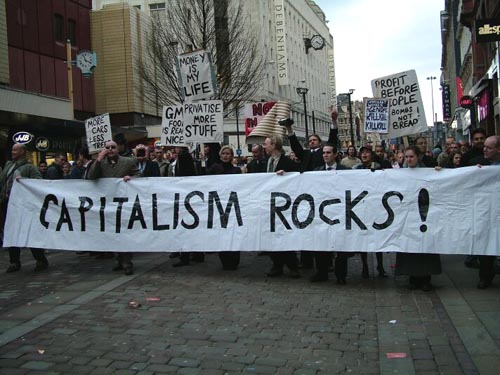 Here at Public Citizen I find that a lot of our detractors espouse a strong dedication to free-market ideologies. I find that this ideology is used to justify a large amount of otherwise irrational behavior, and that its adherents have an unshakable almost religious-like devotion. I find that many espouse the beliefs with a level of certainty which is typically reserved for obvious truths, despite the fact that many of their claims are unsupported as far as I can tell. I would like to look at what I see as some of the flaws in the claims of free market adherents.
Currently there are no countries in the developed world, including the United States, that use anything remotely resembling the minimalist government model these men espouse. Even our politicians who have advocated returning to a freer form of capitalism have been shown to reject this notion in practice. Ronald Reagan, who spoke of minimizing the federal government and getting off of people’s back, did the exact opposite in practice and was at the time of his presidency the most protectionist and most business beholden president we have ever had. If you doubt that, just read this piece (from an extremely free market source).
Today the world’s fastest growing developing countries, including China, India, the four Asian tigers (South Korea, Singapore, Hong Kong, and Taiwan), and much of Western Europe, all explicitly reject the tenets of minimal government intervention in their economies. The United States has maintained a substantial public sector and as well as a high level of government involvement in research and development of new technology through the military and university systems since the Great Depression. Continue Reading »
Posted in Global Warming | Tagged Asian Tigers, Capitalism, Free Mark, Government, Ideology, Intervention, Public Sector, Reagan, Spending, Texas |
Environmental Groups See Clean Energy Groundwork Laid for the Future
(Austin) Senate and House members from both political parties showed unprecedented support for developing more renewable energy and energy efficiency in Texas by filing a large number of clean power, green jobs bills in the 81st Texas State Legislature. A number of major bills passed either the House or the Senate. Ultimately, political disagreements over other issues and over the size and extent of the programs delayed and killed most of these excellent legislative initiatives.
Environmental groups Sierra Club, SEED, Public Citizen, Environmental Defense Fund, and Environment Texas applaud the passage of some clean energy, green jobs legislation and view the Legislature as having laid ample groundwork for the future.
“The fact that both the House and the Senate passed major legislation on energy efficiency and renewable power with bipartisan agreement shows that Texas leaders are willing and able to develop clean power and green jobs for our state,” noted Cyrus Reed, Conservation Director of the Lone Star Chapter of the Sierra Club. “Nevertheless, leaders were distracted by undue influence from industry interests and by the Voter ID debate which hampered passage of clean energy bills and other more vital areas of legislation.”
“Texas is moving more slowly than a melting glacier toward developing global warming policy. Rather than implementing already available energy efficiency and distributed energy solutions, Texas’ response to global warming is to develop futuristic industrial-sized solutions. As a result the state has legislation pending that may develop standards for large scale carbon sequestration projects and provide incentives to get companies to develop the technologies,” said Tom “Smitty” Smith, Director of Public Citizen’s Texas office. “On the positive side, the state has passed a study to develop a series of ‘no regrets’ solutions to global warming that the State can achieve at no cost. Also, the Texas House, especially the House Committee on Environmental Regulation, should be applauded for their more open leadership style this session which lead to far more reasoned and less ideological bills being developed in the committee.”
Clean Power, Green Energy Bills that passed both bodies and will go to the Governor (as this release goes to press):
- Green fleets legislation to promote low emissions and plug-in hybrid vehicles for fleets of major State Agencies (HB 432);
- Legislation allowing cities to create financial districts to loan money for renewable power and energy efficiency (HB 1937).
- Legislation setting a ‘no regrets’ strategy for greenhouse gas reduction in the State; a study of the state’s energy use to find ways to reduce our emissions and save money at the same time (SB 184)
- A coordinated green jobs strategy including funds allocated for child care programs, vocational training initiatives, energy efficiency measures, the Weatherization Assistance Program (WAP), and/or any other recovery funds (passed as a Rider to Article 12).
- Green fee bill passed allowing governing board of public colleges and universities to institute an environmental service fee once approved by student body election.
“This has been a disappointing session,” said Luke Metzger, Director of Environment Texas. “However, with the passage of HB 1937, we can start the ball rolling on developing Texas’ solar future, working with local communities one at a time to start financing solar and energy efficiency projects.”
Groundwork Laid for Next Session
The major Clean Power, Green Jobs bills that passed the House or Senate but did not ultimately make it to the Governor’s Desk include:
- Raising the state’s minimum residential and commercial building codes from 2001 to 2009 standards (passed Senate as SB 16 and HB 2783 in House);
- Raising the utility efficiency goal (SB 546 passed both houses but no agreement was reached between Senator Fraser and Representative Anchia on the size of the goals)
- Adopting appliance efficiency standards for a variety of products, including pool pumps (passed Senate as SB 16)
- Creating a 1,500 MW Emerging Technology Renewable Standard (SB 541 – passed the Senate)
- Creating a $500 million solar incentive program (SB 545 – passed the Senate).
- Creating a Policy requiring utilities and retail electric providers to pay consumers fair buyback rates for excess electricity generation from renewable energy (HB 1243 – passed House and Senate, but was killed in the House through concerns over germaneness and Senate amendments.);
- High performance energy efficiency building standards for state buildings, including universities and public schools (HB 431). The Senate may pass the conference committee report today, on Sine Die.
Factors which prevented bills with bipartisan support from making it across the finish line:
- The issue of Voter ID, which put many major efficiency and renewable bills too far down the calendar for consideration in the House;
- A disagreement over the germaneness and concern over the possible costs to low-income residents of adding the solar incentive bill (SB 545) to the surplus electricity bill (HB 1234), which led Representative Turner to ultimately kill consideration of the bill on the House floor;
- The election of a new Speaker and the naming of new Committee Chairman understandable led to some delays in getting the committees up and running to begin to consider bills;
- Disagreement between House and Senate on size and scope of goals set by solar and energy efficiency bills (SB 545 & 546);
- Disagreement over the potential costs and benefits of the Renewable Portfolio Standard (SB 541);
- Opposition from the Texas Manufacturers Association, the Governor and many utilities against the Renewable Portfolio Standard.
“We were happy to find some new allies this session including certain members of the legislature and some electric utilities that said they supported renewable energy and energy efficiency legislation,” said Jim Marston, Director of Texas Regional Office of Environmental Defense Fund. “Sadly, some of the electric companies talked a good game, but their support evaporated when opposed by their affiliated retail electric providers or others in the industry. In the end, the Association of Electric Companies of Texas reverted to representing the interests of the regressive elements of their membership harming the ability of Texas to participate successfully in the new energy economy.”
“Moreover, the Texas Association of Manufacturers (TAM) while acknowledging that an expanded renewable portfolio standard was the way to bring clean technology jobs to Texas, distributed false cost information about solar legislation that was repudiated by the PUC and others. The bottom line, TAM fought legislation that would have brought new manufacturing jobs to Texas,” said Marston.
Nuclear Bills Blocked
Environmental groups blocked bad bills that would have removed citizen rights to contest permits and would have promoted nuclear power in the State which many view as a financial drain from investment in truly clean energy.
“Nuclear power is expensive, consumes vast quantities of water, comes with serious security and health risks and creates radioactive waste, for which there is no good storage solution. We were happy to block two bad bills this session that were designed to benefit proposed nuclear reactors in Texas,” said Karen Hadden, Director of the Sustainable Energy and Economic Development Coalition.
The nuclear bills that were blocked:
- Fast tracked water permits for nuclear power plants and cut out contested case hearings (HB 2721 was left pending in House Environmental Regulation Committee)
- Subsidies for proposed nuclear power plants in the form of tax rebates (HB 4525 passed the House and was blocked in the Senate.)
“Representative Flynn’s bill would have fast-tracked water permits for nuclear plants, an outrageous attempt in a time of statewide drought,” said Hadden. “It would also have denied citizens an opportunity to contest issuance of the permits through hearings, an assault on democratic process. The other bad bill that we defeated would have given massive subsidies to nuclear power in the form of tax rebates.”
Miscellany
- A good bill to address the Compact Loophole for the Andrews County Low-Level Radioactive Waste Dump bill, HB 3423 Lon Burnam did not get out of Committee.
- Environmental groups blocked a bad provision that would have fast tracked water permits for “clean coal” plants in the final version of HB 469 and added cleaner emissions standards for those plants.
- HB 821 passed, requiring television manufacturers that sell televisions in Texas to make free and convenient recycling available. Texas Campaign for the Environment successfully advocated for this bill.
- Sen. Ellis used a threatened filibuster last night to kill HB 3827 which would have allowed oil companies to evade liability for MTBE water contamination;
- SB 2169 Sets up an interagency working group, co-chaired by the Texas Commission on Environmental Quality, the Texas Department of State Health Services, the Texas Department of Transportation with other agencies to discuss smart growth and make recommendations for developing the state in a sustainable way.
- An amendment to HB 300 creates a certification program for environmental coordinators in Texas Department of Transportation district offices. This bill is still in conference committee as this release goes to press.
“As it concludes, environmentalists can view this legislative session with some hopefulness – the Legislature is definitely involved and interested in clean energy and green jobs and did move these issues forward. But there is also some sadness – an opportunity to move significantly forward on clean energy was lost,” Cyrus Reed added. “Jobs that could have been created, and new sources of clean energy that could have been advanced in Texas were delayed this Session.”
Posted in Global Warming | Tagged 81st Texas Legislative Session, AECT, andrews county, building codes, carbon sequestration, clean coal, Clean Energy, clean power, compact loophole, Cyrus Reed, distributed energy, Energy Efficiency, environment texas, environmental defense fund, environmental groups, fast tracked water permits, flynn, germaneness, Global Warming, green fee bill, green fleets, green jobs, greenhouse gas emissions, house committee on environmental regulation, Karen Hadden, lon burnam, luke metzger, mtbe, no regrets, Nuclear, plug-in hybrids, Public Citizen, PUC, radioactive waste dump, recycling, renewable energy, representative rafael anchia, SEED Coalition, senator ellis, senator troy fraser, Sierra Club, TAM, TCEQ, tdot, Texas, texas association of manufacturers, Texas Campaign for the Environment, Texas Legislature, Tom "Smitty" Smith, txdot, utility efficiency goal, voter id, water contamination, Weatherization |
« Newer Posts - Older Posts »


